
Reviewed · MOUNT FUJI DAY TRIPS FROM TOKYO
Tokyo: Mount Fuji Must-see Attractions One Day Sightseeing Tour
Mount Fuji is the star, but this 10-hour coach tour gives you far more than a quick mountain photo. You move through lakeside viewpoints, a restored village, a centuries-old shrine, a famous pagoda, and clear spring pools without piecing together several train and bus routes.
I like the wide mix of sights and the live explanations from guides such as Kevin, Yulina, Andrew, and Maddy. I also like the simple value: at $60, transport and admission to Saiko Iyashi no Sato Nemba are covered. The catch is time. Seven stops make for a full day, and cloudy weather can hide Fuji completely.
Key points to know before booking
- Seven stops in about 10 hours: You see a broad selection of Mount Fuji area sights, but some visits are brief.
- Chureito Pagoda requires effort: Arakurayama Sengen Park is one of the day’s major photo stops, yet the climb can take time from your visit.
- Fuji visibility is never guaranteed: Low cloud can erase the mountain even when the rest of the day remains scenic.
- Guides are a major strength: Kevin, Yulina, Andrew, Maddy, and Mrs. Yuan are praised for clear timing instructions, local stories, and friendly presentation.
- Lunch is your responsibility: Food is not included, so use stop time wisely.
- Groups can reach 45 people: This is an efficient sightseeing trip, not a quiet private outing.
Why this Mount Fuji day trip works from Tokyo
Mount Fuji is close enough to tempt a day trip from Tokyo, but the route is not always simple. The area spreads across several towns and viewpoints, with rail, bus, and walking connections that can eat up your day. This tour handles the long transfers by coach and gives you a ready-made route.
That matters most if you have only a few days in Japan. You can see the Fuji Five Lakes area without spending your evening studying timetables or worrying about a missed connection. The air-conditioned vehicle is included, as are all listed fees and taxes.
The $60 price is good for the amount of ground covered. You are paying for a full day of transport, a guide, and seven planned stops. It is less compelling if you want to linger at one lake, wait patiently for a clear mountain view, or spend half a day at the pagoda alone.
The trip can carry up to 45 people. That keeps the price down, but it also means fixed departure times and a group pace. Guides such as Andrew are praised for giving clear instructions about where to meet and when to return, which becomes especially important at crowded stops.
More Mount Fuji day trips from Tokyo:
- Mt Fuji and Hakone 1-Day Bus Tour Return by Bullet Train
★ 5.0 · 26,383 reviews - Mt Fuji & Hakone Cruise, Drum Show Bullet Train 1 Day from Tokyo
★ 4.0 · 7,413 reviews - Tokyo Mt Fuji 5th St & Hakone Cruise Bus Tour w/Bullet Train
★ 4.4 · 5,024 reviews
Saiko Iyashi no Sato Nemba and the old village feel
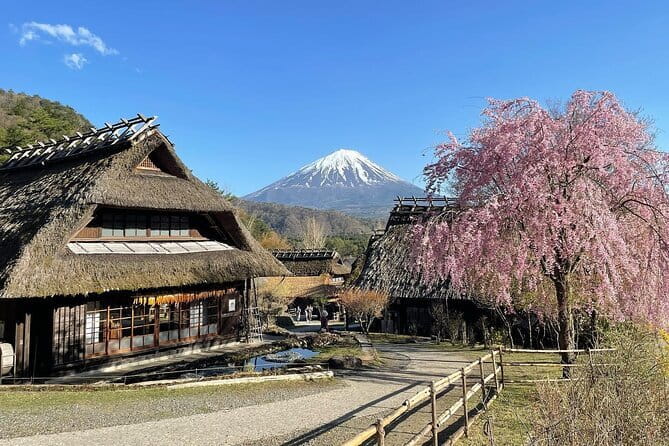
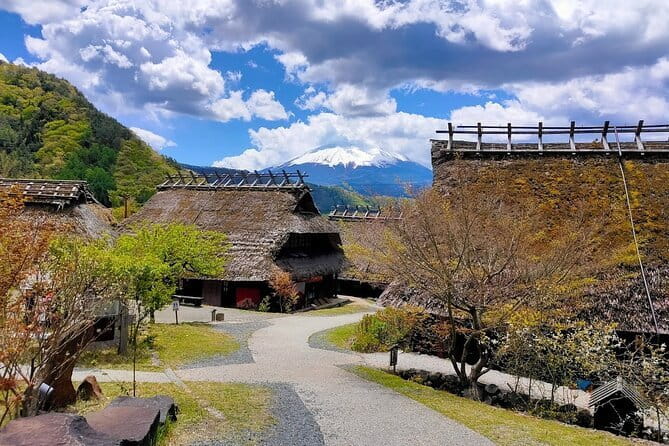
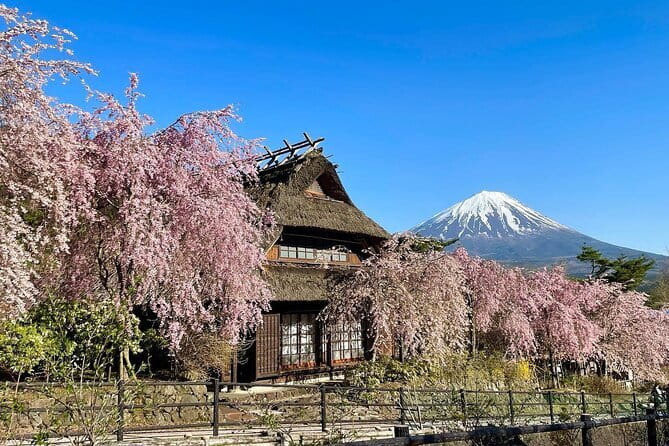
The first stop, Saiko Iyashi no Sato Nemba, gives the day a more human beginning than a string of photo platforms. This reconstructed traditional village in Fujikawaguchiko has thatched-roof houses set against Mount Fuji, when the weather allows the view.
The original settlement was destroyed by a landslide during a typhoon in 1966. Today, the village presents traditional architecture and a carefully arranged rural setting. The admission fee is included, and you have about one hour to look around.
I would use this time for more than a quick Fuji picture. Notice the roofs, the spacing of the homes, and the way the village frames the mountain. The setting explains why this stop matters: it connects Fuji to everyday Japanese life, not just postcards.
One hour is enough for a useful visit, though it may feel short if you want to inspect every building. One practical complaint about the day is that some stops do not receive enough time, and this is one of the places where an extra half-hour would be welcome.
Lake Kawaguchi, the classic Fuji viewpoint
Lake Kawaguchi is known as one of the most accessible of the Fuji Five Lakes. Its irregular shoreline creates several angles toward the mountain, and the water can give you a clean foreground for photographs.
The scheduled visit is only about 20 minutes. That is enough to step out, take pictures, and enjoy the setting, but not enough for a relaxed lakeside walk. You will need to keep an eye on the clock.
The lake formed through volcanic activity connected to Mount Fuji, and the area now serves as one of the region’s main sightseeing bases. Your guide may add local and geographic context as the group moves between viewpoints.
This stop works best as a quick orientation. If Fuji is visible, you may get one of the day’s clearest mountain views. If cloud covers the peak, the lake still provides a pleasant pause, but you should not expect a long, peaceful stay beside the water.
Oishi Park and the changing seasons
Oishi Park is the tour’s main flower and garden stop. Seasonal displays change the look of the park, with cherry blossoms, lavender, autumn leaves, red kochia, snow, and winter reeds appearing at different times of year.
You have about 25 minutes here. That gives you enough time to walk a short section, take photographs, and check the view across the lake. It is not a long garden visit, so set your expectations accordingly.
I like this stop because it gives the day a seasonal element. Fuji is a fixed subject, but the plants around it change. A spring visit, an autumn visit, and a winter visit can feel like different scenes even when the route is the same.
The park also shows the limits of a tightly packed schedule. You are visiting during the best light or flower conditions only by chance, since the tour follows a fixed route. If you care deeply about a particular bloom, you may prefer an independent visit with more time.
More 1 Day Tours in Tokyo:
- 1-Day Tokyo Bus Tour
★ 5.0 · 14,250 reviews - Tokyo: DisneySea 1-Day Passport
★ 4.5 · 2,726 reviews - Tokyo Disneyland 1-Day Passport
★ 4.6 · 2,512 reviews - Tokyo Customized Private Tour (Must See Places in 1 Day)
★ 5.0 · 1,499 reviews
Kawaguchiko Natural Living Center and the torii view

The Kawaguchiko Natural Living Center is a short 10-minute stop, with the useful viewpoint located on the second floor. From there, you can frame a red torii gate with Mount Fuji in the background.
This is a quick photo opportunity rather than a full attraction. The short timing makes sense because it follows the larger lake and park visits, but it also means you need to go straight to the viewpoint and return promptly.
The torii and Fuji pairing captures two sides of the region: the sacred importance of the mountain and its place in Japanese religious tradition. Even if the mountain is hidden, the red gate still gives you a strong visual subject.
Do not treat the stop as a chance to browse at leisure. Ten minutes goes fast, especially with a large group moving through the same area.
Arakurayama Sengen Park and Chureito Pagoda
Arakurayama Sengen Park is probably the stop most people picture when they think of a Mount Fuji day tour. The five-story Chureito Pagoda rises above Fujiyoshida, with Fuji often appearing behind it in the famous composition.
The visit is scheduled for about one hour. That sounds generous, but the park involves a climb to the pagoda viewpoint. You need time to walk up, take photographs, absorb the view, and return to the vehicle.
This stop has a real physical demand that is easy to overlook in a simple itinerary. If stairs or uphill walking are difficult for you, allow extra time and do not assume you can explore every corner of the park.
The timing here deserves attention. One low-rated account felt the pagoda came too late in the day, after the weather had worsened. That is a fair concern. Fuji visibility often changes during the day, so placing the signature viewpoint near the end creates some risk.
Still, the pagoda is too important to skip, and the tour gives you a practical way to reach it from Tokyo. If your main goal is this photograph, an independent visit could offer more control over timing. If your goal is to sample the whole region, this stop earns its place.
Arakura Fuji Sengen Shrine and Fuji’s sacred side
The nearby Arakura Fuji Sengen Shrine adds cultural meaning to the photo-focused park. Founded in 705, the shrine has more than 1,300 years of history and remains a place to pray for well-being and family happiness.
You have only about 15 minutes here, so this is an introduction rather than a full shrine visit. Use the time to look at the grounds, observe the religious setting, and listen to the guide’s explanation.
The shrine is tied to Mount Fuji’s volcanic power. After a major eruption in 807, the shrine held ceremonies during a time of public fear. That background helps explain why Fuji is more than a scenic peak. The mountain has long been treated as a sacred force.
The short stop may frustrate anyone who wants a slower cultural visit. It works better as a compact complement to Arakurayama Sengen Park, since both stops are connected to the same area.
Oshino Hakkai and the eight clear springs
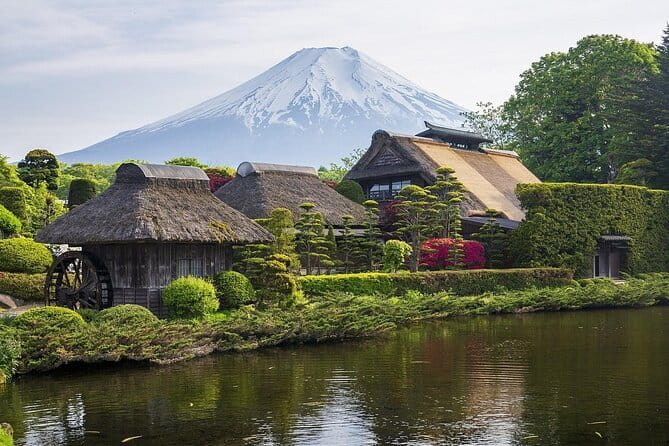
Oshino Hakkai closes the sightseeing route with a different kind of water view. The area has eight clear springs formed by snowmelt from Mount Fuji, and it is recognized as one of Japan’s famous water sites.
You have about one hour to explore. The springs are the central attraction, but the setting also includes traditional buildings, small paths, and places to pause. You can taste the spring water for free, a small detail that makes the visit feel more hands-on.
This is also one of the stops where you may want to manage your time carefully. The area can draw many tour coaches, and it has a strong tourism focus. It is worth seeing, but do not expect an empty rural village.
Some people find that the tour gives too much time here compared with the pagoda or traditional village. I can understand that judgment. Oshino Hakkai is easy to visit and visually pleasant, but the pagoda offers the day’s more distinctive image.
Weather is the biggest factor in your experience
Mount Fuji is famously unpredictable from a sightseeing point of view. Low cloud can hide the summit, even when the lakes, flowers, villages, and shrines remain perfectly worth seeing.
Several accounts describe a good day despite seeing little or none of Fuji. That is the right way to think about this trip. You are buying access to the Mount Fuji region, not a guaranteed mountain portrait.
Your best approach is to enjoy the route as a collection of places. The village, shrine, springs, and seasonal park still have value when the peak disappears. If you would be deeply disappointed without a clear Fuji view, consider checking the forecast and keeping your plans flexible, though weather can change quickly.
The itinerary order also matters. Fuji may be clear at Lake Kawaguchi and hidden by the time you reach the pagoda. You cannot control that on a group tour, and the operator does not promise visibility.
Guides, transport, and the group pace
The strongest part of the human service is the guiding. Kevin is praised for detailed explanations and useful tips for the rest of a Japan trip. Yulina is described as friendly and helpful with Japanese words connected to the places visited.
Andrew receives praise for clear instructions and careful timing. Maddy is noted for making the coach ride entertaining, while Mrs. Yuan is described as warm and approachable while still giving people freedom to explore each stop.
That last point is useful. The guide does not need to walk every person through every corner. You receive an explanation, a meeting time, and space to look around independently. This suits you if you like structure without being escorted step by step.
The coach is air-conditioned, but comfort may vary. One account described an older bus without Wi-Fi and found it uncomfortable. Wi-Fi is not included, and you should treat the vehicle as practical transport rather than a luxury coach.
The group limit is 45 people. Stay alert for the guide’s return instructions, especially at Oshino Hakkai and the parks. A late return by one person can affect the whole schedule.
Lunch, packing, and practical details
Lunch is not included. The tour gives you several stops where food may be available, but the supplied details do not promise a specific restaurant or meal break. Bring money and plan to use your free time sensibly.
Wear shoes suitable for walking and stairs, especially at Arakurayama Sengen Park. You should also allow room in your schedule for quick photo stops, since some locations offer only 10 to 25 minutes.
Mobile tickets are supported, and confirmation is provided at booking. Most people can take part, but tell the operator in advance if you have a stroller or large luggage.
If you book separately from relatives or friends, notify the operator at least one day ahead. Otherwise, you may be placed in different vehicles. Free cancellation is available up to 24 hours before the start time. Changes or cancellations inside that window are not accepted.
Who should book this $60 Fuji tour
I would choose this tour if you want a broad first look at the Fuji region and do not want to plan several transport connections. It suits first-time visitors to Tokyo, families who value a fixed route, and anyone who wants the major photo stops in a single day.
It also suits you if you appreciate a guide who explains the background rather than simply pointing at a view. The best guides on this route add useful details about shrines, local words, eruption history, and meeting times.
I would hesitate if you want a slow day. The schedule is full, several stops are short, and the group must keep moving. I would also hesitate if the Chureito Pagoda is your one essential goal, since the weather may worsen before you reach it and the time there includes the climb.
At $60, the tour offers strong practical value for a full day outside Tokyo. Just book it for the range of sights, not for a guaranteed clear view of Mount Fuji.
FAQ
How long does the Mount Fuji tour last?
The tour lasts approximately 10 hours, including travel from Tokyo and visits to seven stops in the Mount Fuji region.
Is transportation included?
Yes. Round-trip transfers from Tokyo are provided in an air-conditioned vehicle.
Is lunch included?
No. Lunch and other personal expenses are not included.
Does the tour guarantee a view of Mount Fuji?
No. Mount Fuji visibility depends on the weather, and low cloud can hide the mountain.
How large can the tour group be?
The tour can have a maximum of 45 travelers.
Can I cancel for a full refund?
Yes, if you cancel at least 24 hours before the experience start time. Cancellations or changes made less than 24 hours ahead are not accepted for a refund.
Newly reviewed around Tokyo
- Tokyo Asakusa:Calligraphy & Make T-shirt Activity★ 5.0 · 62 reviews
- Travel Tokyo with Your Own Personal Photographer★ 5.0 · 43 reviews
- Intercity Shuttle, Tokyo to Haneda /Narita /Yokohama /Makuhari★ 5.0 · 5 reviews
- 1 Hour Travel around Tokyo with a Professional Photographer★ 5.0 · 3 reviews
- Train in Samurai Swordsmanship and Defeat the Demon in Tokyo★ 5.0 · 5 reviews
- Shuttle Van 6hr Tokyo Tour to-and-from Tokyo, Yokohama and Narita★ 5.0 · 9 reviews
- Kickboxing & Body Training with EX-Pro Fighter★ 5.0 · 4 reviews
- Traditional Japanese Knife Sharpening Class★ 5.0 · 18 reviews
Mount Fuji Day Trips from Tokyo, compared.
Mt Fuji and Hakone 1-Day Bus Tour Return by Bullet Train
Read our review →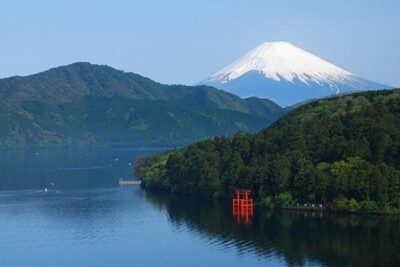
Mt Fuji & Hakone Cruise, Drum Show Bullet Train 1 Day from Tokyo
Read our review →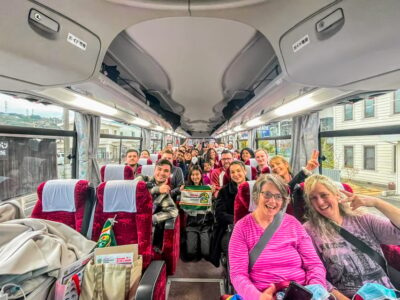
Tokyo Mt Fuji 5th St & Hakone Cruise Bus Tour w/Bullet Train
Read our review →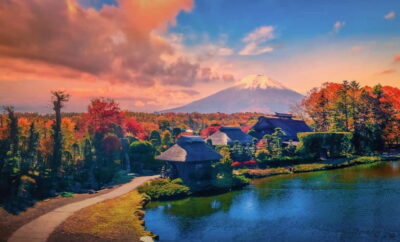
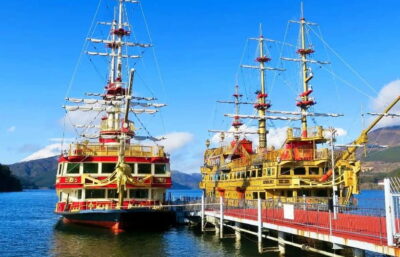
Mt. Fuji Tour, Hakone Ropeway, Owakudani, Lake Ashi
Read our review →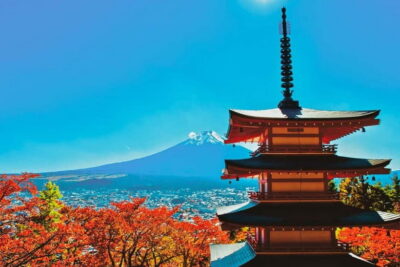
Mt.Fuji,Kawaguchiko Oishi Park,Arakurayama Sengen Park
Read our review →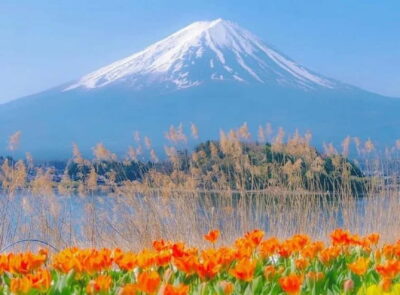
Mt Fuji Top 5 Spots Day Tour: Arakurayama Park,Oshino Hakkai
Read our review →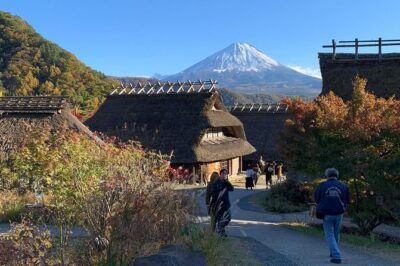
Private Tour to Mt. Fuji and Hakone (Fully Licenced Operator)
Read our review →Browse the lists this tour appears in