
Reviewed · TOKYO GO-KART TOURS
GINZA: Go Kart Experience with NEO GINZA
Tokyo sightseeing usually means trains, sidewalks, or a seat behind a bus window. This 60-minute go-kart ride gives you an open-air view from street level, with Tokyo Tower, Zojoji Temple, the Imperial Palace Outer Gardens, Tokyo Station, and Kabuki-za on the route. I like the small groups of up to six and the two-guide setup, which keeps the outing personal and helps you feel looked after in traffic. I also like the costume choice and the included photos, since both turn a quick city drive into a proper souvenir. The catch is practical: you need the correct Japanese driving documents before you arrive.
- Tokyo landmarks from the driver’s seat: Pass Zojoji Temple, Tokyo Tower, the Imperial Palace Outer Gardens, Tokyo Station, and Kabuki-za.
- Two guides for a small group: Groups are limited to six, with English and Japanese-speaking staff.
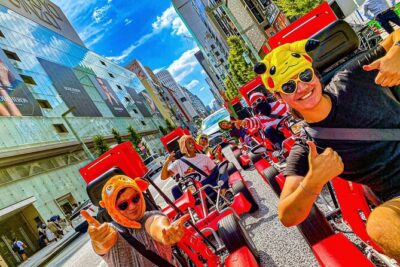
- Costumes included: Pick a playful outfit before setting out for extra photo appeal.
- Photos are part of the package: Guides stop at key sights and share pictures afterward.
- Night rides add city lights: Tokyo Tower lit up after dark can be a memorable bonus.
- Driving paperwork is essential: Bring your physical passport and valid IDP, or the required Japanese translation for certain countries.
A Street-Level View of Central Tokyo
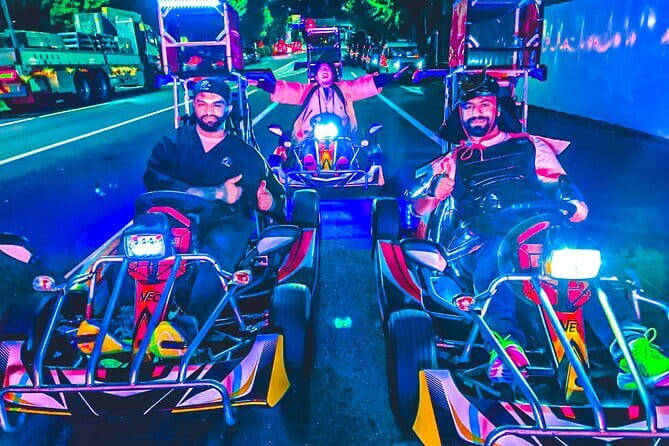
The route begins at Shintomicho 1-chome Building, in the Ginza area. From there, you move through central Tokyo in a compact kart rather than walking between sights or watching them pass through a bus window.
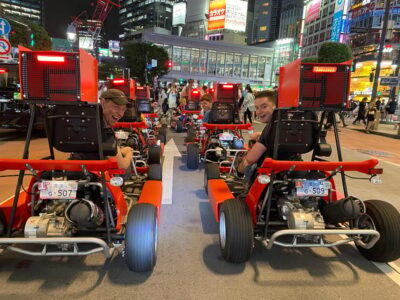
This changes the feel of the sightseeing. You are outside, close to the traffic and buildings, and able to look around in every direction. You also get the small thrill of operating the kart yourself, though the guides lead the group and keep the drive organized.
The experience lasts one hour, so think of it as a lively sampler of central Tokyo, not a full tour of each attraction. You will pass the landmarks and stop for photographs, but you will not have time to enter Zojoji Temple, tour the Imperial Palace, visit Tokyo Station’s interior, or attend a Kabuki performance.
That limited time is part of the appeal. You can fit the ride into a busy Tokyo plan, perhaps before dinner in Ginza or after a day spent indoors at museums and shops. It also means you should book it for the fun of the ride and the city views, not as your only sightseeing time in these districts.
Zojoji Temple and Tokyo Tower
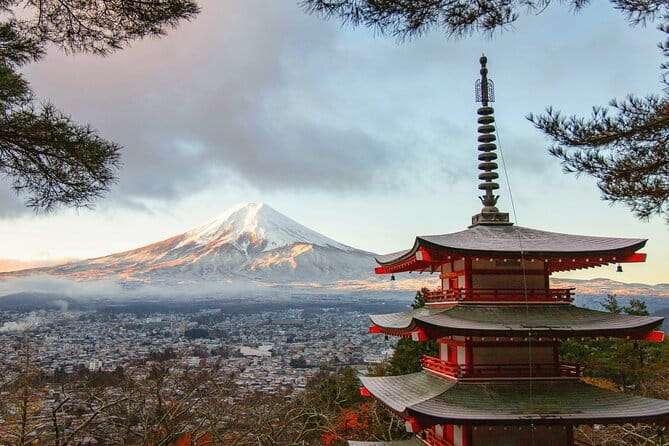
One of the first major sights is Zojoji Temple, a large Buddhist temple near Tokyo Tower. Its traditional architecture gives you a sharp contrast with the modern city around it. From a kart, you get a quick look at the temple grounds and a chance to pose for a photo, rather than a quiet temple visit.
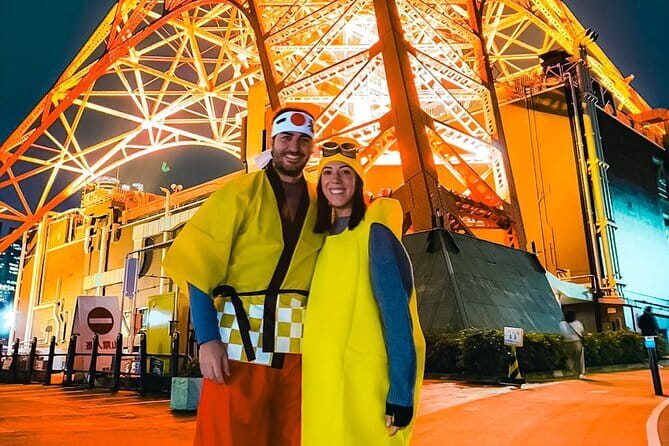
The route then reaches Tokyo Tower, one of the city’s most recognizable landmarks. This is likely to be one of the strongest visual moments of the ride. You can see the tower from street level, and the open-air kart gives you a clear view that is harder to get from inside a vehicle.
A night departure has a special appeal here. The tower is lit after dark, and the bright structure makes a strong background for photographs. Several riders have singled out the night version as particularly memorable, but daytime has its own advantage if you want clearer views of the surrounding streets and buildings.
The guides help with the sightseeing side of the trip. Patrick has been especially praised for pointing out monuments and buildings, explaining some of their background, and suggesting other places to visit in Tokyo. The experience is still centered on driving, so do not expect a long spoken tour at every stop. Its value comes from the mix of short commentary, city views, and movement.
More things to do in Ginza:
- Chopstick Making Workshop in Ginza
★ 4.8 · 1,366 reviews - Tokyo: Art Aquarium Museum GINZA Entry Ticket
★ 4.5 · 278 reviews - Official Japan Go-Kart Through Tokyo Bay / Ginza (IDP Required)
★ 4.5 · 71 reviews
The Imperial Palace Outer Gardens and Tokyo Station
The karts continue toward the Imperial Palace Outer Gardens. This area gives you a broader sense of central Tokyo, with open public spaces and formal surroundings close to the city center.
You will pass through rather than enter the palace grounds. That distinction matters. If you want palace history, gardens, or a closer look at the famous stone bridges, plan a separate visit. Here, the attraction is seeing this important district as part of a moving route.
Next comes Tokyo Station, a major transport hub and one of the city’s best-known buildings. The station area is a useful reminder that Tokyo is not only neon signs and tall towers. The historic station facade and surrounding business district create a different scene from Ginza’s shopping streets and Tokyo Tower’s immediate neighborhood.
The kart puts you at street level, where you can take in the scale of the roads and buildings. You will want to keep your attention on driving, though, so do not expect to study every facade in detail. The guides can point out sights, and the planned photo moments let you pause long enough to record the experience.
Kabuki-za Brings You Back to Ginza
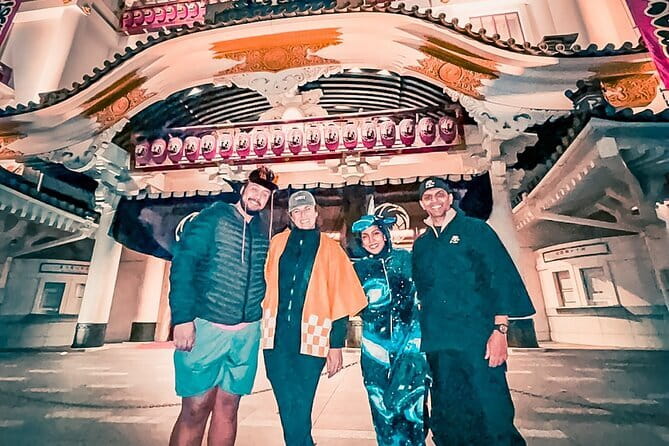
The final major sight is Kabuki-za, the famous theater in Ginza. Its distinctive traditional design makes it an easy landmark to recognize, even during a short stop.
This part of the route helps tie the experience back to its home district. Ginza is known for department stores, fine shops, restaurants, and major city streets, but Kabuki-za adds a strong cultural note. You see the theater from outside and pass through the area rather than attending a show.
After the Ginza section, you return to the Shintomicho 1-chome Building. The route is compact enough to cover several central sights in an hour, but it does not linger at each one. I would pair this ride with a longer walk in Ginza, a visit to the Imperial Palace area, or a separate Tokyo Tower stop if you want more time at any landmark.
Why the Two-Guide Setup Matters
The tour uses two guides, with English and Japanese support, and limits the group to six participants. That is a useful arrangement for a road-based activity.
One guide can lead while the other helps manage the group and photograph the experience. The small size also makes it easier to hear instructions and stay together. It is a better fit for you if you want a shared outing without the feel of a large convoy.
Safety comes up often in the experience feedback. Riders describe the guides as polite, enthusiastic, organized, and reassuring. Patrick is specifically praised for clear instruction, friendly conversation, and pointing out city sights along the way.
Still, this is driving in Tokyo. You must take the road seriously. The costume and photos make the activity playful, but it is not a theme-park ride where you can switch off. Follow the guides, pay attention to traffic, and do not let the camera moments distract you while moving.
More Tokyo go-kart tours:
- Flagship 2-Hours Official Street Go-Kart Tour – Tokyo Bay Shop
★ 5.0 · 4,974 reviews - Official Street Go-Kart in Shibuya
★ 5.0 · 3,435 reviews - Official Street Go-Kart Tour – Akihabara
★ 5.0 · 1,578 reviews - Tokyo: Street Kart Experience in Shibuya
★ 4.9 · 1,484 reviews
Costumes, Cameras, and the Fun Factor
The cost of the experience is $64 per person. That is a fair price if you value the ride itself, the route through several central districts, the guides, insurance, a costume, and the photo service.
The value is less convincing if you only want landmark photographs. You can see many Tokyo sights for little or no cost on foot or by train. What you are paying for here is the unusual way of seeing them, plus the chance to drive through the city in a costume and receive photos afterward.
The costume choice is a major part of the mood. You can choose from a range of playful outfits, then smile for pictures at the stops. This is not a quiet cultural tour, and the costumes may feel too silly if you prefer low-key sightseeing. If you want a lighthearted memory from Tokyo, they are exactly the point.
The photo service is included. Guides take pictures during the experience and share them at the end. You can bring your own phone for personal use at appropriate times, but cellphones are listed among the items not allowed during the activity. A GoPro rental and SD card are also not included.
That last detail is worth noting. Do not arrive expecting an action camera package. The included guide photography covers the main souvenir need, while extra camera equipment is your responsibility.
Day or Night: Which Departure Works Best?
The activity is available at different starting times, depending on the date. A night ride has a clear visual advantage: Tokyo Tower glows, city lights become part of the route, and the outing feels more theatrical.
A daytime ride may suit you better if you want to see building details and street scenes in clearer light. It can also make it easier to recognize the route and landmarks. The supplied experience details do not promise a better time of day, so the choice comes down to the mood you want.
I would choose night for a first go-kart outing if your main goal is atmosphere and photos. I would choose day if you want to pay closer attention to architecture and the route itself.
The one-hour length works well for either option. You get a concentrated burst of city sightseeing without giving up half a day. Several rides can also be a good answer for an evening when you want an activity between dinner plans, provided the departure time fits your schedule.
The Driving Documents You Must Get Right
This is the most important practical issue. Every participant needs special authorization to drive in Japan, and a normal home-country license alone is not enough.
For most countries, you need an International Driving Permit issued in the physical booklet format under the 1949 Geneva Convention. The permit must be issued by the same country that issued your domestic license. You cannot obtain a valid permit online while already traveling.
There are special rules for several places:
- Drivers with licenses from Switzerland, Germany, France, Taiwan, Belgium, or Monaco need an official Japanese translation from the Japan Automobile Federation, not an IDP.
- Licenses from countries outside the 1949 Geneva Convention system, including China, Indonesia, Mexico, Qatar, and Saudi Arabia, are not accepted for driving in Japan.
- You must carry your physical passport.
- You must also carry your physical IDP, or your physical domestic license plus the official Japanese translation where that applies.
Bring the documents to the experience. A digital copy is not described as acceptable, and the instructions specifically call for physical documents.
You also need to be at least 18 and hold a driver’s license. High heels, slippers, alcohol, drugs, and cellphones are not allowed. Wear secure, practical footwear that lets you operate the kart comfortably.
Who Will Enjoy This Most?
I would recommend the ride to adults and older teens who want a playful Tokyo activity rather than a formal sightseeing tour. Couples, friends, and small groups should find the format easy to enjoy, especially if they like dressing up and taking photos.
It also suits a repeat visitor who has already seen Tokyo from trains and sidewalks. The route does not replace a temple visit or palace walk, but it gives you a different angle on places you may already know.
The experience is less suitable if you dislike driving in city traffic, do not have the required documents, or want long stops with detailed historical explanations. It may also disappoint you if you expect a full attraction visit at every landmark. This is a moving city tour with photo stops, not a series of guided museum visits.
The small group helps, but you still share the outing with other drivers. If your ideal experience is private and unhurried, check the group setup carefully before booking. The maximum group size is six, and the listed experience is not described as private.
Booking Flexibility and What Is Included
The $64 price includes the 60-minute kart experience, English and Japanese-speaking staff, insurance, a costume, and photo shooting. Hotel pickup and drop-off are not included, so you need to make your own way to the Shintomicho 1-chome Building.
You can cancel up to 24 hours before departure for a full refund. The reserve-now, pay-later option lets you hold a place without paying at the time of booking, which is useful while your Tokyo schedule is still changing.
Because starting times vary, check the available departure options before you commit to a day or night plan. Also allow enough time to reach the start point and locate the correct building. The experience itself is only an hour, so arriving late would cut into the main activity.
Should You Book the NEO GINZA Go-Kart Ride?
Book it if you want a fast, funny, photo-friendly way to see central Tokyo and you already have the correct driving documents. The combination of Tokyo Tower, Ginza, costumes, two guides, and an open-air ride makes this much more memorable than a standard city transfer.
I would especially choose it for a night outing, a first Tokyo visit with friends, or a return visit when you want something different. The strongest reasons to go are the small group, guide-taken photos, and the chance to see several major sights in one hour.
Skip it if you cannot secure the required IDP or translation, dislike city driving, or want detailed time at each landmark. For everyone else, $64 is a sensible price for an unusual central Tokyo experience, provided you treat it as a lively scenic drive rather than a traditional guided tour.
FAQ
How long does the NEO GINZA go-kart experience last?
The experience lasts 60 minutes, including the scenic drive through central Tokyo and the planned photo stops.
Which landmarks does the route pass?
The route passes Zojoji Temple, Tokyo Tower, the Imperial Palace Outer Gardens, Tokyo Station, and Kabuki-za in Ginza.
Are costumes included?
Yes. A costume is included, and you can choose from a range of playful options before the drive.
Are photos included?
Yes. Photo shooting by the guides is included. GoPro rental and an SD card are not included.
What driving documents do I need?
Most participants need a physical International Driving Permit in booklet format under the 1949 Geneva Convention, along with a physical passport. Drivers from Switzerland, Germany, France, Taiwan, Belgium, and Monaco need their physical domestic license plus an official Japanese translation from the Japan Automobile Federation.
Can I join without a driver’s license or if I am under 18?
No. The experience is not suitable for people without a driver’s license or for drivers under 18.
Newly reviewed around Tokyo
- Tokyo Asakusa:Calligraphy & Make T-shirt Activity★ 5.0 · 62 reviews
- Intercity Shuttle, Tokyo to Haneda /Narita /Yokohama /Makuhari★ 5.0 · 5 reviews
- 1 Hour Travel around Tokyo with a Professional Photographer★ 5.0 · 3 reviews
- Travel Tokyo with Your Own Personal Photographer★ 5.0 · 43 reviews
- Train in Samurai Swordsmanship and Defeat the Demon in Tokyo★ 5.0 · 5 reviews
- Shuttle Van 6hr Tokyo Tour to-and-from Tokyo, Yokohama and Narita★ 5.0 · 9 reviews
- Kickboxing & Body Training with EX-Pro Fighter★ 5.0 · 4 reviews
- Traditional Japanese Knife Sharpening Class★ 5.0 · 18 reviews
Tokyo Go-Kart Tours, compared.
Flagship 2-Hours Official Street Go-Kart Tour – Tokyo Bay Shop
Read our review →
Tokyo Go Kart: Asakusa, Skytree, and Akihabara **IDP MUST**
Read our review →
Shibuya Official Street Go-Kart in Shibuya Annex
Read our review →
Asakusa, Skytree & Akhihabara Go-Kart City Experience
Read our review →
Premium Go-Kart Tour with Tower & Shibuya Crossing
Read our review →Browse the lists this tour appears in