
Reviewed · TOKYO KIMONO EXPERIENCES
Official Tokyo Shibuya : KIMONO Dressed EV-Go Kart Activity Tour
Tokyo sightseeing rarely gets more unusual than this: you put on a traditional kimono, climb into a small Toyota electric kart, and follow a guide through some of the city’s most famous streets. The route links Shibuya Crossing, Harajuku, Tokyo Tower, Ginza, Tokyo Station, and Asakusa in one lively ride.
I like two things here. First, the kimono is included, so this is more than a standard city drive. Second, the roofed EV kart keeps the ride possible in rain, strong sun, or cold weather. The main catch is practical: you need the correct international driving documents, and the ¥1,000 vehicle insurance fee is extra.
Key points to know before booking
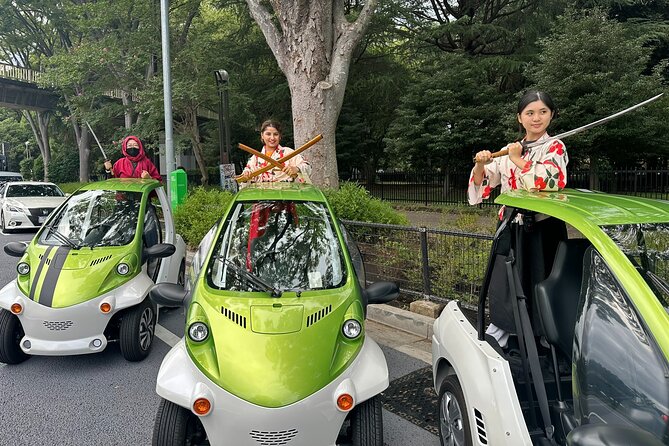
- Toyota COMS EV kart: You drive a Japan-made electric kart rather than sit in a tour bus.
- Kimono included: Choose from traditional Japanese clothing and wear it for the photo session and ride.
- Private outing: Your group takes part alone, with an English or Japanese-speaking guide leading the way.
- Big Tokyo route: Depending on the route and timing, you can see Shibuya, Harajuku, Shinjuku, Roppongi, Tokyo Tower, Ginza, Tokyo Station, and Asakusa.
- Photos included: The staff take pictures and provide image data, useful when your hands are busy driving.
- Documents matter: Most drivers need a physical 1949 Geneva Convention International Driving Permit, plus a passport.
A kimono, an electric kart, and a very large city
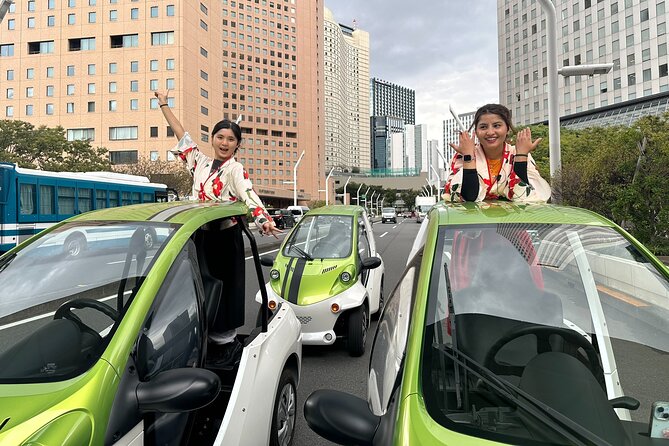
This tour works because it joins two experiences that are usually booked separately. You get a short Japanese clothing experience, then take that unusual outfit onto Tokyo streets in a compact electric vehicle.
The kart is a Toyota COMS EV model. It is roofed, which matters more than it may sound. Tokyo weather can change your plans quickly, and the roof offers protection from rain, summer sunlight, and winter cold. It does not turn the vehicle into a sealed car, so dress for the season, but you are not simply at the mercy of the forecast.
You meet at Fast and Furious Tokyo Japan in Shinjuku City. The activity lasts about one and a half to two hours, with the actual EV kart portion listed as either 60 or 90 minutes. Since the route covers many parts of Tokyo, the ride is best understood as a moving sightseeing loop with photo stops, not a long visit inside each attraction.
The tour is private. That makes a real difference if you are shy about trying a kart in city traffic or want the guide to spend time helping your group. It also means you will not be mixed into a large coach party.
More things to do in Shibuya:
- Official Street Go-Kart in Shibuya
★ 5.0 · 3,435 reviews - Tokyo: Street Kart Experience in Shibuya
★ 4.9 · 1,484 reviews - Shibuya Meltdown Nightlife Tour: All-You-Can-Drink Bar Hopping
★ 5.0 · 1,058 reviews
Getting dressed in traditional Japanese style
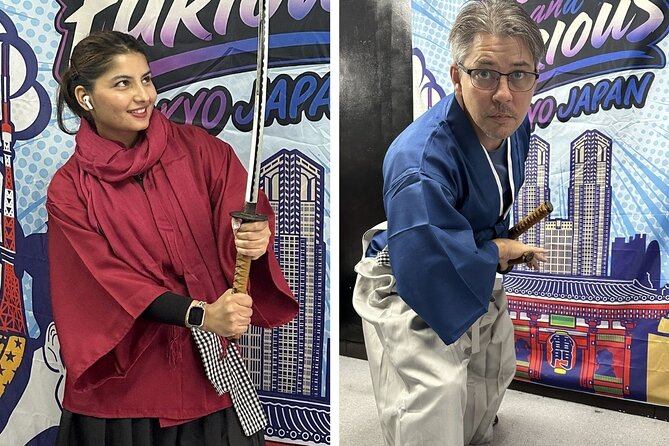
The kimono rental is included in the price, and you can choose from colorful traditional outfits. This portion is not presented as a long cultural class. Instead, it is a practical dressing and photo experience that sets up the drive.
I like the way the clothing changes the feel of the outing. Shibuya and Tokyo Tower are familiar sights, but seeing them while dressed in a kimono gives the ride a clear Japanese character. The outfit also makes the included photos more useful than ordinary snapshots from a moving vehicle.
You should keep your expectations sensible. The tour is not a formal tea ceremony, a detailed lesson in kimono construction, or a quiet visit to a historic house. It is a short cultural addition to a city drive. That is ideal if you want something easy and playful, but less suitable if your main goal is a serious study of Japanese dress.
The staff help you choose and prepare. Michael is specifically praised for explaining the kart clearly and helping a solo participant feel welcome. Mikey, Kazu, and Ide are also noted for patiently explaining each step. That hands-on guidance is important for first-time drivers.
Learning the kart before entering Tokyo traffic
Before setting off, the guide explains how to use the EV kart and outlines the route. This is where the tour’s safety value lies. You are not simply handed a vehicle and sent toward Shibuya.
The staff are used to helping beginners. The kart is electric, and the activity is led by a guide, but you still need to be comfortable driving in an urban setting. The route takes you through central Tokyo streets, so this is not a slow park ride or a closed-course activity.
A locker is provided free of charge for luggage during the tour. Use it for larger bags and anything that could get in the way while driving. You will want your hands free, especially when wearing a kimono.
The insurance arrangement deserves close attention. Personal injury and property damage insurance is included in case of an accident, but vehicle insurance costs an additional ¥1,000 per person. Read the customer agreement sent after booking, and check the precise terms before you go.
Shibuya Crossing and Harajuku
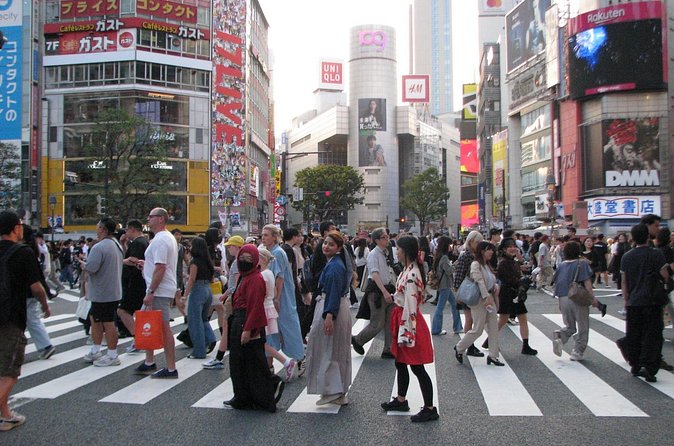
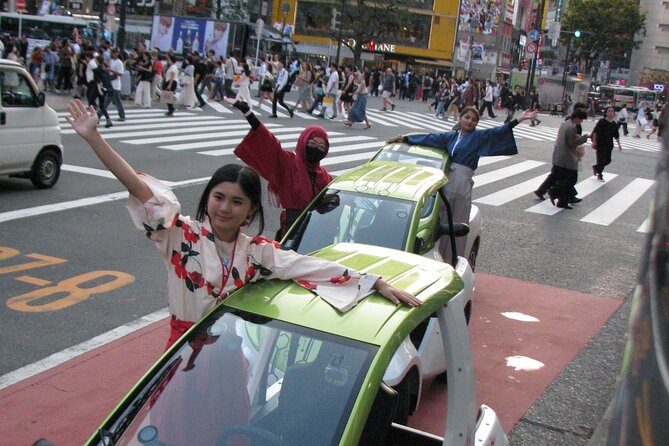
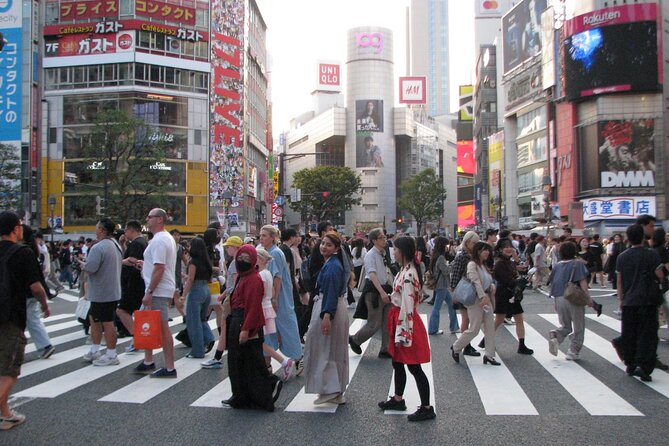
Shibuya Crossing is the headline moment. The guide takes you through the famous intersection, giving you the unusual experience of being part of the scene rather than only watching it from a nearby viewpoint.
The crossing is a quick urban passage, not a sightseeing stop where you can linger. Traffic, signals, and the group’s pace control the moment. Still, this is one of the strongest reasons to book the tour. A photo of you in a kimono near Shibuya has a very different feel from a standard street portrait.
The route continues through Harajuku, a center for fashion and youth culture. Here, the kart places you close to the shops, street signs, and changing styles that make the area distinctive. You see Harajuku as a working neighborhood and shopping district rather than as a single attraction.
The route can also include a photo stop near the large torii gate of Meiji Jingu. This is one of the more fitting backdrops for the kimono. The gate gives the pictures a calm, traditional setting after the high-energy streets of Shibuya and Harajuku.
More Tokyo go-kart tours:
- Flagship 2-Hours Official Street Go-Kart Tour – Tokyo Bay Shop
★ 5.0 · 4,974 reviews - Official Street Go-Kart Tour – Akihabara
★ 5.0 · 1,578 reviews - Tokyo Go Kart: Asakusa, Skytree, and Akihabara **IDP MUST**
★ 5.0 · 988 reviews - Shibuya Official Street Go-Kart in Shibuya Annex
★ 5.0 · 972 reviews
Shinjuku, Tokyo Metropolitan Government Building, and Roppongi
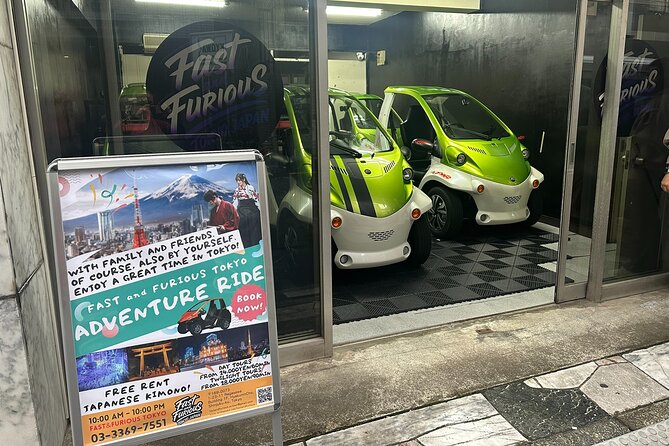
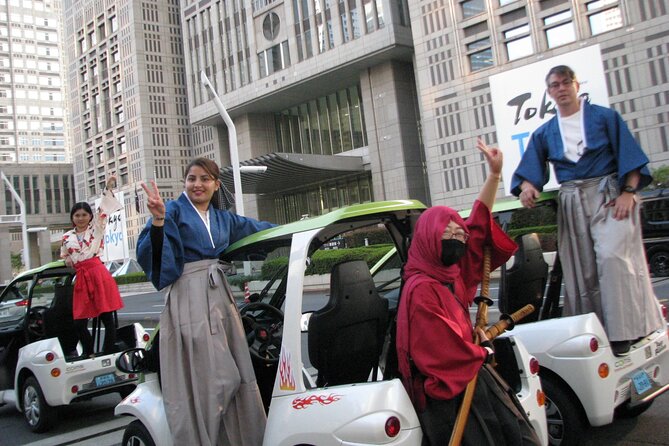
The starting area is Shinjuku, and the route includes a photo opportunity with the Tokyo Metropolitan Government Building in the background. The building is one of the district’s most recognizable landmarks, with a strong modern-Tokyo presence.
This stop is useful because it adds scale to the tour. Shinjuku is not just a collection of shops and train lines. The tall government towers show the enormous size and ambition of the city.
The route also passes through Roppongi. This district is known for nightlife, international restaurants, galleries, and modern architecture. From a kart, you get a street-level look rather than a view from a tower or indoor attraction.
Another section passes through Japan’s largest entertainment district, referring to the Kabukicho area in Shinjuku. You should expect signs, restaurants, and nightlife streets, not a guided visit inside the venues. The value is in seeing several sides of Tokyo within a short period: business towers, fashion streets, shrine surroundings, and late-night districts.
Tokyo Tower and the ginkgo-lined avenue
Tokyo Tower is one of the planned photo backgrounds. The guide positions the group for a picture with the red-and-white tower behind you, an image that quickly identifies the city.
The tower stop is primarily about the photograph and the view from street level. The tour does not include entry to the tower, so do not plan on visiting its observation decks during this activity. If you want that, schedule it separately.
The drive also passes along a ginkgo-lined avenue. This is especially appealing in autumn, when the trees can add color to the route. The tour information does not promise a particular seasonal display, so treat the avenue as a scenic road rather than a guaranteed fall spectacle.
This stretch breaks up the large intersections and commercial districts. You get a more spacious, leafy setting while still seeing Tokyo from the kart.
Ginza, Tokyo Station, and the Imperial Palace area
Ginza is Tokyo’s high-end shopping district, with broad streets, major department stores, luxury brands, and carefully finished buildings. Driving through gives you a quick sense of its polished character.
You do not stop to shop, and the activity does not include purchases or meals. That is fine. The point is to compare Ginza with the youth-oriented streets of Harajuku and the nightlife of Shinjuku. Tokyo changes personality from district to district, and this route lets you see those shifts quickly.
Tokyo Station provides one of the strongest architectural photo settings. The red-brick station building is photogenic and gives the picture a formal, historic-looking backdrop. The activity includes a photo opportunity there, rather than a station tour.
The route also drives near the residence of the Emperor, in the Imperial Palace area. This is a chance to sense the location and importance of the palace grounds from outside. It is not a palace entry visit, and you should not expect an interior tour.
Together, Ginza, Tokyo Station, and the Imperial Palace area create a more polished and official side of Tokyo. They are a useful counterpoint to the neon and crowds found elsewhere on the route.
Asakusa and the Kaminarimon Gate
The final major landmark is Sensoji Temple’s Kaminarimon, or Thunder Gate, in Asakusa. Its enormous lantern is one of Tokyo’s best-known sights, and it makes an excellent kimono photo background.
Asakusa offers a different mood from Shibuya and Ginza. The temple district is tied to older forms of Tokyo, with traditional architecture, temple grounds, and a strong sense of place. The kart lets you connect this area with the modern districts without spending a full day changing trains.
Again, the stop is for a photograph and a short sightseeing moment. The tour does not promise temple entry or time to walk the full shopping approach. If Sensoji is high on your list, return later on foot so you can explore at your own pace.
The activity ends back at the Shinjuku meeting point. That return is convenient because you do not need to work out a separate ride from Asakusa after the tour.
What the $104.24 price really covers
At $104.24 per person, this is not the cheapest way to see Tokyo. Public trains and walking will cost far less, and a standard sightseeing bus may cover some of the same landmarks.
The value comes from the combination. You are paying for a private 60 or 90-minute EV kart experience, a guide, kimono rental, luggage storage, photos and image data, and a route linking many well-known parts of the city. A separate kimono photo session plus a private city tour could easily take more time and planning.
The price makes the most sense for a first visit, a special day, a couple, a small family group, or a solo visitor who wants guided support. It is also a good choice if you want photographs that feel more personal than standard landmark snapshots.
It is less compelling if you dislike driving, prefer long visits at individual sights, or already know Tokyo well and want time for museums, food, or neighborhood walks. The route gives breadth, not depth.
Remember to add the ¥1,000 vehicle insurance charge per person. The total cost is still reasonable for a private, photo-focused city activity, but you should compare the final amount rather than only the advertised price.
Driving documents and other practical details
The license rules are the most important part of booking. Most participants need a physical International Driving Permit issued under the 1949 Geneva Convention by an authorized government organization. You must carry the physical permit and your physical passport.
There are special rules for licenses from Switzerland, Germany, France, Taiwan, Belgium, and Monaco. Drivers from those places need a Japanese translation issued by the Japan Automobile Federation, and must carry the physical domestic license, official translation, and passport.
Licenses from countries not covered by the 1949 Geneva Convention, including China, Indonesia, Mexico, Qatar, and Saudi Arabia, are not accepted for driving in Japan. Check this before paying. The operator sends a customer agreement after reservation, and every participant should read it carefully.
The activity is near public transportation, and most people can participate. It is not recommended for anyone with an illness or injury that affects the ability to drive. Since the tour takes place on public roads, choose a different activity if driving causes you stress.
The operator allows free cancellation up to 24 hours before the start time. Changes or cancellations inside that window are not refunded. If poor weather forces cancellation, you are offered another date or a full refund.
Who should book this Tokyo outing?
I would choose this for someone who wants a memorable city activity rather than a standard sightseeing circuit. It suits first-time visitors who want to cover several districts quickly, couples looking for strong photos, and solo participants who appreciate clear instruction and friendly help.
The kimono makes it especially appealing for people who want a cultural element without committing to a full-day workshop. The EV kart adds the fun factor, while the guide keeps the route organized.
Families need to check the operator’s participation rules and decide if each member is comfortable driving. The supplied information says most people can participate, but it does not provide detailed age, height, or passenger rules. Ask before booking if those details affect your group.
The tour is also weather-conscious. The roof helps in rain and sun, and one outing went ahead despite rain, but the operator still lists good weather as a requirement. Do not assume the kart roof guarantees operation in every condition.
Should you book the kimono EV kart tour?
Book it if you want Tokyo sightseeing with a clear sense of occasion. The combination of kimono, Toyota electric kart, guide-led driving, major landmarks, and included photos gives you something a train ride cannot.
The strongest parts are the help from staff such as Michael, Mikey, Kazu, and Ide, the private format, and the chance to pass through Shibuya Crossing in traditional dress. The main limits are the short stops, extra vehicle insurance, and strict driving-document rules.
I would not pick it as your only Tokyo sightseeing plan. Use it as a lively overview, then return by train or on foot to the places you want to explore properly. If you have the right documents and enjoy being behind the wheel, this is an unusual and worthwhile way to see the city.
FAQ
How long does the activity last?
The full experience lasts approximately one hour and 30 minutes to two hours. The EV kart portion is listed as either 60 or 90 minutes.
Where does the tour start and finish?
It starts at Fast and Furious Tokyo Japan, 1-23-11 Nagasawa Building, 1st floor, Hyakunincho, Shinjuku City, Tokyo 169-0073. The activity finishes back at the same meeting point.
Is kimono rental included?
Yes. Traditional Japanese kimono and other colorful costumes are included for the activity.
Is the tour private?
Yes. Only your group participates in the activity.
Is a guide included?
Yes. An English or Japanese-speaking guide leads the tour and explains how to use the EV kart.
Do I need an International Driving Permit?
Most participants need a physical International Driving Permit issued under the 1949 Geneva Convention. Drivers from Switzerland, Germany, France, Taiwan, Belgium, or Monaco need an official Japanese translation of their license instead. You must also carry your physical passport.
Is insurance included?
Personal injury and property damage insurance is provided in case of an accident. Vehicle insurance costs an additional ¥1,000 per person.
What happens if the weather is poor?
If the operator cancels because of poor weather, you can choose another date or receive a full refund. The vehicles have roofs, but the activity still requires suitable weather conditions.
More Tokyo kimono experiences
- Let’s make kimono !(Kimono is a gift for you
★ 5.0 · 252 reviews - Tokyo: Matcha and Kimono Experience
★ 4.7 · 219 reviews - Tokyo: Asakusa Kimono Dressing and Matcha Experience
★ 4.9 · 173 reviews - Asakusa: Kimono Tea Ceremony with Matcha and Sweet
★ 4.9 · 153 reviews
Newly reviewed around Tokyo
- Tokyo Asakusa:Calligraphy & Make T-shirt Activity★ 5.0 · 62 reviews
- Intercity Shuttle, Tokyo to Haneda /Narita /Yokohama /Makuhari★ 5.0 · 5 reviews
- 1 Hour Travel around Tokyo with a Professional Photographer★ 5.0 · 3 reviews
- Travel Tokyo with Your Own Personal Photographer★ 5.0 · 43 reviews
- Train in Samurai Swordsmanship and Defeat the Demon in Tokyo★ 5.0 · 5 reviews
- Shuttle Van 6hr Tokyo Tour to-and-from Tokyo, Yokohama and Narita★ 5.0 · 9 reviews
- Kickboxing & Body Training with EX-Pro Fighter★ 5.0 · 4 reviews
- Tokyo History: Sensoji Temple & Asakusa District Private Tour★ 5.0 · 28 reviews
Tokyo Kimono Experiences, compared.


Tokyo Asakusa: Traditional Kimono Rental Experience at Wargo
Read our review →
Tokyo Authentic Kimono Rental in Asakusa with Photography Option
Read our review →
Kimono Rental inside Shinjuku Gyoen National Garden
Read our review →Browse the lists this tour appears in