
Reviewed · TOKYO BIKE TOURS
Tokyo Bike Tour: Shibuya & Hidden Tokyo
Tokyo reveals itself differently from a bicycle. On foot, you may spend half your day crossing stations and wide streets. From a saddle, you can link Shibuya Crossing, Harajuku, Aoyama, and Yoyogi in one easy-moving route, with quiet lanes between the headline sights.
I like the way guide Taichi mixes famous stops with ordinary streets, parks, shrines, and local corners. I also like the small group, which keeps the pace calm and lets him answer questions or adjust the route. The catch is simple: you need to ride confidently at about 15 kilometers per hour, including on pavements, through traffic lights, and in tight spaces.
Key points
- Small groups of up to six: You get close guidance instead of riding in a long, loose convoy.
- A local-led route: Taichi knows the Shibuya area well and shares practical tips about cafes, restaurants, cycling, and simple Japanese phrases.
- A useful mix of sights: The route includes Yoyogi Park, Shibuya Crossing, Hachiko, Cat Street, Aoyama Street, Aoyama Cemetery, and Japan National Stadium.
- More ground in three hours: You can cover parts of four Tokyo districts without changing trains or losing time underground.
- Good for first visits: The ride helps you understand how Shibuya, Harajuku, Aoyama, and Gaien fit together.
- Know the limits: The bicycles suit riders from 155 to 195 centimeters tall, with a maximum weight of 120 kilograms.
Why a bicycle works so well in western Tokyo
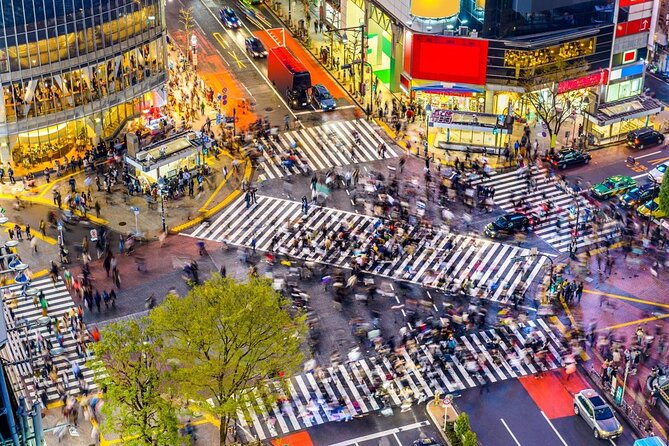
Shibuya can look like a poor place to cycle. There are crowds, huge intersections, narrow side streets, and plenty of signs to read. Yet the district has many calmer roads and pedestrian areas, and a guide who knows the route can keep you away from the worst of the traffic.
That is the main value here. You are not simply renting a bicycle and hoping your phone leads you somewhere interesting. Taichi rides first, gives signals, watches the group, and chooses routes that connect major sights with smaller streets. The ride is still an active tour, but you are not spending your attention on navigation.
The pace is about 15 kilometers per hour. That is moderate for a regular cyclist, yet it feels faster when you are crossing busy areas or riding through narrow spaces. You should be comfortable starting, stopping, turning, crossing traffic lights, and staying with a guide. This is not an electric-bike outing, and you should not book it if you are only comfortable cycling on empty paths.
The route can cover a surprising amount of ground. One outing covered about 9 to 10 miles with several stops and did not feel rushed. Your exact route may vary with the group, weather, and local conditions, but the design clearly favors seeing several neighborhoods rather than spending the whole morning at one landmark.
More things to do in Shibuya:
- Official Street Go-Kart in Shibuya
★ 5.0 · 3,435 reviews - Tokyo: Street Kart Experience in Shibuya
★ 4.9 · 1,484 reviews - Shibuya Meltdown Nightlife Tour: All-You-Can-Drink Bar Hopping
★ 5.0 · 1,058 reviews
Starting near Yoyogi Park and Sendagaya
The meeting point is at Umayamichi Park, at 5-chome-24-11 Sendagaya in Shibuya. It is about a minute from Yoyogi Station and roughly a 10-minute walk from Shinjuku Station, giving you two easy rail options.
That location is useful for a short tour. You do not need to cross central Tokyo before the ride even begins, and you finish back at the same point. The start and end arrangement also makes it easier to continue sightseeing afterward, provided you allow time to return, secure your belongings, and make your next train connection.
Expect a short orientation before setting off. You need to follow Japanese traffic rules and Taichi’s signals. Local cycling customs matter here, especially when the group is moving through crowded paths or crossing roads. The guide’s attention to hand signals, directions, and the riders behind him is one of the strongest practical features of this outing.
The bikes are described as light and well maintained. Some riders have particularly liked the compact, maneuverable design, while one rider felt the bike was functional rather than luxurious. That is a fair way to view it. You are paying for a guided route and local access, not a premium racing-bike experience.
Yoyogi Park: a gentle opening
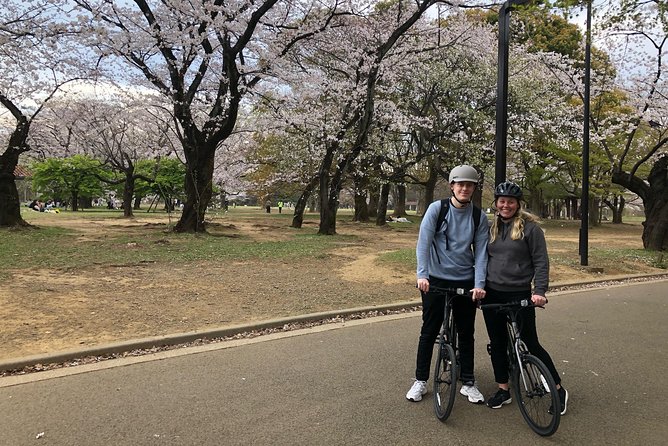
Yoyogi Park gives the tour room to settle into its rhythm. After the orientation, you can get used to the bike, the pace, and the practice of following a guide through Tokyo.
The park is also a useful introduction to the city’s contrasts. A few turns can take you from major rail lines and dense commercial streets into open green space. You may stop for an explanation of the area, take photographs, and get a feel for the group before the ride becomes more urban.
The park itself is not a long walking visit. You are seeing it as part of a larger route. If you want extended time under the trees, plan to return later. On this tour, the park’s value is its setting and its role as a calm starting point.
Shibuya Crossing and Hachiko
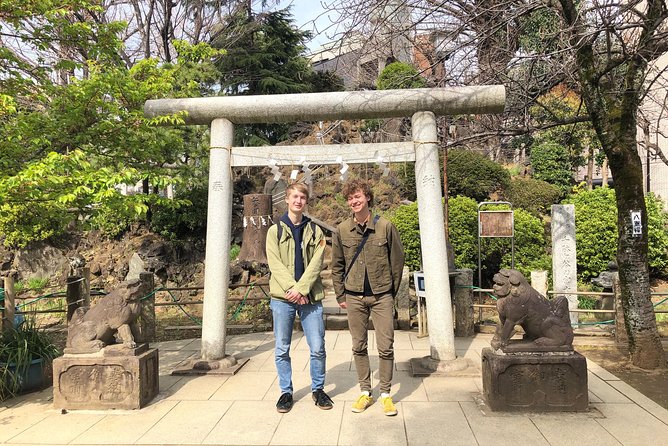
Shibuya Crossing is the obvious headline stop. It is one of Tokyo’s best-known sights, but seeing it by bicycle gives you a useful sense of how the district connects. You do not arrive, take one photograph, and leave by train. You approach through the surrounding streets, pause to understand the area, and continue by bike.
Hachiko, the famous dog statue, is nearby. It is a quick stop, but an important one for a first visit to Shibuya. Taichi can place the statue and crossing in the wider story of the neighborhood, rather than treating them as isolated photo points.
Do not expect a long, empty space for your group at either location. Shibuya is crowded, and bicycles require care. You may need to dismount or follow instructions closely at the busiest points. The advantage of having Taichi lead is that you do not have to decide where to stand, how to thread through the area, or which side street makes sense next.
If you already know Shibuya Crossing well, say so at the start. The small-group format allows some flexibility, and the route has been adjusted for people who had already visited the main crossing. That can turn a familiar stop into more time on local streets.
More Tokyo bike tours:
- Tokyo Great Cycling Tour
★ 5.0 · 811 reviews - Tokyo Top Highlights 3h Guided E-bike Tour
★ 5.0 · 714 reviews - 3h Tokyo E-Bike Tour: Hidden Gems, and Local Life with guide
★ 5.0 · 670 reviews - Tokyo: 3-Hour Bike or E-Bike City Highlights Tour
★ 4.8 · 435 reviews
Cat Street and the quieter side of Harajuku
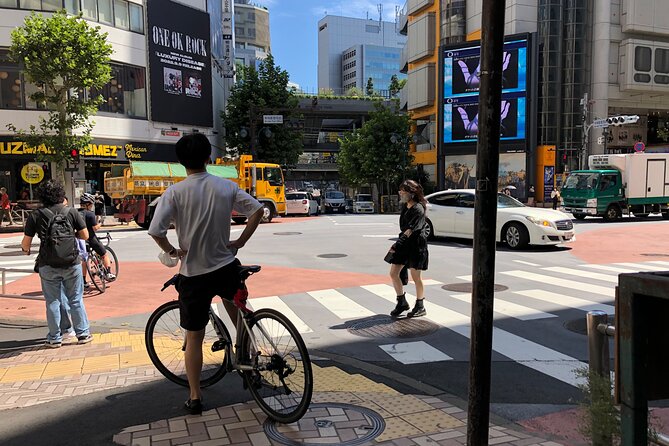
Cat Street offers a different view of the area. Instead of the large junctions and station crowds, you ride through a more relaxed shopping and neighborhood corridor. It is a good place to notice how quickly Tokyo changes from one block to the next.
The bicycle is especially useful here. You can move beyond one famous shopping strip and see how Harajuku links with Shibuya and Aoyama. You might find small lanes, residential stretches, and less obvious places that you would probably miss from a train or bus.
This part of the tour is also where the local guide matters most. A map can show you Cat Street, but it cannot tell you which side roads are pleasant to ride, how to avoid a crowded stretch, or which cafe and restaurant areas are worth noting for later. Taichi’s recommendations are meant to help you keep exploring after the tour.
There is a practical limit. You are riding through a popular part of Tokyo, not a closed cycling trail. Pedestrians, cross traffic, and tight turns require steady attention. Keep your speed and spacing under control rather than treating the ride as a race.
Aoyama Street and Aoyama Cemetery
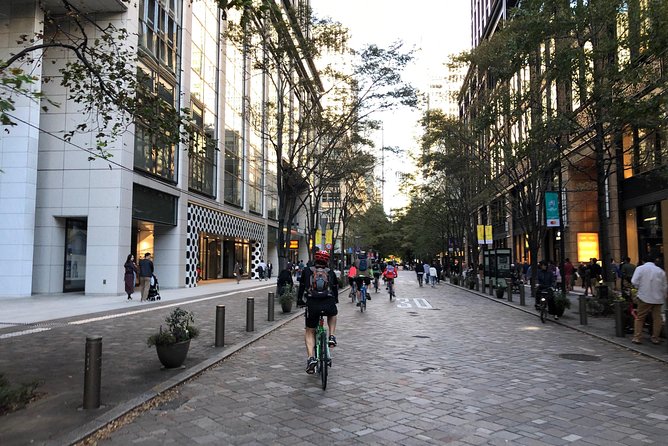
Aoyama Street brings the ride into a more polished part of the city. You get a sense of the transition from youth-oriented Harajuku to Aoyama’s broad roads, shops, and quieter blocks.
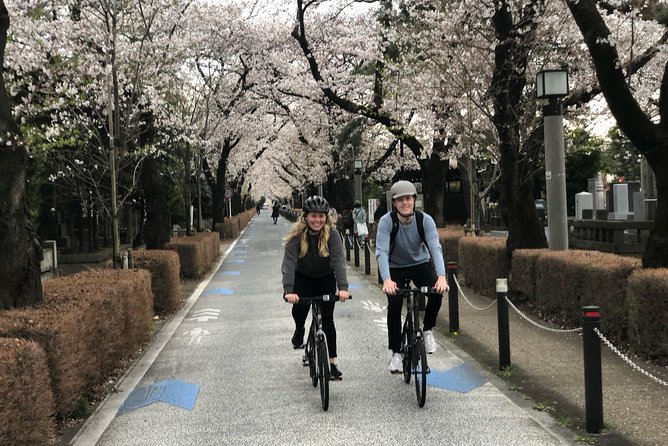
Aoyama Cemetery provides a welcome change of pace. It is one of the stops that gives the tour more substance than a checklist of famous addresses. The setting allows Taichi to discuss local history and daily life, while you take a break from the most crowded streets.
This is a good place to appreciate the tour’s balance. You are not spending all three hours at major attractions, but you are also not being taken far from the Tokyo you came to see. The route keeps tying ordinary spaces back to the districts on your map.
The cemetery is still a place that calls for respect. Follow the guide’s instructions, keep your voice down, and treat the stop as more than a quick photo opportunity.
Japan National Stadium and the Gaien area
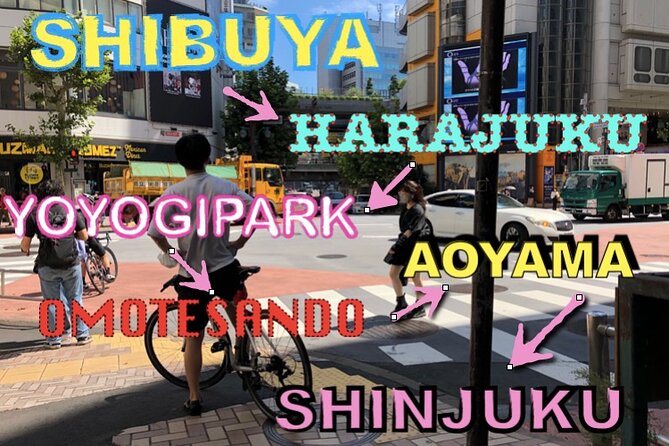
The Japan National Stadium is another major landmark on the route. It adds a modern sports and civic note to a tour that has already included parks, commercial streets, a cemetery, and residential lanes.
The Gaien area helps round out the picture. Instead of seeing Tokyo only as neon, department stores, and packed rail stations, you get a look at broad public spaces and the city’s sports facilities. The ride shows how these areas sit within the same western Tokyo circuit.
You should not expect a stadium event or an interior tour unless the guide specifically says otherwise. The stop is part of the outdoor cycling route. It works best as a visual landmark and a place to ask questions about the area.
By the time you reach this section, the route has done its main job. You have crossed several neighborhoods under your own power and can better judge where you want to return on foot later.
What Taichi adds to the ride
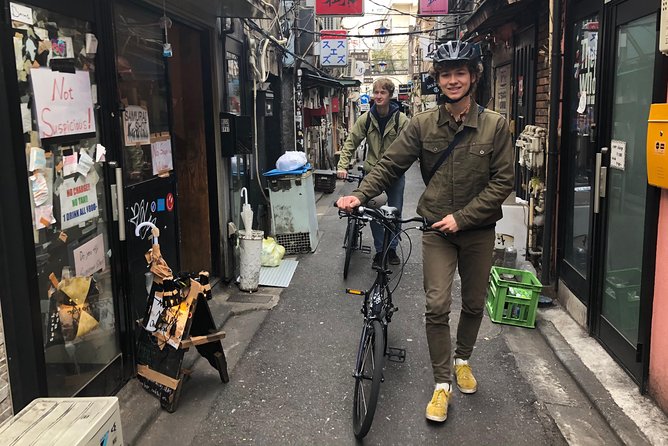
The strongest personal element is Taichi’s guiding. He is a local cyclist based in Shibuya, and his explanations cover more than the names of landmarks. He can talk about local customs, history, bike etiquette, neighborhood changes, simple Japanese phrases, and places to eat or drink.
His calm manner matters on city roads. A guide who knows the route is useful, but a guide who keeps checking the group is better. The ride includes signals and directions, and the group stays together through busy sections. Several riders have also appreciated photographs taken during the outing, including at Shibuya Crossing, though photography should not be treated as a guaranteed formal service.
The small maximum of six people is a real benefit. It allows questions without holding up a large group, and it gives Taichi more room to tailor the route. Solo riders and pairs may receive more personal attention, while a family or group of friends can still ride together.
For groups of four or more, contact the provider directly before booking. That is especially important if you want to confirm arrangements for your full party.
Price, pace, and who gets good value
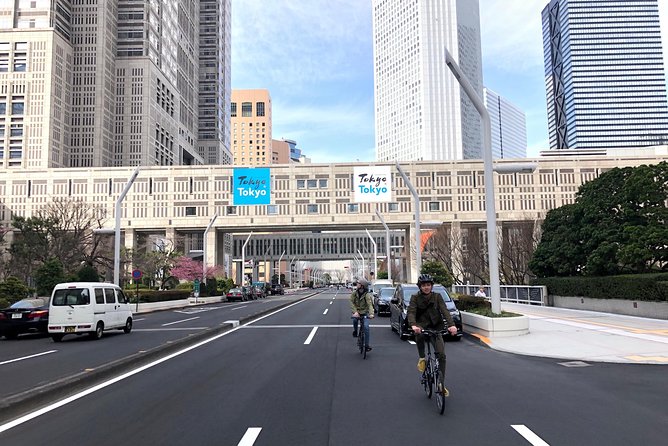
At $64.73 per person, the tour costs more than renting a bicycle for a few hours. The comparison is not quite like for like. A rental gives you wheels, but you still need to choose a route, understand local cycling rules, find safe crossings, and work out how to connect Shibuya with Harajuku, Aoyama, and Gaien.
I think the price is fair if you value local direction and want to cover a lot of ground in three hours. It is also useful early in a Tokyo stay. Taichi can help you understand the districts, suggest places to return to, and explain how the neighborhoods relate to one another.
The value drops if you dislike cycling in traffic or prefer long, quiet stops. You are paying for movement and range, not an extended visit at each landmark. The ride also depends on your ability to keep up. Riders should be at least 13 years old, fit the 155 to 195 centimeter height range, and weigh no more than 120 kilograms.
Late June can be hot, though the moving air helps. The tour proceeds in light rain, but sudden weather changes can cause cancellation. Bring water, dress for the forecast, and avoid booking this as your one fixed activity if your schedule cannot handle a weather change.
Should you book the Shibuya bike tour?
Book it if you want a practical introduction to western Tokyo and feel comfortable on a standard bicycle. It is particularly useful for first-time visitors, active couples, families with teenagers, and people with limited time who want more than a station-to-station view of the city.
I would choose a morning departure early in a Tokyo visit. You get a broad orientation, then can return to Cat Street, Aoyama, Yoyogi, or another neighborhood later with a better sense of direction. A morning ride may also feel more comfortable in hot weather.
Skip it if you are a nervous cyclist, cannot ride confidently at 15 kilometers per hour, or want a slow walking tour with long explanations at each stop. For everyone else, the combination of local guidance, manageable group size, and varied scenery makes this a smart way to get your bearings without spending the day underground.
FAQ
How long does the Tokyo Bike Tour last?
The tour lasts approximately three hours.
Where does the tour start?
It starts at Umayamichi Park, 5-chome-24-11 Sendagaya, Shibuya, Tokyo 151-0051, Japan.
Where does the tour finish?
The activity ends back at the meeting point.
How many people can join the tour?
The maximum group size is six travelers.
What neighborhoods does the tour visit?
The route covers Shibuya, Harajuku, Aoyama, and Gaien.
Which sights are included?
Stops include Yoyogi Park, Shibuya Crossing, Hachiko, Shibuya Cat Street, Aoyama Street, Aoyama Cemetery, and Japan National Stadium.
Is the tour suitable for children?
Participants must be at least 13 years old.
What height and weight limits apply?
The bicycles suit riders between 155 and 195 centimeters tall. Participants must weigh no more than 120 kilograms.
What happens if the weather is bad?
The tour can proceed in light rain, but sudden weather changes may cause cancellation. If poor weather cancels the activity, you can receive a different date or a full refund. You can also cancel for a full refund up to 24 hours before the start time.
Newly reviewed around Tokyo
- Tokyo Asakusa:Calligraphy & Make T-shirt Activity★ 5.0 · 62 reviews
- Intercity Shuttle, Tokyo to Haneda /Narita /Yokohama /Makuhari★ 5.0 · 5 reviews
- 1 Hour Travel around Tokyo with a Professional Photographer★ 5.0 · 3 reviews
- Travel Tokyo with Your Own Personal Photographer★ 5.0 · 43 reviews
- Train in Samurai Swordsmanship and Defeat the Demon in Tokyo★ 5.0 · 5 reviews
- Shuttle Van 6hr Tokyo Tour to-and-from Tokyo, Yokohama and Narita★ 5.0 · 9 reviews
- Kickboxing & Body Training with EX-Pro Fighter★ 5.0 · 4 reviews
- Traditional Japanese Knife Sharpening Class★ 5.0 · 18 reviews
Tokyo Bike Tours, compared.
3h Tokyo E-Bike Tour: Hidden Gems, and Local Life with guide
Read our review →
3-hour Guided E-Bike Tour of the City’s Hidden Gems
Read our review →
3-Hour Bike/E-Bike Tour of the City’s Highlights
Read our review →
Browse the lists this tour appears in