
Reviewed · TOKYO GO-KART TOURS
Akihabara: Go-Kart Experience with Local Guide in Tokyo
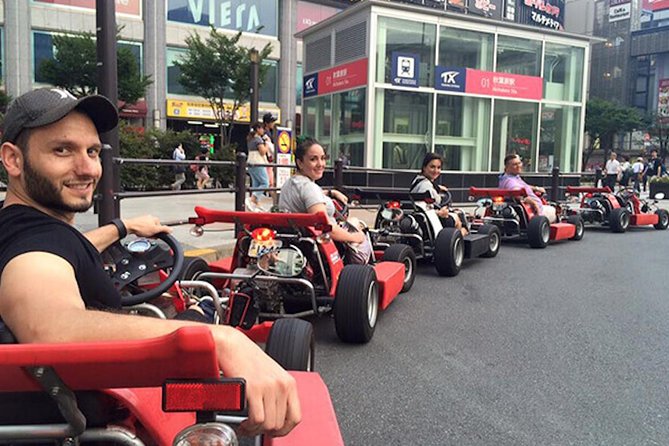
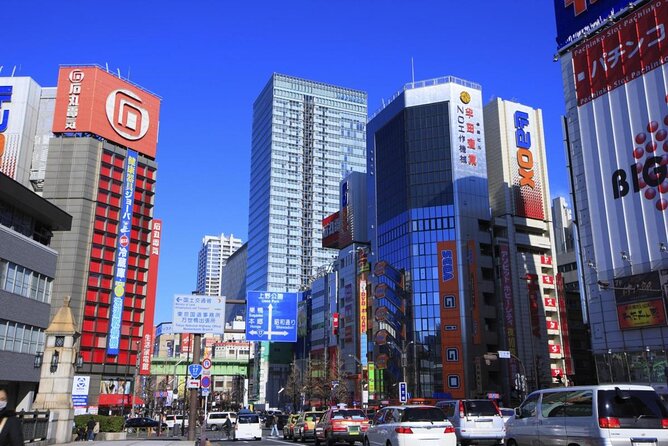
Akihabara’s neon signs, manga shops, electronics stores, and costumed characters make an unusual backdrop for a street-level go-kart ride. Instead of watching Tokyo pass from a train window, you sit low in the traffic and see the city from a completely different angle. The guide leads the group, helps with photos, and keeps the ride organized.
I like the nighttime city views, when the signs and office towers light up, and I like the easygoing photo stops at red lights. Costumes are included, too, which makes the ride playful without adding another charge. The main drawback is serious: you need the exact driving documents accepted in Japan, and the one-hour option can feel short once the safety briefing and traffic lights take their share of the clock.
Key points to know before you book
- Bring the right driving documents: A Japanese license, an eligible Geneva Convention international driving permit with passport, or another specifically accepted document is required.
- Allow 15 to 20 minutes before driving: The safety lecture is mandatory, and you must arrive 10 minutes early.
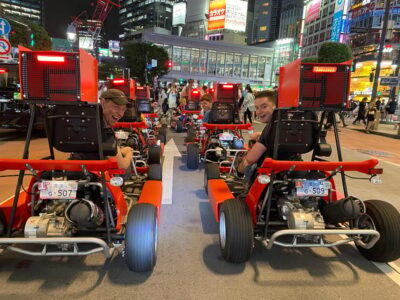
- Expect a small group: Each time slot holds about five or six people, with a maximum of seven travelers and one person per kart.
- Choose evening hours for atmosphere: Night rides bring neon-lit streets and city views, while late afternoon can give you both daylight and lights.
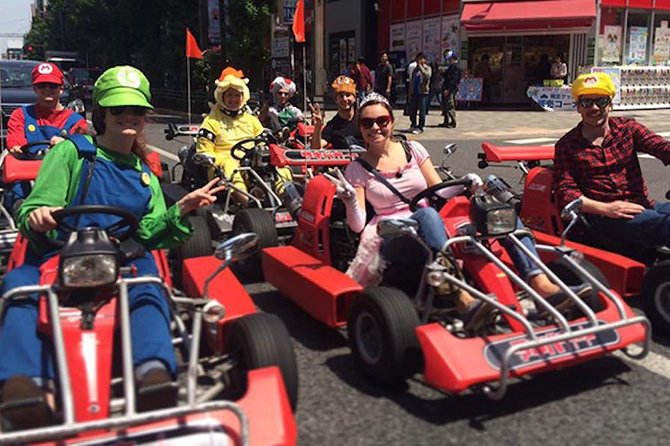
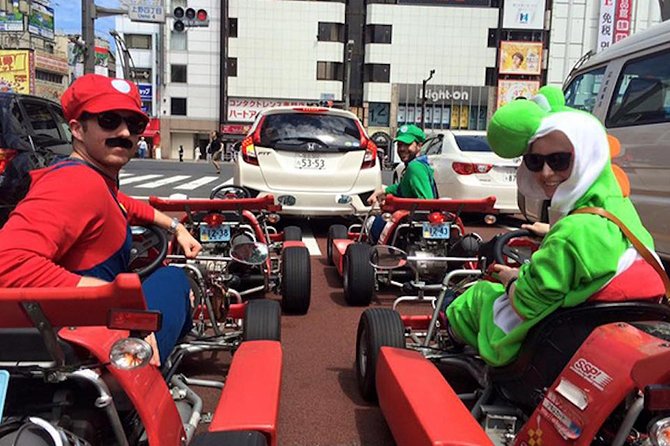
- Do not expect Mario costumes: Costumes are supplied, but Mario outfits are not available.
- Expect a flexible route: The guide can respond to requests, but the route may not include every famous Tokyo sight.
Akihabara’s neon streets from a driver’s seat
This is not a closed go-kart track. You drive on public roads in Tokyo, following a local guide through the Akihabara area and nearby neighborhoods. That distinction matters. The ride feels more like a moving city tour with a playful vehicle than a fast racing session.
Your start point is Akiba CartJapan, in Building Sasage B1F at 2-chome 4-6 Sotokanda, Chiyoda City. It is a short walk from Akihabara Station, but the entrance can be hard to spot. The address is not always enough to guide you straight to the door, so I would use Google Maps and leave extra time for finding the building. A few minutes late can mean missing the ride entirely, with no refund.
Once you arrive, you check in, show your documents, and listen to the safety briefing. The lecture takes about 15 to 20 minutes. You then choose a costume, climb into a single-person kart, and follow the guide onto the road.
The route is designed around the time you select. You may pass streets lined with anime and manga shops, electronics stores, and the bright signs that give Akihabara its famous look. The guide can also respond to requests and show you preferred places within the available time, but you should not treat the route as a fixed list of landmarks.
More Akihabara and anime tours:
- Official Street Go-Kart Tour – Akihabara
★ 5.0 · 1,578 reviews - Tokyo Go Kart: Asakusa, Skytree, and Akihabara **IDP MUST**
★ 5.0 · 988 reviews - Akihabara Anime & Game Adventure Walking Tour (Group or Private)
★ 5.0 · 404 reviews
What the one-hour route really includes
The advertised duration is about one hour, but that is the driving period around a required briefing, check-in, and document inspection. For the short option, every traffic light matters. One rating described roughly half of a one-hour ride as waiting at lights, which is a useful warning if you are expecting nonstop motion.
That does not make the pauses wasted time. At red lights, the guide can take photos, and you can sometimes position your phone in the kart for a quick picture. Still, the one-hour ride gives you a taste rather than a full tour of Tokyo. You will see a section of the city, not every major attraction.
The route can also feel less scenic than expected. Some departures pass good city views and popular sights, while others spend more time on ordinary connecting streets. One rider felt the route did not include enough of the best Akihabara scenes or famous Tokyo landmarks. I would book this for the act of driving through Tokyo first, and for sightseeing second.
If you can choose a longer option, the two-hour ride offers better value for seeing several neighborhoods and allowing time for photos. The supplied price of $72.66 per person is for the roughly one-hour experience, so check the exact duration and price before paying. The longer ride costs more, but it gives the guide more room to reach additional sights without rushing.
Why evening rides work especially well
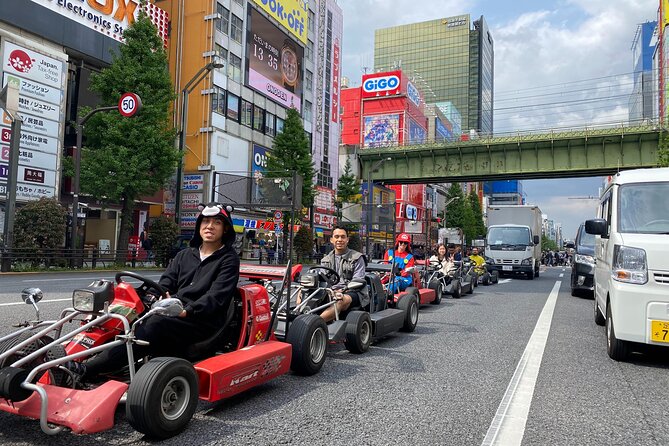
Night is the strongest time for this activity. Akihabara’s signs, shop fronts, and high-rise views give the ride a clear visual payoff, and several highly positive accounts praised the city after dark. One evening departure was particularly enjoyable because the streets had less traffic than Shibuya, allowing more actual driving and less stop-and-go movement.
A late afternoon start can be even more useful in certain seasons. A two-hour ride beginning around 5 or 6 p.m. may show you daylight first, followed by Tokyo’s evening lights. That change makes the longer option feel like two different city views in one outing.
Weather matters. The experience requires good weather and may be canceled if conditions are poor. You can then be offered another date or a full refund. Costumes can also become hot in warm weather, so do not assume dressing up will always be comfortable. In winter, the costume may provide a useful extra layer, but you still need practical clothing underneath.
Costumes, photos, and the fun factor
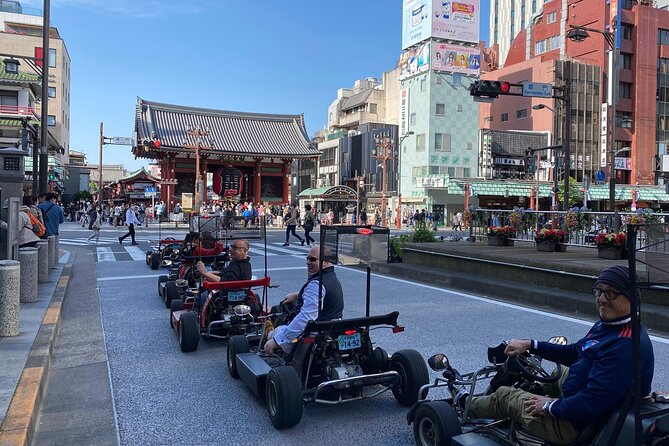
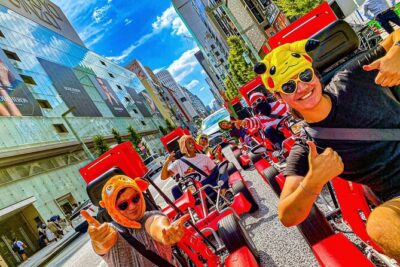
A costume is included with the kart rental, insurance fee, and local guide. The selection can add a silly, theatrical touch to an otherwise ordinary drive, and it helps explain why people on the sidewalk may wave or take notice. The supplied costumes are not Mario costumes, despite the popular association between Tokyo street karts and that character.
Do not choose this activity mainly for a specific costume. The selection and condition can vary, and one account described not finding enough clean choices or the expected character-themed outfits. Think of the costume as a bonus, not the central product.
The guide’s photo help is one of the strongest practical features. Guides can take pictures while the group is stopped at traffic lights, so you do not have to spend the whole ride trying to document it yourself. Some departures included many photos at scenic points, and solo participants could still receive personal photo attention.
You should still follow local safety instructions and keep your phone secure. The kart has a place where you can put a phone for pictures at a red light, but using a phone while moving is not the point of the activity.
More Tokyo go-kart tours:
- Flagship 2-Hours Official Street Go-Kart Tour – Tokyo Bay Shop
★ 5.0 · 4,974 reviews - Official Street Go-Kart in Shibuya
★ 5.0 · 3,435 reviews - Tokyo: Street Kart Experience in Shibuya
★ 4.9 · 1,484 reviews - Shibuya Official Street Go-Kart in Shibuya Annex
★ 5.0 · 972 reviews
Safety on Tokyo’s public roads
The safety briefing is not a formality to skip. You are driving in Japan, potentially on the opposite side of the road from what you know at home, and you must handle a small vehicle around normal city traffic. The training covers safety issues before the group leaves.
The guide leads the group and watches the riders. Positive accounts describe English-speaking guides who explained things clearly, took care with nervous drivers, and checked that everyone was keeping up. The go-karts are generally described as easy to use, though one person noticed squeaky brakes. That is worth knowing, but it was not presented as a reason to avoid the ride.
You need a moderate level of physical fitness. The activity has a minimum age of 18, a height range of 150 to 185 centimeters, and a maximum weight of less than 100 kilograms. High heels and similar footwear are not recommended. Every kart is for one person, so there are no shared or multi-person vehicles.
The small group size helps. Each time slot can accommodate about five or six people, with a maximum of seven. You will not be joining a huge convoy, though the pace still depends on the whole group and on Tokyo traffic.
The license rule is the real booking test
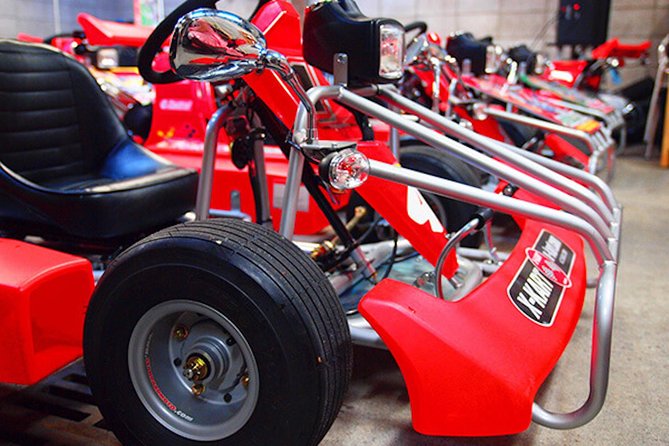
Do not book first and investigate your license later. If you cannot produce the correct documents at check-in, you will not be allowed to drive and no refund is provided under the stated conditions. This is the most important practical issue in the entire activity.
Accepted options include:
- A Japanese driver’s license.
- An international driving permit issued under the Geneva Convention, presented with your passport. Permits based on the Paris, Washington, or Vienna conventions are not accepted.
- A driver’s license from Switzerland, Germany, France, Belgium, Monaco, or Taiwan, together with the required Japanese translation and passport.
- A SOFA driver’s license for eligible United States military personnel. A military ID or military driver’s license alone is not accepted.
For the approved foreign licenses, the Japanese translation must come from the relevant embassy or consulate in Japan, the Japan Automobile Federation, or, for Taiwan, the approved East Asia Relations Commission or JAF route described in the requirements. The foreign license is generally valid for driving in Japan for one year from landing, or until the license expires, whichever comes first, subject to the stated re-entry rule.
If you are unsure, send a copy of your documents to the operator before the day of the activity and ask for confirmation. Do not rely on a driving permit bought from an online service unless it matches the accepted format. Two unhappy accounts involved people who believed their paperwork was sufficient but were refused, followed by disputes about refunds.
Getting there and managing the timing
The meeting point is near Akihabara Station, but the basement location can be difficult to find. Plan to arrive at least 10 minutes early, and more if you are unfamiliar with Sotokanda. Search for the exact venue in Google Maps rather than depending only on GPS coordinates or a general address.
Late arrival is treated strictly because another group may be scheduled after yours. The company may not wait, and a late arrival does not qualify for a refund. This is one activity where rushing from another appointment is a poor plan.
The tour ends back at the same meeting point. Hotel pickup and drop-off are not included, and neither are food or drinks. The location is near public transportation, so it fits well before dinner or after exploring Akihabara’s shops.
Is $72.66 good value?
At $72.66 for about one hour, this is not a cheap way to move around Tokyo. You are paying for the kart, insurance fee, guide, costume, safety process, and the novelty of driving legally on public streets. It is a special-interest experience, not an efficient sightseeing pass.
I think the price makes sense if the driving itself is your main goal. You receive a guided route, photo help, and a chance to see Tokyo at street level in a way that a normal bus or train cannot match. It is also a good choice for a birthday, a first visit to Japan, or anyone who wants something more playful than a standard neighborhood walk.
The value is weaker if you want a detailed history lesson or a guaranteed parade of famous landmarks. The guide may show requested places, but the route is not presented as a narrated tour of every major sight. You may also spend substantial time waiting at traffic lights during a one-hour ride.
For that reason, I would compare the one-hour and two-hour versions carefully. The longer option gives you more time for actual driving, extra neighborhoods, and photographs. Several accounts found two hours about right, while one hour felt too brief.
Who should book this Akihabara ride?
This suits adults who hold the correct driving documents, meet the height and weight limits, and want a lighthearted Tokyo activity. It is especially appealing if you enjoy anime culture, city lights, costumes, and doing something that feels unusual rather than polished and formal.
It also works for solo riders. A solo departure can still include guide-led photos and personal attention. Couples and small groups will likely appreciate the compact format, since there is less waiting for a large crowd.
I would be cautious if you dislike public-road driving, are nervous about driving on the opposite side of the road, or want complete control over the route. The training and guide support help, but you still need to pay attention in live traffic. I would also skip it if your license situation is uncertain, your schedule is tight, or rain is likely.
The experience currently carries a 4.6 out of 5 rating from 57 ratings, with 91 percent recommending it. That points to a strong fun factor, but the lower scores reveal the key risks: unclear meeting directions, refused participation over paperwork, late-arrival rules, uneven routes, traffic lights, and costume expectations.
Final verdict: book it for the drive, not just the sights
I would book this if you want an amusing, photo-friendly ride through Akihabara and you already have the correct Japanese driving documents in hand. Choose an evening slot for the best lights, arrive early, use Google Maps, and treat the costume as an extra rather than a promise of a particular character.
I would choose the two-hour version if your budget allows. The one-hour ride can be fun, but the briefing, red lights, and variable route leave less time than the headline duration suggests. If your priority is Tokyo history, famous landmarks, or a carefully narrated city tour, spend your money elsewhere. If your priority is the strange joy of driving a tiny kart through Tokyo in costume, this delivers the right kind of memorable.
FAQ
Do I need a driving license to join the experience?
Yes. You must bring a Japanese driving license, an accepted international driving permit with your passport, an approved foreign license with its required Japanese translation and passport, or an eligible SOFA license.
Are all international driving permits accepted in Japan?
No. The accepted international permit must follow the Geneva Convention format. Permits based on the Paris, Washington, or Vienna conventions are not recognized for this activity.
What happens if I cannot show the correct documents?
You will not be allowed to participate, and the stated conditions say no refund will be provided. If you are uncertain, send the operator a copy of your documents before the activity.
Are costumes included?
Yes. A costume to wear while driving is included, but Mario costumes are not available.
How early should I arrive?
Arrive at least 10 minutes before the selected start time. You will also complete a mandatory safety lecture lasting about 15 to 20 minutes before driving.
Can two people ride in one kart?
No. Each kart is for one person, and there are no multi-person karts.
What happens if bad weather cancels the ride?
If the activity is canceled because of poor weather, you will be offered another date or a full refund.
Newly reviewed around Tokyo
- Tokyo Asakusa:Calligraphy & Make T-shirt Activity★ 5.0 · 62 reviews
- Intercity Shuttle, Tokyo to Haneda /Narita /Yokohama /Makuhari★ 5.0 · 5 reviews
- 1 Hour Travel around Tokyo with a Professional Photographer★ 5.0 · 3 reviews
- Travel Tokyo with Your Own Personal Photographer★ 5.0 · 43 reviews
- Train in Samurai Swordsmanship and Defeat the Demon in Tokyo★ 5.0 · 5 reviews
- Shuttle Van 6hr Tokyo Tour to-and-from Tokyo, Yokohama and Narita★ 5.0 · 9 reviews
- Kickboxing & Body Training with EX-Pro Fighter★ 5.0 · 4 reviews
- Traditional Japanese Knife Sharpening Class★ 5.0 · 18 reviews
Tokyo Go-Kart Tours, compared.
Flagship 2-Hours Official Street Go-Kart Tour – Tokyo Bay Shop
Read our review →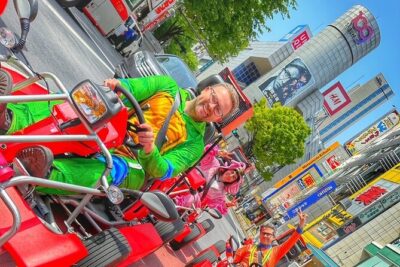
Tokyo Go Kart: Asakusa, Skytree, and Akihabara **IDP MUST**
Read our review →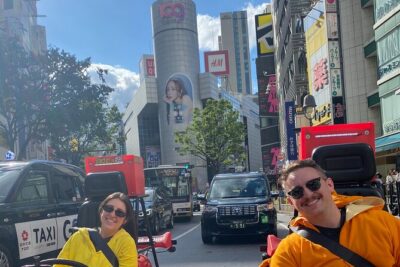
Shibuya Official Street Go-Kart in Shibuya Annex
Read our review →
Asakusa, Skytree & Akhihabara Go-Kart City Experience
Read our review →
Premium Go-Kart Tour with Tower & Shibuya Crossing
Read our review →Browse the lists this tour appears in