
Reviewed · TOKYO GO-KART TOURS
Tokyo: Original Street Kart Experience from Akihabara
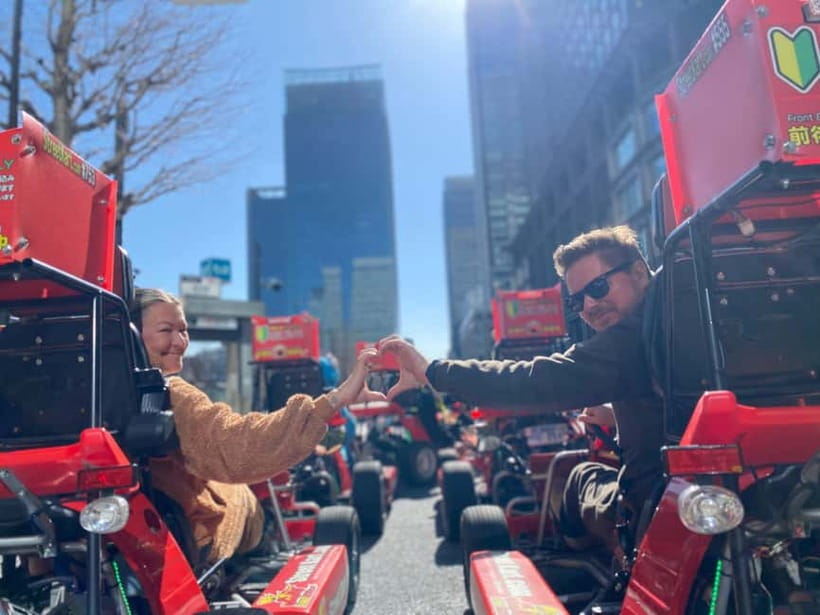
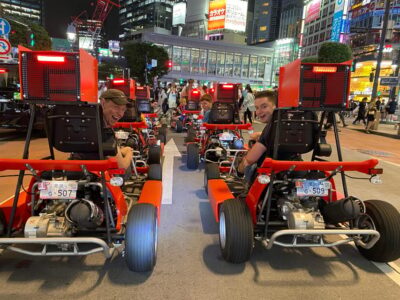
Tokyo turns into a moving stage when you guide a small kart through Akihabara, Ginza, Marunouchi, and the Tokyo Station area in an anime-style costume. You drive on real city roads among normal traffic, following an English-speaking guide who keeps the group together and signals at turns and stops.
I like the small groups of up to six and the photo service, which lets you enjoy the ride without trying to operate a camera at the same time. I also like the route’s mix of Tokyo icons: the Imperial Palace area, the grand facade of Tokyo Station, and the neon-heavy shopping streets of Ginza.
The main catch is time. One hour passes quickly, and $51 is not a bargain if you want a long sightseeing tour. You also need the correct Japanese driving documents before you arrive, so this is not an activity to book casually at the last minute.
Key points to know before you book
- You drive on real Tokyo roads: This is not a closed track or amusement park ride. You operate a custom-made kart in ordinary city traffic.
- The route links several famous districts: Expect Akihabara, Marunouchi, Tokyo Station, Ginza, and views toward the Imperial Palace.
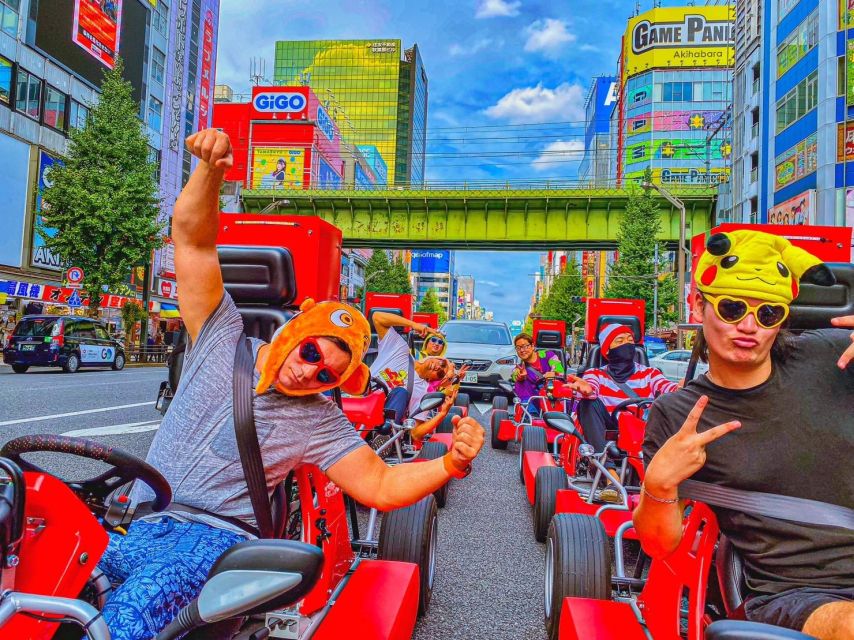
- Costumes are part of the fun: Choose from anime, animation, and game-inspired outfits before setting off.
- Guides are a major part of the experience: Guides including Usama, Mads, Khan, Mike, Billy, and Mark have been praised for clear instructions, photos, and calm group leadership.
- The photo data is included: Action cameras, memory cards, and camera mounts cost extra, but the standard tour includes photos afterward.
- Your driving paperwork matters: Most participants need a physical International Driving Permit issued under the 1949 Geneva Convention, plus a physical passport.
Why driving through Tokyo feels so different
Tokyo is easy to explore by train, but trains keep you underground or inside stations for much of the journey. A go-kart puts you at street level, with buildings, traffic lights, shop fronts, and passing pedestrians close by.
You are not simply being driven around. You control the kart, follow the lead vehicle, and stay alert to the flow of cars. That makes the experience more active than a bus tour and more unusual than a standard walking route.
The karts are small and described as easy to get used to, but you still need to feel comfortable sharing the road with larger vehicles. The guide leads from the front, keeps an eye on the group, and uses clear hand signals. A safety video and instructions come before departure.
That preparation matters. The ride is designed to feel exciting, not reckless. You need to pay attention, hold your line, and follow the guide’s directions. If driving in a foreign city makes you nervous, the first few minutes may feel tense. Once you settle into the formation, the excitement tends to take over.
The group limit of six is another plus. A smaller line is easier to manage at traffic lights and turns, and the guide can keep track of each driver. It also means the experience feels less like a large organized parade.
More Akihabara and anime tours:
- Official Street Go-Kart Tour – Akihabara
★ 5.0 · 1,578 reviews - Tokyo Go Kart: Asakusa, Skytree, and Akihabara **IDP MUST**
★ 5.0 · 988 reviews - Akihabara Anime & Game Adventure Walking Tour (Group or Private)
★ 5.0 · 404 reviews
From the Akihabara base to the first turn
The meeting point is Street Kart Akihabara 1. Look for the go-karts through the building’s glass doors. The base is in the Akihabara district, a practical starting point for an activity built around anime, games, and Tokyo street culture.
At check-in, you handle the required paperwork, watch the safety material, and receive the basic riding instructions. You then choose a costume. The choices include characters and themes from anime, animation, and games, so the costume selection is a real part of the activity rather than a small extra.
Wear sensible clothing beneath the costume. High heels, sandals, flip-flops, and slippers are not allowed. Cellphones are also not allowed during the ride. That last rule is worth noting if you normally rely on your phone for photos, directions, or messaging.
The guide handles the photography during the tour. Guides such as Mads, Usama, Billy, and Mike have taken plenty of pictures, with some guides also arranging photos at notable points along the route. Photo data is included after the ride, so you can enjoy the road without trying to hold a phone.
You can rent an action camera, memory card, or camera mount for an additional fee. Your own camera mount cannot be used on the kart, so check the extra costs before adding video equipment.
Marunouchi and the Imperial Palace view
One of the early highlights is Marunouchi, Tokyo’s historic business district. This part of the city gives you a different view of Tokyo than Akihabara’s pop-culture streets. The surroundings feel formal and corporate, with broad roads and major office buildings.
The route also offers a glimpse of the Imperial Palace in the background. This is not a palace tour, and you should not expect time to stop and explore the grounds. The value is the passing view: you get a quick visual link between Tokyo’s modern business center and the imperial heart of the city.
The kart makes that contrast more noticeable. You are dressed as a game or anime character while passing through one of the city’s most serious office districts. That odd pairing is part of the charm. Tokyo does not need to be simplified into one theme, and this ride lets you see several sides of it in a short period.
At traffic lights, the guide may point out landmarks or share short facts about Japan. The stops also give you a moment to take in the buildings and reset your position in the group.
Tokyo Station and the Ginza route
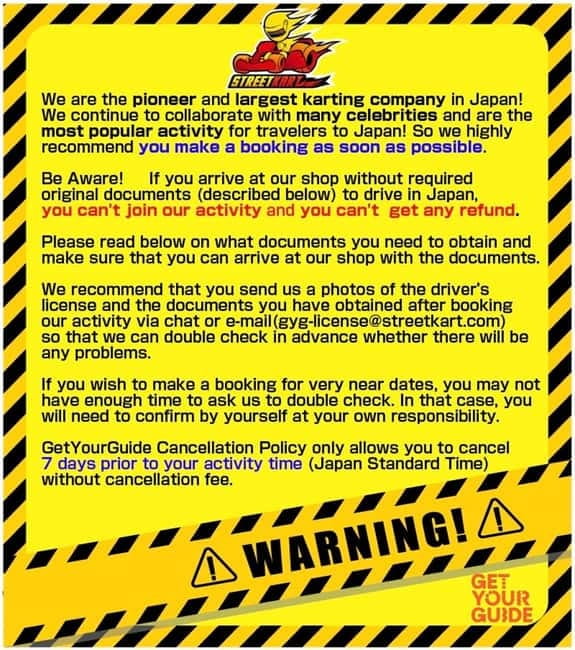
Tokyo Station is one of the strongest visual moments on the route. It is a major transport center with 28 train platforms, and the station area has a grand scale that is hard to appreciate from inside a train.
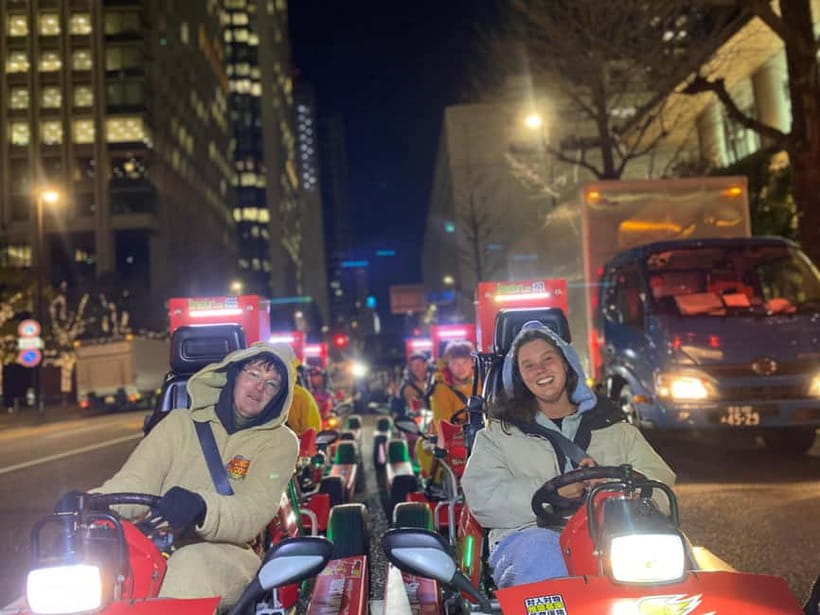
The kart gives you a street-level view of the station and its surrounding roads. Some guides stop near Tokyo Station for group photos, which can produce one of the best keepsakes from the experience. If your tour is in the evening, the station and surrounding streets take on a different character as the city lights come on.
Next comes Ginza, Tokyo’s luxury shopping district. Ginza is not presented as a shopping stop, so think of it as a drive through one of the city’s most polished commercial areas. You may pass expensive storefronts and broad avenues while still wearing a bright costume and sitting in a tiny kart.
That contrast draws attention. People wave, smile, and take pictures as the group passes. You become part of the street scene for a little while, which can be funny and slightly strange. The attention is a central part of the experience, not a side effect.
The route is more about atmosphere than detailed sightseeing. You will see several well-known areas, but you will not stop at each one for a full explanation. If you want museum-quality background on Tokyo’s districts, book a walking tour separately. If you want a memorable way to connect those districts, this ride does the job.
More Tokyo go-kart tours:
- Flagship 2-Hours Official Street Go-Kart Tour – Tokyo Bay Shop
★ 5.0 · 4,974 reviews - Official Street Go-Kart in Shibuya
★ 5.0 · 3,435 reviews - Tokyo: Street Kart Experience in Shibuya
★ 4.9 · 1,484 reviews - Shibuya Official Street Go-Kart in Shibuya Annex
★ 5.0 · 972 reviews
Akihabara makes the costume feel at home
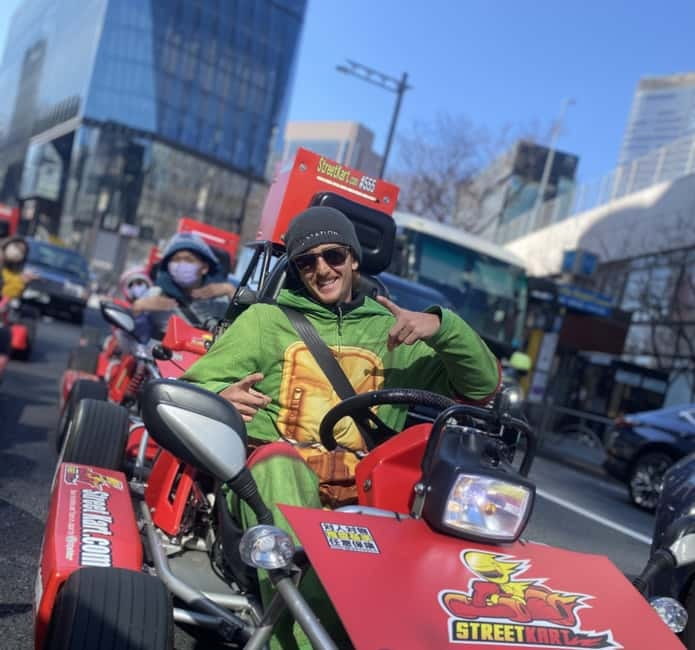
Returning through Akihabara gives the costumes their most natural setting. Akihabara is widely associated with Japanese anime, games, electronics, and character culture, so driving through it dressed as a favorite character makes immediate visual sense.
This is also where the activity feels most playful. You are not just looking at the district’s signs and shops. You are moving through it as part of the spectacle, with the guide leading a line of colorful karts.
Still, keep your expectations in check. The experience does not turn into a shopping trip, and you will not have time to browse stores during the hour. The district is a backdrop and a source of atmosphere, not a dedicated sightseeing stop.
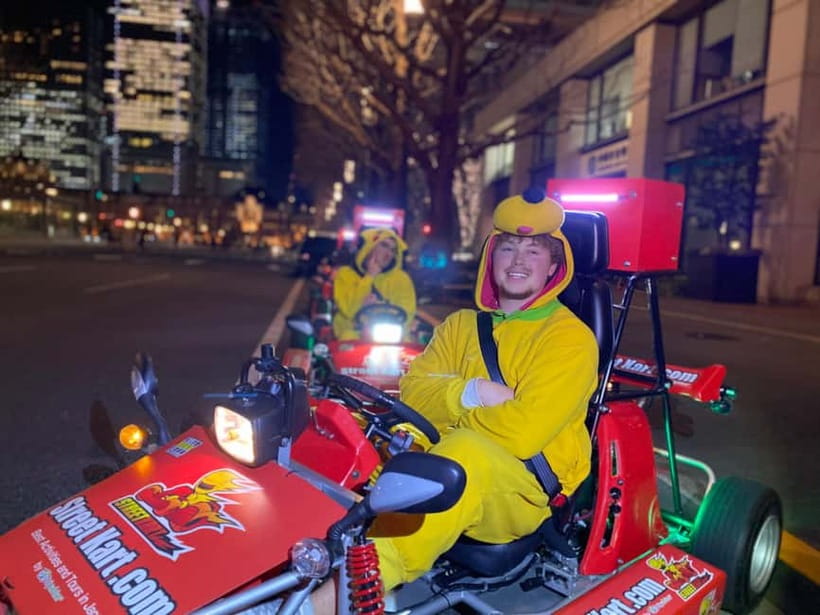
Several people have preferred the night departure, especially for the Tokyo lights. Night rides can make the costumes and photographs more dramatic, while daytime rides may give you clearer views of buildings and road details. The supplied information does not promise a specific departure schedule, so check the available start times when booking.
What the guide adds to the ride
The guide is not just there to lead the karts. The guide sets the pace, gives safety directions, signals clearly, and manages the group at intersections and stops.
Usama has been praised for reviewing the safety rules carefully, using clear communication, and sharing local facts and suggestions. Mads has been described as patient and communicative, while Billy has been singled out for taking photos and helping create a strong evening experience. Guides including Khan, Mike, Mark, Sam, Adam, and John have also been noted for safety, organization, humor, and group control.
These details matter because your enjoyment depends on feeling looked after. A one-hour ride in city traffic leaves little room for confusion. Good hand signals and a guide who checks that nobody is left behind make the difference between fun and needless stress.
The group format helps here. With no more than six participants, the guide can usually keep the line together. A solo booking may even give you a private-feeling outing if other people do not appear for that time slot, though you should not book expecting that result.
Is $51 good value for one hour?
The price is $51 per person. That puts the experience above a simple city walk, but the package includes several things: the custom kart, the guide, costume rental, and photo data.
The strongest value comes from the unusual combination. You get a self-driven ride, a guided route through several central districts, a costume, and a set of photos. Few standard Tokyo activities offer all four.
The weaker point is duration. One hour includes check-in, preparation, instructions, and the driving route, so the actual time moving through the city feels limited. One person found the ride shorter than expected and wished the route included more of the bright downtown areas. Another felt the price was a little high for the length.
I would see the $51 as fair if you value novelty and photographs more than detailed sightseeing. It is less appealing if you want speed, a long route, or a full afternoon activity. The karts are built for city touring, not racing, and the guide controls the pace for safety.
Extra equipment raises the total cost. Action camera rental, a micro-SD card for saving video, and a camera mount are not included. Since standard photo data is already provided, I would skip the add-ons unless video is especially important to you.
Documents, clothing, and safety details
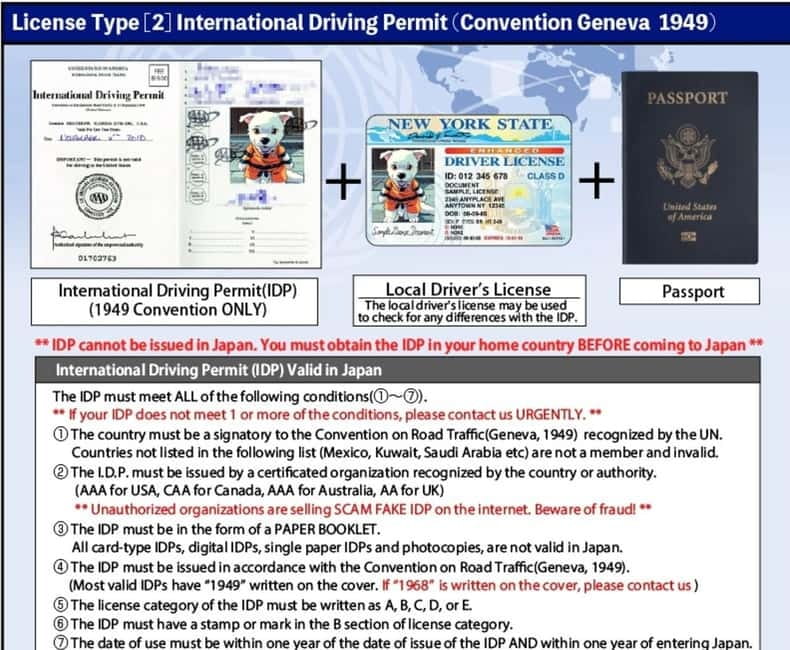
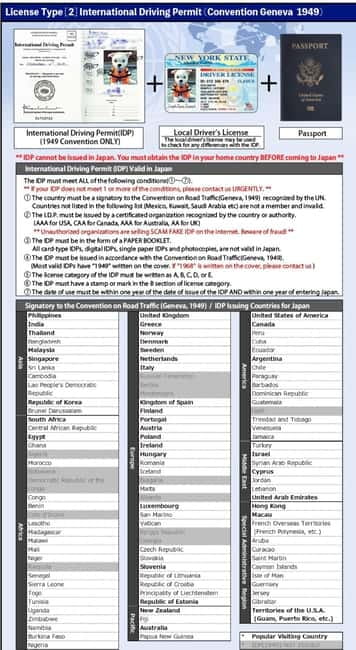
Every participant needs special paperwork to drive in Japan. For most countries, that means a physical International Driving Permit in booklet form, issued under the 1949 Geneva Convention. It must be issued by the same country that issued your domestic license, and it cannot be obtained online while you are already traveling.
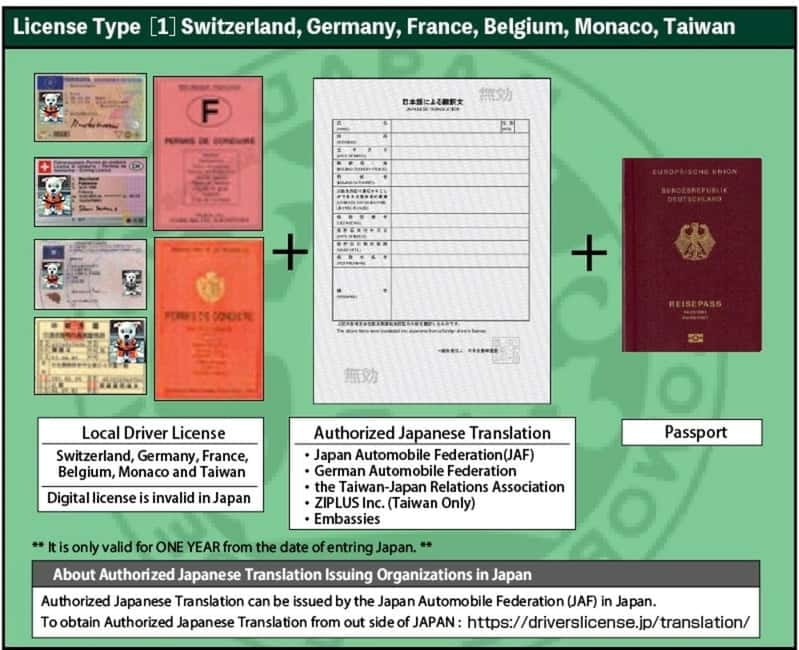
Drivers with licenses from Switzerland, Germany, France, Taiwan, Belgium, or Monaco need an official Japanese translation from the Japan Automobile Federation, not an International Driving Permit. You must carry the physical domestic license, the official translation, and your physical passport.
Licenses from countries not covered by the 1949 Geneva Convention, including China, Indonesia, Mexico, Qatar, and Saudi Arabia, are not accepted for driving in Japan. Street Kart sends guidance after booking, but you should check your eligibility before paying for the activity.
The tour is not suitable for children under 18, pregnant people, people with back problems, mobility impairments, wheelchair users, or people with visual or hearing impairments. Those restrictions are important because the activity involves operating a kart on public roads, not sitting passively in a vehicle.
Cancellation is free up to seven days in advance for a full refund. Check the starting times before booking, since the activity lasts one hour and availability changes by date.
Who will enjoy this most?
I would recommend this to adults who want a playful, photo-friendly way to see central Tokyo. It suits friends, couples, and families with adult children who enjoy anime, games, costumes, and a little public attention.
It is also a good choice for someone who has already seen Tokyo’s major sights and wants a fresh angle. You will not learn as much as you would on a dedicated history tour, but you will remember the strange pleasure of driving past Tokyo Station dressed as a fictional character.
I would think twice if you dislike driving near larger cars, feel uncomfortable being photographed, or want a calm sightseeing experience. The ride is safe only when you follow the guide closely and take the road seriously.
Should you book the Akihabara Street Kart experience?
Book it if you want one memorable hour of hands-on fun, especially at night, and if you can arrange the correct driving documents in advance. The costumes, small group, guide-led route, and included photo data give the experience more substance than a simple novelty ride.
Skip it if $51 feels high for a short activity, if you want extensive sightseeing stops, or if you cannot meet Japan’s driving-document rules. For the right person, though, this is one of Tokyo’s more unusual ways to connect Akihabara’s pop culture with the grand roads around Ginza, Marunouchi, and Tokyo Station.
FAQ
How long does the Tokyo Street Kart experience last?
The activity lasts one hour. Check the available starting times when booking.
Where is the meeting point?
Meet at Street Kart Akihabara 1. Look for the go-karts through the glass doors of the building.
What areas does the route visit?
The route goes through Akihabara, the Tokyo Station area, Marunouchi, and Ginza. You can also see the Imperial Palace in the background.
Is the tour conducted in English?
Yes. The tour has a live English-speaking guide.
How many people can join one group?
The group is limited to six participants.
What is included in the price?
The price includes the custom-made go-kart tour, guide, costume rental, and photo data.
Do I need an International Driving Permit?
Most participants need a physical International Driving Permit issued in booklet form under the 1949 Geneva Convention, along with a physical passport. Drivers from Switzerland, Germany, France, Taiwan, Belgium, and Monaco need an official Japanese license translation instead. Some countries are not permitted to drive in Japan.
Can I use my own camera or phone during the ride?
Cellphones are not allowed during the activity. Action camera rental, a micro-SD card, and a camera mount cost extra, and your own mount cannot be attached to the kart. Photo data from the tour is included.
Newly reviewed around Tokyo
- Tokyo Asakusa:Calligraphy & Make T-shirt Activity★ 5.0 · 62 reviews
- Intercity Shuttle, Tokyo to Haneda /Narita /Yokohama /Makuhari★ 5.0 · 5 reviews
- 1 Hour Travel around Tokyo with a Professional Photographer★ 5.0 · 3 reviews
- Travel Tokyo with Your Own Personal Photographer★ 5.0 · 43 reviews
- Train in Samurai Swordsmanship and Defeat the Demon in Tokyo★ 5.0 · 5 reviews
- Shuttle Van 6hr Tokyo Tour to-and-from Tokyo, Yokohama and Narita★ 5.0 · 9 reviews
- Kickboxing & Body Training with EX-Pro Fighter★ 5.0 · 4 reviews
- Traditional Japanese Knife Sharpening Class★ 5.0 · 18 reviews
Tokyo Go-Kart Tours, compared.
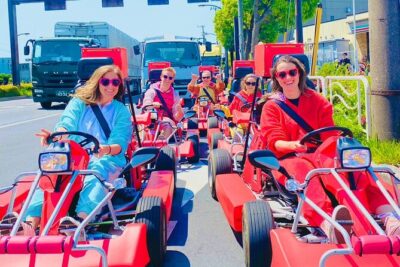
Flagship 2-Hours Official Street Go-Kart Tour – Tokyo Bay Shop
Read our review →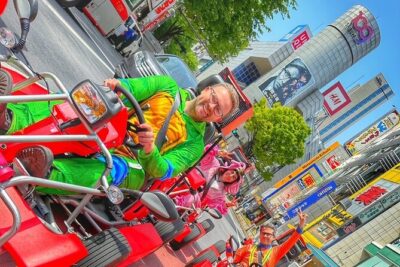
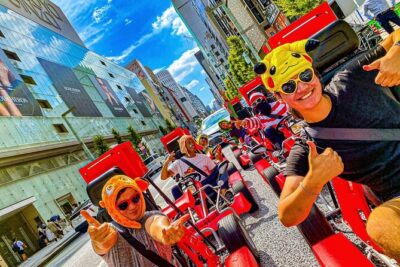
Tokyo Go Kart: Asakusa, Skytree, and Akihabara **IDP MUST**
Read our review →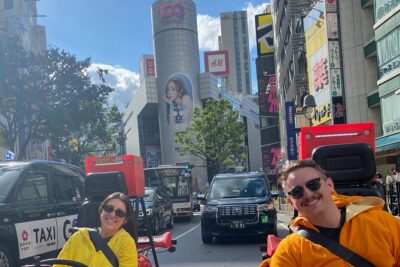
Shibuya Official Street Go-Kart in Shibuya Annex
Read our review →
Asakusa, Skytree & Akhihabara Go-Kart City Experience
Read our review →
Premium Go-Kart Tour with Tower & Shibuya Crossing
Read our review →Browse the lists this tour appears in