
Reviewed · TOKYO SUMO EXPERIENCES
Complete Sumo Experience in Tokyo
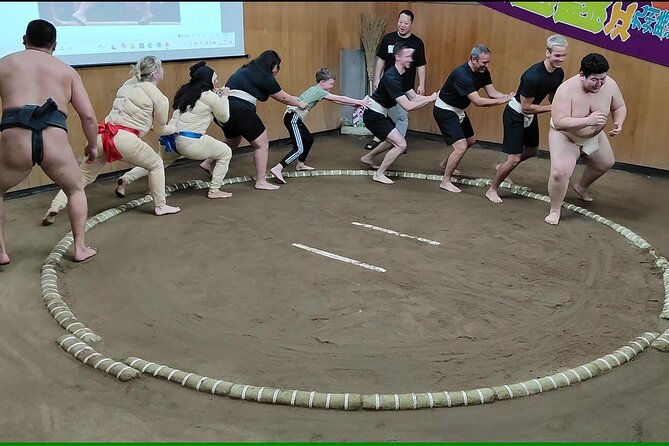
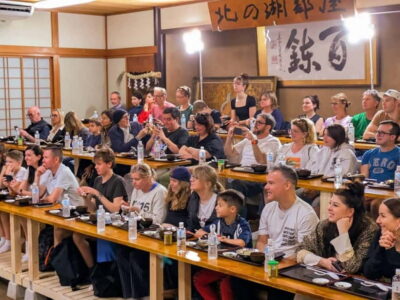
The best part of this Tokyo experience is the close range. You are not watching sumo from the far side of a large arena. You sit near the action in a traditional stable, see wrestlers train, watch matches, and may even step forward to challenge one. I like the mix of explanation and action, and I like that you can ask questions and take photos with the wrestlers afterward.
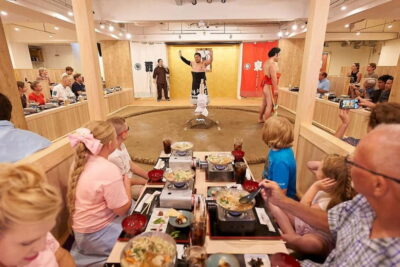
The chanko-nabe meal adds real flavor to the visit. This is the hearty hot-pot dish sumo wrestlers eat to help build their bodies, and the 11 AM and 7 PM sessions let you watch the show while eating it. The main caution is that audience participation can run long, so the experience may feel less tightly paced if you prefer a short demonstration with little interruption.
Key points to know before booking
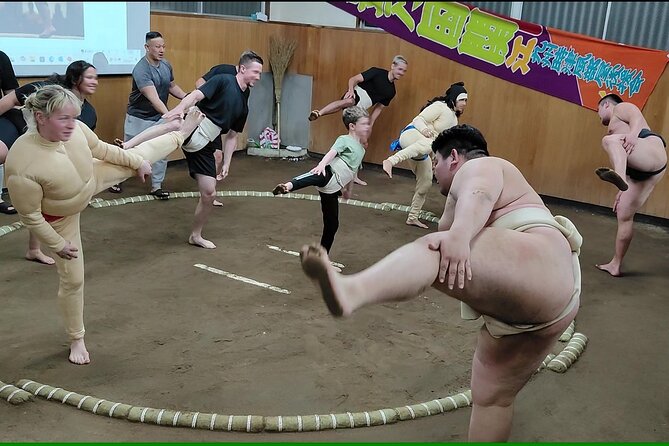
- Watch sumo up close: Training and matches take place in a traditional sumo stable rather than a distant arena seat.
- Choose your meal time: The 11 AM and 7 PM sessions include chanko-nabe, while the 3 PM option does not.
- Take part in the show: You may challenge wrestlers and join the audience participation segment.
- Ask questions directly: A sumo expert gives a basic lesson, followed by a Q&A with the wrestlers.
- Plan for a small group: The maximum group size is 30 people, which should keep the action fairly close.
- Arrive early for seating: An early arrival can help you get a better view, especially if your seat is not assigned.
Why this is different from a sumo tournament
Tokyo gives you two familiar ways to see sumo. You can buy a seat at a major tournament, or you can try to see morning practice at a stable. Both have limits. A tournament gives you the full spectacle, but you are often one small face among thousands. Practice can feel more personal, but access and timing may be harder to arrange.
This experience aims for a middle ground. You visit a traditional stable in Kiyosumi, in Koto City, and watch wrestlers from close by. You get an introduction to the sport, see training and actual matches, then take part in questions, photos, and audience activities.
That close view matters. Sumo is built from brief bursts of force, not long rounds of movement. From nearby, you can better appreciate the push, balance, footwork, and technique behind each bout. The expert’s crash course also gives you a basic framework, so you are not simply watching two large men collide without knowing what to notice.
The format is also friendly to first-time visitors. You do not need a detailed understanding of rankings, rules, or Japanese terms before arriving. The explanations are meant to introduce the origin, culture, and basic techniques of sumo in plain terms.
More Tokyo sumo experiences:
- Tokyo: Sumo Show and Dining Experience
★ 4.8 · 2,742 reviews - the SUMO show
★ 5.0 · 1,960 reviews - Tokyo Shinjuku Sumo Show & Experience with Photo
★ 5.0 · 1,750 reviews
Arriving at the Kiyosumi sumo stable
The meeting point is at Kita-no-umi stable, listed at 2-chōme 10-11, Kiyosumi, Koto City, Tokyo 135-0024. The activity begins and ends at this same location, and hotel pickup and drop-off are not included.
That makes the meeting point an important part of your planning. You need to make your own way there, and the activity information notes that it is near public transportation. Give yourself extra time to find the correct entrance and settle in. One useful piece of advice is to arrive early, since the best seating can make a real difference when the action happens close to the floor.
The maximum group size is 30 people. That is not a private visit, but it is far smaller than a tournament crowd. A group of this size should allow you to see the demonstrations without feeling completely separated from the wrestlers.
The activity lasts about two hours. That is long enough to include an explanation, training, matches, audience participation, questions, and photos, but short enough to fit neatly into a Tokyo sightseeing day.
The opening lesson gives you the basics
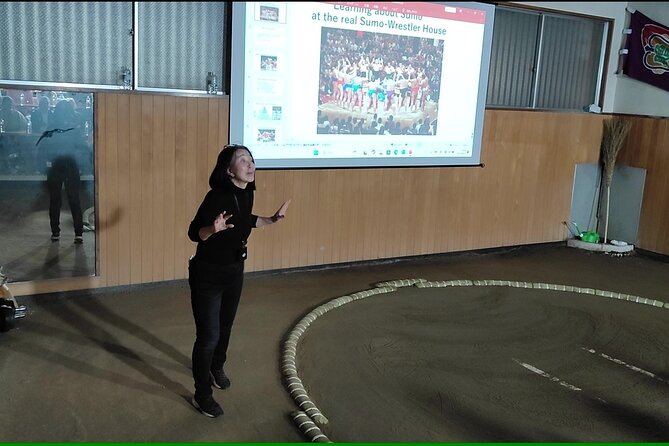
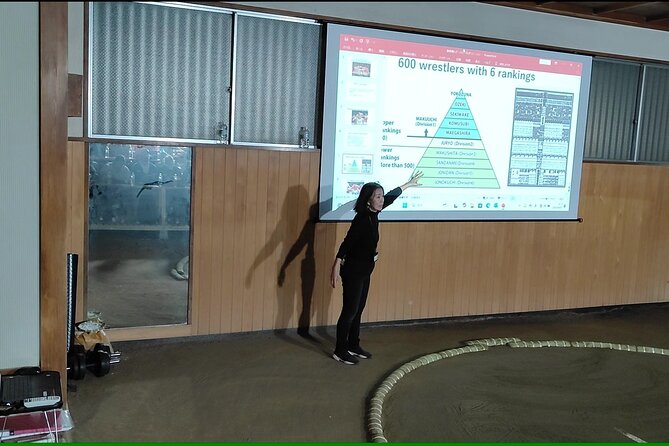
The experience begins with a crash course in sumo led by an expert. This section covers the sport’s origins, history, culture, and combat techniques. For someone new to sumo, this is more useful than it may sound. Sumo has its own vocabulary, rituals, and sense of movement, and a little context helps you read what happens next.
You should come away with a better idea of why wrestlers perform certain movements and how a bout is decided. The lesson also helps you understand the contrast between training and competition. Sumo may look simple from a distance, but the sport depends on timing, balance, grip, and the ability to force an opponent out of the ring.
This part is educational rather than flashy. If you already follow professional sumo closely, you may find the basic introduction familiar. For most first-time visitors, though, it creates a useful starting point before the wrestlers begin.
Watching wrestlers train at close range
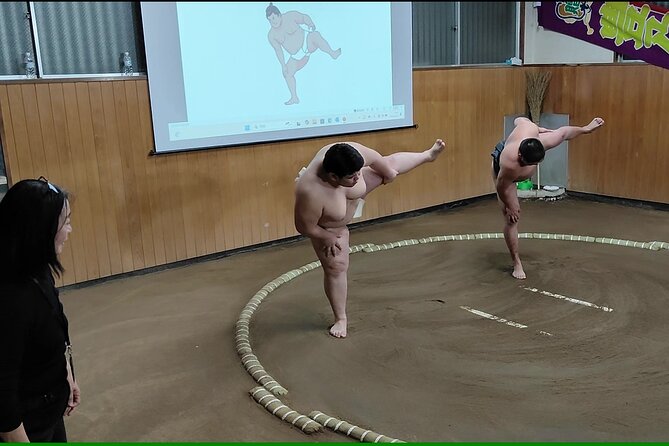
The training portion lets you see wrestlers working in the stable itself. This is the setting that gives the experience its character. A large tournament hall can show you the sport at its official best, but a stable gives you a look at the place where wrestlers practice and prepare.
Expect the viewing to focus on the physical side of sumo. You see wrestlers working on movement and strength, with the expert helping explain what is happening. The value here is proximity. You are close enough to notice the physical effort and the short, powerful nature of the exercises.
The training section also helps you understand that sumo is not only about the final match. Repetition and conditioning are central to the sport. Seeing that work before the bouts makes the competition feel less like a staged show and more like the result of a demanding daily routine.
The information provided does not specify the exact training sequence or the names of the wrestlers appearing that day. The lineup may therefore vary, and you should think of this as a live demonstration rather than a fixed theatrical program.
A completely different kind of day in Tokyo:
- Mt Fuji and Hakone 1-Day Bus Tour Return by Bullet Train
★ 5.0 · 26,383 reviews - 1-Day Tokyo Bus Tour
★ 5.0 · 14,250 reviews - Tokyo: teamLab Planets TOKYO Digital Art Museum Entry Ticket
★ 4.6 · 9,779 reviews - Mt Fuji & Hakone Cruise, Drum Show Bullet Train 1 Day from Tokyo
★ 4.0 · 7,413 reviews
Actual matches bring the room to life
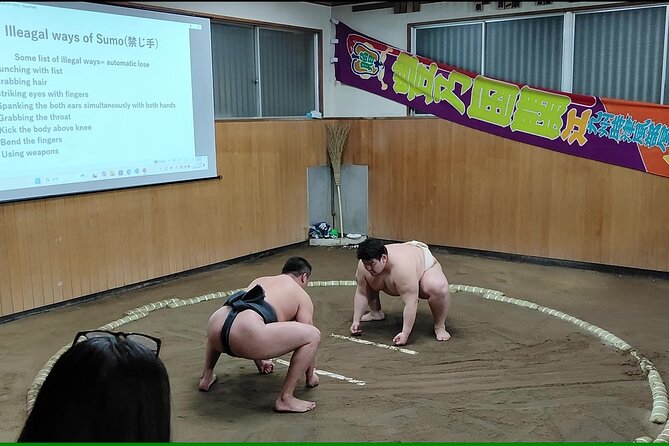
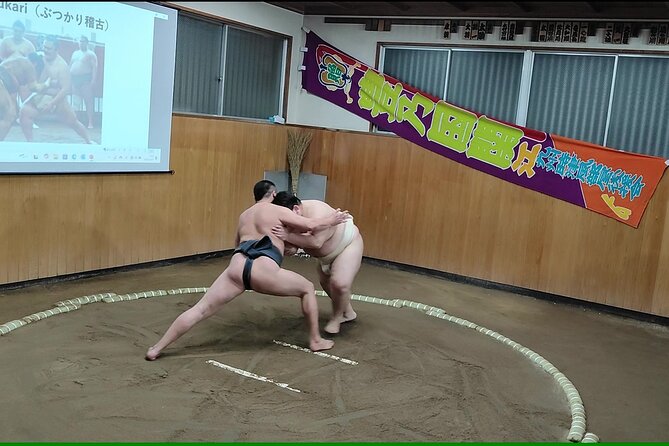
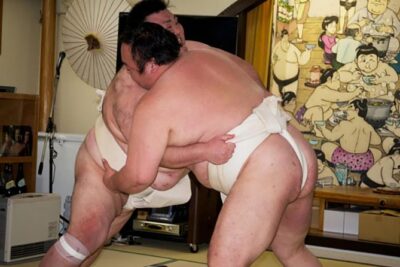
After the introduction and training, you watch actual sumo matches. This is the point when the explanation becomes physical. A bout can be over quickly, but the short length is part of the sport’s appeal. A quick charge, a shift in balance, or a well-timed move can decide the result.
Watching from nearby gives you a better chance to follow those details. You can see how the wrestlers establish position and how they use their weight and leverage. If you have only seen sumo on television, the difference in scale and force should be clear when the action takes place in front of you.
The match section is also a good reason to choose this experience instead of a general cultural talk. You are not only hearing about sumo. You see wrestlers train and compete during the same visit.
Still, keep your expectations realistic. This is not a full grand tournament, and the experience lasts roughly two hours. You get selected training and matches, not an entire day of professional bouts with the full tournament atmosphere.
Audience participation is part of the bargain
A distinctive feature is the chance to challenge a wrestler. This is not passive sightseeing. The wrestlers may invite members of the audience to participate, and the experience includes a humorous, interactive segment.
For many people, this will be the most memorable part. You can feel the difference between hearing about sumo strength and trying to resist it yourself. Even if you do not take part, watching the challenge can make the room feel relaxed and lively.
There is one tradeoff. Audience participation can take longer than expected. If several people join in, the pace may slow, especially for someone who came mainly to watch matches. I would treat this as part of the experience rather than a delay, but it is worth knowing before you book.
The participation also means the tone is not strictly formal. This is a friendly introduction to sumo, with humor and direct contact. If you want a quiet, highly structured cultural lecture, this may feel loose. If you enjoy being included, it is a strong point.
Questions and photos make the visit personal
The Q&A session gives you a chance to ask wrestlers questions directly. This can add a human side to a sport that often looks mysterious from outside Japan. You can use the time to ask about training, matches, or the life of a wrestler, though the supplied details do not promise a particular list of topics or a named speaker.
The photo session follows the same idea. You can take photos with the wrestlers, which gives you a lasting record of the visit and a chance to stand beside people whose size and physical presence are difficult to appreciate on a screen.
These moments also help explain why the close-up setting matters. You are not simply photographing a performance from the audience. You are meeting wrestlers after seeing them work, compete, and answer questions.
The experience provider is Arumachi. No individual guide or wrestler names are given, so do not book this expecting a particular famous sumo figure. Book it for the format, setting, and direct contact.
Chanko-nabe changes the rhythm of the tour
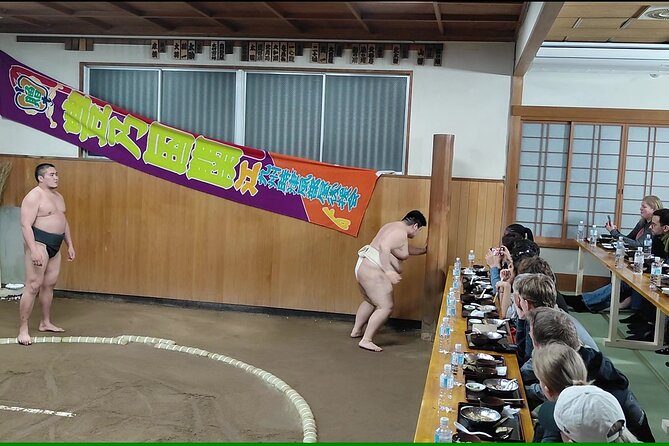
You have two versions to choose from. The 11 AM and 7 PM sessions include chanko-nabe, while the 3 PM session does not. Chanko-nabe is the hot-pot meal associated with sumo wrestlers and their efforts to build muscle and body mass.
Eating it while watching the show makes the visit feel more connected to sumo life. Food is not just an extra dish here. It helps explain how wrestlers eat and train, and it gives the two-hour activity a social rhythm.
The meal was praised for its taste, and the staff were described as friendly. That makes the meal option the better choice if you want a fuller cultural experience and do not mind watching the program while eating.
The 3 PM visit may suit you better if you already have lunch or dinner plans, or if you want to focus on the demonstrations without a meal. Since it does not include chanko-nabe, compare the price and schedule before choosing. The supplied price is $138.52 per person, so the meal option may offer better value if you want food as part of the experience, while the non-meal option keeps the visit more focused.
Is $138.52 a fair price?
At $138.52 per person, this is not a cheap sightseeing stop. Its value depends on what you want to see.
If you only want to watch sumo, a tournament ticket may be a better match when one is available and fits your schedule. On the other hand, a tournament does not normally give you this same combination of a stable setting, close-up training, direct questions, photos, and a chance to challenge a wrestler.
The price also covers more than a performance. You get the expert introduction, training, matches, audience participation, Q&A, and photo time. With the 11 AM or 7 PM departure, you also get the chanko-nabe meal.
I see the price as reasonable for a visitor who wants access and context, not simply a seat. It is less attractive for someone on a tight budget or someone who has already attended a major tournament and wants only more matches.
Who will enjoy this most?
I would recommend the experience to first-time sumo watchers, families with older children, couples, and anyone curious about Japanese sports culture. The explanations make it approachable, while the matches and participation keep it from feeling like a lecture.
It is also a good fit if you want an activity that works in a compact block of your day. At about two hours, it does not require the commitment of a full tournament session.
You should think twice if you dislike audience participation, want a quiet visit, or expect a large-scale professional event. The program includes interaction and humor, and the matches are part of a small presentation rather than a full tournament schedule.
Most travelers can participate, according to the activity information, but no detailed accessibility information is supplied. If you have specific mobility or seating needs, confirm them before booking rather than assuming the stable will meet them.
Booking, timing, and cancellation
Confirmation is provided at the time of booking, and the ticket is mobile, so keep the booking available on your phone. The activity is offered at 11 AM, 3 PM, and 7 PM, with the chanko-nabe meal included at 11 AM and 7 PM only.
Free cancellation is available if you cancel at least 24 hours before the local start time. Cancellations made less than 24 hours before the experience, along with late changes, are not accepted for a refund.
Should you book this sumo experience?
Book it if you want close contact with sumo, not just a distant view of a bout. The stable setting, expert introduction, wrestler Q&A, photo session, and chance to participate give you more personal contact than a standard arena visit.
Choose the 11 AM or 7 PM option if the chanko-nabe meal appeals to you. Choose 3 PM if you want the same basic sumo program without eating. Arrive early for the best chance at a good seat, and allow time to reach the Kiyosumi meeting point.
At $138.52, this is best viewed as a full cultural activity rather than a simple show. If you value access, explanation, food, and a bit of good-natured audience involvement, it is a strong choice. If your priority is watching many high-level matches for the lowest possible price, save your budget for a grand tournament instead.
FAQ
Where does the sumo experience begin?
It begins at Kita-no-umi stable, at 2-chōme 10-11, Kiyosumi, Koto City, Tokyo 135-0024. The activity also ends at the meeting point.
How long does the activity last?
The experience lasts approximately two hours.
Which start times include chanko-nabe?
The 11 AM and 7 PM sessions include a chanko-nabe meal. The 3 PM session does not include the meal.
Can I ask the wrestlers questions?
Yes. A Q&A session with the sumo wrestlers is included.
Can I take photos with the wrestlers?
Yes. A photo session with the sumo wrestlers is included.
What happens if I need to cancel?
You can receive a full refund if you cancel at least 24 hours before the local start time. Cancellations or changes made less than 24 hours before the start time are not accepted for a refund.
Newly reviewed around Tokyo
- Tokyo Asakusa:Calligraphy & Make T-shirt Activity★ 5.0 · 62 reviews
- Intercity Shuttle, Tokyo to Haneda /Narita /Yokohama /Makuhari★ 5.0 · 5 reviews
- 1 Hour Travel around Tokyo with a Professional Photographer★ 5.0 · 3 reviews
- Travel Tokyo with Your Own Personal Photographer★ 5.0 · 43 reviews
- Train in Samurai Swordsmanship and Defeat the Demon in Tokyo★ 5.0 · 5 reviews
- Shuttle Van 6hr Tokyo Tour to-and-from Tokyo, Yokohama and Narita★ 5.0 · 9 reviews
- Kickboxing & Body Training with EX-Pro Fighter★ 5.0 · 4 reviews
- Traditional Japanese Knife Sharpening Class★ 5.0 · 18 reviews
Tokyo Sumo Experiences, compared.
Tokyo Shinjuku Sumo Show & Experience with Photo
Read our review →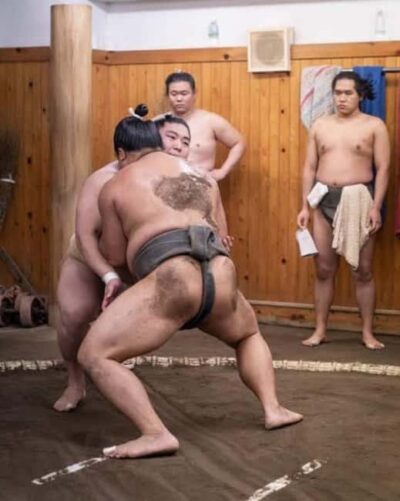
Luxury Sumo Show Experience & Japanese cuisine & Drink
Read our review →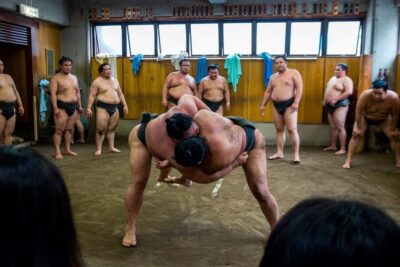
Tokyo Sumo Experience: Chanko & Mochi with a Former Pro
Read our review →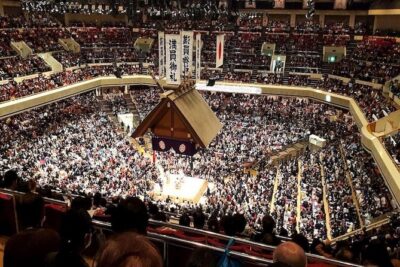
Ultimate Sumo Tournament: Tokyo, Osaka, Nagoya, Fukuoka
Read our review →Browse the lists this tour appears in