
Reviewed · TOKYO SPORTS GAMES AND TICKETS
Tokyo Baseball Experience Tour with Expert English-Speaking Guide
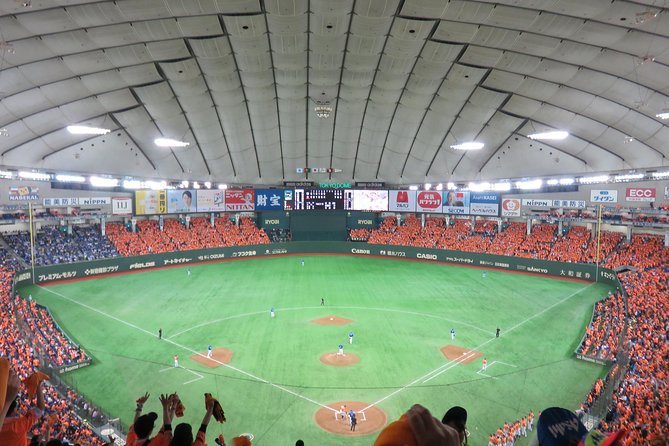
Japanese baseball is not simply a game on a field. It is a carefully organized chorus of chants, drums, songs, and team loyalty. This small-group experience at Meiji Jingu Stadium gives you a friendly way into that culture, with an English-speaking baseball fan explaining what you are seeing and hearing.
I like two things right away: you learn the crowd’s chants before the game, and your ticket places you in one of the stadium’s better seating areas. The main catch is timing. The guided portion ends when the game starts, so do not book this expecting a guide to sit beside you for every inning.
Key points to know before you book
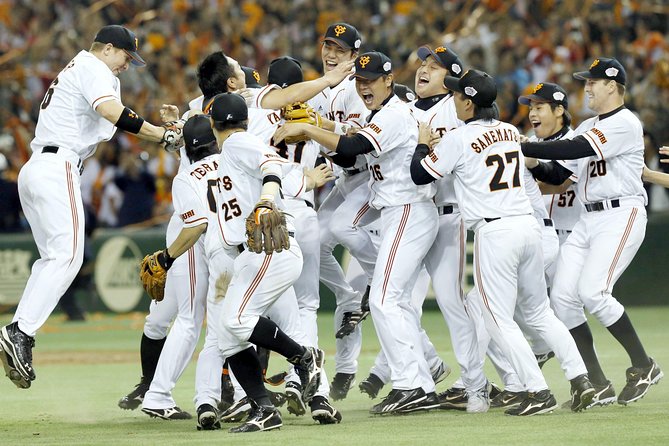
- Japanese fan culture comes first: Learn the chants and anthems that turn the crowd into part of the event.
- Three seat categories are possible: You may receive an S, A, or B seat, depending on availability.
- The group stays small: The tour accepts up to 12 people, with at least eight required for it to operate.
- Audio headsets help: You can hear explanations about Japanese baseball and its differences from MLB.
- You buy food inside: Snacks, drinks, and merchandise are available at stadium stands, but none are included.
- The match may be weather-sensitive: Heavy rain can cancel an open-air game, while light rain usually does not.
Why Japanese baseball feels different from an MLB game
If you know Major League Baseball, you already understand the basic rules. What you may not know is how much organized participation takes place in the stands. Japanese baseball fans use set chants and anthems, often tied to particular players or teams. Learning those songs before first pitch helps you take part instead of sitting quietly and trying to work out the rhythm.
That is the real purpose of this tour. It does not just put you in a seat and hope you figure out the culture. Your guide explains how baseball is celebrated in Japan, then shows you how to respond when the crowd starts singing.
The headset is useful here. Stadiums can be noisy, and a soft-spoken guide would be hard to follow without one. With the audio equipment, you can hear the background about Japanese baseball, the difference between Japanese professional play and MLB, and the details that might otherwise pass you by.
You should still expect a local sporting event, not a formal lecture. The value comes from having a fan nearby who can explain what is happening in plain English and point out why the crowd reacts in a certain way.
More Tokyo sports games and tickets:
- Tokyo: FC TOKYO Football Game at Ajinomoto Stadium
★ 4.8 · 58 reviews - Catch a Baseball Game in Tokyo with a Local – Tickets Included
★ 5.0 · 24 reviews - Tokyo: Alvark Tokyo Basketball Game Ticket
★ 4.5 · 18 reviews
Arriving at Meiji Jingu Stadium
The meeting point is Meiji Jingu Baseball Stadium, at 3-1 Kasumigaokamachi in Shinjuku City. The stadium is near public transportation, but transportation to and from the venue is not included, so you arrange your own route.
Arrive at least 10 minutes before the stated meeting time. This matters more than it might on a private tour. The group can have up to 12 people, and the guide may not be able to wait for late arrivals.
If you miss the start, you may be able to meet the group at a later point by calling the guide. The guide’s phone number is provided before the activity. Still, I would treat this as a backup, not a plan. Finding a group inside a sports venue can be awkward, especially once fans are moving toward their seats.
There is no age requirement, but every person needs a reservation. Children must be accompanied by an adult. The activity is suitable for most people who can participate in a standard stadium visit.
Learning the chants before first pitch
The most distinctive part of the experience takes place before the game begins. Your guide introduces the chants and anthems used by Japanese baseball fans, then helps you understand when they fit into the action.
This is a small detail with a big payoff. You will not need to know Japanese to join in. You are learning a sound pattern and a shared response, much like learning a chorus before a concert. Once the crowd begins, you can follow along instead of watching from the outside.
The guide also discusses the history of baseball in Japan and explains differences between Japanese baseball and MLB. The supplied information does not name the individual guides, but it does specify an English-speaking guide who is an expert and fan of Japanese baseball. That combination matters. You want someone who can explain the sport while also understanding why the fan rituals are enjoyable.
Because the group is limited to 12, questions should be easier than on a large bus tour. The guide can address the basic questions first, then add context for people who already know baseball. If you are a serious MLB fan, this section may be especially useful because it gives you a point of comparison rather than treating Japanese baseball as a completely unfamiliar sport.
Choosing among S, A, and B seats
Your ticket is for one of three categories, based on availability. The price does not guarantee that you can select a particular section.
S Seats are behind the batter, in the heart of the action. If you care most about seeing the pitcher, batter, and plate area clearly, this is the most central option.
A Seats sit behind first or third base. These give you a broad view of the field and a look toward the players on the bench. For many people, this is the most balanced position because you can follow the whole play without being too far from home plate.
B Seats are behind the foul pole. They offer a good view of outfield play, though the angle is less central than the S and A sections.
The exact seat is assigned according to availability. That is worth keeping in mind when comparing this tour with a ticket-only purchase. You are paying for the guide, cultural explanation, and organized introduction, but you are not buying a guaranteed seat in one exact location.
More guided tours in Tokyo:
- Tokyo 6hr Private Tour with Government-Licensed Guide
★ 5.0 · 3,902 reviews - Tokyo: Shinjuku Local Bar and Izakaya Guided Walking Tour
★ 4.9 · 1,794 reviews - Tokyo: Private City Highlights Tour with Local Guide
★ 4.8 · 1,433 reviews - Tokyo: Tsukiji Fish Market Guided Walking Tour
★ 4.9 · 1,397 reviews
The four-hour schedule and the biggest limitation
The activity lasts about four hours. The game itself can run around three hours, but the guided tour ends when the game commences.
That wording is important. You receive admission to the game, and you can enjoy the baseball, but you should not assume that the guide will remain with you through the final inning. The structured portion is designed to prepare you for the event, then get you into the stadium for the start.
One assessment of the experience gave it four out of five and pointed to this exact issue: the participant expected to arrive before the start and enjoy the entire game experience with more time around the event. If you want a long pregame period, a full guided game, or detailed inning-by-inning commentary, this may feel shorter than expected.
If your main goal is to watch several hours of Japanese baseball, the included ticket still gives you a useful reason to book. But read the timing carefully. The tour is best understood as an introduction to the sport and its fan culture, followed by admission to the match, not as a four-hour private guide service inside the stadium.
Food, drinks, and the stadium atmosphere
Food and drinks are not included. Snacks, beverages, and merchandise are available for purchase at stands inside the stadium.
That arrangement gives you control over spending. You can buy something at the venue if you want a classic game-day snack, or skip the extras and focus on the match. The tour price does not cover refreshments, so budget separately if you want food during the game.
Merchandise is also available, which may appeal to baseball fans looking for a team souvenir. No specific menu or prices are provided, so I would not book this expecting a particular dish or a low-cost meal.
The stadium is open-air. Light rain does not automatically stop the match, but heavy rain can lead to cancellation. If the game is called off in advance because of heavy rain, you receive a full refund. If rain begins after the game is already underway, no refund is provided.
A compact rain jacket is a sensible idea, though the tour details do not promise any covered seating. Check the forecast before leaving your hotel, but remember that a forecast alone does not determine the cancellation decision.
Is $98 a fair price?
At $98, this is not the cheapest way to see baseball in Tokyo. A ticket-only option may cost less, depending on the game and the seat. The question is what you need help with.
The price includes:
- An English-speaking guide
- An S, A, or B seat
- An audio headset
- Service fees and tax
- Admission to the game
For a visitor who already understands Japanese baseball and can purchase a suitable ticket alone, the guide may not add enough value. You would be paying for an introduction you may not need.
For an MLB fan who wants to understand Japanese crowd customs, the price is easier to justify. You get a seat in a desirable range, a guide who knows the sport, and an explanation of the chants before the crowd begins. The small group also keeps the experience more personal than a large sightseeing outing.
I would call it fair value for a first baseball experience in Tokyo, provided you care about the culture as much as the score. It is less compelling if all you want is the longest possible game time for the lowest possible cost.
Who will enjoy this most?
This experience suits you best if you fit one or more of these descriptions:
- You enjoy baseball but have never attended a Japanese professional game.
- You follow MLB and want a clear comparison with Japanese baseball.
- You like local customs, songs, and crowd rituals.
- You prefer a small group rather than a large organized tour.
- You want an English explanation before entering an unfamiliar sporting environment.
- You are comfortable arranging your own transportation and buying food separately.
Families can book, since there is no age requirement, but each child needs a reservation and must be with an adult. Young children may enjoy the noise and songs, though the length of a baseball game can be demanding. The tour details do not promise special family seating or child-focused commentary.
This is also a good choice for a solo visitor who does not want to work out the stadium experience alone. A group of up to 12 gives you company without the scale of a major bus tour.
Booking, cancellation, and weather details
Confirmation is sent within 48 hours of booking, subject to availability. The tour needs at least eight bookings to operate. If that minimum is not reached, the activity is canceled and you receive a full refund.
The cancellation information deserves careful attention because two policies are presented. One set of terms lists fees of 25 percent for cancellations 20 days or less before the event, 50 percent for 14 days or less, and 100 percent for seven days or less. Another statement says the experience is non-refundable and cannot be changed for any reason.
Because those terms do not match perfectly, I would confirm the exact rule at booking. Do not assume you can change the date later. This is especially important if your Tokyo plans are still moving around.
The rain policy is clearer. Heavy rain may cancel the match and result in a full refund. Light rain usually allows the game to proceed. If the match has started and rain arrives, no refund is provided.
My take: book it for the culture, not just the ticket
I would book this tour if you want to understand why Japanese baseball feels so communal. The chants, anthems, headset commentary, and comparison with MLB give you more than a seat in the stands.
I would skip it if you already know Japanese baseball well, want to choose an exact seat, or expect a guide to stay through the full game. The most important question is simple: do you want help entering the culture of the stadium, or do you only want to watch baseball?
For the first kind of trip, $98 is a reasonable price. Arrive early, check the cancellation terms, plan to buy your own refreshments, and remember that the guided experience ends at first pitch.
FAQ
Where does the Tokyo Baseball Experience Tour begin?
It begins at Meiji Jingu Baseball Stadium, 3-1 Kasumigaokamachi, Shinjuku City, Tokyo 160-0013, Japan.
Where does the tour end?
The activity ends back at the meeting point at Meiji Jingu Baseball Stadium.
How long does the experience last?
The tour lasts about four hours. The baseball game itself can last around three hours, but the guided portion ends when the game begins.
Is admission to the baseball game included?
Yes. A baseball seat ticket is included in the tour price.
What type of seat will I receive?
You will receive an S, A, or B seat, depending on availability. S seats are behind the batter, A seats are behind first or third base, and B seats are behind the foul pole.
Is food included?
No. Snacks and drinks can be purchased at stands inside the stadium. Merchandise is also available for purchase.
What happens if I arrive late?
You should arrive at least 10 minutes before the meeting time. The group may leave without late arrivals. You receive the guide’s phone number before the tour and may be able to meet the group at a later location.
Can children join the tour?
There is no age requirement, but every person needs a reservation. Children must be accompanied by an adult.
What happens if it rains?
If heavy rain causes the match to be canceled, you receive a full refund. Light rain usually does not stop the match. If rain begins after the game is underway, no refund is provided.
Newly reviewed around Tokyo
- Tokyo Asakusa:Calligraphy & Make T-shirt Activity★ 5.0 · 62 reviews
- Intercity Shuttle, Tokyo to Haneda /Narita /Yokohama /Makuhari★ 5.0 · 5 reviews
- 1 Hour Travel around Tokyo with a Professional Photographer★ 5.0 · 3 reviews
- Travel Tokyo with Your Own Personal Photographer★ 5.0 · 43 reviews
- Kickboxing & Body Training with EX-Pro Fighter★ 5.0 · 4 reviews
- Train in Samurai Swordsmanship and Defeat the Demon in Tokyo★ 5.0 · 5 reviews
- Shuttle Van 6hr Tokyo Tour to-and-from Tokyo, Yokohama and Narita★ 5.0 · 9 reviews
- Traditional Japanese Knife Sharpening Class★ 5.0 · 18 reviews
Tokyo Sports Games and Tickets, compared.
Catch a Baseball Game in Tokyo with a Local – Tickets Included
Read our review →
Horse Racing Tour with Local Fans in Tokyo Racecourse
Read our review →
Horse Racing Tour with Local Fans in Tokyo, Oi Racecourse
Read our review →Browse the lists this tour appears in