
Reviewed · TOKYO GO-KART TOURS
Official Japan Go-Kart Through Tokyo Bay / Ginza (IDP Required)
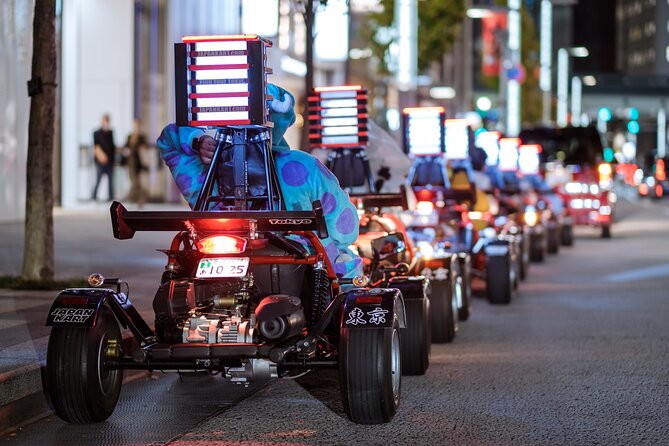
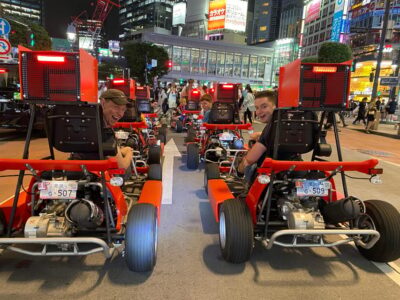
Tokyo looks different from the seat of a small go-kart. Instead of passing the city behind a bus window, you are out in the open, moving through Ginza, Nihonbashi, Akihabara, Asakusa, and the Bay district under your own control. The route is the attraction, but the feeling of driving through Tokyo traffic is the real event.
I like the lead and follow vans, which help keep the group together and make the road experience feel organized. I also like the free costumes and included photos, since they add a playful touch without another charge. The main concern is serious: you must arrive with the correct driving documents, or you can be refused with no refund.
Key points to know
- You drive on public roads: This is not a closed racing track. You follow Japanese traffic rules and drive alongside regular vehicles.
- The route covers eastern Tokyo: Expect Toyosu, Ginza, Nihonbashi, Akihabara, Ueno, Asakusa, and a view of Tokyo Skytree.
- Safety is built into the format: A van leads the group and another follows behind, with a briefing before departure.
- An approved IDP is essential: Japan requires the 1949 Geneva Convention booklet format for most foreign drivers.
- Costumes, fuel, and photos are included: You choose a costume before setting off, subject to availability.
- The group can reach 20 people: Traffic lights may separate the karts briefly, even with staff managing the pace.
What this Tokyo go-kart ride is really like
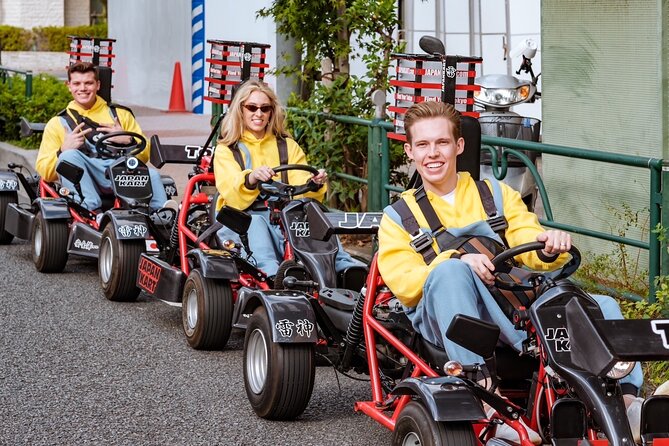
This is best understood as a moving city ride, not a sightseeing tour with a guide explaining every building. You are busy watching traffic, following the kart ahead, and enjoying the novelty of driving through Tokyo. The staff’s job is to guide the group and keep everyone safe, not to provide a running history lesson.
Before leaving, you receive a safety briefing covering kart operation and Japanese road rules. That matters if you normally drive on the right side of the road. Several people who were new to driving on the left found the instruction and lead van useful, especially during the first part of the ride.
The karts are described as easy to handle once you understand the controls. You are not racing other drivers, and the pace is controlled by the group leader. You will still feel the wind, hear the city around you, and get the odd wave or smile from people on the street. That public reaction is part of the fun.
The tour lasts about two and a half hours overall. The actual driving portion is often described as around two hours, with at least one short rest and photo stop. The exact flow depends on traffic, weather, group size, and kart availability.
More things to do in Ginza:
- Chopstick Making Workshop in Ginza
★ 4.8 · 1,366 reviews - Tokyo: Art Aquarium Museum GINZA Entry Ticket
★ 4.5 · 278 reviews - Private Ginza Architecture Walking Tour
★ 5.0 · 50 reviews
Starting near Azumabashi and Toyosu
The meeting point is JapanKart, at 2-chome-18-15 Azumabashi in Sumida City. You should arrive 15 minutes early. The operator may wait up to 10 minutes after the reserved start time, but late arrival is a poor gamble in Tokyo traffic.
The route includes Toyosu, a modern waterfront district known for the Toyosu Fish Market and broad, newer roads. This section gives you a useful contrast with the older neighborhoods later in the ride. Instead of narrow historic streets, you may find a more open urban setting and large-scale waterfront development.
The Toyosu stop is listed as about 10 minutes, with no separate admission fee. Do not treat this as a full market visit. The tour takes you through the district by kart, rather than giving you time for a seafood breakfast or market tour.
A short stop also gives you a chance to settle into the kart. That is useful because the first few minutes are less about sightseeing and more about learning the group’s rhythm, watching the guide van, and remembering to keep left.
Ginza, where the costumes make sense
Ginza is one of the most entertaining parts of the route because the setting is so polished. Department stores, designer shops, bright signs, and wide streets give the costume-clad group a slightly surreal look. You may find pedestrians waving, taking photos, or simply turning to watch the unusual parade.
This is not a shopping stop. You will not have time to browse department stores or linger at a café. The value comes from passing through one of Tokyo’s best-known central districts while driving yourself.
The route through Ginza also shows why the safety system matters. You are not wandering around uncertain side streets. The lead vehicle sets the direction, and the rear vehicle helps prevent the group from stretching too far apart. At traffic lights, the karts may become separated for a moment, so you need to stay alert and follow instructions.
A late afternoon departure can be especially appealing. The city may shift from daylight to sunset and then to illuminated streets during one ride. Since weather affects the activity, check the forecast before you commit to an evening slot.
Nihonbashi and the old road center
Nihonbashi Bridge gives the route a change of mood. This historic crossing was once the starting point for Japan’s major roads, and today it sits among modern office towers and central Tokyo traffic.
From a kart, you will not receive a long talk about the bridge. You will get a quick visual impression as you pass through the area. That is one of the tour’s limits. If you want detailed cultural context, arrange a separate walking tour or visit nearby sights on your own.
Still, Nihonbashi is a worthwhile part of the drive because it links old Tokyo with the modern city around it. You are not simply circling a tourist district. The route uses working roads and ordinary city spaces, which makes the experience feel more like a moving introduction to Tokyo’s layout.
More Tokyo go-kart tours:
- Flagship 2-Hours Official Street Go-Kart Tour – Tokyo Bay Shop
★ 5.0 · 4,974 reviews - Official Street Go-Kart in Shibuya
★ 5.0 · 3,435 reviews - Official Street Go-Kart Tour – Akihabara
★ 5.0 · 1,578 reviews - Tokyo: Street Kart Experience in Shibuya
★ 4.9 · 1,484 reviews
Akihabara and Ueno on the road
Akihabara brings the neon, arcades, electronics shops, anime stores, and gaming culture. You will see the district from the street rather than stopping to shop. That is enough for a vivid first look, but not enough for anyone hoping to visit a specific store.
Ueno adds a quieter cultural note. The area is associated with Ueno Park, museums, a zoo, temples, and seasonal cherry blossoms. Again, this is a drive-by visit. You should not book this ride expecting entry to any of those attractions.
The value here is variety. Within a single outing, you move from the polished commercial center of Ginza to Akihabara’s pop culture streets and then toward Ueno’s older public spaces. The kart makes the transitions feel quick and connected.
The tradeoff is that the city passes fast. If you see a temple gate, shop, or street you want to explore, make a note of it and return later by train. This ride is good at showing you possibilities, not replacing a proper visit.
Asakusa and the view of Tokyo Skytree
Asakusa is one of the strongest parts of the route for first-time visitors. The area around Senso-ji Temple and Nakamise Street has a traditional feel, with food stalls, crafts, and temple architecture. From the kart, you get the approach and street atmosphere, but not time to walk through the temple grounds or shop along Nakamise.
The route also passes near Tokyo Skytree, which rises 634 meters above the city. Even when you do not go up the tower, its scale helps you understand where you are in eastern Tokyo. A drive near Skytree can provide some of the tour’s clearest photo opportunities.
A separate stop near the Bay area or Rainbow Bridge viewpoint may be included for photographs. The exact stop can depend on the day’s route and traffic. Bring a phone or camera, but remember that you are not free to film while driving. Some rides include staff-taken photos, which is useful because you can enjoy the road without trying to handle a camera.
Costumes, photos, and the social side
The price is about $85.89 per person. That is not a cheap way to get from one Tokyo district to another, especially when Tokyo’s trains are fast and affordable. You are paying for a guided road experience, kart rental, fuel, costume use, safety staff, and photos.
For the right person, the cost is reasonable because the kart ride is the point. You get around two hours of driving, cover a wide area, and experience Tokyo from a position most ordinary sightseeing tours cannot offer. If you only want views of Ginza, Asakusa, or Skytree, public transport will give you more time and flexibility for less money.
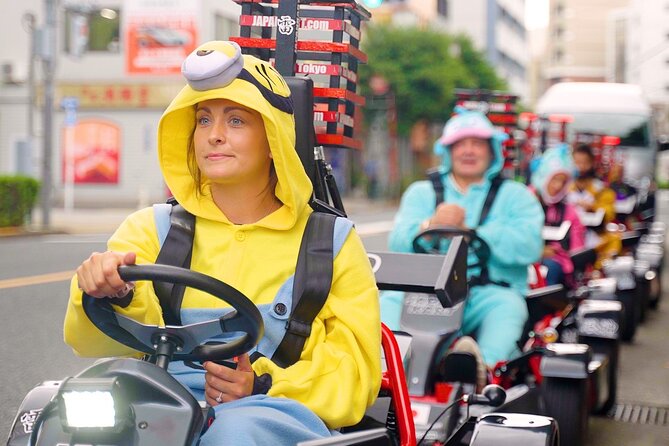
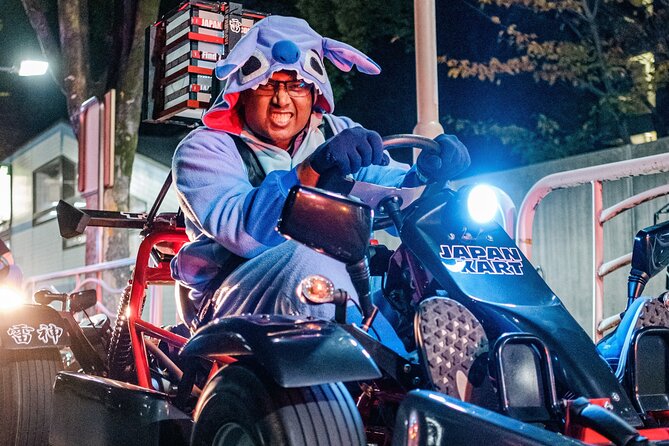
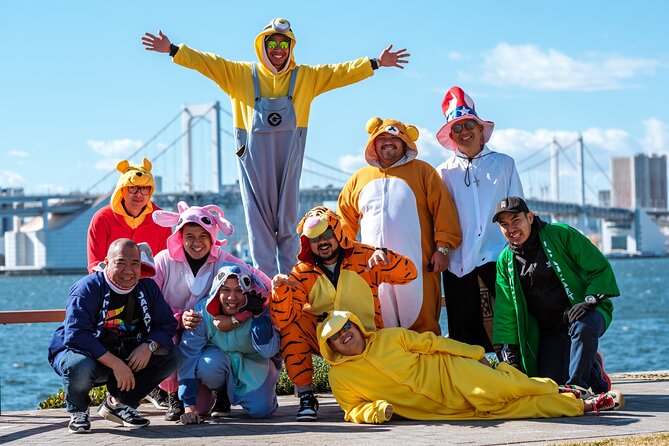
The costumes are optional in spirit, but they are central to the atmosphere. You can choose from the supplied options, subject to availability. A costume makes the ride more playful and explains why people on the street may wave or take pictures.
This works especially well for couples, families with adult children, and friends who want an activity rather than another museum. The ride can suit older drivers too. One participant aged 70 described it as a highlight, which fits the tour’s appeal: you do not need to be a young racing fan, but you should enjoy driving and novelty.
Safety, traffic, and what you need to manage
The safety briefing is one of the strongest practical features. The staff explain kart controls and road rules before departure, then use a van at the front and another at the back to guide the group.
That does not make the activity risk-free. You are still driving on public roads in a major city. You need to stay focused, obey signals, maintain your place, and avoid treating the ride like a race. If driving in unfamiliar traffic makes you nervous, this may not be the right Tokyo activity.
You also need to avoid alcohol before the tour. Wear practical clothes and shoes. Long skirts, high heels, and sandals are not allowed. Service animals are allowed, and the activity is near public transportation.
The maximum group size is 20 people. A large group can mean a few pauses at traffic lights, but the staff work to keep everyone together. The follow van is especially helpful when the group spreads out.
The IDP rule is the make-or-break detail
Read the driving requirements before you book. Most participants must bring all three of the following:
- A valid driving license from their home country
- A passport
- An International Driving Permit issued under the 1949 Geneva Convention
The IDP must be an official booklet, not a printed paper or A4 document. A 1968 Vienna Convention permit is not accepted in Japan. The permit must also come from an approved issuer, such as AAA or AATA in the United States, AAA in Australia, AA or RAC in the United Kingdom, and CAA in Canada.
There is a special rule for licenses issued in Switzerland, Germany, France, Taiwan, Belgium, or Monaco. In those cases, you need your own driving license plus a Japanese translation issued through the Japan Automobile Federation, also called JAF.
Do not assume that a digital copy, a normal international license card, or a permit bought from an unofficial website will work. If you arrive without the correct documents, you can be denied participation and lose the payment. This has been the biggest source of disappointment with the activity, and it is entirely avoidable if you check before booking.
Timing, weather, and cancellation
You receive confirmation at booking, along with an instructional video. Watch it before the day of the ride. It will help you arrive ready instead of using the briefing to learn every basic control.
The operator asks you to arrive 15 minutes early and may only wait 10 minutes after the reserved time. Tokyo’s trains are reliable, but station walks, transfers, and crowds can still take longer than expected. Plan to reach Azumabashi with time to spare.
The activity requires good weather. If poor weather cancels the ride, you can choose a different date if space is available or receive a full refund. For your own cancellation, you need to cancel at least 24 hours before the start time for a full refund. Cancellations or changes inside that window are not refunded.
Mechanical availability can also lead to adjustments when the tour reaches capacity. That is a practical reason not to plan a tightly timed dinner or show immediately afterward.
Who should book this ride?
I would book it if you enjoy driving, want a playful way to see Tokyo, and already have the correct IDP. It suits people who have seen the major sights and want a different angle, as well as first-time visitors who like motion and city energy more than long guided explanations.
I would skip it if you want a calm sightseeing tour, detailed commentary at each landmark, or plenty of time to stop and explore. It is also a poor choice if you are uncertain about driving on the left, uncomfortable in traffic, or unable to secure the required documents.
At $85.89, the tour is good value for a special activity, not for basic transportation. The costumes, escort vans, broad route, and photos add to the package, but the main thing you are buying is the unusual feeling of driving through Tokyo itself.
Should you book JAPANKART?
Book this Tokyo go-kart ride if the idea of passing through Ginza and Asakusa in a costume sounds more exciting than another standard city tour. The route covers a lot of eastern Tokyo, and the staff structure helps make a strange activity feel controlled.
Before paying, confirm your driving documents, check your shoes and clothing, watch the instruction video, and leave extra time to reach the meeting point. If those details are in order, this can be one of the most memorable ways to see Tokyo from street level. If they are not, choose a walking or public transport tour instead.
FAQ
Where does the go-kart tour start and finish?
It starts and ends at JapanKart, 2-chome-18-15 Azumabashi, Sumida City, Tokyo 130-0001, Japan.
How long does the experience last?
The advertised duration is approximately 2 hours and 30 minutes. The driving portion may be around two hours, with a short rest and photo break along the route.
Which Tokyo areas does the route include?
The route includes Toyosu, Ginza, Nihonbashi, Akihabara, Ueno, Asakusa, and an area near Tokyo Skytree.
What driving documents do I need?
Most participants need a home-country driving license, passport, and an International Driving Permit issued under the 1949 Geneva Convention. The IDP must be an official booklet.
Are Vienna Convention 1968 permits accepted?
No. International Driving Permits issued under the 1968 Vienna Convention are not accepted in Japan for this activity.
Do drivers from Switzerland, Germany, France, Taiwan, Belgium, or Monaco need an IDP?
No. They need their own driving license and a Japanese translation issued by the Japan Automobile Federation.
What happens if bad weather cancels the tour?
You can receive a full refund or request another date, depending on availability.
More Tokyo boat trips and river cruises
- Sumida River: Japanese Traditional Yakatabune Dinner Cruise
★ 4.6 · 779 reviews - Dynamic Tokyo: Tokyo Tower, Tea Experience, Bay Cruise Day Tour
★ 4.5 · 521 reviews - Tokyo Bay Yakatabune Dinner/Day Cruise with Japan Show and Drinks
★ 4.5 · 473 reviews - Tokyo Dinner Cruise & Tradition Show & Drinks & Tokyo Tower
★ 4.7 · 315 reviews
Newly reviewed around Tokyo
- Tokyo Asakusa:Calligraphy & Make T-shirt Activity★ 5.0 · 62 reviews
- Intercity Shuttle, Tokyo to Haneda /Narita /Yokohama /Makuhari★ 5.0 · 5 reviews
- 1 Hour Travel around Tokyo with a Professional Photographer★ 5.0 · 3 reviews
- Travel Tokyo with Your Own Personal Photographer★ 5.0 · 43 reviews
- Train in Samurai Swordsmanship and Defeat the Demon in Tokyo★ 5.0 · 5 reviews
- Shuttle Van 6hr Tokyo Tour to-and-from Tokyo, Yokohama and Narita★ 5.0 · 9 reviews
- Kickboxing & Body Training with EX-Pro Fighter★ 5.0 · 4 reviews
- Traditional Japanese Knife Sharpening Class★ 5.0 · 18 reviews
Tokyo Go-Kart Tours, compared.
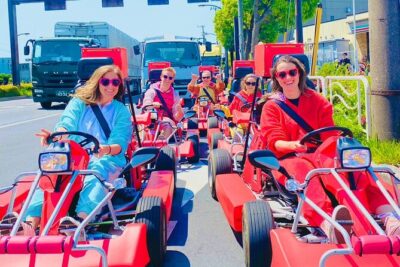
Flagship 2-Hours Official Street Go-Kart Tour – Tokyo Bay Shop
Read our review →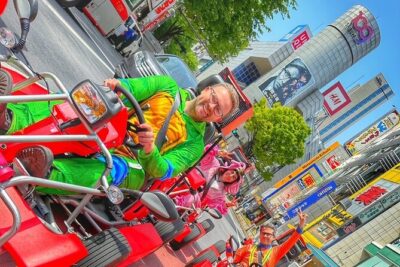
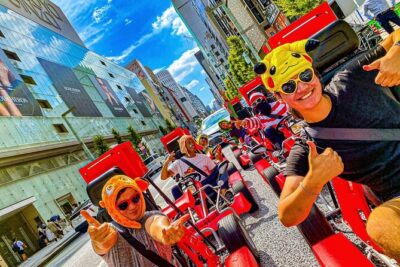
Tokyo Go Kart: Asakusa, Skytree, and Akihabara **IDP MUST**
Read our review →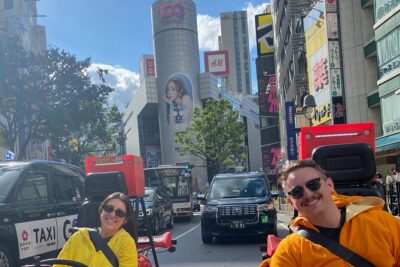
Shibuya Official Street Go-Kart in Shibuya Annex
Read our review →
Asakusa, Skytree & Akhihabara Go-Kart City Experience
Read our review →
Premium Go-Kart Tour with Tower & Shibuya Crossing
Read our review →Browse the lists this tour appears in