
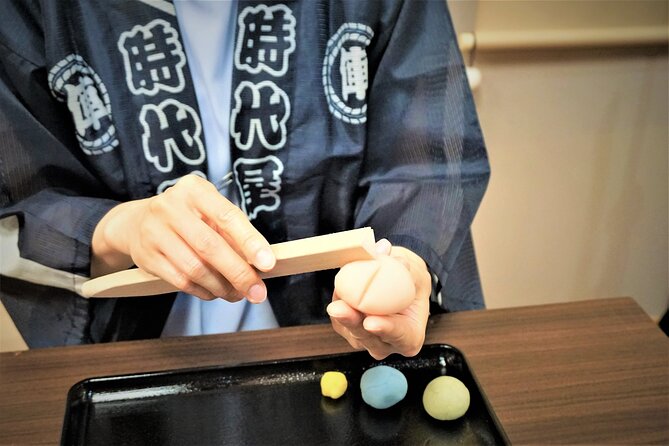
Reviewed · DESSERT TOURS
Tokyo 6hr Private Guided Tour & Japanese Sweets Making Experience
Tokyo sightseeing often means choosing between old temples, quiet gardens, food markets, and neon districts. This private experience gives you a guide’s full attention, then adds a hands-on wagashi-making class at Jidaiya in Asakusa. I like the chance to ask practical questions as you go, especially about customs and the train system.
I also like the flexibility: you choose just two or three sites rather than racing through every stop on the long list. The tradeoff is important, though. Six hours is not enough for all 13 places, and transport, garden admissions, and some food purchases cost extra.
Key points at a glance
- Make Japanese sweets by hand: The wagashi class gives the day a real cultural activity, not just a sequence of photo stops.
- Choose two or three sights: Pick from Asakusa, Meiji Shrine, gardens, markets, Akihabara, Harajuku, Shinjuku, and more.
- Get a private guide: Your group has the guide’s attention, with room for questions and changes in pace.
- Learn Tokyo’s train system: Guide Ted helped one group gain confidence using public transportation, a useful bonus early in your stay.
- Expect a walking and transit day: Private transportation is not included, and the listed Metro Pass costs 800 yen for adults and 400 yen for children.
- Best for ages 12 and up: Young children and babies cannot join this activity.
Why the wagashi class gives this Tokyo tour a different feel
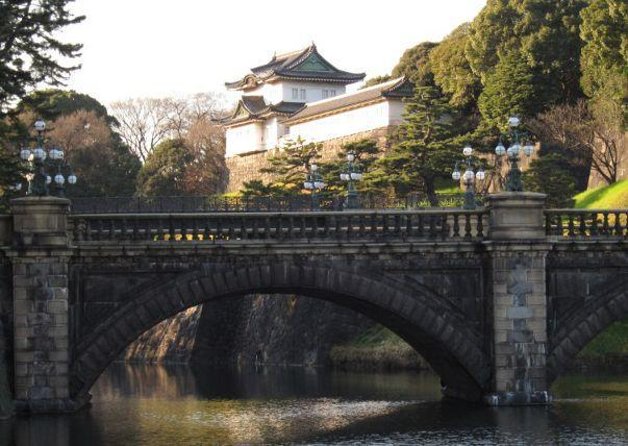
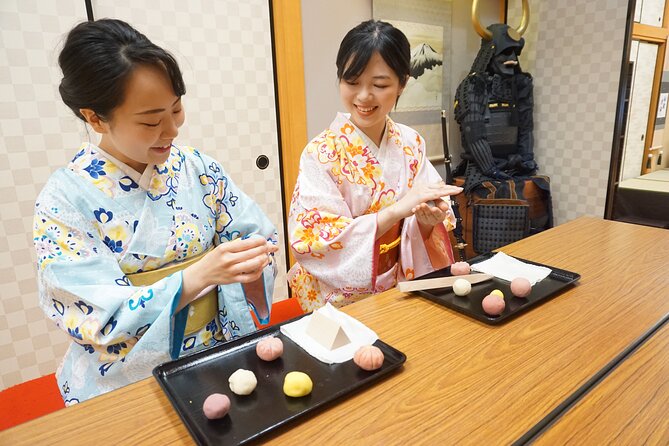
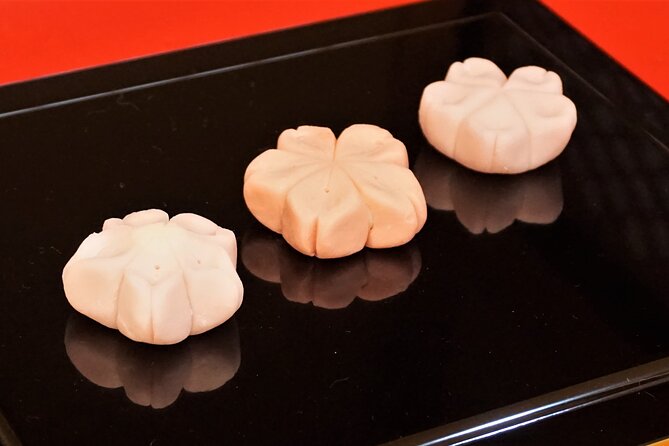
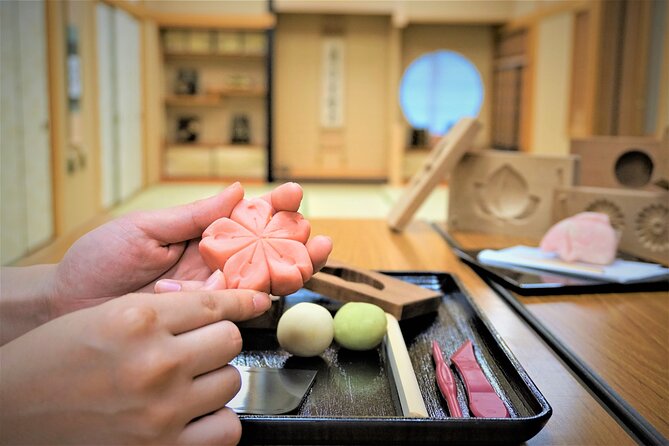
The most distinctive part of the day is not a famous temple or a skyline view. It is sitting down in Asakusa to make wagashi, traditional Japanese sweets, by hand.
Jidaiya describes its programs as a way to seek a more authentic Japanese experience beyond ordinary sightseeing. That matters because Tokyo’s major sights can become a quick cycle of arriving, taking photographs, and moving on. The workshop gives you time to focus on one Japanese craft and ask questions while doing it.
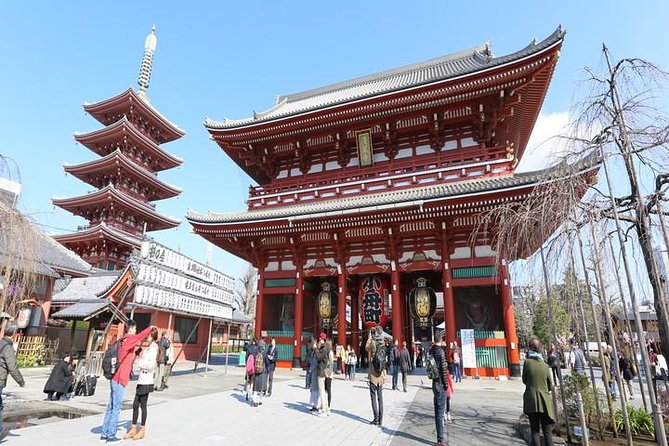
The experience is also well placed. Asakusa preserves an older downtown character, with Senso-ji Temple, traditional streets, and a strong connection to Tokyo’s past. You can pair the sweet-making class with Asakusa sightseeing instead of spending the whole day crossing the city.
The class lasts about one hour. The supplied details do not specify the exact sweets you will shape or how many you will make, so do not book it expecting a full cooking course. Think of it as a guided cultural activity and a pleasant reward during a day of walking.
More Dessert Tours in Tokyo:
- Matcha Making Class in Tokyo with Authentic Japanese Sweets Set
★ 5.0 · 744 reviews - Tokyo: Matcha Making Experience with Mochi Sweets in Asakusa
★ 4.9 · 388 reviews - Make Traditional Nerikiri Sweets & Matcha experience in Shibuya
★ 5.0 · 130 reviews
A private guide who adjusts the day to your interests
The tour is designed for only your group. That is the main reason to consider paying for a private experience rather than joining a large sightseeing circuit. You can ask about temple etiquette, Japanese food, local customs, or how to use the trains without worrying about holding up strangers.
The guides named in the experience include Takako, Sachi, Tatsunobu Narita, also called Ted, Coco, Aiko, and Emiko. Their styles may differ, but the comments connected with the tour point to several useful strengths. Takako is described as personable and professional, while Sachi built a highly personal day around local customs, food, and conversation.
Ted helped one group understand Tokyo’s train system. That could be especially useful if this is your first or second day in the city. A guide who explains how to move around can save you time long after the six-hour tour ends. One group felt confident enough to take a trip to Hakone on its own the following day.
Emiko’s Asakusa visit included an overview from a rooftop opposite the shrine, followed by explanations of history, customs, and proper behavior. That kind of context is valuable at Senso-ji, where it is easy to copy the motions of other people without understanding what you are doing.
Because this is a private tour, tell the operator what matters most before the day begins. If you care more about gardens than shopping districts, say so. If you want food, architecture, or transport help, make that clear. The experience allows a customizable selection of two or three places.
Choosing from Tokyo’s long list of sights
The itinerary lists 13 possible stops, but the tour includes only two or three selected sites. This is not a flaw, as long as you understand the format. The list gives you choices, not a promise that you will visit every place.
A good plan is to choose sights that fit together geographically. Asakusa and the wagashi workshop belong together. Meiji Shrine and Takeshita Street also make a natural pair. Hamarikyu Gardens and Tsukiji Fish Market can work well as a food and garden combination, while Shinjuku Gyoen and Golden Gai suit a day focused on central Tokyo.
Here is what each option offers.
Asakusa and Senso-ji
Asakusa is the heart of Tokyo’s old downtown, known in Japanese as shitamachi, or low city. It offers a glimpse of the Tokyo of earlier decades, with a less polished feel than the city’s modern business districts.
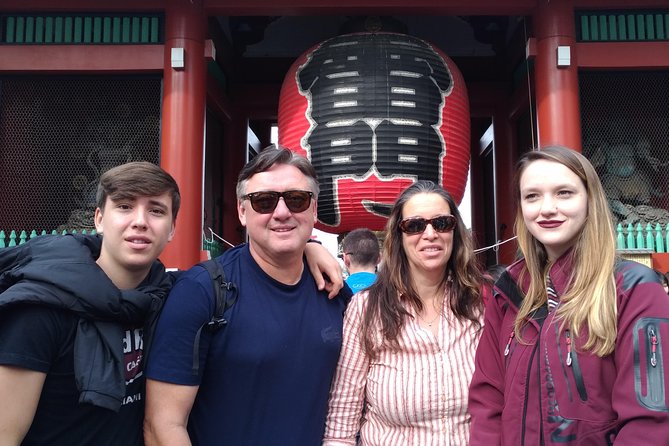
Senso-ji is the main attraction. This colorful Buddhist temple is also called Asakusa Kannon Temple, and its origin story reaches back to the year 628, when two brothers reportedly found a statue of Kannon in the Sumida River. The legend gives the temple a strong sense of place, even if you are mainly interested in architecture and daily ritual.
Asakusa is likely the strongest choice for first-time visitors who want culture without a long explanation of Tokyo’s entire past. You can see the temple, learn how to behave at a Buddhist site, and make wagashi nearby.
The limitation is crowding. Senso-ji is one of Tokyo’s best-known temples, so the main approach can feel busy. A private guide helps by explaining what you are seeing, but the tour does not promise a quiet or empty visit.
More private tours in Tokyo:
- Tokyo 6hr Private Tour with Government-Licensed Guide
★ 5.0 · 3,902 reviews - Private Tour to Mt. Fuji and Hakone (Fully Licenced Operator)
★ 5.0 · 1,910 reviews - Tokyo Customized Private Tour (Must See Places in 1 Day)
★ 5.0 · 1,499 reviews - Mount Fuji Full-Day Private Tour from Tokyo (Customizable)
★ 4.9 · 1,470 reviews
Tsukiji Fish Market
Tsukiji is presented as the old fish market of Japan, now known for food stalls and a broad selection of Japanese specialties. The experience allows about 30 minutes here, which is enough for a quick look and perhaps a purchase, but not a long food crawl.
The guide can help you make sense of what you see and may point out foods worth trying. One group’s day included unagi, sea urchin, octopus, takoyaki, white shrimp, soba, yakitori, tempura, and Asahi beer. Those foods were part of a customized day, not a guaranteed tasting menu, so budget separately for anything you want to eat.
Tsukiji works best if you want food and are comfortable making your own purchases. It is less useful if you expect a formal market tour with included tastings.
Meiji Jingu and Takeshita Street
Meiji Jingu is dedicated to the deified spirits of Emperor Meiji and Empress Shoken. Despite its location beside busy Harajuku Station, the shrine offers a change of pace from Tokyo’s streets.
Pairing it with Takeshita Street creates a sharp contrast. Takeshita Street is linked with Harajuku’s youth culture, fashion, and distinctive shops. In a short distance, you move from a major Shinto shrine to one of Tokyo’s most recognizable shopping streets.
I would choose this combination if you want two very different sides of the city. It also makes sense for anyone curious about both religious customs and modern Japanese style. The drawback is that 30 minutes at Takeshita Street may feel short if you want to shop.
Shinjuku Gyoen National Garden
Shinjuku Gyoen offers spacious lawns, walking paths, and a calmer setting near one of Tokyo’s busiest stations. It is one of the city’s best-known parks and a useful place to slow down after time in dense commercial areas.
The listed visit is about 30 minutes. That is enough for a refreshing walk, but not enough to explore every section at an easy pace. Admission is not included, so you will need to pay separately.
Choose Shinjuku Gyoen if you want a quiet break and a chance to see how Tokyo protects open space within the city. It pairs naturally with Shinjuku Golden Gai, though the two areas offer very different moods.
Koishikawa Korakuen and Rikugien
These are two of Tokyo’s finest traditional Japanese gardens. Koishikawa Korakuen was built during the early Edo period for the Mito branch of the Tokugawa family. Rikugien was created around 1700 for the fifth Tokugawa shogun, and its name refers to the six Chinese and Japanese poetic themes reflected in its design.
Both gardens reward a slower eye. You are looking at ponds, paths, bridges, and carefully arranged views rather than checking off famous buildings. The tour allows about 30 minutes at Koishikawa Korakuen and 20 minutes at Rikugien, with admission not included for either.
I would not choose both unless gardens are your main reason for booking. The timing is brief, and the gardens are separated from other major sights. One garden paired with the wagashi class or a temple would give the day more variety.
Hamarikyu Gardens
Hamarikyu is a large garden beside Tokyo Bay. Its seawater ponds change level with the tides, and a teahouse sits on an island within the garden.
This is a good choice if you want traditional garden design in a central Tokyo setting. The connection between the ponds and the bay also gives the visit a detail you will not find in an ordinary city park.
The suggested visit is about 20 minutes, and admission is extra. That is a short stop, so I would choose it for a quick taste rather than a full garden outing.
The Imperial Palace
The Imperial Palace occupies the former site of Edo Castle, surrounded by moats, large stone walls, and parkland. The tour does not include entry inside the palace, so your visit is limited to the accessible outside areas.
This stop is useful for understanding Tokyo’s political and historical center. It is less suitable if you expect palace rooms, interior tours, or a long guided visit. Admission is listed as free, but the tour specifically excludes access to the inside.
Akihabara
Akihabara began as an electronics district and has become known for anime, manga, games, and related popular culture. A 20-minute visit gives you a quick look at the area’s identity.
Choose Akihabara if you have a clear interest in electronics or Japanese pop culture. Do not choose it simply because it is famous if you would rather spend your limited time in a temple or garden. Twenty minutes is not much time for shopping.
Shinjuku Golden Gai
Golden Gai is a compact nightlife district near Kabukicho. The route also mentions the Godzilla figure looming above the area and Don Quijote, a large discount store known for unusual gifts.
This stop gives you a taste of Tokyo after dark culture, small bars, and busy central streets. It is more atmospheric than instructional, and 20 minutes will only provide a quick look. If you want detailed nightlife exploration, this tour does not promise that.
How the six hours work in practice
The schedule is built around walking and public transportation. Private transportation is not included, and the tour lists a 24-hour Metro Pass at 800 yen for adults and 400 yen for children. The guide meets you in Tokyo on foot, so you should be ready to use the city’s trains and walk between points.
That arrangement keeps the experience flexible and helps you learn how Tokyo works. It also means the day is not door-to-door sightseeing. Transfers, station navigation, and walking will take part of your six hours.
The time estimates add up to far more than one day, which confirms that the list is a menu of choices. You cannot visit Asakusa, Tsukiji, Meiji Shrine, three gardens, Akihabara, Harajuku, and Shinjuku properly in six hours. A private guide can help you avoid an unrealistic plan, but you should still select two or three priorities.
For a first visit, I would choose Asakusa with the wagashi class, then either Meiji Shrine and Takeshita Street or Tsukiji. For a second Tokyo visit, I would consider one garden, Akihabara, or Golden Gai, depending on your interests.
Is the $172 price a fair deal?
At $172 per person, this is not a budget walking tour. You are paying for a private licensed guide, a six-hour customized experience, and the wagashi-making activity. For a couple or small group that values personal attention, the price can make sense.
The value is strongest when you use the guide for more than basic sightseeing. Ask about customs. Learn how to use the Metro. Get help choosing food. Have the guide explain why Senso-ji works the way it does, or how a Japanese garden directs your view.
The price does not cover private transportation, Metro fares, garden admissions, or food purchases. The gardens listed as requiring admission include Shinjuku Gyoen, Koishikawa Korakuen, Hamarikyu Gardens, and Rikugien. Add those costs before comparing this tour with a cheaper group outing.
Group discounts are offered, but groups cannot be combined. The activity remains private to your party. It is also limited to people aged 12 and older, so families with young children or babies need another option.
Practical advice before you book
Plan your top three interests before meeting the guide, but stay open to advice about distance and timing. The best day will usually come from choosing nearby sights rather than trying to cover the entire city.
Wear comfortable shoes. The tour involves walking and public transportation, and the listed stops range from temples and markets to gardens and shopping districts.
If you want the strongest cultural connection, make Asakusa one of your choices. If you want help getting around Tokyo, schedule the experience near the start of your stay. Ted’s example shows how a guide can turn train confusion into useful confidence for the rest of your trip.
The booking confirmation arrives at the time of booking. Service animals are allowed, and most people can participate, but the minimum age is 12. Free cancellation is available if you cancel at least 24 hours before the local start time. Changes or cancellations inside that window are not accepted for a refund.
Should you book this Tokyo experience?
Book it if you want a private guide, prefer a flexible day, and like the idea of making wagashi rather than only looking at sights. It is especially useful during your first or second day in Tokyo, when advice about customs, food, and trains can shape the rest of your trip.
Choose another tour if you want private transport, a fixed route through many attractions, included food, or a full-day garden visit. The long list of stops can look ambitious, but the real experience is a focused six-hour visit to two or three places plus the sweets workshop.
For the best balance, choose Asakusa and Jidaiya, then add one nearby or contrasting area. That gives you a temple, an older Tokyo district, a hands-on Japanese activity, and time to enjoy the city without turning the day into a race.
FAQ
How long does the Tokyo private tour last?
The experience lasts approximately six hours.
Is this a private tour?
Yes. Only your group participates, and you receive the guide’s attention throughout the experience.
How many sights can I visit?
The tour includes a customizable choice of two or three sites from the listed options. You cannot visit every place on the full list in six hours.
Is wagashi making included?
Yes. A wagashi-making experience at Jidaiya in Asakusa is included.
Who are the guides?
The guides named for this experience include Takako, Sachi, Tatsunobu Narita, also called Ted, Coco, Aiko, and Emiko. A specific guide is not guaranteed in the supplied information.
Does the tour include private transportation?
No. Private transportation is not included. You meet the guide in Tokyo on foot and use public transportation as needed.
Is a Metro Pass included?
No. The listed cost for a 24-hour Metro Pass is 800 yen for an adult and 400 yen for a child.
Are garden admission fees included?
No. Admission is not included for Shinjuku Gyoen National Garden, Koishikawa Korakuen Garden, Hamarikyu Gardens, or Rikugien Garden.
Can children join the tour?
Only people aged 12 and older can participate. Young children and babies are not allowed.
What is the cancellation policy?
You can cancel at least 24 hours before the local start time for a full refund. Cancellations or changes made less than 24 hours before the start are not accepted for a refund.
Newly reviewed around Tokyo
- Tokyo Asakusa:Calligraphy & Make T-shirt Activity★ 5.0 · 62 reviews
- Intercity Shuttle, Tokyo to Haneda /Narita /Yokohama /Makuhari★ 5.0 · 5 reviews
- 1 Hour Travel around Tokyo with a Professional Photographer★ 5.0 · 3 reviews
- Travel Tokyo with Your Own Personal Photographer★ 5.0 · 43 reviews
- Train in Samurai Swordsmanship and Defeat the Demon in Tokyo★ 5.0 · 5 reviews
- Shuttle Van 6hr Tokyo Tour to-and-from Tokyo, Yokohama and Narita★ 5.0 · 9 reviews
- Kickboxing & Body Training with EX-Pro Fighter★ 5.0 · 4 reviews
- Traditional Japanese Knife Sharpening Class★ 5.0 · 18 reviews
Dessert Tours, compared.
Matcha Making Class in Tokyo with Authentic Japanese Sweets Set
Read our review →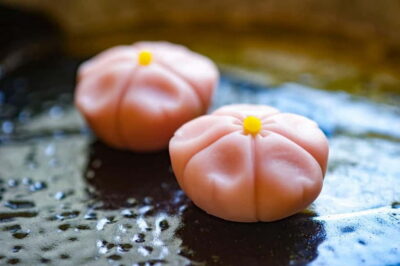
Matcha Making Experience with Mochi Sweets in Asakusa
Read our review →
Make Traditional Nerikiri Sweets & Matcha experience in Shibuya
Read our review →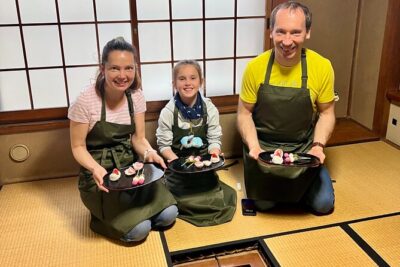
Private Mochi Sweets Making class near Shibuya area
Read our review →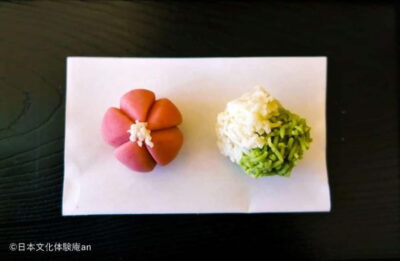
Japanese Traditional Sweets making and Tea Ceremony
Read our review →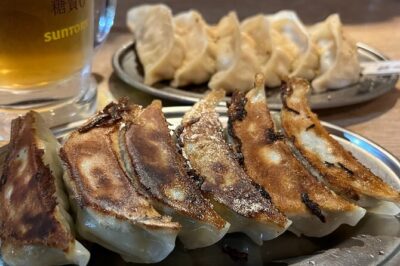
Tokyo Local Food Tour: Noodles, Skewers, Dumplings, Sweets
Read our review →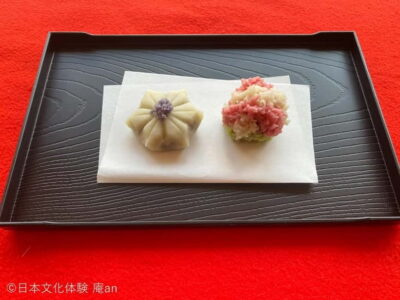
Two Types of Japanese Sweets Making and Tea Ceremony
Read our review →
Mochi Matcha Gluten Free Japanese Sweets Class near Shibuya area
Read our review →Browse the lists this tour appears in