
Reviewed · TOKYO FOOD TOURS
Tokyo: West-Side Cycling and Food Tour with Guide
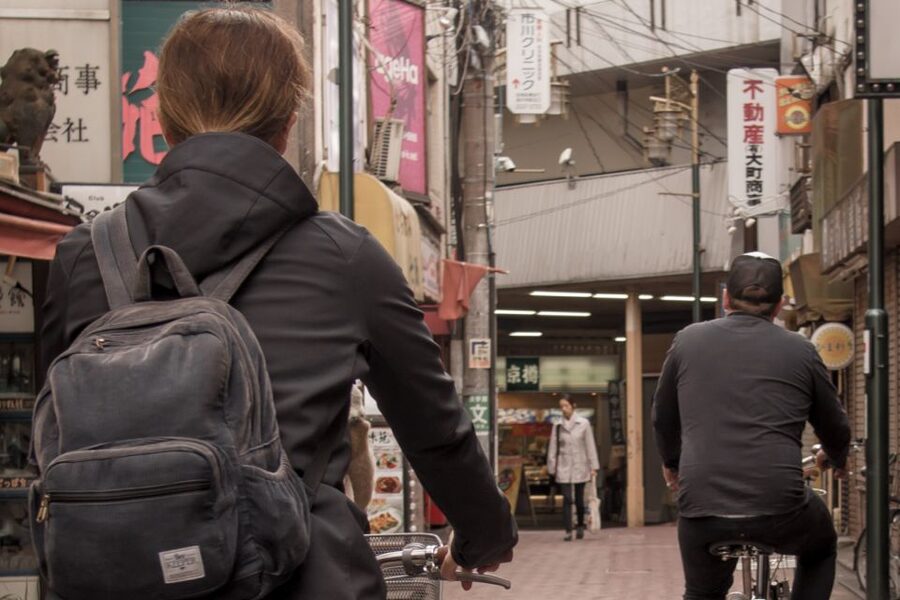
Tokyo’s inner west side is best seen at street level, and this tour puts you there on a practical little mamachari bicycle. You pedal through Nakano, Koenji, and Asagaya, using back lanes, riverside paths, and activity hubs that are easy to miss from a train window.
I like two things right away: the tour shows you ordinary Tokyo life, not just famous sights, and the food is built into the route rather than treated as a separate stop. Guide Andy also brings useful insight into Japanese customs, vending machines, neighborhood design, and daily routines.
The main catch is the riding. You cover about 7.5 to 9.5 miles, or 12 to 15 kilometers, on narrow streets and uneven surfaces. You need to be comfortable on a bicycle, at least 140 centimeters tall, and ready to ride in possible rain.
Key points to know before booking
- Ride a mamachari through three west Tokyo neighborhoods: These practical city bikes have front baskets and are suited to the slower pace of local streets.
- See Tokyo beyond the main tourist routes: Nakano, Koenji, and Asagaya offer a more residential view of the city.
- Eat as you go: The price includes two street food items, a simple Japanese lunch, and one bottled drink.
- Learn how Tokyo’s cycling system works: Bicycle parking fees are included, and the guide explains local cycling habits and parking arrangements.
- Expect a steady 3.5-hour outing: The pace is leisurely, but the distance and occasional sharp turns still require basic cycling confidence.
- Meet guide Andy outside Koenji Station: He waits by the ticket gates in a baseball cap five minutes before departure, and the tour leaves on time.
Why this west Tokyo route works
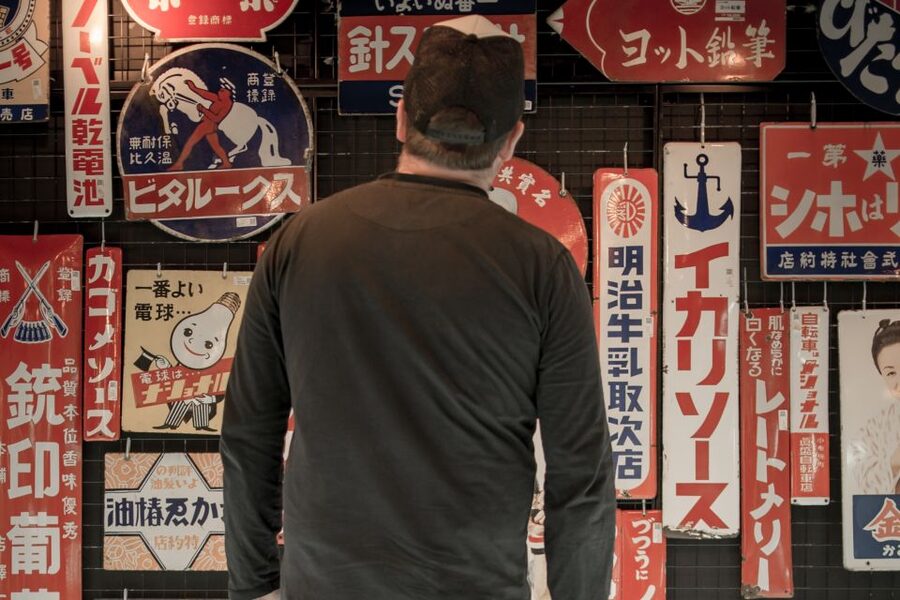
Many first-time Tokyo visits stay close to Shinjuku, Shibuya, Asakusa, or the major department store districts. Those areas are worth seeing, but they do not tell you much about how a large number of residents spend an ordinary day.
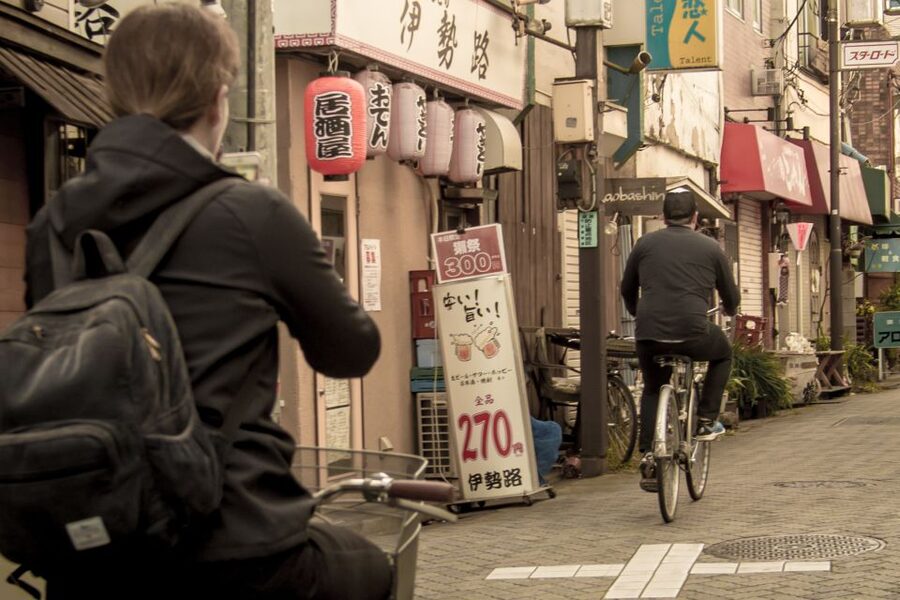
This route begins in Koenji and moves through a connected part of the city where shopping streets, homes, small businesses, food counters, and rail stations fit tightly together. On a bicycle, you can cover more ground than on foot while still moving slowly enough to notice details.
I especially like the mix of transport. You are not simply cycling for three hours. You ride, walk, stop for food, park the bicycles, and listen to explanations about the places around you. That change of pace makes the tour easier to follow and gives the guide room to explain local habits.
The experience is also deliberately low-key. There is no promise of grand monuments or postcard views. The appeal is the rhythm of west Tokyo: twisting lanes, modest homes, riverside routes, neighborhood shops, and the practical systems that keep a very dense city moving.
More Tokyo food tours:
- Tokyo: Shinjuku Food Tour (13 Dishes at 4 Local Eateries)
★ 5.0 · 6,603 reviews - Tokyo: Shinjuku Food Tour (15 Dishes and 4 Eateries)
★ 4.9 · 2,033 reviews - Best of Shinjuku: Izakaya Food Tour (4 Stops, 14+ Tastings)
★ 5.0 · 1,863 reviews
Starting at Koenji Station
Koenji Station is convenient for visitors staying in central Tokyo. It is about six minutes from Shinjuku by JR train and around 18 minutes from Shibuya, so you do not need a long journey to reach the meeting point.
The guide waits directly outside the ticket gates five minutes before the start. Look for the baseball cap and introduce yourself. This is not a good tour for arriving at the last second. The group departs on time, and the bikes cannot wait for a late arrival.
That firm start is practical rather than fussy. The route moves through narrow streets and has several planned food and parking stops. Delaying the group would affect the whole schedule.
Koenji itself is a fitting place to begin. It is a quieter suburban station than the major central hubs, yet it leads quickly into active local streets. From the start, you get a sense of the contrast between Tokyo’s efficient railway network and the smaller roads that spread behind it.
Getting used to the mamachari
The bicycle is a salvaged mamachari, a familiar Japanese utility bike often used for short neighborhood trips. These are not sleek road bikes. They are upright, practical, and fitted with a front basket, making them well suited to a food-and-neighborhood tour.
The bikes are described as sometimes creaky or squeaky, but they are maintained and considered easy to ride. That distinction matters. You are choosing comfort and local character over speed or sporty handling.
The upright position helps you look around as you pedal. The basket is handy for small purchases or personal items, though you should keep valuable belongings secure. You will also appreciate the bike’s slower, steady feel when moving through tight streets.
You should still take the riding requirements seriously. The route includes narrow and crowded sections, uneven surfaces, occasional sharp turns, and a total distance of roughly 12 to 15 kilometers. Children under 10 are not accepted, and the recommended minimum height is 140 centimeters.
If you are used to cycling only on wide, quiet paths, this may feel demanding at first. If you regularly ride in cities, the pace should be manageable. The tour is leisurely, but leisurely does not mean completely effortless.
Nakano, Koenji, and Asagaya at street level
The route connects three west Tokyo neighborhoods, each with its own feel. You move through Nakano, Koenji, and Asagaya rather than treating them as isolated stops, which helps you understand how these districts fit together.
In Nakano, you can expect a mixture of local streets and activity areas. The attraction is not one famous sight but the way everyday Tokyo is arranged around railway stations, narrow roads, small shops, and residential blocks.
Koenji brings a lively neighborhood character without requiring you to spend the day in the city center. Cycling lets you slip behind the main roads and follow turns that would be easy to overlook on foot. The route may include architecture and small local features that do not appear in a standard sightseeing plan.
Asagaya adds another part of the same west-side story. Moving between the neighborhoods by bike gives you a better sense of distance and scale. Tokyo can look like one continuous city from a train, but the smaller districts have their own patterns and habits.
This is where the guide matters most. Andy is an Australian guide who has lived in Japan long enough to explain both the obvious and the easily missed. His value is not just naming streets. He helps connect the food, cycling rules, architecture, shopping areas, and social customs into a picture of daily life.
Past outings have included explanations of Japanese habits, local society, and the practical details of living in Tokyo. Andy is also described as patient with questions and willing to share suggestions after the tour, which can be useful if you want to continue exploring the west side on your own.
More Tokyo bike tours:
- Tokyo Great Cycling Tour
★ 5.0 · 811 reviews - Tokyo Top Highlights 3h Guided E-bike Tour
★ 5.0 · 714 reviews - 3h Tokyo E-Bike Tour: Hidden Gems, and Local Life with guide
★ 5.0 · 670 reviews - Tokyo: 3-Hour Bike or E-Bike City Highlights Tour
★ 4.8 · 435 reviews
Riverside paths, tight corners, and city movement
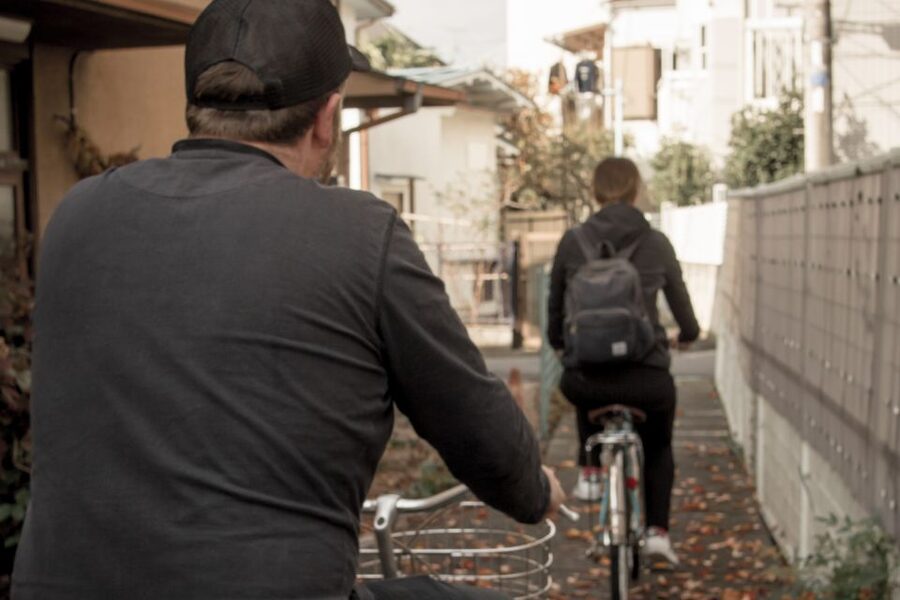
The route uses a mix of riverside bike paths and back streets. That variety is one of the strongest reasons to choose a bicycle tour instead of a walking tour.
A riverside section gives you a brief change from the tightly packed streets. You can settle into a regular pace and see a quieter side of the city. The back lanes then bring you close to the details that make Tokyo feel practical and lived-in.
Expect some sharp turns. One description of the route specifically points to adventure-filled riding and tight corners. That does not mean the tour is a race or an extreme activity, but it does mean you should pay attention and follow the guide’s lead.
The bicycle is a good tool for this kind of route because it allows quick changes in direction. You can move from a main street to a narrow lane, stop near a food counter, and continue without relying on a train timetable.
You will also see Tokyo’s bicycle culture up close. Bicycle parking fees are included, and the tour introduces you to local parking systems. This is a small detail, but it is useful. Tokyo does not treat bicycle parking as an afterthought, and understanding where bikes can be left helps you move around the city more responsibly.
Lunch and two street food stops
Food is one of the tour’s best practical features. You receive two popular street food items, a simple local lunch, and one bottled drink. That makes the $110 price easier to judge because several costs are already covered.
The lunch is not presented as a formal restaurant meal. It is meant to feel like a regular neighborhood refueling stop. A previous route included a small noodle bar, where the group ate alongside hungry office workers. That sort of stop gives you a more useful look at daily food culture than a polished restaurant chosen only for visitors.
The two street foods add variety. You get to try small, familiar local foods as you move through the neighborhoods, with the guide explaining what you are eating and how it fits into ordinary life.
The bottled drink also has a practical purpose. Tokyo vending machines can be confusing when you are not sure what the labels mean, and Andy can help explain the choices. That may sound minor, but small moments like this are often what make a first visit feel easier.
There is an important limitation. The tour does not cater to personal tastes, dietary requirements, or allergies. It is not suitable for vegans or people with food allergies. If you have strict food needs, this is not the right food tour, even if the cycling route appeals to you.
What the $110 price includes
At $110 per person, this is not a budget bicycle rental with a map. You are paying for a guide-led route, local food, bicycle use, parking fees, and cycling liability insurance.
The value is strongest if you want interpretation. Renting a bike would cost less, but you would need to plan a route, find suitable places to stop, manage parking, and work out how to move through unfamiliar streets. You would also miss Andy’s explanations of customs and neighborhood life.
The price is less compelling if you only want exercise or a fast overview of Tokyo. This is a food and culture tour first, with cycling as the way to connect the pieces.
A small group or private format can make the experience more personal. The available format depends on the booking, so check what you are selecting. In a smaller group, it should be easier to ask questions, manage the pace, and hear explanations while riding or walking.
Free cancellation up to 24 hours before departure and a reserve-now, pay-later option add flexibility. Those terms matter in Tokyo, where weather and changing plans can affect an outdoor activity.
Weather, clothing, and basic preparation
The tour operates in all seasons and generally continues in rain. You should expect the possibility of getting wet rather than assuming the activity will be moved indoors.
Wear clothes that are comfortable for several hours of light cycling and walking. Practical shoes are more useful than anything formal. Since the route can include uneven surfaces and narrow streets, leave bulky luggage behind.
Bring your passport or another ID card, hand sanitizer or tissues, and a garbage bag. The garbage bag is a small but useful item for keeping personal belongings dry or carrying rubbish when a bin is not immediately available.
Carry water if you prefer more than the included bottled drink, but keep your load light. A front basket is available on the bikes, though it is not a substitute for secure luggage storage.
The tour is outdoor-focused, so heat, cold, and rain will affect your comfort. If a wet-weather ride sounds miserable, choose a dry forecast if possible. If you are happy to accept a little weather in exchange for seeing Tokyo from street level, the all-season format gives you more scheduling freedom.
Who will get the most from this tour
I would recommend this experience to you if you have already seen Tokyo’s headline areas and want a closer look at residential west Tokyo. It also works well early in a visit because Andy can help you understand Japanese food habits, neighborhood etiquette, transport patterns, and cycling customs.
It suits confident casual cyclists, couples, friends, and small groups who enjoy asking questions. The pace is relaxed, but you need to steer, brake, and stay alert around other people and vehicles.
It is less suitable if you want major landmarks, a luxury meal, a completely flat or traffic-free ride, or a carefully adapted menu. It is also not suitable for vegans, people with food allergies, children under 10, or anyone under 140 centimeters tall.
The strongest part is the combination of movement and explanation. You do not simply pass through Nakano, Koenji, and Asagaya. You have time to notice how people park bicycles, where they eat lunch, how streets change from one block to the next, and how a local guide reads the city.
Should you book this west Tokyo cycling tour?
Book it if you want to see Tokyo as a place where people live, work, shop, eat, and get around, not only as a list of famous sights. Andy’s local explanations, the three neighborhood route, and the included food make this a useful introduction to the inner west side.
Think twice if narrow streets, rain, or 12 to 15 kilometers on a city bike would make you uncomfortable. Also skip it if you need vegan, allergy-friendly, or highly customized food.
For the right rider, the $110 cost is fair because it covers a guided half-day, several tastings, lunch, bicycle parking, insurance, and access to a part of Tokyo that is difficult to understand from the train alone.
FAQ
Where does the tour begin?
The tour begins outside the ticket gates at Koenji Station on the JR Train Network. The guide waits there five minutes before the start and wears a baseball cap.
How long does the experience last?
The tour lasts 210 minutes, or about 3.5 hours. Check the available start times when booking.
Which neighborhoods does the route visit?
The route covers Nakano, Koenji, and Asagaya in west Tokyo. It uses back streets, riverside paths, and local activity areas.
How far do you cycle?
You should expect to ride roughly 7.5 to 9.5 miles, or 12 to 15 kilometers, at a leisurely pace.
What food and drinks are included?
The price includes two street food items, a simple local lunch, and one bottled drink.
Is the tour suitable for people with dietary restrictions?
No. The experience does not cater to personal tastes, dietary requirements, or allergies. It is not suitable for vegans or people with food allergies.
What should I bring?
Bring a passport or ID card, hand sanitizer or tissues, and a garbage bag. Prepare for an outdoor activity that may continue in rain.
Can I cancel the booking?
You can cancel up to 24 hours in advance for a full refund. A reserve-now, pay-later option is also available.
Newly reviewed around Tokyo
- Tokyo Asakusa:Calligraphy & Make T-shirt Activity★ 5.0 · 62 reviews
- Intercity Shuttle, Tokyo to Haneda /Narita /Yokohama /Makuhari★ 5.0 · 5 reviews
- 1 Hour Travel around Tokyo with a Professional Photographer★ 5.0 · 3 reviews
- Travel Tokyo with Your Own Personal Photographer★ 5.0 · 43 reviews
- Train in Samurai Swordsmanship and Defeat the Demon in Tokyo★ 5.0 · 5 reviews
- Shuttle Van 6hr Tokyo Tour to-and-from Tokyo, Yokohama and Narita★ 5.0 · 9 reviews
- Kickboxing & Body Training with EX-Pro Fighter★ 5.0 · 4 reviews
- Traditional Japanese Knife Sharpening Class★ 5.0 · 18 reviews
Tokyo Food Tours, compared.
Shinjuku Food Tour (13 Dishes at 4 Local Eateries)
Read our review →
Shinjuku Food Tour (15 Dishes and 4 Eateries)
Read our review →
Best of Shinjuku: Izakaya Food Tour (4 Stops, 14+ Tastings)
Read our review →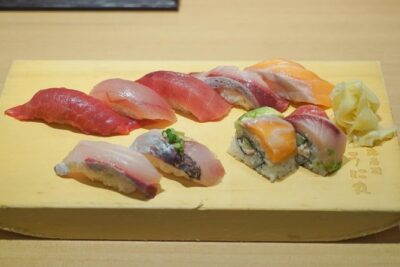
Tokyo Night Foodie Tour in Shinjuku – Seasonal Sushi, Wagyu Beef
Read our review →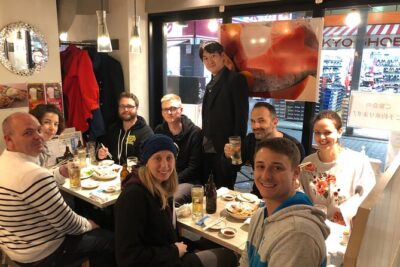
Eat and Drink Like a Local: Tokyo Ueno Food Tour-Taverns&Ramen
Read our review →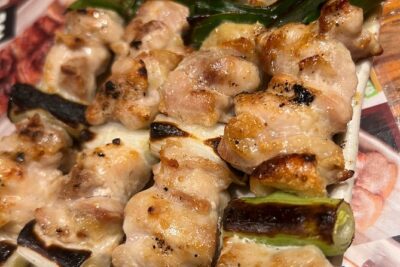
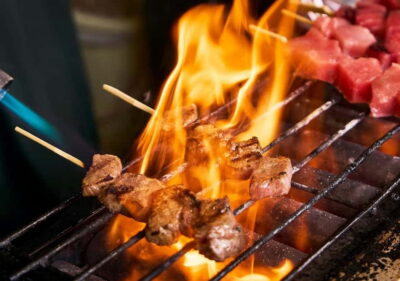
Tsukiji Fish Market: Street Food & Culture Walking Tour
Read our review →
Browse the lists this tour appears in