
Reviewed · TOKYO SUMO EXPERIENCES
Tokyo: Sanctuary Authentic Grand Sumo Experience & Training
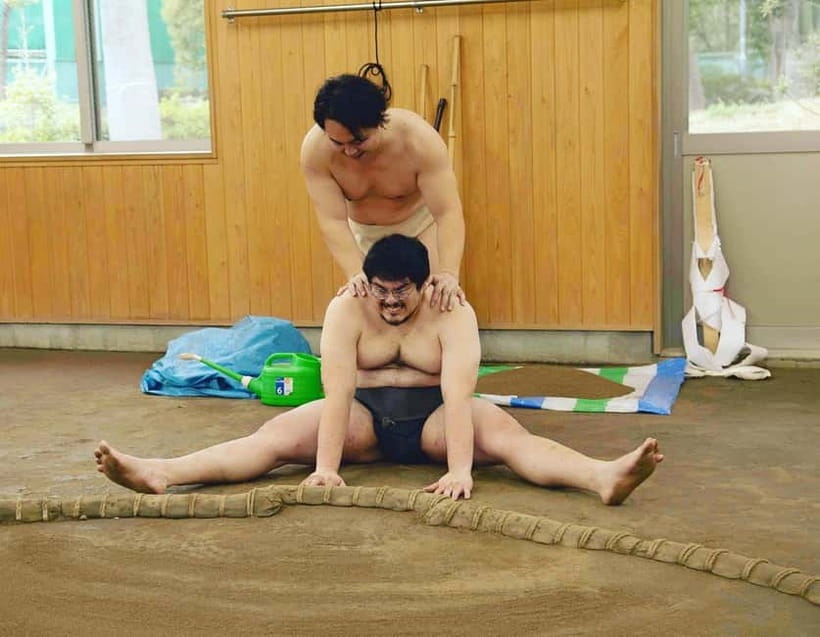
The unusual part here is simple: you do not just watch sumo, you enter the real clay dohyo and learn how wrestlers prepare. Coach Takeshi leads the session in English and Japanese, covering warm-ups, rituals, rules, and basic wrestling before the final matches.
I like the provided mawashi, which means you do not need to bring special gear, and I like the clear cultural element. You learn why sumo begins with ritual, not just brute force. The main drawback is practical: two hours of pushing, squatting, and sweating can be demanding, and the nearby shower costs ¥100 for five minutes.
Key points
- Real training, not a staged show: You stretch, practice sumo movements, and wrestle in a genuine dohyo.
- Mawashi provided: You can wear the traditional belt, or take part in normal clothes if you prefer.
- Takeshi leads the class: Instruction is given in both English and Japanese.
- Rituals come first: You learn traditional Shinto customs and the rules of fighting in the ring.
- Family-friendly format: Children aged five and older may watch free, or join by booking a place.
- Bring water and two towels: The session is physical, and the shower nearby is basic and inexpensive.
Entering the Dohyo at Heiwanomori Park
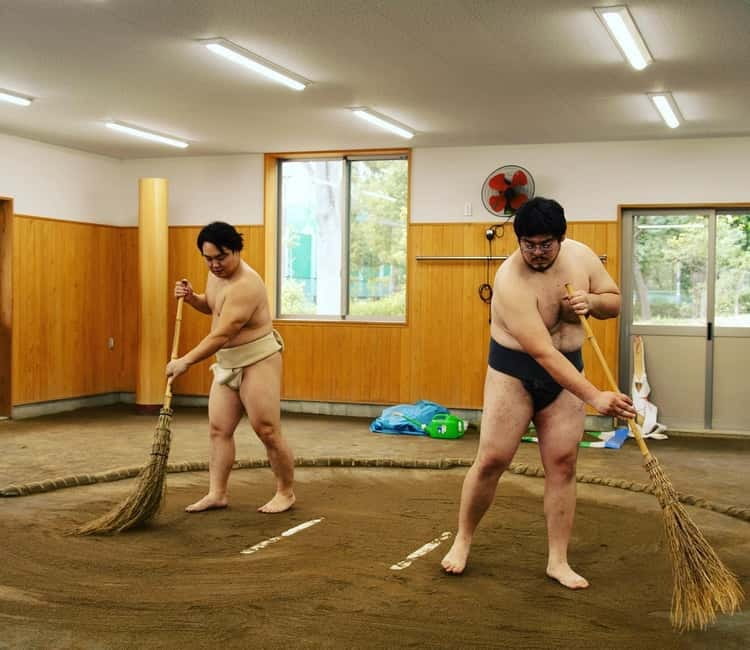
Amita Sumo Dojo meets at Heiwanomori Park Sumo-jo in Ota City, on the southern side of Tokyo. The address is 2-1 Heiwanomorikoen, and the meeting point is a small office at the site.
The nearest station is Heiwajima on the Keikyu Main Line, about a 10-minute walk away. This is not a central Tokyo attraction that you can casually add between the Tokyo Skytree and Shibuya Crossing. You need to allow time for the train ride and the walk, but the route is straightforward once you leave the station.
The published train times give you a useful planning guide. From Shinagawa, allow about 22 minutes. From Shimbashi, allow about 28 minutes. From Nihonbashi, the trip takes about 34 minutes, while Shibuya takes about 36 minutes. From Shinjuku, plan on roughly 49 minutes.
A taxi is possible, but taxis will not normally come to the location unless you arrange one yourself. I would use the train and walk unless you have a particular reason to take a taxi.
More Tokyo sumo experiences:
- Tokyo: Sumo Show and Dining Experience
★ 4.8 · 2,742 reviews - the SUMO show
★ 5.0 · 1,960 reviews - Tokyo Shinjuku Sumo Show & Experience with Photo
★ 5.0 · 1,750 reviews
The First 30 Minutes: Stretching, Stomping, and Sumo Basics
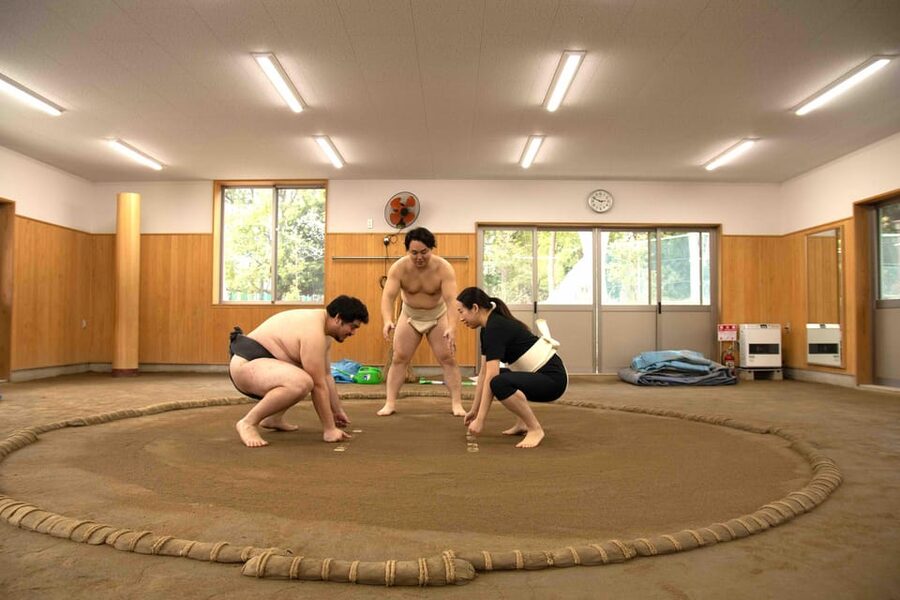
The session begins with the physical foundations of sumo. You will work through stretches and warm-ups before learning the movements used inside the ring.
That opening matters because sumo is not simply two large people crashing into one another. Balance, footwork, posture, and timing all matter. The exercises help you understand why a wrestler must stay low and stable while trying to move an opponent off balance.
You do not need previous martial arts or wrestling experience. The activity is presented for beginners, and the instruction can be adjusted to different fitness levels. One family of four found the session workable for each person, and another participant joined with a 13-year-old daughter and an 18-year-old nephew.
Still, do not treat this as a quiet cultural lecture. You are likely to sweat. The organizers specifically recommend bringing several bottles of water and two towels, one for training and one for the shower. That advice is worth taking seriously.
You can also wear ordinary clothes if you prefer. The choice is useful for anyone who feels uncomfortable wearing a mawashi, though the provided belt is part of what makes the experience feel different from a standard exercise class.
Wearing the Mawashi and Learning the Ring
The dohyo is the heart of the session. This is a real clay sumo ring, not a theatrical platform built only for photographs.
You are given a mawashi, the traditional sumo belt, at no extra cost. The experience does not require you to provide your own equipment. Wearing one gives you a better sense of how restricted movement and close contact shape the sport, though you may stay in your own clothing if that suits you better.
The instructor explains the rules for wrestling inside the dohyo. You learn that the aim is not simply to overpower someone. Position, balance, and the direction of force all affect what happens next. Even a short match can make those ideas clear.
This is also where the activity differs from watching a professional tournament. In the spectator seats, you see the action for only a few seconds at a time. Here, you are asked to notice the stance, the push, the foot placement, and the ritual before the bout.
Shinto Rituals Before the Wrestling Begins
Sumo is closely tied to Japanese Shinto tradition, and the class gives these customs a practical place in the session. You follow demonstrations of the traditional rituals before entering into the matches.
The warm-ups and rituals help explain why sumo has a formal, almost ceremonial rhythm. The sport is not presented as random physical contact. There is a set way to prepare, enter the ring, and show respect for the dohyo.
This cultural explanation is one of the strongest reasons to choose the activity instead of a basic sumo-themed photo opportunity. You are not only handed a belt and told to pose. You learn something about the customs surrounding the sport, then use that knowledge in the ring.
The instruction is in Japanese and English. That does not mean every detail will be translated into a long lecture. Instead, expect demonstrations and simple explanations that help you follow the movements and rituals as they happen.
A completely different kind of day in Tokyo:
- Mt Fuji and Hakone 1-Day Bus Tour Return by Bullet Train
★ 5.0 · 26,383 reviews - 1-Day Tokyo Bus Tour
★ 5.0 · 14,250 reviews - Tokyo: teamLab Planets TOKYO Digital Art Museum Entry Ticket
★ 4.6 · 9,779 reviews - Mt Fuji & Hakone Cruise, Drum Show Bullet Train 1 Day from Tokyo
★ 4.0 · 7,413 reviews
The Matches With Friends and Coach Takeshi
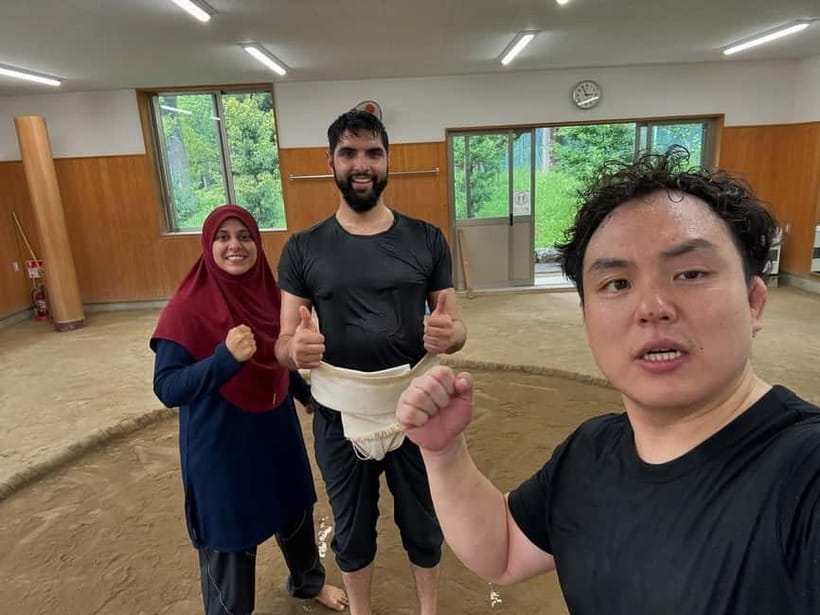
After the instruction, you can wrestle with friends, family members, or other people in your group. If you are brave enough, you can also challenge the coaches.
Takeshi is the coach most often identified with the experience. He is described as warm and easy-going, and he has wrestled with participants during the final part of the class. One particularly memorable session included a match against a five-time Japanese national champion.
That possibility should be understood correctly. This is not a promise that every person will defeat a national-level wrestler, nor is the point to turn the class into a serious competition. The value is the chance to feel the difference between your own effort and the technique of an experienced sumo practitioner.
You can also keep the effort modest. The format is adaptable to the people taking part, so you do not have to treat each match as a full-force contest. If you are fit and eager, you can push harder. If you are new to physical activity, you can take a gentler approach.
Families may find this part especially memorable because everyone can take a turn. A former youth wrestler joined with his son and found that the experience matched what he had hoped for. That makes this a useful choice for a child or teenager who already has an interest in wrestling or martial arts.
Why the Ritual and Training Are Worth More Than a Tournament Seat
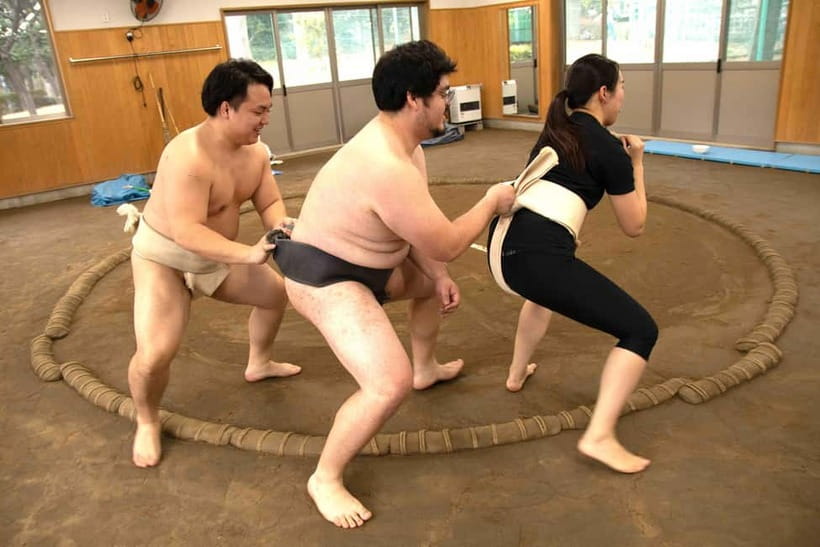
At $199 per person, this is not a cheap Tokyo activity. You are paying far more than you would for a basic museum visit or a seat at a public sporting event.
The comparison is also not quite fair. A tournament ticket gives you professional matches, a crowd, and the excitement of seeing elite wrestlers compete. This two-hour experience gives you access to the ring, instruction from a coach, traditional rituals, and the chance to wrestle yourself.
For someone who only wants to see sumo, the price may be hard to justify. You could prefer a tournament, a sumo demonstration, or a more affordable cultural activity.
For someone who wants to take part, the value is stronger. The mawashi, dohyo, coaching, and match time are all included. You are not paying extra to rent the main equipment or to enter a separate training area. The activity also fills a focused two hours rather than taking up half a day.
The perfect customer is not necessarily the biggest sports fan. It is the person who values a personal encounter over passive viewing. You may remember the feel of stepping into the ring more clearly than the details of a short demonstration on a stage.
Fitness, Clothing, and What to Pack
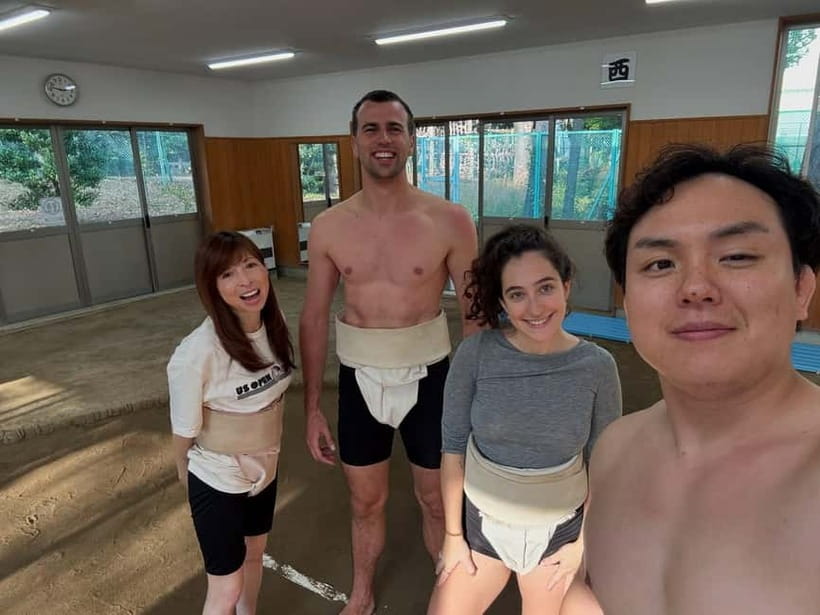
No experience is needed, and all genders, ages, and fitness levels are welcome. That does not mean the class is effortless. Sumo training uses the legs and hips heavily, and the repeated warm-ups, low stances, and matches will make you sweat.
Bring:
- Several bottles of water
- One towel for training
- A second towel for showering
- Comfortable clothing if you do not want to wear the mawashi
The nearby shower room costs ¥100 for five minutes. It is a useful option, but it is basic and limited, so do not expect a full spa-style changing facility.
The choice of clothing is refreshingly flexible. You can try the real belt, which is the more memorable option, or stay in ordinary clothes. If modesty or comfort is a concern, you can still join without wearing the mawashi.
The activity provider notes that injuries and accidents are not their responsibility. That is a reminder to be sensible. Tell the coach if you need to reduce the pace, and do not turn a friendly match into a test of pride.
Bringing Children to the Sumo Dojo
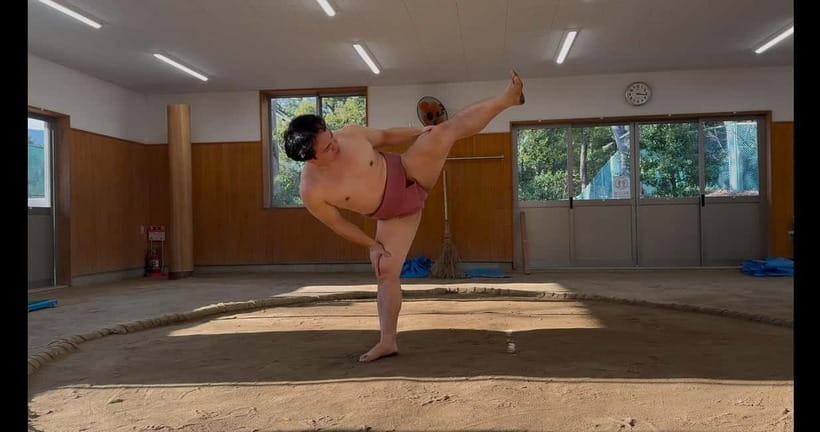
Children under four may accompany an adult, but they can only observe. Children aged five and older may watch the session free of charge.
If a child aged five or older wants to participate, you must book a place for that child. This rule matters for families because an observing child and a participating child are treated differently.
The class can work well for a family with mixed interests. A young child can watch, an older child can take part, and adults can join the same session. The activity is also suitable for teenagers who want more than a standard sightseeing stop.
Keep in mind that the physical side may be tiring for smaller children. The information provided says the class can suit different fitness levels, but it does not promise that every child will want to complete every exercise. A parent should be ready to let a child observe part of the time.
Booking Timing and the Two-Hour Schedule
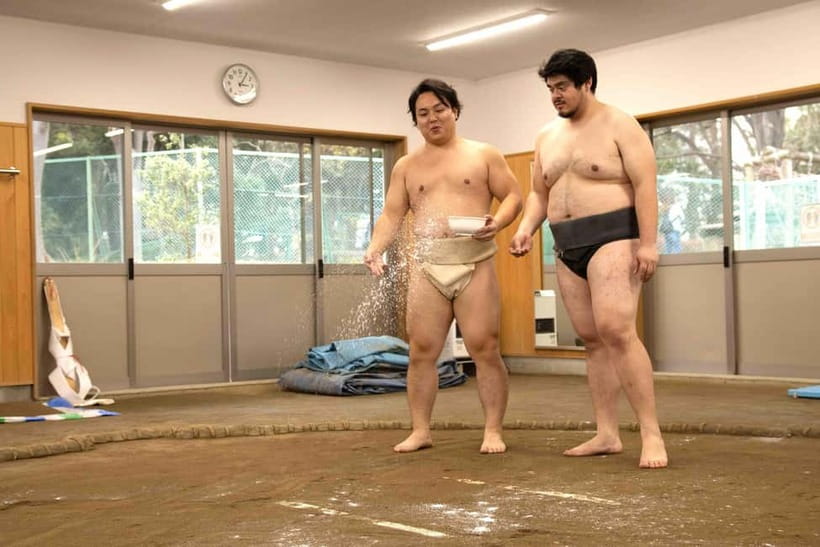
The experience lasts two hours, with starting times based on availability. You should book at least two days before your preferred date, even though the booking system may allow reservations as little as 12 hours ahead.
That extra notice is sensible because the session depends on coach availability and preparation. I would not leave this until the night before if it is an important part of your Tokyo plans.
Cancellation is free up to 24 hours in advance for a full refund. You can also reserve now and pay later, which gives you some flexibility while arranging a longer Japan itinerary.
The two-hour length is well judged for the activity. It gives enough time for warm-ups, cultural explanation, practice, and matches without turning the class into a full-day commitment. Add the train journey, the walk, and time to change or shower, and you should reserve a larger block of your day.
Who Will Get the Most From This Experience
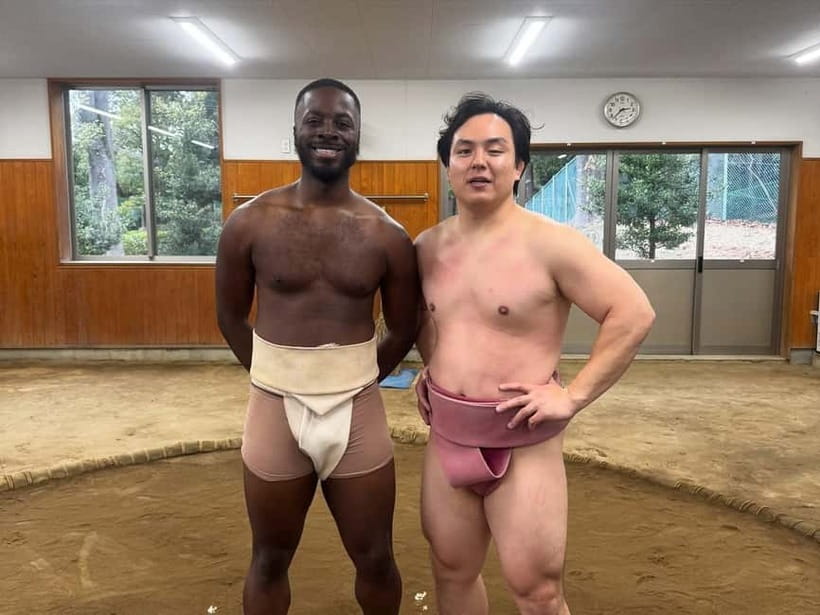
I would choose this for you if you want to participate rather than sit in a seat. It is especially suitable for:
- Families with children aged five and older
- People who enjoy martial arts, wrestling, or unusual sports
- First-time visitors who want a cultural activity with physical involvement
- Anyone curious about Japanese ritual and traditional sport
- Friends who want an activity they can share and remember together
I would think twice if you dislike close physical contact, cannot manage a vigorous warm-up, or want a polished performance with no effort required. The experience asks you to participate, and that is both its strength and its limitation.
It is also not a replacement for attending a professional sumo tournament. You will learn about the sport and wrestle in a real ring, but you will not see a full day of elite competition. If you have room in your budget and schedule, the two experiences serve different purposes.
Should You Book Amita Sumo Dojo?
Book it if the idea of wearing a mawashi, stepping into a real dohyo, and trying a match appeals to you. The best parts are the hands-on training, the explanation of Shinto rituals, and the chance to work with Takeshi rather than simply watch a staged show.
At $199, this is a premium activity. I would not choose it for a quick photograph or a casual introduction to sumo. I would choose it for a family, sports fan, or curious first-time visitor who wants a personal and physical connection to one of Japan’s most distinctive traditions.
Bring water, bring two towels, allow time for the trip to Heiwajima, and expect to sweat. If you accept those conditions, this is one of the more unusual ways to spend two hours in Tokyo.
FAQ
Do I need previous sumo or wrestling experience?
No. The activity is designed for beginners, and no previous experience is needed.
Is the mawashi included?
Yes. A real sumo belt, called a mawashi, is provided at no extra cost.
Can I participate without wearing a mawashi?
Yes. You may wear normal clothing if you prefer.
Where does the activity take place?
It takes place at Heiwanomori Park Sumo-jo, 2-1 Heiwanomorikoen, Ota City, Tokyo, 143-0005.
How do I reach the sumo dojo?
The venue is about a 10-minute walk from Heiwajima Station on the Keikyu Main Line.
Can children join?
Children under four may observe only. Children aged five and older may observe free of charge, but each child who participates needs a booking.
Is food included?
No. Food is not served during the activity. Bring plenty of water because the training can make you sweat heavily.
Newly reviewed around Tokyo
- Tokyo Asakusa:Calligraphy & Make T-shirt Activity★ 5.0 · 62 reviews
- Intercity Shuttle, Tokyo to Haneda /Narita /Yokohama /Makuhari★ 5.0 · 5 reviews
- 1 Hour Travel around Tokyo with a Professional Photographer★ 5.0 · 3 reviews
- Travel Tokyo with Your Own Personal Photographer★ 5.0 · 43 reviews
- Train in Samurai Swordsmanship and Defeat the Demon in Tokyo★ 5.0 · 5 reviews
- Shuttle Van 6hr Tokyo Tour to-and-from Tokyo, Yokohama and Narita★ 5.0 · 9 reviews
- Kickboxing & Body Training with EX-Pro Fighter★ 5.0 · 4 reviews
- Traditional Japanese Knife Sharpening Class★ 5.0 · 18 reviews
Tokyo Sumo Experiences, compared.
Tokyo Shinjuku Sumo Show & Experience with Photo
Read our review →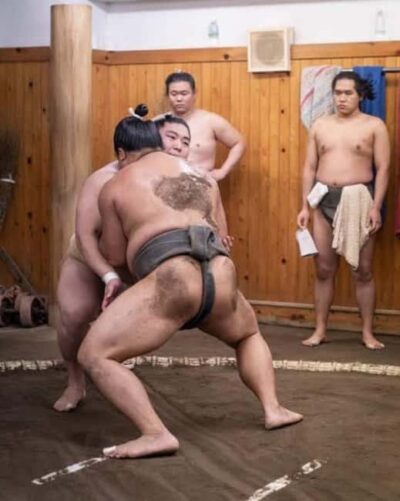

Luxury Sumo Show Experience & Japanese cuisine & Drink
Read our review →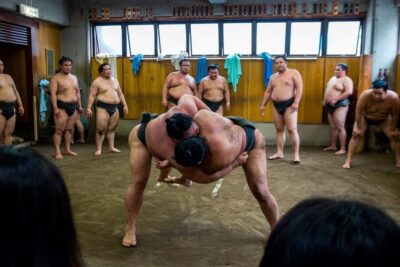
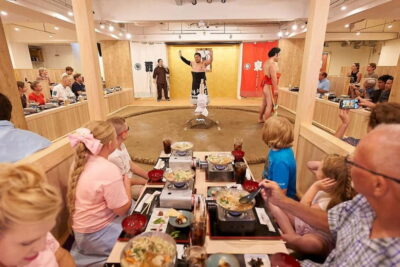
Tokyo Sumo Experience: Chanko & Mochi with a Former Pro
Read our review →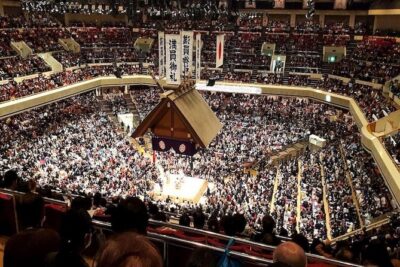
Ultimate Sumo Tournament: Tokyo, Osaka, Nagoya, Fukuoka
Read our review →Browse the lists this tour appears in