
Reviewed · AUDIO TOURS
Tokyo: Open Top Panoramic Sightseeing Bus with Audio Guide
Tokyo is vast, and this 70-minute open-top bus ride gives you a quick sense of its scale without asking you to master the rail map first. Choose the Bay Course for Rainbow Bridge and Odaiba, or the City Course for the Imperial Palace area, Roppongi, Tokyo Tower, and Ginza.
I like the low $11 price and the GPS audio system, which delivers information as the bus reaches each sight. I also like the easy first-day format: sit back, get your bearings, and note places you may want to visit later. The trade-off is simple: traffic, weather, limited legroom, and occasional loud music can affect the ride.
Key points
- Two useful routes: Pick Tokyo Bay and Odaiba, or the central city route through Roppongi, Tokyo Tower, and Ginza.
- Rainbow Bridge is the highlight: The Bay Course crosses it on both the first and second levels of the route.
- GPS audio commentary: Information plays according to the bus location in seven listed languages.
- Strong value at $11: You see a wide slice of Tokyo for less than many standard sightseeing rides.
- Weather matters: Rain may close the roof, while open-air seats can feel cold or hot.
- Arrive early: Check in at the Tokyo VIP Lounge 20 to 40 minutes before departure, since the bus leaves on time.
A fast first look at Tokyo from the top deck
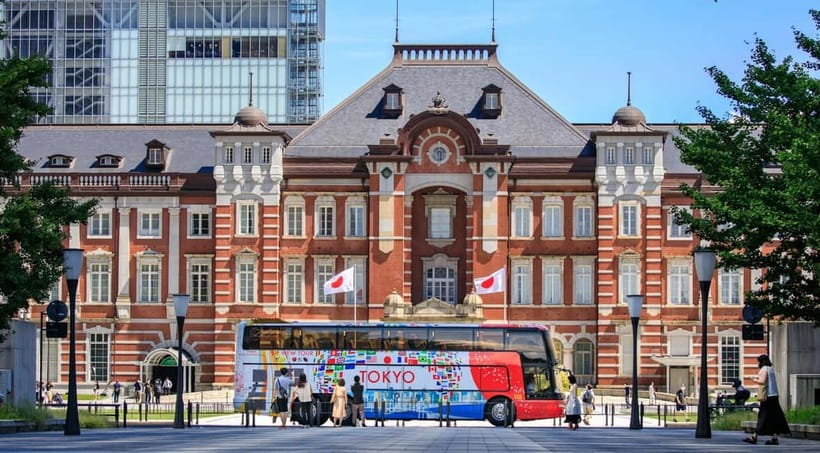
The best reason to book this ride is not any single monument. It is the change in scale. From street level, Tokyo can feel like a series of separate districts. From the open top of the bus, you begin to see how Marunouchi, Ginza, Tokyo Tower, the waterfront, and Odaiba fit together.
That makes this a smart choice for your first day, especially if you have just arrived and want a calm introduction before tackling the trains and crowds. You are not stopping for long visits at the sights. Instead, you get passing views, location-based commentary, and a chance to mark down what deserves a closer look.
At $11 per person, the ride is priced more like a city orientation than a full guided tour. You should not expect a detailed walking tour or a live guide explaining every building. You are paying for a broad view of Tokyo, a seat, and a simple audio service.
More Tokyo self-guided and audio tours:
- Tokyo: 60min Panoramic Open Top Bus Tour with Audio Guide
★ 4.0 · 40 reviews - Akihabara: Self-Guided Tour with a special brochure
★ 3.7 · 11 reviews - Tokyo Self-Guided Audio Tour
★ 3.5 · 10 reviews
Choose the Bay Course for the best views
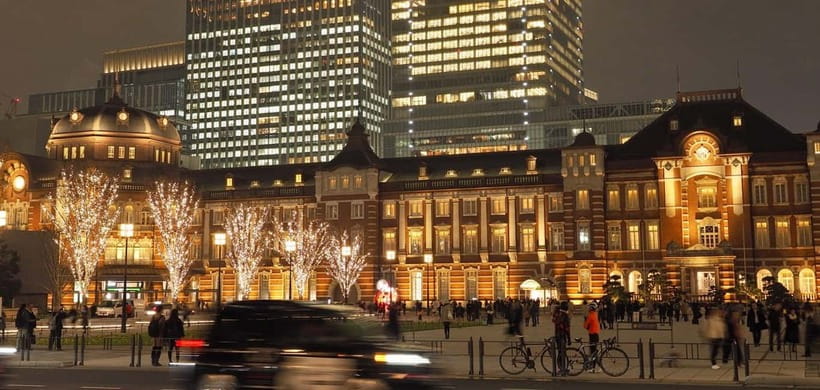
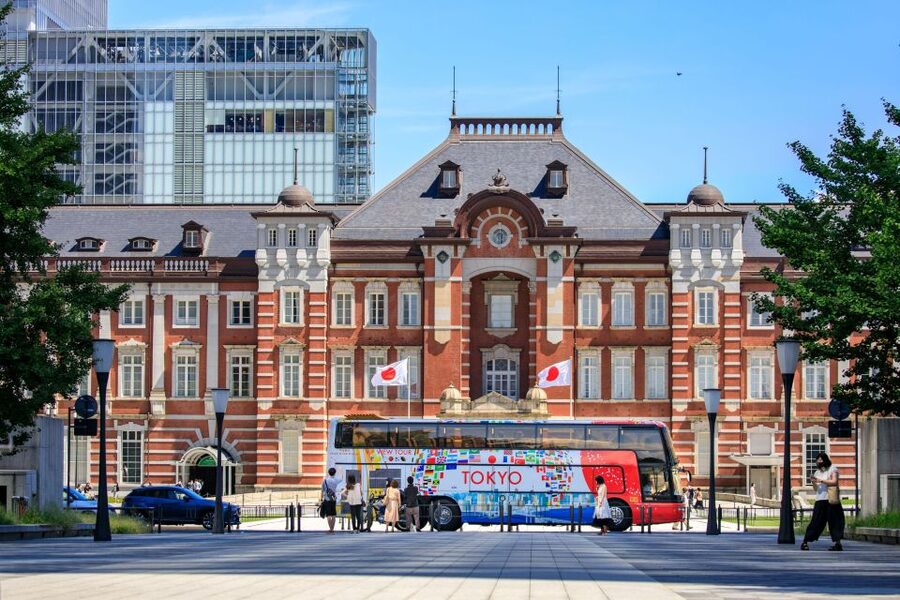
The Bay Course lasts about 70 minutes and combines central Tokyo with the waterfront. It begins at the Tokyo Station Red Brick Station Building, then passes through Marunouchi before heading toward Zojoji Temple and Tokyo Tower.
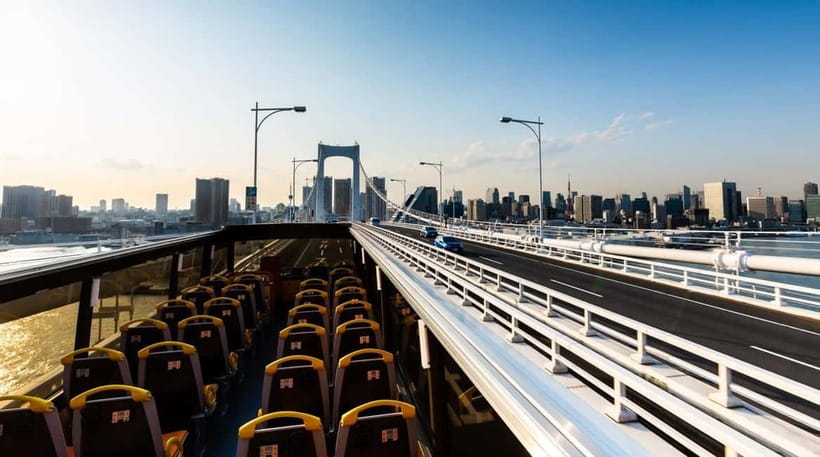
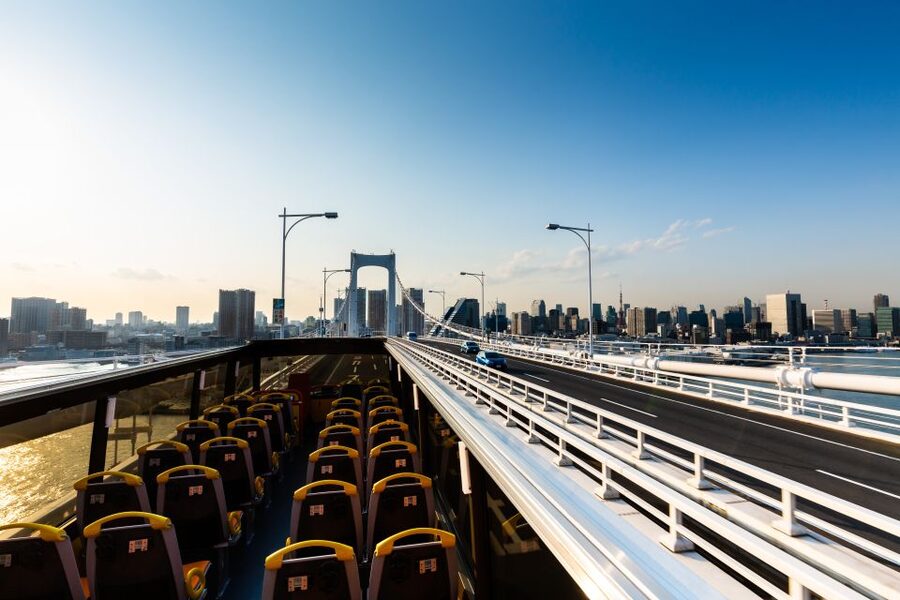
The route then reaches Shibaura and crosses the first level of Rainbow Bridge. This is the point where the ride feels most different from an ordinary city bus. You get open views toward Tokyo Bay and a sense of the bridge as a working piece of transport infrastructure, not just a photo backdrop.
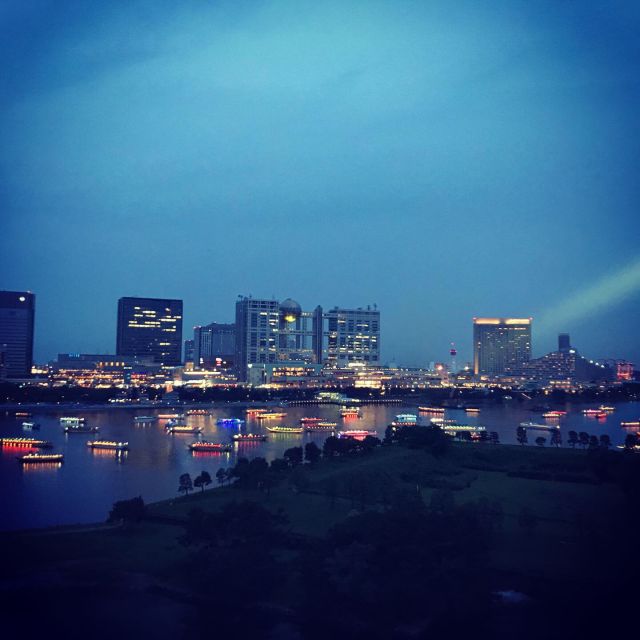
On the Odaiba side, the bus passes the Fuji TV Building, the Statue of Liberty, and Odaiba Seaside Park. These sights show Tokyo’s newer waterfront character, with broad roads, open spaces, and modern buildings replacing the tighter streets of the central districts.
The route crosses Rainbow Bridge again on its second level before heading through Shiodome and Ginza. This return leg gives you another angle on the bridge and city skyline. If you have only one ride in your schedule, I would favor the Bay Course for this crossing and the mix of old, modern, and waterfront Tokyo.
The route does not give you time to stop at Odaiba Seaside Park or visit the Fuji TV Building. Think of those locations as previews. If one catches your eye, return later by train or on foot.
Choose the City Course for central Tokyo
The City Course also takes about 70 minutes. It begins at Tokyo Station and moves through Marunouchi, the district of broad avenues and major office buildings near the Imperial Palace.
From there, the bus passes Chidorigafuchi and the Akasaka State Guest House. These areas provide a different view of Tokyo from the waterfront route, with formal institutions, palace surroundings, and some of the city’s most important public spaces.
The ride continues through Meiji Jingu Gaien, Tokyo Midtown, and Roppongi. Tokyo Midtown and Roppongi bring the focus back to high-rise Tokyo, while Meiji Jingu Gaien offers a change of pace with its park setting.
Tokyo Tower is the main visual marker on this route. You will see it from the bus, but you will not visit the observation decks. The bus then passes Hibiya and returns toward Ginza, giving you a good look at one of Tokyo’s best-known shopping and dining districts.
I would choose the City Course if you care more about central neighborhoods, major buildings, and Tokyo’s skyline than the bay. It is also a good fit if your plans already include Odaiba on another day.
How the GPS audio guide works
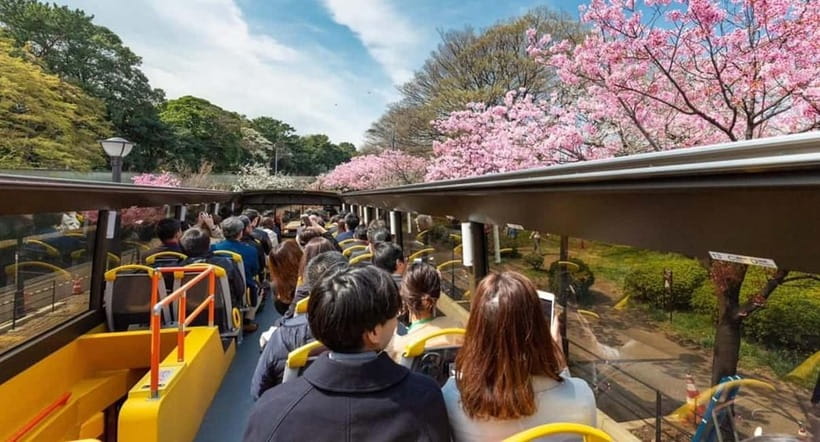
The audio system uses GPS to identify the bus’s position and play commentary linked to the current part of the route. It is designed to adjust as traffic changes, so the narration should match the sights near you rather than follow a rigid timetable.
The listed languages are Japanese, English, Chinese, French, Korean, Vietnamese, and Thai. The information focuses on landmarks and their background, giving the ride more purpose than a silent drive through town.
This is an automatic system, not a live guiding session. Japanese-speaking staff are available for assistance, but the instructor language is Japanese and there is no live guide providing continuous commentary in person.
Bring your own headphones if you have a pair with a standard 3.5mm mini plug. Headphones can also be purchased for 100 yen. The audio is useful, though the music between sections may feel too loud beside the spoken information. On some rides, live Japanese announcements may also make the audio harder to hear.
For the clearest experience, sit where you can see well and keep the volume at a comfortable level before the bus leaves. The system is helpful, but it is not the same as having a guide answer questions or point out every passing detail.
A completely different kind of day in Tokyo:
- Mt Fuji and Hakone 1-Day Bus Tour Return by Bullet Train
★ 5.0 · 26,383 reviews - 1-Day Tokyo Bus Tour
★ 5.0 · 14,250 reviews - Tokyo: teamLab Planets TOKYO Digital Art Museum Entry Ticket
★ 4.6 · 9,779 reviews - Mt Fuji & Hakone Cruise, Drum Show Bullet Train 1 Day from Tokyo
★ 4.0 · 7,413 reviews
What the Tokyo Station meeting point is really like
The meeting point is the Tokyo VIP Lounge on the second and third floors of a building with Family Mart on the ground floor. It is about a five-minute walk from Tokyo Station’s Yaesu North Exit.
This part deserves care because finding the building is more important than the name suggests. It is a shared facility, not a luxurious private lounge. Some people may find the room basic, and seating rules can be strict when you arrive outside the free-use period.
You can use the facility free of charge beginning 40 minutes before departure. If you arrive earlier, a facility fee may apply. Check the exact arrangements on the day and do not assume that an empty chair is available for waiting.
I would arrive 30 to 40 minutes early, especially if Tokyo Station is new to you. The staff may not speak much English, but assistance is available in Japanese, and the route to the bus involves a short walk. A map and clear preparation will save stress.
The bus does not wait for late arrivals. There are no refunds if you reach the wrong location or miss the scheduled departure, even if you contact the operator before departure. Keep the meeting point details open on your phone, and allow extra time for finding the correct Tokyo Station exit.
Weather can change the whole ride
This tour operates in ordinary rain or shine, with cancellations limited to severe conditions such as typhoons. If rain begins, the open roof may be closed. That keeps the ride running, but it changes the main appeal of sitting above the traffic.
Open-top seating also exposes you to temperature. A pleasant spring afternoon can feel very different from a cold winter ride or a hot summer one. One passenger found the limited legroom and weather exposure worth noting, so dress for the forecast rather than for the temperature inside the station.
The bus schedule can shift slightly because of traffic, weather, or other unexpected conditions. Tokyo roads can slow down, and the 70-minute estimate should not be treated as a guarantee that you will arrive at a particular place at an exact minute.
Do not bring food, umbrellas, smoking materials, or selfie sticks onto the vehicle. The headphone jack supports only 3.5mm mini plugs. These rules are easy to follow, but knowing them in advance helps you avoid a last-minute scramble.
The views are better than the detail
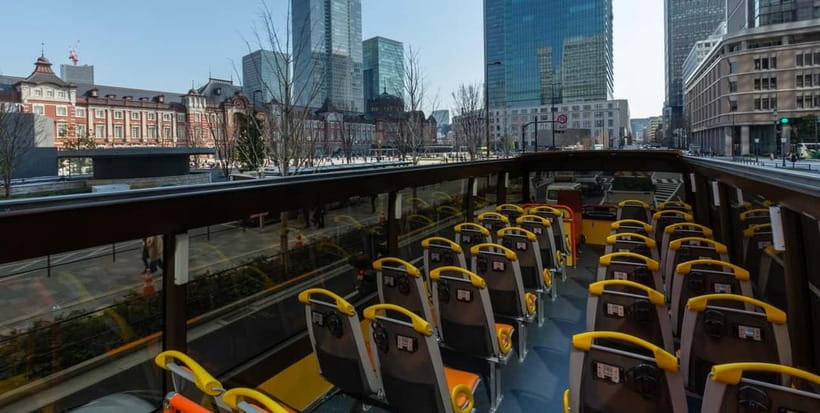
The bus gives you a broad visual introduction, not a close examination of each landmark. You will see Tokyo Tower, the Imperial Palace area, Ginza, Rainbow Bridge, Odaiba, and major modern buildings, but you will not have time to explore them during the ride.
That is not a flaw if you use the tour correctly. I would treat it as a planning tool. If Tokyo Tower catches your attention, you can return later. If the waterfront appeals to you, set aside more time for Odaiba. The ride helps you decide where to spend your valuable sightseeing hours.
Rainbow Bridge is the strongest part of the Bay Course because the elevated road gives you a moving view rather than a single fixed lookout. The contrast between the bridge, bay, high-rises, and open sky makes the ride feel special for its price.
The City Course is more about passing through the capital’s central districts. It gives you a practical sense of how close or far apart the major areas are, even when the traffic makes the ride slower than expected.
Value at $11 per person
At $11, this is one of the easier Tokyo activities to justify. A normal 70-minute ride on local transport might cost much less, but it would not include an open top, a planned route through key sights, or landmark commentary in several languages.
You are also paying for convenience. You do not need to change trains between Tokyo Station, Roppongi, Tokyo Tower, and Ginza. You sit in one place while the city comes to you.
The limits are clear. There is no stop-and-explore format, no live guide in your chosen language, and no promise of a roof-open ride in bad weather. Limited knee room may bother taller passengers, and the audio music could be quieter.
For a first look at Tokyo, the value is strong. For someone who already knows the city and wants a deep cultural explanation, the ride may feel too brief and general. The price works best when you see it as an orientation tour, not your main sightseeing day.
Who should book this bus ride?
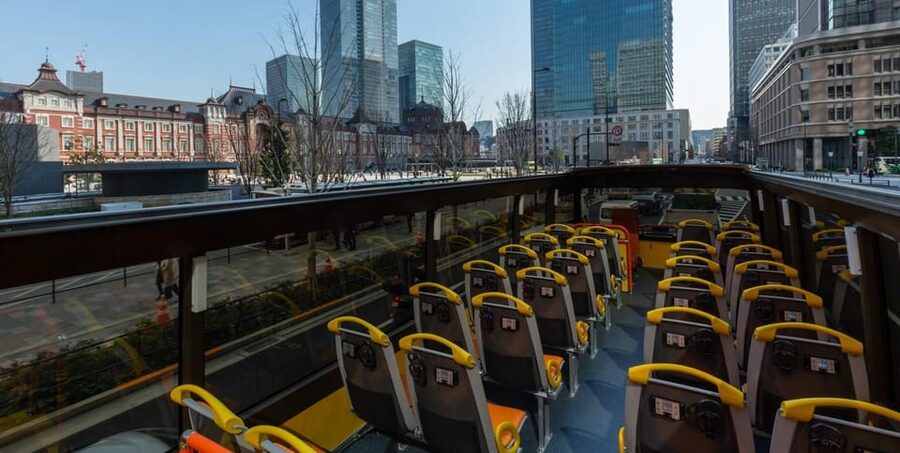
I would recommend it to first-time visitors, people with a short Tokyo stay, and anyone who wants an easy activity after a long flight. It also suits families or mixed groups who do not want to organize a full day around several train changes.
The Bay Course fits you if Rainbow Bridge and Odaiba sound appealing. Choose the City Course if you want Tokyo Station, the Imperial Palace area, Roppongi, Tokyo Tower, and Ginza.
This may not suit you if you dislike exposed seating, need generous legroom, or want a detailed personal guide. It is also a poor choice for a tight schedule immediately after the tour, since traffic can affect the finish time.
The overall rating is 3.8 out of 5, which fits the experience well. The ride earns praise for its organization, friendly assistance, safe driving, views, and low price. The main weak spots are the basic meeting room, language limitations at check-in, weather, legroom, and audio volume.
Should you book it?
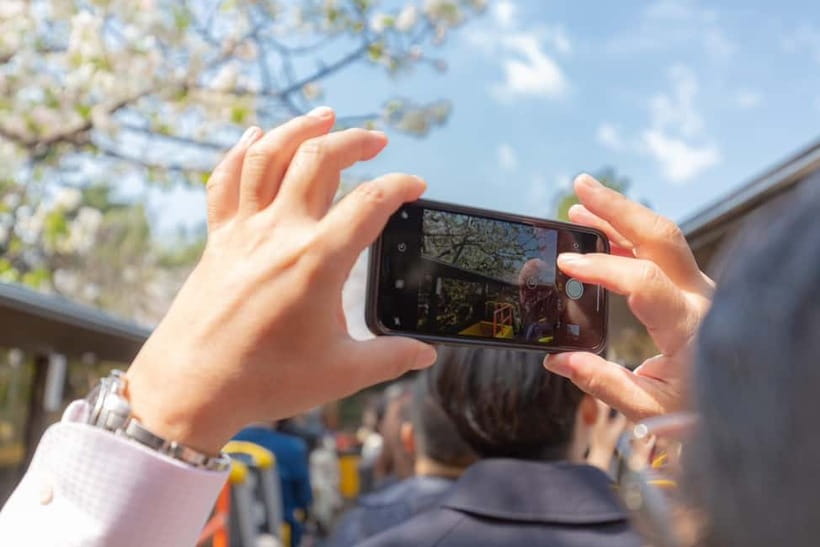
Book this tour if you want a cheap, low-effort overview of Tokyo and can accept that the bus keeps moving. I would pick the Bay Course for the most memorable scenery, especially the Rainbow Bridge crossing, and the City Course for central Tokyo landmarks.
Arrive early, check the weather, bring suitable clothing, and use your own 3.5mm headphones if possible. If you approach the ride as a first look rather than a full tour, it delivers a useful 70 minutes for very little money.
FAQ
How long is the Tokyo open-top bus tour?
Both the Bay Course and City Course last approximately 70 minutes.
Where is the meeting point?
The meeting point is the Tokyo VIP Lounge on the second and third floors of a building with Family Mart on the ground floor. It is about a five-minute walk from Tokyo Station’s Yaesu North Exit.
How early should I arrive?
You should check in 20 to 40 minutes before departure. Arriving closer to 40 minutes early is sensible if you need time to find the building or complete check-in.
Which languages are available on the audio guide?
The listed audio guide languages are Japanese, English, Chinese, French, Korean, Vietnamese, and Thai.
Does the tour run in the rain?
The tour operates in ordinary rain or shine, but the open roof may be closed if it rains. Cancellations are limited to extreme weather conditions such as typhoons.
Are headphones included?
Headphones are not included. You may bring headphones with a 3.5mm mini plug or purchase a pair for 100 yen.
Newly reviewed around Tokyo
- Tokyo Asakusa:Calligraphy & Make T-shirt Activity★ 5.0 · 62 reviews
- Intercity Shuttle, Tokyo to Haneda /Narita /Yokohama /Makuhari★ 5.0 · 5 reviews
- 1 Hour Travel around Tokyo with a Professional Photographer★ 5.0 · 3 reviews
- Travel Tokyo with Your Own Personal Photographer★ 5.0 · 43 reviews
- Train in Samurai Swordsmanship and Defeat the Demon in Tokyo★ 5.0 · 5 reviews
- Shuttle Van 6hr Tokyo Tour to-and-from Tokyo, Yokohama and Narita★ 5.0 · 9 reviews
- Kickboxing & Body Training with EX-Pro Fighter★ 5.0 · 4 reviews
- Traditional Japanese Knife Sharpening Class★ 5.0 · 18 reviews
Audio Tours, compared.
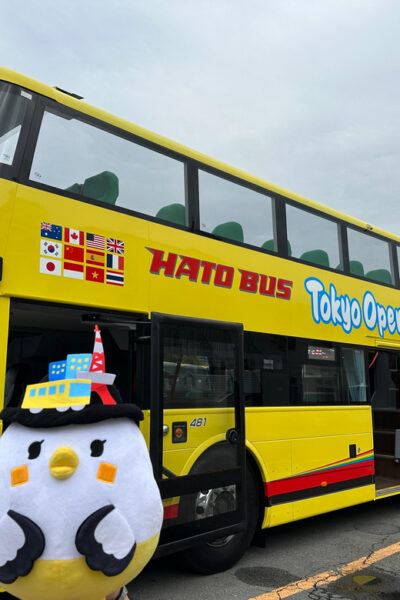
60min Panoramic Open Top Bus Tour with Audio Guide
Read our review →

Sumo Keiko Training Tour with Audio Guide & Photo
Read our review →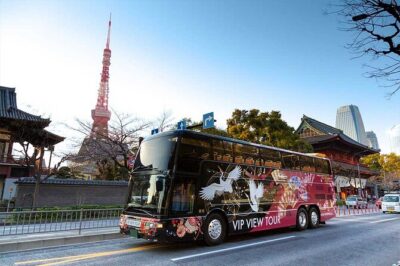
Browse the lists this tour appears in