
Reviewed · HALF-DAY
Tokyo: A Half-Day Trip Bus Tour in the Morning
Tokyo is huge, and this tour handles one of its biggest sightseeing challenges: reaching three famous sights without spending half the day changing trains. You ride between the stops in a comfortable hybrid bus, with an English-speaking guide filling in the story along the way. Aki, Kumiko, Yuko, and other guides have earned special praise for clear explanations, humor, and personal attention.
I like the efficient route and the useful mix of guided sightseeing and free time. You get the Imperial Palace outer garden, Tokyo Tower, and Sensō-ji in one outing, then can stay around Asakusa for food or shopping if you wish. The main limitation is that you do not enter the Imperial Palace itself, and busy days can make the temple area feel crowded.
Key points at a glance
- Three major Tokyo sights in one morning: Visit the Imperial Palace outer area, Tokyo Tower, and Sensō-ji without arranging separate transport.
- A nationally licensed English-speaking guide: Expect cultural background, practical explanations, and occasional personal touches such as Japanese phrases or kimono demonstrations.
- Tokyo Tower’s 150-meter observatory: The main deck gives wide city views, with Mount Fuji possible on a clear day.
- Free time at Nakamise: Browse the 200-meter shopping street near Sensō-ji and buy snacks, meals, or souvenirs at your own expense.
- A useful first-day orientation: The route gives you a clear introduction to Tokyo’s imperial, Buddhist, and modern city landmarks.
- Good value at $40: Entrance fees and transport are included, though hotel pickup and drop-off are not.
Why this four-hour route works in Tokyo
At $40 per person, this is an economical way to cover three well-known sights in a city that can be slow to cross. The price includes the bus, the guide, Tokyo Tower admission, and access to the listed sightseeing stops. You are paying less for private attention and more for a sensible route that removes much of the day’s transport planning.
The tour normally lasts about four hours, though the activity information also gives a total duration of 270 minutes. Starting times vary, so check the exact option when booking. You can depart from the Hato Bus Tokyo office near Tokyo Station or from Hato Bus Shinjuku Station East Exit, depending on your selected departure.
This is not a slow, specialist tour. It is a first look at central Tokyo, designed to show you the city’s main symbols in a short stretch of time. I think that makes it especially useful at the start of a visit, when you want orientation before returning later to places that deserve more time.
The bus is a major part of the value. Tokyo’s train system is excellent, but stations can be large, crowded, and confusing when you are still learning the city. A hybrid bus with air conditioning gives you a place to sit between stops, which matters during Tokyo’s hot summer months. One guide handled a group in temperatures above 35 degrees Celsius, and several people praised the cool bus in August.
More early morning tours in Tokyo:
- Tokyo: Sumo Morning Practice Viewing Tour
★ 4.8 · 570 reviews - Tokyo: Sumo Morning Training Visit
★ 4.4 · 370 reviews - Tokyo: Sumo Morning Practice Tour at Sumida City
★ 4.8 · 308 reviews
The Imperial Palace outer garden and Nijubashi Bridge
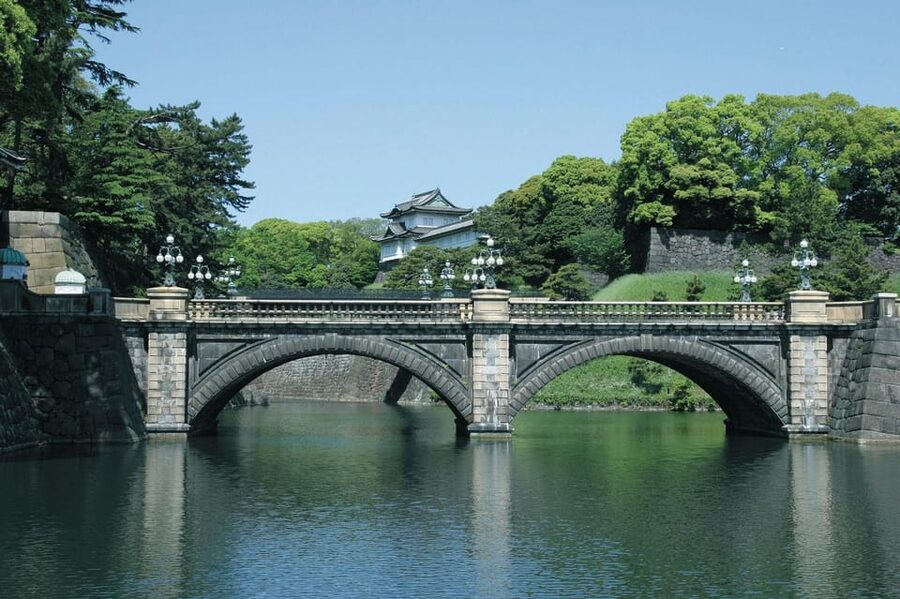
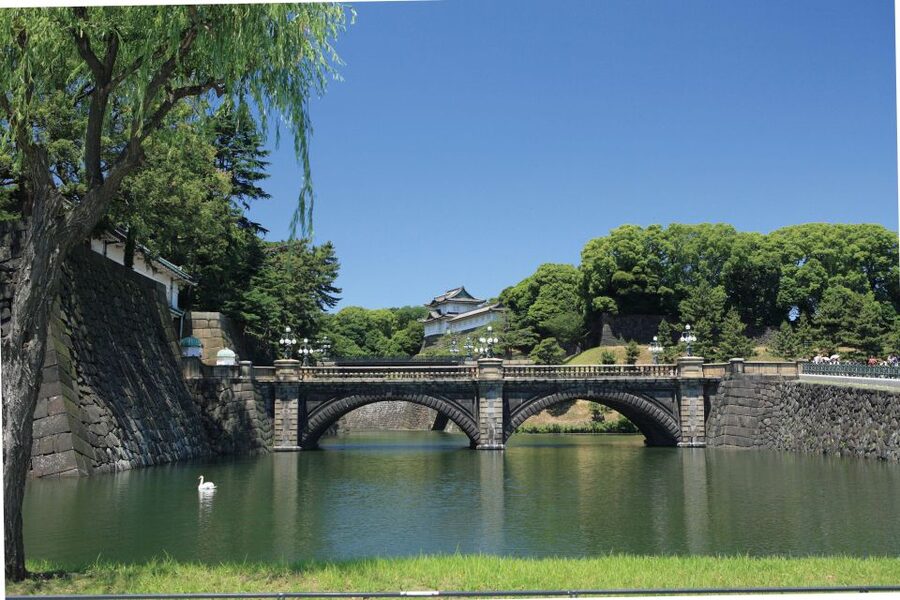
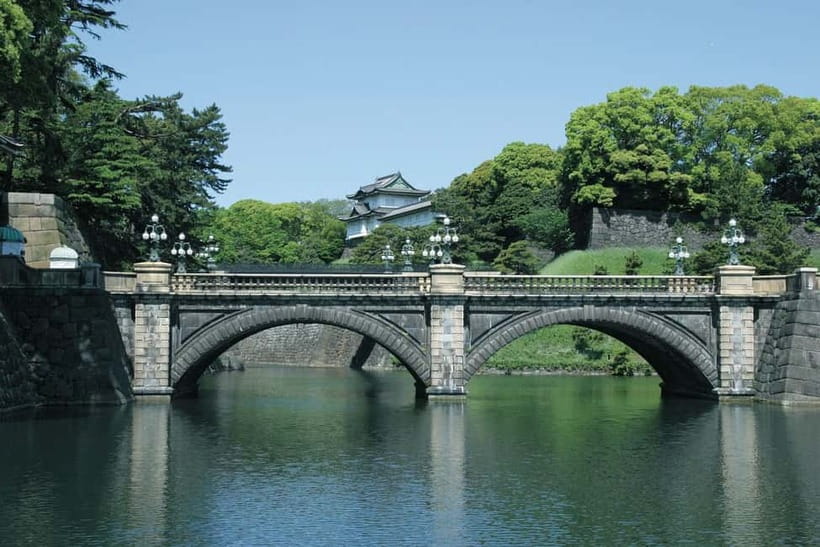
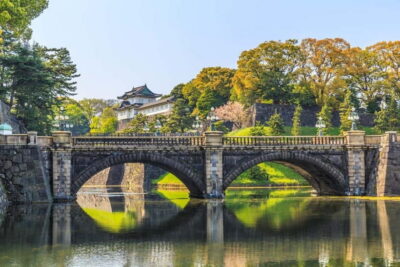
The first sightseeing stop takes you to the Imperial Palace outer area for about 40 minutes. You will see the statue of Masashige Kusunoki and walk toward the Nijubashi Bridge area, where the palace grounds offer an impressive combination of stonework, open space, and carefully framed views.
This stop is more about setting and symbolism than entering a palace interior. The Imperial Palace itself is not open to you on this tour, and the East Gardens are not included. That distinction matters, especially if you imagined walking through the palace grounds. You are seeing the outer garden and historic architecture from public areas.
Still, the stop works well as an introduction to Japan’s imperial institution. Your guide can explain the role of the emperor, the palace setting, and the meaning of the bridge area while you take photographs. The pace is short enough to keep the tour moving, but long enough for a walk and a few good pictures.
I would treat this as a scenic and historical photo stop rather than a palace visit. If the palace interior or East Gardens is high on your list, plan a separate visit. The guide may also suggest other places to explore later, including parks and areas near Tokyo Bay.
Tokyo Tower from the 150-meter main observatory
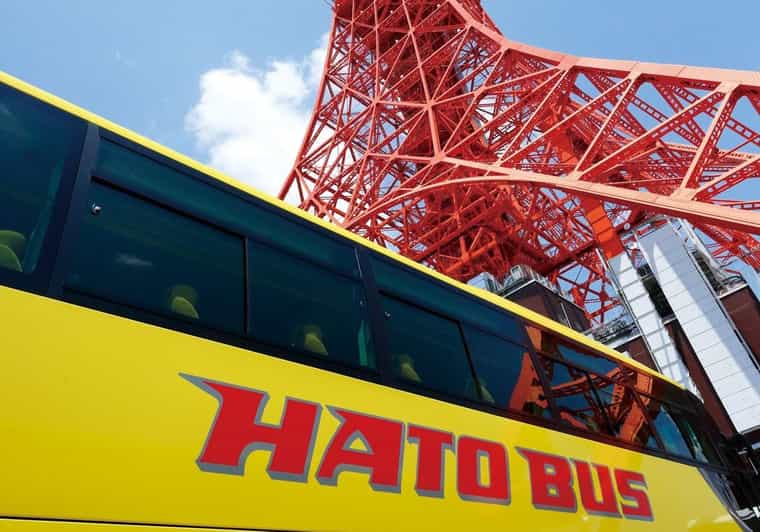
Tokyo Tower is the tour’s high point in a literal sense. You go up to the main observatory, 150 meters above the city, for about 40 minutes of sightseeing and free time.
The view lets you see Tokyo as a vast urban spread rather than a collection of separate neighborhoods. On a clear day, Mount Fuji may be visible. Weather makes a real difference here, so cloudy or hazy conditions can limit the view. Even then, the tower remains one of Tokyo’s most recognizable structures and gives you a useful sense of the city’s scale.
The 40-minute stop is enough for the observatory, photographs, and a quick look around. It is not enough for an extended visit to every part of the tower complex. That is a fair trade for a half-day tour, but you should not expect a long, unhurried tower visit.
Crowds can affect the experience. One person described Tokyo Tower as very busy while still finding the view worthwhile. I would keep your expectations practical: this is a quick city panorama, not a private viewing platform. The included admission makes the stop better value than arranging the tower separately.
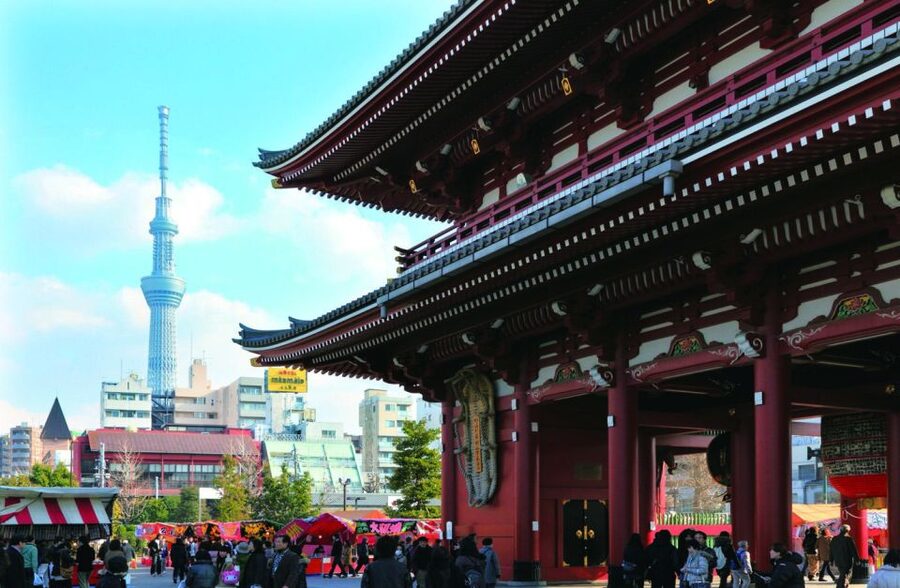
Sensō-ji and the Nakamise shopping street
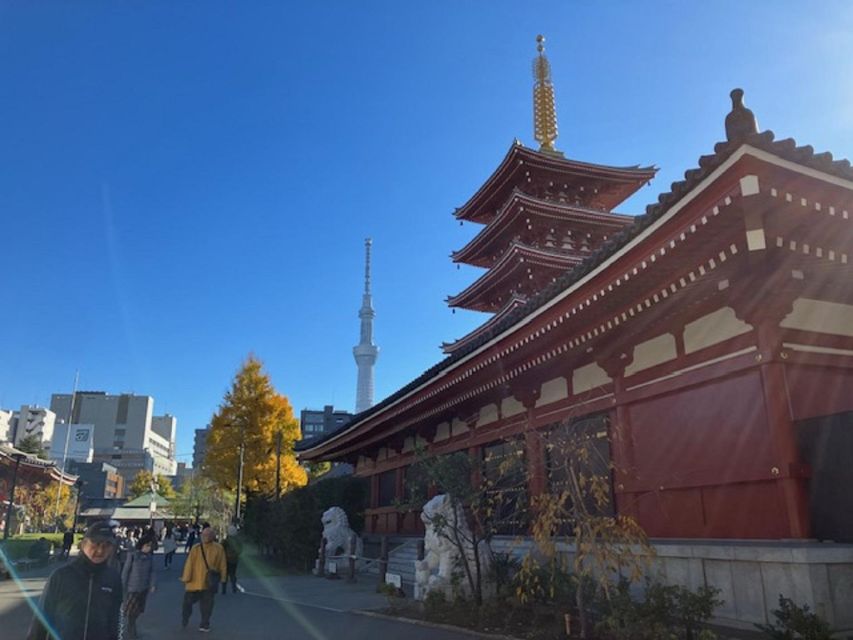
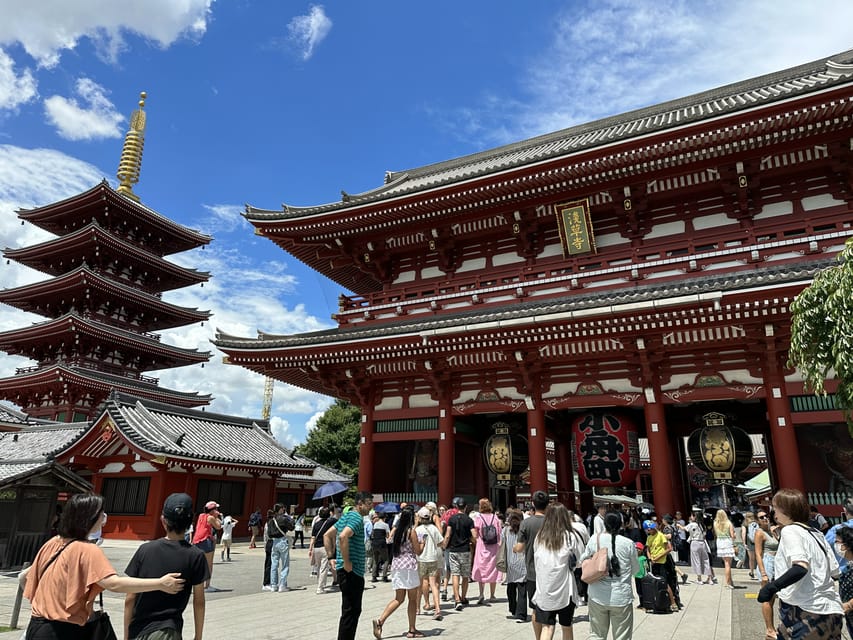
The longest stop is at Sensō-ji, also called Asakusa Kannon Temple. You get about an hour here, including a guided visit, sightseeing, photography, and free time.
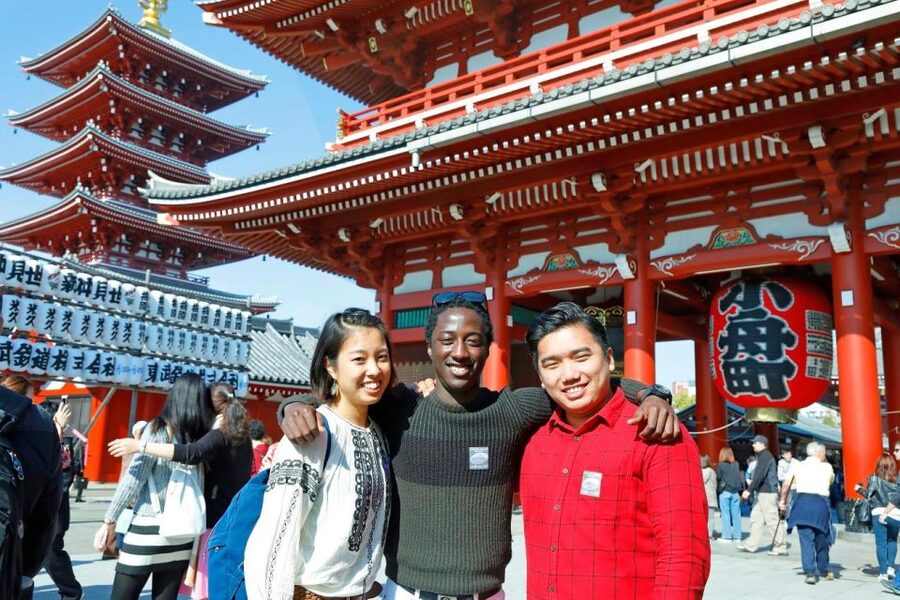
Sensō-ji is Tokyo’s oldest temple, and its appeal comes from both the religious site and the traditional street leading toward it. Your guide can point out details of the temple’s craftsmanship and explain the difference between Buddhist temples and Shinto shrines. You may also learn how to pray, depending on the guide and the flow of the visit.
After the guided portion, you can explore on your own. Nakamise, a traditional shopping street about 200 meters long, is the practical advantage of ending the tour here. You can look for souvenirs, try local snacks, or find a meal. Food and shopping are not included, and one useful tip is to carry cash because parts of the market are mostly cash only.
This stop often feels fuller and more active than the Imperial Palace area. Sensō-ji can be very crowded, especially on holidays and busy sightseeing days. Keep track of the guide and your meeting instructions, since it is possible to lose sight of the group in the temple area. One person found the final stop less cohesive for that reason, so I would not wander far until you know exactly when and where the group is reconvening.
The tour officially returns to the original starting point, but one person reported ending at Tokyo Station rather than the expected pickup location. Check the precise end point for your booking, especially if you have a train or flight soon afterward.
More half-day trips in Tokyo:
- Half-day Tokyo Afternoon Tour by Hato Bus
★ 4.0 · 269 reviews - Half-day Tokyo Morning Tour by Hato Bus
★ 4.0 · 220 reviews - Tokyo Private Half-Day Tour with a Local – Secrets & Highlights
★ 5.0 · 53 reviews - Old and Nostalgic Tokyo: Half-Day Yanaka Walking Tour
★ 4.9 · 30 reviews
What the English-speaking guide adds
The guide is more than a person who leads you from bus to bus. The strongest part of this experience is the cultural explanation between the landmarks. Guides such as Kumiko, Aki, Yuko, Koyiko, Atsushi, Azumi, Makoto, Takako, and Shota have been singled out for clear English, humor, patience, and useful historical detail.
The style can vary by guide, but the tour data points to several recurring strengths:
- Historical background at the Imperial Palace and Sensō-ji
- Explanations of Buddhism, Shinto, and temple customs
- Practical help with photographs and meeting points
- Japanese phrases and greetings
- Personal cultural details, including one guide explaining how she put on her own kimono and obi
- Suggestions for places to visit after the tour
That human element helps you notice details you might otherwise pass by. A temple roof, a bridge, or a statue can look attractive without making much sense. A good explanation gives each place a purpose.
The tour is conducted in English, so you need enough English to follow spoken explanations. Several people particularly praised the guides’ pronunciation and ability to make Japanese culture easy to understand. The average rating is 4.6 out of 5 from 236 ratings, and 89 percent of ratings give the transport a perfect score. Those figures fit the experience described here: the bus and guide service are the dependable core of the outing.
Timing, crowds, and physical effort
The tour is efficient, but efficient does not mean motionless. You will get on and off the bus several times, walk around the Imperial Palace outer area, move through Sensō-ji, and use the facilities at Tokyo Tower. A few steps are required when boarding and leaving the bus.
The activity is marked wheelchair accessible, but the step information is worth noting if you use a wheelchair or have limited mobility. Confirm the exact arrangements before booking if those steps could be difficult for you.
Tokyo’s weather should shape your expectations. The air-conditioned bus is a welcome refuge in summer, but the outdoor stops can still be hot. At Sensō-ji and the palace area, you will be outside for much of your time. In rain, the tour can still work, but photographs and walking are less pleasant. One person considered the trip worthwhile despite poor weather, while another found holiday crowds the main challenge.
The tour does not feel designed for a leisurely lunch. You get free time at Asakusa, but the priority is sightseeing. If you want a long meal, extensive shopping, or detailed temple photography, stay in Asakusa after the group portion ends if your schedule allows.
Who will get the most from this tour

I would recommend this outing to you if you are visiting Tokyo for the first time, have only a few days, or prefer not to manage several major sights by train. It is also a good choice if you are staying near Shinjuku and want a direct start from the Shinjuku departure point.
Families may appreciate the simple transport and short stops. Children under six can ride free, but they do not receive their own seats, so factor that into your plans. Older visitors may appreciate the bus between stops, though the walking and boarding steps still matter.
This tour also suits anyone who likes context. You will not simply photograph three landmarks and move on. The guide explains imperial Tokyo, the city’s modern skyline, and Buddhist tradition at Sensō-ji. The range gives you a useful framework for planning later days.
You may want something else if you already know Tokyo well, want a private guide, or prefer to spend an entire morning in one neighborhood. The tour covers ground rather than offering long visits. It also does not include hotel pickup, so you must reach the selected departure point yourself.
Booking details that matter
You can cancel up to 24 hours before departure for a full refund, and the reserve-now, pay-later option keeps your plans flexible. Enter your first and last name carefully and keep the name within 20 characters. A middle name can be omitted if needed, and longer names may cause a booking error.
The meeting point depends on the option you choose. Confirm whether your departure is the Hato Bus Tokyo office or Hato Bus Shinjuku Station East Exit. Arrive with enough time to find the correct bus area, especially if you are unfamiliar with Tokyo Station or Shinjuku.
The tour returns to its starting point according to the activity details, but the final drop-off can vary by arrangement. If you need to catch a flight, reserve a generous margin rather than treating the scheduled end as an exact arrival time.
Should you book this Tokyo bus tour?
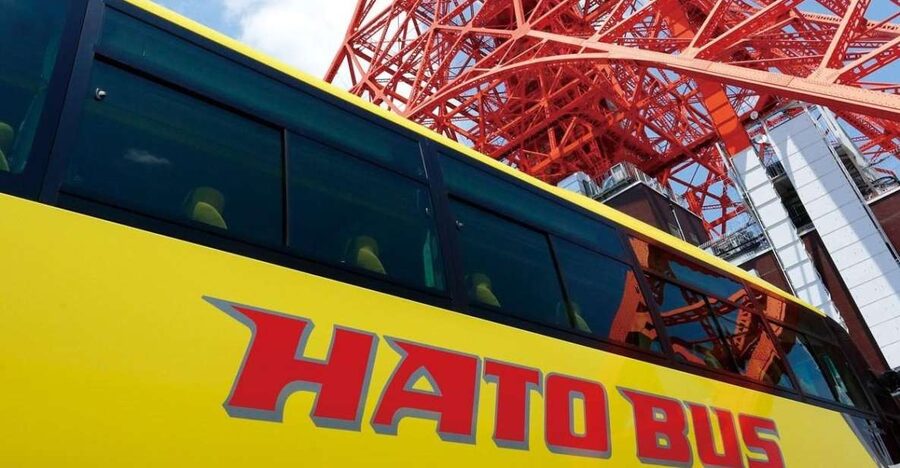
Book it if you want three essential Tokyo sights in one well-organized outing and value a guide who can explain what you are seeing. The $40 price is strong for the included transport, guide, and Tokyo Tower admission, especially when you consider the time saved.
Skip it if entering the Imperial Palace is your main goal, if you dislike group tours, or if you want long, independent visits at every stop. For most first-time visitors, though, this is a practical start to Tokyo: comfortable transport, clear English explanations, a city view from Tokyo Tower, and enough free time at Sensō-ji to continue exploring on your own.
FAQ
How long does the Tokyo bus tour last?
The listed duration is about four hours, with the activity information also stating 270 minutes. Check the available starting time and exact schedule when booking.
Where does the tour begin?
Departure options include the Hato Bus Tokyo office and Hato Bus Shinjuku Station East Exit. The exact meeting point depends on the option selected.
Which attractions are included?
The tour visits the Imperial Palace outer area near Nijubashi Bridge, Tokyo Tower, and Sensō-ji Temple in Asakusa.
Can I enter the Imperial Palace?
No. The tour visits the outer garden area and does not include entry into the Imperial Palace itself.
Are the East Gardens of the Imperial Palace included?
No. The East Gardens are not part of this tour.
Is Tokyo Tower admission included?
Yes. Admission to the main observatory at 150 meters is included.
Will I see Mount Fuji from Tokyo Tower?
You might see Mount Fuji if the weather is clear. Visibility depends on conditions on the day.
Is food included?
No. You pay separately for snacks and meals at Nakamise and elsewhere in Asakusa.
Is the tour conducted in English?
Yes. A live, nationally licensed English-speaking guide accompanies the tour.
Can children under six join?
Children aged zero to under six can travel free, but they do not receive their own seats.
Is hotel pickup included?
No. You need to reach the selected departure point yourself.
Is the tour wheelchair accessible?
The activity is marked wheelchair accessible, but you should note that a few steps are required when getting on and off the bus.
More 1 Day Tours in Tokyo
- Mt Fuji and Hakone 1-Day Bus Tour Return by Bullet Train
★ 5.0 · 26,383 reviews - 1-Day Tokyo Bus Tour
★ 5.0 · 14,250 reviews - Mt Fuji & Hakone Cruise, Drum Show Bullet Train 1 Day from Tokyo
★ 4.0 · 7,413 reviews - Tokyo: DisneySea 1-Day Passport
★ 4.5 · 2,726 reviews
Newly reviewed around Tokyo
- Tokyo Asakusa:Calligraphy & Make T-shirt Activity★ 5.0 · 62 reviews
- Intercity Shuttle, Tokyo to Haneda /Narita /Yokohama /Makuhari★ 5.0 · 5 reviews
- 1 Hour Travel around Tokyo with a Professional Photographer★ 5.0 · 3 reviews
- Travel Tokyo with Your Own Personal Photographer★ 5.0 · 43 reviews
- Train in Samurai Swordsmanship and Defeat the Demon in Tokyo★ 5.0 · 5 reviews
- Shuttle Van 6hr Tokyo Tour to-and-from Tokyo, Yokohama and Narita★ 5.0 · 9 reviews
- Kickboxing & Body Training with EX-Pro Fighter★ 5.0 · 4 reviews
- Traditional Japanese Knife Sharpening Class★ 5.0 · 18 reviews
Half-Day, compared.
Tokyo Private Half-Day Tour with a Local – Secrets & Highlights
Read our review →
Old and Nostalgic Tokyo: Half-Day Yanaka Walking Tour
Read our review →


Browse the lists this tour appears in