
Reviewed · TOKYO WAGYU AND YAKINIKU DINING
Tokyo: Wagyu and Sushi Gastronomic Journey
The best part of this Shinjuku evening is the mix of serious food and gritty neighborhood life. You get guided tastings of Wagyu and sushi, then walk through neon streets, narrow food lanes, a quiet shrine, and Golden Gai’s tiny bar-lined alleys. It gives you both a meal and a useful first look at central Tokyo after dark.
I like the small group, capped at 10, and the way the guide adds context to each dish instead of simply pointing out restaurants. I also like the contrast between Hanazono Shrine’s calm grounds and the noise of Kabukicho. The main consideration is pace: three to three and a half hours includes dinner and a lot of walking, while the $154 price is worthwhile mainly if you value the food guidance and neighborhood orientation.
Key points at a glance
- Wagyu and sushi in one evening: Two food venues give the tour a clear culinary focus.
- Shinjuku after dark: Kabukicho, Godzilla Head, Omoide Yokocho, and Golden Gai bring very different sides of the district.
- A quiet shrine break: Hanazono Shrine offers a short pause from the bright signs and crowded streets.
- Small-group format: A maximum of 10 people makes it easier to ask questions and keep together in narrow lanes.
- English guidance: The guide explains food, local customs, and the area as you walk.
- Alcohol for adults: Alcoholic drinks are included for participants aged 20 and above.
Starting near Nishishinjuku at 7-chōme-10-5
The meeting point is in front of the 3rd Burger, at 7-chōme-10-5 Nishishinjuku. That detail matters in Shinjuku, where a station exit that looks close on a map can leave you several blocks from the actual meeting place.
Plan to arrive early. The tour begins with a group check-in before heading toward Kabukicho, and the operator says an uncontactable guest may be canceled from the tour. If you cannot find the meeting point, being there with time to spare gives you a better chance to sort it out.
The activity lasts about three hours, with the full duration sometimes reaching three and a half. You will need comfortable shoes, a working phone, and enough room in your evening schedule for the route to run a little long.
More Tokyo wagyu and yakiniku dinners:
- Tokyo Night Foodie Tour in Shinjuku – Seasonal Sushi, Wagyu Beef
★ 5.0 · 1,161 reviews - Tokyo: Wagyu and 7 Japanese Dishes Cooking Class
★ 4.9 · 273 reviews - Small-Group Wagyu Beef and 7 Japanese Dishes Tokyo Cooking Class
★ 5.0 · 190 reviews
Wagyu explained through taste, not just price
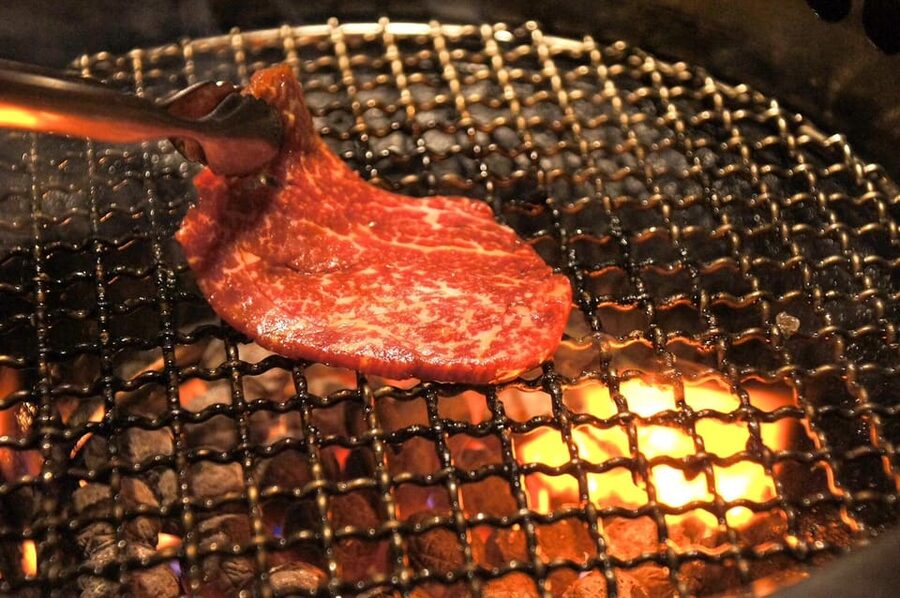
Wagyu is often treated as a luxury label, but the useful part of this experience is learning what you are actually eating. The guide discusses the beef’s background, flavor, and regional differences while you taste it. That context can help you understand why different cuts and grades command different prices.
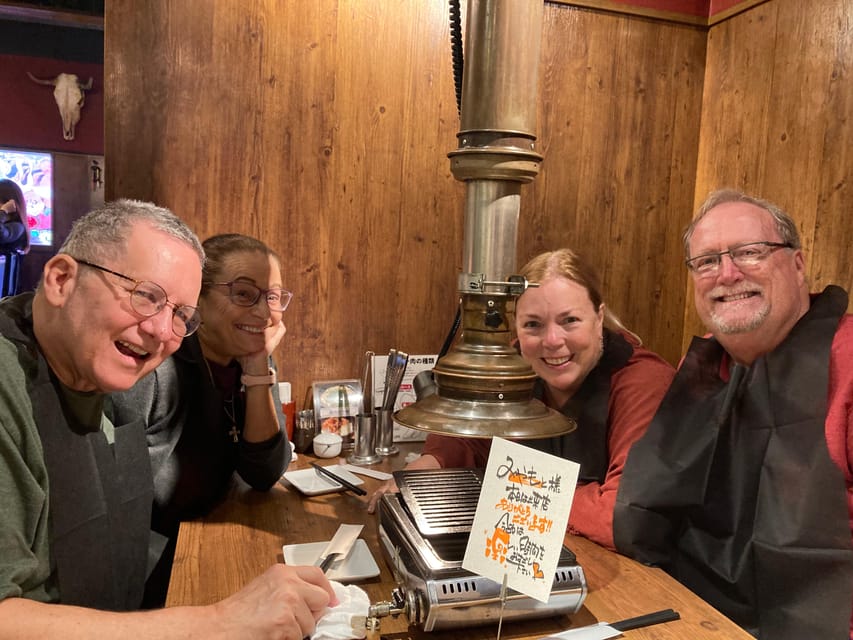
The food is not presented as an isolated restaurant meal. The guide connects Wagyu to Japanese dining customs and explains what makes the beef distinctive. One participant, Dana, specifically praised guide Emma for explaining the food clearly and making a first Japanese barbecue experience feel easy and enjoyable.
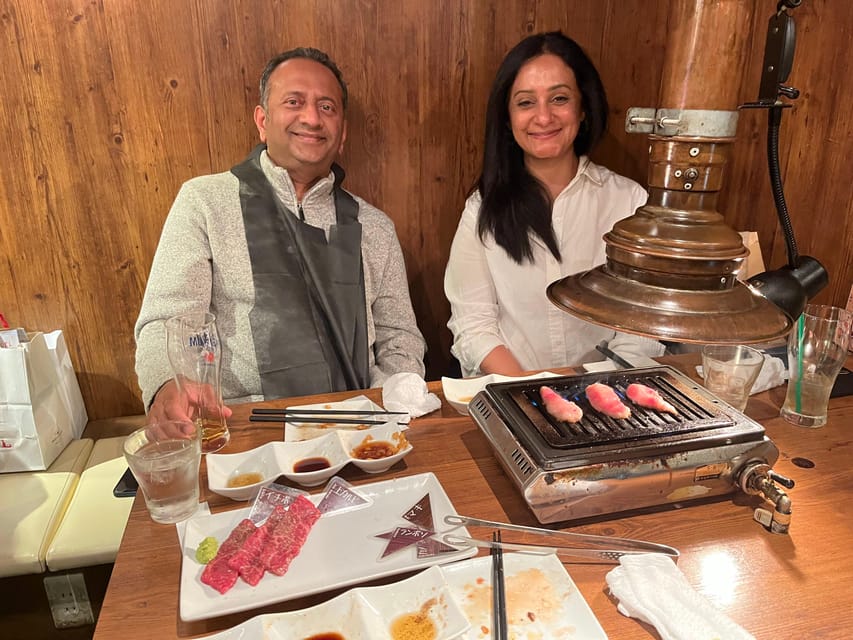
The exact Wagyu preparation can depend on the venue and the evening. You may encounter a Japanese barbecue-style meal, as one account describes, but the supplied details do not promise a particular cut, grade, or cooking method. That is worth remembering if you are booking this solely for a named Wagyu brand.
I like the fact that the meal is paired with sushi rather than asking you to choose between the two. Wagyu is rich and filling, while sushi brings a lighter, more delicate contrast. The combination also lets the guide explain two very different food traditions in one sitting.
Sushi with guidance on seasonal ingredients
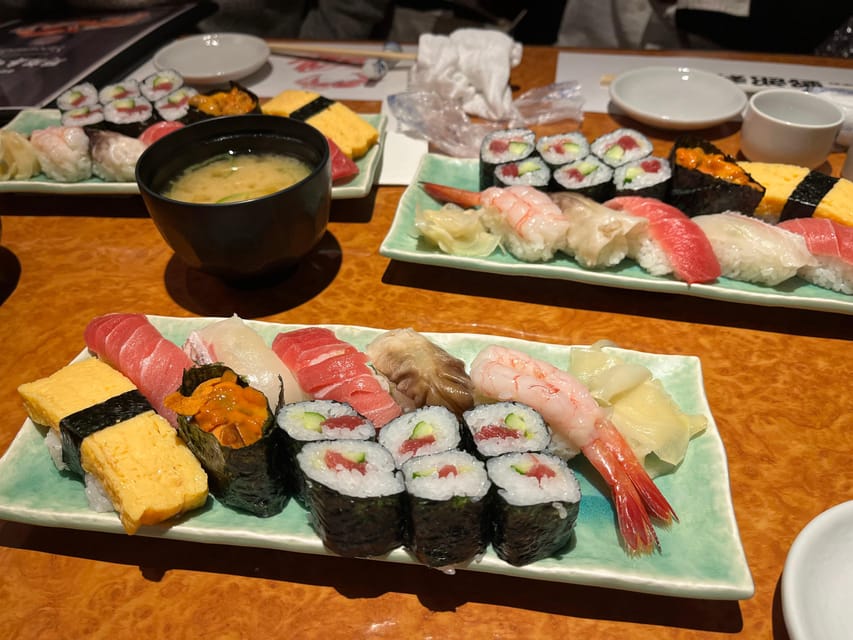
The sushi portion focuses on freshness, seasonal ingredients, and the precision of the chefs. You will see how each piece is assembled and receive help understanding what you are tasting. That is useful if sushi menus, unfamiliar fish, or Japanese dining etiquette leave you guessing.
The most valuable part for a first-time visitor is the explanation. A good guide can tell you why one piece feels delicate while another has a stronger flavor, and can point out how traditional technique affects the final bite. This is more useful than simply being sent to a sushi counter with a large menu and no help.
The food is served at one of two distinct venues included in the evening. The tour information does not name the restaurants or list every dish, so you should not expect a fixed menu you can study in advance. If you have allergies or strict dietary needs, ask before booking rather than assuming substitutions are available.
The food receives the strongest praise across the supplied feedback. People repeatedly single out the tender Wagyu, fresh sushi, and the way the guide adds meaning to each dish. The praise is consistent enough to make the meal the tour’s safest selling point, though the lack of a published menu means some details remain unknown.
Kabukicho, Godzilla Head, and Tokyo’s night energy
After meeting, the route moves through Kabukicho, Shinjuku’s famous entertainment district. This is the part of Tokyo known for bright signs, nightlife, restaurants, and a constant flow of people. The guide helps you read the area instead of leaving you to wander through it without context.
You also get a look at the Godzilla Head above the Shinjuku Toho Building. It is an easy landmark and a fun pop-culture marker, but it also helps you understand how Tokyo mixes old neighborhoods, commercial entertainment, and giant visual symbols within a few blocks.
Kabukicho is lively, but it is not a quiet sightseeing district. Expect crowds, noise, flashing signs, and a lot to look at. The tour’s group limit of 10 is helpful here, especially when crossing busy streets or stopping briefly to hear the guide.
I like this section because it gives the meal a sense of place. You are not simply eating in Shinjuku and then going home. You are seeing the district that supplies much of the evening’s character, with the guide pointing out how food and nightlife fit together.
A completely different kind of day in Tokyo:
- Mt Fuji and Hakone 1-Day Bus Tour Return by Bullet Train
★ 5.0 · 26,383 reviews - 1-Day Tokyo Bus Tour
★ 5.0 · 14,250 reviews - Tokyo: teamLab Planets TOKYO Digital Art Museum Entry Ticket
★ 4.6 · 9,779 reviews - Mt Fuji & Hakone Cruise, Drum Show Bullet Train 1 Day from Tokyo
★ 4.0 · 7,413 reviews
Hanazono Shrine, a calm pause in Shinjuku
Hanazono Shrine provides a sharp change of mood. Its grounds offer a quieter setting amid Shinjuku’s commercial streets and give you a glimpse of traditional Japanese religious practice.
The shrine is not presented as a long temple visit. It is one stop within a walking route, so expect a short cultural pause rather than an extensive guided history lesson. That is still valuable. After neon signs and crowded sidewalks, a few calm minutes can make the rest of the evening feel more varied.
This stop also keeps the tour from becoming only a food crawl. You get a reminder that Shinjuku is not just department stores, bars, and entertainment. Religious sites remain part of the district’s daily fabric, even when surrounded by modern city life.
Respect the setting. Keep voices low, follow the guide’s instructions, and treat the shrine as a place of worship rather than only a photo stop.
Omoide Yokocho and the city’s small-scale food culture
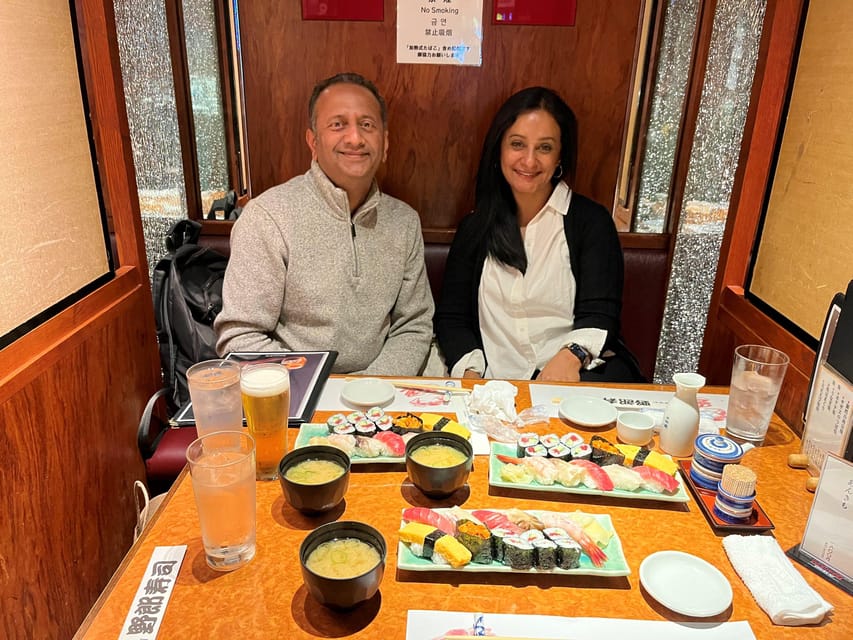
Omoide Yokocho is a narrow alleyway lined with tiny bars and eateries. It is known for yakitori and familiar Japanese comfort food, and its compact scale gives you a different view of dining in Tokyo.
The alley is a good counterpoint to the more polished focus on Wagyu and sushi. Here, the appeal is closeness, atmosphere, and simple food served in a tight urban setting. Even if you do not sit down for a full meal at Omoide Yokocho, walking through it helps explain why Shinjuku’s food culture feels so layered.
The passageways are narrow, so stay close to the group. You may also find the area crowded, particularly during a popular evening time. This is one reason the guide matters: you can keep moving without having to work out the route alone.
The tour includes dinner at two food venues, but the provided details do not state exactly how Omoide Yokocho fits into those meals. Treat it as part of the neighborhood walk and food context, not as a guaranteed separate restaurant stop unless the operator confirms that before departure.
Golden Gai, where the evening finishes
The tour ends in Shinjuku Golden Gai, a maze of narrow lanes with more than 200 small bars. Each bar may have its own style and regular crowd, making the area feel far more personal than a large nightlife venue.
Golden Gai is best understood as a walk through Tokyo’s postwar drinking culture. The lanes are tight, the bars are small, and many spaces are designed for a handful of people rather than a large crowd. That intimacy is part of the appeal, but it can also make the setting feel less comfortable for anyone who dislikes confined spaces.
The tour includes alcoholic beverages for participants aged 20 and over. The supplied information does not specify which drinks are served or guarantee entry into a particular Golden Gai bar, so think of the included alcohol as part of the food-and-nightlife program rather than a promise of a bar crawl.
Ending here makes practical sense. You finish in an area built for an evening out, with plenty of nightlife nearby. Since there is no hotel pickup or drop-off, you will need to arrange your own way back after the tour.
What $154 buys you in Shinjuku
At $154 per person, this is not a cheap dinner. You are paying for more than food, though. The price includes a local English-speaking guide, dinner, tastings at two food venues, and alcoholic beverages for adults. It also buys a small group, with no more than 10 participants.
The value is strongest if you want help ordering, understanding the food, and finding your way through Shinjuku’s nightlife districts. A solo visitor or first-time Tokyo visitor may get more from this than someone who already knows the area and is comfortable choosing restaurants independently.
The price is less compelling if your only goal is to eat a large quantity of Wagyu and sushi. The menu, portions, restaurant names, Wagyu grade, and exact drink selection are not provided. You are paying for the guided evening and cultural setting as much as for the individual dishes.
Transportation is not included. Allow roughly 200 to 800 yen for local transport, depending on what you use and where you go afterward. Hotel pickup and drop-off are also not included.
Who will enjoy this evening most
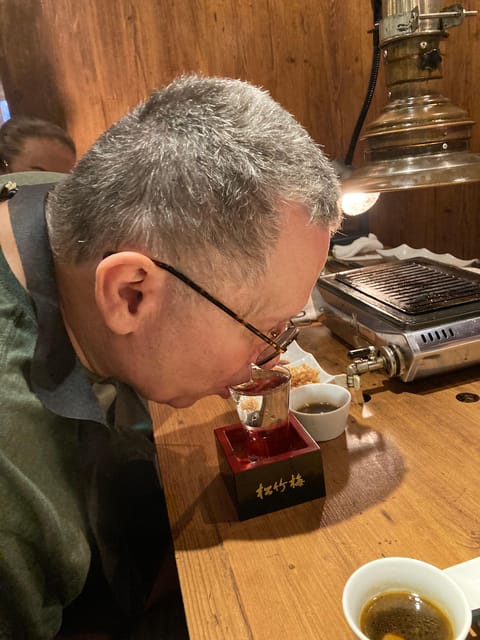
I would choose this tour if you want a compact introduction to Shinjuku that combines food with street life. It suits people who enjoy asking questions, trying unfamiliar dishes, and walking through busy neighborhoods after dark.
It is also a good fit for a small group of friends who want a planned first night in Shinjuku. The guide handles the route while you focus on the meal and the surroundings. The English-language format removes some of the uncertainty that can come with ordering in unfamiliar restaurants.
Food-focused visitors should be happy, especially if Wagyu and sushi are both high on your list. The supplied feedback repeatedly praises the quality of the beef and sushi, along with the guides’ warmth and explanations. Emma receives specific praise for her friendly style and clear food advice.
You may want a different activity if you need a quiet, slow meal, a fixed tasting menu, or a detailed guarantee about every dish. The route includes crowded entertainment streets and narrow alleys, and the full evening can stretch beyond three hours.
Practical details before you book
The tour is offered in English and uses a live guide. The group is limited to 10, which is a useful size for crowded streets and small dining spaces.
You can cancel up to 24 hours before the activity for a full refund, and the reserve-now, pay-later option keeps you from paying immediately. Starting times vary, so check availability for your date.
Alcohol is included only for participants aged 20 and above. If you are younger than 20, the tour still includes the food and guided walking portions, but the provided details do not state what nonalcoholic alternatives are served.
Wear shoes suitable for several hours on foot. Bring a little extra money for transport, and do not plan a tight connection immediately after the advertised end time.
Should you book the Wagyu and sushi journey?
Book it if you want excellent food paired with a guided Shinjuku walk, not simply a restaurant reservation. The combination of Wagyu, sushi, Kabukicho, Hanazono Shrine, Omoide Yokocho, and Golden Gai gives you a broad evening in only three to three and a half hours.
The strongest reasons to go are the small group, the repeated praise for the food, and the guide’s role in making unfamiliar dishes easier to understand. The main reasons to hesitate are the high price, the unknown menu details, and the busy walking route.
For a first Tokyo visit, I think the package makes sense if you value local guidance and want your first Shinjuku night to feel organized but not sterile. If you already know the district and prefer choosing your own restaurants, spend the $154 on a meal and explore at your own pace.
FAQ
Where does the tour meet?
The meeting point is just in front of the 3rd Burger at 7-chōme-10-5 Nishishinjuku.
How long does the experience last?
The advertised duration is three hours, though the activity may last three to three and a half hours.
What food is included?
The experience includes dinner at two distinct food venues, with Wagyu beef and sushi as the main culinary focus.
Is alcohol included?
Alcoholic beverages are included for participants aged 20 and above.
Is transportation included?
No. Transportation costs are not included and may range from 200 yen to 800 yen. Hotel pickup and drop-off are also not provided.
What language is the tour conducted in?
The tour has a live English-speaking guide, and the group is limited to 10 participants.
Newly reviewed around Tokyo
- Tokyo Asakusa:Calligraphy & Make T-shirt Activity★ 5.0 · 62 reviews
- Intercity Shuttle, Tokyo to Haneda /Narita /Yokohama /Makuhari★ 5.0 · 5 reviews
- 1 Hour Travel around Tokyo with a Professional Photographer★ 5.0 · 3 reviews
- Travel Tokyo with Your Own Personal Photographer★ 5.0 · 43 reviews
- Train in Samurai Swordsmanship and Defeat the Demon in Tokyo★ 5.0 · 5 reviews
- Shuttle Van 6hr Tokyo Tour to-and-from Tokyo, Yokohama and Narita★ 5.0 · 9 reviews
- Kickboxing & Body Training with EX-Pro Fighter★ 5.0 · 4 reviews
- Traditional Japanese Knife Sharpening Class★ 5.0 · 18 reviews
Tokyo Wagyu and Yakiniku Dining, compared.
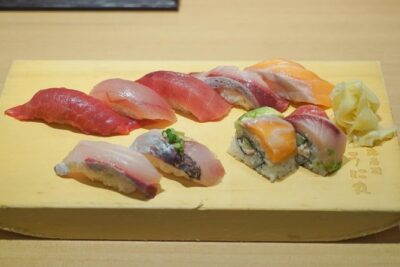
Tokyo Night Foodie Tour in Shinjuku – Seasonal Sushi, Wagyu Beef
Read our review →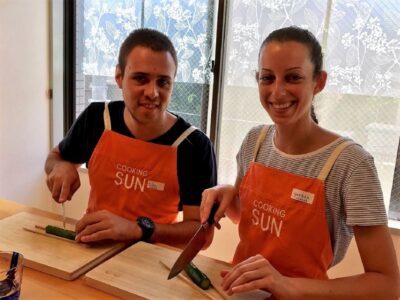
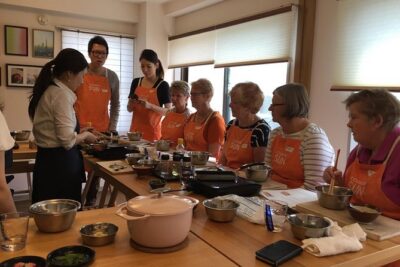
Small-Group Wagyu Beef and 7 Japanese Dishes Tokyo Cooking Class
Read our review →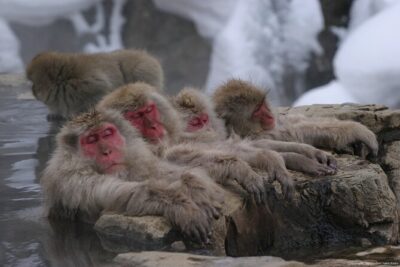
Nagano Snow Monkey 1 Day Tour with Beef Sukiyaki Lunch from Tokyo
Read our review →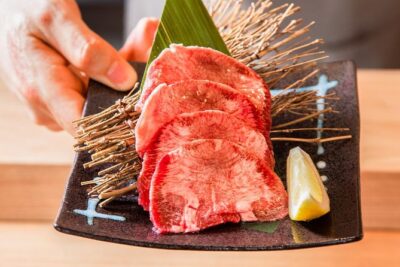
Wagyu & Sake Pairing in Shinjuku – Steak, Shabu-Shabu & More
Read our review →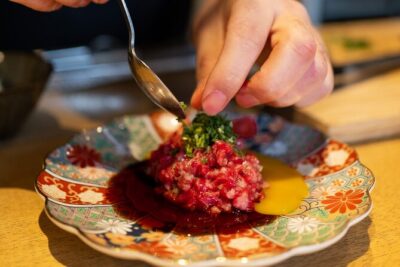
Tokyo Wagyu & Sake Pairing Tasting Experience with Local Flavors
Read our review →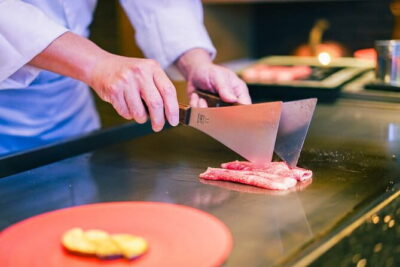
Wagyu Beef and Sake Pairing Foodie Tour in Tokyo
Read our review →
Browse the lists this tour appears in