Reviewed · TOURS
Tokyo: True Crime And Ghost Stories Tour
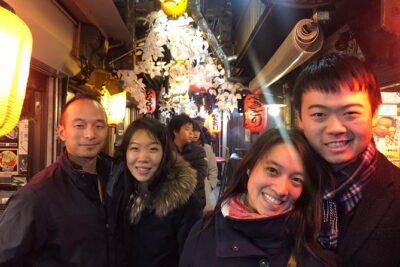
Tokyo has a polished public face, but this walk takes you behind it, from Kabukicho’s crime and sex districts to wartime atrocities and ghost stories in a dark cemetery. Guide John uses history, acting, jokes, and plenty of grim detail to connect places that most sightseeing walks skip.
I like the way the tour joins modern Tokyo to its more troubling past, and I like that it ends with traditional Japanese ghost stories rather than offering three straight hours of murder cases. The drawback is clear: you walk quite a bit, climb stairs, and hear about murder, prostitution, sexual exploitation, and war crimes. This is not a gentle evening stroll.
Key points to know
- Kabukicho begins the story: Learn about gang conflicts, murders, lovers, hostess and host clubs, love hotels, and Tokyo’s quasi-legal sex trade.
- Toyama Park brings wartime history into view: The tour addresses Unit 731 and human experimentation, subjects that require a serious and respectful approach.
- Aoyama Cemetery changes the mood: The final section uses a large, quiet cemetery as the setting for Japanese ghost stories.
- John is the main attraction: His comic timing, dramatic acting, local knowledge, and willingness to answer questions shape the experience.
- The walk is adult-oriented: Dark humor and occasional strong language are part of the presentation, and children under 14 are not admitted.
- The price is modest: At $35 per person, you pay mainly for three hours of guiding, storytelling, and context. Add about 200 yen for transport.
Starting at Hanazono Shrine in Shinjuku
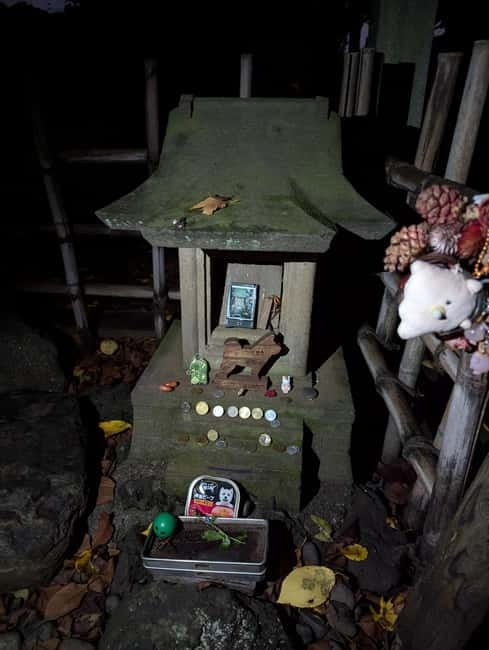
The meeting point is inside Hanazono Shrine, near Golden Gai, in central Shinjuku. Look for the stairs leading toward the main shrine building. The guide is described as John, a thin, bald white man, and the booking messages provide extra instructions for finding him.
This is a good starting point because Hanazono Shrine sits beside one of Tokyo’s most famous nightlife areas. You begin in a traditional religious setting, then step almost immediately into the neon streets of Kabukicho. That contrast says a lot about Tokyo: old and new, sacred and commercial, public respectability and private appetite can sit remarkably close together.
The tour lasts about three hours and finishes at Aoyama-Itchome Station. You are not paying entry fees at the stops, but you will need roughly 200 yen for transportation during the route. Dinner is not included, so eat before the walk or plan a meal afterward.
The meeting point deserves a little care. Hanazono Shrine is easy to reach in broad terms, but Shinjuku has many streets, exits, signs, and crowds competing for your attention. Check your email or the GetYourGuide app before setting out, and arrive with enough time to locate the shrine itself.
Other Tokyo days people book alongside this one:
- Mt Fuji and Hakone 1-Day Bus Tour Return by Bullet Train
★ 5.0 · 26,383 reviews - 1-Day Tokyo Bus Tour
★ 5.0 · 14,250 reviews - Tokyo: teamLab Planets TOKYO Digital Art Museum Entry Ticket
★ 4.6 · 9,779 reviews
Kabukicho: gang wars, nightlife, and the price of secrecy
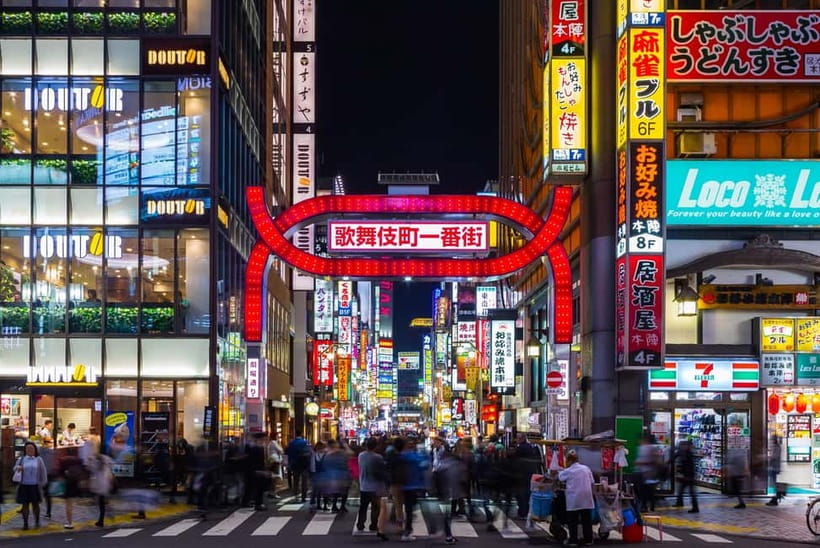
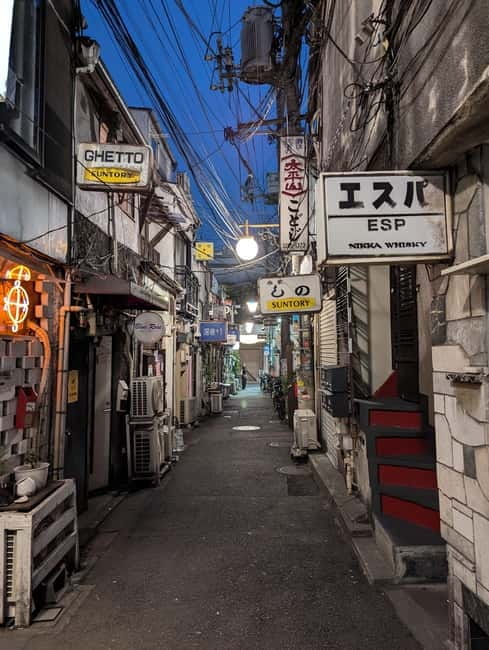
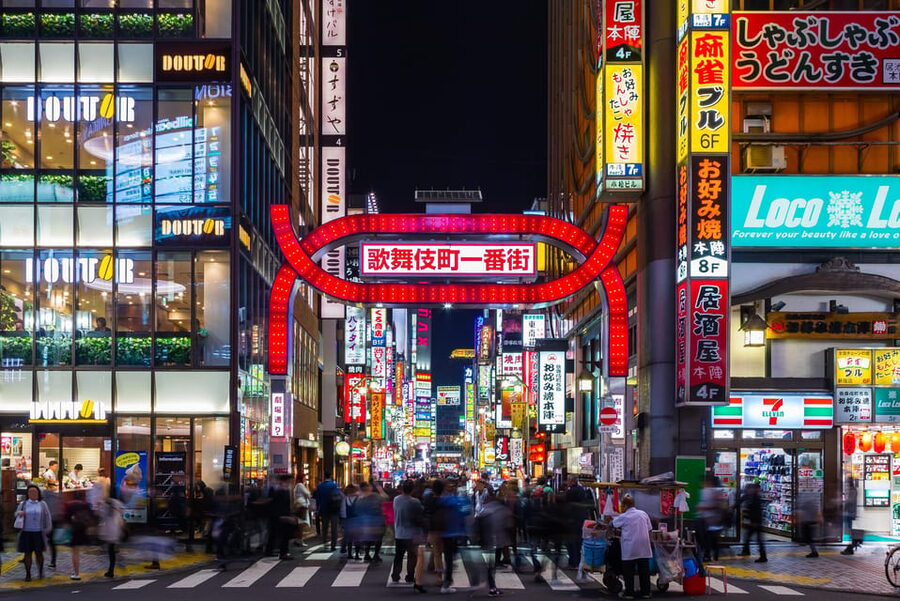
The first guided section takes about 45 minutes in Shinjuku’s Kabukicho district. This is Japan’s largest red-light district, though that label only tells part of the story. The area also contains restaurants, bars, clubs, entertainment venues, hotels, and the famous Golden Gai drinking quarter.
John’s presentation covers gang wars, shocking murders, betrayed lovers, and the structure of Tokyo’s quasi-legal sex industry. You can expect discussion of girl clubs, boy clubs, love hotels, prostitution, and the ways nightlife businesses operate in a place where entertainment, organized crime, and ordinary commerce can overlap.
This part works best when treated as social history rather than simple shock entertainment. The useful question is not only who committed a crime, but why certain businesses developed here, how the district gained its reputation, and how Tokyo’s nightlife economy functions. John’s strongest moments, based on the experience described, come when he adds context instead of just recounting a gruesome incident.
The tone is deliberately irreverent. John uses dirty jokes, adult language, and comic acting to keep the group engaged. That approach makes difficult subjects easier to listen to for some people, but it will not suit everyone. If you prefer a solemn treatment of crime, you may find the humor too strong.
You also need to stay aware of your surroundings. Kabukicho is an active nightlife district, not a museum arranged for tourists. The streets may be crowded, and the subject matter can make the area feel more sinister than it looks in daylight. Listen closely, keep with the group, and avoid treating working businesses or local people as scenery.
Golden Gai and the city’s after-dark character
Golden Gai is one of the main reference points near the beginning of the experience. Its narrow lanes and tiny bars help explain why Shinjuku has such a strong drinking culture. The tour does not include dinner, bar entry, or drinks, so do not confuse this walking experience with a pub crawl.
That is actually a benefit for many visitors. You get the setting and the background without paying for a string of drinks or being pushed into venues. You can return later if you want to explore Golden Gai on your own, though the tour itself is focused on stories rather than nightlife consumption.
I like this part because it shows Tokyo at street level. The famous city is often presented through department stores, temples, food markets, and high views. Here, you hear about the places where people work late, spend money, hide affairs, seek companionship, or get into trouble. It is an imperfect side of the city, but it is part of the real urban picture.
Toyama Park and the difficult story of Unit 731
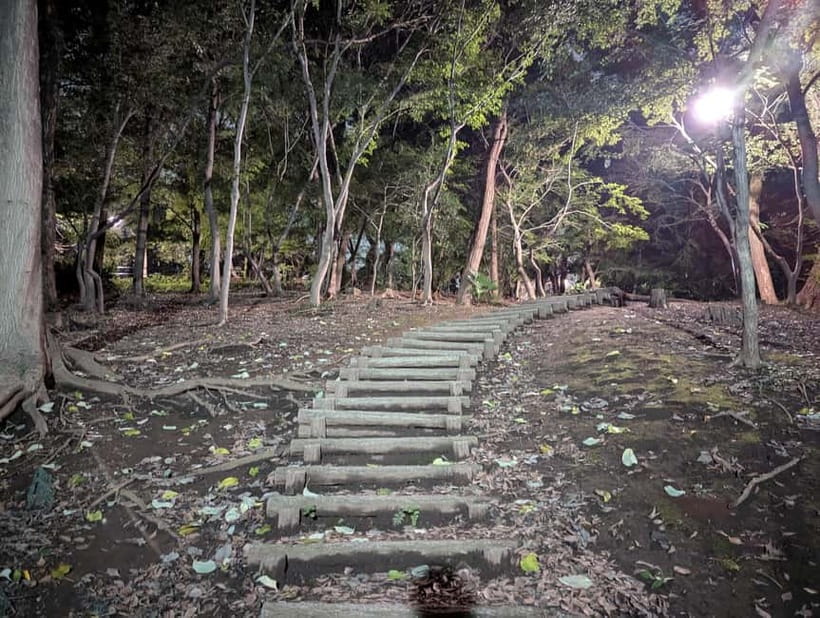
The route then moves to Toyama Park, with about 30 minutes of guided explanation. This is the most serious section of the tour. The park is linked in the experience to Unit 731 and the human experimentation carried out during Japan’s wartime period.
The material concerns crimes against humanity, not spooky folklore. You should be ready for accounts connected with human experimentation and the victims who suffered and died. The tour description uses very strong language for this stop, but the important point is the subject itself: wartime crimes are often harder to process than a ghost story because they happened to real people.
This section gives the walk more weight. Without it, the experience could be a standard true-crime outing built around sensational cases. By placing Tokyo’s nightlife beside wartime responsibility, John broadens the discussion to include the parts of Japanese history that are often left out of a cheerful first visit.
The tone may still include John’s characteristic humor elsewhere, but I would expect this stop to require a different kind of attention. If you are especially sensitive to medical violence, human experimentation, or war crimes, you should consider that before booking. The experience is not designed to soften the material.
Toyama Park also creates an interesting shift in mood. You move away from bright commercial streets and into a place associated with painful memories and unsettling stories. The walk is not simply a string of unrelated stops. Its strength comes from showing how a modern city can contain ordinary parks and nightlife districts alongside difficult historical traces.
A completely different kind of day in Tokyo:
- Mt Fuji & Hakone Cruise, Drum Show Bullet Train 1 Day from Tokyo
★ 4.0 · 7,413 reviews - Tokyo: Shinjuku Food Tour (13 Dishes at 4 Local Eateries)
★ 5.0 · 6,603 reviews - Tokyo Mt Fuji 5th St & Hakone Cruise Bus Tour w/Bullet Train
★ 4.4 · 5,024 reviews - Flagship 2-Hours Official Street Go-Kart Tour – Tokyo Bay Shop
★ 5.0 · 4,974 reviews
Aoyama Cemetery and Japanese ghost stories
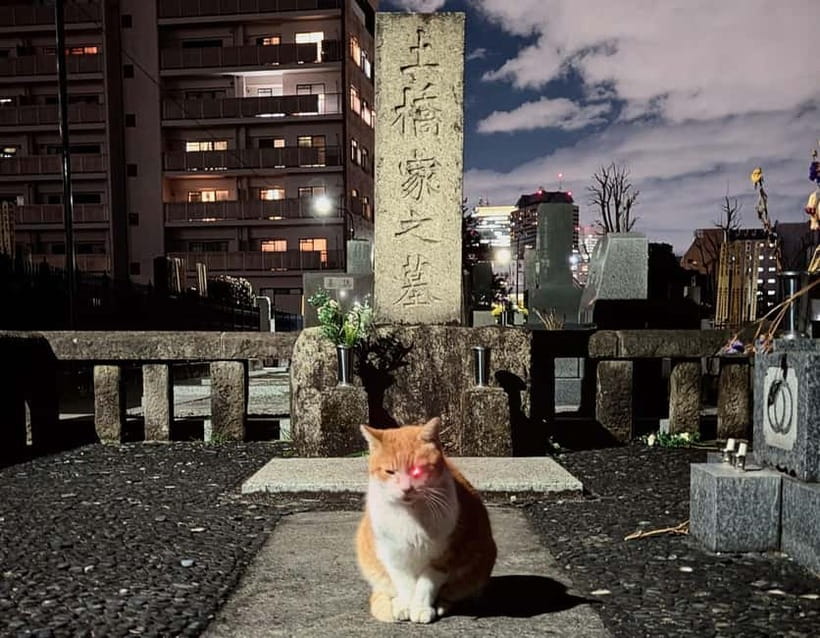
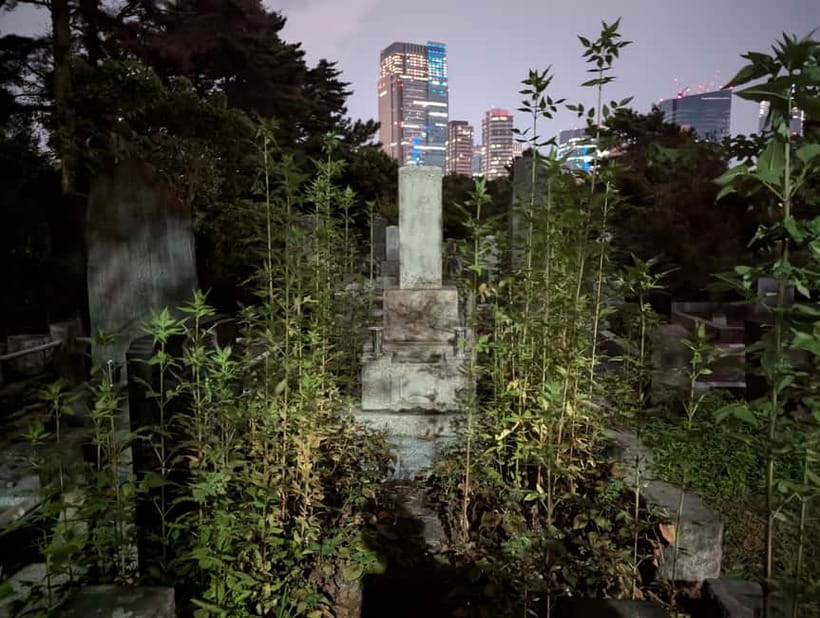
The final major section takes place at Aoyama Cemetery, described as Tokyo’s largest cemetery. The tour spends about 45 minutes here, and this is where the mood changes from crime and wartime history to folklore and ghost stories.
A cemetery is a natural setting for this material, especially after dark. The wide grounds, graves, trees, and quiet streets offer a sharp contrast to Kabukicho. John’s dramatic delivery and acting become especially important here. He is not simply reading a list of supernatural tales. His performance helps create the atmosphere, with comic relief available when the stories become too grim.
The ghost stories are connected to Japanese culture and urban folklore rather than presented as proof of the supernatural. That distinction matters. You can enjoy the suspense, the local setting, and the old stories without needing to believe every haunting account.
The cemetery section is also one reason timing matters. Several people found the darkness and atmosphere effective, while one practical suggestion was to begin earlier so the cemetery could first be seen in daylight or at sunset. That is sensible advice. A little remaining light would help you understand the setting, while a later finish would still allow the ghost stories to gain their proper mood.
Aoyama Cemetery is also connected with the grave of Hachiko, Japan’s famous loyal dog. This gives the final stop a softer note. After stories of violence and restless spirits, Hachiko’s grave offers a familiar and emotional piece of Japanese popular memory.
What makes John’s guiding style work
John is the clear center of the experience. The strongest praise focuses on his storytelling, comic timing, historical background, and dramatic acting. He is described as animated, expressive, quirky, and passionate about the material.
That style will suit you if you enjoy a guide who performs a story rather than delivering a dry lecture. John uses jokes to break up grim subjects, changes his voice, acts out scenes, and keeps asking the group to stay involved. Several descriptions also point to his willingness to answer questions about Japan beyond the set route.
His humor is not neutral or polished. It can be dark, crude, and occasionally awkward. That is part of the product, not an accidental feature. Some people will find it a useful release from the heavy material. Others may prefer a more restrained guide.
I also like that the experience can support real conversations about Japan. The best version of this tour is not just a hunt for the most shocking story. It gives you a chance to ask about organized crime, wartime memory, the sex industry, Japanese folklore, and the way Tokyo’s neighborhoods changed over time.
The group format can vary, and a private group is available. A private booking may be worth considering if you want more time for questions or if your party has a particular interest in crime, folklore, or wartime history. The standard tour is still designed to be interactive, but the amount of discussion naturally depends on group size and pace.
Walking, stairs, weather, and practical comfort
This is a walking tour, and the route covers several districts. The description warns that you will walk quite a bit and may need to climb stairs. Wear comfortable shoes, carry water, and avoid scheduling it after a day when you have already exhausted yourself.
The route is not suitable for wheelchair users, people with a low level of fitness, or people over 300 pounds, listed as 136 kilograms. Children under 14 are not admitted. These limits are tied to the walking, stairs, adult subjects, and the nature of the presentation.
Weather matters. The experience continues in conditions such as rain, and the evening setting can make the cemetery section more atmospheric, but wet paths and humidity will make the walk harder. Tokyo summers can be tiring, so consider your energy and clothing before booking a warm-weather start.
Bring only what you need. You will be moving through busy city areas, and the tour does not include a meal. Since transportation costs are separate, keep a little cash or another way to pay the small transport charge.
Is $35 a fair price?
At $35 per person, this is a good value if you want a specialist walking tour rather than a list of famous sights. You receive three hours of guiding, no separate admission fees are required, and the experience covers four very different parts of Tokyo’s darker side.
The value rests almost entirely on John’s delivery and preparation. You are not paying for a museum ticket, a meal, a vehicle, or a spectacular view. You are paying for research, local interpretation, route planning, and the ability to hold attention while discussing unpleasant material.
That makes the tour more worthwhile for people who already enjoy true crime, horror, Japanese history, or urban folklore. If you are only mildly curious about dark tourism, $35 may still be reasonable, but the adult tone and long walk should guide your decision more than the price.
There is also a useful booking cushion: you can cancel up to 24 hours ahead for a full refund, and you can reserve now and pay later. Starting times vary, so check availability before fixing your evening plans.
Who should book this Tokyo walk?
I would recommend it to adults and older teens who enjoy crime documentaries, ghost stories, social history, and guides with a strong personal style. It is especially good for a repeat visitor who has already seen the standard Tokyo sights and wants a different view of Shinjuku and Aoyama.
It also suits a history-minded person who wants more than sensational stories. The Unit 731 section and the discussion of organized crime give the experience serious content, while the cemetery and folklore provide the theatrical finish.
I would not choose it for young children, anyone who tires easily, or anyone uncomfortable with sexual subjects and graphic descriptions. I would also think twice if you want a quiet, respectful, museum-style treatment of war crimes. John’s approach is energetic and often funny, even when the facts are grim.
Should you book the True Crime and Ghost Stories Tour?
Book it if you want a three-hour walk that treats Tokyo as a city of contradictions: shrines beside nightlife, ordinary parks linked to terrible crimes, and modern streets filled with old ghost stories. John’s storytelling is the main reason to choose this tour, and his acting, jokes, and broad background keep the route moving.
Skip it if you dislike dark humor, adult language, long walks, stairs, or difficult wartime subjects. For everyone else, the $35 price buys an unusual evening and a view of Tokyo that most guidebooks leave out. Wear good shoes, arrive ready for uncomfortable topics, and save some energy for the cemetery.
FAQ
How long does the Tokyo True Crime and Ghost Stories Tour last?
The tour lasts three hours.
Where does the tour begin?
It begins at Hanazono Shrine in Shinjuku, just in front of the stairs leading to the main shrine building, near Golden Gai.
Where does the tour finish?
The tour finishes at Aoyama-Itchome Station.
Which language is the tour conducted in?
The tour is conducted in English.
Who guides the tour?
The guide is John, who leads the walk through the crime, wartime history, and ghost story sections.
Is transportation included?
Transportation fees are not included. The listed additional cost is 200 yen. There are no entry fees for the stops along the route.
Is the tour suitable for children?
No. Children under 14 are not suitable for this activity because it includes murder, prostitution, sex, war crimes, dark humor, and occasional adult language.
Can I cancel the booking?
Yes. You can cancel up to 24 hours in advance for a full refund, and you can reserve now and pay later.
Newly reviewed around Tokyo
- Tokyo Asakusa:Calligraphy & Make T-shirt Activity★ 5.0 · 62 reviews
- Intercity Shuttle, Tokyo to Haneda /Narita /Yokohama /Makuhari★ 5.0 · 5 reviews
- 1 Hour Travel around Tokyo with a Professional Photographer★ 5.0 · 3 reviews
- Travel Tokyo with Your Own Personal Photographer★ 5.0 · 43 reviews
- Kickboxing & Body Training with EX-Pro Fighter★ 5.0 · 4 reviews
- Train in Samurai Swordsmanship and Defeat the Demon in Tokyo★ 5.0 · 5 reviews
- Shuttle Van 6hr Tokyo Tour to-and-from Tokyo, Yokohama and Narita★ 5.0 · 9 reviews
- Traditional Japanese Knife Sharpening Class★ 5.0 · 18 reviews
Tours, compared.
Mt Fuji and Hakone 1-Day Bus Tour Return by Bullet Train
Read our review →
Shinjuku Food Tour (13 Dishes at 4 Local Eateries)
Read our review →
Tokyo Mt Fuji 5th St & Hakone Cruise Bus Tour w/Bullet Train
Read our review →
Flagship 2-Hours Official Street Go-Kart Tour – Tokyo Bay Shop
Read our review →
Mt. Fuji Tour, Hakone Ropeway, Owakudani, Lake Ashi
Read our review →
Tokyo 6hr Private Tour with Government-Licensed Guide
Read our review →