
Reviewed · FOOD
Tokyo Pre Japan Planning Kit Itineraries, Food & Survival
Tokyo is too large for a one-size-fits-all tour, and this four-day digital plan takes a sensible approach: it gives you a route, then gets out of your way. You can begin and stop whenever you like, skip places that do not appeal, or linger when a neighborhood catches your attention.
I like the mix of famous sights and practical help, from Tsukiji Fish Market and Sensoji to a Japanese survival card and local food suggestions. I also like the freedom: there is no group to chase and no guide rushing you toward the next stop.
The main catch is simple: there is no physical guide. The PDF is described as about eight pages, so this is a useful framework rather than a deeply researched guidebook. Download it before you leave, too. One customer received the document too late to use it and had trouble getting a refund after buying twice.
Key points at a glance
- Four days of flexible planning: Follow the suggested route or treat it as a menu of ideas.
- Tokyo’s major districts: The plan covers Asakusa, Shibuya, Harajuku, Ueno, Akihabara, Odaiba, Shinjuku, and more.
- Useful extras: You receive local food recommendations, a Japanese survival card, and an eSIM discount.
- Mostly free sightseeing: The named stops have no admission charge except Shinjuku Gyoen, whose ticket is not included.
- Good value for a group: The price is $26.06 for up to 15 people, not per person.
- Plan ahead: This is a mobile PDF, not a live tour, and access problems can spoil the value if you wait until the last moment.
A Tokyo plan that leaves room for your own choices
This experience works best as a travel skeleton. Tokyo can easily eat up hours of research, especially when you are deciding how to combine distant neighborhoods, food stops, gardens, markets, and observation decks.
The four-day outline gives you a manageable set of districts. You are not required to follow every stop, and that matters. One day may call for a long lunch in Asakusa, a shopping detour in Harajuku, or an early night instead of a packed schedule.
The plan begins from Shinjuku City, but it is available around the clock, from midnight to 11:30 p.m., Monday through Sunday, during the stated operating period. Those hours describe access to the digital activity, not the opening hours of every attraction. You still need to check individual sights before setting out.
More Tokyo food tours:
- Tokyo: Shinjuku Food Tour (13 Dishes at 4 Local Eateries)
★ 5.0 · 6,603 reviews - Tokyo Tsukiji Fish Market Food and Culture Walking Tour
★ 5.0 · 3,184 reviews - Tokyo: Shinjuku Food Tour (15 Dishes and 4 Eateries)
★ 4.9 · 2,033 reviews
Day 1: Tsukiji, Asakusa, and Tokyo from above
The first day starts at Tsukiji Fish Market, with about two hours suggested. Tsukiji was once the world’s largest and busiest seafood market, and it remains a useful place to experience Tokyo’s food culture and market trade.
The sightseeing here is mostly about atmosphere, browsing, and eating. Admission is free, but food purchases are not included. If you are hoping for a quiet start, this may not be it. The market can be active and crowded, and a two-hour visit gives you enough time to look around without turning the whole day into a food stop.
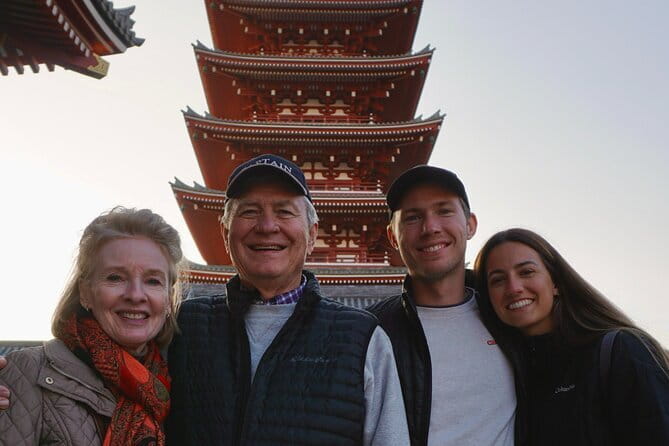
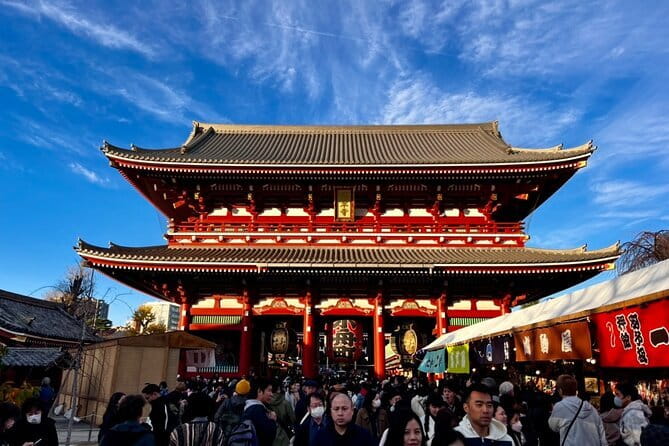
Next comes Asakusa and Sensoji, Tokyo’s oldest and most iconic Buddhist temple. Kaminarimon, the large entrance gate, leads toward Nakamise shopping street and the temple grounds. This is one of the best choices in the plan for a first taste of traditional Tokyo.
Give yourself the full two hours if you enjoy small shops, temple architecture, and a slower walk. The stop is free, but you should expect plenty of activity around the approach to the temple. The strength of the itinerary is that it pairs a food market with an old temple district, giving your first day more variety than a simple checklist of famous buildings.
The final named stop is the Tokyo Metropolitan Government Building Observation Decks, with one hour suggested. From the 45th floor, you can look across the city from a free observation area. The views depend on weather and visibility, but the price is hard to beat.
This first day is ambitious if you linger over food or shopping. The PDF gives you permission to adjust it, which is important. You can spend longer in Asakusa and save the observation deck for another time if the pace feels rushed.
Day 2: Imperial grounds, Harajuku style, and Shibuya lights
Day two begins at the Imperial Palace, with about two hours planned. The palace is the historic residence of Japan’s Emperor, and the East Gardens provide open space and old structures in the middle of Tokyo.
The gardens are free, but the itinerary does not promise entry to every palace area. Think of this as a walk through the accessible historic grounds, not a palace interior tour. I like starting the day here because it gives you a calmer contrast to the city districts that follow.
Harajuku Station comes next, with two hours suggested. Harajuku is known for fashion, unusual shops, and Takeshita Street. This is the stop to choose if you want a more youthful, style-focused side of Tokyo.
The plan keeps the stop broad rather than tying you to one store or attraction. That is helpful because your interests may range from clothing to quirky goods, and the area can change your plans quickly. Allow extra time if you want to shop, since the two-hour suggestion can pass fast.
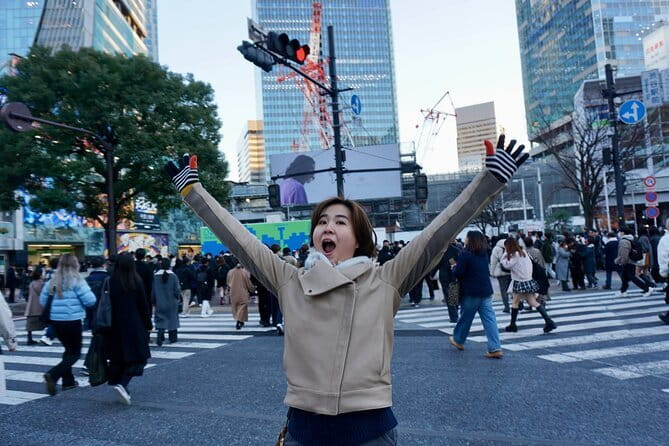
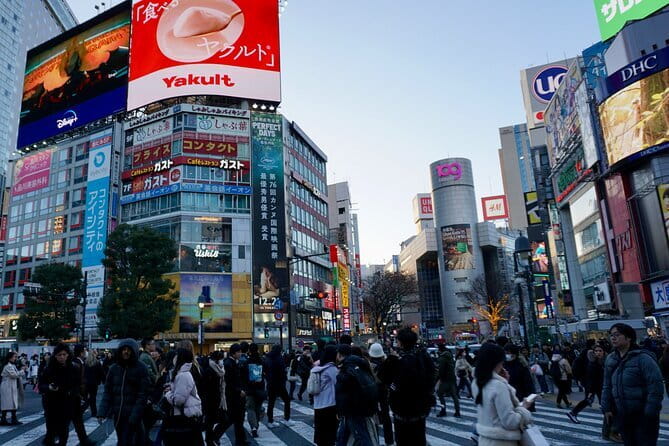
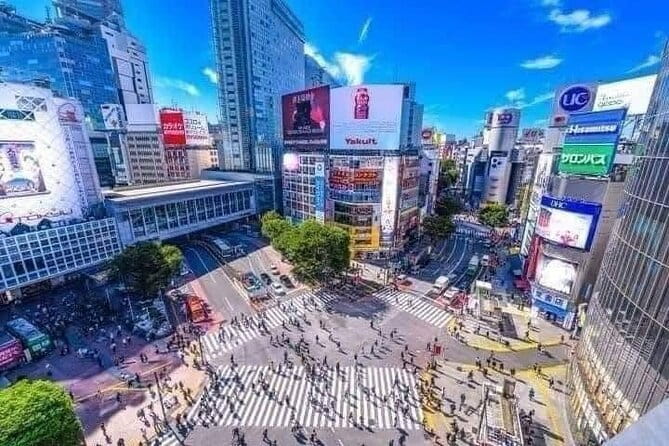
The day ends at Shibuya Crossing, also with two hours suggested. The famous intersection is best understood by watching it from several angles, then walking through it yourself. The surrounding streets are packed with shops, signs, restaurants, and city activity.
There is no admission charge for crossing the street, but this is another area where your budget depends on what you buy or eat. The suggested time gives you room to see the crossing more than once and explore nearby streets. If you want a quiet day, this is likely the most intense part of the four-day schedule.
Day 3: Ueno market streets and Akihabara’s pop culture
Day three focuses on Ueno and Akihabara. Ueno Ameyoko gets about three hours, making it the longest individual stop in the plan.
Ameyoko is an open-air market street with food stalls, shops, seafood, clothing, and other goods. It is a practical place to look for casual food and everyday shopping rather than polished department-store browsing. The free entry makes it easy to wander without pressure.
Three hours may sound long, but Ueno works well when you let yourself browse. The itinerary does not list a separate museum visit, so you can keep the day centered on the market or adapt the time to your own interests. As with Tsukiji, food and shopping costs are separate from the activity price.
Akihabara follows, with about two hours suggested. This is Tokyo’s electronics and anime district, with gadgets, games, and pop-culture merchandise. If you are not interested in those subjects, two hours may be more than enough. If you are, it may feel short.
That flexibility is one of the better features of the plan. You can shorten Akihabara and spend more time in Ueno, or reverse the order if that fits your day. The outline points you toward two very different shopping districts without pretending they suit everyone equally.
A completely different kind of day in Tokyo:
- Mt Fuji and Hakone 1-Day Bus Tour Return by Bullet Train
★ 5.0 · 26,383 reviews - 1-Day Tokyo Bus Tour
★ 5.0 · 14,250 reviews - Tokyo: teamLab Planets TOKYO Digital Art Museum Entry Ticket
★ 4.6 · 9,779 reviews - Mt Fuji & Hakone Cruise, Drum Show Bullet Train 1 Day from Tokyo
★ 4.0 · 7,413 reviews
Day 4: Odaiba, gardens, and Shinjuku after dark
The final day begins in Odaiba, a futuristic island in Tokyo Bay. The suggested two-hour stop includes modern architecture, entertainment areas, and waterfront views. The district is also associated with attractions such as the giant Gundam statue and teamLab Borderless.
The itinerary does not include admission to paid attractions, so treat those as optional additions. Odaiba can work well when you want a change from temples, markets, and train stations. Its free public areas provide a reason to visit even if you do not buy an attraction ticket.
Next is Shinjuku Gyoen National Garden, with two hours suggested. The garden combines Japanese, English, and French styles, and offers a quieter setting in the middle of the city. Admission is not included, unlike most of the other named stops.
That extra ticket cost is worth factoring into your budget. Shinjuku Gyoen is also one of the stops where the season matters, especially during cherry blossom time, though the supplied plan does not guarantee seasonal conditions. Use the two-hour suggestion as a guide, not a rule.
The day ends in Shinjuku at night, with three hours planned. The outline points you toward neon-lit streets, izakayas, karaoke bars, and late-night city energy. This is a natural final evening because it lets you choose your own dinner and nightlife rather than locking you into a particular venue.
The three-hour block gives you time to eat, walk, and decide how late you want to stay out. The food recommendations supplied with the PDF may help here, but the details of those suggestions are not specified in the tour information. You should still check prices, opening times, and reservation needs yourself.
What the food and survival extras add
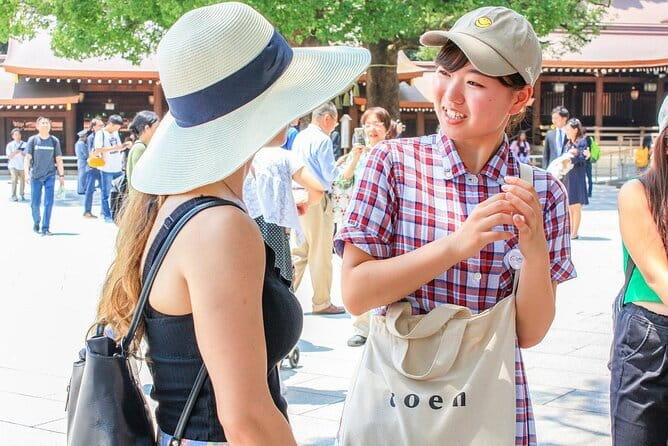
The local food recommendations are potentially the most useful part of the package for a first visit. Tokyo offers far more choices than most people can sort through quickly, and a short list can save you from spending each evening searching on your phone.
The recommendations are described as personal suggestions from locals, but no individual guide names or full restaurant list is provided. I would treat them as starting points rather than a guarantee that every choice will match your taste, budget, or location.
The Japanese survival card is another practical extra. The information supplied does not spell out every phrase or topic it contains, so you should not depend on it for every situation. Still, a compact reference can be handy when you need basic help with signs, ordering, or daily travel.
You also receive a discount on an eSIM. The discount itself is included, but the final eSIM price and provider terms are not stated. Check those details before buying, especially if you already have a phone plan that works in Japan.
The real value of $26.06 per group
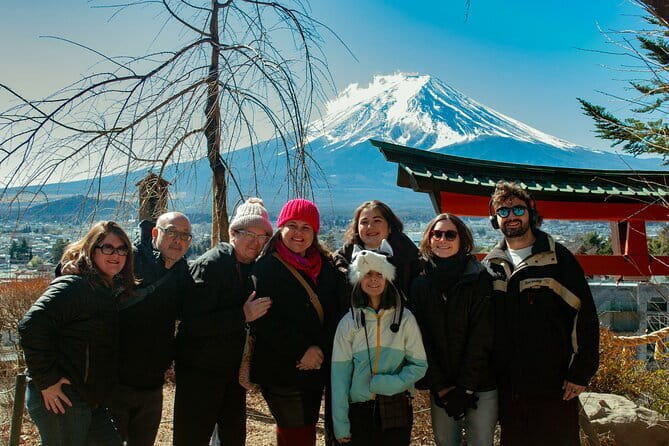
At $26.06 per group of up to 15 people, the price is reasonable if you use the plan for several days. A couple or family pays the same listed group price, which improves the value. Even a solo visitor may find it worthwhile if the PDF prevents a few hours of planning work.
The important point is that you are paying for direction, not admission tickets or personal guiding. Tsukiji, Sensoji, the Tokyo Metropolitan Government Building observation decks, the Imperial Palace area, Harajuku, Shibuya, Ueno, Akihabara, Odaiba, and Shinjuku are mostly free to enter as described. Shinjuku Gyoen is the clear named exception, with admission not included.
Food, shopping, transportation, and optional attractions are also outside the price. The plan is therefore a low-cost planning tool, not a prepaid holiday package.
The 4.4 rating from eight published ratings suggests generally positive use, but the small number matters. The strongest praise centers on flexibility and useful ideas for a four or five-day visit. The clearest warning concerns delivery timing and duplicate purchases. Buy once, confirm the PDF has arrived, and save it to your phone before your trip begins.
Who will get the most from this PDF
I would choose this for an independent visitor who wants structure without a fixed group schedule. It also suits first-time visitors who know they want to see Tokyo’s main districts but do not want to spend an evening building routes from scratch.
It is a good fit for couples and families because you can divide the suggestions among your group. It also works for people who prefer to skip a stop without feeling they have wasted a prepaid tour.
I would be less likely to recommend it to someone seeking detailed cultural explanations, live answers, or personal restaurant guidance. There is no in-person guide, and the material is fairly brief. If you want a deep historical tour of each temple or a carefully arranged food crawl, this is not that product.
The plan also assumes you are comfortable handling Tokyo on your own. It is near public transportation, and most people can participate, but the supplied details do not provide a step-by-step transport guide or specific station instructions for every stop.
Practical booking advice before you go
Book far enough ahead to receive the mobile PDF and read it before arrival. The stated cancellation policy allows a full refund if you cancel at least 24 hours before the start time. Inside that 24-hour window, the amount paid is not refunded, and changes are not accepted.
The experience has a maximum of 15 travelers, though there is no physical group meeting. The activity starts in Shinjuku City and ends back at the stated meeting point, while the actual sightseeing is self-guided.
Most important, do not mistake the opening hours for attraction hours. The digital activity is available all day, but Tsukiji, gardens, markets, temples, and paid attractions each follow their own schedules. Confirm those details before you set out.
Should you book this Tokyo planning kit?
Book it if you want a cheap, flexible starting point for four days in Tokyo, especially if you are traveling with others and can share the cost. The combination of city highlights, food suggestions, a survival card, and an eSIM discount gives it more practical use than a bare sightseeing list.
Skip it if you expect a personal guide, detailed commentary, or a fully booked schedule with every ticket included. The best way to use it is as a framework: download it early, choose the stops that fit your interests, and leave room for Tokyo to surprise you.
FAQ
How long does the Tokyo planning experience last?
The experience is designed for approximately four days. Each day contains suggested stops with estimated visit times.
Is this a guided tour with a person present?
No. It is a self-guided digital experience with a PDF itinerary. There is no physical tour guide.
What is included in the purchase?
You receive a self-guided PDF itinerary, local Tokyo food recommendations, a Japanese survival card, and a discount on an eSIM.
Does the price include attraction tickets?
Most named stops are listed with free admission. Shinjuku Gyoen National Garden has an admission fee that is not included. Optional paid attractions and personal purchases are also not included.
How much does the experience cost?
The listed price is $26.06 per group of up to 15 people.
Where does the activity start?
The stated start point is Shinjuku City, Tokyo, Japan. The activity ends back at the meeting point.
Can I use the itinerary at any time?
The digital activity is listed as available Monday through Sunday from 12:00 a.m. to 11:30 p.m. The attractions themselves may have different opening hours.
Can most people participate?
Yes. The activity information says most people can participate and that it is near public transportation.
What is the cancellation policy?
You can receive a full refund if you cancel at least 24 hours before the experience start time. Cancellations or changes made less than 24 hours before the start time are not accepted for a refund.
Newly reviewed around Tokyo
- Tokyo Asakusa:Calligraphy & Make T-shirt Activity★ 5.0 · 62 reviews
- Intercity Shuttle, Tokyo to Haneda /Narita /Yokohama /Makuhari★ 5.0 · 5 reviews
- 1 Hour Travel around Tokyo with a Professional Photographer★ 5.0 · 3 reviews
- Travel Tokyo with Your Own Personal Photographer★ 5.0 · 43 reviews
- Train in Samurai Swordsmanship and Defeat the Demon in Tokyo★ 5.0 · 5 reviews
- Shuttle Van 6hr Tokyo Tour to-and-from Tokyo, Yokohama and Narita★ 5.0 · 9 reviews
- Kickboxing & Body Training with EX-Pro Fighter★ 5.0 · 4 reviews
- Traditional Japanese Knife Sharpening Class★ 5.0 · 18 reviews
Food, compared.
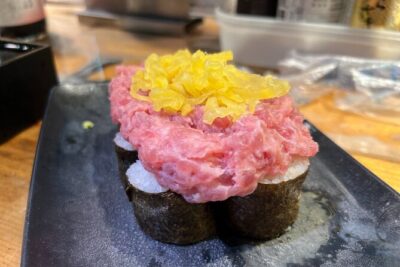
Shinjuku Food Tour (13 Dishes at 4 Local Eateries)
Read our review →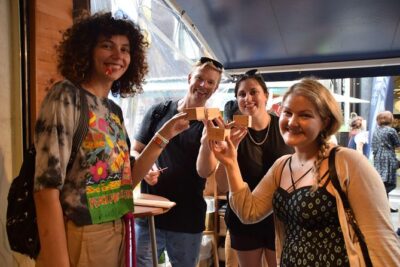
Tokyo Tsukiji Fish Market Food and Culture Walking Tour
Read our review →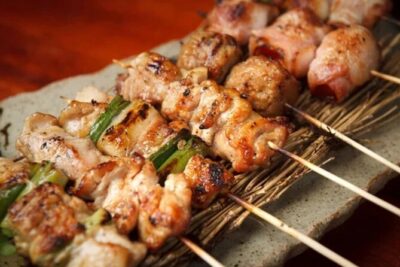
Shinjuku Food Tour (15 Dishes and 4 Eateries)
Read our review →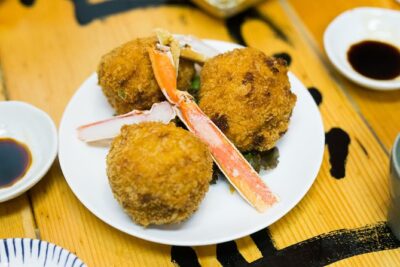
Best of Shinjuku: Izakaya Food Tour (4 Stops, 14+ Tastings)
Read our review →
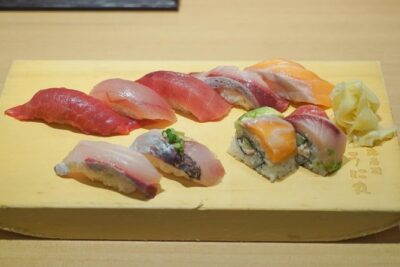
Tokyo Night Foodie Tour in Shinjuku – Seasonal Sushi, Wagyu Beef
Read our review →
Eat and Drink Like a Local: Tokyo Ueno Food Tour-Taverns&Ramen
Read our review →
Browse the lists this tour appears in