
Reviewed · TOKYO FOOD TOURS
Tokyo Food Tour: The Past, Present and Future 11+ Tastings
Tokyo’s food story comes in three acts on this six-hour walking tour: historic Nihonbashi, working-day Yurakucho, and tech-focused Akihabara. You taste dashi ingredients, mochi, amazake, curry udon, a fruit sandwich, street foods, and modern packaged snacks while moving through four very different parts of central Tokyo.
I like the clear past-present-future idea, which gives the day a purpose beyond simply eating. I also like the small group limit of eight and the chance to eat at places you might not choose on your own. The main catch is the pace: you walk about 6.5 kilometers, use subway stairs, and need to keep up with the group.
Key points to know before booking
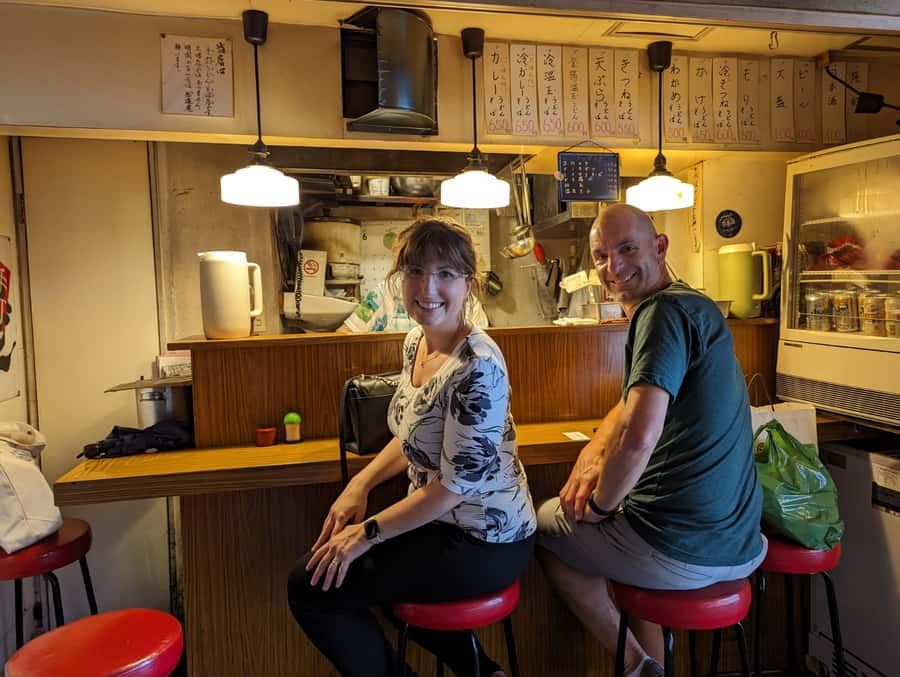
- 11-plus tastings across four central Tokyo districts: The route covers Nihonbashi, Tokyo Station, Yurakucho, and Akihabara.
- Nihonbashi supplies the historical anchor: You learn about dashi, katsuobushi, kelp, amazake, daifuku mochi, and other long-standing foods.
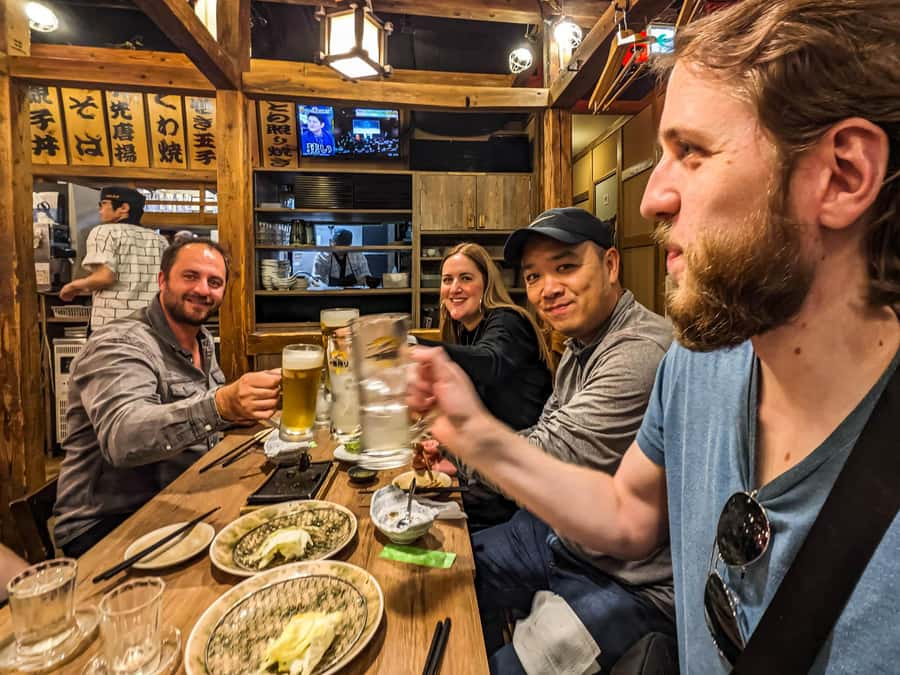
- Yurakucho shows Tokyo’s working-day food culture: Eat at an izakaya and noodle stall beneath the railway tracks, with one alcoholic drink included.
- Akihabara connects food with modern marketing: Traditional snacks are presented in ways designed to reach younger customers.
- Small groups keep the tour personal: You can join a group of no more than eight or book a private outing.
- This is an active food walk: Comfortable shoes, stamina, and the ability to manage subway stairs matter more than appetite alone.
A food tour built around Tokyo’s past, present, and future
Many Tokyo food tours focus on one neighborhood or one type of dish. This one takes a broader view. Instead of treating food as a collection of isolated samples, it links what you eat to trade, work, transport, gift-giving, technology, and changing tastes.
The route begins in Nihonbashi, moves through the Tokyo Station and Yurakucho area, and finishes in Akihabara. Two short subway rides connect the districts. That means less time spent crossing the city on foot, but it also means you need to handle stations, escalators, and stairs at a reasonable pace.
The tour lasts about 5.5 to 6.5 hours, depending on the chosen start time and the day’s flow. You get at least 11 tastings and one alcoholic drink. The food is not presented as a full meal at every stop, so think of this as a long grazing lunch with cultural explanation rather than a series of restaurant dinners.
More Tokyo food tours:
- Tokyo: Shinjuku Food Tour (13 Dishes at 4 Local Eateries)
★ 5.0 · 6,603 reviews - Tokyo: Shinjuku Food Tour (15 Dishes and 4 Eateries)
★ 4.9 · 2,033 reviews - Best of Shinjuku: Izakaya Food Tour (4 Stops, 14+ Tastings)
★ 5.0 · 1,863 reviews
Nihonbashi: the ingredients behind Japanese flavor
Nihonbashi is the strongest opening section because it gives you the basic building blocks first. The guide introduces dashi, the savory stock used throughout Japanese cooking, along with katsuobushi and kelp.
Katsuobushi is dried, fermented, and shaved bonito. Kelp provides another key part of dashi. Tasting or discussing these ingredients at the start helps you recognize flavors that might otherwise seem mysterious in later dishes.
The food stops here focus on traditional snacks and preserved items. You may try simmered kelp, also called kombu tsukudani, a fermented rice drink called amazake, sweet potato chips known as imo kenpi, and daifuku mochi with a sweet filling.
These are useful tastings because they show several sides of Japanese food culture. Kombu tsukudani points to preservation and concentrated flavor. Amazake offers a mild, sweet drink with a long place in Japanese food traditions. Imo kenpi has a simple crunch, while daifuku shows the softer, sweeter side of rice-based foods.
Some of the shops connected with this portion date back more than a century. That detail matters. You are not only sampling generic versions of familiar foods. You are visiting long-established businesses selected for their connection to the ingredients and customs being explained.
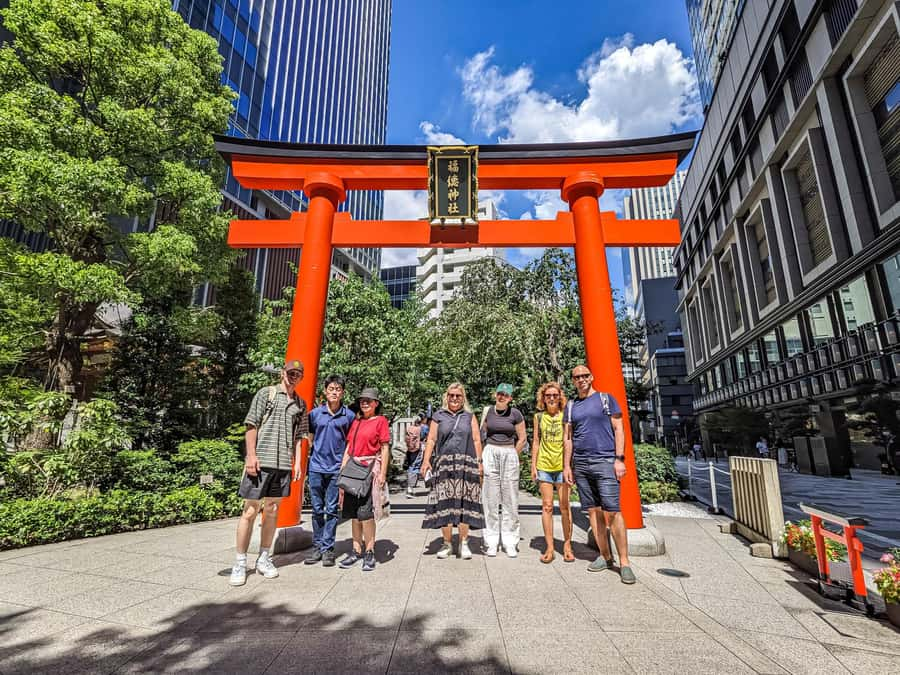
There is also a shrine visit as part of the cultural side of the morning. The supplied details do not identify the shrine, so you should view it as a short cultural stop rather than plan around a specific famous landmark.
The Nihonbashi portion lasts about 105 minutes. That is enough time for the food and explanations without making the opening feel rushed. If you prefer a fast-moving tour with constant restaurant stops, this section may feel talk-heavy. I see that as a reasonable tradeoff, since the historical context gives the tastings more meaning.
Tokyo Station: fruit sandwiches and Japan’s gift culture
The route then reaches Tokyo Station, where the focus shifts from old ingredients to the way food is bought, packaged, and given to others.
A featured tasting is a fruits sando, a Japanese milk-bread sandwich filled with fresh fruit and whipped cream. It is a visual and textural change from the savory kelp and dashi discussion. The soft bread, creamy filling, and fruit make it an easy favorite for many people, though the sweetness may feel substantial after several earlier samples.
Tokyo Station also provides a way to discuss Japanese gift-giving customs. Food is often purchased as a present when someone returns from a trip or visits family. Presentation, packaging, and regional identity all matter, and station shops are important places to see this system at work.
The tour links this food culture with Japan’s bullet trains. Tokyo Station is not simply a transport stop here. It shows how fast rail travel helped create demand for portable, attractive food gifts and quick bites.
This segment takes about an hour and combines sightseeing with tasting. It is a good point to notice how different Japanese food can feel when sold as a souvenir instead of served at a table. If you want a tour devoted only to obscure neighborhood restaurants, this retail and transport angle may be less appealing. If you want to understand how food fits into daily Japanese life, it adds useful context.
Yurakucho: eat like a salaryman beneath the tracks
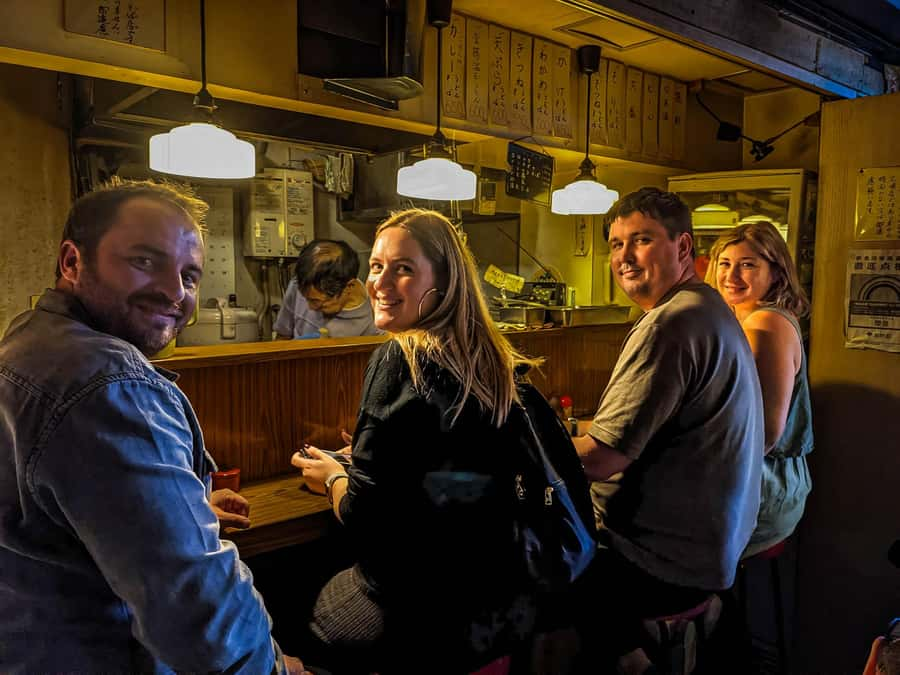
After about 15 minutes on foot, you reach Yurakucho, where the mood changes again. Here, the tour looks at the food habits of Japan’s salarymen, the office workers associated with Tokyo’s weekday dining culture.
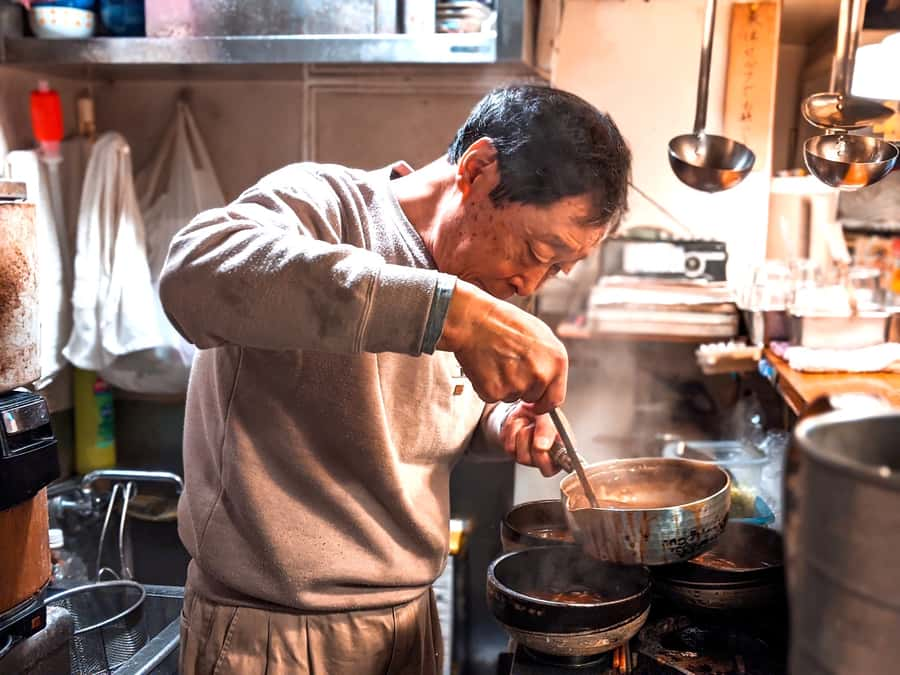
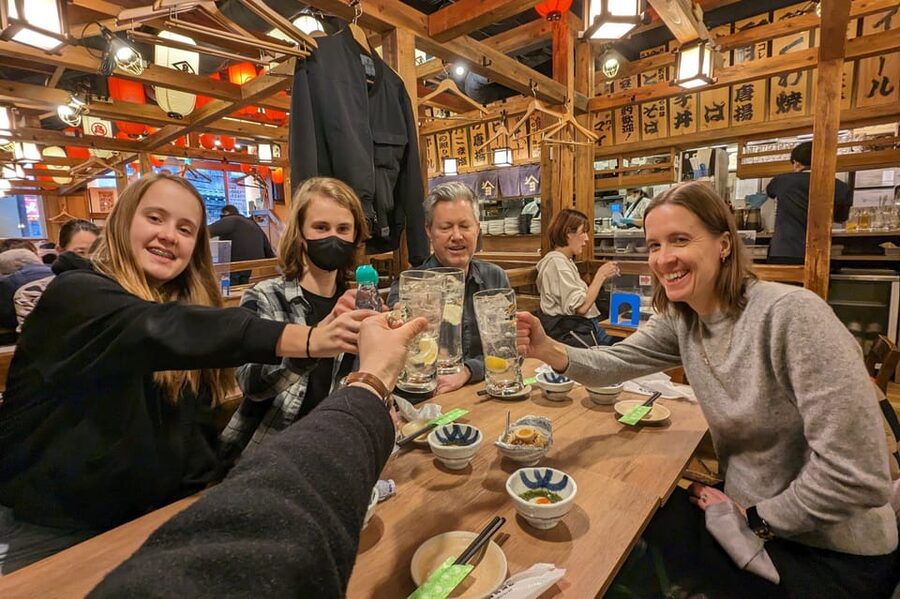
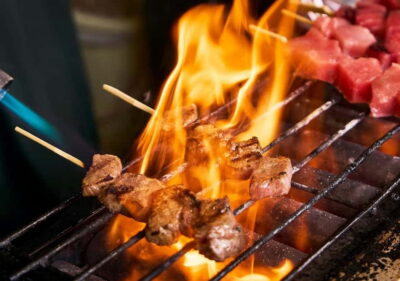
The setting is part of the appeal. You eat at an izakaya and a noodle stall tucked beneath the railway tracks. The space is more practical than polished, and that is exactly the point. This is food connected with work, commuting, quick social meals, and the rail lines that shape central Tokyo.
The meal portion includes common chicken dishes, a Japanese sour, and curry udon. The sour is an alcoholic drink, and one alcoholic drink is included in the tour price. If you do not drink alcohol, check with the operator before booking to confirm how that part can be handled, since the stated package includes one alcoholic drink and the tour is not suitable for vegetarians or vegans.
Curry udon is a useful example of modern Japanese comfort food. It combines noodles with a curry-flavored broth, showing how Japanese cooking adopts outside influences and turns them into familiar local dishes. It also feels more substantial than the smaller sweets and snacks earlier in the day.
The Yurakucho section lasts about an hour. I like its practical character. You are not being shown a staged version of Tokyo dining. You are being taken to the kind of compact, informal places that make sense for workers near a major rail corridor.
The drawback is that eating beneath railway tracks may not suit anyone looking for a quiet, refined meal. Expect a working neighborhood atmosphere and a tour that keeps moving.
A completely different kind of day in Tokyo:
- Mt Fuji and Hakone 1-Day Bus Tour Return by Bullet Train
★ 5.0 · 26,383 reviews - 1-Day Tokyo Bus Tour
★ 5.0 · 14,250 reviews - Tokyo: teamLab Planets TOKYO Digital Art Museum Entry Ticket
★ 4.6 · 9,779 reviews - Mt Fuji & Hakone Cruise, Drum Show Bullet Train 1 Day from Tokyo
★ 4.0 · 7,413 reviews
Akihabara: traditional snacks with a modern sales pitch
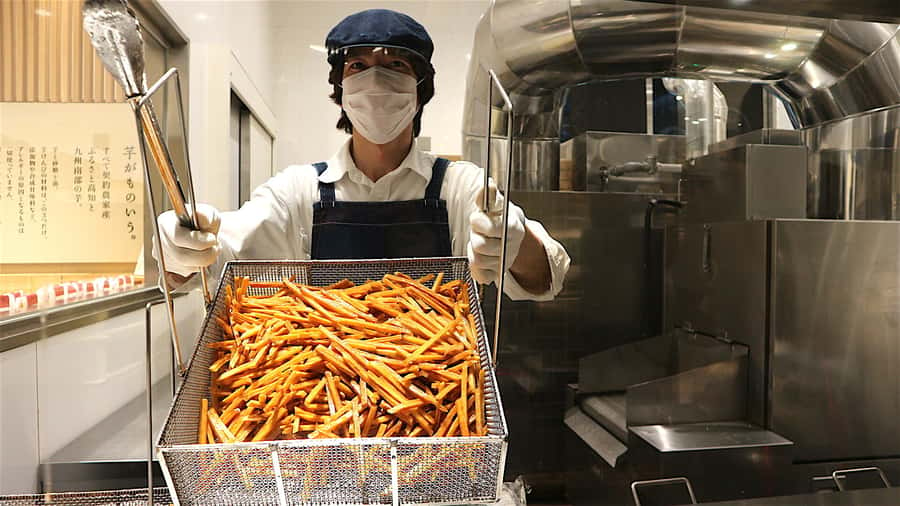
A short subway ride takes you to Akihabara, where the tour’s final chapter deals with food marketing and younger audiences.
Akihabara is known for electronics, anime culture, and new technology. Here, you look at how traditional Japanese snacks are packaged and presented in fresh ways to appeal to younger people.
The tasting is less about one famous dish and more about the way food is sold. A familiar snack can gain a new audience through bright packaging, playful presentation, or a connection with popular culture. The guide explains how Akihabara has helped introduce new ideas, technology, and subcultures to Japan.
This is a smart ending because it brings the earlier sections together. In Nihonbashi, you look at foundational ingredients and old shops. In Yurakucho, you see food shaped by work and industrial transport. In Akihabara, you consider how the next generation encounters those traditions.
The final section lasts about an hour and includes dessert and local snacks. Since the exact products can vary, you should expect a selection rather than one fixed signature item. The value lies in the explanation around the tasting, not just the sugar or packaging in your hand.
You finish in Akihabara, near Akihabara Station. Confirm the exact end point in your booking information, especially if you have a tight evening plan.
What the 164 dollar price really covers
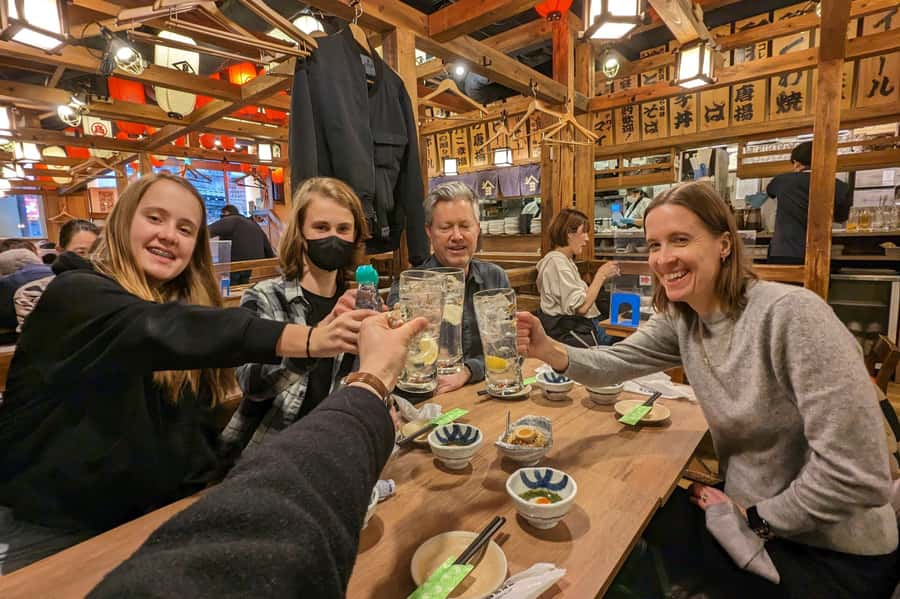
At $164 per person, this is not a budget lunch. The value depends on what you want from a Tokyo food experience.
You are paying for 11 or more tastings, one alcoholic drink, a guide, and a route linking several districts. You also avoid the work of choosing unfamiliar shops, translating menus, and figuring out how to connect Nihonbashi, Tokyo Station, Yurakucho, and Akihabara in one day.
The price makes more sense if you treat the tour as both a meal and a guided city walk. A self-guided version would cost less, especially if you bought only small snacks. It would not provide the same organized explanation of dashi, gift culture, salaryman dining, and modern food marketing.
A private tour gives you more control and is available for your own friends or family. The small-group option, limited to eight people, should provide a more personal setting than a large coach-style outing. The guide names associated with this experience include Paiva and Miko. Paiva is described as adding broad cultural context, while Miko’s route focuses on the connection between food’s past, present, and future.
I would call the price fair for visitors who value interpretation and variety. It is less attractive if you mainly want the cheapest way to fill up or if you already know Tokyo’s food districts well.
Timing, transport, and what to wear
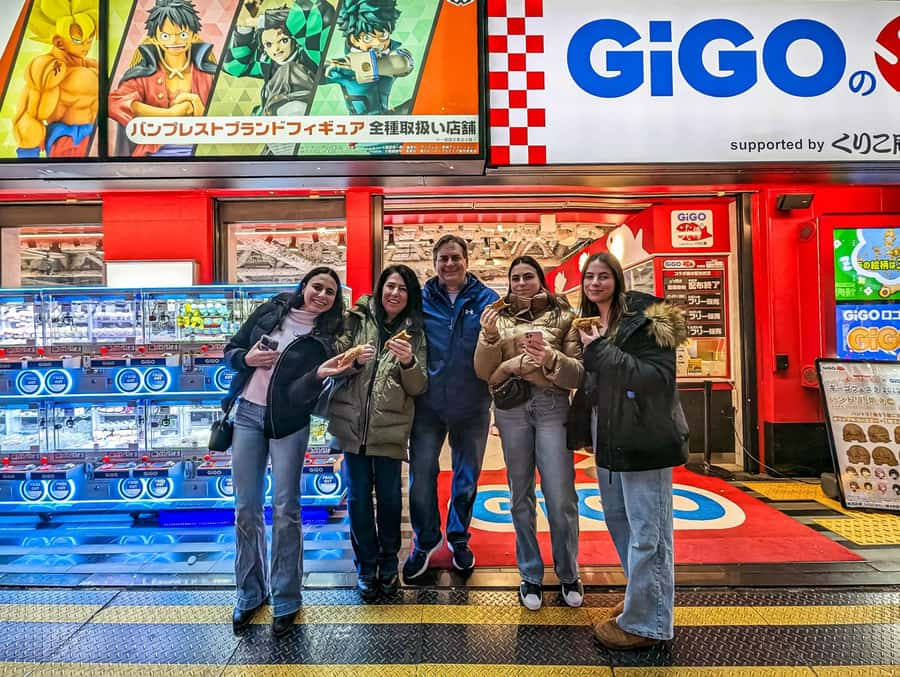
You need to reach Nihonbashi Subway Station Exit B12 unless you have arranged an optional private hotel meeting. Stay inside the shopping mall at basement level and look for the bench on the right after coming through Exit B12. Do not go up to street level.
If you arrive by taxi, use Coredo Nihonbashi at 1 Chome-4-1 Nihonbashi, Chuo City. The elevator near the entrance leads down to the meeting area. The instructions warn that a taxi may drop you on the wrong side of the building, so allow extra time.
There are two short subway rides during the tour. Subway fares are not included, so carry money or a transit card. The tour begins at Nihonbashi and finishes in Akihabara, so this is not a loop that brings you back to your starting neighborhood.
Wear comfortable shoes and light, comfortable clothing. A small towel and reusable water bottle are sensible in warm weather. The tour operates in rain or shine.
The group needs to walk at a reasonable pace. You will cover about four miles and handle many subway stairs. The experience is not wheelchair accessible and is not suitable for people with mobility impairments. It is also not suitable for vegans or vegetarians based on the stated food arrangements.
English, Japanese, and Portuguese guiding are available. Hotel pickup is optional only when booking a private tour with hotel meeting arrangements. Otherwise, you make your own way to the start.
Who will enjoy this Tokyo food route most
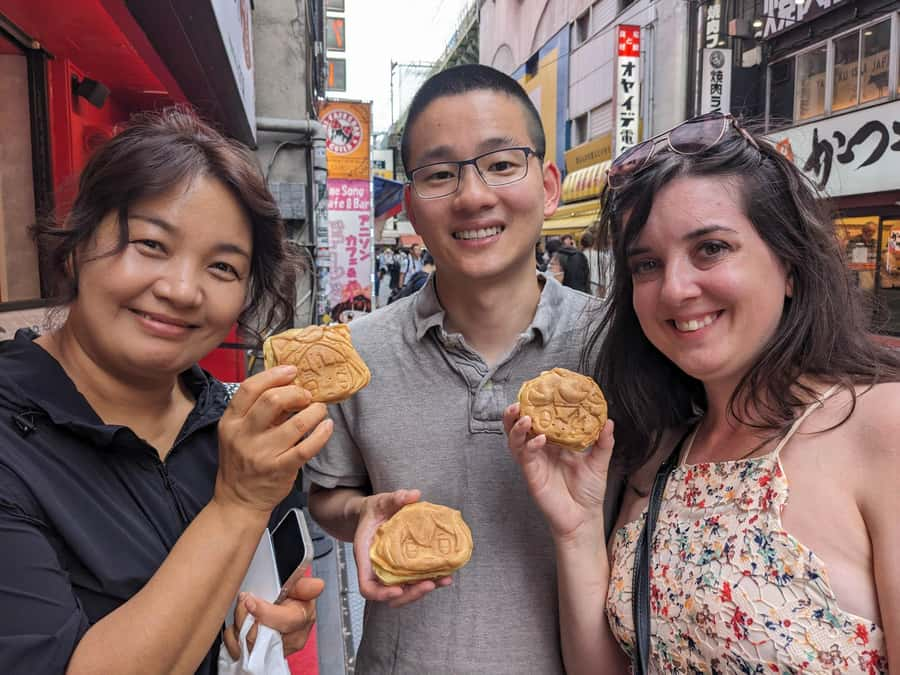
I recommend this tour to first-time visitors who want food and context in the same package. It is especially useful if you want to understand why dashi matters, how station food connects with Japan’s gift customs, and how Tokyo’s working districts eat.
It also suits people who like variety. In one day, you move from fermented drinks and mochi to curry udon, a sour, fruit sandwiches, and modern snacks. You should not expect every tasting to become a new favorite, but the range keeps the day interesting.
The route is less suitable for anyone with strict dietary restrictions, limited walking ability, or a strong preference for leisurely meals. It is also not ideal if you dislike public transport or want to spend the entire day in one neighborhood.
The required minimum is two bookings. If you are the only person booked, the activity may be canceled and refunded. For a smoother experience, keep your schedule flexible around the tour date.
Should you book this Tokyo food tour?
Book it if you want a full-day food lesson in central Tokyo, not just a list of restaurant stops. The strongest features are the clear three-part theme, the 11-plus tastings, the small group size, and the chance to eat in places that are easy to miss on your own.
I would choose the private option for families, friends, or anyone who needs a slower pace. The regular small group is a better value if you can walk briskly and enjoy meeting other people.
Skip it if you need wheelchair access, eat vegan or vegetarian food, or want a quiet restaurant-centered meal. For everyone else, the route offers a useful way to connect the old foundations of Japanese cooking with the everyday food of Tokyo workers and the modern sales culture of Akihabara.
FAQ
How long does the Tokyo food tour last?
The tour lasts about 5.5 to 6.5 hours. Starting times vary, so check availability when booking.
How many food tastings are included?
The experience includes 11 or more food tastings, plus one alcoholic drink.
Which areas does the tour visit?
The route covers Nihonbashi, Tokyo Station, Yurakucho, and Akihabara. It includes subway travel between some areas.
Where does the tour start?
The standard meeting point is Nihonbashi Subway Station Exit B12. Remain at basement level inside the shopping mall and meet by the bench on the right.
Where does the tour finish?
The route finishes in Akihabara, at or near Akihabara Station. Confirm the precise end point in your booking details.
Are subway fares included?
No. You take two short subway rides during the tour and pay those fares yourself.
Is the tour suitable for wheelchair users?
No. The tour is not wheelchair accessible and requires about 6.5 kilometers of walking, including many subway stairs.
Can I book a private tour?
Yes. You can book a private tour for your own friends or family, or join a small group with a maximum of eight people.
Newly reviewed around Tokyo
- Tokyo Asakusa:Calligraphy & Make T-shirt Activity★ 5.0 · 62 reviews
- Intercity Shuttle, Tokyo to Haneda /Narita /Yokohama /Makuhari★ 5.0 · 5 reviews
- 1 Hour Travel around Tokyo with a Professional Photographer★ 5.0 · 3 reviews
- Travel Tokyo with Your Own Personal Photographer★ 5.0 · 43 reviews
- Train in Samurai Swordsmanship and Defeat the Demon in Tokyo★ 5.0 · 5 reviews
- Shuttle Van 6hr Tokyo Tour to-and-from Tokyo, Yokohama and Narita★ 5.0 · 9 reviews
- Kickboxing & Body Training with EX-Pro Fighter★ 5.0 · 4 reviews
- Traditional Japanese Knife Sharpening Class★ 5.0 · 18 reviews
Tokyo Food Tours, compared.
Shinjuku Food Tour (13 Dishes at 4 Local Eateries)
Read our review →
Shinjuku Food Tour (15 Dishes and 4 Eateries)
Read our review →
Best of Shinjuku: Izakaya Food Tour (4 Stops, 14+ Tastings)
Read our review →
Tokyo Night Foodie Tour in Shinjuku – Seasonal Sushi, Wagyu Beef
Read our review →
Eat and Drink Like a Local: Tokyo Ueno Food Tour-Taverns&Ramen
Read our review →
Tsukiji Fish Market: Street Food & Culture Walking Tour
Read our review →
Browse the lists this tour appears in