Reviewed · TOURS
Tameike: Exploring the Heart of Japanese Politics Tour
Japan’s political heart is not far from the usual sightseeing route, but it feels worlds away from Tokyo’s neon streets. This three-hour walk takes you into the National Diet Building, then over to Hie Shrine and a long-established tea shop for matcha and sweets.
I like the clear mix of government, Shinto tradition, and everyday food culture. I also like the small group, limited to five people, which gives you room to ask about voting, customs, and daily life. The main drawback is the walking and stairs, so this is not the tour for sore feet or uncomfortable shoes.
- See inside Japan’s National Diet Building with an English-speaking guide and learn how the country’s political system works.
- Meet Hie Shrine’s monkey guardians, linked with career success and matchmaking.
- Walk through the Thousand Torii Gates, a compact but memorable shrine feature.
- Ask real questions in a group of no more than five, or possibly enjoy a one-on-one outing.
- Finish with matcha, traditional sweets, and a tea gift at historic Dobashi-en.
- Pay $129 per person for a focused three-hour experience that combines access, guiding, refreshments, and local interpretation.
Why this small tour makes Tokyo’s politics easier to understand
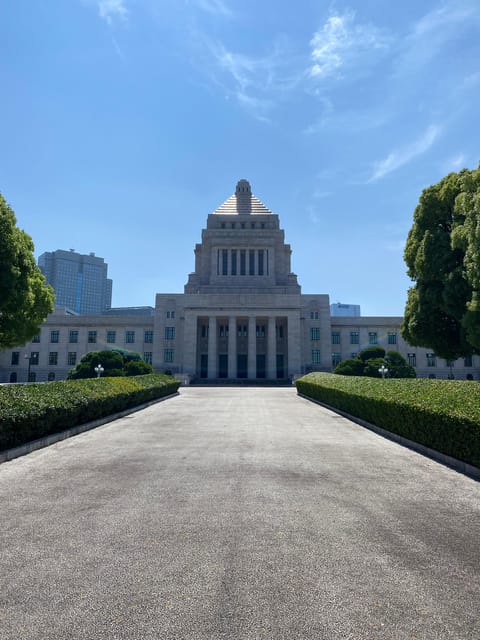
Many visitors pass through Tokyo without getting a clear picture of how Japan is governed. This tour gives you a place, the National Diet Building, where political decisions are made, then explains the system in plain English.
The value comes from the conversation. You are not simply looking at a grand building and moving on. Your guide can explain voting procedures, the work of government, important political events, and the traditional ideas that still shape public life.
Past departures have been led by Megumi, often called Meg. She is praised for explaining Japanese politics clearly while also answering questions about customs and daily life. That matters here because the subject can get technical. A guide who welcomes questions can turn a formal tour into a useful discussion.
The group limit of five is a major advantage. You can ask about domestic politics, Japan’s place in the world, or small cultural details such as why public parks often have few trash cans. If your group is tiny, the outing may feel almost like a private lesson. The tradeoff is the price: at $129, this costs more than a simple shrine visit or self-guided walk. You are paying for access, a live English-speaking guide, cultural explanation, and a carefully connected route.
Starting at Kokkai-gijidōmae Station
Your meeting point is Kokkai-gijidōmae Station, Exit 1. Look for a guide wearing a navy blue happi, the traditional Japanese coat. This is a useful detail in a busy station, especially if you are arriving from another part of Tokyo and have little time to spare.
The station is next to the National Diet Building, so the first walk is only about five minutes. That short start keeps the tour efficient. You do not spend the opening half hour crossing Tokyo before reaching the main subject.
I would arrive with enough time to find Exit 1 without rushing. The supplied meeting details are specific, but large Tokyo stations can still take a moment to navigate. Keep your phone charged, and have the guide’s meeting instructions available before you leave your hotel.
Other Tokyo days people book alongside this one:
- Mt Fuji and Hakone 1-Day Bus Tour Return by Bullet Train
★ 5.0 · 26,383 reviews - 1-Day Tokyo Bus Tour
★ 5.0 · 14,250 reviews - Tokyo: teamLab Planets TOKYO Digital Art Museum Entry Ticket
★ 4.6 · 9,779 reviews
Inside the National Diet Building
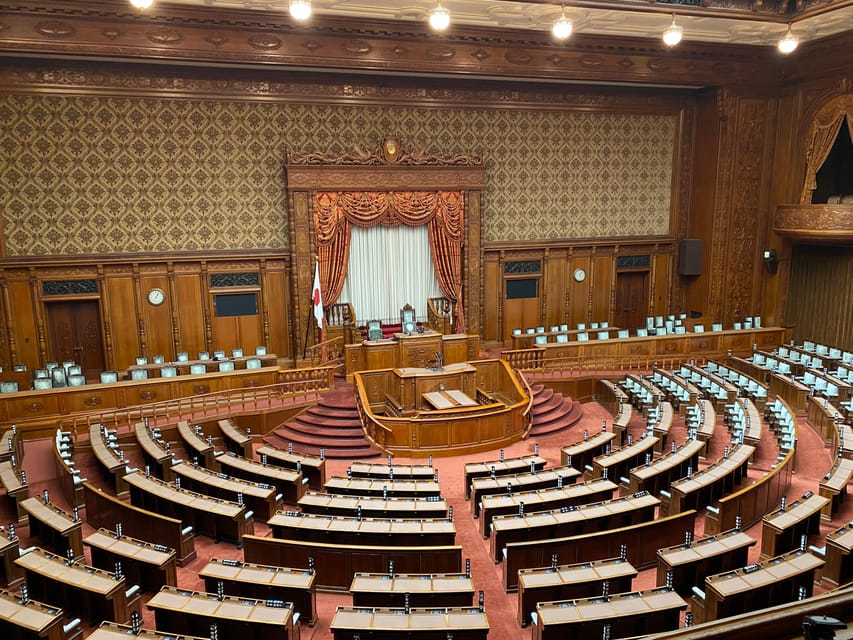
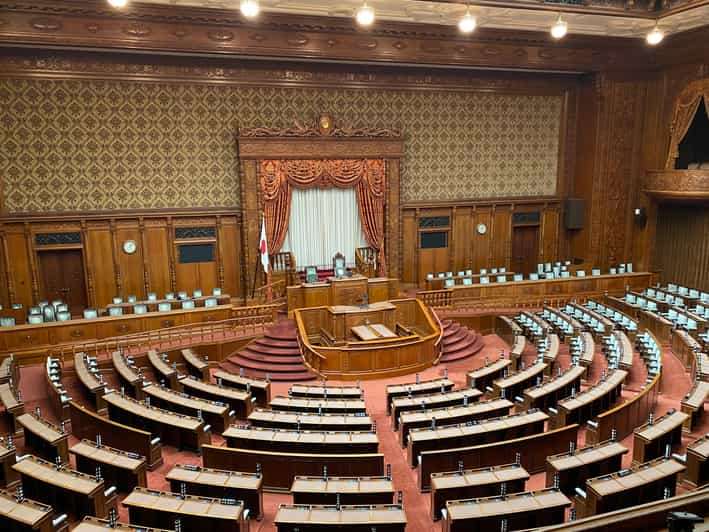
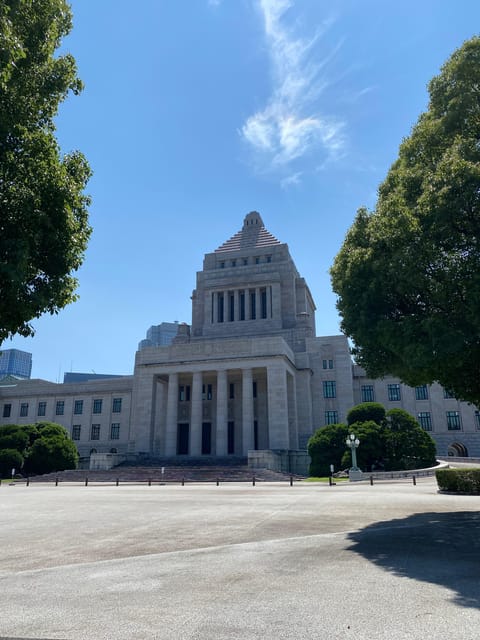
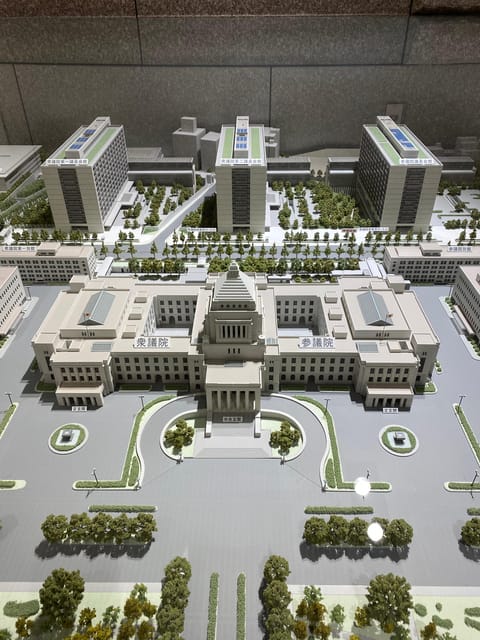
The first major stop lasts about an hour. You enter the National Diet Building for a guided visit focused on its architecture, history, grand chambers, and political role.
This is the part of the tour that gives the whole outing its purpose. Japan’s government can seem hard to understand from a distance. Inside the building, the institutions become more concrete. You can connect political events and voting procedures with the rooms where national business takes place.
The building itself is a draw. The architecture is formal and imposing, and the interior gives you more to look at than a standard street-side explanation. Your guide helps you read the building as both a working political center and a historic public symbol.
Expect stairs here. Comfortable walking shoes are not just a polite suggestion. The tour includes several on-foot transfers, and the National Diet Building has stairs that can make the first hour more demanding than the schedule suggests.
The hour is long enough to provide substance but short enough to keep the visit from becoming a lecture. If you are interested in government, history, or the way a modern country organizes power, this will likely be the strongest part of the morning or afternoon.
If politics is not your subject, the visit may require a little patience. The building’s appeal comes partly from understanding what happens there. Without interest in government, you may find the explanations more useful than the architecture alone.
The short walk to Hie Shrine
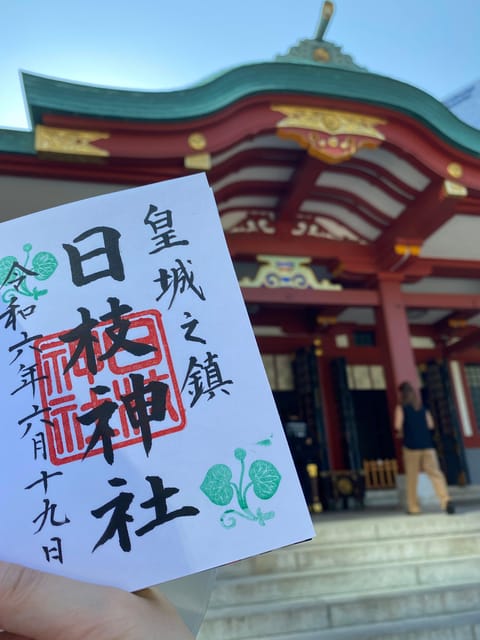
After the Diet visit, you walk for about 15 minutes to Hie Shrine. This transfer is easy to understand geographically: two powerful institutions, national government and Shinto worship, sit close together in central Tokyo.
The walk also gives you a small break between topics. You move from official state business to a religious site tied to personal hopes and daily life. Your guide can help you understand the proper way to worship at a Shinto shrine, so you do not have to guess what to do at the entrance or main hall.
Hie Shrine is known as a power spot for career success and matchmaking. That combination makes the visit especially relevant if you are curious about how Japanese spiritual practice connects with modern goals. People come not only for scenery or old buildings, but also with personal hopes in mind.
Hie Shrine, monkey guardians, and the Thousand Torii Gates
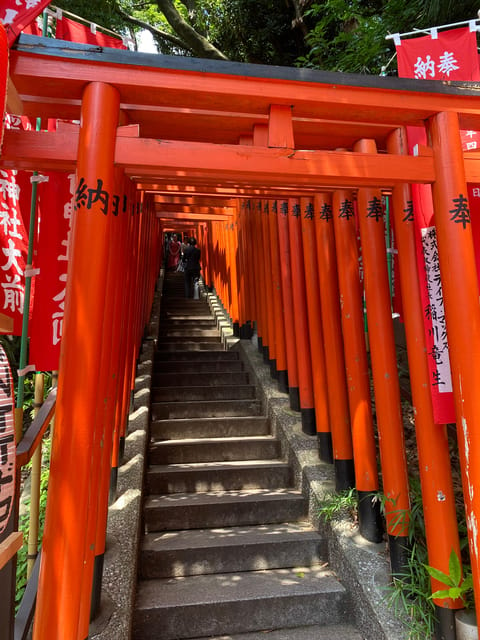
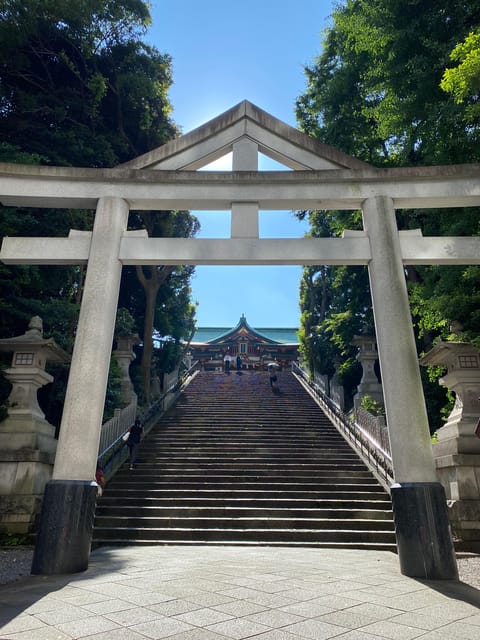
The shrine visit takes about 45 minutes. Look for monkey statues at the gate and main hall. Monkey imagery also appears on votive tablets and charms, giving the site a distinct visual identity.
The monkey connection is one of the details that makes this shrine memorable. It gives your guide a natural way to explain symbols, wishes, and the role of charms in Japanese religious life. If you have already visited famous shrines in Kyoto or Tokyo, you may appreciate seeing a different set of motifs rather than repeating the same visual experience.
Do not miss the Thousand Torii Gates. They recall the famous rows at Fushimi Inari Shrine, though this tour offers them within a shorter central Tokyo visit. The gates create a strong change of mood from the formal Diet Building. You get color, repetition, and a more intimate route through the shrine grounds.
The shrine is also a good place to pause and ask practical questions. You can learn how to worship, what the charms represent, and why certain images appear on shrine objects. The guide’s role is important because the meaning is easy to miss if you only take photographs.
Keep in mind that this is still a walking tour, not a leisurely temple stay. The schedule allows 45 minutes, so you will see the key areas without having unlimited time to wander. If you want long periods for photography or quiet reflection, you may need to return on your own.
A completely different kind of day in Tokyo:
- Mt Fuji & Hakone Cruise, Drum Show Bullet Train 1 Day from Tokyo
★ 4.0 · 7,413 reviews - Tokyo: Shinjuku Food Tour (13 Dishes at 4 Local Eateries)
★ 5.0 · 6,603 reviews - Tokyo Mt Fuji 5th St & Hakone Cruise Bus Tour w/Bullet Train
★ 4.4 · 5,024 reviews - Flagship 2-Hours Official Street Go-Kart Tour – Tokyo Bay Shop
★ 5.0 · 4,974 reviews
Matcha and sweets at Dobashi-en
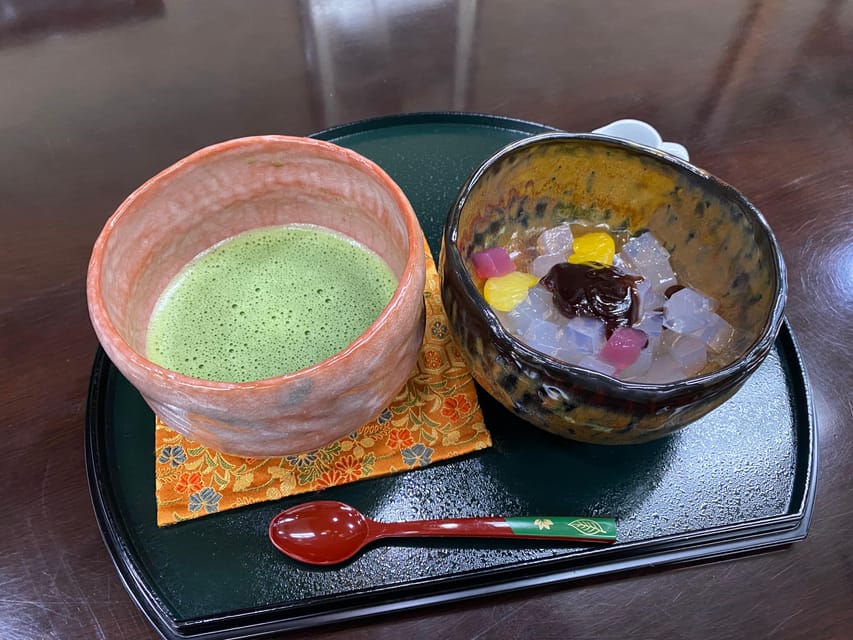
The final 15-minute walk leads to Dobashi-en, a long-established green tea shop. You finish with about 45 minutes for tea and local sweets.
This is a smart ending. A political building and shrine visit give you ideas to process, while matcha and a sweet provide a calm, familiar Japanese ritual. You are not simply stopping for a random drink. The tea shop adds a food and craft element to the outing.
The matcha is included, along with sweets and a souvenir tea gift. That helps explain part of the $129 cost, though the main value still comes from the guide and the National Diet entry. If you enjoy tea, traditional snacks, and small local shops, the last stop will feel like more than a refreshment break.
You should also prepare some cash. Some shops may not accept cards, and the tour information specifically advises carrying money in advance. The included tea and snack are covered, but cash is useful if you want to buy something extra or encounter a shop payment issue.
The tea stop gives you a chance to continue the conversation. Questions about Japanese customs, food, etiquette, and ordinary life fit naturally here. Guides such as Megumi have been especially praised for moving comfortably between formal political subjects and casual cultural questions.
What the $129 price really buys you
At $129 per person, this is not a bargain sightseeing loop. It is a specialist experience with a small group, entry to the National Diet Building, an English-speaking guide, tea, sweets, and a souvenir.
The price makes more sense if you want explanation rather than a checklist of sights. You could visit Hie Shrine without paying a tour fee. You could also look at the Diet Building from outside. What you cannot easily reproduce on your own is the connected story: how Japan’s political center, Shinto beliefs, and tea culture fit together in one route.
The group size improves the value. With a maximum of five people, you have a better chance to ask follow-up questions than on a large coach tour. Some outings may have only one participant, creating an unusually personal format. You should not assume that every departure will be private, but the small-group design gives you a good chance of direct conversation.
I would recommend this tour more strongly to a first-time visitor who wants context than to someone focused only on major sights. It is also a good choice for repeat visitors who have already seen Tokyo’s famous neighborhoods and want a more specific subject.
Walking, timing, and practical comfort
The full experience lasts three hours and ends at Akasaka-Mitsuke Station. The route includes roughly five minutes from the station to the Diet Building, 15 minutes to Hie Shrine, and another 15 minutes to the tea shop.
The distances are manageable, but the schedule is active. You will be on your feet at each stop, and the Diet Building has stairs. Wear shoes you would happily use for a half day in Tokyo.
The tour is offered in English with a live guide. Check the available starting times when you book, since the exact departure time can vary. You can cancel up to 24 hours before the tour for a full refund, and the reserve-now, pay-later option allows you to hold a place without paying immediately.
Do not attend if you are feeling unwell on the day. That is sensible advice for a small group, where close contact and a shared tea stop are part of the experience.
Who will get the most from this experience
I would choose this tour if you want:
- A clear introduction to the Japanese political system.
- A chance to ask questions in English rather than rely on a guidebook.
- A small group with room for personal conversation.
- A shrine visit with specific symbols, including monkeys and the Thousand Torii Gates.
- A traditional tea and sweets stop after walking.
- Something more focused than a general Tokyo highlights tour.
You may want a different activity if you dislike stairs, prefer a relaxed pace, or have little interest in politics. The shrine and tea shop help balance the subject, but government remains the central theme.
The tour also suits solo visitors and couples who value conversation. Several departures have had a one-on-one feel, which can be a real benefit if you want to ask detailed questions about Japan’s institutions and culture.
Should you book the Tameike tour?
Book it if you want to understand Japan through more than famous streets and photographs. The National Diet Building gives you the political setting, Hie Shrine brings in belief and personal hopes, and Dobashi-en closes the route with tea and sweets.
The strongest reason to go is the guide. Megumi, also known as Meg, has received especially warm praise for her clear explanations, kindness, and willingness to discuss both politics and ordinary Japanese life. Guide assignments can vary, but the small-group format gives this tour a personal shape.
At $129, you are paying for access and conversation, not just transportation between sights. If that is the kind of value you want, this is a thoughtful three-hour use of your Tokyo time. If you only want low-cost sightseeing, visit Hie Shrine independently and save the money.
FAQ
How long does the Tameike tour last?
The tour lasts three hours, including the National Diet Building, Hie Shrine, the tea shop, and walks between the stops.
Where does the tour begin?
Meet at Kokkai-gijidōmae Station, Exit 1. Your guide wears a navy blue happi coat.
Where does the tour finish?
The tour ends at Akasaka-Mitsuke Station.
Is the tour conducted in English?
Yes. It includes a live English-speaking guide.
How many people can join the tour?
The group is limited to five participants. Some departures may have only one participant.
What is included in the price?
The price includes entry to the National Diet Building, tea and a snack at Dobashi-en, and a souvenir tea gift.
Do I need comfortable shoes or cash?
Yes. Comfortable walking shoes are recommended because the route includes walking and stairs at the National Diet Building. You should also carry cash because some shops may not accept cards.
Newly reviewed around Tokyo
- Tokyo Asakusa:Calligraphy & Make T-shirt Activity★ 5.0 · 62 reviews
- Intercity Shuttle, Tokyo to Haneda /Narita /Yokohama /Makuhari★ 5.0 · 5 reviews
- 1 Hour Travel around Tokyo with a Professional Photographer★ 5.0 · 3 reviews
- Travel Tokyo with Your Own Personal Photographer★ 5.0 · 43 reviews
- Train in Samurai Swordsmanship and Defeat the Demon in Tokyo★ 5.0 · 5 reviews
- Shuttle Van 6hr Tokyo Tour to-and-from Tokyo, Yokohama and Narita★ 5.0 · 9 reviews
- Kickboxing & Body Training with EX-Pro Fighter★ 5.0 · 4 reviews
- Traditional Japanese Knife Sharpening Class★ 5.0 · 18 reviews
Tours, compared.

Mt Fuji and Hakone 1-Day Bus Tour Return by Bullet Train
Read our review →
Shinjuku Food Tour (13 Dishes at 4 Local Eateries)
Read our review →
Tokyo Mt Fuji 5th St & Hakone Cruise Bus Tour w/Bullet Train
Read our review →
Flagship 2-Hours Official Street Go-Kart Tour – Tokyo Bay Shop
Read our review →
Mt. Fuji Tour, Hakone Ropeway, Owakudani, Lake Ashi
Read our review →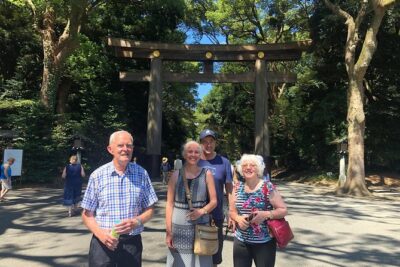
Tokyo 6hr Private Tour with Government-Licensed Guide
Read our review →