
Reviewed · TOKYO FOOD TOURS
Shinjuku: Food Tour – 15 Dishes & 3 Drinks at 4 Eateries
Shinjuku’s best food experiences are often behind unmarked doors, up narrow stairs, or tucked into noisy lanes. This three-hour tour gives you a practical way into that world, with 15 Japanese dishes and three drinks served across four eateries in Omoide Yokocho, Kabukicho, and Golden Gai.
I like the wide food range, from sushi and juicy gyoza to kushikatsu, grilled vegetables, yakitori, tofu, and sake. I also like the neighborhood walk, since you get more than a meal. You move through some of Tokyo’s most atmospheric nighttime streets with guides such as Ayaka, Naoto, Shun, Midori, Luna, Yuki, and Nono.
The main caution is organization. Most experiences appear to run smoothly, but one account described a much larger group than expected, poor directions, and long waits between restaurants. The advertised maximum is 15 people, so confirm the group size if that matters to you.
Key points to know before booking
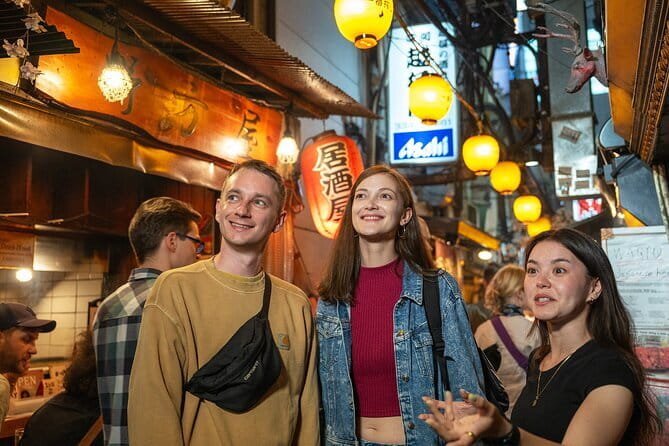
- Four eateries in three famous Shinjuku areas: You visit Omoide Yokocho, Kabukicho, and Golden Gai, with the food spread across four stops.
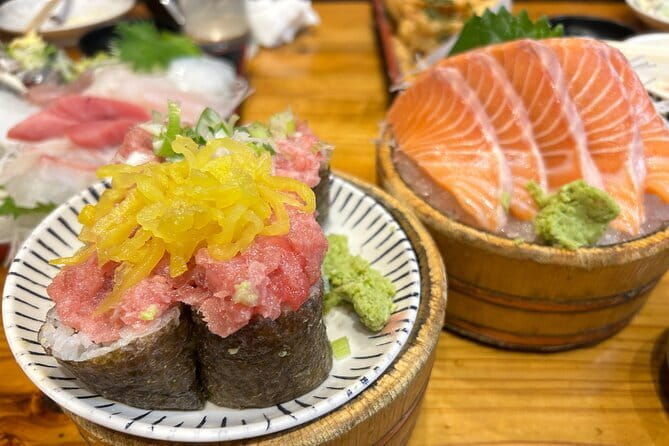
- Fifteen dishes and three drinks included: The menu can include sushi, gyoza, yakitori, kushikatsu, tofu, grilled vegetables, and Japanese sake.
- A useful first-night introduction: The walking route helps you get your bearings in Shinjuku’s confusing nightlife streets.
- Friendly guides make a real difference: Ayaka, Naoto, Shun, Midori, Luna, Yuki, and Nono are among the guides praised for patience, care, and good company.
- Prepare for Japanese dining customs: At least one restaurant requires you to remove your shoes.
- Good value if you eat and drink heartily: At $112.75, the price covers a full evening of food, drinks, guidance, and four restaurant visits.
Why this Shinjuku food tour works well for a first night
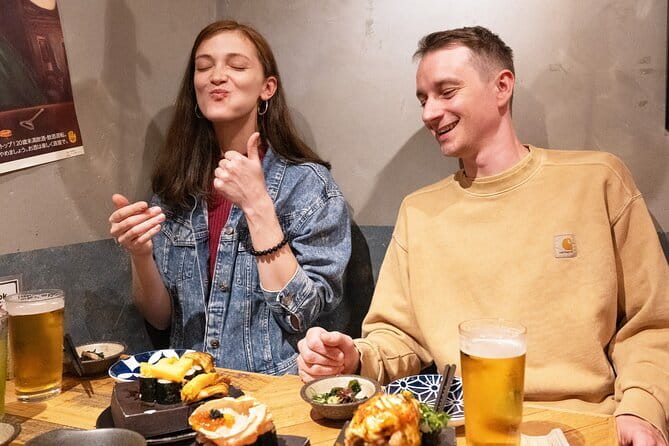
Shinjuku can feel like several cities packed into one district. Bright signs fill Kabukicho, tiny bars crowd Golden Gai, and Omoide Yokocho offers a more old-fashioned look at Tokyo dining. You can wander through all three areas on your own, but finding a seat, reading a menu, and choosing a fair-priced place takes time.
This tour solves much of that problem. You follow a guide from the East Exit police box at Shinjuku Station to a sequence of eateries selected for their food and local character. The point is not fine dining. It is a lively evening of small dishes, shared tables, narrow streets, and Japanese food that may be unfamiliar at first glance.
The schedule lasts about three hours, with roughly an hour in each area. Since the food is divided among four venues, you do not sit through one long meal. Instead, you get several short stops and a change of setting as the night goes on.
That format suits you if you want to sample a lot without committing to a single restaurant. It also helps if you are new to Japanese food. A guide can explain what you are eating, help with ordering, and keep the evening moving.
More things to do in Shinjuku:
- Tokyo: Shinjuku Food Tour (13 Dishes at 4 Local Eateries)
★ 5.0 · 6,603 reviews - Tokyo Bar Hopping Tour in Shinjuku (All-You-Can-Drink + Dinner)
★ 5.0 · 3,587 reviews - Tokyo: Shinjuku Food Tour (15 Dishes and 4 Eateries)
★ 4.9 · 2,033 reviews
Omoide Yokocho begins with old Tokyo atmosphere
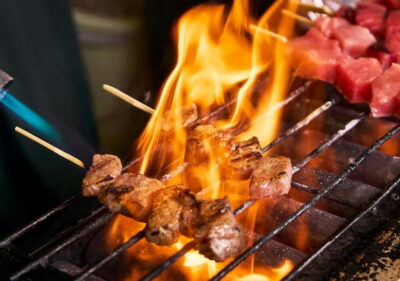
The first stop is Omoide Yokocho, a narrow collection of small eateries near Shinjuku Station. It is known for its nostalgic backstreets, compact dining rooms, and grilled food. You start with familiar introductions to izakaya dining, including yakitori, fried tofu, gyoza, grilled vegetables, craft beer, and sake.
This is a smart opening stop. Yakitori gives you a direct taste of casual Japanese food, while gyoza and grilled vegetables are easy for most people to enjoy. Fried tofu adds another texture, and the drink pairing begins the social side of the evening.
Omoide Yokocho is also one of the places you might find difficult to handle alone. Tables are small, menus may not be obvious, and the lanes can feel crowded. A guide takes care of the basic decisions while you pay attention to the setting.
Do not expect a quiet meal here. These are compact izakaya spaces, and the appeal comes partly from the close quarters and lively sound. If you prefer spacious restaurants and slow service, this stop may feel rushed. If you like casual food in an atmospheric setting, it is a strong introduction.
Kabukicho brings more food and a local izakaya setting
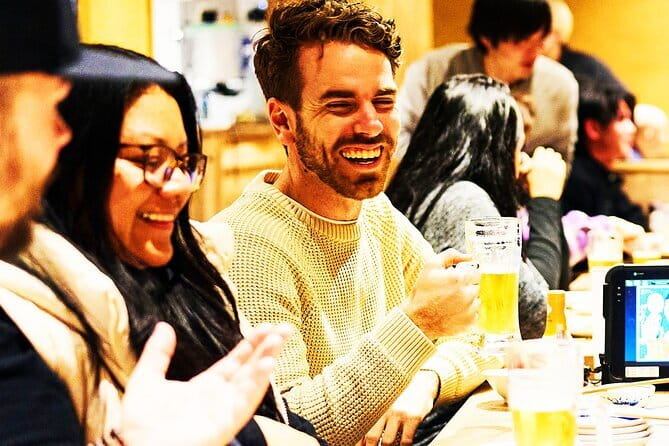
The next area is Kabukicho, Tokyo’s famous nightlife district. The tour takes you to another izakaya selected for its food, with dishes that can include fresh sushi, gyoza, fried items, and other Japanese specialties.
The value of this stop is access. Popular local izakaya can be difficult to enter without a reservation, especially at night. A prearranged visit removes some of the guesswork and gives you a chance to eat in a place you might otherwise pass without noticing.
The food selection matters here. With up to 15 dishes included across the evening, you are not relying on one plate to define the tour. Sushi brings a fresh element, while gyoza and fried dishes add something hot and filling. You might also encounter dishes that are less familiar, which is part of the point of going with a guide.
The walking connection between restaurants requires attention. Shinjuku has plenty of signs and side streets, and it is easy to lose sight of a group. One poor account described people waiting outside and getting lost between stops. That appears to be an exception rather than the usual experience, but you should stay close to the guide and make sure you know the meeting procedure if the group spreads out.
Golden Gai ends the night with drinks and conversation

Golden Gai is made up of tiny bars packed into a small network of narrow lanes. The tour uses this area for a final bar stop, where you can mingle with local people and other members of the group while enjoying another drink and more food.
This is the most social section of the evening. You are not simply sitting down for another course. You are moving into the kind of small bar setting that can feel intimidating when you do not speak Japanese or understand the local customs.
A sake tasting is one of the highlights mentioned by people who had a particularly good evening. Another account praised the quality of the sake selection and the cultural explanations that came with it. The exact drinks can vary, but three drinks are included overall, and sake is an important part of the experience.
Golden Gai bars are small, so the atmosphere depends heavily on the guide and the size of the group. With a well-managed group, this can be a memorable way to finish the tour. With too many people, it can become cramped and hard to hear. That is why the stated maximum of 15 is important.
More Tokyo food tours:
- Best of Shinjuku: Izakaya Food Tour (4 Stops, 14+ Tastings)
★ 5.0 · 1,863 reviews - Tokyo Night Foodie Tour in Shinjuku – Seasonal Sushi, Wagyu Beef
★ 5.0 · 1,161 reviews - Eat and Drink Like a Local: Tokyo Ueno Food Tour-Taverns&Ramen
★ 5.0 · 957 reviews - Tokyo: Shibuya Food Tour (13 dishes and 4 Eateries)
★ 5.0 · 770 reviews
The food covers familiar favorites and new tastes
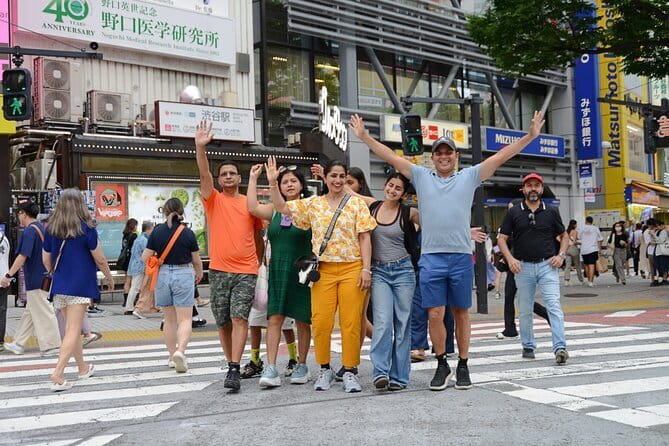
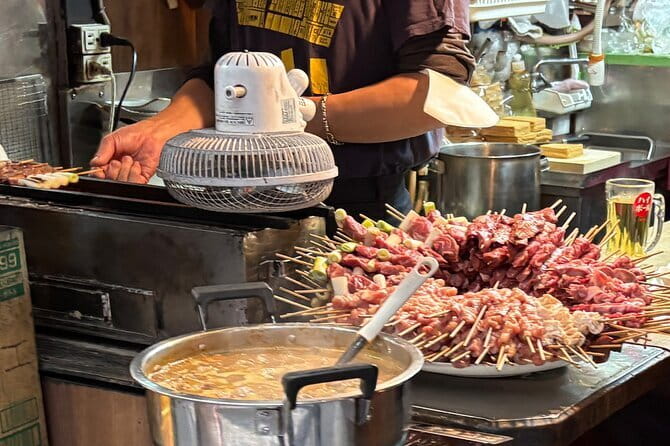
The menu is one of the strongest reasons to consider this experience. Fifteen dishes gives you a broad sample rather than one specialty. The stated highlights include sushi, crispy kushikatsu, juicy gyoza, yakitori, fried tofu, grilled vegetables, and other Japanese dishes.
Kushikatsu is especially useful for first-time visitors to Japanese food. These skewered, breaded, fried items are easy to understand and satisfying after walking. Gyoza offers another dependable favorite, while sushi provides a lighter contrast.
You may also encounter sweet or unusual items. One praised dish was a custard-filled fish, a Japanese snack that brings a different flavor and texture to the night. The exact menu is not fully fixed in the information provided, so you should treat the 15 dishes as a promised quantity rather than a guaranteed list of every plate.
The food is served over several stops, not placed in front of you all at once. That makes the evening easier on your appetite and lets you compare different styles of izakaya food. Still, you should not book this expecting a formal tasting menu. This is casual neighborhood eating, with dishes chosen for variety and atmosphere.
The guides shape the quality of the evening
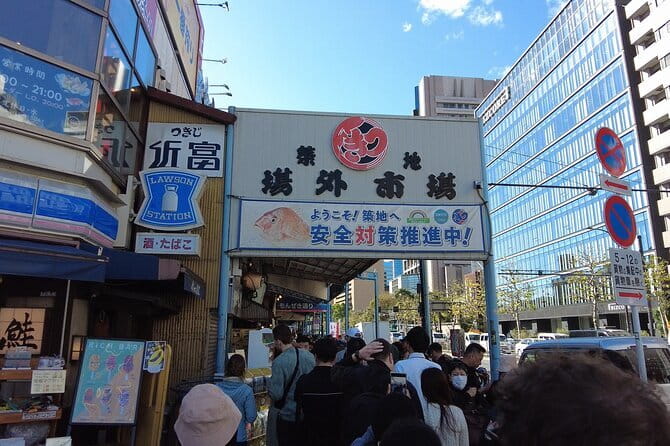
A food tour lives or dies by its guide. The strongest accounts praised guides for being friendly, patient, attentive, and willing to adjust the pace. Ayaka was particularly praised for navigating the neighborhood and helping participants reach places they might not find alone.
Naoto was praised for taking the group to four different places, explaining the food, and creating a fun evening. Shun received special praise after leading what became a private tour and adding historical stops. Midori was appreciated for combining food with background about Shinjuku, while Luna was credited with introducing a broad range of interesting foods and drinks.
Yuki and Nono were also praised for leading the group into places with few tourists beyond the tour itself. That detail gets to the heart of the experience. You are not simply eating in a restaurant selected for foreign visitors. You are visiting ordinary Japanese drinking and dining spaces, though the tour itself is clearly designed to help international visitors use them.
Guide quality may vary by date. The strong feedback is consistent on friendliness, but one poor experience described a guide who offered little information and lost the group between restaurants. You should view the guide as a major part of the value, not a minor extra.
What $112.75 buys you in practical terms
At $112.75 per person, this is not the cheapest way to eat in Shinjuku. You can certainly find individual bowls, skewers, dumplings, or drinks for less. The comparison changes when you add four eateries, 15 dishes, three drinks, a walking route, and help entering local-style places.
The price makes the most sense if you would otherwise spend an evening guessing where to go. It also works well if you want to try many dishes but do not want to order full portions at several restaurants. The group format spreads the cost of guidance and lets you sample food without making every dining decision yourself.
The value is weaker if you are already comfortable in Shinjuku, speak Japanese, and enjoy choosing your own bars. It is also less appealing if you do not drink, since three drinks are part of the package and help make up a portion of the cost.
The rating of 4.9 from 323 reviews and the 97 percent recommendation rate suggest a strong overall record. Still, the one-star accounts matter because they point to the main risk: poor coordination can damage an otherwise good route. The stated group limit is 15, but one account described a group of around 50. Ask about the expected group size when booking if you want the most comfortable experience.
Timing, meeting point, and small practical details
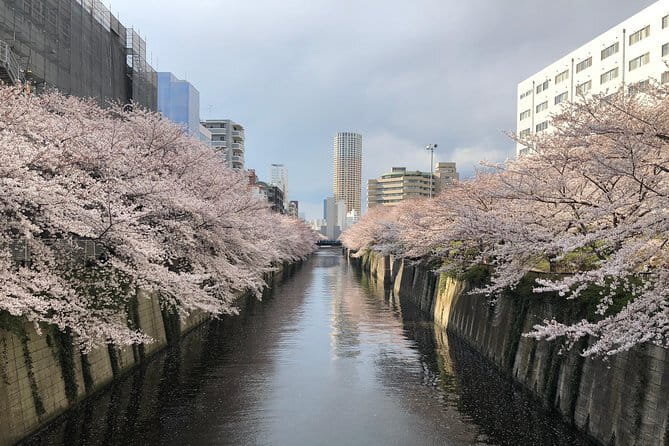
The tour begins at the police box by Shinjuku Station’s East Exit, at 3-chōme-38-1 Shinjuku. This is a useful meeting point, but Shinjuku Station is large and confusing, so allow time to reach the East Exit rather than arriving at the station just before the start.
The activity ends back at the meeting point. That gives you a clear finish and makes it easier to continue your evening in Shinjuku, provided you do not have a tight connection elsewhere.
A mobile ticket is accepted, and confirmation arrives at booking. The tour is near public transportation, and most people can participate. The supplied information does not describe special accessibility arrangements, so you should contact the provider if you have mobility needs or concerns about narrow eateries and walking between stops.
One restaurant requires shoes to be removed. Wear socks and shoes that are easy to take off. This is a small detail, but it can make the stop more comfortable and prevent an awkward moment.
Free cancellation is available up to 24 hours before the start time. A cancellation within 24 hours is not refunded, and changes inside that window are not accepted. The cut-off uses Tokyo local time.
Who will enjoy this three-hour evening
I would recommend this tour most strongly to first-time visitors who want a guided introduction to Shinjuku after dark. It is also a good match for solo visitors, couples, and small groups who want company at the table and help with unfamiliar dishes.
You will probably get the most from it if you:
- Enjoy trying several small dishes rather than ordering one large meal
- Want to sample sake, beer, and Japanese bar food
- Prefer a social evening with a guide and other participants
- Feel unsure about entering tiny izakaya or Golden Gai bars alone
- Want neighborhood history and orientation along with dinner
It may not suit you if you want a quiet, private meal, have strict dietary requirements that need advance confirmation, or dislike moving between several venues. The information provided does not specify vegetarian, allergy, or special-diet arrangements, so ask before booking rather than assuming the menu can be changed.
Should you book the Shinjuku food tour?
Book it if you want a lively first taste of Shinjuku nightlife, especially if you value access and guidance more than choosing every dish yourself. The combination of 15 dishes, three drinks, four eateries, and three famous neighborhoods gives you plenty to sample in one evening.
I would be more cautious if you are sensitive to crowds or expect a perfectly polished operation. The strongest experiences depend on a friendly guide who keeps the group together and explains the food. Confirm that the tour is running with its stated maximum of 15 people, arrive early at the East Exit police box, and wear easy-to-remove shoes.
For most visitors, the real value is not just the amount of food. It is the chance to step into Shinjuku’s small drinking spots with someone who knows where to go. If that sounds more useful than spending the evening choosing restaurants from a phone screen, this is a worthwhile booking.
FAQ
How long does the Shinjuku food tour last?
The tour lasts approximately three hours.
How many dishes and drinks are included?
The experience includes up to 15 Japanese dishes and three drinks.
How many eateries does the tour visit?
The tour visits four eateries across Omoide Yokocho, Kabukicho, and Shinjuku Golden Gai.
Where does the tour begin and end?
It begins at the police box by Shinjuku Station’s East Exit, at 3-chōme-38-1 Shinjuku, and ends back at the meeting point.
What is the maximum group size?
The stated maximum is 15 participants.
Can I cancel for a full refund?
Yes. You must cancel at least 24 hours before the experience start time for a full refund. Cancellations and changes made less than 24 hours before the start time are not refunded.
Newly reviewed around Tokyo
- Tokyo Asakusa:Calligraphy & Make T-shirt Activity★ 5.0 · 62 reviews
- Intercity Shuttle, Tokyo to Haneda /Narita /Yokohama /Makuhari★ 5.0 · 5 reviews
- 1 Hour Travel around Tokyo with a Professional Photographer★ 5.0 · 3 reviews
- Travel Tokyo with Your Own Personal Photographer★ 5.0 · 43 reviews
- Train in Samurai Swordsmanship and Defeat the Demon in Tokyo★ 5.0 · 5 reviews
- Shuttle Van 6hr Tokyo Tour to-and-from Tokyo, Yokohama and Narita★ 5.0 · 9 reviews
- Kickboxing & Body Training with EX-Pro Fighter★ 5.0 · 4 reviews
- Traditional Japanese Knife Sharpening Class★ 5.0 · 18 reviews
Tokyo Food Tours, compared.
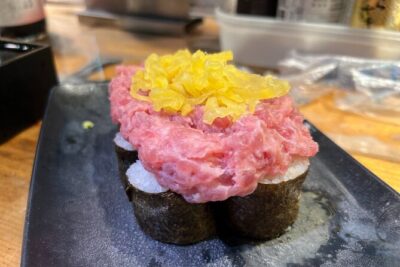
Shinjuku Food Tour (13 Dishes at 4 Local Eateries)
Read our review →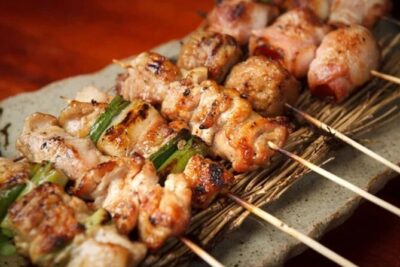
Shinjuku Food Tour (15 Dishes and 4 Eateries)
Read our review →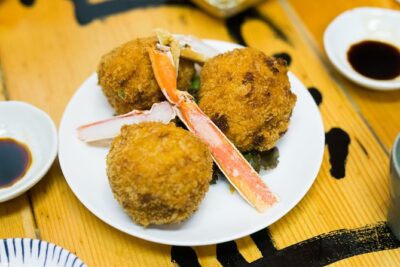
Best of Shinjuku: Izakaya Food Tour (4 Stops, 14+ Tastings)
Read our review →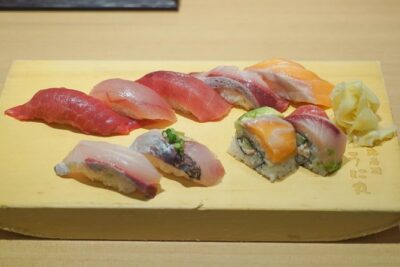
Tokyo Night Foodie Tour in Shinjuku – Seasonal Sushi, Wagyu Beef
Read our review →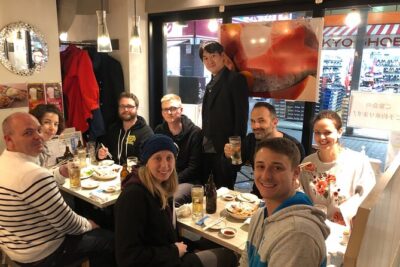
Eat and Drink Like a Local: Tokyo Ueno Food Tour-Taverns&Ramen
Read our review →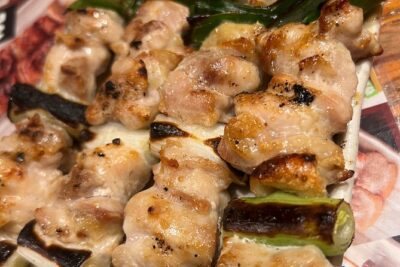
Tsukiji Fish Market: Street Food & Culture Walking Tour
Read our review →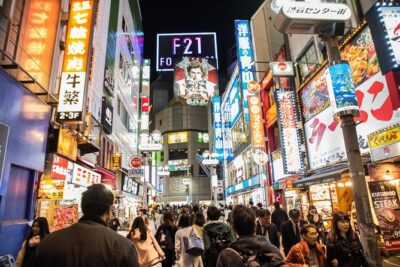
Browse the lists this tour appears in