
Reviewed · TOKYO FOOD TOURS
Shibuya All You Can Eat Best Food Tour The Original One in Tokyo
Shibuya is famous for its giant crossing, but its best food moments often happen a few turns away from the crowds. This four-hour walk takes you from sushi and Japanese barbecue to takoyaki and sweets, with a stop in tiny Nonbei Yokocho, where the bars feel almost comically small. The food variety is the main draw, and the guides, including Kato, Hamada, Amber, and Tanaka, are praised for making the evening feel personal.
I like the small group limit of 10, which gives your guide room to help with ordering, explain customs, and adjust when someone needs a quick errand. I also like that the tour mixes eating with real Shibuya streets rather than keeping you inside restaurants all evening. The drawback is price: at $205 per person, you need to value guidance and convenience, not just the food on your plate.
Key points at a glance
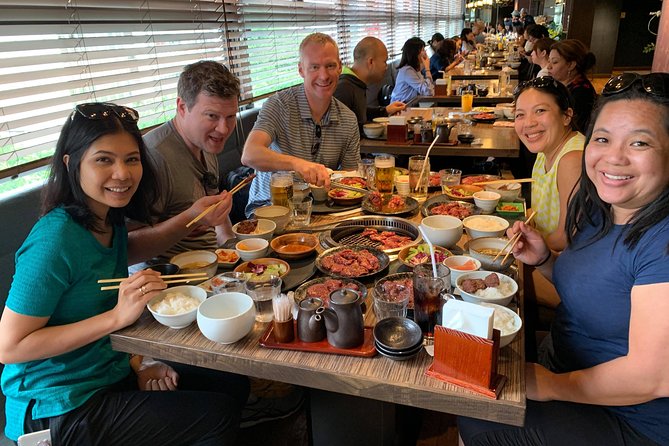
- Four to five food stops: Expect sushi, yakitori, yakiniku, takoyaki, and desserts, though the exact mix can change.
- A useful Shibuya introduction: You see Hachiko, Shibuya Crossing, Nonbei Yokocho, Shibuya 109, and MEGA Don Quijote.
- Small groups matter: The maximum is 10 people, and some departures may feel almost private.
- Come hungry: The portions add up, with sushi, barbecue, fried chicken, takoyaki, sweets, and other tastings often filling the full four hours.
- Guide quality shapes the experience: Guides such as Hamada, Kato, Amber, Tanaka, and Hiromi receive especially warm praise for friendliness and local insight.
- The price is the sticking point: $205 is high for a food walk, so the value comes from access, translation, planning, and company rather than food alone.
Why this Shibuya food walk works
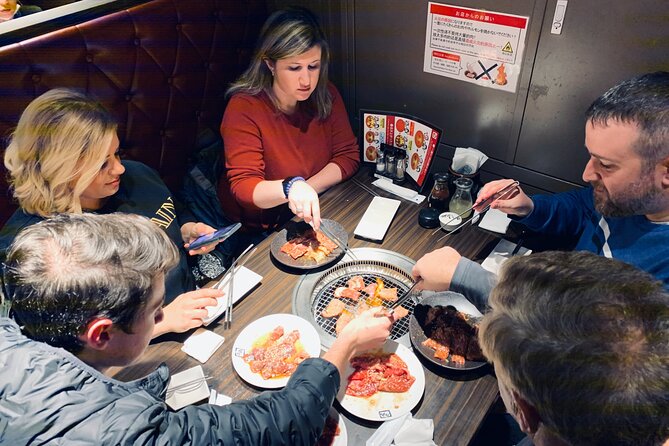
This is not simply a restaurant crawl. It is a way to get your bearings in one of Tokyo’s most confusing districts while eating enough Japanese food to make a full meal, and probably a second one.
You meet at the Hachiko Statue near Shibuya Station. From there, your guide leads you through streets that move quickly and change character block by block. One minute you are near department stores and huge signs. Soon you are beside a narrow lane lined with tiny drinking spots.
The food is broad rather than narrowly focused. You may have sushi, Japanese barbecue, yakitori, takoyaki, karaage, sake, and mochi or another dessert. The advertised plan includes four to five food stops, while some past outings have used three or four main locations. That is worth understanding before you book: the route is flexible, and the exact dishes depend on the guide and the restaurants available that day.
I see the food variety as a real strength for a first visit to Japan. You can try several familiar and unfamiliar dishes without spending time choosing restaurants or worrying about menus. Your guide can also help you order and explain the basic manners around eating and drinking.
More things to do in Shibuya:
- Official Street Go-Kart in Shibuya
★ 5.0 · 3,435 reviews - Tokyo: Street Kart Experience in Shibuya
★ 4.9 · 1,484 reviews - Shibuya Meltdown Nightlife Tour: All-You-Can-Drink Bar Hopping
★ 5.0 · 1,058 reviews
Starting at Hachiko and Shibuya 109
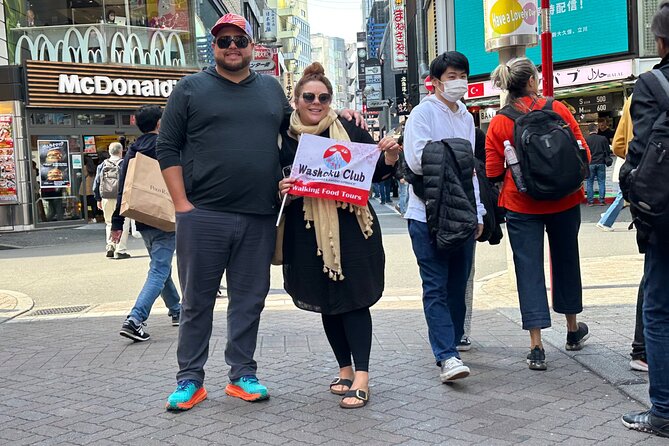
The meeting point is the Hachiko Statue, a sensible landmark beside Shibuya Station. It is easy to find, but the surrounding station area can be crowded, so allow enough time to get there. Your mobile ticket confirms the booking, and the tour ends back at the same meeting point.
The first listed stop is the area around Shibuya 109. This is a good place to see how local eating fits into the district’s enormous retail machine. The streets around the mall attract thousands of people, and small izakaya sit alongside shops, arcades, and larger commercial spaces.
You are scheduled to spend about 45 minutes here. The point is not to admire one landmark for long. It is to start eating and to see a side of Shibuya that is easy to miss when you stick to the station, the crossing, and the major shopping buildings.
An izakaya is part restaurant, part bar, and part social meeting place. Food often arrives in several small dishes, which makes the format useful for a tasting tour. You can sample more than one item without committing to a large meal.
This is also where the guide’s personality begins to matter. Hamada has been praised for patience and for helping people feel comfortable, while Kato is often described as relaxed and good company. Amber is noted for being patient and friendly, and Tanaka for explaining the area well. Your actual guide may be someone else, but the tour depends heavily on having a guide who can keep the group moving while still making time for questions.
Nonbei Yokocho, the tiny alley with a big character
Nonbei Yokocho is one of the most memorable parts of the route. Its name is often translated as Drunkard’s Alley, and the passage is known for compact bars and narrow spaces. One account described venues that seemed able to hold only four or five people. That gives you a useful picture: this is not a grand dining hall, but a close, slightly old-fashioned drinking lane tucked beside modern Shibuya.
The planned visit lasts about 30 minutes. You may stop for food or a drink, or simply walk through while your guide explains how people spend an evening in the area. Alcohol is available to buy, but it is not included in the tour price.
I like this stop because it gives the walk some texture. Sushi and barbecue are enjoyable, but you can find those foods in many places. A lane of tiny bars tells you more about the way Japanese nightlife can work, with regulars gathering in small establishments where space is limited and the atmosphere is informal.
Do not expect a long historical lecture here. The supplied information points to cultural explanation, local dining customs, and practical guidance rather than a formal history tour. If you want a quiet evening, the narrow alley and busy streets may feel like a lot. If you enjoy seeing how a district changes after dark, this should be one of the strongest parts.
Shibuya Crossing, famous but still worth five minutes
The stop at Shibuya Crossing lasts about 15 minutes. Your guide gives you time to experience the crossing and take a photograph. More than 2,000 people cross each minute according to the tour description, so the scene can feel less like a landmark and more like a moving current of people.
You will not spend an hour here, and that is sensible. The crossing is best experienced briefly, especially when the larger purpose of the tour is food and local streets. The short stop also keeps the route from becoming a standard sightseeing walk.
This is where the experience balances famous Tokyo with less obvious Tokyo. You get the required Shibuya photograph, then move on to places that are harder to find by simply following a sightseeing map.
More Tokyo food tours:
- Tokyo: Shinjuku Food Tour (13 Dishes at 4 Local Eateries)
★ 5.0 · 6,603 reviews - Tokyo: Shinjuku Food Tour (15 Dishes and 4 Eateries)
★ 4.9 · 2,033 reviews - Best of Shinjuku: Izakaya Food Tour (4 Stops, 14+ Tastings)
★ 5.0 · 1,863 reviews - Tokyo Night Foodie Tour in Shinjuku – Seasonal Sushi, Wagyu Beef
★ 5.0 · 1,161 reviews
MEGA Don Quijote and the everyday Tokyo shopping stop
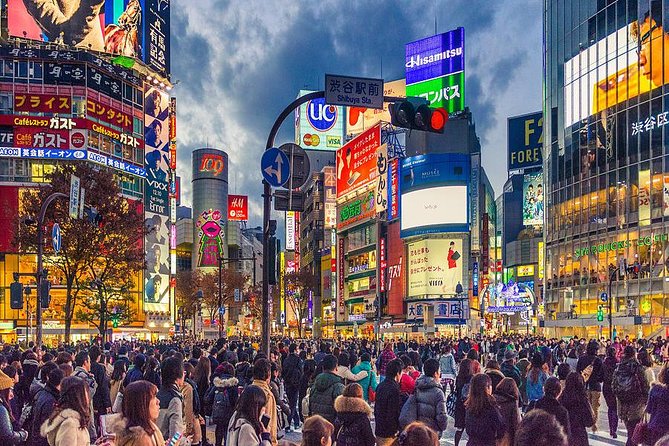
The MEGA Don Quijote stop lasts about 30 minutes. This 24-hour shop sells an astonishing range of goods, from sweets and packaged food to cosmetics, electronics, and household items.
It may sound like an odd stop on a food tour, but it can be useful. You see the snacks and products people buy for daily life, gifts, and late-night browsing. It is also a practical place to pick up Japanese sweets or small souvenirs if something catches your eye.
The drawback is that this is commercial rather than traditional. If you want every minute devoted to local restaurants, you may prefer more time at a food stop. If you want a quick look at Japan’s famously packed retail culture, the detour adds variety.
Some guides have also helped people with small errands or purchases. Hamada, for example, assisted one person at BIC Camera during the evening. That is not a guaranteed part of the tour, but it shows how a flexible guide can make the experience more useful than a fixed march from restaurant to restaurant.
What you are likely to eat
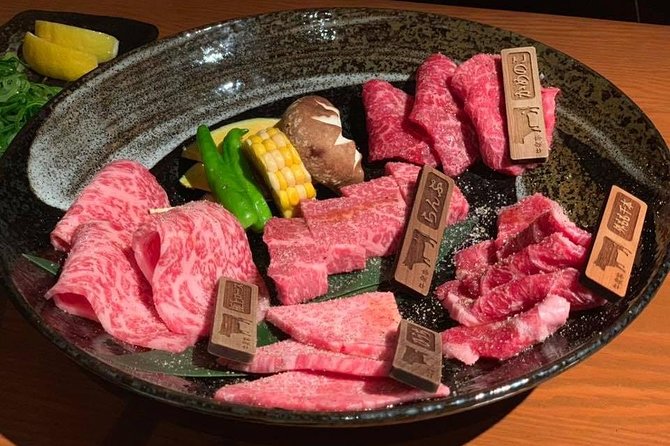
The strongest feature is the range. The tour includes food rather than just recommendations, with sushi, yakitori, yakiniku, takoyaki, and desserts specifically named.
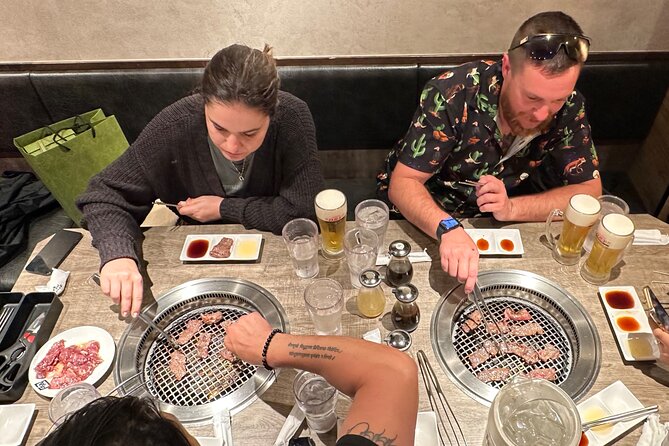
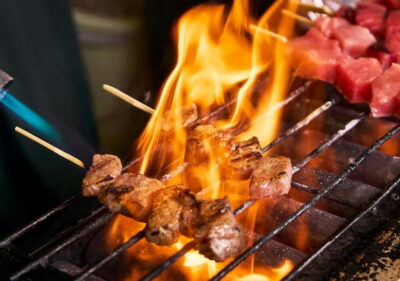
Sushi gives you a familiar starting point, though the exact pieces and restaurant can vary. Yakiniku usually means cooking meat at a small grill built into the table. Several accounts describe this as a highlight, especially for people who enjoy choosing and cooking their own pieces.
Takoyaki, the round snack filled with octopus, brings a different texture and a more casual street-food feel. You may also encounter karaage, Japanese fried chicken, and yakitori, grilled pieces served on skewers. Dessert may include mochi or another sweet.
The tour includes two soft drinks and water. Sake and other alcoholic drinks cost extra. That arrangement is fair, but keep it in mind when judging the $205 price. A few drinks can push the total higher.
The title says all you can eat, but I would not interpret that as unlimited ordering at every stop. The practical meaning is a generous food-focused outing with several stops. Past descriptions repeatedly say people left full, and the safest advice is simple: eat lightly beforehand.
How much food and how the stops feel
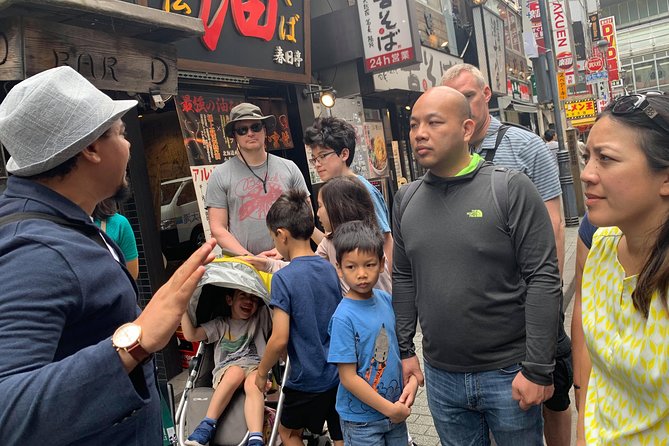
This is not a formal sit-down dinner with one long reservation. It is a moving meal. You walk between locations, eat in several places, and get an explanation of the neighborhood along the way.
That structure has two advantages. First, you taste more kinds of food. Second, you avoid gambling on one restaurant when you are unfamiliar with Japanese menus. A guide can direct the order and help the group share dishes.
It also has limits. Restaurant seating, waiting time, and the exact route can affect the rhythm. One poorly organized departure was criticized because the main guide arrived late and the early food stop lacked clear explanation. That appears to be an exception rather than the usual pattern, but it is a useful reminder that the quality of the evening depends on coordination as well as appetite.
A separate complaint described a guide who let the group choose what to eat without offering much explanation, including a stop at a Korean barbecue restaurant. If you are paying this much because you want a strong lesson in Japanese food, make your expectations clear at the start. Ask your guide what each dish is, how it is normally eaten, and why that restaurant was chosen.
The guide can make or break the $205 price
The strongest part of the experience is the human element. Kato has been praised for communication, humor, and local trivia. Hamada is frequently described as attentive, on time, patient, and willing to help with practical matters. Amber receives praise for warmth and food knowledge, while Tanaka is singled out for friendliness and explanations about the area.
Hiromi has also been praised for guiding people to dining places they would not have found alone. Other named guides include Ryu, Suzuki, Show, Islam, Adam, and Naoto Kato.
That range matters because you are not booking a completely standardized meal. You are booking a guide-led evening. A good guide explains what is on the table, notices if someone is uncomfortable, waits when the group gets separated, and adds small cultural details without turning the meal into a lecture.
A maximum of 10 people is a useful limit. It is small enough for questions and group conversation, but large enough to give the evening some social energy. Some departures have had only one family or one person, creating a private-tour feel. That can be wonderful if you enjoy direct attention, though a very small group may feel quieter than expected.
Is the food tour good value?
At $205 per person, this is not a bargain meal. You can eat well in Tokyo for much less if you are happy to choose your own restaurants, use translation tools, and learn by trial and error.
The price begins to make more sense if you value several things at once:
- A planned route through Shibuya
- Four hours of food and neighborhood walking
- A guide who explains ordering and local customs
- Several different Japanese dishes in one evening
- A small group capped at 10
- Help navigating unfamiliar restaurants
- The chance to see Nonbei Yokocho and lesser-known streets
I would not book it mainly for the food quantity. I would book it for the combination of food, company, translation, and access to places you may not notice alone.
For a first trip to Tokyo, that combination can save time and reduce the stress of choosing restaurants. For a repeat visitor who already knows Shibuya and enjoys independent eating, the price is harder to defend.
The 4.9 rating from 261 ratings and 97 percent recommendation indicate a very strong overall response, but the low scores are useful. Some people felt the tour was too expensive, too loosely explained, or poorly organized. You should treat the experience as guide-dependent rather than assume every departure will feel identical.
Who should book it
I would recommend this tour to someone visiting Tokyo for the first time, especially if you want an easy introduction to Japanese food without spending your first night decoding menus.
It also suits families and mixed groups. One family enjoyed sushi, yakiniku, karaage, and takoyaki while being led through areas they would not have found alone. A patient guide can help when some members are adventurous eaters and others are cautious.
Solo visitors can also fit in well. One solo participant ended up with what felt like a private tour when a companion became ill. The small group format makes it easier to talk with the guide than on a large bus outing.
You may want to skip it if you need strict control over ingredients, dislike walking between food stops, or mainly want a cheap meal. The supplied information does not give detailed allergy, vegetarian, or dietary substitution rules, so contact the operator before booking if food restrictions are important.
The tour is near public transportation, and most people can participate. Wear comfortable shoes and leave room in your schedule after the tour, because the food may be substantial.
Booking details worth knowing
The tour lasts about four hours and begins and ends at the Hachiko Statue, 2 Chome-1 Dogenzaka, Shibuya. It is offered with a mobile ticket, and confirmation is provided at booking.
Two soft drinks and water are included. Desserts are included, while alcoholic drinks are available for an additional charge. Hotel pickup and drop-off are not included.
Free cancellation is available if you cancel at least 24 hours before the local start time. Within 24 hours, the payment is not refunded, and late changes are not accepted.
Should you book this Shibuya food tour?
Book it if you want a generous, social introduction to Shibuya and Japanese food, and you are willing to pay for a guide-led evening rather than restaurant bills alone. The combination of sushi, barbecue, takoyaki, sweets, Nonbei Yokocho, and a small group gives you a lot in four hours.
I would especially choose it near the beginning of a Tokyo trip. You will learn how Shibuya fits together, see places worth returning to, and gain a few food ideas for the rest of your stay.
I would pass if $205 feels high for a meal, or if you prefer to choose every dish and restaurant yourself. The tour can be excellent with a strong guide such as Hamada, Kato, Amber, or Tanaka, but the mixed feedback shows why expectations matter. Think of it as a guided food-and-neighborhood experience, not an unlimited restaurant buffet.
FAQ
Where does the Shibuya food tour start?
It starts at the Hachiko Statue at 2 Chome-1 Dogenzaka, Shibuya, Tokyo 150-0043, near Shibuya Station.
Where does the tour end?
The tour ends back at the Hachiko Statue meeting point.
How long does the experience last?
The experience lasts about four hours.
What food is included?
The tour includes four to five food stops selected by the guide. Named foods include sushi, yakitori, yakiniku, takoyaki, and desserts. Past food selections have also included karaage, mochi, and sake, though alcohol costs extra.
Are drinks included?
Two soft drinks and water are included. Alcoholic drinks are available to purchase separately.
How large is the group?
The maximum group size is 10 people. Some departures may have fewer participants.
Can I cancel for a refund?
Yes. You can receive a full refund if you cancel at least 24 hours before the experience start time. Cancellations or changes made within 24 hours are not refunded or accepted.
Newly reviewed around Tokyo
- Tokyo Asakusa:Calligraphy & Make T-shirt Activity★ 5.0 · 62 reviews
- Travel Tokyo with Your Own Personal Photographer★ 5.0 · 43 reviews
- Intercity Shuttle, Tokyo to Haneda /Narita /Yokohama /Makuhari★ 5.0 · 5 reviews
- 1 Hour Travel around Tokyo with a Professional Photographer★ 5.0 · 3 reviews
- Train in Samurai Swordsmanship and Defeat the Demon in Tokyo★ 5.0 · 5 reviews
- Shuttle Van 6hr Tokyo Tour to-and-from Tokyo, Yokohama and Narita★ 5.0 · 9 reviews
- Kickboxing & Body Training with EX-Pro Fighter★ 5.0 · 4 reviews
- Traditional Japanese Knife Sharpening Class★ 5.0 · 18 reviews
Tokyo Food Tours, compared.
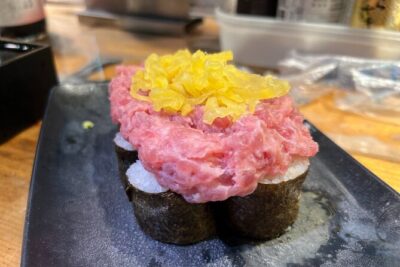
Shinjuku Food Tour (13 Dishes at 4 Local Eateries)
Read our review →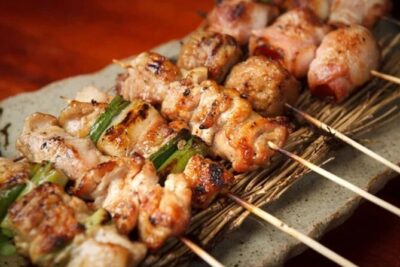
Shinjuku Food Tour (15 Dishes and 4 Eateries)
Read our review →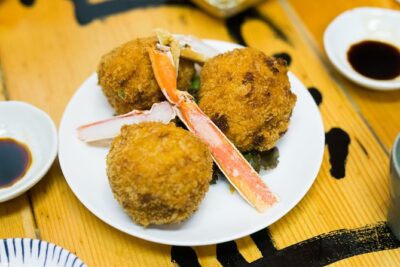
Best of Shinjuku: Izakaya Food Tour (4 Stops, 14+ Tastings)
Read our review →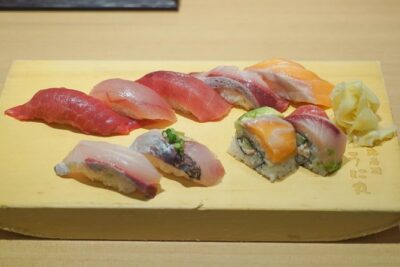
Tokyo Night Foodie Tour in Shinjuku – Seasonal Sushi, Wagyu Beef
Read our review →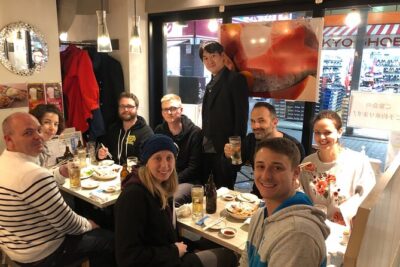
Eat and Drink Like a Local: Tokyo Ueno Food Tour-Taverns&Ramen
Read our review →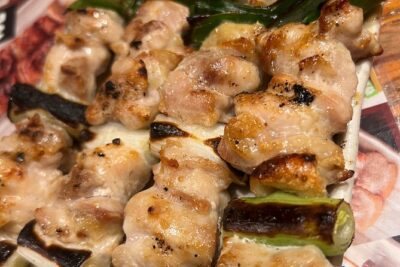
Tsukiji Fish Market: Street Food & Culture Walking Tour
Read our review →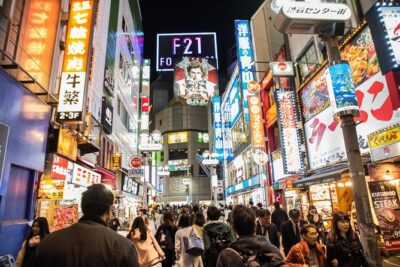
Browse the lists this tour appears in