
Reviewed · TOKYO FOOD TOURS
Private Tokyo Food Tour with 10+ Tastings of Japanese Classics
Ueno gives you a fine introduction to Tokyo through its food. In about three and a half hours, you’ll move from the crowded stalls of Ameyoko to temple grounds and park paths, stopping for sushi, gyoza, yakitori, tea, fruit, matcha ice cream, and a secret dish. The food is the main event, but the neighborhood gives each bite a sense of place.
I like the private format, which lets your guide adjust the pace, answer questions, and work around your group. I also like the mix of everyday Japanese food and cultural stops, especially Ueno Park, the shrine, and the Buddhist temple. The main drawback is the price: at $460 per person, this is a serious splurge, particularly for a solo visitor or small group.
Key points at a glance
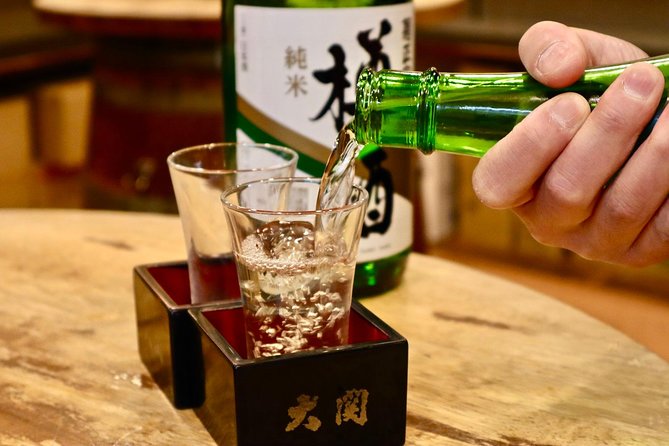
- More than 10 tastings: Expect sushi, gyoza, yakitori, seasonal fruit, two kinds of tea, matcha ice cream, beer, and a secret dish, with the menu subject to change.
- Ueno beyond the museums: The route ties food to Ameyoko market, train-track arcades, Ueno Park, Shinto worship, and Buddhist traditions.
- A truly private outing: Only your group takes part, so the guide can shape the afternoon around your questions and pace.
- Strong guide feedback: Shona, Shonan, Mary, Nozomi, and Mari have all been singled out for warmth, cultural explanations, and care in hot or rainy weather.
- A full afternoon of food: You may not need dinner afterward, so arrive hungry and pace yourself.
- Good planning matters: Meet at Ueno Station at noon, wear comfortable walking shoes, and raise dietary needs before booking.
Why Ueno makes such a good food-tour base
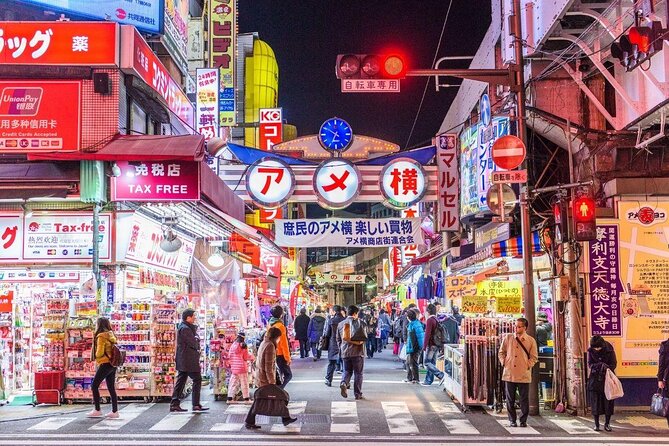
Ueno has an appealing mix of rough edges and quiet corners. Ameyoko brings shops, food stalls, bars, and local shopping under the city’s constant movement. A short walk away, Ueno Park offers open space and old religious sites.
That change of mood is what makes this outing more than a string of restaurant visits. You get a look at how Tokyo layers the ordinary beside the ceremonial. A snack near a train line can lead to a peaceful temple courtyard a few minutes later.
Ueno Park occupies land that once belonged to one of Edo’s most important temples. Today it is especially known for cherry blossoms and spring hanami, but the area remains worth seeing outside blossom season. The park gives the tour a breathing space between food stops, while the nearby religious sites add context to the neighborhood.
I would choose this area if you want Tokyo food and culture in one compact outing. You will not see every side of the city, but you will get a useful, walkable introduction to one of its most characterful districts.
More Tokyo food tours:
- Tokyo: Shinjuku Food Tour (13 Dishes at 4 Local Eateries)
★ 5.0 · 6,603 reviews - Tokyo: Shinjuku Food Tour (15 Dishes and 4 Eateries)
★ 4.9 · 2,033 reviews - Best of Shinjuku: Izakaya Food Tour (4 Stops, 14+ Tastings)
★ 5.0 · 1,863 reviews
Ameyoko brings Tokyo’s everyday food scene close
The tour begins at Ueno Station at 12:00 p.m., then takes you into a popular indoor-outdoor market filled with shops selling food, gifts, and clothing. This is Ameyoko, a place where shopping and eating are tightly mixed.
The market matters because it feels practical rather than polished. You are seeing a working commercial district, not a staged cultural display. The guide can help you understand what you are looking at and steer you toward foods that would be easy to miss on your own.
The exact order and selection can change based on availability, weather, and other conditions. That flexibility is useful in a market, where the best choice may depend on what is fresh or open that day. It also means you should treat the advertised menu as a strong guide, not a fixed contract.
Ameyoko can be crowded and confusing, especially if you are meeting at Ueno Station for the first time. One person had trouble finding the meeting point, so give yourself extra time and confirm the exact station location before noon. The guide will meet you there, but you do not want to begin the afternoon stressed and hungry.
Food under the elevated tracks
One stop takes place in an area beneath the elevated train tracks. The Japanese term refers to the space under the girders, and these under-track zones often have their own compact food and bar culture.
Here, the setting is part of the appeal. You are not simply eating in a neutral dining room. The trains, shops, and tight urban arrangement help explain the practical way Tokyo uses its limited space.
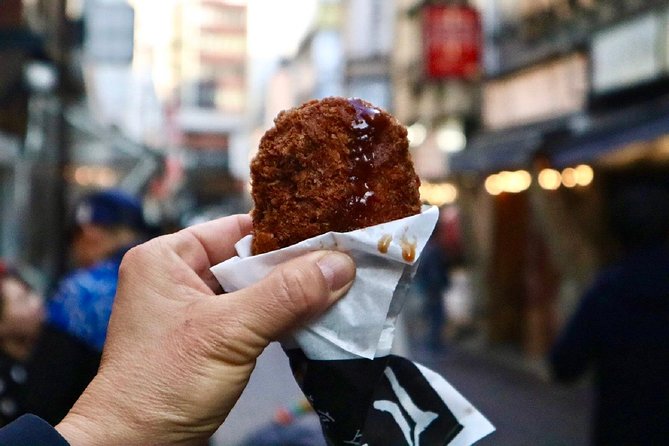
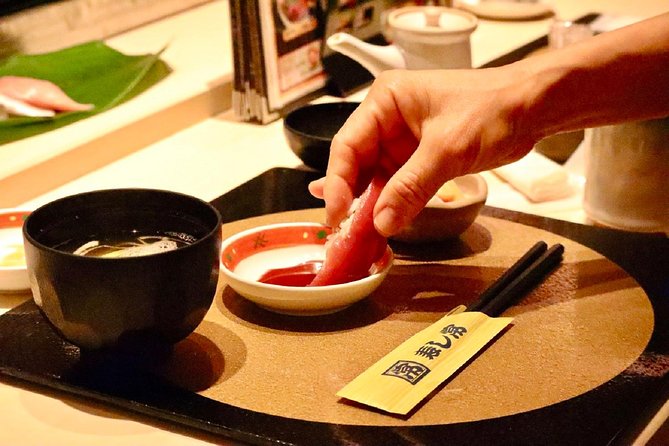
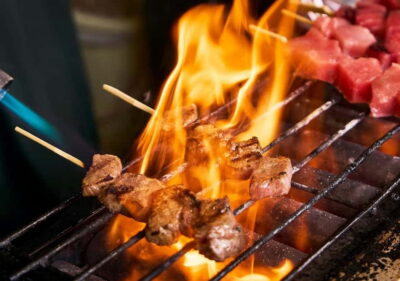
The food menu includes several familiar Japanese classics. Fresh sushi gives you a taste of a national staple, while crisp gyoza offers a hot, savory contrast. Yakitori brings grilled chicken skewers, and the tour also includes other foods such as croquettes. Seasonal fruit adds something fresh between heavier bites.
You should expect a lot of eating in a short time. One guide specifically advised pacing yourself because the portions and number of stops add up. I would avoid a large breakfast and skip the idea of making dinner reservations immediately after the tour.
The tasting list, and what it means for value
The advertised experience includes more than 10 tastings, though the precise menu can shift. The food and drinks listed are:
- Fresh Japanese sushi
- Crispy gyoza
- Grilled yakitori
- Croquettes and other local foods
- Seasonal fresh fruit
- Two different types of tea
- Traditional matcha ice cream
- One draft beer
- Water
- A secret dish
This is a generous amount for a 3.5-hour tour. You are paying not only for food, but also for someone to select the stops, explain what you are eating, and connect the dishes to the neighborhoods around you.
Still, $460 per person is difficult to justify if you measure value only by the cost of the food. Tokyo offers many inexpensive meals, and you could sample several classics for far less. The price makes more sense for a private group that wants a guide, a flexible pace, and a food-focused cultural introduction without doing the planning.
Group discounts are available, though the exact savings are not provided. If you are traveling with family or friends, check the final group price rather than judging the experience only by the single-person rate.
A completely different kind of day in Tokyo:
- Mt Fuji and Hakone 1-Day Bus Tour Return by Bullet Train
★ 5.0 · 26,383 reviews - 1-Day Tokyo Bus Tour
★ 5.0 · 14,250 reviews - Tokyo: teamLab Planets TOKYO Digital Art Museum Entry Ticket
★ 4.6 · 9,779 reviews - Mt Fuji & Hakone Cruise, Drum Show Bullet Train 1 Day from Tokyo
★ 4.0 · 7,413 reviews
Ueno Park changes the pace
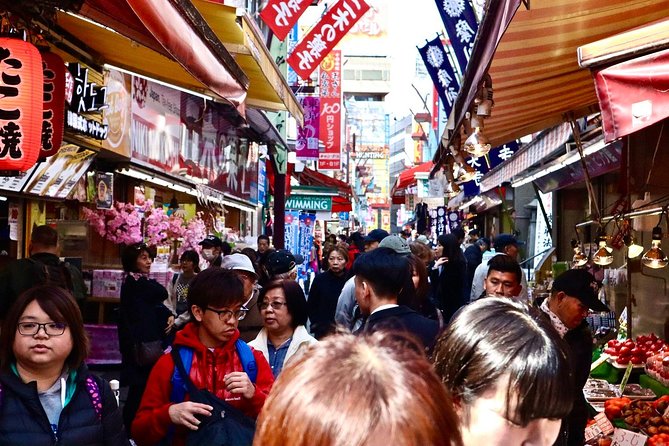
Food tours can become tiring when every stop means another crowded street. Ueno Park helps break that rhythm. It is a spacious public park with a strong connection to Tokyo’s past and a reputation as one of the city’s best cherry-blossom viewing areas.
The park also lets your guide explain how the neighborhood developed. Ueno was once home to a major temple complex during the Edo period, when Tokyo was known as Edo. That history gives the park more weight than a simple green break between tastings.
Spring is the park’s famous season, especially during hanami, but the tour is not limited to cherry-blossom viewing. The religious sites and open paths remain part of the route at other times of year. Weather can affect the experience, though, and the tour requires good weather.
A rainy day does not automatically mean a poor afternoon. One guide, Shona Kirino, worked out different ways to keep the group dry during bad weather. Even so, bring suitable rain protection and understand that poor conditions can lead to a new date or a full refund.
A Shinto shrine and a Buddhist temple
The route includes a Shinto shrine built in 1627 in memory of Tokugawa Ieyasu, founder of the Tokugawa Shogunate. This is a useful stop for understanding the religious traditions that shaped old Tokyo.
The itinerary also includes a Buddhist temple with quiet grounds used for worship and prayer. Placing both sites in the same afternoon gives you a simple way to see the difference between two major Japanese religious traditions without turning the tour into a formal lecture.
The value here depends heavily on your guide. Guides named Shona or Shonan, Mary, Nozomi, and Mari have been praised for explaining food history and local customs while keeping the afternoon friendly. Nozomi, in particular, connected the dishes to Japanese food history and showed interest in the visitor’s own culture. Mari was noted for mixing facts with a relaxed walk, and Shona helped with water and weather concerns.
Those details matter because a private tour can either feel personal or feel like a paid escort from one snack to the next. The guide is responsible for making the cultural parts useful. The available feedback points to warm, engaged guiding, but individual styles will naturally differ.
Tea, sweets, and the final stop
The drinks are not filler. You get two kinds of tea, along with a draft beer and water. Tea gives the guide another opening to explain everyday Japanese habits, while beer provides an easy break from the more formal cultural material.
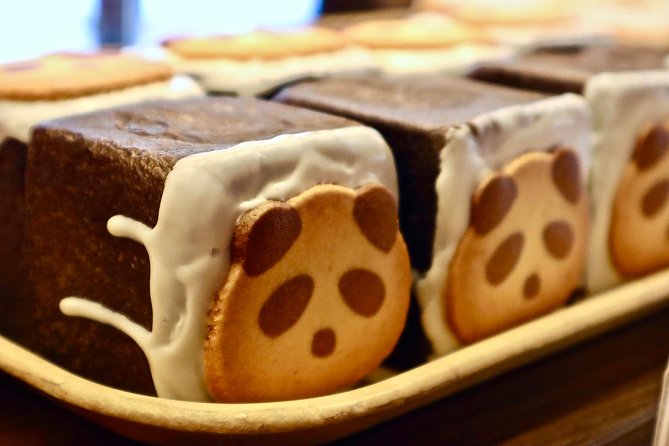
Matcha ice cream is the sweet finish, supported by seasonal fruit. If you are new to matcha, the ice cream offers a gentler introduction than a strong bowl of whisked tea. The secret dish adds a small element of surprise, though the exact item is not specified.
Because the menu changes, contact the provider before booking if you have dietary requirements. The company says some restrictions may not be possible to accommodate, particularly because the food selection is designed as a balanced sequence. Do not wait until the meeting point to explain allergies or food restrictions.
The private format is the real difference
Only your group participates, and the start time is set for noon. The private arrangement gives you more control than a large shared tour. You can ask about ingredients, pause for explanations, and move at a pace that suits your group.
That does not mean the route is fully custom-built. The food stops still depend on availability, and the itinerary can change with weather or other conditions. Think of the private format as personal guiding around a planned experience, not a completely free-form food crawl.
The format works especially well for families, couples, and friends who want to talk with the guide. It may also suit a first afternoon in Tokyo, when you want to eat well and get your bearings in a district without researching every stop yourself.
You should wear comfortable walking shoes. The tour runs a little over three hours, includes market streets, park paths, and cultural sites, and does not include hotel pickup or drop-off. It begins and ends at the Ueno Station meeting point.
What the $460 price really buys
At $460 per person, this is among the pricier ways to taste Tokyo. The cost is easiest to defend when you value privacy, a dedicated English-speaking guide, and a full meal-sized collection of tastings.
It is less attractive if you are mainly looking for cheap local food. The food itself is not presented as luxury dining, and the tour does not promise hotel transport or a special private dining room. You are paying for access, explanation, planning, and companionship as much as for sushi and beer.
For a group, the calculation may improve if discounts apply. For a solo visitor, I would compare the price with a small-group food tour or a self-guided afternoon in Ameyoko. For a couple celebrating a special day, the private setting may be easier to justify.
Free cancellation is available up to 24 hours before the start time. Changes or cancellations inside that window are not refunded, and the company may offer a new date or refund if bad weather or insufficient bookings force a cancellation.
Who should book this Ueno food tour?
I would recommend it if you want a relaxed introduction to Japanese classics and prefer a guide to handle the choices. It is especially useful if you have limited time in Tokyo and want food, local shopping, a park, a shrine, and a temple in one outing.
You will likely enjoy it if you like trying many small portions rather than sitting down for one long meal. The mix of sushi, gyoza, yakitori, fruit, tea, beer, and matcha ice cream offers plenty of variety.
I would pause before booking if you have strict dietary restrictions, dislike walking, or are focused on keeping food costs low. I would also check the exact meeting instructions carefully, since Ueno Station can be confusing and the tour does not include hotel pickup.
Should you book it?
Book this private Ueno food tour if you want more than a list of dishes. The best part is the combination of market food, under-track dining areas, Ueno Park, religious sites, and a guide who can explain what connects them.
The price is high, but the private format and large number of tastings give it a clear purpose. For a small group that wants a friendly, efficient afternoon with plenty to eat, it can be a strong choice. If you are a budget-minded solo visitor, spend time comparing alternatives before committing.
FAQ
How long does the private Tokyo food tour last?
The experience lasts approximately 3 hours and 30 minutes.
Where does the tour begin and end?
It begins at Ueno Station, at 7 Chome-1 Ueno, Taito City, Tokyo 110-0005, and ends back at the meeting point.
What time does the tour start?
The scheduled start time is 12:00 p.m.
What foods and drinks are included?
Included items are sushi, gyoza, yakitori, seasonal fruit, matcha ice cream, two types of tea, one draft beer, water, and a secret dish. Other foods, including croquettes, may also be included, and the menu can change.
Is the tour private?
Yes. Only your group participates in the activity.
Can dietary restrictions be accommodated?
You should contact the provider before booking with your dietary requirements. Some restrictions may not be possible to accommodate because the menu is planned as a balanced food experience.
What is the cancellation policy?
You can cancel at least 24 hours before the start time for a full refund. Cancellations or changes made less than 24 hours before the start are not refunded. Poor weather or failure to meet the minimum number of participants may lead to a different date or a full refund.
Newly reviewed around Tokyo
- Tokyo Asakusa:Calligraphy & Make T-shirt Activity★ 5.0 · 62 reviews
- Intercity Shuttle, Tokyo to Haneda /Narita /Yokohama /Makuhari★ 5.0 · 5 reviews
- 1 Hour Travel around Tokyo with a Professional Photographer★ 5.0 · 3 reviews
- Travel Tokyo with Your Own Personal Photographer★ 5.0 · 43 reviews
- Train in Samurai Swordsmanship and Defeat the Demon in Tokyo★ 5.0 · 5 reviews
- Shuttle Van 6hr Tokyo Tour to-and-from Tokyo, Yokohama and Narita★ 5.0 · 9 reviews
- Kickboxing & Body Training with EX-Pro Fighter★ 5.0 · 4 reviews
- Traditional Japanese Knife Sharpening Class★ 5.0 · 18 reviews
Tokyo Food Tours, compared.
Shinjuku Food Tour (13 Dishes at 4 Local Eateries)
Read our review →
Shinjuku Food Tour (15 Dishes and 4 Eateries)
Read our review →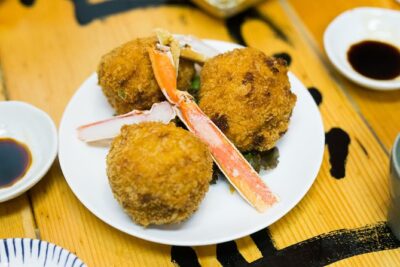
Best of Shinjuku: Izakaya Food Tour (4 Stops, 14+ Tastings)
Read our review →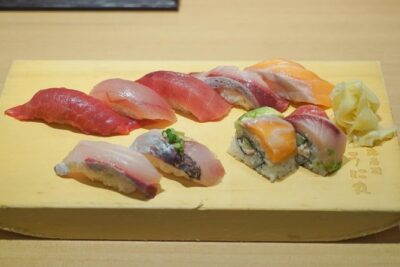
Tokyo Night Foodie Tour in Shinjuku – Seasonal Sushi, Wagyu Beef
Read our review →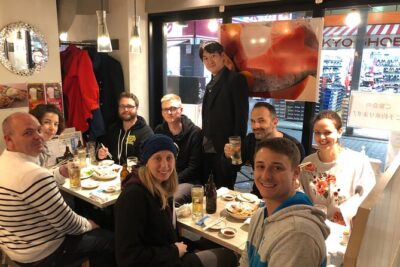
Eat and Drink Like a Local: Tokyo Ueno Food Tour-Taverns&Ramen
Read our review →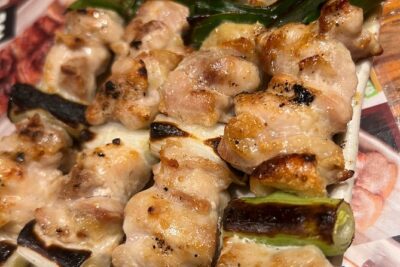
Tsukiji Fish Market: Street Food & Culture Walking Tour
Read our review →
Browse the lists this tour appears in