
Reviewed · TOKYO GO-KART TOURS
Official Japan Go-Kart Through Shibuya / Shinjuku
The wildest part of this Tokyo outing is not the kart itself. It is the moment you roll into Shibuya Scramble Crossing, surrounded by towers, giant screens, and pedestrians who may stop to wave or take pictures. You are seeing Tokyo from street level, with the wind in your face and a tiny engine beneath you.
I like the clear safety setup, with a lead vehicle and support staff behind the group, and I like the free photos and videos taken along the route. Costumes add a playful touch, too. The main drawback is Tokyo traffic. You will stop at lights, crawl behind cars, and sometimes get separated by traffic before the group is gathered again.
Key points to know before you book
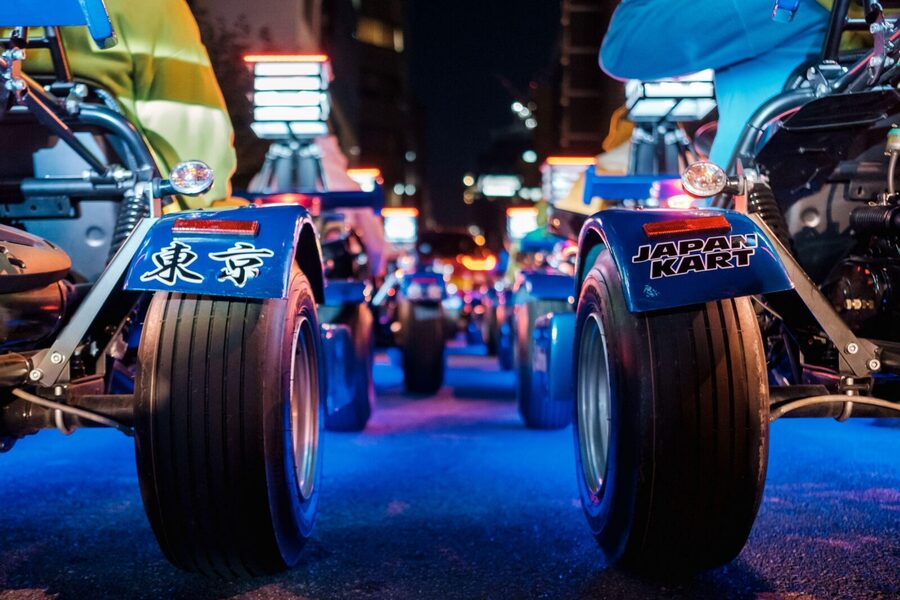
- Shibuya Crossing is the star moment: You may pass through the famous intersection more than once, depending on the route.
- Two main route lengths are offered: The shorter option runs about 90 minutes, while the longer route lasts about two hours.
- Safety support is built into the ride: Guides lead the group, with a car or motorbike following behind.
- Your driving paperwork is critical: You need your passport, home-country license, and a hard-copy 1949 Geneva Convention IDP, unless special translation rules apply.
- Free media adds real value: Staff take photos and videos during the ride, with some groups receiving them by AirDrop.
- Traffic shapes the experience: This is city driving, not a fast racetrack session.
What driving a go-kart through Tokyo feels like
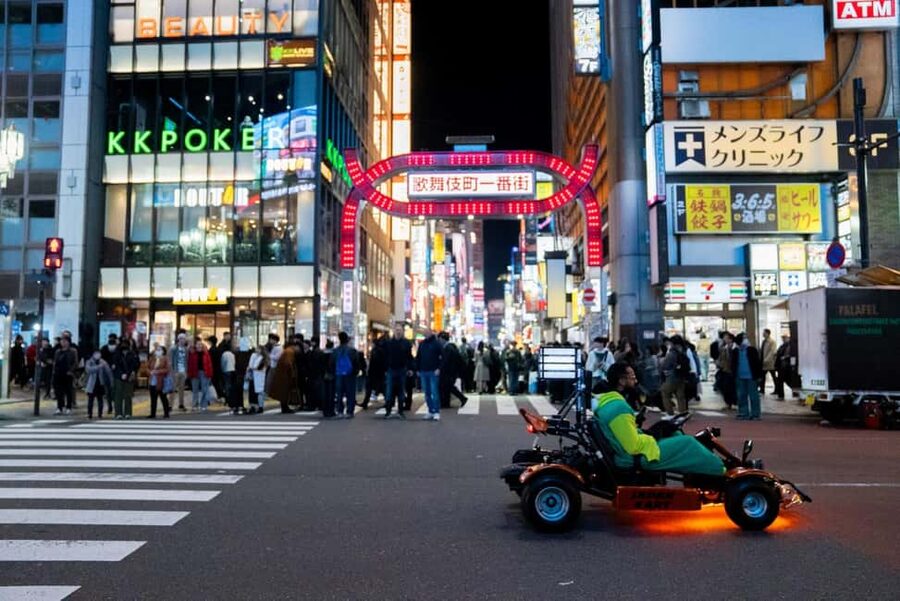
This is a sightseeing tour with a motor, not a traditional amusement-park go-kart race. The karts are designed for road use, and you drive in Tokyo traffic under the direction of an English-speaking guide.
That distinction matters. You are not competing with the people beside you. You are keeping formation, following instructions, watching traffic, and enjoying the strange sight of Tokyo from a very low seat. The ride can feel thrilling when the road opens up, but much of the time you will be moving at city speed or waiting at a traffic light.
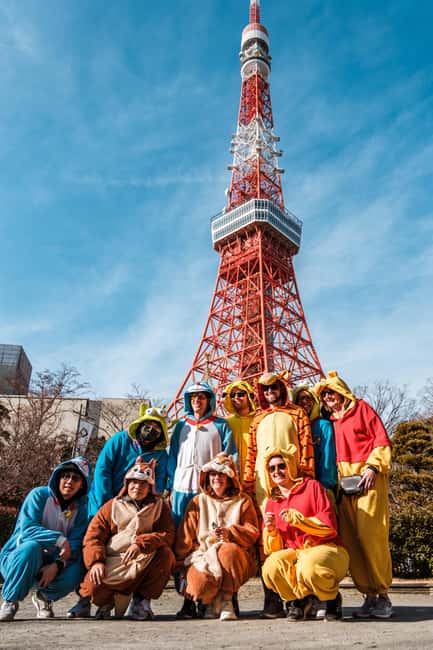
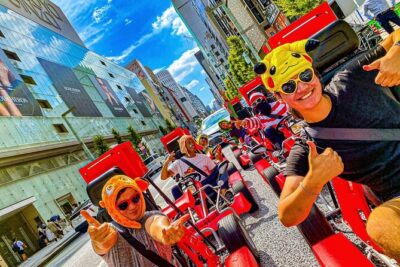
The public reaction is part of the fun. People smile, wave, and take pictures as the costumed group passes. You become a small moving attraction without needing to perform. That attention can feel funny and slightly embarrassing, which is exactly why many people remember it.
The staff place a strong focus on preparation. You receive a full safety briefing before setting off, and the team explains how the karts work. Several riders specifically praised the calm instructions and patient help given to nervous drivers. If you are unsure at the start, tell the staff. The early minutes are about getting comfortable, not showing off.
More things to do in Shibuya:
- Official Street Go-Kart in Shibuya
★ 5.0 · 3,435 reviews - Tokyo: Street Kart Experience in Shibuya
★ 4.9 · 1,484 reviews - Shibuya Meltdown Nightlife Tour: All-You-Can-Drink Bar Hopping
★ 5.0 · 1,058 reviews
Choosing between the 90-minute and two-hour routes
The shorter route covers several West Tokyo sights. It can include Shibuya Scramble Crossing, Harajuku, Omotesando, and Shinjuku Kabukicho. This is the better choice if you want the main city atmosphere without committing to a longer drive.
Shibuya gives you the big visual moment. Harajuku adds youth culture and shopping streets, while Omotesando offers a more polished architectural setting. Shinjuku Kabukicho brings neon, entertainment signs, and a very different mood from the quieter ceremonial areas near the Imperial Palace.
The two-hour route covers a wider central Tokyo circuit. It can include Tokyo Tower, Shibuya Crossing, the Imperial Palace, and Tokyo Station. This option gives you more variety and more time in the kart, but it also means more exposure to traffic, weather, and stop-and-go driving.
The published route descriptions are not perfectly identical across every option. Some promotional details also refer to Ginza, Ueno, and Asakusa. Treat those as possible route themes rather than promises for every departure. The branch, route selected, traffic, and kart availability can affect which sights you pass.
If Shibuya is your main goal, confirm the exact route when booking. If you want a broader look at central Tokyo and do not mind a longer outing, choose the two-hour version.
Shibuya Scramble Crossing at street level
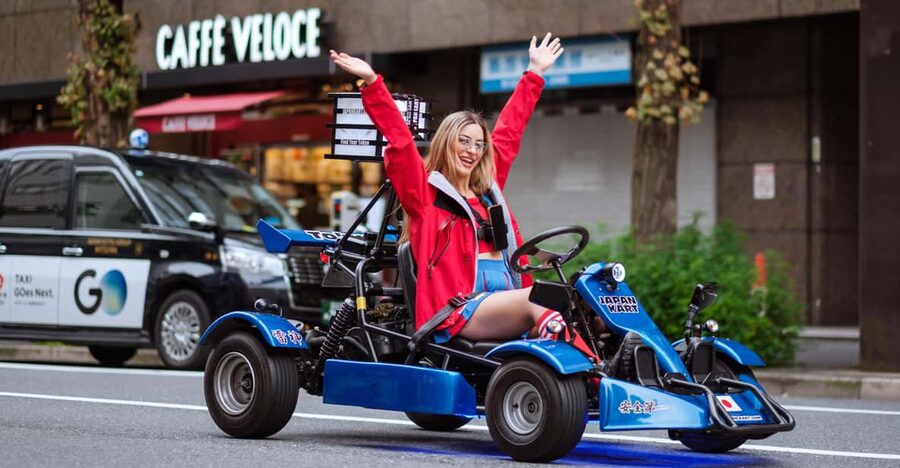
Shibuya Crossing is the clearest reason to book this activity. From a kart, you are not watching the crossing from a café window or a station walkway. You are part of the traffic flow, moving through the intersection with Tokyo rising around you.
The crossing is not a long stop for sightseeing. You pass through as part of the route, so keep your attention on the guide and road. The payoff comes in the scale of the scene: huge screens, dense buildings, marked lanes, and crowds moving in several directions.
Some rides pass through Shibuya twice. That can give you a second chance to enjoy the view and capture photographs, although the exact number of crossings depends on the route and traffic conditions.
Your guide will take pictures and videos during the ride and at selected stops. This is useful because handling a phone while driving is not appropriate. Some groups receive the images digitally at no extra cost, and mounts may be available for a GoPro or phone. Ask the staff what is available on your departure.
Tokyo Tower, Tokyo Station, and the Imperial Palace
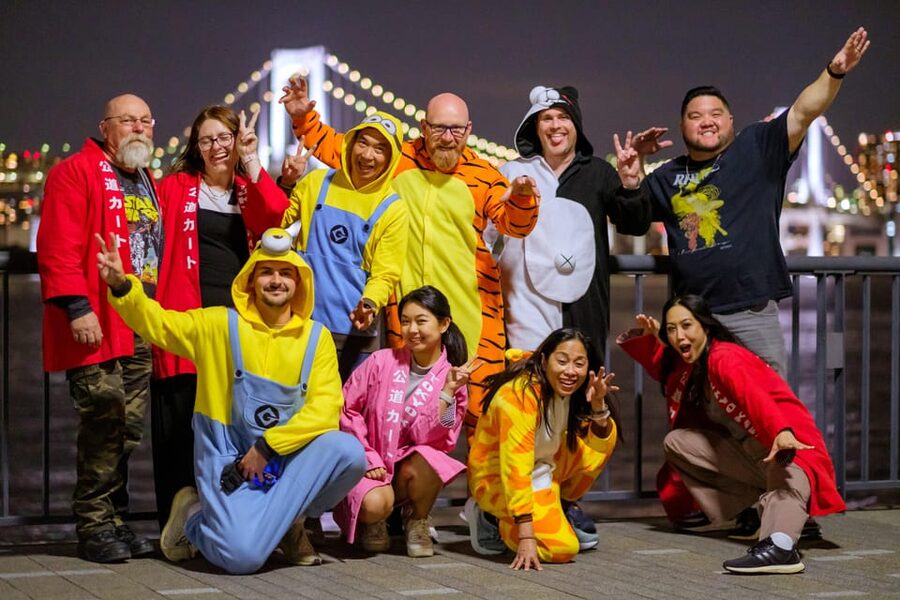
The longer route adds several landmarks that show a different side of Tokyo.
Tokyo Tower is the most obvious photo stop. The red-and-white structure rises above the surrounding streets, and a break here gives you time to appreciate it without trying to steer and look upward at the same time. This stop is one of the stronger reasons to choose the two-hour tour.
The Imperial Palace is generally passed rather than visited. You should not expect a palace tour or an extended walk through the grounds. Instead, you see the area as part of the road circuit, a useful contrast to the neon districts and commercial streets elsewhere in Tokyo.
Tokyo Station provides another architectural photo stop. Its historic-looking red-brick exterior differs sharply from the glass towers and animated signs found around Shibuya and Shinjuku. The route connects these places as a moving city tour, rather than treating them as separate sightseeing visits.
The attraction here is the contrast. You can move from Tokyo Tower to major business streets, then toward the Imperial Palace and Tokyo Station, all while staying on the road. The tradeoff is that passing a landmark from a kart is not the same as touring it on foot. You gain range, but you give up time inside each place.
More things to do in Shinjuku:
- Tokyo: Shinjuku Food Tour (13 Dishes at 4 Local Eateries)
★ 5.0 · 6,603 reviews - Tokyo Bar Hopping Tour in Shinjuku (All-You-Can-Drink + Dinner)
★ 5.0 · 3,587 reviews - Tokyo: Shinjuku Food Tour (15 Dishes and 4 Eateries)
★ 4.9 · 2,033 reviews - Best of Shinjuku: Izakaya Food Tour (4 Stops, 14+ Tastings)
★ 5.0 · 1,863 reviews
Harajuku, Omotesando, Shinjuku, Ginza, and older Tokyo
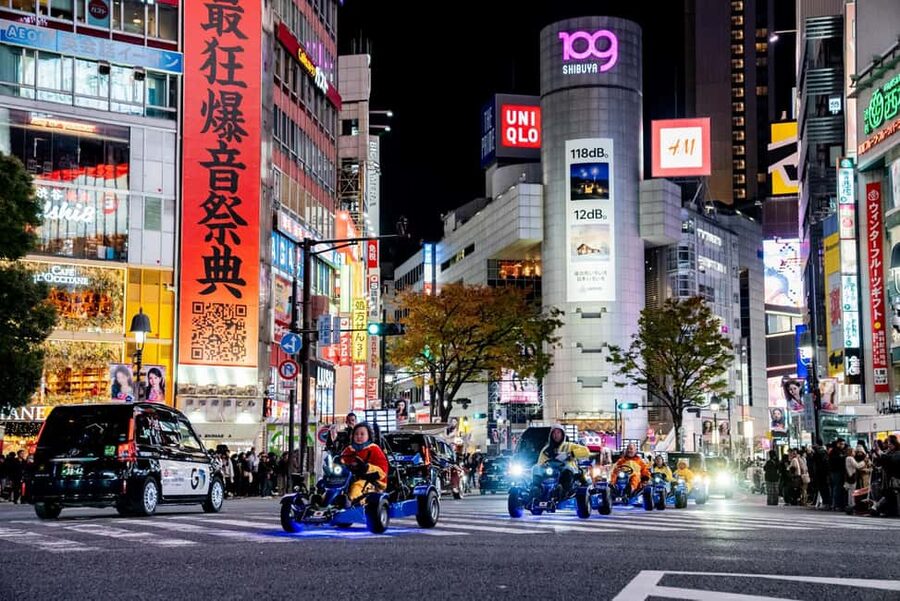
The West Tokyo route brings a different set of impressions. Harajuku is associated with youth fashion and shopping, while Omotesando is known for broad streets and stylish buildings. From a kart, you get a quick visual sample rather than a detailed look at the shops.
Shinjuku Kabukicho has a louder, more colorful character. Signs, restaurants, and entertainment venues create a very different setting from the Imperial Palace area. Driving through it is useful if you want to connect Tokyo’s major districts in one outing.
Some descriptions also mention Ginza, Ueno, and Asakusa. These districts offer a broader view of the city, including major shopping streets and older temple-area Tokyo. Still, you should verify the selected route before assuming all of them are included. The official route choices listed for this experience focus mainly on West Tokyo and the central Tokyo circuit.
That uncertainty is not necessarily a problem, but it affects how you plan. If you want to explore Asakusa’s temples, Ueno’s museums, or Ginza’s department stores, set aside separate walking time. A kart tour can show you where these areas are, but it does not replace visiting them on foot.
Safety, group movement, and driving confidence
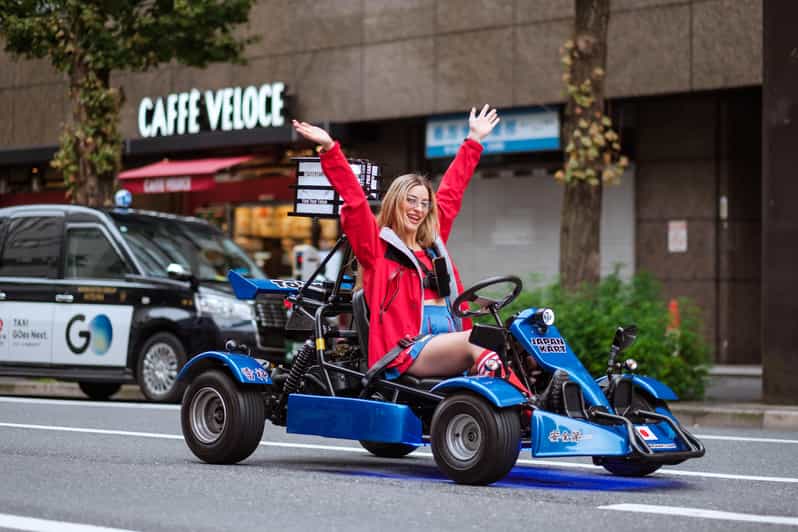
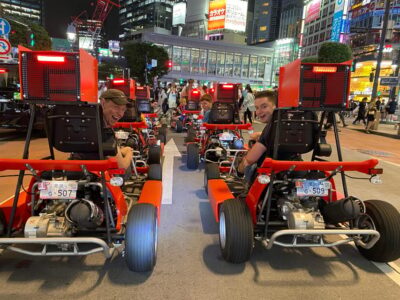
The safety system is one of the strongest features. The group usually has a lead car, and support may follow in another car or on a motorbike. This helps the guide keep the group together and gives newer drivers help if they fall behind.
You may still become separated by traffic lights or a car changing lanes. That is normal in central Tokyo. The support team is there to guide you back, but you must remain alert and follow directions rather than assuming the group will always stay in one neat line.
The karts are described as easy to drive, but you still need normal road awareness. You are sharing city streets, not riding on a closed course. Sandals and flip-flops are not allowed, and alcohol or drugs are prohibited. You also may not bring alcoholic drinks into the vehicle.
Drivers must be at least 18. The instructor language is English, and small groups are available. The reported experience rating is high, with 97 percent of recorded ratings giving a perfect score, but the format will not suit anyone seeking a quiet or private sightseeing tour.
The paperwork rule that can ruin your booking
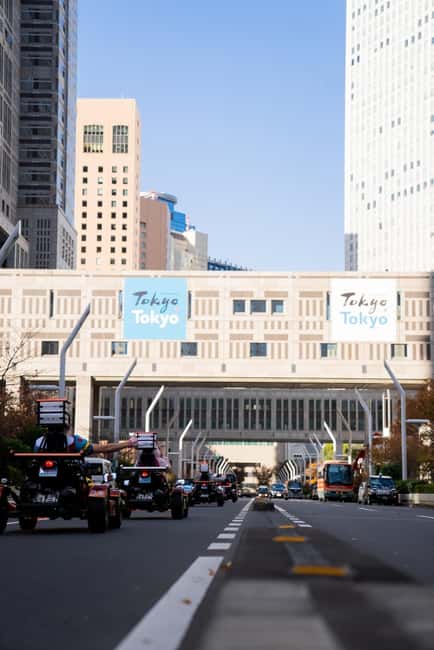
Treat the driving documentation requirement as seriously as the booking itself. You need all three of these:
- Your valid driving license from your home country
- A hard-copy International Driving Permit issued under the 1949 Geneva Convention by an approved authority in your own country
- Your passport
The IDP must be a booklet, not a loose paper document. A permit issued under the 1968 Vienna Convention is not accepted in Japan. Online companies that sell documents without being your country’s approved issuer may not provide what you need.
The approved issuer varies by country. Examples supplied for this activity include AAA or AATA in the United States, AAA in Australia, AA or RAC in the United Kingdom, and CAA in Canada.
Drivers with licenses from Switzerland, Germany, France, Taiwan, Belgium, Estonia, or Monaco follow a different process. They need the original license, an official Japanese translation from the authorized organization, and a passport.
US military participants need a SOFA license combination of an active military ID and a stateside driver’s license.
Bring physical documents to the shop. A phone photograph or digital copy is not enough. If you arrive without the correct paperwork, you can be refused participation with no refund. This is the single most important practical warning in the entire experience.
Cost, timing, weather, and what the $122 buys
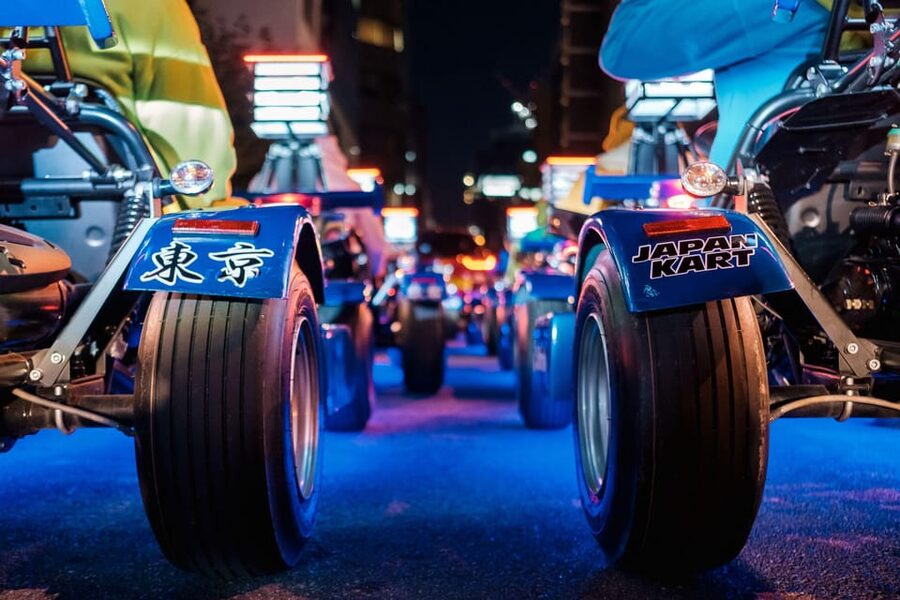
At about $122 per person, the activity is not cheap transportation. You are paying for the road-legal kart, fuel, safety briefing, costumes, cold-weather jackets when needed, an English-speaking guide, and an organized route through major Tokyo districts.
The free photos and videos improve the value. You do not have to depend entirely on a companion standing on a pavement to capture the moment. The staff also make the outing feel organized, which matters when you are driving in a large unfamiliar city.
The price makes the most sense for someone who sees the kart ride as a main Tokyo memory. It makes less sense if your goal is simply to get from Shibuya to Tokyo Tower. Trains and walking are far cheaper and usually faster.
Allow two to three hours for the overall activity, depending on the selected route and schedule. The advertised driving portions include a 90-minute option and a two-hour option. Time at the shop, briefing, preparation, photo stops, and return should be part of your planning.
Weather can change the mood quickly. A sunny day gives you the best chance to enjoy the open-air ride. Rain makes the roads more difficult, and cold weather can be uncomfortable even with jackets. One rainy outing was still considered worthwhile because the staff offered help, but it was clearly harder than a dry-day drive.
If bad weather causes the operator to cancel, you can receive a full refund or reschedule if space is available. Mechanical problems can also lead to a changed or adjusted schedule.
Who will enjoy this Tokyo kart tour
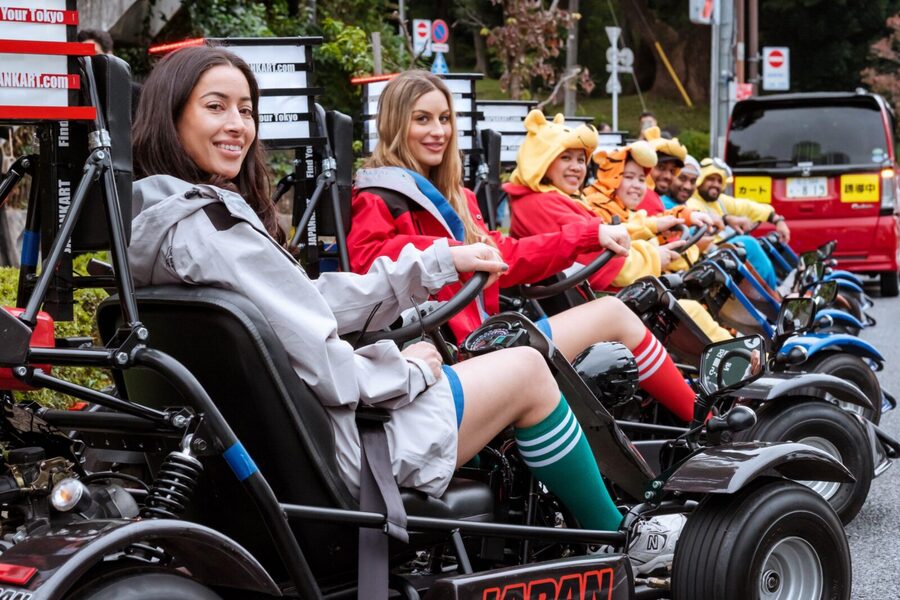
I would recommend it most strongly to adults who want an unusual city activity and are comfortable driving in traffic. It suits couples, friends, and groups who enjoy being noticed and do not mind looking a little silly in costume.
It can also work for nervous drivers if you take the safety briefing seriously and tell the team that you need a few minutes to settle in. Staff have helped uncertain drivers gain confidence before the group moved fully into the route.
It is less suitable for anyone who dislikes traffic, hates being photographed, or expects a fast kart race. It is also not an ideal substitute for a walking tour of Tokyo’s historic areas. You see many places, but you stop at only a few, and some landmarks are passed from the road.
Plan this early in your Tokyo stay if possible. That gives you a memorable overview of several districts and leaves room to revisit the areas you want to explore more slowly. An evening departure may appeal if you want neon streets and a livelier atmosphere, while daytime is better for clear views and easier photography.
Should you book the Japan Go-Kart Tokyo tour?
Book it if the idea of driving through Shibuya Crossing makes you grin. The safety support, friendly English-speaking staff, costumes, and free media make this more than a simple kart rental. You get a playful city tour with a strong sense of occasion.
Skip it if you want deep sightseeing, guaranteed access to every named district, or uninterrupted driving. Traffic is unavoidable, route details can vary, and the paperwork rules are strict.
Before paying, confirm your route, check which branch you are using, and obtain the correct 1949 Geneva Convention IDP in booklet form. If those details are in order, this is a memorable way to see Tokyo at street level, with Tokyo’s drivers, signs, towers, and crowds forming the backdrop.
FAQ
How long does the go-kart tour last?
The activity takes about two to three hours overall. The available driving routes include a 90-minute option and a two-hour option.
Where does the tour start?
The starting branch may be JAPANKART Kanda or JAPANKART Shinjuku, depending on the option you book.
Where does the tour finish?
Drop-off is at either the JAPANKART Shinjuku Branch or the JAPANKART Kanda Branch, depending on the selected option.
Do I need an International Driving Permit?
Yes. Most drivers need their home-country driving license, a hard-copy International Driving Permit issued under the 1949 Geneva Convention by an approved authority in their own country, and their passport.
Are 1968 Vienna Convention permits accepted?
No. International Driving Permits issued under the 1968 Vienna Convention are not accepted for this activity in Japan.
What documents do drivers from France, Germany, Switzerland, Taiwan, Belgium, Estonia, and Monaco need?
They need their original driving license, an official Japanese translation from the authorized organization, and their passport.
Are photos and videos included?
Photos and videos are included in the activity. Staff take images during the route and at stops, and some groups receive them digitally at no extra cost.
Can I cancel for a refund?
You can cancel up to 24 hours before the tour starts for a full refund. Arriving without the required driving documents does not qualify for a refund. If bad weather causes the operator to cancel, you can receive a full refund or reschedule if availability allows.
More Tokyo go-kart tours
- Flagship 2-Hours Official Street Go-Kart Tour – Tokyo Bay Shop
★ 5.0 · 4,974 reviews - Official Street Go-Kart Tour – Akihabara
★ 5.0 · 1,578 reviews - Tokyo Go Kart: Asakusa, Skytree, and Akihabara **IDP MUST**
★ 5.0 · 988 reviews - Shibuya Official Street Go-Kart in Shibuya Annex
★ 5.0 · 972 reviews
Newly reviewed around Tokyo
- Tokyo Asakusa:Calligraphy & Make T-shirt Activity★ 5.0 · 62 reviews
- Intercity Shuttle, Tokyo to Haneda /Narita /Yokohama /Makuhari★ 5.0 · 5 reviews
- 1 Hour Travel around Tokyo with a Professional Photographer★ 5.0 · 3 reviews
- Travel Tokyo with Your Own Personal Photographer★ 5.0 · 43 reviews
- Train in Samurai Swordsmanship and Defeat the Demon in Tokyo★ 5.0 · 5 reviews
- Shuttle Van 6hr Tokyo Tour to-and-from Tokyo, Yokohama and Narita★ 5.0 · 9 reviews
- Kickboxing & Body Training with EX-Pro Fighter★ 5.0 · 4 reviews
- Traditional Japanese Knife Sharpening Class★ 5.0 · 18 reviews
Tokyo Go-Kart Tours, compared.
Flagship 2-Hours Official Street Go-Kart Tour – Tokyo Bay Shop
Read our review →
Tokyo Go Kart: Asakusa, Skytree, and Akihabara **IDP MUST**
Read our review →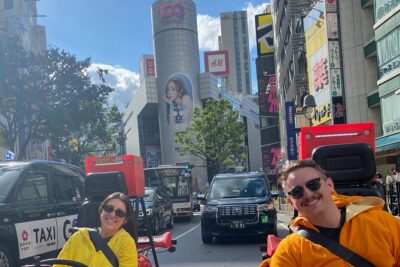
Shibuya Official Street Go-Kart in Shibuya Annex
Read our review →
Asakusa, Skytree & Akhihabara Go-Kart City Experience
Read our review →
Premium Go-Kart Tour with Tower & Shibuya Crossing
Read our review →Browse the lists this tour appears in