
Reviewed · TOKYO GO-KART TOURS
Iconic Tokyo Uptown Landmarks Go Kart Tour (120 Minutes)
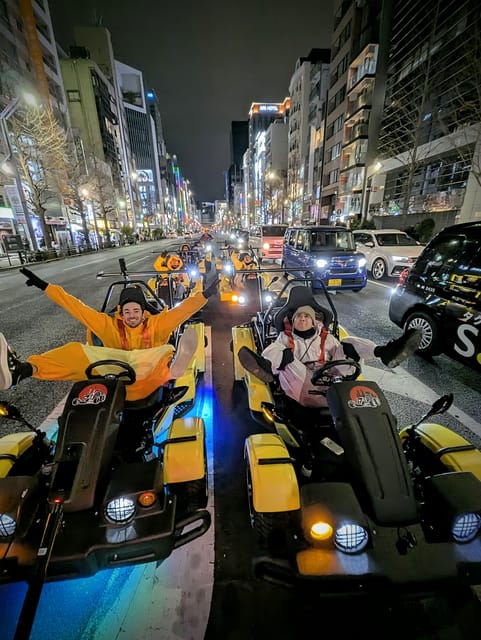
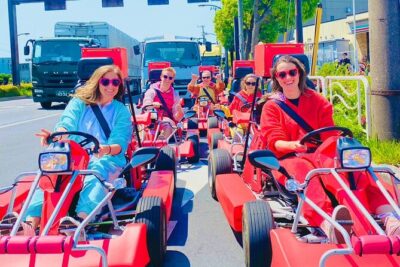
Tokyo is at its most surprising from a go-kart. You sit low, feel the city air, and pass from the Skytree area to Ginza, Tokyo Station, the Imperial Palace, Tokyo Tower, and Kabukiza in one long urban loop. This is not a race. It is a guided road trip through central Tokyo, with your guide talking to you through a two-way radio.
I like the comfortable, street-ready karts, especially for first-time drivers and bigger or taller riders. I also like the live commentary, since the guide can explain what you are seeing while giving simple traffic instructions. The main catch is practical: you need the correct driving documents, and arriving without them means you cannot take part or receive a refund.
Key points at a glance
- A 120-minute city route: Start near Tokyo Skytree and drive through Ryogoku, Tokyo Station, the Imperial Palace area, Tokyo Tower, Ginza, and Kabukiza.
- Comfort-focused karts: Advanced suspension, hydraulic brakes, reinforced frames, and stable handling help make city driving less tiring.
- Live help by radio: Your guide gives safety instructions and local stories throughout the ride.
- Night rides can be especially striking: Neon-lit streets add color, and rain jackets are available if the weather turns wet.
- Easy photo option: An on-board Insta360 camera can record the ride, but you need a Micro SD card or must buy one on site.
- Small groups: The maximum is 10 people, with English, German, and Spanish guide options.
What this Tokyo go-kart tour is really like
This experience gives you a street-level look at Tokyo rather than a view from a platform or a seat on a sightseeing bus. You are still seeing major sights, but the movement between them is part of the point. One minute you are near the tall, modern Skytree. Later, you are passing formal government buildings, department stores, theaters, and older city districts.
The route lasts two hours and begins and ends at Kartzilla Go Kart Tokyo. The facility is about an 8 to 10-minute walk from Yotsugi Station on the Keisei Line. The walk goes through a quiet residential area, so do not expect the attraction to sit in a major shopping district. Follow the Google Maps location and the Kartzilla signs, and call the facility if you have trouble finding it.
You need to arrive at least 40 minutes before departure. That time is not optional fussing. You will check in, show your documents, receive driving instructions, and attend the required safety briefing before getting on the road.
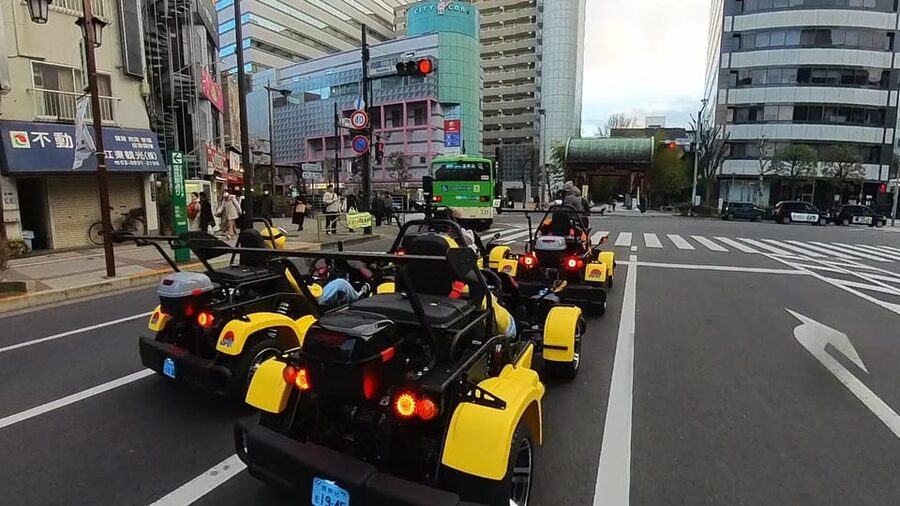
The karts are designed for city use and described as street-legal. That matters. This is not a short amusement-park circuit. You will be driving in Tokyo traffic, so the guide’s directions and the radio link are central to the experience. The tour keeps a relaxed pace, with no racing.
More Tokyo go-kart tours:
- Flagship 2-Hours Official Street Go-Kart Tour – Tokyo Bay Shop
★ 5.0 · 4,974 reviews - Official Street Go-Kart in Shibuya
★ 5.0 · 3,435 reviews - Official Street Go-Kart Tour – Akihabara
★ 5.0 · 1,578 reviews
Why the karts matter on a two-hour drive
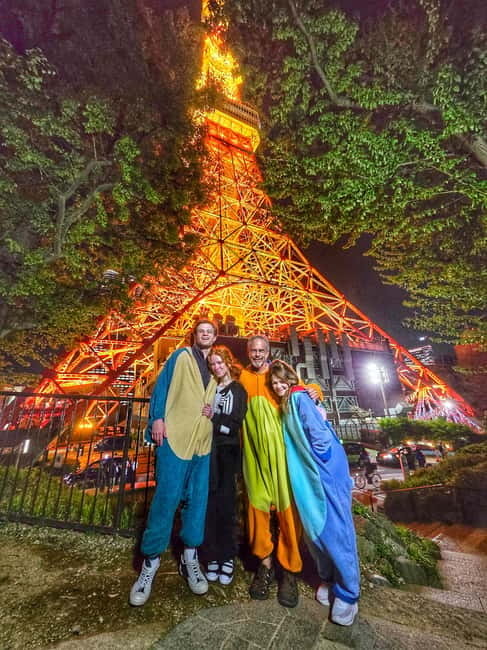
A go-kart can sound more comfortable than it feels after the first 20 minutes. Kartzilla addresses that concern with features aimed at longer road use: advanced suspension, hydraulic brakes, reinforced frames, and stable handling.
The suspension should help smooth out the ordinary bumps of city streets. Hydraulic brakes give you more controlled stopping than the simple systems found on many recreational karts. The reinforced frames are also designed to accommodate big and tall riders, which makes this a more practical choice than a tiny track kart.
You still sit in an open vehicle, so weather matters. One rider reported rain for about half of the session, with rain jackets available. Towels and hair dryers were useful afterward. I would dress for conditions rather than relying on the costume alone, especially during Tokyo’s wet seasons.
The karts are presented as beginner-friendly, but beginner-friendly does not mean license-free. You remain responsible for driving safely on public roads. If you are nervous, the guide’s real-time instructions should help you get your bearings, but you should still be comfortable operating a vehicle before booking.
The route from Tokyo Skytree to Ryogoku
The starting point near Tokyo Skytree gives you an immediate visual marker. Skytree is one of Tokyo’s defining modern structures, and the route offers scenic views as you drive through the surrounding city.
From the kart, you see the tower in the context of everyday streets rather than from an observation deck. That is a useful change of scale. You are not simply looking at Tokyo from above. You are moving through the neighborhoods below it.
The route continues toward Ryogoku Kokugikan, Tokyo’s famous sumo stadium. Ryogoku is closely tied to sumo culture, and the stadium gives the drive a strong connection to one of Japan’s most recognizable traditional sports. The guide provides live commentary, so this is a good place to listen rather than simply point your camera.
The itinerary describes these locations as guided scenic drives. You should understand that the experience is built around passing the sights and hearing about them, not attending a sumo match or touring the interiors.
Tokyo Station and the Imperial Palace surroundings
Tokyo Station brings a different mood. Its location sits at the center of business, transport, shopping, and city movement. From a go-kart, you get a quick but memorable look at the area’s grand urban scale.
The Imperial Palace surroundings offer a sharper contrast. The palace grounds and nearby streets connect modern Tokyo with the country’s imperial institution. You will see the area from the road, with the guide explaining the setting as you pass. If you want a long palace visit, gardens, or an interior tour, plan that separately. This ride gives you orientation, not a full palace outing.
That is one of the route’s strengths. Tokyo can feel scattered on a map, with major districts separated by rail lines and large roads. In two hours, you connect several of them in one continuous experience. The ride does not replace walking tours or museums, but it can help you understand how the city’s parts relate to one another.
A completely different kind of day in Tokyo:
- Mt Fuji and Hakone 1-Day Bus Tour Return by Bullet Train
★ 5.0 · 26,383 reviews - 1-Day Tokyo Bus Tour
★ 5.0 · 14,250 reviews - Tokyo: teamLab Planets TOKYO Digital Art Museum Entry Ticket
★ 4.6 · 9,779 reviews - Mt Fuji & Hakone Cruise, Drum Show Bullet Train 1 Day from Tokyo
★ 4.0 · 7,413 reviews
Tokyo Tower, Ginza, and Kabukiza
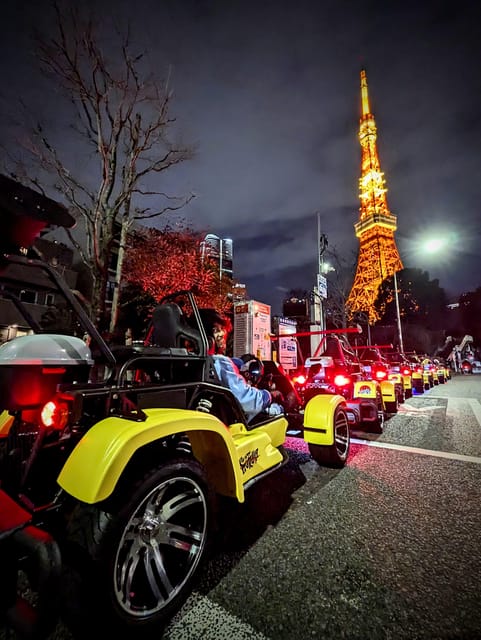
Tokyo Tower supplies another big visual moment. Its warm, familiar form contrasts with Skytree’s newer height, and seeing both during one outing gives you a quick lesson in Tokyo’s changing skyline.
Ginza brings you into one of the city’s best-known shopping and dining districts. The streets here feel polished and commercial, with major stores and city lights. A go-kart offers an unusual way to pass through an area usually explored on foot or by taxi.
Kabukiza adds a cultural stop to the route. The theater is associated with kabuki, Japan’s traditional stage art, and its distinctive facade is easy to recognize from the street. Again, the value is in the sequence: sumo in Ryogoku, imperial Tokyo near the palace, luxury retail in Ginza, and kabuki near the end of the route.
The route is therefore more than a list of famous buildings. It gives you several versions of Tokyo in a short span. You see old and new, formal and commercial, monumental and ordinary. The guide’s stories help connect those pieces while you concentrate on driving.
Live guidance makes the ride easier
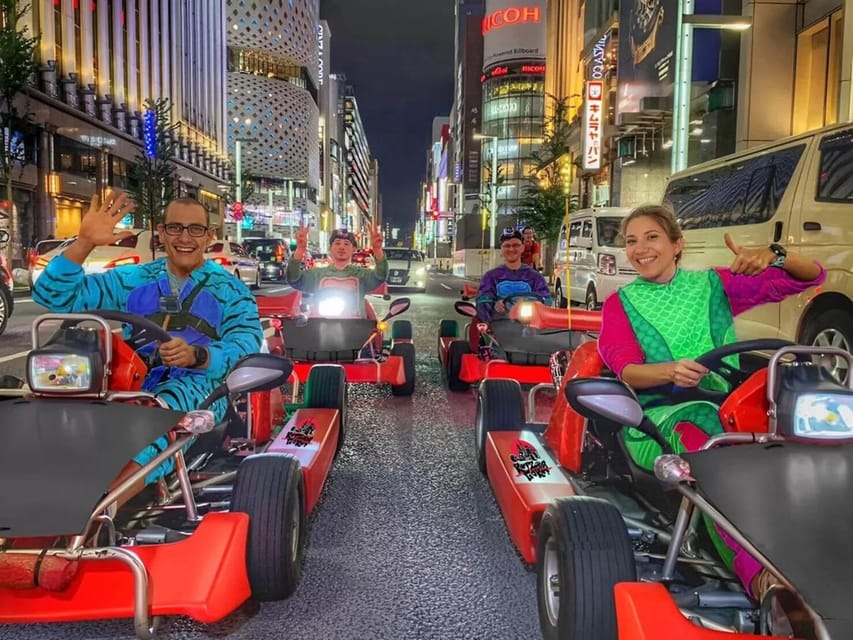
The two-way radio is one of the most useful parts of the setup. Your guide can give directions, help the group keep together, and offer safety reminders without waiting for a stop.
Guides such as Sata have been praised for clear instructions and for pointing out different sights along the way. Travis has also helped visitors with Tokyo suggestions and ideas for the rest of a Japan trip. Guide quality always depends on the person assigned that day, but the format gives the guide plenty of contact with the group.
The listed guide languages are English, German, and Spanish. Confirm the available language when booking if that matters to you.
The group size is limited to 10 participants. That is small enough for the guide to keep an eye on the group and communicate directly, though you are still driving as part of a group on public streets. The experience works best if everyone follows the same pace and instructions. It is not the place to treat the streets like a private track.
Cost and what you get for $116
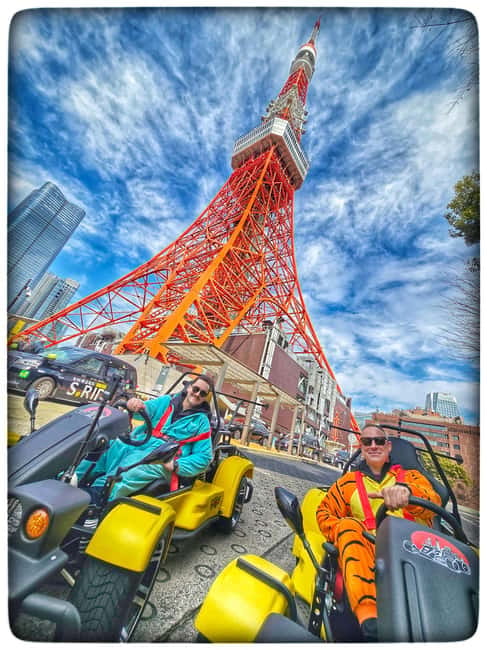
At $116 per person, this is not a cheap way to move around Tokyo. Public transport costs far less, and a regular sightseeing bus may cover more commentary without requiring you to drive.
The value comes from the combination of transport, entertainment, and access to a viewpoint you cannot get from a train. The fee includes the street-legal kart, fuel, professional guide, accident insurance, an anime costume, drinks, and use of the on-board Insta360 camera. You also get two hours of direct participation rather than simply looking through a vehicle window.
The camera detail needs attention. You must bring a Micro SD card for the Insta360 footage, or buy one on site. The camera is optional, so you can skip it if you prefer to focus on the road. Free photos are also part of the experience, according to the tour information.
Meals are not included, and there is no hotel pick-up or drop-off. The station is close enough to walk, but you need to arrange your own transport to and from Yotsugi. For a first or second day in Tokyo, the ride can offer useful city orientation. For someone mainly seeking the cheapest sightseeing option, it will not be the best value.
Costumes, weather, and the practical side
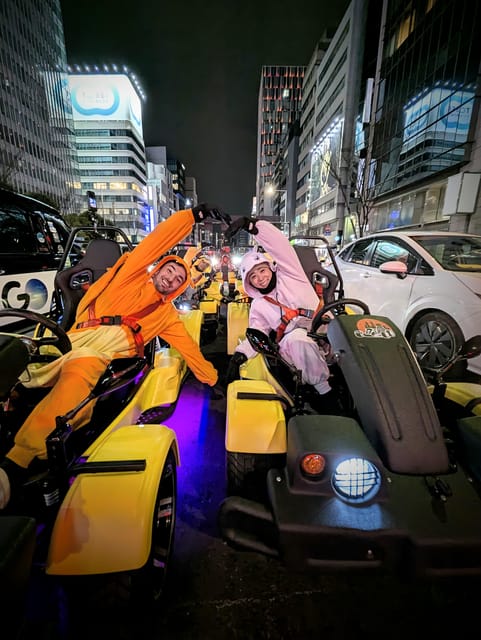
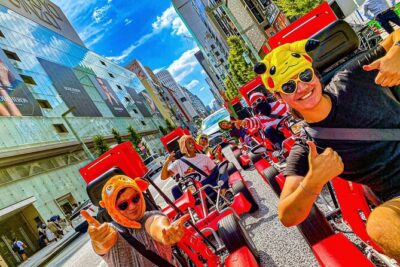
Anime costume rental is included. The costumes add a playful element and make the photos more memorable, though they may not appeal to everyone. You can think of them as part of the entertainment rather than a required part of learning about Tokyo.
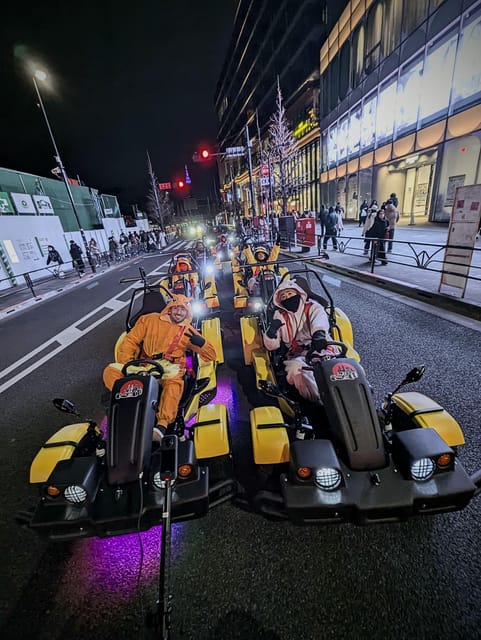
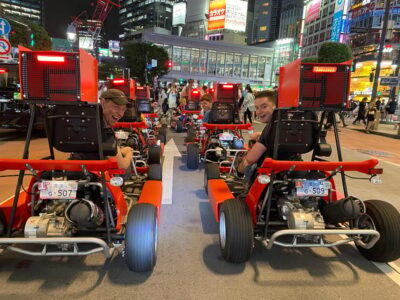
Night departure times may be worth considering. One rider specifically found the neon lights especially enjoyable after dark. The route includes Ginza and other highly lit city areas, so an evening ride can give you a different visual experience from a daytime outing.
Rain is a real possibility. Rain jackets are available, and towels and hair dryers have been useful at the end of a wet ride. Still, open-air driving in rain can reduce comfort and make cameras less convenient. Check the forecast and wear clothing that can handle changing conditions.
Bring your passport, your physical driver’s license, and the required international permit or translation. Digital licenses, photographs of documents, and expired licenses are not accepted.
The license rules are the most important detail
Non-residents must have an International Driving Permit issued under the 1949 Geneva Convention. A license from Switzerland, Germany, France, Belgium, Monaco, or Taiwan can be accepted when paired with an official Japanese translation issued by JAF.
Japanese citizens and residents of Japan need a Japanese driving license. The tour does not accept a license alone when an international permit or translation is required. Check the exact rule that applies to your nationality before paying.
If you arrive without an accepted document, you cannot drive and no refund is provided. This is the one detail I would treat as a booking checklist item, not a small footnote.
The tour is for adults 18 and older. It is not suitable for people without a license, visually impaired people, or anyone over 95. Intoxication is not allowed, and alcohol and drugs are prohibited. The activity is listed as wheelchair accessible, but the driving requirements still apply.
Who will enjoy this most
I would recommend this to you if you want an active way to see Tokyo and like the idea of handling the vehicle yourself. It is especially good for first-time visitors who want a broad look at the city’s central districts without spending a full day changing trains.
It also suits visitors who enjoy unusual photo opportunities. The low driving position, costumes, landmarks, and optional 360-degree camera create images that a standard walking tour will not.
This is less suitable if you want long stops, museum time, detailed visits inside landmarks, or a quiet cultural tour. The experience is active and public. You need to pay attention to traffic, weather, and the group. Someone who dislikes driving may find the two hours tiring rather than fun.
The ride can work well early in a Tokyo stay because guides may offer useful suggestions for the rest of your trip. It can also be a lively final-day activity, particularly at night when the city lights are on.
Should you book the Tokyo Uptown Route?
Book it if the idea of driving past Tokyo landmarks sounds more appealing than simply photographing them from a sidewalk. The strongest reasons are the comfortable karts, live radio support, small group size, and the range of districts covered in two hours.
Before booking, confirm your license paperwork, check the weather, and decide if you want to buy a Micro SD card for the camera. I would choose an evening departure for neon views, unless cooler temperatures or rain make daytime more practical.
At $116, you are paying for participation and novelty, not the lowest-cost sightseeing. If that is what you want, this Kartzilla route is a good fit. If you mainly want facts, interiors, and long stops, spend the money on walking tours and attractions instead.
FAQ
How long is the Tokyo Uptown go-kart tour?
The tour lasts 120 minutes, or two hours, including the route through Tokyo’s main districts.
Where does the tour start?
It starts and finishes at Kartzilla Go Kart Tokyo. The facility is about an 8 to 10-minute walk from Yotsugi Station on the Keisei Line.
Which landmarks does the route pass?
The route includes Tokyo Skytree, Ryogoku Kokugikan, Tokyo Station, the Tokyo Imperial Palace surroundings, Tokyo Tower, Ginza, and Kabuki-za.
What driving documents do I need?
You need a valid driving license and passport. Non-residents need an International Driving Permit issued under the 1949 Geneva Convention, or a license from Switzerland, Germany, France, Belgium, Monaco, or Taiwan with an official Japanese translation from JAF.
Can I use a digital license or a photo of my license?
No. Digital licenses, photographs, and expired licenses are not accepted.
Is the camera included?
Use of the on-board Insta360 camera is included, but you must bring a Micro SD card or purchase one at the facility. The camera is optional.
What languages are available for the guide?
Live guides are available in English, German, and Spanish.
Newly reviewed around Tokyo
- Tokyo Asakusa:Calligraphy & Make T-shirt Activity★ 5.0 · 62 reviews
- Intercity Shuttle, Tokyo to Haneda /Narita /Yokohama /Makuhari★ 5.0 · 5 reviews
- 1 Hour Travel around Tokyo with a Professional Photographer★ 5.0 · 3 reviews
- Travel Tokyo with Your Own Personal Photographer★ 5.0 · 43 reviews
- Train in Samurai Swordsmanship and Defeat the Demon in Tokyo★ 5.0 · 5 reviews
- Shuttle Van 6hr Tokyo Tour to-and-from Tokyo, Yokohama and Narita★ 5.0 · 9 reviews
- Kickboxing & Body Training with EX-Pro Fighter★ 5.0 · 4 reviews
- Traditional Japanese Knife Sharpening Class★ 5.0 · 18 reviews
Tokyo Go-Kart Tours, compared.
Flagship 2-Hours Official Street Go-Kart Tour – Tokyo Bay Shop
Read our review →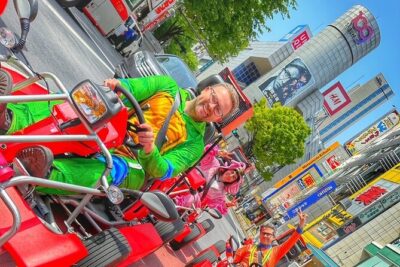
Tokyo Go Kart: Asakusa, Skytree, and Akihabara **IDP MUST**
Read our review →
Shibuya Official Street Go-Kart in Shibuya Annex
Read our review →
Asakusa, Skytree & Akhihabara Go-Kart City Experience
Read our review →
Premium Go-Kart Tour with Tower & Shibuya Crossing
Read our review →Browse the lists this tour appears in