
Reviewed · TOKYO RAMEN TOURS AND CLASSES
Home made Ramen you made from scratch!!
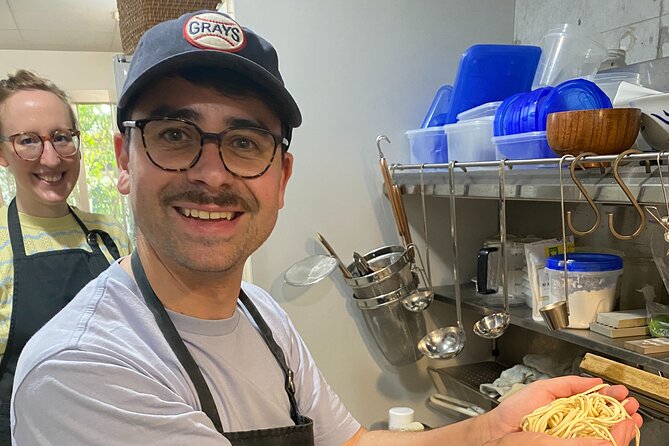
The best part of this Tokyo class is that you do not simply watch someone assemble a bowl. You work through the key parts of ramen from scratch with Hideki, a former ramen-restaurant cook with about 10 years of experience. You make the noodles, soup stock, toppings, and gyoza, then sit down to eat what you prepared.
I like the small group size, capped at four people, and the practical recipe booklet that helps you repeat the meal at home. I also like the location in Minamishinagawa, which is handy for reaching Ginza, Shibuya, Shinjuku, Shinagawa, and Haneda Airport.
The main consideration is the price: $115 per person is a serious charge for a three-hour cooking class. Alcohol and soft drinks cost extra, too. The value is strongest if you want instruction and a meal you can recreate, not just a quick bowl of ramen.
Key points to know before booking
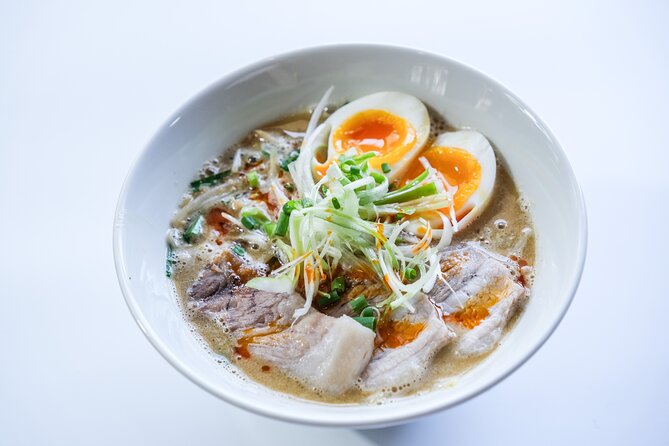
- You make the ramen from scratch: The class covers noodles, dashi, nitamago, and chashu rather than only showing you how to garnish a finished bowl.
- Hideki teaches from professional experience: He worked in a ramen restaurant for about 10 years and guides you through the cooking process.
- The group is very small: A maximum of four people makes this a hands-on class rather than a demonstration.
- Gyoza is part of the meal: You prepare dumplings alongside the ramen.
- The class takes place in a home studio: Expect a personal setting, not a large commercial cooking school.
- You finish with lunch: The ramen you make is included, while alcohol and soft drinks cost extra.
Making ramen, not just watching it
Many food classes give you a tidy demonstration and a few tasks to perform. This one aims higher. You learn the parts that give ramen its character, from the soup stock to the noodles and toppings.
That matters because a bowl of ramen is not one recipe. It is a group of separate preparations that must come together at the right time. The class shows you how those pieces work as a meal, rather than treating ramen as an instant soup with a few extras.
You also make gyoza dumplings. That gives the three-hour session a second useful skill and a fuller lunch. If you are looking for a quick lesson focused only on noodle shaping, this may feel broader than necessary. If you want a Japanese meal you can try again at home, the range of dishes makes better sense.
The class is designed for no more than four people. That is important here. Ramen has several moving parts, and a small group gives Hideki more room to correct your technique, answer questions, and manage the cooking at the crucial moment.
More Tokyo ramen tours and classes:
- Eat and Drink Like a Local: Tokyo Ueno Food Tour-Taverns&Ramen
★ 5.0 · 957 reviews - Ramen & Gyoza Cooking Class in Tokyo with Local Supermarket Visit
★ 5.0 · 823 reviews - Tokyo: Ramen Tasting Tour with 6 Mini Bowls of Ramen
★ 4.9 · 432 reviews
Meeting Hideki in Minamishinagawa
The meeting point is Hideki Ramen Cooking Studio at 6-chōme-15-3 Minamishinagawa, Shinagawa City, Tokyo 140-0004. The studio is near public transportation, and the location is especially useful if your plans include Shinagawa or Haneda Airport.
You should allow time to find the meeting point and get your train route right. One participant arrived late after sorting out the railway directions, and Hideki stayed in contact through WhatsApp. He has also met people at the train station and walked with them to his home, which can make the first part less stressful.
The exact station name is not provided, so check the meeting instructions carefully after booking. Do not assume the studio is directly beside your hotel or a major sightseeing stop. Minamishinagawa is convenient for several parts of Tokyo, but Tokyo’s rail network rewards careful planning.
The location is a practical advantage rather than a sightseeing stop. You are coming here for the cooking, not for a grand dining room or a view. The home setting gives the class a relaxed feel, but it also means the facilities are more personal and informal than those of a professional culinary school.
Preparing dashi, the foundation of the bowl
The first important lesson is dashi, the soup stock used to build the ramen broth. This is where the class moves beyond a basic cooking activity. You learn that the flavor of ramen starts well before the noodles enter the bowl.
Hideki explains how to prepare the stock and gives tips along the way. The available details do not specify every ingredient or cooking method, so you should not expect a fixed list of techniques before arrival. What you can count on is a hands-on lesson in the soup base, followed by the other components of the dish.
This part is useful because soup stock is one of the harder elements to judge from a finished bowl. At a ramen shop, you taste the result but do not see the work behind it. Here, you take part in that process and can later use the recipe booklet as a guide.
The timing can become busy as the class progresses. One French-language comment describes the pace starting calmly and then speeding up as the cooking comes together. That is normal for a meal with several parts. Hideki manages the final cooking, which helps keep the ramen from being overcooked or served out of order.
Rolling noodles and building the meal
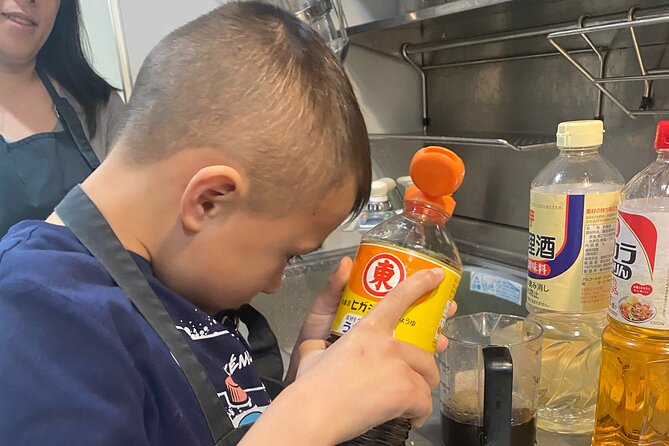
Making noodles from scratch is one of the clearest reasons to choose this class. You do not simply boil packaged noodles and add toppings. You take part in preparing the noodles that go into the bowl.
The available information does not say how the dough is mixed, rolled, or cut, so I would not book this expecting a detailed specialist lesson on every noodle-making style. The useful promise is simpler: you learn the process and get to eat the noodles you made.
That hands-on format suits people who learn by doing. Hideki is described as patient, and he walks participants through each step. You should still expect to work at the counter and follow instructions closely. This is a cooking class, not a passive tasting.
A small group makes a real difference during this stage. With up to four people, you can ask about texture, timing, and the steps that are easiest to repeat at home. In a large class, noodle work can turn into a short turn at a shared station. Here, the format is much more personal.
A completely different kind of day in Tokyo:
- Mt Fuji and Hakone 1-Day Bus Tour Return by Bullet Train
★ 5.0 · 26,383 reviews - 1-Day Tokyo Bus Tour
★ 5.0 · 14,250 reviews - Tokyo: teamLab Planets TOKYO Digital Art Museum Entry Ticket
★ 4.6 · 9,779 reviews - Mt Fuji & Hakone Cruise, Drum Show Bullet Train 1 Day from Tokyo
★ 4.0 · 7,413 reviews
Nitamago and chashu add the ramen-shop finish
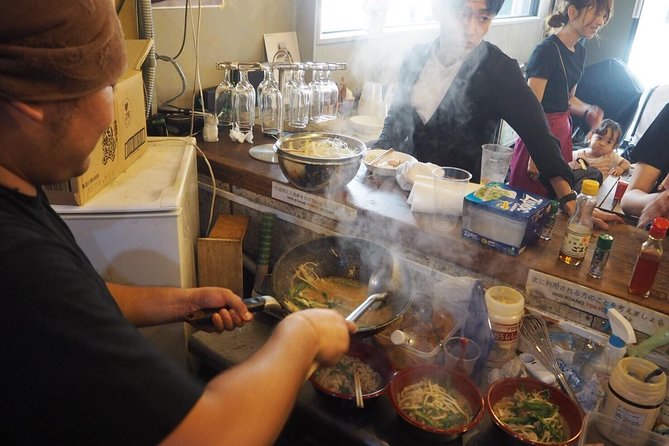
The lesson includes nitamago, the seasoned ramen-style boiled egg, and chashu, the pork topping used in many ramen bowls. These details are easy to take for granted when you order at a restaurant, but they are part of what makes the finished bowl feel complete.
The egg brings another preparation to the class, while the chashu adds a substantial topping. You learn how these items are cooked and used with the noodles and soup. The exact seasoning and cooking times are not supplied, so you will need to pay attention during the lesson rather than relying only on advance notes.
I like the inclusion of these toppings because they make the class more useful at home. Learning only the broth might leave you with an incomplete meal. With noodles, soup, egg, and pork covered, you have the main building blocks of a ramen bowl.
There is also a practical limit. Homemade ramen can require several preparations and careful timing. You may not reproduce the entire meal quickly on a busy evening. The class is most valuable if you enjoy cooking projects and want to understand the process, not if you need a ten-minute recipe.
Making gyoza alongside the ramen
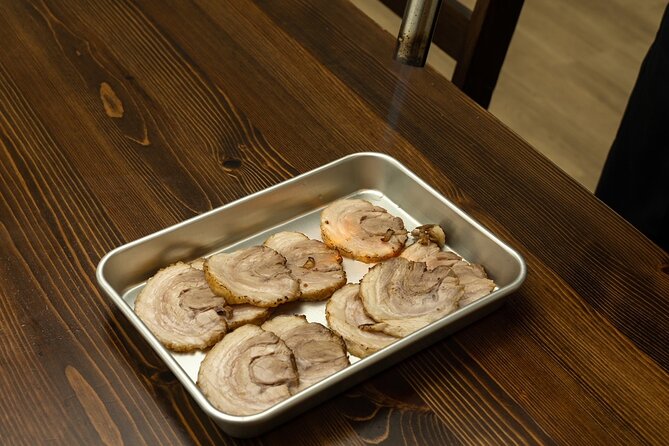
Gyoza gives the meal a second Japanese cooking skill. You prepare dumplings with Hideki, then eat them with the ramen. That adds variety to a session that might otherwise focus heavily on soup and noodles.
The class details do not spell out every gyoza step, so I cannot promise a specific folding method or filling. You can expect hands-on preparation and instruction from Hideki. The reviews describe the finished ramen and gyoza as delicious, with the recipe booklet covering the work.
This is also a good test of the class pace. Ramen and dumplings are both best when handled at the right moment. Hideki’s role is not only to explain recipes but to help bring the meal together without leaving you with a cold bowl.
If you are traveling with someone who does not care much about ramen, gyoza makes the experience more appealing. Both people have another dish to work on and eat. The maximum group size also means a couple or small family can have a more direct class than they would in a large cooking studio.
Eating what you made for lunch
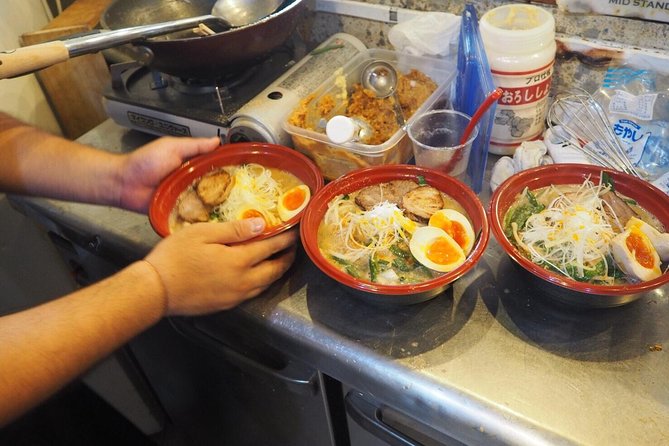
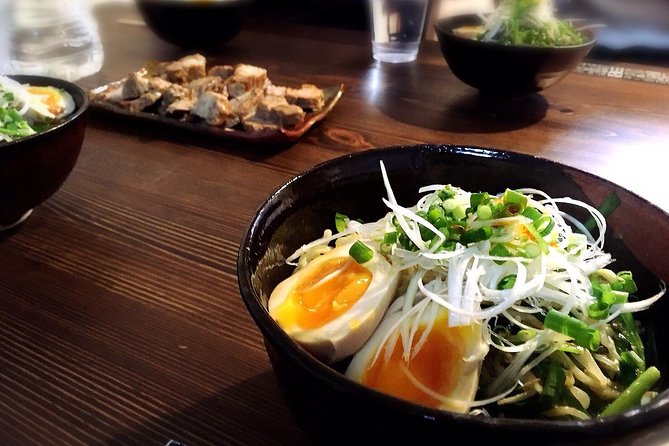
Lunch is included, and it means the ramen you prepare is the main payoff of the class. You are not buying a separate restaurant meal after three hours of cooking. The meal gives you a chance to taste the result while the method is still fresh in your mind.
That final bowl can be more satisfying than a standard restaurant lunch because you know how each part reached the table. It is also the best moment to notice how the noodles, stock, egg, pork, and dumplings fit together.
Alcoholic drinks and soft drinks are not included. They cost extra, so budget for that if you want something beyond the food. The listed price covers the class and lunch, not every drink you might order or request.
The class ends back at the meeting point. This is convenient if you need to return to Shinagawa or continue toward another part of Tokyo. It is less useful if you hoped to finish near a major attraction, since the activity does not include a sightseeing route.
A home class with a personal feel
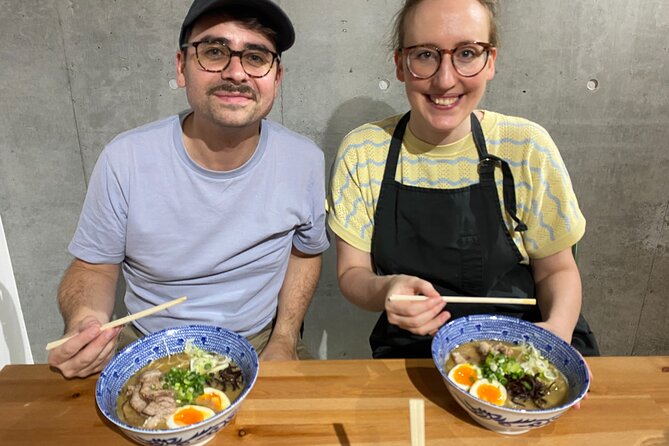
The setting is part of the experience. Hideki teaches in his home, and the class is described as friendly, intimate, and welcoming. That can make the lesson feel more like being invited into a local kitchen than attending a polished group event.
Hideki has also prepared a small recipe book for participants. This is one of the strongest practical touches. You do not have to rely on memory after leaving Tokyo, and you can use the instructions when you try the ramen and gyoza at home.
He has been praised for being patient and for walking people through each step. He has also escorted people to and from the train station, which can help if you are unsure of the last part of the route. Station assistance is not presented as a separate guaranteed feature, so confirm the meeting instructions and communication details before you set out.
A home studio is not the right fit for everyone. If you prefer a formal school with multiple workstations, a printed syllabus, and a commercial kitchen, this may feel basic. If you value direct contact with a local cook and a small group, the informal setting is a major plus.
Is $115 a fair price?
At $115 per person, this is not a budget lunch. You are paying for about three hours of instruction, a small group capped at four, the ingredients, the meal, and Hideki’s professional background.
The price makes the most sense when you count the teaching, not just the food. A bowl of ramen and a serving of gyoza alone would cost far less in Tokyo. The extra value comes from learning dashi, noodles, nitamago, chashu, and dumplings, then taking home instructions for another attempt.
I would also compare the class with what you want from a food activity. If your priority is eating excellent ramen at the lowest possible cost, visit a ramen shop. If your priority is understanding how the dish is made and gaining a recipe you can share with friends, the price is easier to justify.
Group discounts are available, which may improve the value if you are booking with family or friends. The published information does not give the discount amount, so check the final price before booking.
Who will enjoy this class most?
I would recommend this experience to people who enjoy cooking, want a small group, or have already eaten ramen in Japan and want to understand the work behind it. It is also a good choice for couples and small groups who prefer a personal lesson to a large class.
It suits a food-focused day in Tokyo, especially if you are staying near Shinagawa or need a practical connection toward Haneda. The three-hour length gives you enough time for several dishes without taking an entire day.
Families may enjoy it, but the available information does not state an age requirement or child policy. Ask before booking if you are traveling with children. The class involves several cooking stages, so anyone joining should be ready to follow instructions.
I would skip it if you want a quick activity, dislike home-based settings, or only want to eat ramen without cooking. The work is the point. You will get more from the class if you are willing to handle the ingredients and keep up as the final cooking comes together.
Booking, timing, and cancellation
Confirmation is sent within 48 hours of booking, subject to availability. The activity is often booked about seven days ahead, so I would not leave it until the last morning if your Tokyo schedule is tight.
Mobile tickets are available, and the class is near public transportation. Keep the meeting address and communication details handy, especially if you are arriving from another part of the city.
Free cancellation is available up to 24 hours before the start time for a full refund. Cancellations or changes made less than 24 hours before the experience are not accepted for a refund. Cutoff times use Tokyo local time, so check the clock carefully if you are changing plans from another time zone.
Should you book Hideki’s ramen class?
Book it if you want more than a meal. You will make noodles, dashi, nitamago, chashu, and gyoza, work in a very small group, and leave with a recipe booklet. Hideki’s restaurant background and patient teaching make the lesson especially useful for anyone hoping to repeat the food at home.
Think twice if $115 feels high for lunch or if you prefer a polished cooking school. The home setting is informal, drinks cost extra, and the cooking pace becomes busier near the end.
For a hands-on food experience with a local host, this is a strong choice. The combination of professional ramen experience, a maximum of four participants, and a full meal gives the class real value, provided you want to cook as much as you want to eat.
FAQ
How long does the ramen cooking class last?
The class lasts approximately three hours.
Where does the activity begin?
It begins at Hideki Ramen Cooking Studio, 6-chōme-15-3 Minamishinagawa, Shinagawa City, Tokyo 140-0004, Japan.
Where does the activity end?
The activity ends back at the meeting point.
Who teaches the class?
The class is taught by Hideki, who worked at a ramen restaurant for about 10 years.
How many people can join the class?
The activity has a maximum of four participants.
What food will I prepare?
You will prepare ramen from scratch and gyoza dumplings. The lesson includes dashi, nitamago, and chashu.
Is lunch included?
Yes. Lunch consists of the ramen you make from scratch.
Are drinks included?
Alcoholic beverages and soft drinks are not included and cost extra.
Is the class near public transportation?
Yes. The activity is near public transportation.
Can I cancel for a full refund?
Yes. You can cancel at least 24 hours before the start time for a full refund. Cancellations or changes made less than 24 hours before the start time are not accepted for a refund.
Newly reviewed around Tokyo
- Tokyo Asakusa:Calligraphy & Make T-shirt Activity★ 5.0 · 62 reviews
- Intercity Shuttle, Tokyo to Haneda /Narita /Yokohama /Makuhari★ 5.0 · 5 reviews
- 1 Hour Travel around Tokyo with a Professional Photographer★ 5.0 · 3 reviews
- Travel Tokyo with Your Own Personal Photographer★ 5.0 · 43 reviews
- Train in Samurai Swordsmanship and Defeat the Demon in Tokyo★ 5.0 · 5 reviews
- Shuttle Van 6hr Tokyo Tour to-and-from Tokyo, Yokohama and Narita★ 5.0 · 9 reviews
- Kickboxing & Body Training with EX-Pro Fighter★ 5.0 · 4 reviews
- Traditional Japanese Knife Sharpening Class★ 5.0 · 18 reviews
Tokyo Ramen Tours and Classes, compared.
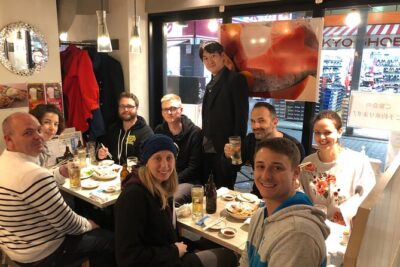
Eat and Drink Like a Local: Tokyo Ueno Food Tour-Taverns&Ramen
Read our review →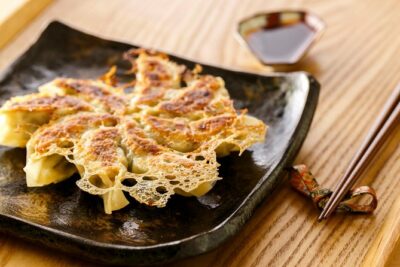
Ramen & Gyoza Cooking Class in Tokyo with Local Supermarket Visit
Read our review →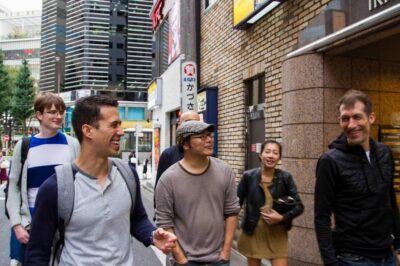

Easy Ramen Cooking Experience in Kabukicho, Shinjuku
Read our review →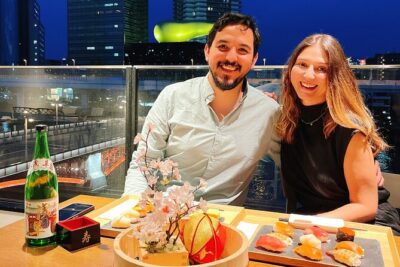
Ramen and Sushi Cooking Class with Sake Pairing Set in Tokyo
Read our review →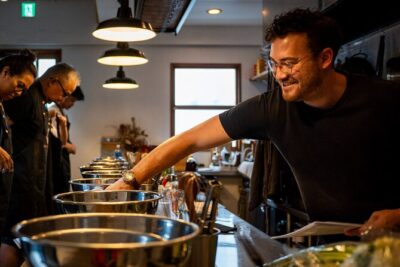
Professional Ramen & Gyoza with Ramen Chef in a restaurant!
Read our review →
Ramen Dojo Tokyo | Make All 3 (Tonkotsu/Shoyu/Miso)
Read our review →Ramen Dojo Tokyo | Make All 3 (Tonkotsu/Shoyu/Miso)
Read our review →Browse the lists this tour appears in