Reviewed · FULL-DAY
Full-Day Accessible Tour of Tokyo for Wheelchair Users
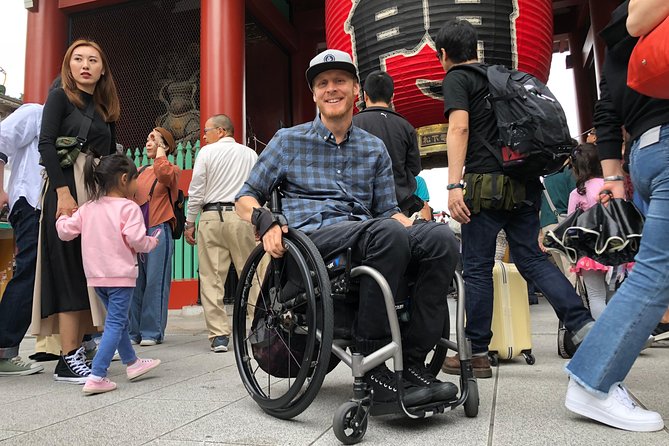
Tokyo can be hard to read from a wheelchair. A station may have an elevator, but not always near the entrance you need. A temple approach may look flat, then turn into an awkward stretch of paving. This private accessible tour tackles those small problems with a guide who handles routes, train tickets, and the pace of the day.
I like the one-to-one attention and the chance to see both old Asakusa and modern Shibuya without arranging every transfer yourself. I also like the guides’ practical approach. Fumiko, Yumi, Kaori, and Emiko are praised for adapting routes, finding fewer-step paths, and helping families with different mobility needs.
The main caution is stamina. Seven hours in Tokyo can mean plenty of rolling, walking, crowds, and station transfers. One party covered about 15,000 steps, though that will vary by group. The tour requires at least two people, including caregivers, and a moderate level of physical fitness.
The details that shape your day
- Private guiding keeps the pace flexible: Only your group takes part, so the guide can adjust stops and routes to your needs.
- Train travel is part of the experience: Tickets are included, and guides help you use Tokyo’s often confusing rail and subway system.
- The route links old and new Tokyo: You move from Senso-ji and Sumida Park to Shibuya Crossing, Cat Street, Meiji Shrine, and Omotesando.
- Pickup is available in Tokyo’s 23 wards: Hotel pickup and drop-off are included, though you should confirm the exact pickup arrangement when booking.
- The guides focus on mobility as well as sightseeing: Past guides including Fumiko, Yumi, Kaori, Michiko, Keita Mizuri, and Emiko have helped with ramps, station routes, crowds, and changing needs.
- The price buys logistics, not entry tickets: At $191.08 per person, the value is strongest if train navigation and accessible planning would otherwise be stressful.
Why this Tokyo tour is useful for wheelchair users
The strongest feature here is not simply the list of famous places. It is the way the day connects them. Tokyo is huge, and its train system can feel like a puzzle of platforms, elevators, gates, and long corridors. A guide who knows how to find a workable route can save you time and energy before you even reach the first temple.
You also get a private setting rather than a fixed group pace. That matters if one person rolls, another walks with a rollator, and a caregiver needs extra time. The guide can explain the next stop, keep the group together, and adjust the order when needed.
The tour begins at 9:30 a.m. and lasts about seven hours. Hotel pickup and drop-off are included within Tokyo’s 23 wards. The listed meeting point is the Asakusa Culture Tourist Information Center, so confirm whether your party will be collected at your hotel or asked to meet in Asakusa.
This is not a tour built around private cars. Train tickets are included, while taxi, private car, and bus transport cost extra. That is a useful distinction. You are not only seeing Tokyo, you are learning how to get around it by public transport with help at each stage.
More full-day trips in Tokyo:
- From Tokyo: Mount Fuji Full-Day Sightseeing Trip
★ 4.5 · 4,970 reviews - Mount Fuji Full-Day Private Tour from Tokyo (Customizable)
★ 4.9 · 1,470 reviews - Tokyo Private Full-Day Tour by Car or Van
★ 5.0 · 684 reviews
Asakusa begins with a modern view of old Tokyo
The first stop is the Asakusa Culture Tourist Information Center, an eight-story building designed by Kengo Kuma. It faces the Kaminarimon area and gives you a useful orientation point before the temple visit.
The building itself is worth a look, especially if you enjoy contemporary Japanese architecture. Its design gives a modern counterpoint to the older religious buildings nearby. The stop lasts about 15 minutes, so expect a quick introduction rather than a long architectural visit.
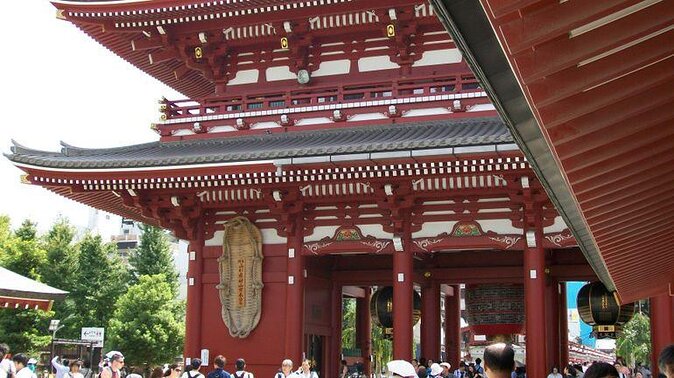
From there, you head toward Nakamise Shopping Street through Kaminarimon, the Thunder Gate. The gate is one of Tokyo’s best-known symbols, with the giant lantern marking the approach to Senso-ji. Nakamise is lined with small shops selling snacks, souvenirs, and traditional goods.
The street is only scheduled for about 20 minutes. That is enough to take in the atmosphere and reach the temple, but not enough for serious shopping. Crowds and shopfronts can make this section feel tight, so stay close to your guide and allow the guide to choose the easiest line through.
Senso-ji is the heart of Asakusa. It is Tokyo’s colorful and popular Buddhist temple, with a long tradition and a strong visual presence. Your guide can explain the story of the two fishermen linked to the temple’s founding and point out the difference between a Buddhist temple and a Shinto shrine.
The official stop is about 20 minutes. That keeps the day moving, but it also means the visit is more about seeing the main approach and understanding the site than exploring every corner. Ask for a pause if you need one. The private format makes that more realistic than a large group tour.
Sumida Park adds breathing room by the river
After Senso-ji, the route moves to Sumida Park beside the Sumida River. This is a quieter change of pace from the temple approach and shopping street. You can look across toward Tokyo Skytree, with cherry blossoms making the park especially appealing in season.
The stop is brief, about 15 minutes. Think of it as a scenic pause rather than a full park visit. It gives you a chance to rest, take photos, and see how Tokyo mixes riverside space with dense city districts.
The exact ease of the path can depend on your chair and the day’s crowd levels. Your guide’s route choices matter here, particularly if you need to avoid rough surfaces or unnecessary detours. Do not expect a long leisurely park outing from this schedule, but do expect a useful view and a break between major sights.
Shibuya brings crowds, lights, and a different kind of Tokyo
Shibuya Crossing is one of the day’s headline moments. At the green light, people move across the intersection from several directions, creating the famous wall of motion seen in photographs and films.
You have about 20 minutes here. That is enough to watch the crossing and take in the surrounding district, though it is not a long shopping visit. The area can be crowded, so a guide is particularly useful for keeping the group together and finding a practical viewing position.
The tour then continues to Shibuya Cat Street, a roughly half-mile shopping street between Shibuya and Harajuku. Its shops appeal to younger fashion-conscious shoppers, with a more local street feel than the giant department stores and station complexes nearby.
The scheduled time is 25 minutes. You might enjoy this stop most if you want to see present-day Tokyo rather than only historic sights. It is also a good place to ask your guide about the contrast between Shibuya, Harajuku, and Omotesando.
The route does not treat every stop as a major museum visit. Instead, it gives you short, well-placed looks at several parts of the city. That trade-off is sensible for a full day on wheels, but you should not book it expecting long stays at each attraction.
A completely different kind of day in Tokyo:
- Mt Fuji and Hakone 1-Day Bus Tour Return by Bullet Train
★ 5.0 · 26,383 reviews - 1-Day Tokyo Bus Tour
★ 5.0 · 14,250 reviews - Tokyo: teamLab Planets TOKYO Digital Art Museum Entry Ticket
★ 4.6 · 9,779 reviews - Mt Fuji & Hakone Cruise, Drum Show Bullet Train 1 Day from Tokyo
★ 4.0 · 7,413 reviews
Meiji Shrine offers a calmer change of mood
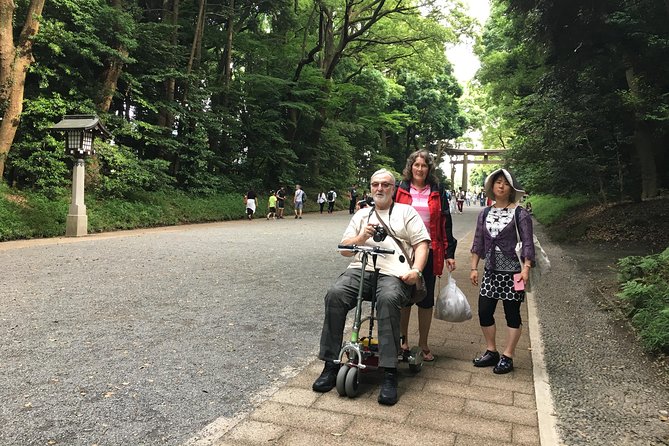
Meiji Jingu is dedicated to Emperor Meiji and Empress Shoken. It sits beside busy Harajuku Station, yet the shrine area feels far removed from the traffic and shopping streets.
The scheduled visit is 50 minutes, the longest stop on the tour. That gives you time to take in the approach, see the shrine setting, and listen to explanations about Shinto customs and architecture. The guide can also help distinguish the shrine from Senso-ji, which is Buddhist.
Mobility needs can vary greatly here. The tour is designed around accessible routes, but the site is large and the approach may require more rolling or walking than a quick city viewpoint. Use the private format to set a comfortable pace. If fatigue is building, tell your guide early rather than waiting until the end of the visit.
This is also where the day’s mix works well. You have already seen commercial streets and a major intersection. Meiji Shrine gives you a quieter cultural stop without leaving the city center.
Omotesando closes with Tokyo style
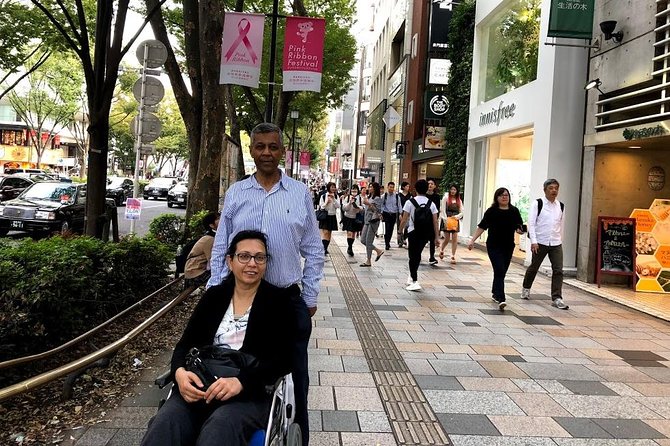
The final listed stop is Omotesando, a tree-lined boulevard in the Aoyama area running through parts of Shibuya and Minato wards. It is known for fashion, design, and polished storefronts, giving the day a stylish finish.
The stop lasts about 20 minutes. You are likely to see the avenue and its architecture rather than make a full shopping circuit. The boulevard is sloped, so your guide’s route planning and your own energy level matter here.
Omotesando is a useful ending because it shows another side of Tokyo. Asakusa gives you temple gates and traditional shops. Shibuya gives you crowds and pop culture. Omotesando gives you a more refined urban district. In one day, you get a broad sense of how different Tokyo can feel from one neighborhood to the next.
Train travel is part of the lesson
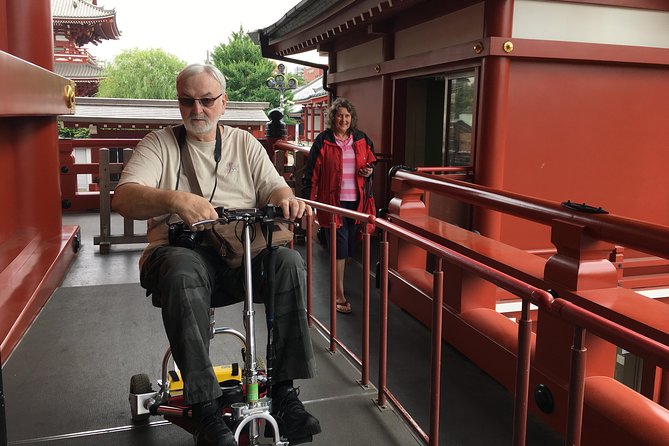
The included train tickets are more important than they may first appear. You are not being driven from one attraction to another. You are using Tokyo’s public transport, with a guide helping you manage stations and accessible routes.
The experience can be especially valuable if you want to keep using trains after the tour. Guides have helped groups get tickets, navigate stations, and arrange ramp assistance. Station attendants may provide slope ramps when needed, but the guide remains with your group and helps coordinate the journey.
Still, train travel takes effort. Stations can involve distance, waiting, and crowded areas even when elevators are available. The advertised moderate fitness requirement should be taken seriously. A caregiver should be prepared to assist with personal needs, and you should tell the operator about your chair or mobility equipment before the day.
Guide quality is central to the value
The guide can make or break this experience. The strongest pattern from the supplied feedback is practical care rather than a scripted lecture. Fumiko is praised for keeping track of a wheelchair user in crowded Tokyo and making sure the person could see each site. Yumi is praised for choosing routes with fewer steps when legs became tired.
Kaori is described as organized and quick to adjust the itinerary. She also helped with a lunch recommendation, although food and drinks are not included. Emiko guided a 96-year-old using a rollator-wheelchair combination and helped the group learn how to seek wheelchair support in the subway.
Michiko helped make train travel less intimidating, while Keita Mizuri was praised for his friendly manner. These names do not guarantee who you will receive, but they show the type of guide experience associated with the tour. The best use of your guide is to be clear at the start about rolling ability, transfer needs, rest breaks, preferred attractions, and how much time you want in crowded places.
Is $191.08 a fair price?
At $191.08 per person, this is not the cheapest way to see Tokyo. You are paying for a private guide, train tickets, hotel transfers within the 23 wards, and a full day of route planning.
The value improves if you would otherwise need to research accessible stations, arrange each train transfer, and work out which sights can be visited without stairs. A private guide can also save energy by choosing a better sequence and adjusting the plan when needed.
The price does not include meals, drinks, or private vehicle transport. If trains are not suitable for your group, a taxi, car, or bus can be arranged for an extra fee. That additional cost should be part of your budget from the start.
I would see this as a practical service rather than a bargain sightseeing package. It makes the most sense for a wheelchair user and caregiver who want a broad first look at Tokyo without handling every transport problem alone.
Who should book this experience?
I would recommend it to a pair or small family group that wants major Tokyo sights in one day and needs a guide who understands mobility concerns. It suits first-time visitors especially well, since the route covers old Tokyo, modern Tokyo, shrine culture, shopping streets, and the rail system.
It can also work for a mixed-mobility group. The guide can adjust the pace, shorten a stop, or change the route when needed. The private setting is much better for that than a large shared excursion.
I would hesitate if you want a slow day with long meals, detailed temple visits, or extensive shopping. The schedule covers many districts, and the city itself can be tiring. I would also think twice if your group cannot manage moderate physical activity or if you need fully private transport throughout the day.
Free cancellation is available if you cancel at least 24 hours before the start time. The tour requires a minimum of two people, including caregivers, and the minimum age is six.
Should you book this accessible Tokyo day?
Book it if your main goal is to see a wide range of Tokyo with help from a private guide, especially if trains, crowds, and station routes worry you. The combination of Asakusa, Senso-ji, Sumida Park, Shibuya, Meiji Shrine, and Omotesando gives you a solid first-day overview.
Before booking, confirm your hotel pickup, describe your wheelchair or rollator clearly, and ask how much walking or rolling your group should expect. If you are ready for a full, active day and value expert route help more than a low price, this is a strong choice.
FAQ
How long does the accessible Tokyo tour last?
The tour lasts approximately seven hours and begins at 9:30 a.m.
Where does the tour start?
The listed meeting point is the Asakusa Culture Tourist Information Center at 2-chome 18-9 Kaminarimon, Taito City, Tokyo. Hotel pickup is also offered within Tokyo’s 23 wards, so confirm the exact arrangement when booking.
Is hotel pickup and drop-off included?
Yes. Hotel pickup and drop-off are included for locations within Tokyo’s 23 wards.
Are train tickets included?
Yes. Train tickets are included in the tour price. Private taxis, cars, and buses are not included and are available for an extra fee.
Is this a private tour?
Yes. Only your group takes part in the activity.
What attractions are included?
The planned stops include the Asakusa Culture Tourist Information Center, Nakamise Shopping Street, Senso-ji Temple, Sumida Park, Shibuya Crossing, Shibuya Cat Street, Meiji Jingu Shrine, and Omotesando.
How many people are required to book?
A minimum of two people is required per booking, and caregivers count toward that minimum.
Can I cancel for a full refund?
Yes, if you cancel at least 24 hours before the experience start time. Cancellations or changes made less than 24 hours before the start time are not accepted for a refund.
Newly reviewed around Tokyo
- Tokyo Asakusa:Calligraphy & Make T-shirt Activity★ 5.0 · 62 reviews
- Intercity Shuttle, Tokyo to Haneda /Narita /Yokohama /Makuhari★ 5.0 · 5 reviews
- 1 Hour Travel around Tokyo with a Professional Photographer★ 5.0 · 3 reviews
- Travel Tokyo with Your Own Personal Photographer★ 5.0 · 43 reviews
- Train in Samurai Swordsmanship and Defeat the Demon in Tokyo★ 5.0 · 5 reviews
- Shuttle Van 6hr Tokyo Tour to-and-from Tokyo, Yokohama and Narita★ 5.0 · 9 reviews
- Kickboxing & Body Training with EX-Pro Fighter★ 5.0 · 4 reviews
- Traditional Japanese Knife Sharpening Class★ 5.0 · 18 reviews
Full-Day, compared.
Mount Fuji Full-Day Private Tour from Tokyo (Customizable)
Read our review →
Mt. Fuji, Hakone Full-Day Private Tour with English Driver Guide
Read our review →