
Reviewed · TOKYO
Explore Local Tokyo: Buddhism & Shinto
Monzennakacho offers a side of Tokyo that many visitors miss: quiet temple grounds, Shinto traditions, old water channels, and the local pride of East Tokyo’s Shitamachi district. The most memorable part is the chance to watch a Buddhist fire ceremony, a daily ritual that is difficult to understand from a guidebook alone.
I like the maximum group size of six, which gives you room to ask questions. I also like the focus on manners and meaning, not just architecture. Manami, the guide, brings academic training and a personal connection to the area. The main drawback is the short running time, about 1 hour and 40 minutes, so this is a focused introduction rather than a full neighborhood tour.
Key points to know before booking
- See Monzennakacho through local eyes: Learn why Shitamachi residents call themselves Edokko and take pride in supporting old Edo.
- Start with a café presentation: The tour opens with a short explanation before you begin walking.
- Compare Buddhism and Shinto: Visit Fudo-son Temple and Tomioka Hachimangu Shrine while learning how the two traditions differ.
- Watch for the Buddhist fire ritual: A daily ceremony is included at no extra charge, though the exact viewing conditions are not specified.
- Keep the group personal: No more than six people can join, making questions and discussion easier.
- Plan for a compact outing: The tour lasts about 1 hour and 40 minutes and returns to Monzen-nakacho Station.
Why Monzennakacho makes a good Tokyo stop
Tokyo can feel enormous and hurried. Monzennakacho gives you a slower look at the city, especially if you have already seen the major districts and want something tied to everyday religious practice.
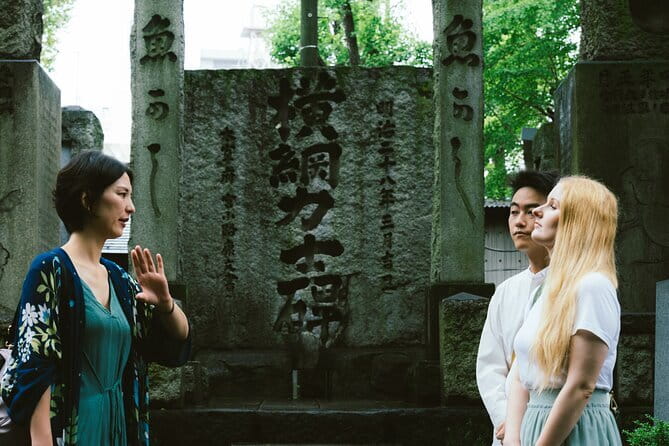
The area belongs to Shitamachi, the eastern part of Tokyo located in a delta between two large rivers. That setting helped shape local work, trade, and community life. The people of this district call themselves Edokko. The word carries a sense of local character: not wealthy or fancy, but proud of the people who helped build and support Edo, the former name of Tokyo, for more than 250 years.
That context matters. You are not simply ticking off two religious buildings. You are learning why the neighborhood developed as it did and why residents see their identity as separate from Tokyo’s more polished central districts.
I appreciate that the tour begins with this social and geographic background. Without it, a water channel may look like an ordinary strip of water and a shrine may seem like one more stop on a long sightseeing list. With the explanation, both become part of the area’s story.
Other Tokyo days people book alongside this one:
- Mt Fuji and Hakone 1-Day Bus Tour Return by Bullet Train
★ 5.0 · 26,383 reviews - 1-Day Tokyo Bus Tour
★ 5.0 · 14,250 reviews - Tokyo: teamLab Planets TOKYO Digital Art Museum Entry Ticket
★ 4.6 · 9,779 reviews
The café introduction gives you useful context
Your meeting point is Monzen-nakacho Station, at 2 Chome-4 Monzennakacho in Koto City. From there, you first go to a café, where Manami gives a short presentation before the walking portion begins.
This opening is a smart use of time. Religious customs can be hard to explain while standing in a busy public space, and a brief orientation helps you notice what comes next. You can get the basic terms and local setting before reaching the temples and shrine.
The presentation is also a good point to ask questions. If you are unsure about the difference between a Buddhist temple and a Shinto shrine, or how to behave at each, ask early. The tour is built around explanation, so you should use the small group to clear up anything that feels confusing.
The café stop does mean this is not a nonstop walking route. If you prefer a tour that begins immediately with photographs and sightseeing, the introduction may feel slow. I see it as a useful trade: a few minutes of preparation can make the religious sites much easier to read.
Water channels explain the Shitamachi economy
One of the first subjects is the area’s water. Monzennakacho’s position between two large rivers created unusual geographic conditions and helped shape the local economy.
The tour does not treat the waterways as decoration. Instead, Manami connects them with the practical life of Shitamachi and with the pride of the Edokko. That is valuable because Tokyo’s past is often presented through grand landmarks, while the city’s growth also depended on ordinary districts built around transport, work, and community.
This is a good example of what you are paying for. You could walk through Monzennakacho alone, but you might pass the channels without understanding why they matter. A guide turns a simple physical feature into a clue about the district’s development.
Do not expect a long waterfront excursion. The tour lasts less than two hours, and the supplied details describe the water channels as one theme rather than a separate extended stop. Think of this part as neighborhood orientation, not a full historical walking route.
Fudo-son Temple brings Buddhism into focus
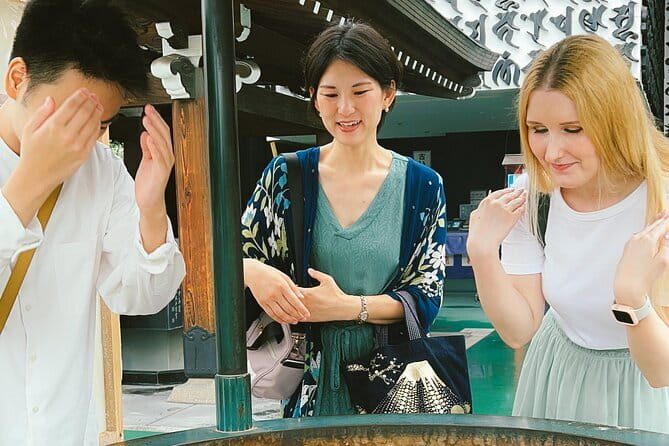
Fudo-son Temple is the main Buddhist stop. Here, Manami explains Buddhist practices, local customs, and the manners expected at religious sites.
For many people, this may be the most useful part of the tour. Japanese temples and shrines can look peaceful and familiar, yet the rituals are not always obvious. You may know that you should be respectful, but still wonder what to do with your hands, when to bow, or how temple customs differ from shrine customs.
The tour includes a free visit to a Buddhist daily ritual. There is also an opportunity to watch a fire ceremony at a local Buddhist temple. The information does not promise that every booking will see every part of the ritual, so treat it as a possibility rather than a guaranteed performance. If the ceremony is taking place during your visit, it can provide a powerful look at living religious practice rather than a display arranged for sightseeing.
Manami’s role is especially important here. One person who joined after visiting Japan more than 20 times considered this tour among the best of many they had taken, crediting Manami’s PhD-level academic background and personal passion. That does not mean the tour is an academic lecture. It means you can expect more than a few memorized facts.
The temple visit also calls for proper behavior. Follow Manami’s directions, keep your voice low, and watch what local worshippers are doing before taking photographs. Small coins for offering boxes are not included, and offering is not required, so do not feel pressured to contribute.
A completely different kind of day in Tokyo:
- Mt Fuji & Hakone Cruise, Drum Show Bullet Train 1 Day from Tokyo
★ 4.0 · 7,413 reviews - Tokyo: Shinjuku Food Tour (13 Dishes at 4 Local Eateries)
★ 5.0 · 6,603 reviews - Tokyo Mt Fuji 5th St & Hakone Cruise Bus Tour w/Bullet Train
★ 4.4 · 5,024 reviews - Flagship 2-Hours Official Street Go-Kart Tour – Tokyo Bay Shop
★ 5.0 · 4,974 reviews
Tomioka Hachimangu Shrine shows the Shinto side
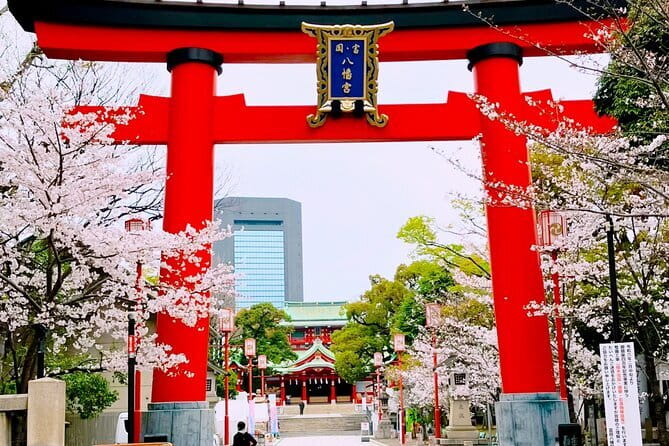
The route also includes Tomioka Hachimangu Shrine, giving you a direct comparison with Buddhism.
The value here is contrast. A temple and a shrine may both have gates, sacred spaces, and visitors who pause to pray, but they belong to different religious traditions. Manami explains those differences and the manners connected with each setting.
You should come ready to listen rather than expect a large sightseeing spectacle. The supplied details do not promise special events, exhibits, or a long visit inside the shrine grounds. The strength of this stop is the explanation. Once you know what separates Shinto practice from Buddhist practice, other religious sites across Japan become easier to understand.
I like the way the two traditions are presented together. If you visit temples and shrines on your own, it is easy to label everything simply as Japanese religion. This tour gives you a basic framework that you can use for the rest of your trip.
A small group changes the feel of the walk
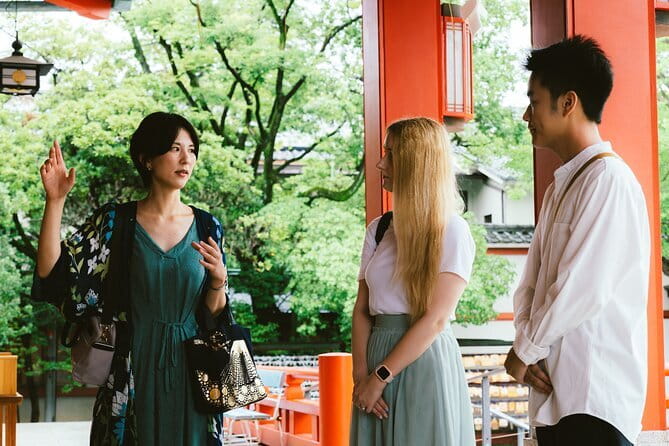
The group is limited to six people. That is a major benefit for a tour based on questions, observation, and religious etiquette.
In a large group, you may hear the guide but hesitate to interrupt. Here, you should be able to ask about a ritual, a building, or a custom as it comes up. Manami’s patient and generous approach, noted by people who spent time with her, also suits a personal format.
A small group does not guarantee that every discussion will match your interests. If one person has many questions about Buddhism, for example, less time may remain for neighborhood details. Still, the six-person limit gives this outing a more flexible feel than a standard coach tour.
The guide’s academic background is another plus for curious visitors. One person specifically praised the depth and passion Manami brought to the visit, while another found the tour helpful preparation for seeing other sites in Japan. That is the right way to view the experience: not as a complete course in Japanese religion, but as a clear starting point that improves the rest of your sightseeing.
Timing, meeting point, and practical planning
The tour lasts approximately 1 hour and 40 minutes and ends back at the meeting point. That makes it easy to fit into a morning or afternoon without giving up half a day.
You meet at Monzen-nakacho Station in Koto City. The location is near public transportation, and a mobile ticket is available. Since the tour returns to the same place, you do not need to plan a complicated pickup or figure out where the walk finishes.
Wear shoes and clothing suitable for a short urban walk, though no special fitness requirement is stated. Most people can participate, and service animals are allowed. The route includes religious sites, so modest, respectful clothing and a quiet manner are sensible choices.
Build in a little flexibility around the start time. The tour includes a café presentation and religious sites, and a ceremony may be underway. The stated duration is approximate, so avoid scheduling an important attraction immediately afterward.
The only extra money specifically mentioned is small change for offering boxes at temples and shrines. You do not have to make an offering, but carrying a few coins gives you the choice.
Is $58.53 a fair price?
At $58.53 per person, this is not the cheapest way to take a walk through East Tokyo. You can visit public streets, temples, and shrines without paying an admission fee. The question is what you want from the outing.
The price is easier to justify if you value explanation. You are paying for a small group, a guide with strong academic and local knowledge, a café orientation, and help understanding religious manners. The Buddhist daily ritual is included at no extra cost, and the chance to see a fire ceremony adds something you may not arrange easily on your own.
The value is also stronger for a first visit to Japan. If you already know the basic differences between Buddhism and Shinto, you may find the content less essential. Even experienced Japan visitors can still benefit from a more local look at Monzennakacho, but the tour’s strongest audience is someone who wants cultural context rather than another famous landmark.
At less than two hours, the cost works best as a focused add-on. Pair it with other plans in East Tokyo, but do not book it expecting a full-day walking tour or an extended temple study.
Who should book this experience?
I would choose this tour if you want to understand what you are seeing at Japanese religious sites. It suits curious first-time visitors, repeat visitors looking for a different part of Tokyo, and anyone who prefers a small group over a large guided procession.
It is especially useful if you feel uncertain about temple and shrine etiquette. Manami explains those customs directly, and the comparison between Fudo-son Temple and Tomioka Hachimangu Shrine gives you a practical base for later visits.
Families and mixed-interest groups may also appreciate the short length. The tour is long enough to introduce the area without demanding a full day, though younger children who dislike explanations may not enjoy the café presentation or ritual discussion.
You may want to skip it if your priority is major architecture, shopping, food, or a packed list of famous Tokyo sights. This outing is about local setting, religious practice, and interpretation. Its rewards are quiet and thoughtful rather than flashy.
Should you book the Monzennakacho tour?
Book it if you want a personal introduction to Buddhism, Shinto, and an East Tokyo neighborhood that many sightseeing plans overlook. The small group, the daily Buddhist ritual, and Manami’s depth of knowledge make the $58.53 price reasonable for visitors who want more than photographs.
Before booking, be comfortable with the short schedule and the possibility that the fire ceremony may depend on timing. If those limits suit you, this is a useful, compact way to gain cultural footing early in your Japan trip.
Free cancellation is available when you cancel at least 24 hours before the start time. Changes or cancellations inside that window are not accepted for a refund.
FAQ
Where does the tour begin?
It begins at Monzen-nakacho Station, at 2 Chome-4 Monzennakacho, Koto City, Tokyo 135-0048, Japan.
Where does the tour end?
The activity ends back at the meeting point.
How long does the experience last?
The tour lasts approximately 1 hour and 40 minutes, within the stated range of one to two hours.
How many people can join?
The maximum group size is six people.
Who leads the tour?
The experience is provided by Manami. Information supplied about her notes that she holds a PhD and guides visitors through the area’s Buddhist, Shinto, and local cultural traditions.
What places are included?
The route includes Monzennakacho, Fudo-son Temple, and Tomioka Hachimangu Shrine. It also covers local water channels and the Shitamachi district.
Is a Buddhist ceremony included?
A free visit to a Buddhist daily ritual is included. There is also an opportunity to watch a fire ceremony at a local Buddhist temple, but the information does not state that the fire ceremony is guaranteed on every departure.
Do I need to pay temple or shrine admission?
Admission tickets are listed as free. Small coins for offering boxes are not included, and making an offering is optional.
Is the experience accessible by public transportation?
Yes. The meeting point is at Monzen-nakacho Station, and the activity is near public transportation.
What is the cancellation policy?
You can receive a full refund if you cancel at least 24 hours before the experience start time. Cancellations or changes made less than 24 hours before the start are not accepted for a refund.
Newly reviewed around Tokyo
- Ueno and Yanaka Culture Art Walking Tour in Old Tokyo★ 5.0 · 5 reviews
- Sumo Training Watching Experience in Tokyo★ 4.5 · 8 reviews
- Giant Sushi Cooking Class: Make a 1.5m Sushi Roll in Tokyo★ 5.0 · 9 reviews
- 2 Hours Mochi &Nerikiri Making & Matcha Class in Bunkyo★ 5.0 · 21 reviews
- Japanese Sweets (Mochi & Nerikiri) making at a Private studio★ 5.0 · 22 reviews
- Mt Fuji and Kawaguchiko Private Tour★ 5.0 · 10 reviews
- Half-Day Local Tokyo Tour in Adachi Market and Shibamata★ 5.0 · 16 reviews
- Private Full-Day Tour of Tokyo with Hotel Pickup★ 5.0 · 3 reviews