
Reviewed · TOKYO
Celebrate Unique Japanese New Year Tradition Culture Festivity
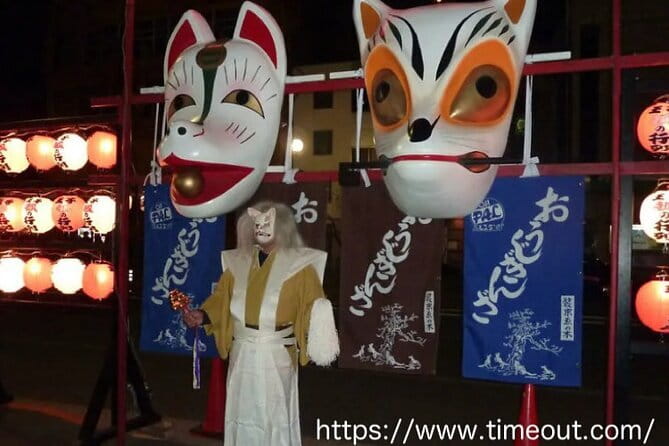
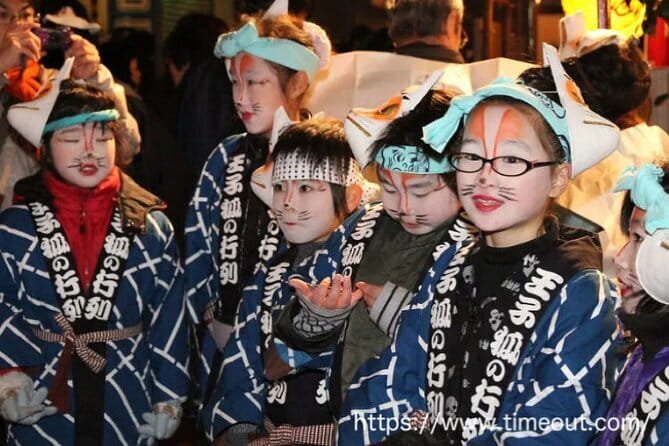
Oji’s New Year celebration turns an old fox legend into a real street event. More than 200 participants carry yellow lanterns, wear kimonos, and appear in fox masks or makeup as they make their way toward Oji Inari Shrine. The story comes from a local tale, later pictured in ukiyo-e art, about foxes gathering at the shrine on New Year’s Eve.
I like the mix of three local shrines and a Japanese host, followed by an izakaya stop with sake served in hinoki cypress cups. I also like that the evening leads you to the procession itself rather than leaving you to hunt for the best viewing spot. The main caution is the group-size problem: one account describes more than 50 people, even though the stated maximum is 30, so you should confirm the current headcount before paying.
Key points
- Fox folklore becomes a real New Year procession: Look for yellow lanterns, fox masks, kimono, fox makeup, and traditional dances.
- Three shrines before the party: The host provides local religious and cultural context as you walk through Oji.
- Sake with an expert: A sake sommelier explains brewing before a tasting with five kinds of snacks.
- Drinks are included: Adults receive free-flow sake, beer, or other alcoholic drinks, while underage participants receive soft drinks.
- The late-night timing needs checking: The listed start time is 8:30 am, but the program is described as a New Year’s Eve event leading to midnight.
- Expect some crowd risk: The advertised limit is 30 people, but a past booking reportedly exceeded 50.
Why Oji’s fox story makes this New Year outing different
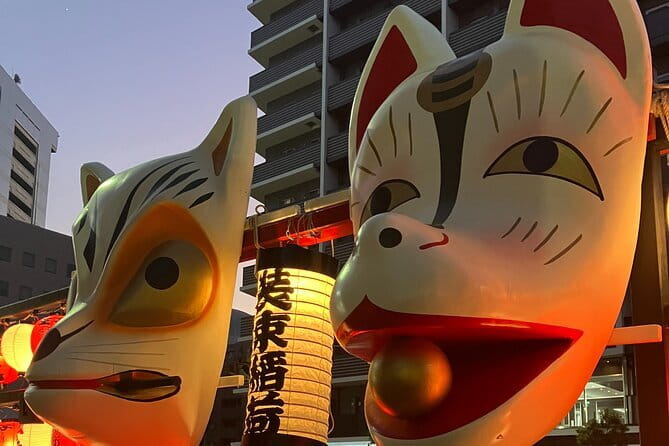
Tokyo has plenty of New Year shrine visits, but Oji adds a strong local story. According to the legend, foxes from across the region came to Oji Inari Shrine on New Year’s Eve. Their mysterious lights were said to resemble foxfire, a strange glow associated with fox spirits in Japanese folklore.
That tale was preserved in an ukiyo-e image by Utagawa, and local residents later built a modern pageant around it. The result is not a staged theater show made for tourists. It is a community event with local participants, traditional dress, lanterns, masks, and music.
That distinction matters. You are not simply watching a performance in a hall. You are moving through the neighborhood toward a public celebration connected to a real shrine and a local custom. The evening should feel more grounded than a generic New Year party, though it also means crowds, cold weather, noise, and less control over the viewing conditions.
The procession includes traditional dances, with the lion dance as one of the major highlights. The lion dance is vigorous and theatrical, and it gives the final part of the evening a strong visual finish. You will also see participants in fox makeup and masks, which ties the modern event back to the old legend.
Other Tokyo days people book alongside this one:
- Mt Fuji and Hakone 1-Day Bus Tour Return by Bullet Train
★ 5.0 · 26,383 reviews - 1-Day Tokyo Bus Tour
★ 5.0 · 14,250 reviews - Tokyo: teamLab Planets TOKYO Digital Art Museum Entry Ticket
★ 4.6 · 9,779 reviews
Meeting at JR Oji Station and visiting three shrines
The tour begins at the north entrance of JR Oji Station, at 1-chōme-10-18 Ōji, Kita City. Oji is in northern Tokyo, so plan your route carefully and allow enough time to find the correct station exit. The activity returns to the same meeting point at the end.
Your host takes you to three local shrines. The exact shrine names and walking order are not provided, so you should not expect a fixed list of famous monuments. That is part of the appeal. The visit is designed around local New Year customs, not a greatest-hits tour of Tokyo.
At each shrine, your host can help explain what you are seeing and how shrine visits fit into the New Year period. The value here is context. Without some guidance, a shrine visit can seem like a quick stop to bow, clap, and leave. With a host, you have a better chance to understand the setting and the role these places play in the local celebration.
Still, keep your expectations realistic. The shrine portion is not described as a long guided lecture or a private religious ceremony. You will be part of a walking group, and the schedule must eventually move on to the izakaya and procession. If you want extended time for photography or quiet reflection, you may find the pace brisk.
One practical concern is group behavior. A group of 20 to 30 people can already feel large in a compact shrine space. One past account described a group of more than 50 and felt that it took over the shrines and attracted unwanted attention. That is a serious issue for a cultural tour. Confirm the current group limit with the operator, especially since the stated maximum is 30 but the earlier group was reportedly larger.
The izakaya stop, sake lessons, and hinoki masu cups
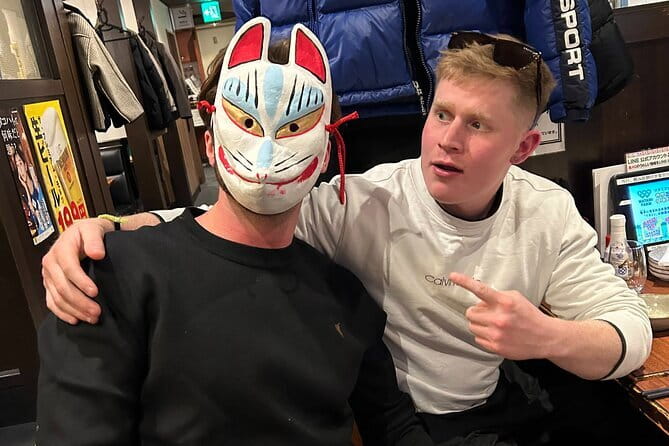
After the shrine visits, the group goes to a cozy izakaya. An izakaya is a Japanese drinking and dining place, usually more casual than a formal restaurant. Here, the evening shifts from walking and sightseeing to eating, conversation, and sake.
A sake sommelier explains how sake is brewed before the tasting begins. The supplied details do not list the sake brands or styles, so you should not book this expecting a particular premium label. The useful part is the chance to learn how the drink is made and then compare several pours in one sitting.
Sake is served in hinoki cypress masu cups. A masu is a small wooden measuring cup, traditionally linked to rice measurement and later used for serving sake. Hinoki adds a distinct woody scent, making the serving style part of the experience rather than just a way to hold a drink.
The tasting comes with five kinds of snacks. The listed examples include edamame, fried chicken, and French fries. That combination tells you what kind of evening this is: informal, filling, and social rather than a refined tasting menu. The snacks help absorb the alcohol and give you something familiar if you are new to Japanese drinking culture.
Adults receive free-flow sake, beer, or other alcoholic beverages. Soft drinks are provided for participants under the legal drinking age. The listing does not state the drinking-age cutoff, so ask the operator if you are booking for a mixed-age group.
The all-you-can-drink arrangement can add value, but only if you actually plan to drink. At $106.74 per person, the price covers the host, shrine visits, sake instruction, food, drinks, and access to the procession route. For someone who would otherwise pay separately for several drinks and a meal, that package may be reasonable. For a nondrinker, the value is weaker because the food and soft drinks are likely to account for less of the cost.
You should also pace yourself. The procession is the main event, and you do not want to reach it tired or unsteady. Sake, beer, and other drinks can add up quickly, especially when they are included without a fixed limit.
Reaching the fox procession before midnight
The tour takes you to the starting point of the fox procession as midnight approaches. This is one of the strongest practical features because Oji’s New Year event can be confusing when crowds gather. You are not simply told to meet somewhere near the shrine at midnight. The host brings the group to the place where the procession begins.
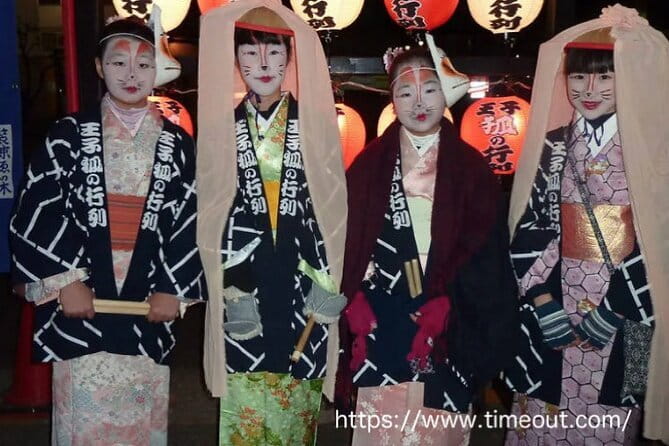
Expect a public celebration rather than a controlled show. More than 200 participants take part, carrying yellow lanterns that represent foxfires. Some wear kimonos, while others use fox masks or makeup. The effect should be striking, especially after dark, when the lanterns create the visual link to the old fox story.
The traditional dances are part of the finale, including a powerful lion dance. The exact viewing distance, length of the performance, and procession route are not specified. That means your view may depend on crowd conditions and where the group is placed. You may be near the action, but you should not assume reserved seating or a guaranteed front-row position.
The event is outdoors, and the experience requires good weather. Dress for a long winter night in Tokyo and wear comfortable shoes. That is practical advice rather than an added tour feature: the evening includes shrine walking, time at the izakaya, and standing near a procession. The provided information does not mention heated indoor viewing, seating, or storage for luggage.
The timing deserves special attention. The tour is described as a New Year’s Eve activity that builds toward midnight, yet the meeting information gives a start time of 8:30 am. A three-hour tour beginning in the morning cannot also lead directly to a midnight procession. This is almost certainly a scheduling detail that needs confirmation, but you should not assume. Ask the operator for the exact meeting time and full evening schedule before booking transport or accommodation around it.
A completely different kind of day in Tokyo:
- Mt Fuji & Hakone Cruise, Drum Show Bullet Train 1 Day from Tokyo
★ 4.0 · 7,413 reviews - Tokyo: Shinjuku Food Tour (13 Dishes at 4 Local Eateries)
★ 5.0 · 6,603 reviews - Tokyo Mt Fuji 5th St & Hakone Cruise Bus Tour w/Bullet Train
★ 4.4 · 5,024 reviews - Flagship 2-Hours Official Street Go-Kart Tour – Tokyo Bay Shop
★ 5.0 · 4,974 reviews
Is $106.74 a fair price?
The price is $106.74 per person. That is not a bargain-priced shrine walk, but the package includes several elements that would otherwise be separate: a host, three shrine visits, an izakaya meal of snacks, a sake explanation, sake tasting, and free-flow drinks.
For a drinker who wants an organized New Year’s night, the price can make sense. You receive a cultural introduction, food, alcohol, and help getting to the procession. The local event itself is the real reason to book, and the izakaya portion gives the evening a place to gather before the crowds and midnight activity.
The value is less clear for anyone who does not drink alcohol. Soft drinks are included, but the package is built around sake and other alcoholic beverages. You may prefer to visit the shrines independently and watch the procession without paying for the tasting and free-flow drinks.
There is also a premium for convenience. Tokyo’s trains and neighborhoods are usually manageable, but New Year’s Eve crowds can make meeting friends and finding the correct shrine entrance harder than expected. If the host keeps the group organized and brings you to the procession’s starting point, that service has real value.
The group issue affects the price, too. A small group can make shrine visits more respectful and allow you to hear the host. A group of more than 50 changes the experience completely. You should ask whether the group will be divided, how many people are assigned to each host, and how the maximum of 30 is being enforced.
Who will enjoy this Oji New Year experience?

I would recommend this outing to you if you want a social, guided New Year celebration with a clear local theme. It suits first-time visitors who would rather have a host explain the shrines and lead them to the procession than plan every detail alone.
It is also a good match for adults who enjoy sake and casual Japanese food. The izakaya setting, wooden masu cups, snack pairings, and free-flow drinks make the evening feel informal and festive.
Families can participate, since soft drinks are provided for people under the drinking age. Still, the late-night timing needs confirmation, and the outdoor procession may not work well for young children if the event involves long periods of standing.
I would be cautious about booking if you want a quiet, private, or highly polished cultural experience. This is a public neighborhood celebration. You may deal with crowds, limited space at shrines, changing views, and a large group.
It may also disappoint you if you are looking for a detailed tour of famous Tokyo landmarks. The focus is Oji, its shrines, its sake stop, and its fox procession. That narrower focus is a strength for people interested in local tradition, but not for someone trying to cover the city’s major sights.
Booking details that matter before you commit
Confirmation is sent within 48 hours, subject to availability. The activity accepts mobile tickets, and it is near public transportation. Most people can participate, but the tour is not described as a private or fully accessible experience.
Free cancellation is available up to 24 hours before the start time for a full refund. Changes or cancellations made less than 24 hours before the start time are not accepted, and the local time controls the cutoff. If poor weather cancels the event, you are offered another date or a full refund.
Before booking, I would ask three direct questions:
- Is the actual meeting time 8:30 am or an evening time before midnight?
- What is the confirmed maximum group size for this date?
- How many hosts will accompany the group, and will a group larger than 30 be split?
Those questions are especially important here because the schedule and group-size details do not fully agree. The celebration itself sounds distinctive, but clear logistics are part of getting good value from a $106.74 booking.
Should you book the Oji fox celebration?
Book it if you want a New Year’s Eve built around Japanese folklore, shrine customs, sake, and a real local procession. The combination of yellow foxfire lanterns, masks, kimonos, traditional dances, and a lion dance gives this outing a clear identity. The host-led shrine visits and izakaya stop also make it easier to join the celebration without planning every step yourself.
I would hold off until the operator confirms the start time and group size. A well-run group of 30 or fewer could be a memorable way to enter the New Year. A group of more than 50, especially in small shrine spaces, could feel crowded and awkward. For drinkers who value convenience and cultural explanation, the price is defensible. For nondrinkers or visitors who prefer independence, a self-guided visit to Oji may be the better choice.
FAQ
Where does the experience begin?
It begins at the north entrance of JR Oji Station, at 1-chōme-10-18 Ōji, Kita City, Tokyo 114-0002, Japan.
Where does the experience end?
The activity ends back at the meeting point at JR Oji Station.
How long does the experience last?
The listed duration is approximately three hours.
What is included in the price?
The package includes visits to three local shrines, a host, sake instruction, sake tasting, five kinds of snacks, free-flow sake, beer, or other alcoholic drinks for adults, and soft drinks for participants under the drinking age.
Is the activity suitable for people who do not drink alcohol?
Soft drinks are included for people under the drinking age. The supplied information does not specify a separate nonalcoholic price or menu, so ask the provider if you do not drink.
What happens if the weather is poor?
The experience requires good weather. If it is canceled because of poor weather, you are offered a different date or a full refund.
Newly reviewed around Tokyo
- Ueno and Yanaka Culture Art Walking Tour in Old Tokyo★ 5.0 · 5 reviews
- Sumo Training Watching Experience in Tokyo★ 4.5 · 8 reviews
- Giant Sushi Cooking Class: Make a 1.5m Sushi Roll in Tokyo★ 5.0 · 9 reviews
- 2 Hours Mochi &Nerikiri Making & Matcha Class in Bunkyo★ 5.0 · 21 reviews
- Japanese Sweets (Mochi & Nerikiri) making at a Private studio★ 5.0 · 22 reviews
- Mt Fuji and Kawaguchiko Private Tour★ 5.0 · 10 reviews
- Half-Day Local Tokyo Tour in Adachi Market and Shibamata★ 5.0 · 16 reviews
- Private Full-Day Tour of Tokyo with Hotel Pickup★ 5.0 · 3 reviews