
Reviewed · TOKYO RAMEN TOURS AND CLASSES
Breakfast Ramen Tour in Shinjuku, Tokyo
Breakfast ramen is a fine way to see a different side of Shinjuku. Over two hours, you’ll visit two ramen shops, eat three mini bowls totaling about one full serving, and add two gyoza dumplings and a drink. The early start takes you through Kabukicho before the usual crowds arrive.
I like the smart portion sizes and the clear food lesson. You get enough ramen to compare styles without facing three giant bowls before noon. The main drawback is the early meeting time, and the $90 price is high for breakfast if you only measure the food.
Key points
- Three mini bowls let you compare ramen styles without committing to three full meals.
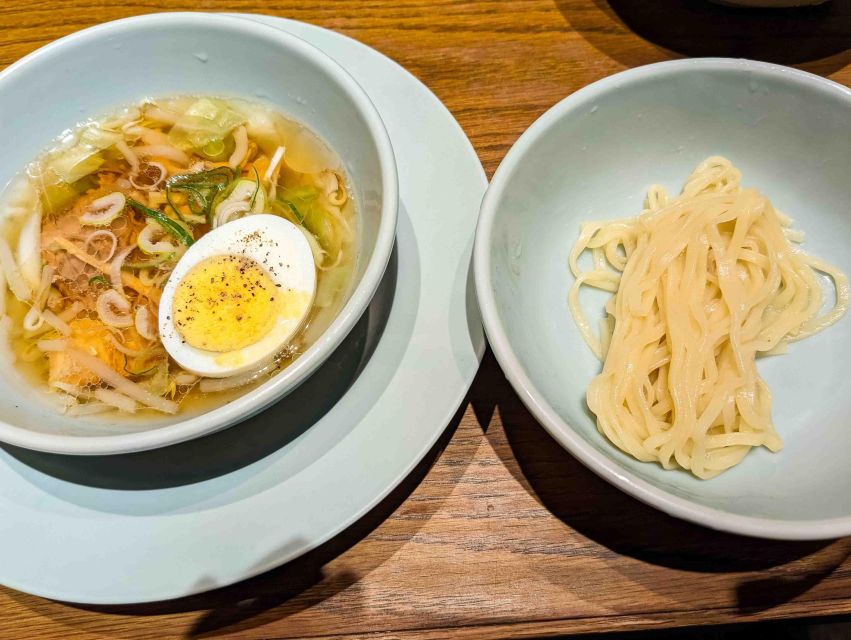
- The first shop focuses on classic Tokyo shoyu ramen, with two mini bowls and a lesson on soy-based broth.
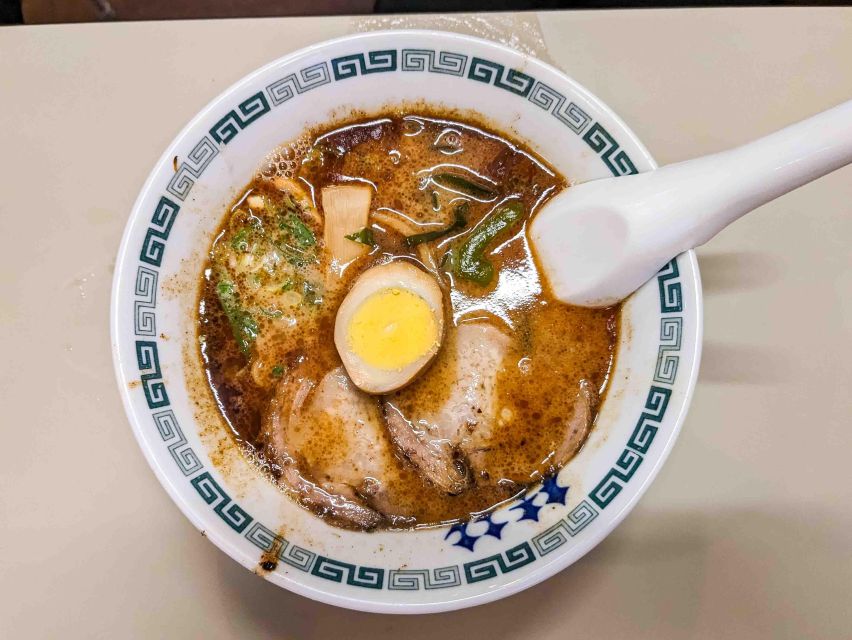
- The second shop adds tonkotsu ramen and two gyoza, giving you a useful contrast in flavor and texture.
- A coffee-shop introduction and quiz give the tour a clear structure before you sit down to eat.
- The early morning timing reveals a quieter Shinjuku, a useful change from the neighborhood’s better-known late-night personality.
- English-speaking guides such as Frank, Daisy, and Deep bring different personalities to the experience, with an emphasis on explanation and conversation.
Starting with ramen before the day gets loud
Most people associate Shinjuku with neon signs, packed trains, and late nights. This tour begins much earlier, when the neighborhood is calmer and the focus is breakfast rather than nightlife.
You meet in front of the 7-Eleven on Yasukuni-dori Avenue, at the entrance to Kabukicho, close to Shinjuku Station’s East Exit. Look for the guide holding a Tokyo Ramen Tours sign. Because Shinjuku Station has many exits and can feel confusing, allow extra time to reach the East Exit.
The exact starting time depends on availability when you book. That matters here. This is not a tour to squeeze in after a slow hotel breakfast. You are choosing it because you are ready to eat early and want food sightseeing before the rest of your day begins.
I like that the tour uses the morning as part of the experience rather than treating breakfast as a simple meal. You get to see Shinjuku at a quieter hour, then continue with the rest of Tokyo while many visitors are only getting started.
More things to do in Shinjuku:
- Tokyo: Shinjuku Food Tour (13 Dishes at 4 Local Eateries)
★ 5.0 · 6,603 reviews - Tokyo Bar Hopping Tour in Shinjuku (All-You-Can-Drink + Dinner)
★ 5.0 · 3,587 reviews - Tokyo: Shinjuku Food Tour (15 Dishes and 4 Eateries)
★ 4.9 · 2,033 reviews
Coffee, ramen basics, and a short quiz
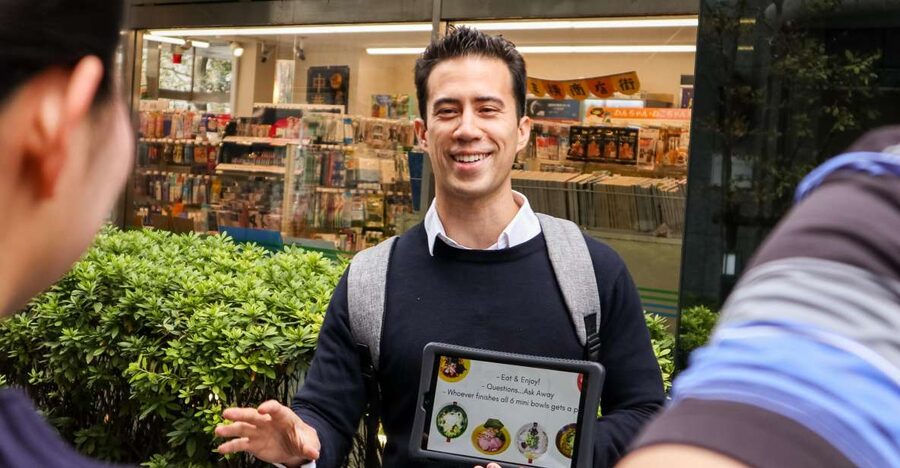
The first stop is a nearby coffee shop. This is where the guide explains the foundations of ramen before taking you into the shops themselves.
You’ll learn about the basic parts of the dish and get an introduction to the difference between shoyu and tonkotsu ramen. Shoyu means soy sauce ramen, while tonkotsu is associated with a pork-bone broth. The point is not just to memorize labels. It gives you a way to notice what changes from bowl to bowl.
The quiz adds a bit of play to the lesson. It also gives the guide a chance to see what you already know. If you have eaten ramen across Japan, you may already recognize some terms. If you are new to the subject, the quiz gives you a simple framework before the tasting begins.
This coffee-shop start also helps pace the morning. You do not immediately rush into a shop, eat quickly, and leave with a blur of flavors. Instead, you begin with context, then use that information at the table.
The guide’s personality matters during this opening. Frank is described as easy to talk to and focused on ramen, while Daisy and Deep have been praised for keeping the conversation friendly and interactive. Guide assignments can vary, so you should not book expecting one particular person, but the tour is conducted in English.
Two bowls of classic Tokyo shoyu ramen
The first ramen shop is the main lesson in classic Tokyo shoyu ramen. Here, you receive two mini bowls rather than one full bowl.
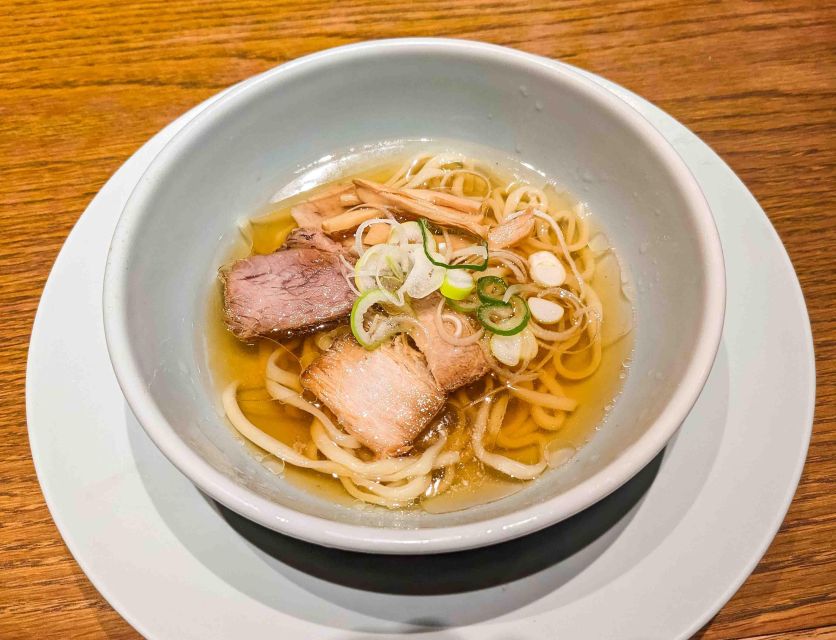
That setup is one of the tour’s best ideas. A standard ramen serving can be filling, especially early in the morning. Two small portions let you compare without turning breakfast into a test of endurance. Each mini bowl is about one-third the size of a full bowl, so the total amount is substantial but manageable.
The guide explains the role of shoyu ramen and places it in the wider story of the dish. You can focus on the broth, noodles, toppings, and overall balance instead of simply eating until the bowl is empty.
I would pay attention to the differences between the two bowls, even if they are both in the shoyu family. Notice how the soy flavor comes through, how the broth feels on your palate, and how the noodles work with it. The tour is designed to help you understand ramen as a group of related styles, not one fixed recipe.
The shop setting is part of the appeal. You are taken to small places that you might not select on your own, particularly if you cannot read the menu or do not know which shops serve breakfast. The guide handles the food focus, while you can concentrate on tasting and asking questions.
There is a practical point here: ramen shops are working restaurants, not staged attractions. The experience is about eating in a real local setting, and the pace may feel brisk. Keep your questions coming, but also be ready to eat while the food is hot.
Tonkotsu, gyoza, and the second style of ramen
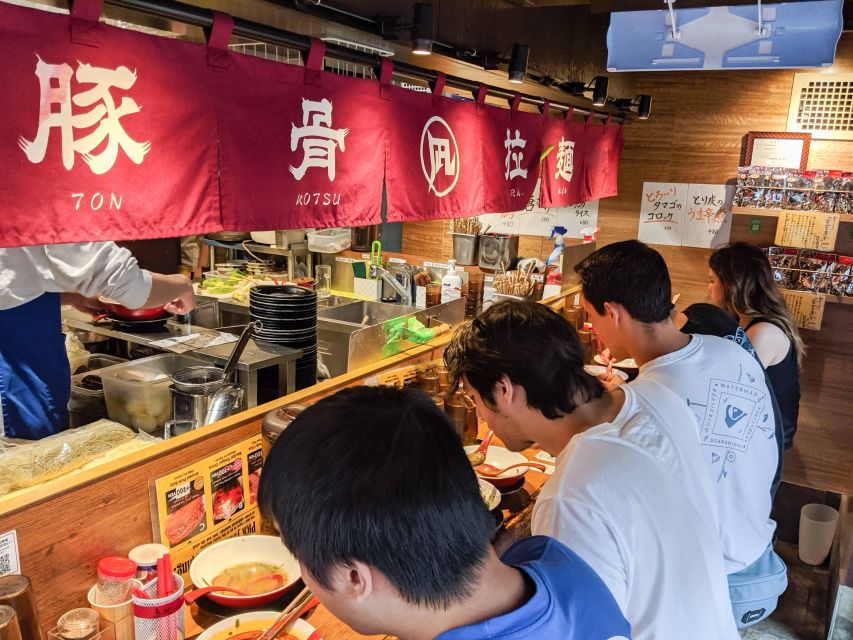
The second shop changes the subject to other ramen styles, with special attention to tonkotsu. You receive one more mini bowl, followed by two gyoza dumplings.
Tonkotsu gives the breakfast a different direction from the first shop’s shoyu focus. The guide explains how pork-bone broth fits into the ramen world, allowing you to compare the two styles rather than treating ramen as one broad category.
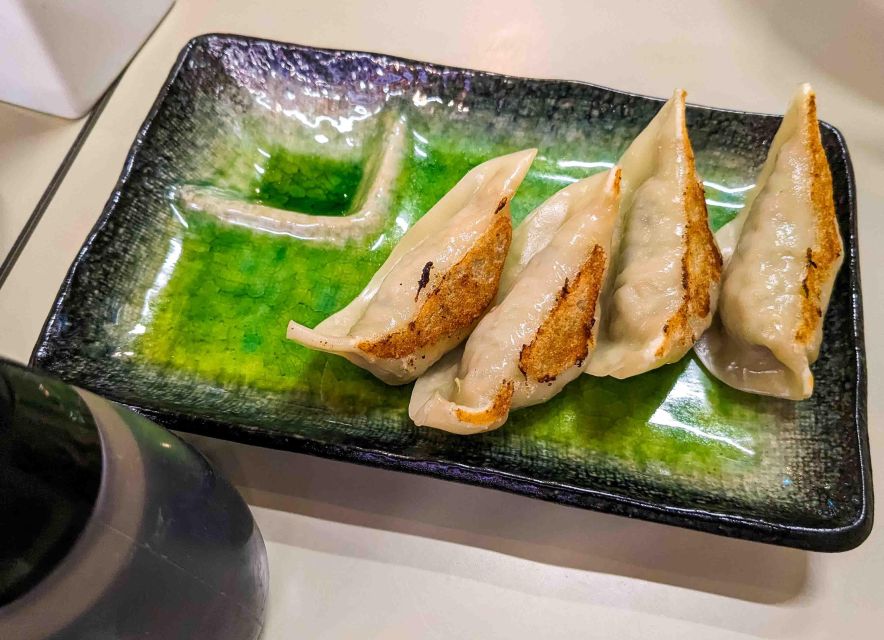
The gyoza provide a welcome change in texture. After three small ramen portions, two dumplings are enough to add variety without making the meal uncomfortably large. You also receive one beverage, which rounds out the breakfast.
The second stop is useful because it widens the lesson. You are not simply visiting two restaurants for the sake of collecting stops. You are tasting a second style and learning why ramen menus can differ so much from one shop to another.
I would not expect a full survey of every regional ramen style in Japan during two hours. The tour concentrates on shoyu and tonkotsu, with other styles mentioned as part of the discussion. That is a sensible limit for a morning outing, but serious ramen fans looking for a broad regional tasting should treat this as an introduction rather than a complete course.
More Tokyo ramen tours and classes:
- Eat and Drink Like a Local: Tokyo Ueno Food Tour-Taverns&Ramen
★ 5.0 · 957 reviews - Ramen & Gyoza Cooking Class in Tokyo with Local Supermarket Visit
★ 5.0 · 823 reviews - Tokyo: Ramen Tasting Tour with 6 Mini Bowls of Ramen
★ 4.9 · 432 reviews - Tokyo: Easy Ramen Cooking Experience in Kabukicho, Shinjuku
★ 4.6 · 321 reviews
What the food portions really mean
The meal includes three mini bowls, two gyoza, and a beverage. Since each ramen bowl is about one-third the size of a standard serving, you are eating roughly the equivalent of a full bowl spread across three tastings, plus the dumplings.
That is a good amount for breakfast. One person described the portions as just right for the morning, and that matches the design of the tour. You can taste several broths and still have room to enjoy lunch later.
The food is the main reason to book, but the $90 price pays for more than the ingredients. You are also paying for a guide who explains the dish, chooses the stops, manages the route, and helps you navigate places you might overlook. The value is strongest if you care about Japanese food and want a guided introduction.
If you are comparing prices with an ordinary ramen breakfast, the tour will look expensive. A self-guided morning at one ramen shop costs far less. The better comparison is with a small-group food experience that includes instruction, multiple tastings, and a guide in a busy part of Tokyo.
Private and small-group options are available. A smaller group should make it easier to ask questions and follow the guide’s explanations, though the exact group arrangement depends on the booking you choose.
The early start is both the point and the catch
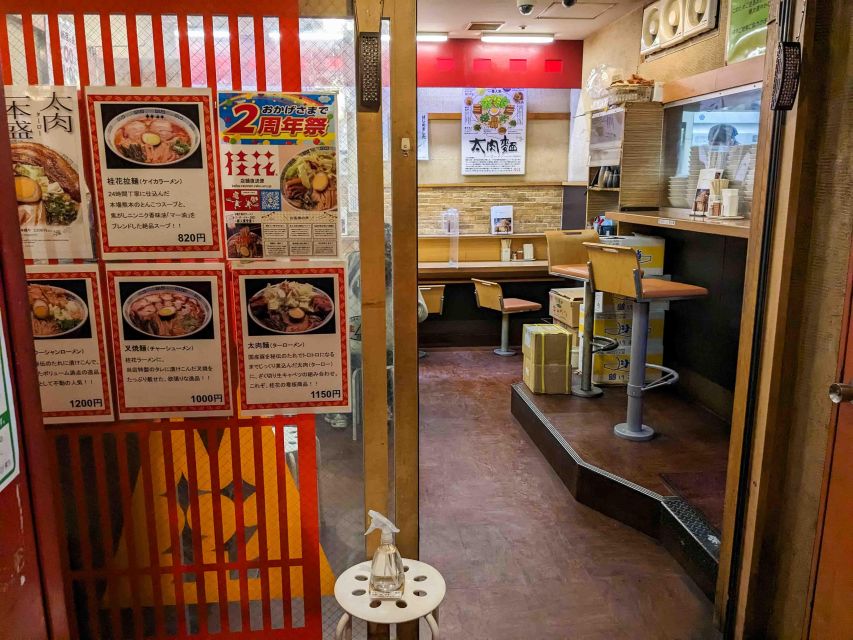
The morning timing gives the tour its character. Shinjuku feels different before the day’s full rush, and you can see Kabukicho in a calmer setting than its famous nighttime image suggests.
That quiet atmosphere is a genuine benefit if you enjoy seeing a neighborhood at more than one hour of the day. It also leaves your afternoon open for museums, shopping, gardens, or another part of Tokyo.
The tradeoff is obvious. You need to be ready to meet early, and the tour does not work well for anyone who wants a relaxed hotel breakfast or a late start after nightlife. The exact start time is not fixed in the information provided, so check the available times before booking.
You should also remember that any train ticket required to reach the meeting point is not included. The meeting point is near Shinjuku Station’s East Exit, but Shinjuku Station is large enough that a few extra minutes can prevent a stressful start.
Guides, conversation, and the learning style
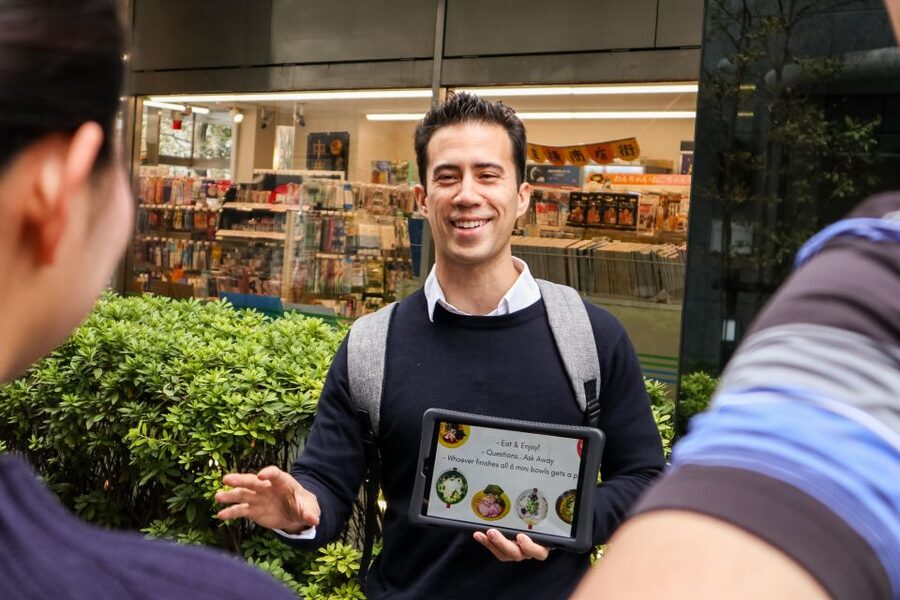
The guide is central to the experience. The tour is conducted in English, and the format encourages questions rather than simply leading you from one restaurant to another.
Several guides have been associated with strong guest experiences. Frank is described as an expert on ramen who is easy to talk to. Daisy is noted for making the food information fun and interactive, while Deep is described as friendly and willing to discuss ramen, Tokyo, and Japan more broadly.
Because guide assignments may change, think of these names as examples of the style rather than a guarantee. What you can count on from the activity details is an English-speaking live guide and a tour built around explanation, tasting, and conversation.
This is especially useful if you have questions about ordering ramen in Japan. You can learn what shoyu and tonkotsu mean, how the styles differ, and why a small shop may be worth visiting even when it is not famous outside the neighborhood.
The tour also suits people who like a little participation. The opening quiz and the back-and-forth at the shops make this more active than a simple food crawl. If you prefer to eat quietly and set your own pace, the guided format may feel more structured than you want.
Who will get the most from this breakfast tour
I would recommend this experience to first-time visitors who want a practical introduction to ramen without spending half a day on a food tour. It is also a good fit for people who enjoy learning the basics behind a dish, not just taking photographs of it.
Ramen fans should find value in the side-by-side tasting, particularly if they have not compared shoyu and tonkotsu in a guided setting. The mini portions also make sense for anyone who wants variety without three full bowls.
Families and groups with mixed levels of food interest may appreciate the short two-hour length. The early finish leaves plenty of time for other plans, and the amount of food is easier to manage than a long lunch tour.
I would think twice if you dislike early starts, avoid pork, or want a broad tasting of regional ramen styles. The supplied information specifically highlights pork-bone tonkotsu and gyoza, so anyone with dietary restrictions should confirm suitability before booking.
Practical details that affect your decision
The experience lasts two hours and costs $90 per person. It includes three mini ramen bowls, two gyoza dumplings, and one beverage. Train tickets, if needed, are separate.
You can cancel up to 24 hours in advance for a full refund, and the reserve-now, pay-later option gives you some flexibility while arranging your Tokyo schedule. Check the available starting times before you commit, since the early hour is a key part of the outing.
The meeting point is in front of the 7-Eleven on Yasukuni-dori Avenue at the Kabukicho entrance, near Shinjuku Station’s East Exit. Your guide will hold a Tokyo Ramen Tours sign.
The activity is available as a private or small-group experience. If the price works for your budget, a smaller format should be appealing because the tour depends on conversation and food explanation rather than sightseeing from a distance.
Should you book the Breakfast Ramen Tour?
Book it if you want to understand ramen as you eat it. The strongest features are the three small portions, the contrast between shoyu and tonkotsu, the two different shops, and the chance to see early morning Shinjuku before it becomes crowded.
At $90, this is not a bargain breakfast. It is a guided food lesson with a meal attached. I think the price makes sense for curious eaters who would not feel confident choosing small ramen shops alone, especially first-time visitors to Tokyo.
Skip it if you want a cheap bowl, a late morning, or a broad tour of every ramen style in Japan. For everyone else, the combination of manageable portions, clear instruction, friendly English-speaking guides, and a quieter view of Shinjuku makes this a well-focused introduction.
FAQ
Where does the Breakfast Ramen Tour meet?
Meet in front of the 7-Eleven on Yasukuni-dori Avenue at the entrance to Kabukicho in Shinjuku, close to Shinjuku Station’s East Exit. The guide will hold a Tokyo Ramen Tours sign.
How long does the tour last?
The tour lasts two hours.
How many ramen bowls are included?
You receive three mini bowls of ramen. Each bowl is about one-third the size of a standard bowl.
What ramen styles will I learn about?
The tour focuses on shoyu ramen, which uses soy sauce, and tonkotsu ramen, which uses pork-bone broth. The guide also discusses other ramen styles.
Is food included in the price?
Yes. The price includes three mini bowls of ramen, two gyoza dumplings, and one beverage.
Is the tour conducted in English?
Yes. The tour has a live English-speaking guide.
Are train tickets included?
No. Any train ticket required to reach the meeting point is not included.
Can I cancel the booking?
You can cancel up to 24 hours in advance for a full refund. The reserve-now, pay-later option lets you book without paying immediately.
Newly reviewed around Tokyo
- Tokyo Asakusa:Calligraphy & Make T-shirt Activity★ 5.0 · 62 reviews
- Intercity Shuttle, Tokyo to Haneda /Narita /Yokohama /Makuhari★ 5.0 · 5 reviews
- 1 Hour Travel around Tokyo with a Professional Photographer★ 5.0 · 3 reviews
- Travel Tokyo with Your Own Personal Photographer★ 5.0 · 43 reviews
- Kickboxing & Body Training with EX-Pro Fighter★ 5.0 · 4 reviews
- Train in Samurai Swordsmanship and Defeat the Demon in Tokyo★ 5.0 · 5 reviews
- Shuttle Van 6hr Tokyo Tour to-and-from Tokyo, Yokohama and Narita★ 5.0 · 9 reviews
- Traditional Japanese Knife Sharpening Class★ 5.0 · 18 reviews
Tokyo Ramen Tours and Classes, compared.
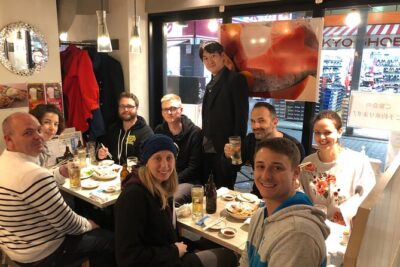
Eat and Drink Like a Local: Tokyo Ueno Food Tour-Taverns&Ramen
Read our review →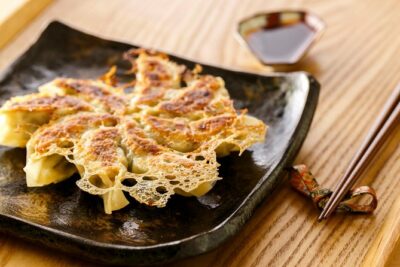
Ramen & Gyoza Cooking Class in Tokyo with Local Supermarket Visit
Read our review →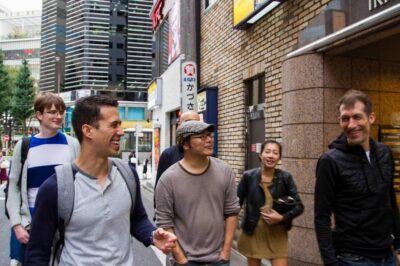

Easy Ramen Cooking Experience in Kabukicho, Shinjuku
Read our review →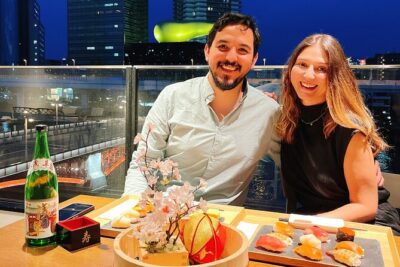
Ramen and Sushi Cooking Class with Sake Pairing Set in Tokyo
Read our review →
Professional Ramen & Gyoza with Ramen Chef in a restaurant!
Read our review →
Ramen Dojo Tokyo | Make All 3 (Tonkotsu/Shoyu/Miso)
Read our review →Ramen Dojo Tokyo | Make All 3 (Tonkotsu/Shoyu/Miso)
Read our review →Browse the lists this tour appears in