
Reviewed · TOKYO JDM CAR CULTURE TOURS
Daikoku Parking Area : JDM car meet tour by a local Japanese
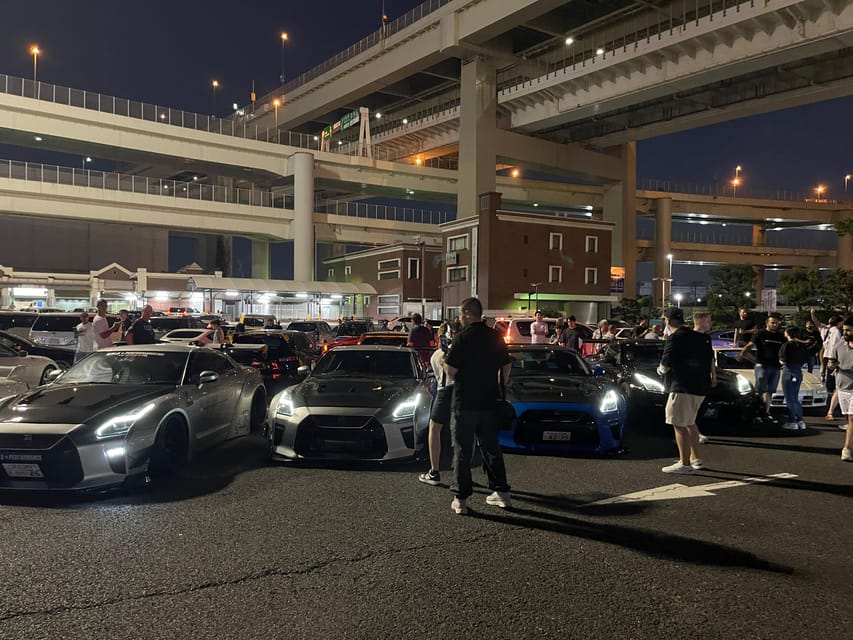
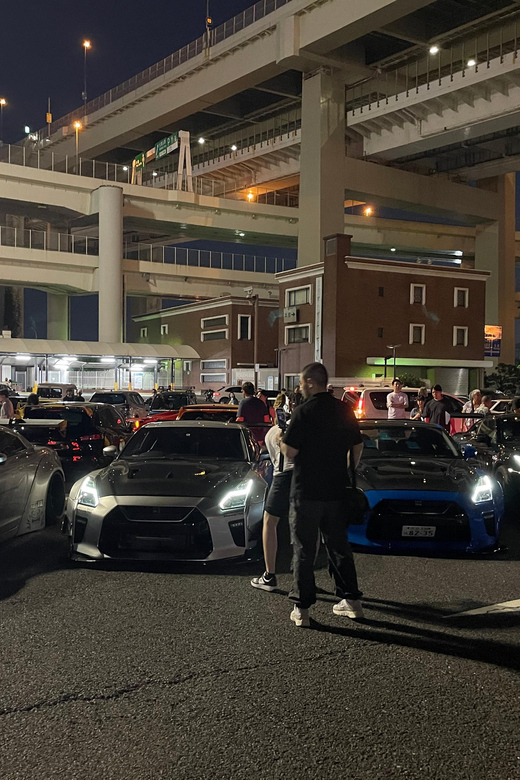
Tokyo’s expressways are part of the attraction here. You ride the Metropolitan Expressway and Bay Shore Route, cross Rainbow Bridge, and reach the same Daikoku Parking Area seen in Japanese car films and games such as Wangan Midnight and Shutoko Battle. The setting is as important as the cars.
I like the tiny group size, which keeps the ride personal, and I like the chance to visit both Tatsumi and Daikoku rather than simply being dropped at one parking area. The main caution is that this can feel more like transport with a car meet than a guided tour. Toshiro is friendly and a good driver, but the amount of car commentary may depend on your questions and his conversation on the night.
Key points to know before booking
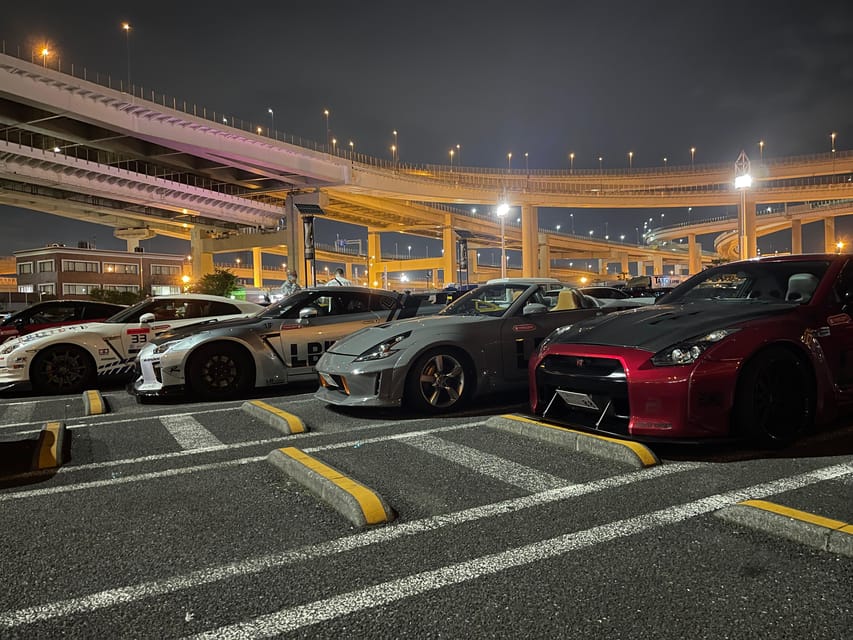
- Daikoku gets about 90 minutes: Most of the free time is spent at Tokyo’s best-known car-meet stop.
- The drive is part of the experience: Metropolitan Expressway, Bay Shore Route, and Rainbow Bridge create the movie-like setting.
- Toshiro is the local guide: He drives, speaks English, and can answer questions about Tokyo if you start the conversation.
- Friday and Saturday timing matters: The group may leave at 6 p.m. and return around 9 p.m. because police may close Daikoku from about 8:30 p.m.
- You visit Tatsumi first: This gives you a short 15-minute photo stop before the longer Daikoku visit.
- This is best for flexible car fans: The meet itself may be the highlight, while the guiding is lighter than on a standard sightseeing tour.
What this Daikoku car meet tour really offers
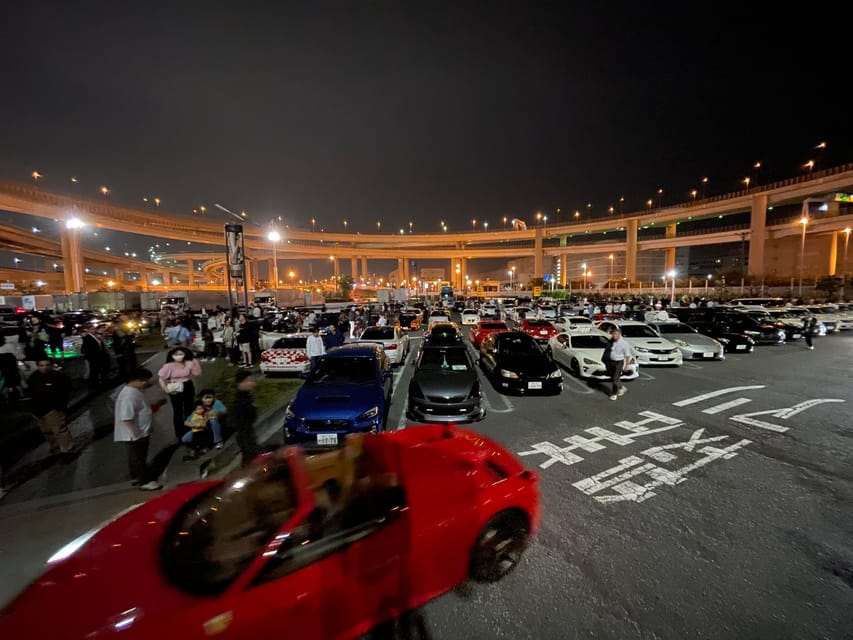
This is not a museum visit, a racing activity, or a technical lesson about Japanese performance cars. It is a small shared drive to two famous expressway parking areas, with Tokyo’s night scenery providing the backdrop.
That distinction matters. If you want to see how Japanese car culture looks in real life, this tour puts you in the right places at the right time. You may see tuned cars, sports cars, and owners gathering around their vehicles. The exact cars are never guaranteed, so the appeal is partly the atmosphere and the possibility of catching an especially good night.
I would think of the tour as three parts: the drive, the parking-area visits, and the Tokyo skyline on the way back. The drive links the whole evening together. Daikoku is the main event, but the expressway route gives the outing its character.
The advertised group size is up to three customers, though the activity details also refer to a limited one-person group. I would confirm the final group arrangement when booking. Either way, this is intended to be a very small shared outing, not a large coach tour.
More Tokyo JDM and car meet nights:
- GT-R35 800hp Club Membership – secret underground car meet
★ 4.8 · 998 reviews - Tokyo: Fast & Furious Tokyo Drift 3 Experience (Kaila Yu SP)
★ 4.8 · 947 reviews - Tokyo: Daikoku JDM Car Meet & Night Car Culture Tour
★ 4.8 · 626 reviews
Meeting Toshiro in Ōba
The meeting point is in front of MOS BURGER in Ōba. You need to arrive on time because this is a shared drive, and a late arrival can affect everyone in the vehicle.
Hotel transportation is not included, so you must make your own way to the meeting point. The tour lasts about three hours, with the exact starting time depending on availability and the chosen day.
Toshiro is the named local guide and driver. The strongest praise centers on his kindness, friendly manner, and driving. One person also found him helpful for small talk and questions about Tokyo. That makes him a good fit if you want a relaxed local escort rather than a formal guide giving a speech at every stop.
You should also set your expectations correctly. Two ratings specifically describe the experience as mainly pickup, driving, and drop-off, with little information about the cars at Daikoku. If you want detailed talk about engines, modifications, racing history, or individual models, ask Toshiro questions during the drive. Do not assume that a full car lesson is built into the price.
Tatsumi 1st Parking Area in 15 minutes
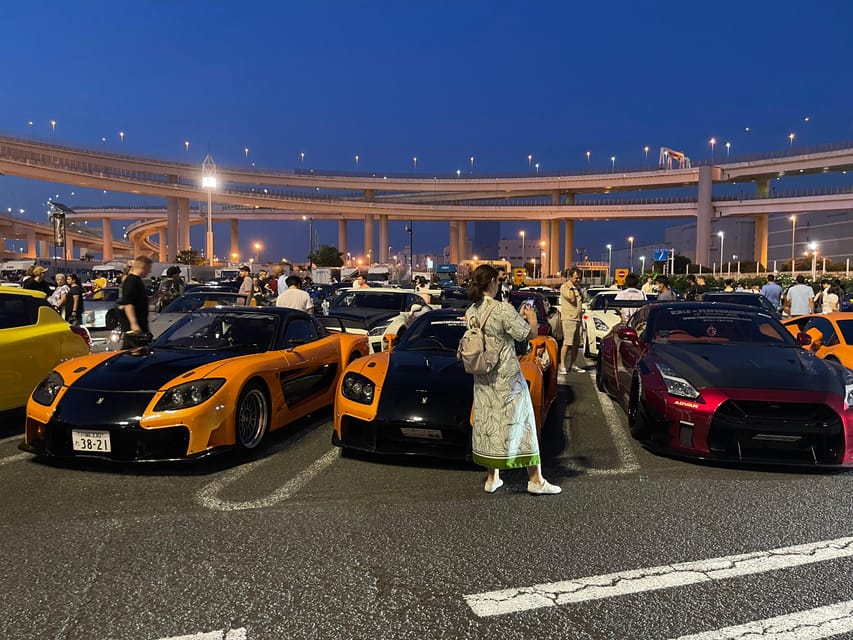
Tatsumi 1st Parking Area is the first stop. You get about 15 minutes for photographs and a quick look around.
This short stop works as an introduction to the evening. You can see an expressway parking area used by car enthusiasts, take in the setting, and get your camera ready before the longer visit to Daikoku. It also breaks up the drive early in the tour.
The limitation is time. Fifteen minutes is enough for a quick photo stop, not a long search for particular cars or a detailed walk around the facility. If Tatsumi is your main reason for booking, this tour may feel too brief. For most people, it works better as a preview before Daikoku.
Passing Tokyo Skytree Town
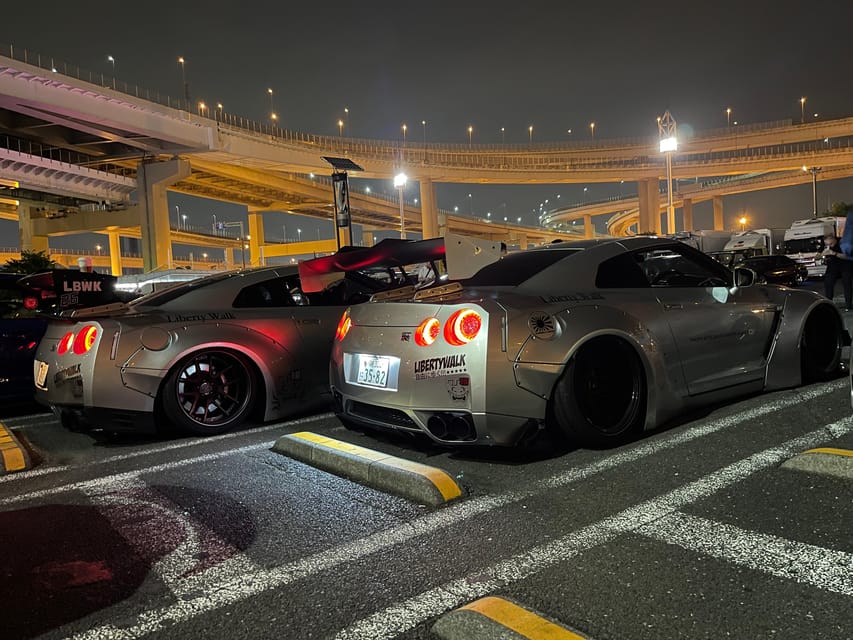
After Tatsumi, the route passes Tokyo Skytree Town. This is a drive-by view, not a scheduled visit or photo stop.
That may sound minor, but it adds variety to an evening focused on expressways and parking areas. You get a glimpse of one of Tokyo’s best-known landmarks without leaving the route for a separate sightseeing visit.
Keep your camera ready, but do not expect time to stop, walk around, or frame a careful photograph. The same applies to Tokyo Tower later in the route. These landmarks are visual extras rather than full attractions.
A completely different kind of day in Tokyo:
- Mt Fuji and Hakone 1-Day Bus Tour Return by Bullet Train
★ 5.0 · 26,383 reviews - 1-Day Tokyo Bus Tour
★ 5.0 · 14,250 reviews - Tokyo: teamLab Planets TOKYO Digital Art Museum Entry Ticket
★ 4.6 · 9,779 reviews - Mt Fuji & Hakone Cruise, Drum Show Bullet Train 1 Day from Tokyo
★ 4.0 · 7,413 reviews
The main event at Daikoku Parking Area
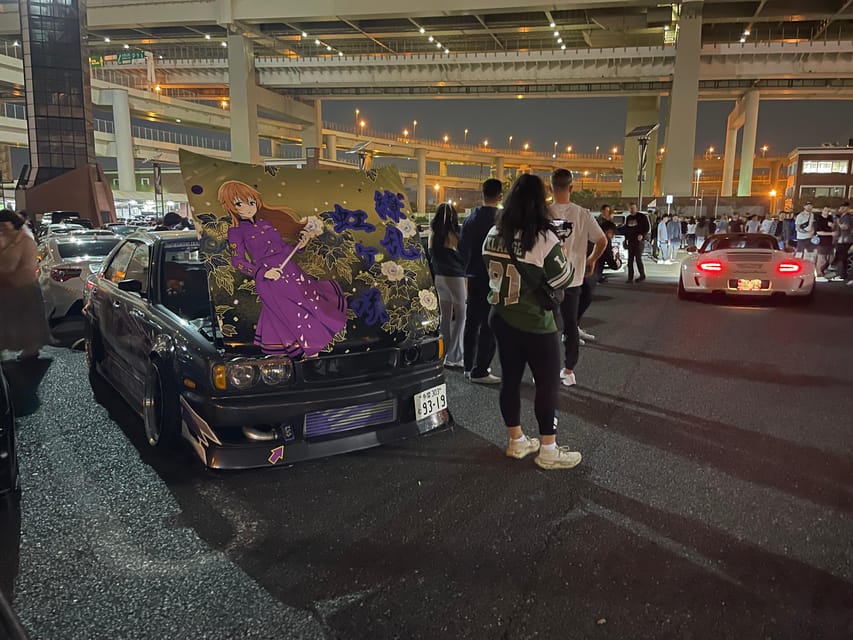
Daikoku Parking Area receives about 1.5 hours of the tour, including free time and a photo stop. This is where the tour earns most of its value.
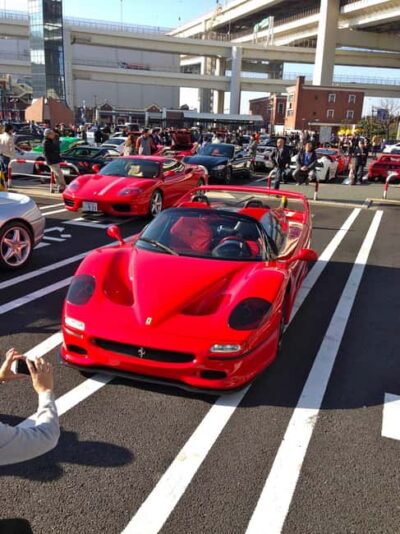
Daikoku has become closely linked with Japanese car culture because of its appearance in games, films, online videos, and enthusiast photography. The tour lets you see the real setting rather than a staged display. You are not looking at cars behind ropes. You are visiting a working expressway parking area where the mix of vehicles can change from night to night.
That unpredictability is part of the fun. On a strong evening, you might see a broad mix of interesting cars and people gathered around the same hobby. On a quieter night, the stop may be more modest. The tour cannot promise a particular make, model, or size of gathering.
The 90-minute stay gives you enough time to look around without rushing. You can take photographs, enjoy the setting, and watch the meeting develop. If you care about the social side of the scene, this is also the point where you can simply observe how car enthusiasts use the space.
There is an important practical catch. Police may close the parking area from around 8:30 p.m., especially on Friday and Saturday nights. That is why the group may leave at 6 p.m. and return around 9 p.m. The earlier departure is not wasted time. It is designed to give you a reasonable chance of reaching Daikoku before access changes.
The experience also depends on the guide’s role. Toshiro can drive you there and give you a comfortable base for the visit, but detailed explanations are not guaranteed. One low rating described the stop itself as excellent while finding the overall experience too much like a taxi ride. I would book this knowing that Daikoku is the attraction, and Toshiro’s main job is to get you there safely and efficiently.
The expressway route and Rainbow Bridge
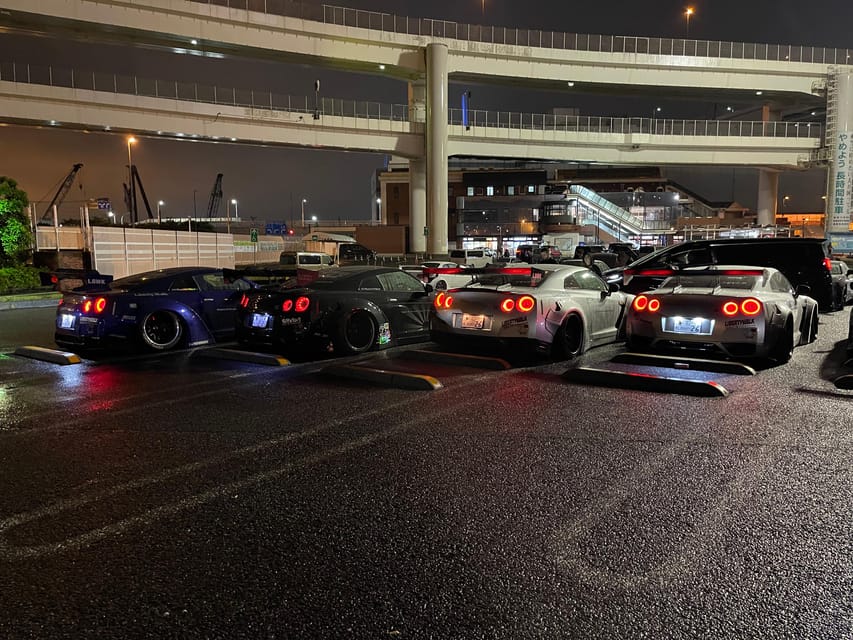
The road journey connects the car meet to Tokyo’s broader night view. You travel on the Metropolitan Expressway and Bay Shore Route, then pass Rainbow Bridge on the way back.
For fans of Wangan Midnight or Shutoko Battle, this route has special appeal. The point is not only to arrive at a parking area. You are seeing the roads and structures associated with the image of Japanese highway driving that appears in games and film.
You do not drive the car yourself, and this is not a high-speed driving session. It is a passenger experience with an experienced local Japanese driver. That makes it suitable for people who want to see the route without renting a car or trying to understand Tokyo’s complicated expressways on their own.
Rainbow Bridge is also useful for people who are only partly interested in cars. You get a different angle on Tokyo at night, with the road itself carrying you through the view. It is a quick pass-by rather than a stop, so treat it as part of the moving scenery.
Passing Tokyo Tower on the way back
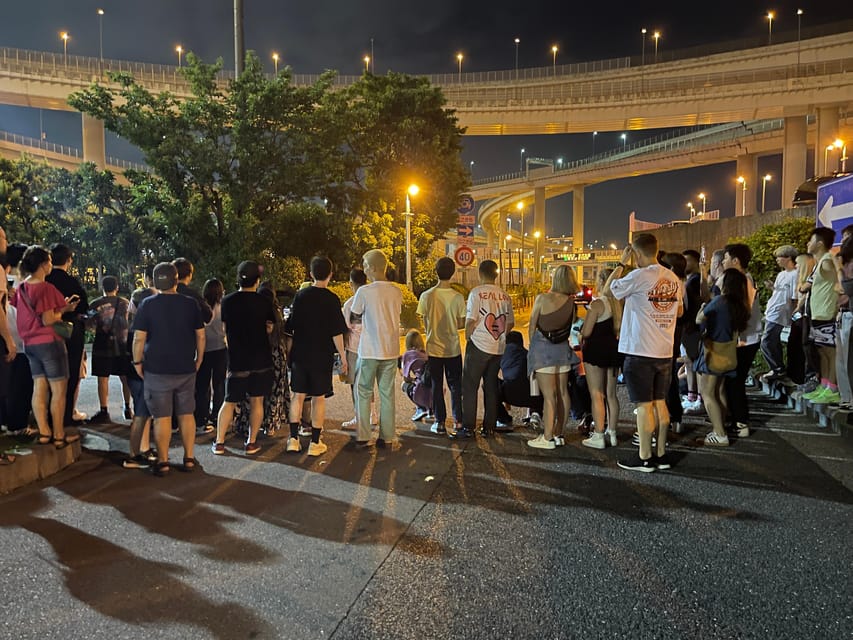
Tokyo Tower is another drive-by landmark. Like Tokyo Skytree, it adds a familiar piece of Tokyo to an evening otherwise centered on expressways and car parks.
You should not book this tour expecting landmark photography. There is no scheduled stop at Tokyo Tower, and there is no walking time at Skytree Town. The benefit is that you can combine a car-meet outing with brief views of two major Tokyo sights without paying for a separate city-night tour.
For me, this combination helps the tour appeal beyond dedicated JDM fans. You can spend the main portion of the night at Daikoku, then enjoy the city’s lights and landmarks on the route back to Ōba.
Choosing the best night to go
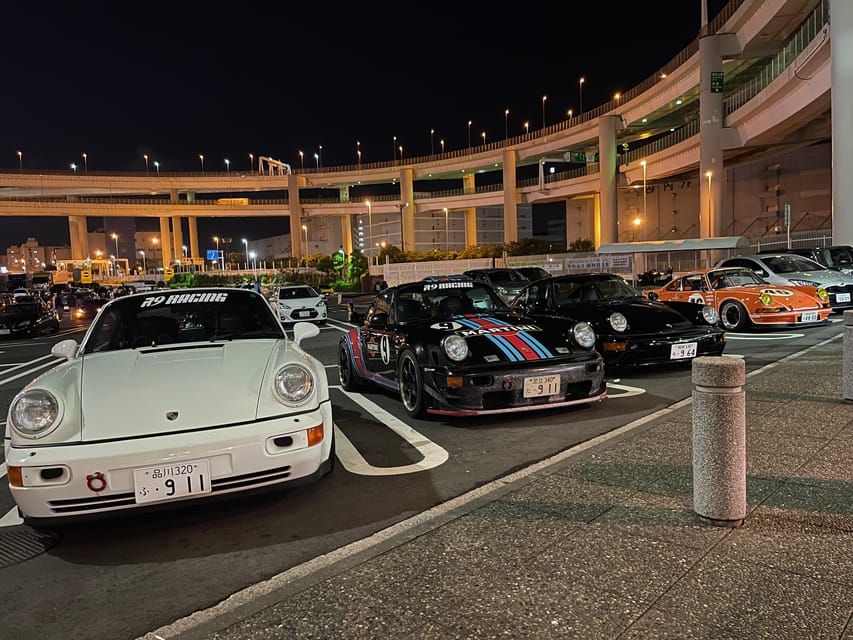
The tour can operate on weekdays, but Friday, Saturday, and Sunday are suggested as better choices. That advice matters because the car-meet scene can vary by night, and weekend timing is built around possible police restrictions.
Friday and Saturday may require the 6 p.m. departure and a return near 9 p.m. If you have dinner reservations or another evening booking, leave room for traffic and the fixed nature of a shared tour.
Rain can also change the plan. The tour can be postponed to another convenient day if conditions are wet. This is sensible for an activity built around outdoor viewing and photography, but it means you should keep some flexibility in your schedule.
I would choose a dry Friday, Saturday, or Sunday evening if your main goal is to see the car meet at its liveliest. A weekday may suit you better if you want a quieter outing or need a different schedule, but the exact selection of cars and the feel of the gathering cannot be promised.
Is $127 a fair price?
At $127 per person, this is not the cheapest way to reach Daikoku. Its value comes from convenience and scale rather than from a long list of guided activities.
Your price covers a shared small-group ride, fuel, toll roads, an English-speaking local driver, the Tatsumi stop, about 1.5 hours at Daikoku, and the Tokyo night route. Tokyo’s expressways are not simple for a first-time visitor, and having someone else handle the driving removes a major practical problem.
The price is easier to justify if you do not have a rental car, do not want to navigate the expressway system, and care about seeing both the route and the parking areas. It is also reasonable for a solo visitor who wants access to a small group rather than arranging a private car.
The value is weaker if you expect a full guided presentation about Japanese car culture. The mixed feedback makes that clear. Toshiro receives strong praise for being kind, friendly, and a good driver, while the main criticism is the lack of commentary. You are paying for access and transport with a local driver, not a guaranteed automotive expert.
For a committed JDM fan, the price may feel worthwhile because reaching Daikoku independently can be awkward. For someone only mildly interested in cars, the Tokyo night views and Rainbow Bridge help balance the cost, but the short drive-by stops should not be mistaken for a full sightseeing tour.
Who will enjoy this most
I would recommend this outing to you if you want to:
- See Daikoku in person after encountering it in games, films, or online car culture.
- Ride Tokyo’s expressways without renting a car.
- Keep the group very small.
- Combine a car meet with night views of Rainbow Bridge, Tokyo Tower, and Tokyo Skytree.
- Spend a relaxed evening with a local English-speaking driver.
- Accept that the cars and level of commentary may vary.
I would think twice if you need a structured guide who explains every vehicle, talks continuously about tuning, or guarantees a certain type of car. The strongest part is the setting and the access to Daikoku. The guiding style may be quiet unless you ask questions.
The activity is listed as wheelchair accessible, but the details do not explain the vehicle setup or how easy it is to enter and exit. If that affects your booking, confirm the arrangement before paying.
Booking details worth keeping in mind
Free cancellation is available up to 24 hours before departure for a full refund. You can also reserve now and pay later, which helps if you are still arranging your Tokyo schedule.
English is the listed tour language. The meeting point is in front of MOS BURGER in Ōba, and hotel transportation is not included. Be early, especially because this is a shared tour with a small number of seats.
The stated activity details describe a group of up to three customers, while another field refers to one participant. I would ask for clarification if the final group size matters to you. In either case, it is designed to be much smaller than a standard sightseeing excursion.
Should you book the Daikoku car meet tour?
Book it if your goal is simple: get to Daikoku, see the real expressway setting behind Japanese car culture, and enjoy a small-group night drive through Tokyo. The 90-minute Daikoku visit, Rainbow Bridge crossing, and access to a local driver make it a practical choice for people without their own car.
Do not book it expecting a nonstop lecture or a carefully planned display of specific models. The cars are unpredictable, and the guide’s commentary may be limited. Ask questions, choose a dry Friday, Saturday, or Sunday if possible, and treat the drive itself as part of the evening.
For JDM fans, this is a focused way to reach a difficult-to-access car-meet location. For everyone else, it is a quirky Tokyo night outing with a strong automotive theme and a few landmark views along the way.
FAQ
How long does the Daikoku car meet tour last?
The tour lasts about three hours, including the drive, the Tatsumi stop, the Daikoku visit, and the return to Ōba.
Where does the tour start?
The meeting point is in front of MOS BURGER in Ōba.
How many people can join the shared tour?
The tour is described as a small shared group for up to three customers. Another activity detail refers to one participant, so confirm the final group arrangement if this is important to you.
How much time is spent at Daikoku Parking Area?
You have about 1.5 hours at Daikoku Parking Area, including free time and a photo stop.
Does the tour include Tokyo Tower and Tokyo Skytree visits?
No. The vehicle passes Tokyo Skytree Town and Tokyo Tower. They are drive-by views, not scheduled visits or walking stops.
Are fuel and toll roads included?
Yes. Fuel and toll road costs are included in the tour price.
What happens if it rains?
The tour can be postponed to another convenient day if it rains. Free cancellation is also available up to 24 hours in advance for a full refund.
Newly reviewed around Tokyo
- Tokyo Asakusa:Calligraphy & Make T-shirt Activity★ 5.0 · 62 reviews
- Intercity Shuttle, Tokyo to Haneda /Narita /Yokohama /Makuhari★ 5.0 · 5 reviews
- 1 Hour Travel around Tokyo with a Professional Photographer★ 5.0 · 3 reviews
- Travel Tokyo with Your Own Personal Photographer★ 5.0 · 43 reviews
- Kickboxing & Body Training with EX-Pro Fighter★ 5.0 · 4 reviews
- Train in Samurai Swordsmanship and Defeat the Demon in Tokyo★ 5.0 · 5 reviews
- Shuttle Van 6hr Tokyo Tour to-and-from Tokyo, Yokohama and Narita★ 5.0 · 9 reviews
- Traditional Japanese Knife Sharpening Class★ 5.0 · 18 reviews
Tokyo JDM Car Culture Tours, compared.
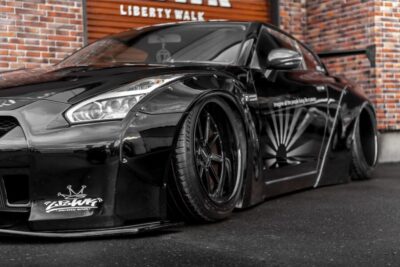
GT-R35 800hp Club Membership – secret underground car meet
Read our review →
Fast & Furious Tokyo Drift 3 Experience (Kaila Yu SP)
Read our review →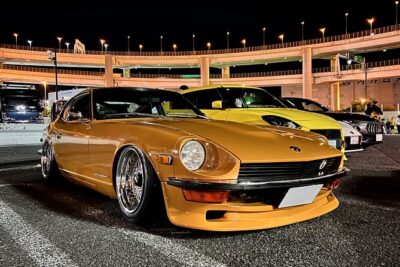
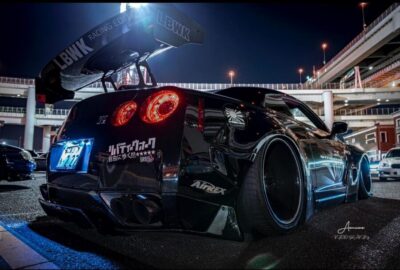
Secret Car Meet: R34 Skyline Car Club Membership
Read our review →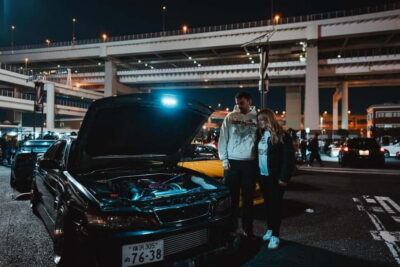
Tokyo Drift: Daikoku PA Supreme Car Experience 大黒PA
Read our review →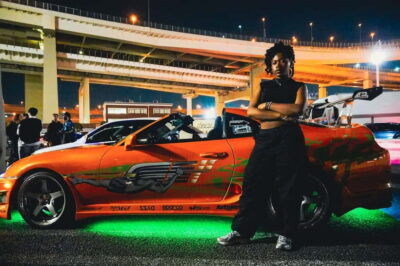
Go Daikoku PA Fast & Furious 3 Sports Car Meetup
Read our review →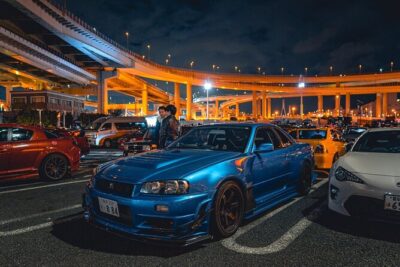
Browse the lists this tour appears in