
Reviewed · TOKYO FOOD TOURS
Tokyo Street Food Tour – 7 Japanese Foods
Tokyo’s best food discoveries are not always found near the famous sights. This two-hour walk takes you through Musashi-Koyama and Togoshi Ginza, where small shops serve karaage, yakitori, onigiri, curry bread, pudding, and other local bites. I like the off-center setting, and I like that the food covers far more ground than the usual sushi and ramen list. The one catch is simple: portions can be generous, so arrive hungry and pace yourself.
I also like the small group limit of eight, which gives the guide room to explain dishes and adjust the pace. Guides including Makayla, Frank, Sahori, Bunga, and others have led this route, with food knowledge and easy conversation earning especially strong praise. You will need a moderate level of fitness, since the experience is a walking tour with several stops rather than a seated meal.
Key points at a glance
- Seven Japanese foods in about two hours: Expect a broad tasting menu rather than one long meal.
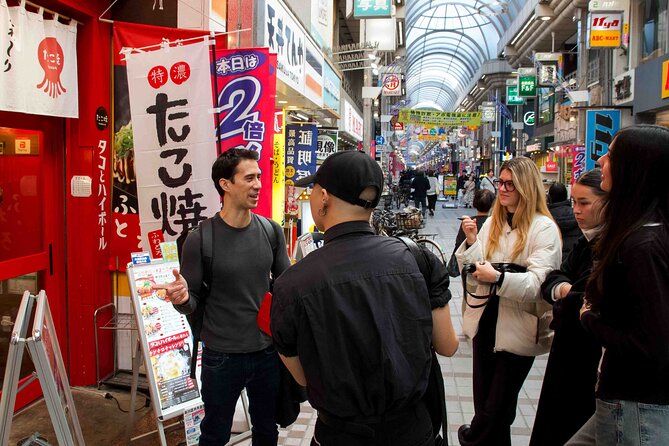
- Two local shopping streets: The route begins at Musashi-Koyama and finishes along Togoshi Ginza.
- Food beyond sushi and ramen: Karaage, yakitori, onigiri, curry bread, pudding, and sweets show a more everyday side of Japan.
- Small groups of up to eight: The size suits questions, conversation, and a relaxed pace.
- A filling lunch with a soft drink: Portions may be generous, so do not eat a large meal beforehand.
- A practical Tokyo introduction: You start at Park City Musashikoyama THE MALL and finish at Togoshi Ginza Shopping Street.
Why this Tokyo food walk feels different
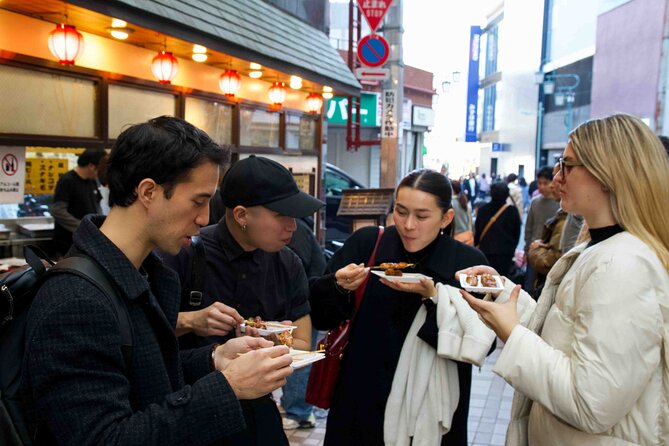
This is not a tour of Tokyo’s postcard center. It begins in Shinagawa City, in the Musashi-Koyama area, and ends in Togoshi Ginza. Those names may not be at the top of a first-time Tokyo itinerary, which is part of the appeal. You get a look at shopping streets built around everyday food, local errands, and small storefronts.
I like the route because it links eating with place. You are not simply handed seven samples in a food hall. You walk between the stops, see the covered arcades, and get a sense of how neighborhood food streets work.
The experience is also well suited to anyone who wants a first taste of Japanese food without committing to unfamiliar full meals. The menu includes recognizable comfort foods, but the range is wide enough to keep the walk interesting. Fried chicken, grilled skewers, rice balls, filled bread, custard pudding, and sweets each show a different part of casual Japanese eating.
The tone appears to depend somewhat on the guide, as it should on a small walking tour. Makayla has led the route with a warm, conversational approach. Frank has been praised for choosing good stops and explaining the history of the food and shops. Sahori has led small groups through less tourist-focused areas, while Bunga has made the route a particularly enjoyable introduction to Tokyo for first-time visitors.
More Tokyo food tours:
- Tokyo: Shinjuku Food Tour (13 Dishes at 4 Local Eateries)
★ 5.0 · 6,603 reviews - Tokyo: Shinjuku Food Tour (15 Dishes and 4 Eateries)
★ 4.9 · 2,033 reviews - Best of Shinjuku: Izakaya Food Tour (4 Stops, 14+ Tastings)
★ 5.0 · 1,863 reviews
Starting at Musashi-Koyama’s covered arcade
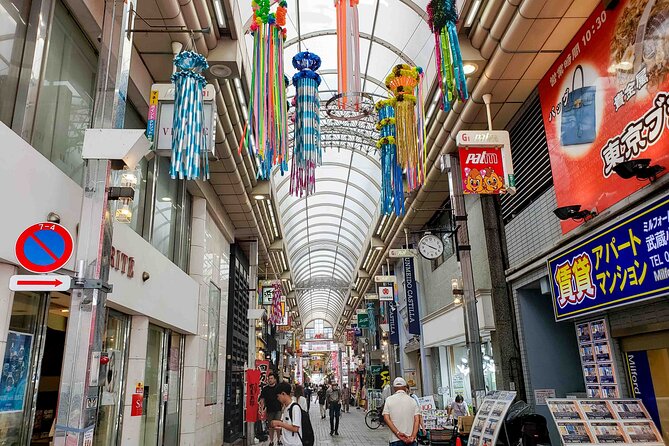
Meet at Park City Musashikoyama THE MALL, at 3-chōme-15-1 Koyama in Shinagawa City. The first portion takes you through Musashi Koyama Shopping Street Palm, a decades-old covered arcade on the way to Togoshi Ginza.
That setting matters. Covered shopping streets are useful in any weather, but they also give you a close look at the practical side of Tokyo life. You pass food stalls and small shops rather than spending the whole tour among major attractions. The route has a local, ordinary feel, which is exactly what many food-focused visitors are hoping to find.
The first tastings take place here. The food is served from established local vendors, including an award-winning karaage seller and a yakitori restaurant that has been operating since 1926. Those details give the food some useful context. You are not only trying fried chicken and skewers, you are seeing how these dishes fit into long-running neighborhood businesses.
The first stop is listed at about 30 minutes, though the whole experience includes movement between vendors. Since food comes early, resist the temptation to finish every bite immediately. The tour includes seven foods in total, and the portions have been described as generous.
Karaage and yakitori: the savory start
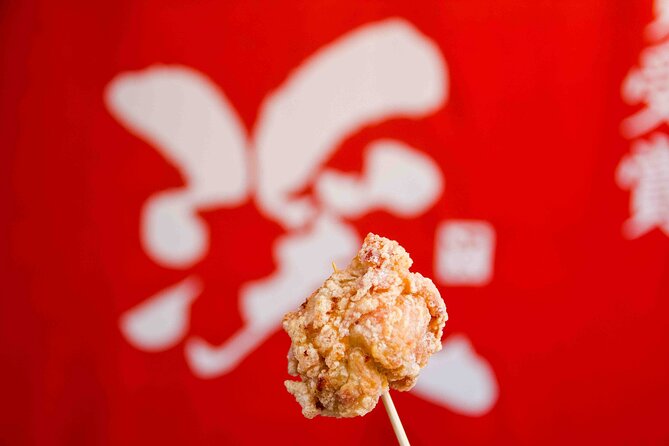
The karaage is Japanese fried chicken, usually prized for its crisp coating and juicy interior. Here, it comes from a vendor described as award-winning, making it one of the more anticipated early tastings. It is also a good opening dish because most people can approach it without much explanation, while still noticing the seasoning and preparation.
Several people who took the tour singled out the karaage as a favorite. That makes sense: a well-made piece of fried chicken is an easy crowd-pleaser, and it gives the guide a simple way to begin talking about Japanese street food.
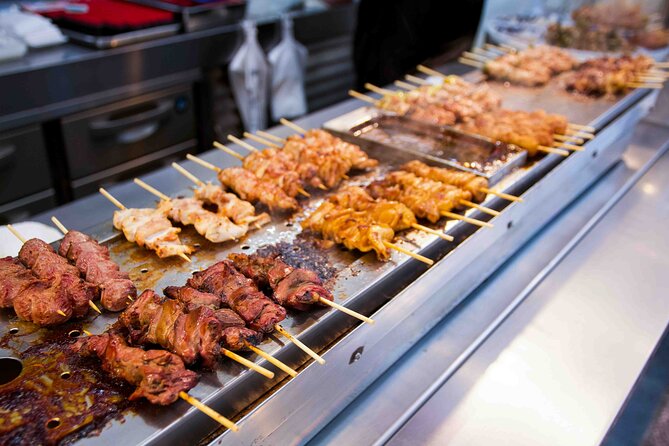
Next comes yakitori, chicken grilled over charcoal on skewers. The restaurant has been operating since 1926, an unusually specific bit of history that adds weight to the stop. Yakitori is not just a quick snack. It is a familiar part of casual Japanese dining, and the charcoal cooking gives it a different character from the fried karaage.
These two dishes also create a useful contrast. One is crisp and fried, the other is grilled and smoky. If you are mainly interested in texture and cooking methods, this early section gives you plenty to compare.
Onigiri with fillings beyond tuna
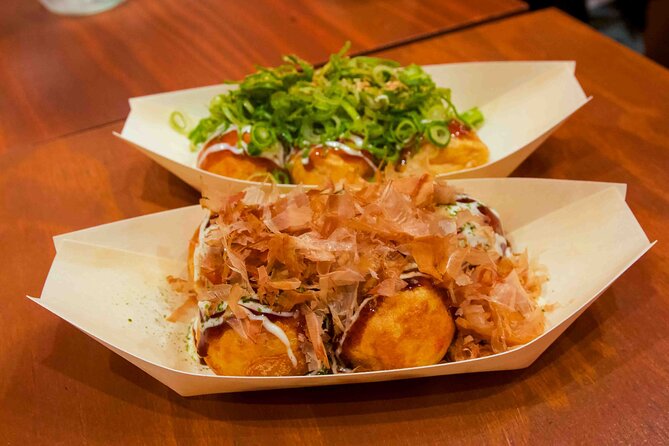
The handmade onigiri stop brings a different style of Japanese food to the route. Onigiri are rice balls, often shaped by hand and filled or seasoned in many ways. This shop offers more than 40 filling choices, including spicy tuna, bacon, and cream cheese.
That range is worth noting if you have a narrow idea of what Japanese food includes. You may expect salmon, pickled plum, or tuna, but bacon and cream cheese show how flexible onigiri can be in modern casual food shops.
A handmade rice ball can also be more filling than it looks. The rice provides a solid middle course, so you may want to take smaller bites and keep room for the later samples. The tour works best as a progressive meal, not as seven items to consume as quickly as possible.
If you have food preferences, this may be one of the more useful places to ask your guide what is available. The listing says there are over 40 fillings, but it does not promise a particular choice for every departure. Your guide can help you understand the options on the day.
A completely different kind of day in Tokyo:
- Mt Fuji and Hakone 1-Day Bus Tour Return by Bullet Train
★ 5.0 · 26,383 reviews - 1-Day Tokyo Bus Tour
★ 5.0 · 14,250 reviews - Tokyo: teamLab Planets TOKYO Digital Art Museum Entry Ticket
★ 4.6 · 9,779 reviews - Mt Fuji & Hakone Cruise, Drum Show Bullet Train 1 Day from Tokyo
★ 4.0 · 7,413 reviews
Curry bread and Japanese pudding
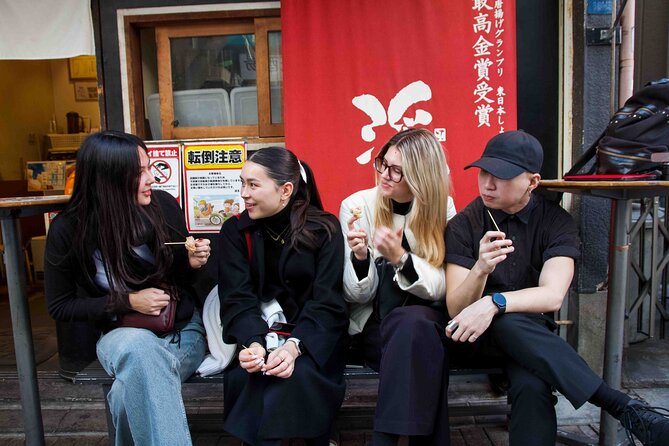
Curry bread is a savory pastry filled with Japanese beef curry. The outside is freshly baked bread, while the inside gives you a soft, seasoned filling. It is a good example of how familiar foods have been adapted into Japanese snack culture.
This is another substantial bite, especially when combined with onigiri and the earlier chicken dishes. If you usually eat a large breakfast or lunch, adjust your plans. The tour includes lunch, not just tiny samples.
The Japanese pudding provides a sweet break from the savory foods. It is described as super creamy, so expect a soft custard texture rather than a firm Western-style pudding. I like having this contrast in the lineup. A food walk feels more complete when it moves between salty, grilled, fried, and sweet tastes.
The exact order of the seven foods can depend on the shops and the guide. The named foods include karaage, yakitori, onigiri, curry bread, and pudding, while the Togoshi Ginza portion adds further local delicacies. Dango is also mentioned as a particularly good final stop in one account of the route, but it should not be treated as a guaranteed item for every departure.
Walking into Togoshi Ginza Shopping Street
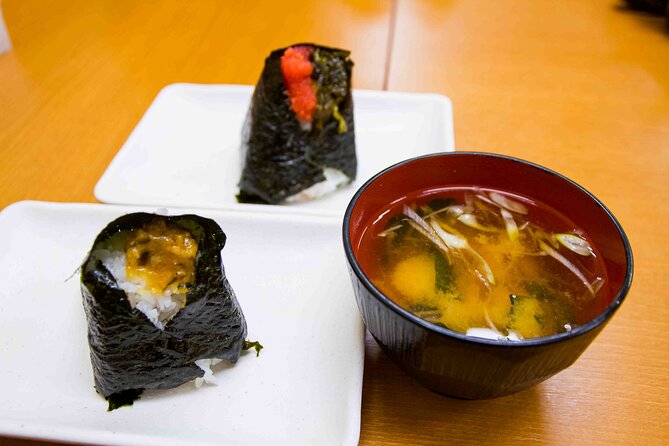
After the first section, you walk to Togoshi Ginza Shopping Street, the main part of the experience. The walk helps break up the eating, although you should still expect a fair amount of standing and moving between storefronts.
Togoshi Ginza is known here for small food shops and hole-in-the-wall stops rather than major tourist attractions. That gives the tour its strongest sense of place. You are eating in an active neighborhood shopping area, not in a staged food attraction designed only for short-term visitors.
The main section lasts about an hour according to the stated schedule. Because the total experience is approximately two hours, the timing may feel fairly full once walking, ordering, eating, and explanations are included.
This is where the guide’s role matters most. A good guide can explain why a particular dish is popular, how a shop fits into the area, and what you are tasting without turning every bite into a lecture. The strongest feedback about this experience centers on that combination of food selection, local setting, and relaxed conversation.
What the small group changes
The maximum group size is eight. That is small enough to keep the route personal, but it is not a private tour unless your party happens to fill the group or no one else books.
Small groups are especially useful at compact food shops. You are less likely to split into separate clusters, and you should have more chances to ask about ingredients, cooking methods, or the neighborhood. The guide can also keep an eye on the group as you move along crowded shopping streets.
Several departures have been very small, including one with only two participants and another with four. That is not guaranteed, but the eight-person cap keeps the experience from becoming a large procession.
The guide names associated with this route include Makayla, Frank, Sahori, and Bunga. Their styles may differ, but the common thread is an emphasis on friendly conversation and food background. If you have dietary concerns or simply do not want one of the dishes, ask early. One account describes a guide accommodating a food the group did not want, but the available information does not promise substitutions.
Is $91.45 good value?
At $91.45 per person, this is not a cheap snack crawl. You are paying for seven food tastings, one soft drink, a guide, neighborhood orientation, and the convenience of having the stops organized.
The value is strongest if you want an introduction to casual Japanese food and would otherwise be unsure where to go. Seven separate purchases can take time, and popular shops may be difficult to identify if you cannot read Japanese or do not know the area. The guide also gives you the story behind the foods and businesses, which is more useful than simply receiving a list of dishes.
The price is less attractive if you already know Musashi-Koyama and Togoshi Ginza, speak Japanese comfortably, and prefer to choose your own food stops. You could likely spend less by eating independently, but you would lose the structure, explanations, and planned variety.
The included soft drink is a small extra rather than the main value. The real question is whether the seven tastings and guided neighborhood walk fit your plans. For a food-focused visitor who wants a ready-made lunch and a side of Tokyo beyond the usual routes, the price is reasonable. For someone mainly seeking famous landmarks, it may not be the best use of two hours.
Timing, meeting point, and walking effort
The advertised duration is about two hours. The schedule includes roughly 30 minutes around Musashi-Koyama Shopping Street Palm and about one hour at Togoshi Ginza, with walking between the two areas.
Some descriptions of the experience make it sound closer to an hour and a half of active walking and grazing. That difference is not unusual for a food tour, since the final length can shift with shop service, group pace, and time spent talking.
You start at Park City Musashikoyama THE MALL, 3-chōme-15-1 Koyama, Shinagawa City, Tokyo 142-0062. You finish at Togoshi Ginza Shopping Street, near the shopping street association building at 1-chōme-15-16 Togoshi, Shinagawa City, Tokyo 142-0041.
There is no hotel pickup or drop-off. The meeting area is near public transportation, but you should plan your route to the exact starting point rather than assuming the guide will collect you from your hotel.
A moderate level of physical fitness is recommended. Expect walking, standing, and eating while moving through shopping streets. Service animals are allowed, and the ticket is mobile, which keeps arrival simple.
Who should book this food tour?
I would choose this tour if you want to:
- Try several Japanese foods in one sitting without planning every stop yourself.
- See a less tourist-focused part of Tokyo.
- Learn how everyday foods such as onigiri and yakitori fit into local eating.
- Travel with a small group rather than a large coach-style crowd.
- Eat a filling lunch while walking through neighborhood shopping streets.
- Start your Tokyo food experience with dishes beyond sushi and ramen.
Families can also find it approachable, especially if children enjoy fried chicken, rice, bread, sweets, or skewers. Keep in mind that everyone needs to manage the walking and the amount of food.
I would hesitate if you need a fully seated meal, have very limited mobility, or want a tour centered on Tokyo’s famous central districts. The food is the focus, but the local setting and walk are just as important.
Should you book the Musashi-Koyama and Togoshi Ginza food walk?
Book it if your idea of a good Tokyo afternoon includes small shops, generous bites, and useful local context. The strongest reasons are the varied menu, the modest group size, and the chance to visit two neighborhood shopping streets that are not usually the first stops on a Tokyo sightseeing plan.
Come hungry, but not overly full. Give yourself enough time to reach the meeting point, wear comfortable shoes, and expect the tour to feel like a moving lunch rather than a formal tasting menu.
At $91.45, it is best for people who value guidance and variety over the lowest possible food bill. If that sounds like you, this is a practical way to taste seven Japanese foods while seeing a quieter side of Tokyo.
FAQ
How long does the Tokyo street food tour last?
The tour lasts approximately two hours. The route includes about 30 minutes around Musashi-Koyama Shopping Street Palm, about one hour at Togoshi Ginza Shopping Street, and walking between the two areas.
How many foods are included?
The experience includes seven types of Japanese street food. Named examples include karaage, yakitori, handmade onigiri, curry bread, Japanese pudding, and additional local delicacies.
What drink is included?
One free soda or soft drink is included with the food tastings.
Where does the tour start?
The meeting point is Park City Musashikoyama THE MALL at 3-chōme-15-1 Koyama, Shinagawa City, Tokyo 142-0062, Japan.
Where does the tour finish?
The tour ends at Togoshi Ginza Shopping Street in Shinagawa City, Tokyo 142-0041, Japan.
How large is the group?
The tour has a maximum of eight participants. Some departures may be smaller, but a private tour is not guaranteed.
Can I cancel for a full refund?
Yes. You can cancel at least 24 hours before the experience start time for a full refund. Cancellations or changes made less than 24 hours before the start time are not accepted for a refund.
Newly reviewed around Tokyo
- Tokyo Asakusa:Calligraphy & Make T-shirt Activity★ 5.0 · 62 reviews
- Intercity Shuttle, Tokyo to Haneda /Narita /Yokohama /Makuhari★ 5.0 · 5 reviews
- 1 Hour Travel around Tokyo with a Professional Photographer★ 5.0 · 3 reviews
- Travel Tokyo with Your Own Personal Photographer★ 5.0 · 43 reviews
- Train in Samurai Swordsmanship and Defeat the Demon in Tokyo★ 5.0 · 5 reviews
- Shuttle Van 6hr Tokyo Tour to-and-from Tokyo, Yokohama and Narita★ 5.0 · 9 reviews
- Kickboxing & Body Training with EX-Pro Fighter★ 5.0 · 4 reviews
- Traditional Japanese Knife Sharpening Class★ 5.0 · 18 reviews
Tokyo Food Tours, compared.
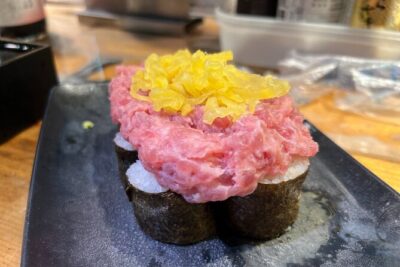
Shinjuku Food Tour (13 Dishes at 4 Local Eateries)
Read our review →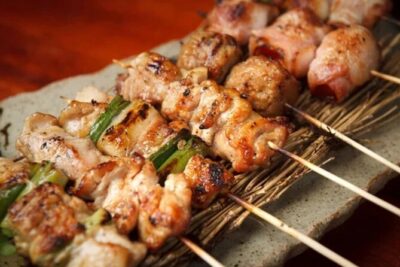
Shinjuku Food Tour (15 Dishes and 4 Eateries)
Read our review →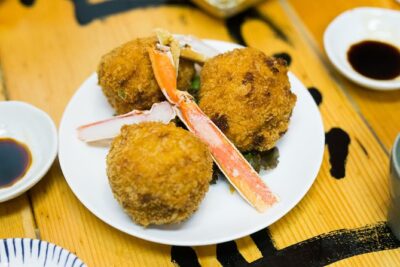
Best of Shinjuku: Izakaya Food Tour (4 Stops, 14+ Tastings)
Read our review →
Tokyo Night Foodie Tour in Shinjuku – Seasonal Sushi, Wagyu Beef
Read our review →
Eat and Drink Like a Local: Tokyo Ueno Food Tour-Taverns&Ramen
Read our review →
Tsukiji Fish Market: Street Food & Culture Walking Tour
Read our review →
Browse the lists this tour appears in