
Reviewed · FOOD
Sangenjaya Back Alleys Private Food and Drink Tour
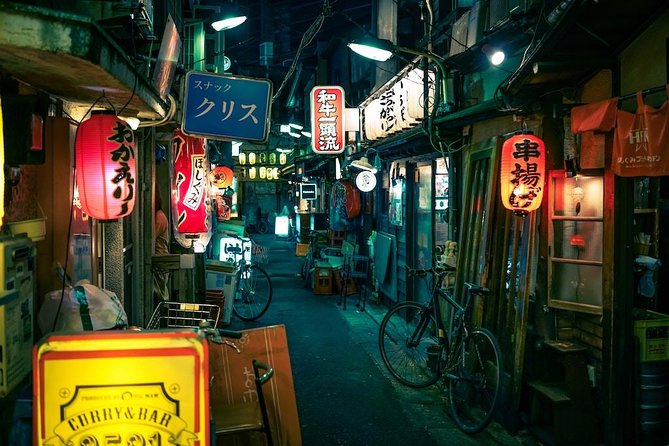
Sangenjaya’s narrow back streets offer the kind of Tokyo evening you will not find in a large food hall. With Simon as your guide, you move between three small izakayas for sashimi, grilled fish, charcoal chicken, kushikatsu, Hoppy, sake, and hands-on okonomiyaki. The neighborhood feels lived-in, not staged for sightseeing.
I like the small private groups, usually two to six people, because they fit into the tiny bars and make conversation easy. I also like the mix of food, drinks, and local context. Simon knows the area well and can adjust dishes for preferences such as avoiding raw fish or meat.
The main consideration is smoking. It is permitted in many Japanese bars and restaurants, and the evening includes narrow streets, small seats, shared plates, and alcohol. This is a food-and-drink night, not a formal restaurant meal, so come ready for close quarters and a full stomach.
Key points to know before booking
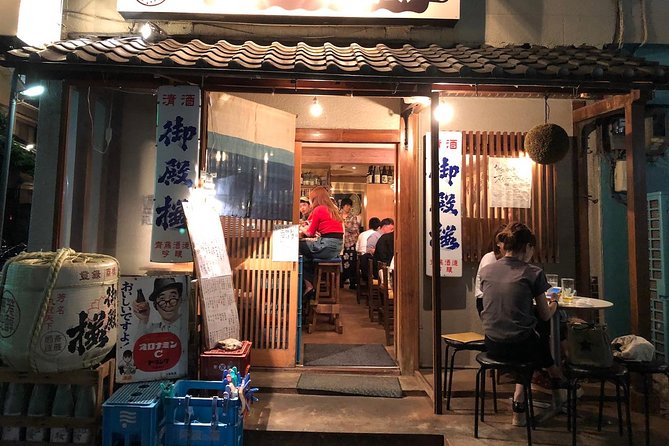
- Three different izakayas: You visit a sake restaurant, a kushikatsu standing bar, and a teppanyaki restaurant.
- At least 10 Japanese delicacies: Expect shared plates rather than one individual dish at each stop.
- A guide with local connections: Simon takes you to places that are difficult to identify or enter confidently on your own.
- Four hours near Shibuya: Sangenjaya is only about five minutes from Shibuya, yet its back streets feel far removed from the main tourist routes.
- Drinks are part of dinner: Beer, sake, shochu, Hoppy, and umeshu are included, with soft drinks for anyone under 20.
- Private and flexible: Solo participants are welcome, and dietary requirements can be discussed before the tour.
Why Sangenjaya makes a smart food-tour base
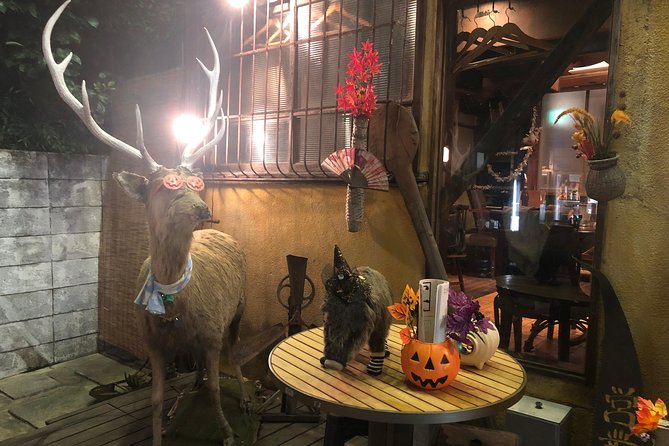
Sangenjaya sits in Setagaya, close to central Tokyo but with a more local evening rhythm. The tour begins at Sangenjaya Station at 6:30 pm, then heads into a maze of lantern-lit lanes filled with compact bars, neighborhood restaurants, and izakayas.
The appeal is not a famous landmark. It is the way the neighborhood works after dark. People meet friends, stop for a quick drink after work, and share small plates in rooms that may hold only a few tables. You get a look at ordinary Tokyo social life while still being close to the city center.
I especially value the location for first-time visitors who have spent their days around Shibuya, Shinjuku, or Asakusa. Sangenjaya gives you a different side of Tokyo without requiring a long train ride. The contrast is part of the experience: a short trip from Shibuya, then narrow lanes where a sign, curtain, or tiny doorway may be all that marks a bar.
You do need to keep your expectations practical. This is not a polished restaurant tour with spacious seating and a fixed menu. The atmosphere depends on small venues, shared dishes, and the social energy of each stop. That is exactly why the tour works for some people and less well for anyone who prefers quiet, private dining.
More Tokyo food tours:
- Tokyo: Shinjuku Food Tour (13 Dishes at 4 Local Eateries)
★ 5.0 · 6,603 reviews - Tokyo Tsukiji Fish Market Food and Culture Walking Tour
★ 5.0 · 3,184 reviews - Tokyo: Shinjuku Food Tour (15 Dishes and 4 Eateries)
★ 4.9 · 2,033 reviews
Stop one: cooking okonomiyaki and monjayaki
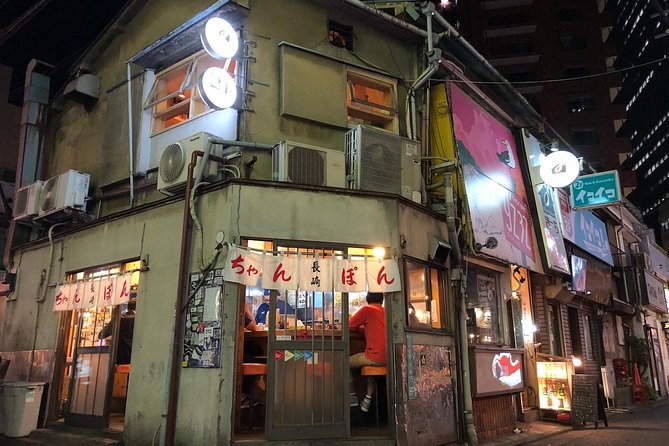
One stop takes place in a traditional teppanyaki restaurant where you cook your own Japanese savory pancakes. Okonomiyaki is the better-known dish, while monjayaki has a softer texture and is closely associated with Tokyo-style casual dining.
The cooking adds useful context. You are not simply handed a finished plate. You see how the food comes together on the hot plate and take part in the meal. Simon can explain the process and help guide you through it, which makes this a good stop for anyone who has never tried teppanyaki-style dining in Japan.
The setting may include tatami seating, based on the experience described by one couple, so be prepared for a more traditional arrangement than a Western restaurant table. If sitting on the floor is difficult, ask about it when booking. The supplied information does not promise a particular seating arrangement for every group.
This stop is also where flexibility matters. One couple requested okonomiyaki and avoided raw fish and meat, and Simon adjusted the evening accordingly. Dietary requirements should be shared in advance rather than left until you arrive. The tour promises a range of food, but it does not promise that every dish can be replaced at the last moment.
Stop two: kushikatsu, Hoppy, and the standing-bar mood
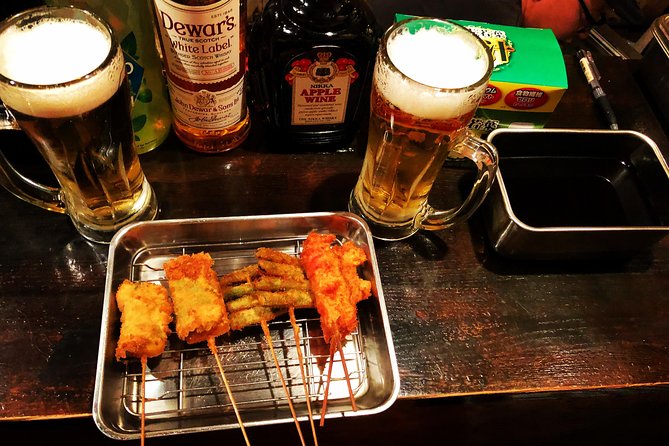
Another stop brings you to a small kushikatsu bar. Kushikatsu consists of skewered and fried foods, served in the casual style associated with Osaka but enjoyed across Japan. Here, the point is not only the skewers. It is the setting.
You may stand, share food, and try Hoppy, a retro Japanese drink often associated with old-school drinking culture. Beer and other traditional drinks are also included. Hoppy is particularly useful for understanding how Japanese bar culture includes more than sake and imported lager.
The bar is described as raucous, so this is likely the most energetic part of the evening. The small room and local crowd create a social atmosphere, but they also mean noise and limited personal space. If you want a calm tasting with long explanations between courses, this will not be the best stop. If you like the feeling of being out for an evening rather than attending a lecture, it should fit well.
Because the group is private, Simon can help you order and explain what you are eating without making you feel lost. That matters in a compact bar where menus may be brief, handwritten, or less useful to someone who cannot read Japanese. You still share plates with the group, so this is not a tour for anyone who wants a separate serving of every item.
Stop three: seafood and sake in a small izakaya
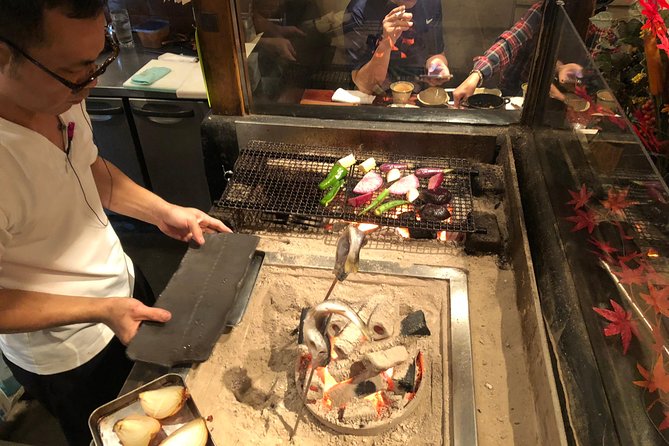
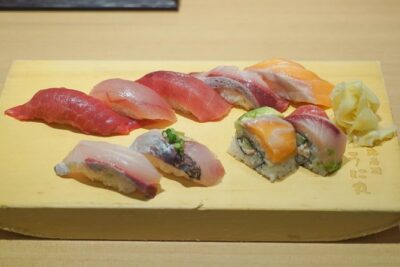
The final major food stop is a hidden-away sake restaurant, where you try seafood and nihonshu, the Japanese term for sake. The food described includes sashimi, grilled fish, charcoal-grilled chicken, pickles, and other small dishes recommended by the guide.
This stop gives the evening a different pace. After the informal energy of the standing bar, a sake-focused restaurant lets you pay more attention to the relationship between food and drink. You may try several types of sake rather than treating it as one single beverage. Beer, shochu, and umeshu are also part of the included drink selection across the evening.
The seafood focus is worth noting before you reserve. If raw fish is a firm no, say so ahead of time. The tour can cater to dietary requirements, and the itinerary can be shaped around preferences, but the experience is built around trying a broad range of Japanese dishes. It is not a seafood-free tour by default.
The restaurant connections are one of the strongest reasons to book with a guide. A first-time visitor could walk through Sangenjaya and still pass these places without realizing what they were. Even if you are comfortable ordering in Japan, finding three suitable small venues in the right order would take time and luck.
A completely different kind of day in Tokyo:
- Mt Fuji and Hakone 1-Day Bus Tour Return by Bullet Train
★ 5.0 · 26,383 reviews - 1-Day Tokyo Bus Tour
★ 5.0 · 14,250 reviews - Tokyo: teamLab Planets TOKYO Digital Art Museum Entry Ticket
★ 4.6 · 9,779 reviews - Mt Fuji & Hakone Cruise, Drum Show Bullet Train 1 Day from Tokyo
★ 4.0 · 7,413 reviews
What you will eat and drink over four hours
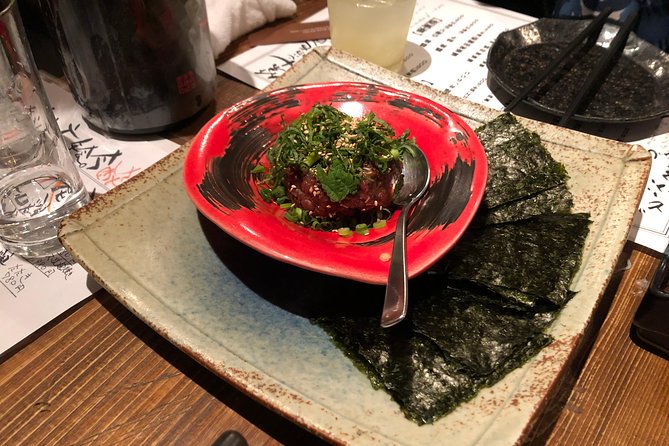
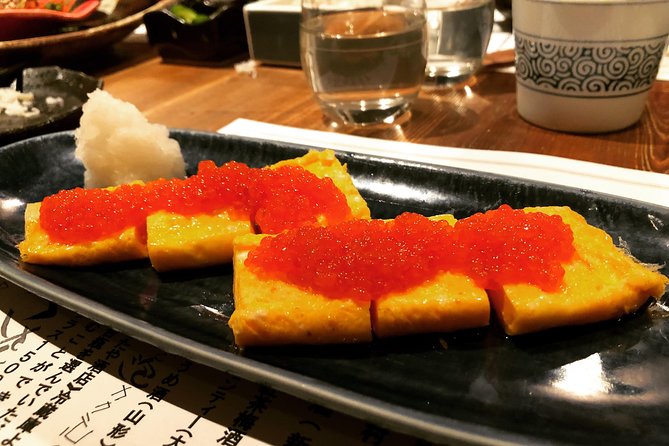
The tour includes dinner and at least 10 Japanese delicacies. Since the plates are shared, the exact selection can vary, but the food list gives you a good sense of the range:
- Sashimi and other seafood
- Grilled fish
- Charcoal-grilled chicken
- Japanese pickles
- Kushikatsu skewers
- Okonomiyaki
- Monjayaki
- Beer
- Sake
- Shochu
- Hoppy
- Umeshu
The list is generous for a four-hour outing. You should not plan another full dinner afterward. One person described leaving very full and more than a little tipsy, though you remain free to drink as much or as little as you choose.
That flexibility makes the price easier to assess. At $229.92 per person, this is not a cheap way to grab dinner in Tokyo. You are paying for a private guide, three venue visits, dinner, alcoholic drinks, translation and ordering help, and access to places you might not find alone. For someone who would otherwise spend the evening guessing at menus and hesitating outside small bars, that can be fair value.
For a confident Tokyo regular who already knows Sangenjaya and can order comfortably, the same price may feel high. The value rests on the guide’s local knowledge and the access it provides, not on the amount of food alone.
Simon’s role and the benefit of a private group
The guide is Simon, and his personality is a major part of the experience. The strongest praise centers on his friendly manner, clear communication, local connections, and willingness to recommend other places to eat and explore during the rest of your Tokyo stay.
That kind of guidance is useful beyond the four hours. Simon lives in Sangenjaya and knows the neighborhood as a place to spend time, not simply as a route between booked restaurants. He can explain what you are eating, give background on Japanese drinking customs, and help you feel comfortable in places where a visitor might otherwise hesitate.
The private format also changes the tone. Groups are generally kept to two to six people, though larger groups can be accommodated. You do not share the tour with strangers outside your booking, which is helpful for couples, families, and solo participants who want a more personal evening.
Solo travelers are explicitly welcome. A private solo booking costs more than joining a large group in many tour formats, but it gives you direct attention and avoids the awkwardness of joining a preexisting party. For couples, the arrangement can feel closer to a hosted night out than a standard sightseeing tour.
Practical details that affect your evening
The tour starts at Sangenjaya Station, at 2 Chome-15 Taishido, Setagaya City, at 6:30 pm. It ends back at the same meeting point after about four hours. Transport to and from Sangenjaya is not included, so you need to make your own way there.
From Shibuya, the neighborhood is close enough to pair with a day in central Tokyo. Still, allow time to reach the station without rushing. The tour depends on arriving at the meeting point on time, and the early evening is when many small venues begin to fill.
Wear comfortable shoes. The walking is light, but the route passes through narrow back streets and may involve standing or moving between small establishments. You should also expect some smoky environments, since smoking is permitted in many bars and restaurants in Japan. Pregnant travelers are not advised to join for this reason.
The legal drinking age in Japan is 20. Anyone younger will receive soft drinks instead. The experience remains food-focused, but alcohol is woven into the evening, so groups with under-20 participants should be comfortable with that setup.
Free cancellation is available up to 24 hours before the start time for a full refund. Changes or cancellations inside that window are not accepted for a refund. The experience requires good weather, and poor weather may lead to a different date or a full refund.
Who will enjoy this tour most
I would choose this tour if you want to understand how Tokyo locals eat and socialize after work. It suits curious eaters who are willing to share dishes, try unfamiliar drinks, and accept that the best venues may have little space.
It is also a good first-night choice. Simon can help you get comfortable with izakaya customs, introduce dishes you might not order alone, and offer practical suggestions for the rest of your trip. The hands-on pancake cooking gives the evening a clear activity, while the other stops provide food and conversation.
You may want a different experience if you avoid alcohol completely, dislike smoky rooms, have difficulty with close seating, or need a strictly fixed menu. The tour can accommodate dietary needs, but you should discuss them before booking. It is best viewed as a flexible food crawl rather than a controlled tasting designed around precise portions.
Should you book the Sangenjaya back-alley tour?
Book it if you want a private, social evening in a part of Tokyo that is easy to miss. The strongest reasons are Simon’s local connections, the three very different izakaya settings, the large amount of food and drink, and the chance to cook okonomiyaki and monjayaki yourself.
At $229.92, the cost is justified most clearly for solo travelers, couples, and small groups who value guidance and access more than a low-cost dinner. You are not just buying dishes. You are paying to enter a local rhythm with someone who can explain what is happening and take away the stress of ordering.
Skip it if your priority is budget dining, a smoke-free setting, or a quiet meal with your own plate at every course. For everyone else, this is a strong way to spend an evening near Shibuya while seeing a more local side of Tokyo.
FAQ
Where does the tour start and finish?
The tour starts at Sangenjaya Station, at 2 Chome-15 Taishido in Setagaya City, at 6:30 pm. It ends back at the same meeting point after approximately four hours.
What food is included?
The tour includes dinner and at least 10 Japanese delicacies. Dishes may include sashimi, grilled fish, charcoal-grilled chicken, pickles, kushikatsu, okonomiyaki, and monjayaki.
Which drinks are included?
Included drinks can include beer, sake, shochu, Hoppy, and umeshu. Soft drinks are served to participants under the legal drinking age of 20.
Can dietary requirements be accommodated?
Yes. You should provide your dietary requirements when booking so arrangements can be made. The food is shared among the group, and the exact dishes may be adjusted where possible.
Is this a private tour?
Yes. Only your group participates. The preferred group size is two to six people, although larger groups can be accommodated.
How much walking is involved?
There is light walking through narrow back streets between the venues. Comfortable footwear is recommended. Smoking is permitted in many Japanese bars and restaurants, so the experience is not advised for pregnant travelers.
Newly reviewed around Tokyo
- Tokyo Asakusa:Calligraphy & Make T-shirt Activity★ 5.0 · 62 reviews
- Intercity Shuttle, Tokyo to Haneda /Narita /Yokohama /Makuhari★ 5.0 · 5 reviews
- 1 Hour Travel around Tokyo with a Professional Photographer★ 5.0 · 3 reviews
- Travel Tokyo with Your Own Personal Photographer★ 5.0 · 43 reviews
- Train in Samurai Swordsmanship and Defeat the Demon in Tokyo★ 5.0 · 5 reviews
- Shuttle Van 6hr Tokyo Tour to-and-from Tokyo, Yokohama and Narita★ 5.0 · 9 reviews
- Kickboxing & Body Training with EX-Pro Fighter★ 5.0 · 4 reviews
- Traditional Japanese Knife Sharpening Class★ 5.0 · 18 reviews
Food, compared.
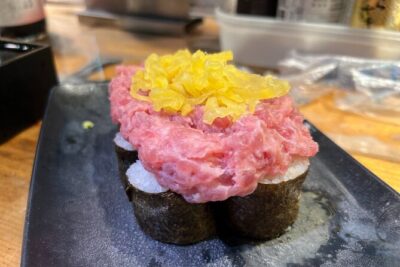
Shinjuku Food Tour (13 Dishes at 4 Local Eateries)
Read our review →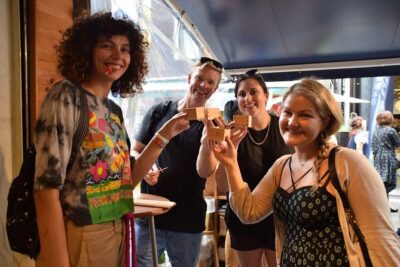
Tokyo Tsukiji Fish Market Food and Culture Walking Tour
Read our review →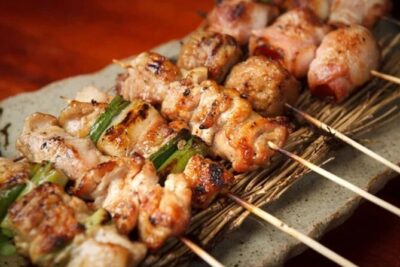
Shinjuku Food Tour (15 Dishes and 4 Eateries)
Read our review →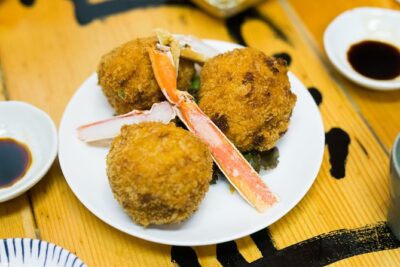
Best of Shinjuku: Izakaya Food Tour (4 Stops, 14+ Tastings)
Read our review →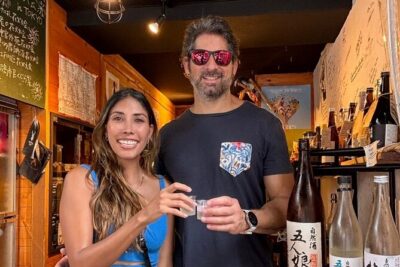
Tokyo Night Foodie Tour in Shinjuku – Seasonal Sushi, Wagyu Beef
Read our review →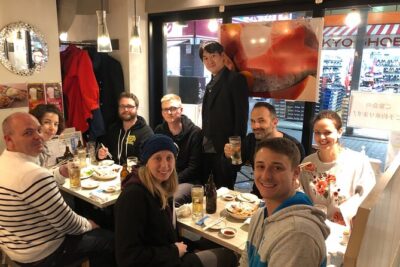
Eat and Drink Like a Local: Tokyo Ueno Food Tour-Taverns&Ramen
Read our review →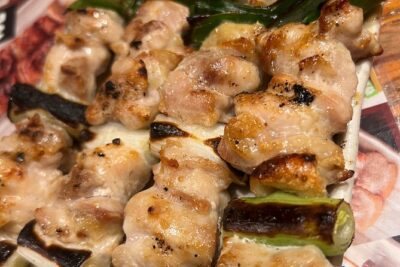
Browse the lists this tour appears in