
Reviewed · TOKYO FOOD TOURS
Flavours of Tokyo: A Journey Through Time – Small Group Food Tour
Tokyo’s food story comes into focus on this long, wonderfully varied walk. You move from the old merchant quarter of Nihonbashi to postwar railway bars in Ginza and Yurakucho, then finish among Akihabara’s anime shops and new-style sweets. The food is the thread tying those eras together.
I like the small maximum group of nine, which gives guides such as Yasu, Miko, and Keiko room to answer questions and help with unfamiliar foods. I also like the wide menu, from dashi and katsuobushi to yakitori, tempura soba, fruit sandwiches, and Pokemon taiyaki. The main catch is the pace: five and a half hours and about four miles of walking will feel too long if you want a quick food crawl.
Key points to know before booking
- Fourteen tastes tell Tokyo’s food story, from Edo-period staples to modern fusion sweets.
- Three distinct districts give the tour more range than a single-neighborhood food walk.
- A maximum of nine people keeps the experience personal and manageable.
- Two short subway rides are extra, and you will handle station stairs.
- The tour ends in Akihabara, not back at the starting point.
- This is a history walk with food, not simply a series of restaurant visits.
Tokyo’s past, present, and future on one plate
The clever idea here is to use food as a guide to Tokyo’s development. You begin in Nihonbashi, an area tied to old commerce and the ingredients that shaped Japanese cooking. You then move through Ginza and Yurakucho, where postwar industry and office culture changed the way people ate. Finally, Akihabara offers a look at food linked to modern entertainment and novelty.
That structure gives the day a clear purpose. You are not just collecting snacks. You are seeing how ingredients, work patterns, transport, shopping, and popular culture have influenced Japanese meals.
The tour includes 14 food and drink items, though not every item is a full meal-sized portion. Most are individual servings. A few are designed to share, including pickles and candied sweet potato, while one drink was changed to an individual bottle after feedback that people enjoyed it more than expected.
At $176 per person, this is not a bargain snack tour. The value depends on what you want. If you would otherwise pay for several meals, local guiding, cultural background, and subway navigation, the price can make sense. If you mainly want the largest possible amount of food in the shortest time, a shorter neighborhood tour may suit you better.
More Tokyo food tours:
- Tokyo: Shinjuku Food Tour (13 Dishes at 4 Local Eateries)
★ 5.0 · 6,603 reviews - Tokyo: Shinjuku Food Tour (15 Dishes and 4 Eateries)
★ 4.9 · 2,033 reviews - Best of Shinjuku: Izakaya Food Tour (4 Stops, 14+ Tastings)
★ 5.0 · 1,863 reviews
Nihonbashi: dashi, dried fish, and the foundations of Japanese cooking
Meet at 11:30 a.m. near the Nihonbashi 1-chome Mitsui Building. Finding the exact meeting point may require care, so I would arrive early and use the building name as well as the address. One person had trouble locating the start because the subway exit information was not prominent enough.
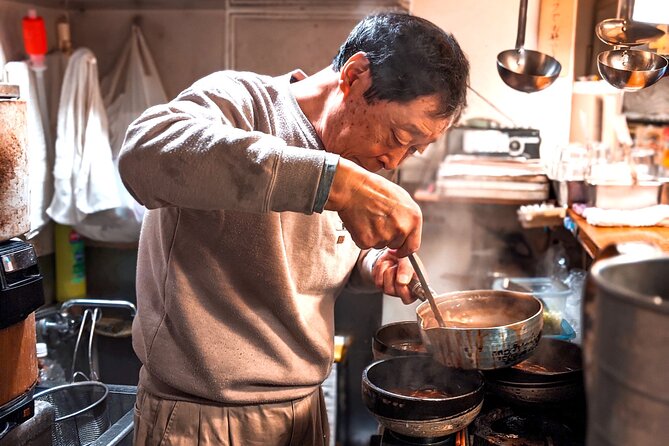
The first section lasts about 90 minutes and introduces the ingredients behind many Japanese dishes. Dashi is the star. This stock often comes from kombu kelp and katsuobushi, dried and fermented bonito flakes. These ingredients help explain why Japanese food can taste delicate while still having plenty of depth.
You may taste the components separately, including dashi, katsuobushi, kombu, satsuma-age, and amazake. That is useful because you learn to recognize the building blocks rather than meeting them only in a finished dish.
Nihonbashi Bridge adds a sense of place. The bridge is more than a photo stop. It helps set up the older Tokyo that existed before the modern railway network and high-rise shopping districts. This is one of the places where the tour’s historical theme earns its keep.
Do not expect a long sit-down meal at this stage. The food comes as a series of small tastes, with the guide explaining what you are eating and why it matters. I like this approach for curious eaters, though someone arriving very hungry may wish for a breakfast first.
Fukutoku Shrine: a short lesson in Japanese worship
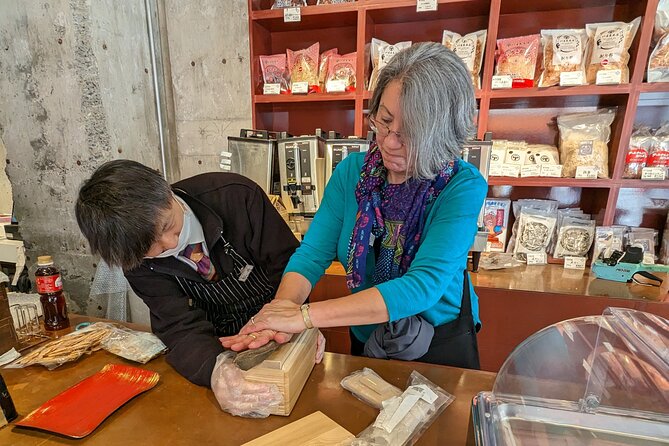
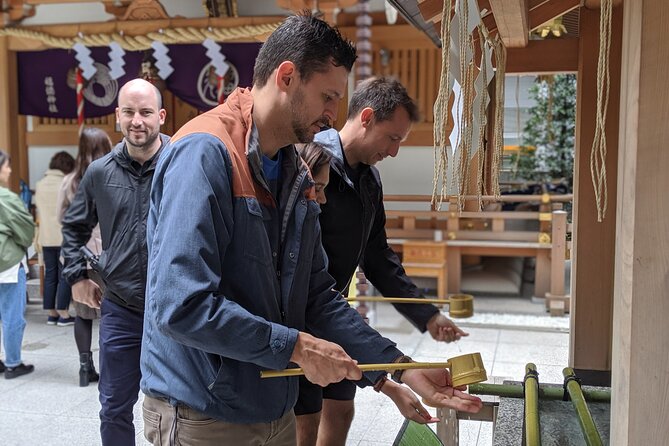
The group makes a brief stop at Fukutoku Shrine, where you learn the difference between a Shinto shrine and a Buddhist temple. The guide also explains how to cleanse yourself and pray at a shrine.
This takes only about 10 minutes, but it adds useful context. Food in Japan is tied to seasonal customs, local traditions, and religious practice, so understanding how a shrine works makes the rest of the day feel less like a string of unrelated tastings.
You will not spend long here, and the tour is not presented as a full religious sightseeing visit. Think of it as a compact cultural pause between food stops.
Ginza and Yurakucho: eating under the railway tracks
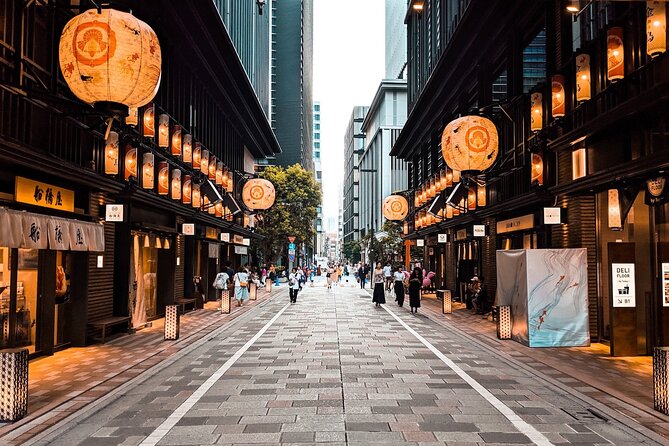
The route then moves toward Ginza and Yurakucho for about 70 minutes. Here the focus shifts to Japan’s postwar industrial growth and the rise of the salaryman.
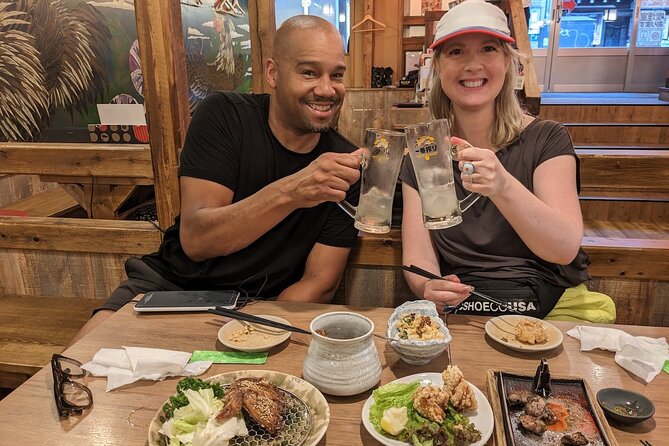
That change in working life affected food. Office workers needed quick meals and after-work drinks, which helped fuel the growth of small bars and restaurants under the railway tracks. These gado shita spots remain one of the most appealing parts of this tour because they show you a practical side of Tokyo that polished shopping streets can hide.
The included lunch tastes in this section include yakitori and tempura soba. Yakitori gives you a classic grilled flavor, while tempura soba combines noodles, broth, and crisp fried ingredients in a familiar Japanese comfort meal.
You may also have a lemon sour, a Japanese alcoholic drink. If you do not drink alcohol, confirm your options with the guide. The tour description specifically includes this drink, so it is worth knowing before you book.
Ginza itself is known for department stores and high-end shopping, but the tour’s interest lies in the contrast with the modest railway-side food businesses. The walk helps you see both sides of the district: polished commercial Tokyo above ground and small, practical eating places tucked beside the tracks.
A completely different kind of day in Tokyo:
- Mt Fuji and Hakone 1-Day Bus Tour Return by Bullet Train
★ 5.0 · 26,383 reviews - 1-Day Tokyo Bus Tour
★ 5.0 · 14,250 reviews - Tokyo: teamLab Planets TOKYO Digital Art Museum Entry Ticket
★ 4.6 · 9,779 reviews - Mt Fuji & Hakone Cruise, Drum Show Bullet Train 1 Day from Tokyo
★ 4.0 · 7,413 reviews
Tokyo International Forum and Marunouchi: a change of scale
From Yurakucho, you walk toward Tokyo Station and pass the Tokyo International Forum. The stop lasts about 15 minutes and gives the group a chance to see one of the area’s impressive modern buildings.
The contrast is deliberate. You have just been considering compact railway bars and working-class eating habits. Now the setting becomes broad, formal, and architectural. This is not a food stop, but it keeps the tour from becoming a restaurant checklist and shows how central Tokyo has changed physically as well as culturally.
A short pause at Kitte Marunouchi follows. The building is close to Tokyo Station and adds another view of the shopping and commercial side of modern Tokyo. These stops are brief, so do not expect a full building tour. Their purpose is to connect the food story with the city around it.
Tokyo Station: tamagoyaki and the fruit sandwich
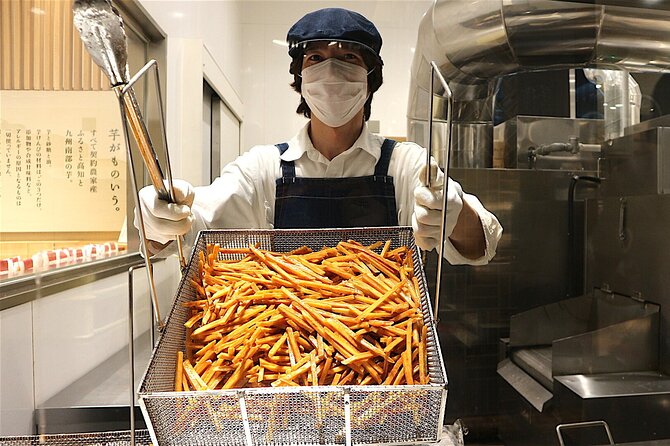
At Tokyo Station, the food shifts toward things commonly eaten on a commute home. You taste tamagoyaki, the sweet-savory Japanese omelette, and a fruit sando, a milk-bread sandwich filled with fresh fruit and whipped cream.
The fruit sandwich is one of the tour’s more memorable contrasts. It looks simple, but the soft bread, cream, and fresh fruit feel quite different from the savory foods earlier in the day. It also shows how Japanese food culture can take a familiar format and give it a distinctly local character.
Tokyo Station is a logical place for this theme. It is a major transport hub, and food sold around stations is built for people heading home, changing trains, or taking something with them. You get a glimpse of ordinary food habits rather than only restaurant specialties.
The food is often served as a taste or shared portion, not as a full individual plate. The operator has adjusted some servings over time, but I would still frame this as a generous tasting walk rather than a formal lunch followed by dessert.
Akihabara: traditional flavors meet pop culture
The final district is Akihabara, famous for electronics, maid cafes, and anime culture. The tour uses this setting to ask what the future of Japanese food might look like.
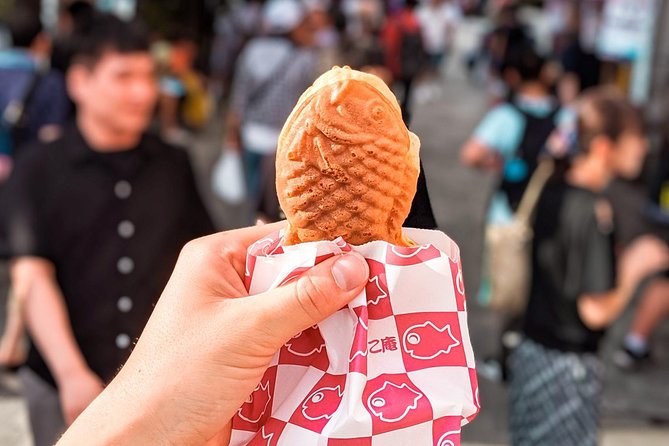
Desserts here combine traditional flavors with modern formats. Depending on the stop, you may taste daifuku or dorayaki, candied sweet potato, matcha, Pokemon taiyaki, and matcha bubble tea or matcha ice cream.
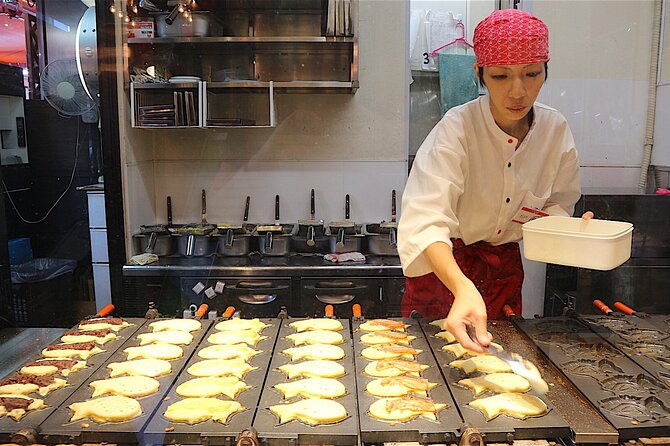
Pokemon taiyaki is a particularly playful finish. Taiyaki is traditionally a fish-shaped cake often filled with sweet bean paste, but the Pokemon version connects an older snack form with current pop culture. It is a small example of the past and present sharing the same plate.
The final section lasts about 45 minutes and ends at Akihabara Station. The route does not return you to Nihonbashi, so plan your afternoon from the eastern side of central Tokyo. That ending is convenient if you want to continue exploring Akihabara, but less convenient if you have left belongings near the starting point.
How much food do you actually get?
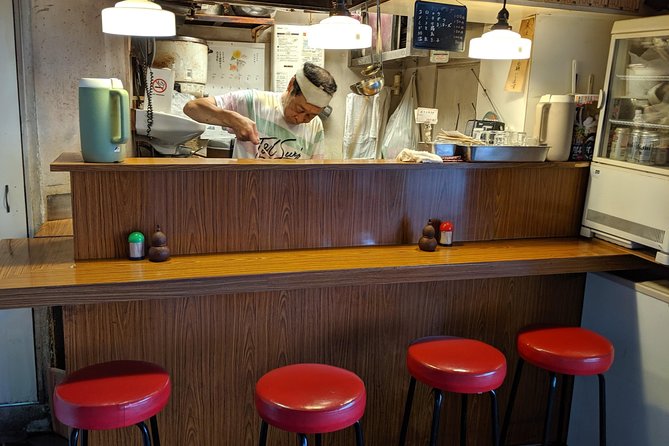
The included items cover a broad range:
- Dashi, katsuobushi, kombu, and satsuma-age
- Amazake
- Imo kenpi, or candied sweet potato
- Daifuku or dorayaki
- Pokemon taiyaki
- Matcha bubble tea or ice cream
- Yakitori
- Tempura soba
- Tamagoyaki
- Fruit sando
- Lemon sour
That list explains why people can find the tour filling, especially when the tastes are spread across five and a half hours. Still, portions and appetite vary. One critical account found too many items served for tasting or sharing and left hungry, while the tour company’s response said most later groups felt full.
I would not book this expecting a single large lunch. I would book it expecting constant sampling with a few more substantial items such as soba and yakitori. If you have a large appetite, eat a light breakfast and carry water.
The guide makes or breaks the long format
A five-and-a-half-hour walking food tour needs a guide who can keep the day moving without turning it into a lecture. The strongest guide names associated with this experience include Yasu, Miko, Keiko, and Paiva.
Yasu is praised for sharing Japanese history, helping with small transit problems, and keeping the pace comfortable. Miko is noted for preparing a booklet with ingredient notes and historical photos, and for following up with dish names and group photos after the tour. Keiko is described as warm and clear when explaining culture, while Paiva is praised for showing interesting places and giving a useful overview of central Tokyo.
Guide assignments can change, so you should not assume a particular person will lead your date. The important point is the guide’s role. This tour works best when you ask questions, compare foods, and take part in the historical discussion. If you want to eat quietly and move on, the structure may feel slow.
Walking, subway rides, and practical planning
You walk about 6.5 kilometers, or four miles, over the full tour. You also take two short subway rides, and those fares are not included in the price.
The walking is generally at a reasonable group pace, but the day includes many subway stairs. You need moderate physical fitness and the ability to keep moving with the group. Comfortable shoes are essential. Anyone who cannot manage the walking requirement should ask about changing to a private tour.
The start time is 11:30 a.m., and the finish is in Akihabara after roughly five and a half hours. That makes this a substantial part of your day. Avoid booking it just before a timed attraction, evening reservation, or long-distance train.
The ticket is mobile, and confirmation is provided at booking. The experience depends on suitable weather and a minimum group size. If the operator cancels for poor weather or too few bookings, you are offered another date or a full refund.
Cancellation wording should be checked carefully at the time of purchase. The supplied terms include both a non-refundable statement and a separate schedule offering a full refund more than seven days ahead, a 50 percent refund between seven and two days, and no refund within 48 hours. Because those terms conflict, confirm the policy shown for your booking before paying.
Who will get the most from this Tokyo food walk?
I would choose this tour if you want food tied to history and neighborhoods, not just a list of famous dishes. It is also a strong choice for a first visit because the route covers several central areas and ends near a major station.
Small groups help solo visitors and couples talk with the guide without getting lost in a crowd. The experience also suits people who want help ordering or identifying foods they might pass by on their own.
It is less suitable if you have limited time, dislike walking, need a large sit-down meal, or prefer to stay in one district. The tour’s slower pace is part of its design. You are given time to hear the background, move between districts, and notice how Tokyo changes from one area to another.
Should you book Flavours of Tokyo?
Book it if the past, present, and future theme appeals to you and you want a broad introduction to Tokyo food culture. The mix of dashi, railway-side dining, station foods, and Akihabara sweets gives you a more thoughtful day than a simple snack hunt.
Skip it if your main goal is speed or maximum portions. At $176, the price is justified by the small group, guide time, many tastes, and cross-city itinerary, but only if you value the cultural explanation as much as the food.
My practical advice is simple: arrive early at Nihonbashi, eat a light breakfast, wear good shoes, budget for two subway fares, and keep the rest of your afternoon open. If that sounds like your kind of day, this is a very good way to understand Tokyo through what people eat.
FAQ
How long does the food tour last?
The tour lasts approximately five hours and 30 minutes, beginning at 11:30 a.m.
How many people can join the tour?
The maximum group size is nine people.
Where does the tour start?
It starts at the Nihonbashi 1-chome Mitsui Building, at 1-chome 4-1 Nihonbashi, Chuo City, Tokyo.
Where does the tour finish?
It finishes at Akihabara Station in the Sotokanda area.
How much walking is involved?
You should expect to walk about 6.5 kilometers, or four miles, over the tour.
Are subway fares included?
No. You take two short subway rides, and those transport costs are paid separately.
What foods and drinks are included?
Included items include dashi, katsuobushi, kombu, satsuma-age, amazake, candied sweet potato, daifuku or dorayaki, Pokemon taiyaki, matcha bubble tea or ice cream, yakitori, tempura soba, tamagoyaki, fruit sando, and a lemon sour.
Is alcohol included?
Yes. The listed alcoholic drink is a lemon sour, a Japanese alcoholic drink.
Is the tour suitable for someone with limited mobility?
The tour requires moderate physical fitness, walking at a reasonable pace, and going up and down many subway stairs. If you cannot meet that requirement, the small-group tour is not suitable.
What happens if the tour is canceled?
If poor weather or an insufficient number of bookings causes the operator to cancel, you are offered another date or experience, or a full refund.
Newly reviewed around Tokyo
- Tokyo Asakusa:Calligraphy & Make T-shirt Activity★ 5.0 · 62 reviews
- Intercity Shuttle, Tokyo to Haneda /Narita /Yokohama /Makuhari★ 5.0 · 5 reviews
- 1 Hour Travel around Tokyo with a Professional Photographer★ 5.0 · 3 reviews
- Travel Tokyo with Your Own Personal Photographer★ 5.0 · 43 reviews
- Train in Samurai Swordsmanship and Defeat the Demon in Tokyo★ 5.0 · 5 reviews
- Shuttle Van 6hr Tokyo Tour to-and-from Tokyo, Yokohama and Narita★ 5.0 · 9 reviews
- Kickboxing & Body Training with EX-Pro Fighter★ 5.0 · 4 reviews
- Traditional Japanese Knife Sharpening Class★ 5.0 · 18 reviews
Tokyo Food Tours, compared.
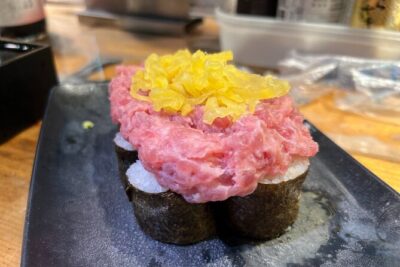
Shinjuku Food Tour (13 Dishes at 4 Local Eateries)
Read our review →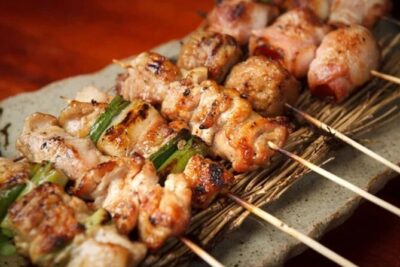
Shinjuku Food Tour (15 Dishes and 4 Eateries)
Read our review →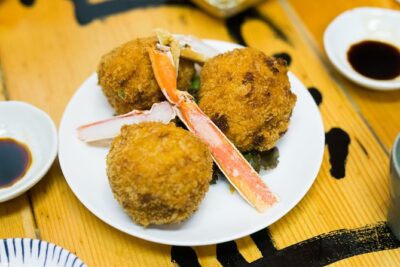
Best of Shinjuku: Izakaya Food Tour (4 Stops, 14+ Tastings)
Read our review →
Tokyo Night Foodie Tour in Shinjuku – Seasonal Sushi, Wagyu Beef
Read our review →
Eat and Drink Like a Local: Tokyo Ueno Food Tour-Taverns&Ramen
Read our review →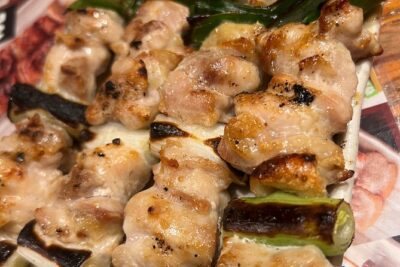
Tsukiji Fish Market: Street Food & Culture Walking Tour
Read our review →
Browse the lists this tour appears in