
Reviewed · TOKYO RAMEN TOURS AND CLASSES
Ramen Tasting – Mini Bowl Ramen Tour
Tokyo ramen is not one dish. It is a whole family of broths, noodles, toppings, and local traditions. This three-hour tour lets you taste six mini-bowls at three ramen shops, so you can compare spicy fish, savory pork, shoyu, tonkotsu, and other styles without ordering six full meals.
I like two things here: the small portions make unfamiliar flavors easy to try, and the walking between shops adds a bit of Tokyo life to what could otherwise be a string of meals. Guides such as Sahori, Brian, Makayla, and Bunga are praised for explaining both ramen and the city. The main drawback is simple: you need to arrive hungry, and the price of $118.92 is high for a meal unless you value the guide, variety, and neighborhood strolls.
Key points at a glance

- Six mini-bowls instead of one huge serving: You get to compare several ramen styles without committing to a full bowl each time.
- Three Tokyo neighborhoods: The route connects ramen stops with local streets and city scenes, beginning around Shibuya Crossing.
- A guide who explains the food: Expect help with ramen styles, ingredients, ordering customs, and how to eat it like a local.
- Small group size: The tour accepts a maximum of 10 people, though some departures may feel much more intimate.
- A fair test for ramen beginners: You can try unfamiliar broths and toppings in manageable portions.
- Plan for walking: Transportation to and from the attractions is not included, and a moderate fitness level is advised.
Why six small bowls work better than one big bowl
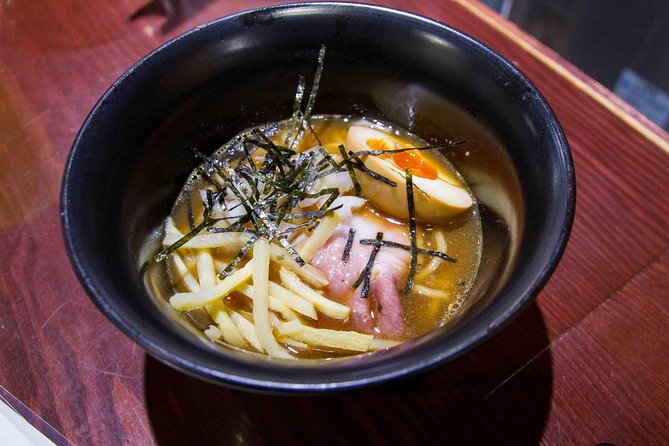
Ordering ramen alone in Tokyo can be confusing. Menus may offer several broths, noodle textures, spice levels, and regional specialties. You may recognize tonkotsu or shoyu, but the differences are easier to understand once you taste them side by side.
That is the smart idea behind this tour. Each mini-bowl gives you a clear sample rather than a full lunch. You can compare a creamy pork broth with a lighter soy-based bowl, then try something spicy or fish-forward. The portions are described as small, but six servings add up. I would treat lunch as the main event, not a quick snack.
This setup also reduces the risk of ordering badly. If a broth is not your favorite, you only have a small portion to finish. If you love it, you have learned what to seek out later during your Tokyo stay.
Some tour arrangements have allowed a pair to sample as many as 12 different ramen types by sharing the mini-bowls. The advertised experience is up to six varieties per person, so you should regard 12 as a possible sharing arrangement rather than the standard promise.
More Tokyo ramen tours and classes:
- Eat and Drink Like a Local: Tokyo Ueno Food Tour-Taverns&Ramen
★ 5.0 · 957 reviews - Ramen & Gyoza Cooking Class in Tokyo with Local Supermarket Visit
★ 5.0 · 823 reviews - Tokyo: Ramen Tasting Tour with 6 Mini Bowls of Ramen
★ 4.9 · 432 reviews
Starting at Shibuya Crossing
The listed meeting area includes Shibuya Crossing, the famous scramble where several streams of people cross at once. The crossing itself is a brief stop, about two minutes, with no admission charge.
That short pause is useful for getting your bearings in one of Tokyo’s busiest districts. It also gives the tour a clear urban starting point before the food begins. If you are meeting your guide around Shibuya Station, allow extra time to find the correct exit. One account specifically praised the guide for helping with the station, which is a good reminder that this part of Tokyo can be confusing even when you are comfortable using public transport.
Do not expect a long sightseeing visit at the crossing. Its value is orientation and atmosphere, not a formal guided tour of Shibuya. The real focus is the food and the neighborhoods connected to it.
Three ramen shops, three different personalities
The tour visits three award-winning ramen shops in neighborhoods known for the dish. Each stop offers a different specialty, with two mini-bowls commonly served at each restaurant. This format makes the stops feel distinct rather than repetitive.
The first bowl may introduce you to a familiar style, while the second pushes you toward something less expected. You might encounter spicy fish flavors, savory pork, delicate shoyu, creamy tonkotsu, or regional variations. The exact shops and bowls can change, so you should not book this expecting a fixed six-item menu.
That flexibility is part of the appeal. Ramen shops are small, specialized businesses, and the guide can explain what makes each one worth visiting. You also get to see how a neighborhood ramen counter differs from the next place on the route.
The tradeoff is that you do not choose the whole meal independently. If you have strong preferences, tell the guide about dietary needs before or at the start of the tour. One account noted that dietary requirements were handled without trouble, but the supplied details do not promise that every restriction can be accommodated.
What you learn about Japanese ramen
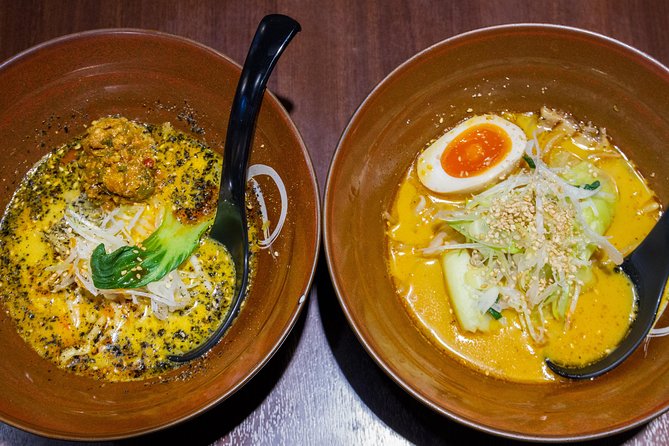
This is more than a food crawl. The guide covers the history and future of Japanese ramen, the difference between styles, and the ingredients that shape each bowl. You also learn basic ramen manners and how people order and eat it locally.
That information matters because ramen is easy to reduce to broth and noodles. In practice, the balance depends on the stock, seasoning, noodle shape, cooking time, toppings, and the way each shop builds its bowl. Tasting several examples helps you notice those details.
Guides including Brian and Sahori have been praised for answering questions about both ramen and Tokyo. Brian is described as especially passionate about the subject, while Sahori is repeatedly noted for her energy, fluency in English, and willingness to check how everyone is enjoying each dish. Makayla is described as friendly and easy to spend time with, and Bunga is praised for combining food information with local history.
The guide makes a difference here. Without context, six small bowls can blur together. With a clear explanation, you begin to understand why one broth feels heavy, another bright, and another more subtle.
More Tokyo food tours:
- Tokyo: Shinjuku Food Tour (13 Dishes at 4 Local Eateries)
★ 5.0 · 6,603 reviews - Tokyo Tsukiji Fish Market Food and Culture Walking Tour
★ 5.0 · 3,184 reviews - Tokyo: Shinjuku Food Tour (15 Dishes and 4 Eateries)
★ 4.9 · 2,033 reviews - Best of Shinjuku: Izakaya Food Tour (4 Stops, 14+ Tastings)
★ 5.0 · 1,863 reviews
Walking between bowls
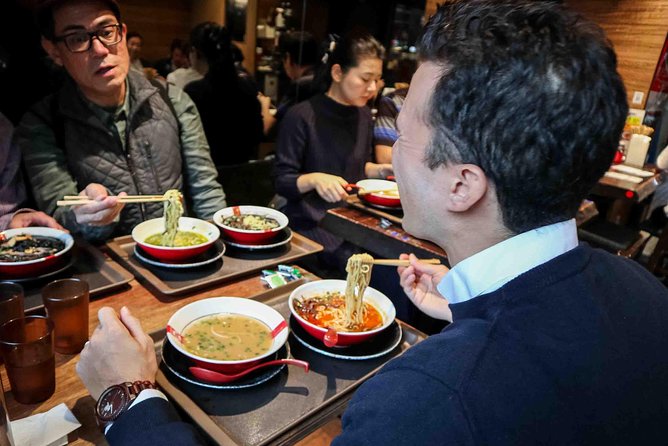
Walking is built into the experience. You visit three neighborhoods and move between restaurants rather than staying in one food hall. This gives you a better sense of Tokyo beyond the dining rooms, and it helps break up the meal.
The route has been described as a good amount of walking, though not too difficult for people with moderate fitness. One account also mentioned a park stroll and cherry blossoms during the visit. That seasonal detail cannot be guaranteed, but it shows how the route may include pleasant city pauses between tastings.
Still, this is not a seated tasting in one location. Wear comfortable shoes and expect stairs or station navigation as part of moving through Tokyo. Transportation to and from attractions is not included, so you will need to reach the meeting point and make your own way onward after the tour.
The walking also affects your appetite. A short stroll after each pair of bowls is welcome, especially once the broth starts adding up.
How much food do you actually get?
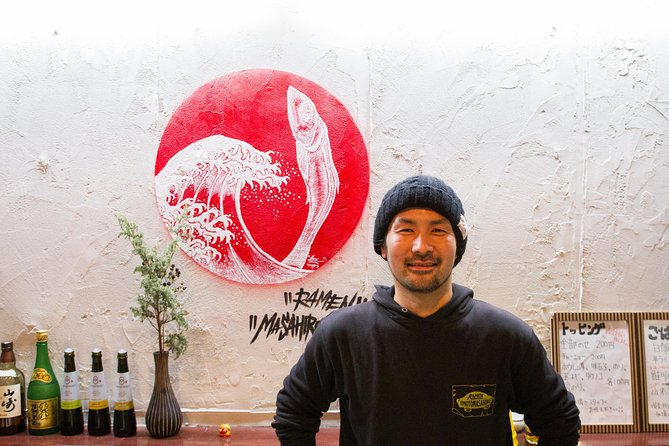
The official inclusions describe lunch with six mini-bowls of ramen and one beverage. Some accounts describe two drinks, but I would plan on the stated inclusion of one beverage unless the provider confirms otherwise.
Do not let the word mini fool you into treating this as a light tasting. The portions are designed for comparison, but six bowls still make a substantial meal. Several accounts stress arriving hungry. The format is generous enough that some people were surprised by how much food they received.
This is best scheduled as lunch rather than paired with a large meal before or after. If you are a small eater, you may need to pace yourself. If you are enthusiastic about ramen, the amount should feel satisfying.
The small-bowl format is especially helpful for families, couples, and first-time ramen explorers. You can discuss each sample as you go, and sharing may increase the number of styles you taste. It is less suited to someone who wants one large, customized bowl and a quiet meal.
Guides are a major part of the value
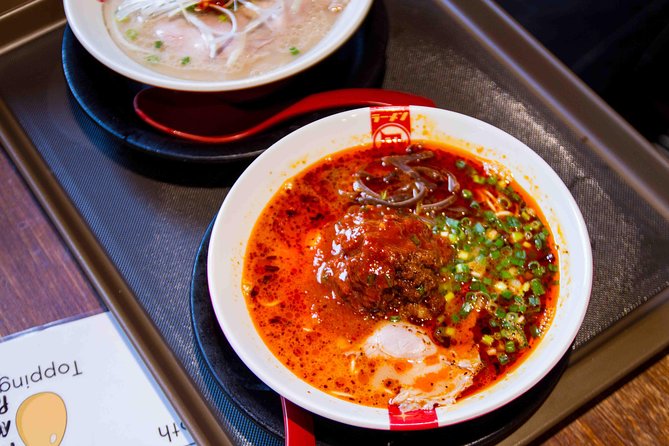
The food is the reason to book, but the guide is what turns it into a tour. A local guide handles the movement between shops, explains the menu, answers questions, and helps you make sense of the differences.
The named guides associated with strong feedback include Sahori, Brian, Makayla, Bunga, Daisy, Julija, Manny, and Deep. The descriptions of these guides vary in personality, but the common strengths are clear: they are friendly, enthusiastic, comfortable discussing ramen, and willing to explain Tokyo beyond the bowl.
Sahori is repeatedly singled out for her warmth, energy, and clear English. Brian is valued for his passion and detailed explanations. Makayla is praised for making the group feel relaxed, while Daisy is credited with helping people try styles outside their normal choices. Manny is described as entertaining and good at explaining where different ramen types came from.
You cannot select a particular guide from the information provided, so book for the structure of the experience rather than one individual. Still, the consistency of the guide comments is encouraging.
Group size and the feel of the afternoon
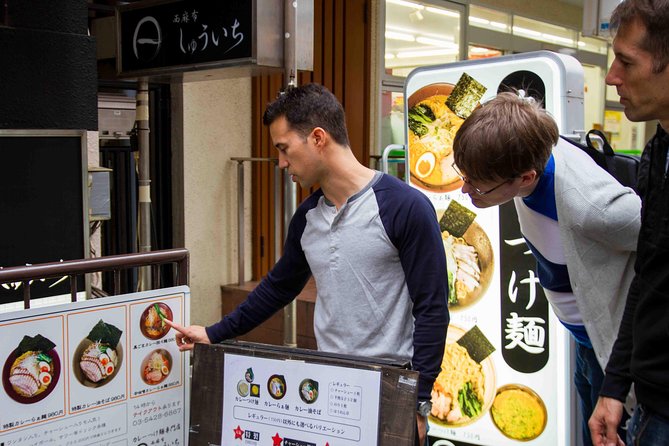
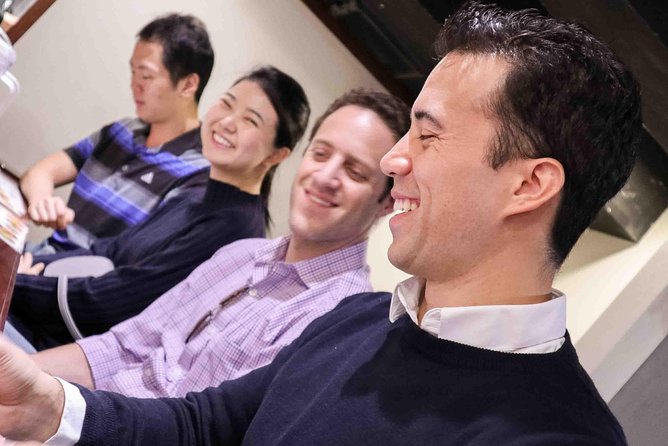
The maximum group size is 10 people. That is small enough for a guide to answer questions and keep the group together in busy areas. It also suits a food experience, where seating at compact ramen shops can be limited.
Some departures may be much smaller. One account described a private-feeling outing with only a parent, child, and guide, while another family of four enjoyed the format together. You should not assume a private tour, but the group cap keeps it from becoming a large procession.
A group can add to the fun because you compare reactions to each bowl. The downside is that timing depends on the whole party. If you prefer to eat at your own pace, remember that the tour has three scheduled stops and shared movement through the city.
Is $118.92 a good value?
At $118.92 per person, this is not a cheap ramen lunch. You could order a single excellent bowl in Tokyo for far less. The price makes sense only if you want several things at once: a guided introduction, six tastings, neighborhood walking, cultural background, and help navigating unfamiliar shops.
I see the value in the variety. Ordering six full bowls independently would be wasteful, and finding several distinct shops on your own takes planning. The tour removes that work and gives you a structured way to compare styles.
The value is strongest for first-time visitors, ramen fans, and people who do not know how to choose from a Japanese menu. It is weaker for experienced Tokyo diners who already know their favorite shops and are happy to explore alone.
The 99 percent recommendation rate and five-star overall rating suggest a very strong record, but price remains a personal call. If you judge the experience only by the amount of food, it is expensive. If you are paying for access, explanation, and variety, it becomes easier to justify.
Who should book this ramen tour?
I would choose this tour if you want an easy introduction to Japanese ramen and do not want to spend your first days guessing at menus. It also works well near the start of a Tokyo trip because the guide can give you ideas for later meals.
It suits:
- First-time visitors to Tokyo
- Ramen fans who want to compare styles
- Couples and families who enjoy tasting together
- People who prefer small portions over one large bowl
- Anyone who wants food paired with neighborhood walking
- Diners who appreciate help with ordering and local customs
I would think twice if you have a strict diet that makes broth, noodles, or toppings difficult, though dietary needs have been handled successfully in at least one case. I would also skip it if you dislike walking, eat very little, or want a quiet, unhurried lunch.
The mobile ticket is convenient, and confirmation arrives when you book. Free cancellation is available up to 24 hours before the start time, with local-time cutoffs. Changes or cancellations inside that window are not accepted for a refund.
My practical advice before you go
Eat lightly beforehand. Six mini-bowls and a drink are more filling than the name suggests.
Wear shoes suited to city walking and arrive with enough time to find the meeting point around Shibuya or the specified neighborhood. Public transportation is nearby, but getting to and from the attractions is your responsibility.
Ask questions. The tour becomes more valuable when you compare the broths, ask why one shop uses a certain noodle, or find out how regional ramen differs. You are not just checking six meals off a list.
If you are traveling with someone, consider sharing tastes when appropriate. Some people have managed to try up to 12 types as a pair, though the standard experience is up to six bowls per person.
Should you book it?
Book it if you want a guided, generous introduction to Tokyo ramen and like the idea of tasting several styles rather than choosing one bowl. The strongest reasons are the six-bowl comparison, the three-shop route, and guides who bring real enthusiasm to the subject.
Skip it if $118.92 feels too high for lunch, if you already have a carefully planned ramen list, or if walking between restaurants is not appealing. For most first-time ramen fans, though, this is a practical way to replace menu uncertainty with a clear sense of what you like.
FAQ
How long does the ramen tour last?
The experience lasts approximately three hours.
How many ramen varieties will I taste?
The tour includes up to six mini-bowls of ramen. Some accounts describe pairs sharing enough samples to try up to 12 types, but the advertised amount is up to six varieties.
How many ramen shops are included?
You visit three award-winning ramen shops in three Tokyo neighborhoods.
Is a drink included?
Yes. The official inclusions list one beverage with the six mini-bowls of ramen.
Where does the tour start?
The listed itinerary includes Shibuya Crossing, also called Shibuya Scramble Crossing. Check your booking confirmation for the exact meeting instructions.
Is transportation included?
No. Transportation to and from the attractions is not included, although the experience is near public transportation.
How many people can join the tour?
The maximum group size is 10 people.
Do I need to be physically fit?
A moderate level of physical fitness is recommended because the tour includes walking between neighborhoods and ramen shops.
Can I cancel for a refund?
Yes. You can cancel at least 24 hours before the experience start time for a full refund. Cancellations or changes made less than 24 hours before the start time are not accepted for a refund.
Newly reviewed around Tokyo
- Tokyo Asakusa:Calligraphy & Make T-shirt Activity★ 5.0 · 62 reviews
- Intercity Shuttle, Tokyo to Haneda /Narita /Yokohama /Makuhari★ 5.0 · 5 reviews
- 1 Hour Travel around Tokyo with a Professional Photographer★ 5.0 · 3 reviews
- Travel Tokyo with Your Own Personal Photographer★ 5.0 · 43 reviews
- Train in Samurai Swordsmanship and Defeat the Demon in Tokyo★ 5.0 · 5 reviews
- Shuttle Van 6hr Tokyo Tour to-and-from Tokyo, Yokohama and Narita★ 5.0 · 9 reviews
- Kickboxing & Body Training with EX-Pro Fighter★ 5.0 · 4 reviews
- Traditional Japanese Knife Sharpening Class★ 5.0 · 18 reviews
Tokyo Ramen Tours and Classes, compared.
Eat and Drink Like a Local: Tokyo Ueno Food Tour-Taverns&Ramen
Read our review →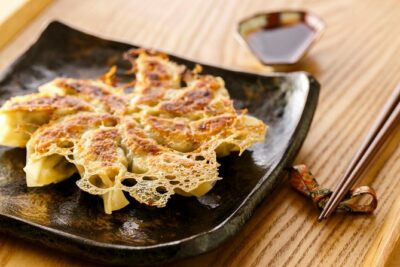
Ramen & Gyoza Cooking Class in Tokyo with Local Supermarket Visit
Read our review →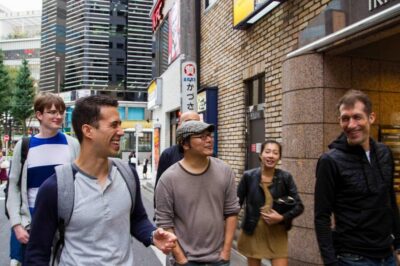

Easy Ramen Cooking Experience in Kabukicho, Shinjuku
Read our review →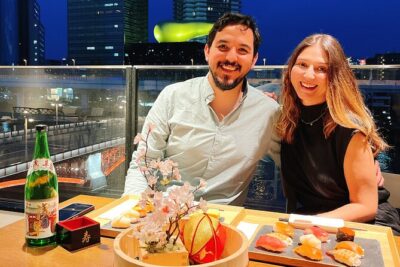
Ramen and Sushi Cooking Class with Sake Pairing Set in Tokyo
Read our review →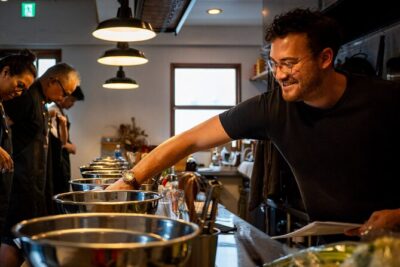
Professional Ramen & Gyoza with Ramen Chef in a restaurant!
Read our review →
Ramen Dojo Tokyo | Make All 3 (Tonkotsu/Shoyu/Miso)
Read our review →Ramen Dojo Tokyo | Make All 3 (Tonkotsu/Shoyu/Miso)
Read our review →Browse the lists this tour appears in