
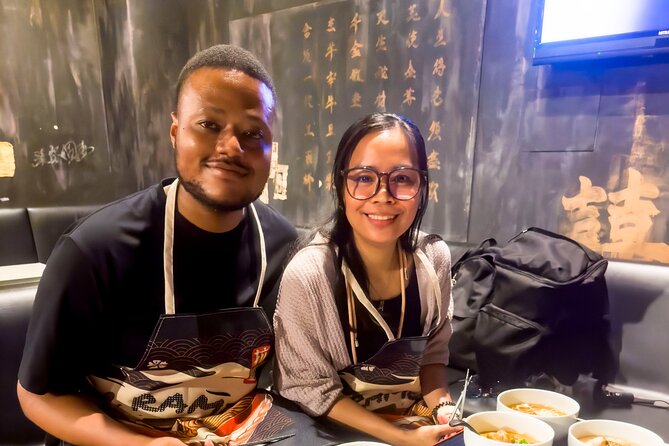
Reviewed · TOKYO RAMEN TOURS AND CLASSES
Shibuya: Ramen Dojo Tokyo | Make All 3 (Tonkotsu/Shoyu/Miso)
Three ramen styles, one short lesson, and a professional noodle machine make this Shibuya class a neat way to get beyond simply ordering a bowl. You knead dough, cut noodles, prepare chicken chashu, adjust soup, and taste tonkotsu, shoyu, and miso side by side.
I like the small group limit of eight, since beginners get room to ask questions and work with the equipment. I also like the three mini bowls: you can compare the flavors without committing to one large serving. The main consideration is that the soup bases are prepared in advance, so this is more a noodle-making and ramen assembly class than a full broth-from-scratch workshop.
Key points to know before booking
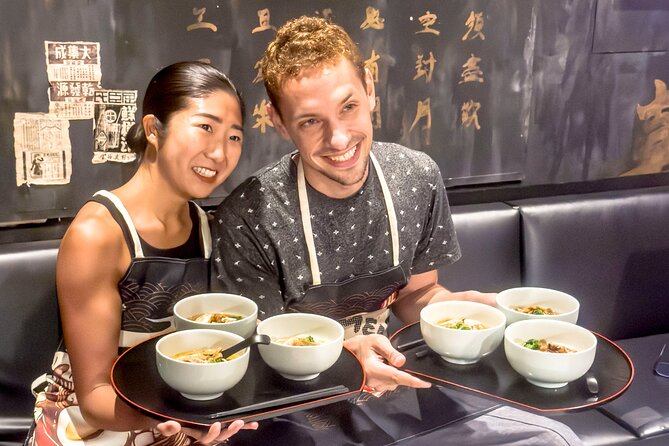
- Three styles in 90 minutes: Taste tonkotsu, shoyu, and miso in one sitting.
- Hands-on noodle work: Knead dough and run it through a professional cutter yourself.
- Small class size: The maximum is eight people, with an English-speaking instructor.
- A useful home takeaway: You receive a digital recipe after class.
- A light but satisfying meal: Three mini ramen bowls are included, along with chicken chashu and toppings.
- Near Shibuya Station: Allow about 10 minutes to walk to the studio, then you finish where you started.
Making ramen near Shibuya Station
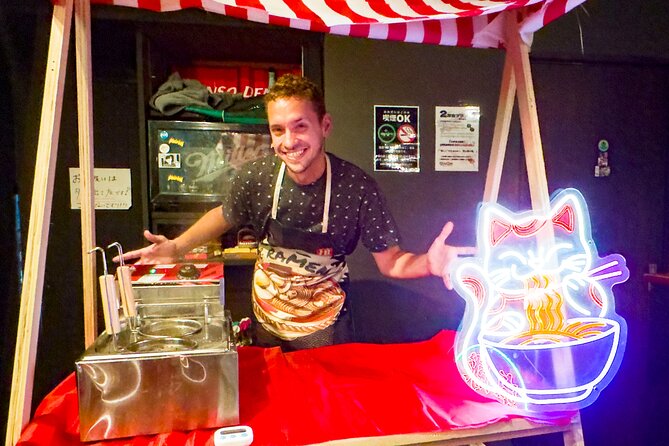
The class takes place at the Umekita Building, 7-11 Maruyamachō, roughly a 10-minute walk from Shibuya Station. That location matters. You are not committing to a long ride across Tokyo for a 90-minute activity, and you can continue shopping, sightseeing, or eating around Shibuya when the lesson ends.
The studio setting also keeps the focus on the food. This is not a restaurant demonstration where you sit back and watch a cook work. You use the kitchen equipment, handle the dough, help prepare the toppings, and finish your own bowls.
The class is conducted in English, and the small group gives the instructor time to guide each person. That makes it a good pick if you have never made noodles before. One participant who described being new to cooking found the process difficult at first, but the patient instruction helped make it manageable.
The activity is listed at about $86.22 per person. That is not cheap for a 90-minute meal, but the price covers instruction, ingredients, kitchen equipment, an apron loan, three tastings, and a digital recipe. You are paying for an activity and a meal, not simply for three small portions of ramen.
More things to do in Shibuya:
- Official Street Go-Kart in Shibuya
★ 5.0 · 3,435 reviews - Tokyo: Street Kart Experience in Shibuya
★ 4.9 · 1,484 reviews - Shibuya Meltdown Nightlife Tour: All-You-Can-Drink Bar Hopping
★ 5.0 · 1,058 reviews
The first 10 minutes: check-in and a clear briefing
The opening briefing takes about 10 minutes. This is when you get settled, put on the borrowed apron, and learn how the class will run.
A short introduction is useful here because the session moves through several tasks in a tight schedule. You will make noodles, prepare chicken chashu, finish the meat, prepare the noodles and soup, plate three bowls, and sit down to eat. Knowing the order helps you follow along without feeling rushed.
The format also suits mixed groups. An eight-person maximum means the instructor can offer help as you knead dough or work with the cutter. Children can take part too. An 8-year-old was accommodated successfully, which makes this a possible family activity for children who can follow kitchen instructions and use the equipment with adult support.
You should expect a practical class rather than a long cultural lecture. The cultural connection comes through ramen itself, Japan’s everyday comfort food and one of its best-known dishes. The focus is on making and tasting.
Chicken chashu and the limits of the broth lesson
The next step is chicken chashu preparation, which takes about five minutes, followed by another 10 minutes to finish the chicken. Chashu is the tender, seasoned meat commonly placed on ramen, and preparing it gives you more to do than simply cooking noodles.
The chicken also helps turn the finished bowls into a complete meal. You are not tasting plain noodles in soup. You add meat and toppings, then arrange each bowl for the final photo.
Here is the point to keep clear: the soup bases are shown and adjusted, but the full broth-making process is not the heart of the lesson. The ingredients for the noodles are prepared in advance, and the broth is also prepared before or during the class rather than made from raw ingredients over several hours.
That is not a problem if your main goal is to learn noodle technique and compare flavors. It is a limitation if you booked mainly to learn how to build tonkotsu broth from bones or make a complete soup base from the beginning. One participant specifically wanted more broth instruction, and the provider acknowledged that the lesson could offer more detail there.
The class does let you adjust the soup to your preferred taste. That is useful because ramen is not one fixed flavor. You get a chance to notice how seasoning changes the character of each bowl, even though you are not making the entire stock from scratch.
Twenty minutes of kneading and noodle cutting
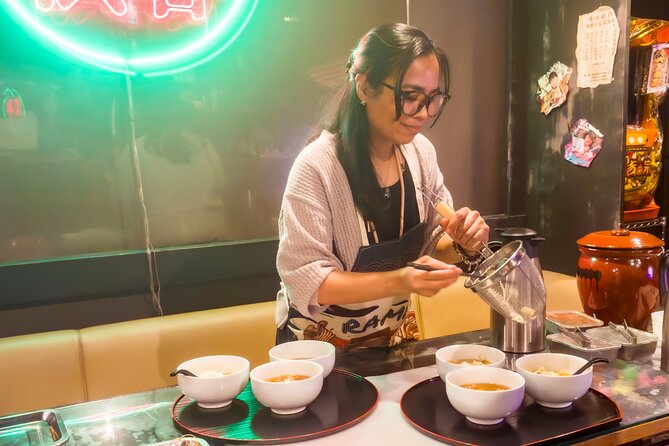
Noodle making is the most hands-on part of the session. You knead the dough, then push it through a professional noodle machine or cutter. This gives you a direct feel for the work behind the bowl you usually receive at a restaurant.
For beginners, the machine is a major advantage. Cutting noodles evenly by hand would take more time and skill, while the professional equipment lets you see how dough becomes the long strands used in ramen. The instructor can help with the parts that feel awkward at first.
The 20-minute noodle segment is long enough to feel like a real activity, but not so long that the class becomes a flour workshop. You still have time for the chicken, soup, plating, and tasting.
Expect flour and dough handling. The experience is not suitable for people with severe airborne flour sensitivity, celiac disease, or severe wheat, egg, or soy allergies. The ingredients also mean it is not a good match for anyone who needs strict vegan, vegetarian, or religious dietary compliance. A vegetarian broth is not part of the stated offering.
If you want to recreate the noodles at home, pay close attention to the texture of the dough and the cutting process. The digital recipe supplied afterward is useful, but a recipe cannot replace noticing how the dough feels as you work it. That is one reason the in-person portion has value.
More Tokyo ramen tours and classes:
- Eat and Drink Like a Local: Tokyo Ueno Food Tour-Taverns&Ramen
★ 5.0 · 957 reviews - Ramen & Gyoza Cooking Class in Tokyo with Local Supermarket Visit
★ 5.0 · 823 reviews - Tokyo: Ramen Tasting Tour with 6 Mini Bowls of Ramen
★ 4.9 · 432 reviews - Tokyo: Easy Ramen Cooking Experience in Kabukicho, Shinjuku
★ 4.6 · 321 reviews
Finishing the chicken and preparing the three soups
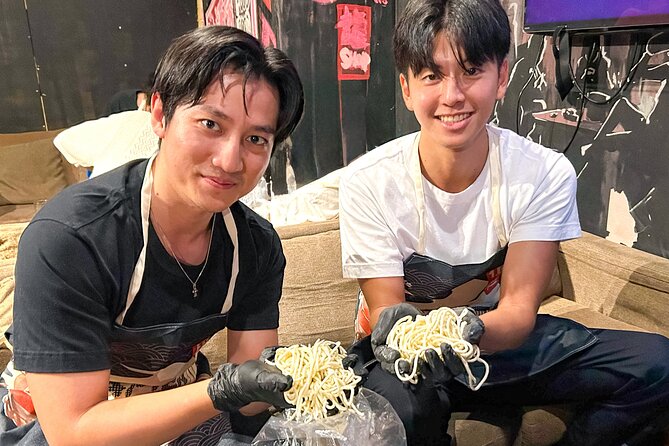
After the noodle work, you return to the chicken chashu and finish it. The schedule then allows about 10 minutes for boiling noodles and preparing the soup.
This stage brings the separate pieces together. Fresh noodles need to be cooked at the right moment, since they can lose their best texture if they sit too long. The instructor guides the timing, then helps you prepare the three ramen styles.
The three choices are:
- Tonkotsu: A creamy, savory style associated with pork-bone ramen, though this class uses the stated ingredients and serves chicken chashu.
- Shoyu: A soy-sauce-based style with a more seasoned, savory profile.
- Miso: A fuller, fermented soybean flavor with a stronger, more rounded taste.
You are not receiving three full restaurant-size bowls. Each serving is a mini bowl, which is the right arrangement for a tasting class. It lets you compare the soups without becoming uncomfortably full, and it leaves room to notice the differences between them.
The side-by-side format is one of the strongest reasons to book this experience. If you order ramen one bowl at a time, you may know which bowl you like best, but you will not easily compare three styles in the same sitting. Here, you can taste the contrast while the preparation is still fresh in your mind.
Five minutes of plating, toppings, and photos
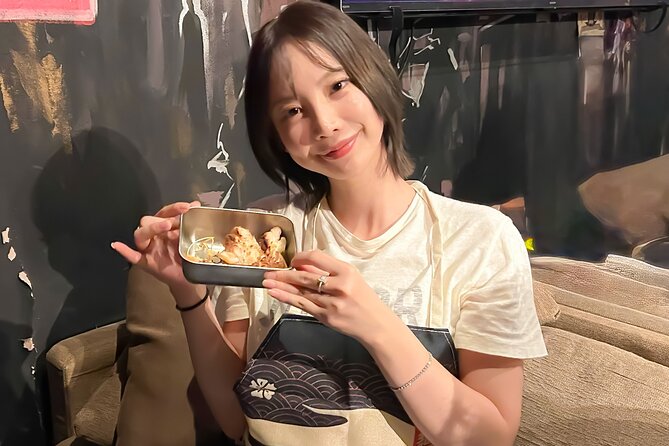
Plating takes about five minutes. You add the noodles, soup, chicken chashu, and toppings to create the final trio.
This part has a practical use beyond taking photos. Ramen depends on balance. The noodles, soup, meat, and toppings all need to fit together in each bowl. Seeing three finished versions at once helps you understand how a change in soup affects the whole dish.
The finished setup is also photo-friendly. You get three colorful mini bowls rather than one large bowl, so there is a clear visual difference between the styles. If you enjoy recording your food experiences, this gives you a tidy final moment before eating.
Do not expect a long lesson in Japanese food styling. The plating portion is short and guided. The main value is that you assemble what you have made and can sit down with a proper result.
Thirty minutes to taste and compare
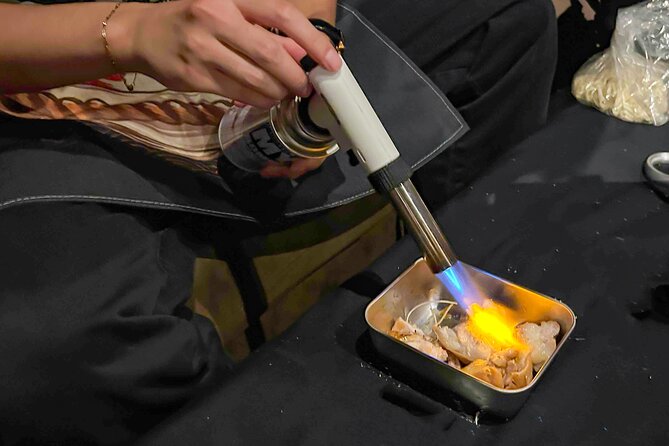
The final 30 minutes are for tasting and photos. You sit down at the same studio where the class began and eat the three ramen bowls you helped prepare.
This is a relaxed finish after a fairly busy sequence of tasks. You can compare the soups in a sensible order, notice the noodle texture, and decide which style best suits your taste. The three small servings also make the meal easier to manage for children or for anyone who wants to keep room for later food in Shibuya.
The food has earned strong praise for taste, and the class has been especially well received for patient instruction. That combination matters. A cooking class can be fun but leave you with something you would not want to eat. Here, the goal is both learning and a satisfying lunch or early dinner.
The 30-minute tasting period also gives the instructor time to answer questions. Use it to ask about substitutions, noodle texture, seasoning, or how to use the recipe at home. Since the session ends at the starting point, you do not need to hurry away for a transfer.
What you can realistically learn for home cooking
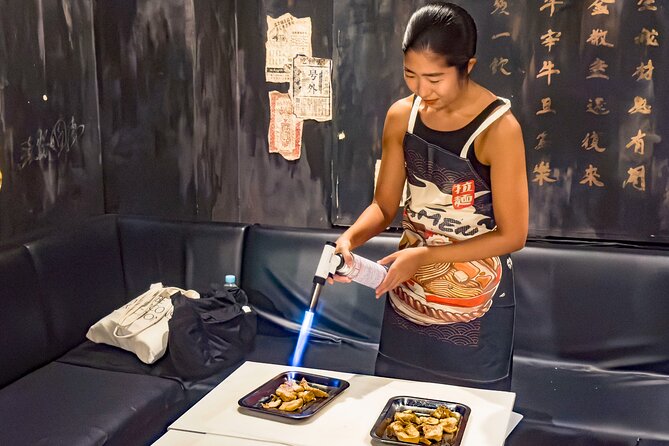
The digital recipe provided afterward gives you a way to repeat parts of the experience at home. You will have learned the broad sequence: prepare the dough, cut the noodles, cook them, season the soup, prepare the chicken, and assemble the bowl.
The most useful lessons are likely to be the physical ones. You can see how the dough behaves, how the machine cuts it, and how the finished noodles look before they go into the soup. You also learn how three different soup styles change the final dish.
The recipe is not a promise that you can reproduce a long-simmered restaurant broth in 90 minutes. If you want a detailed lesson in making tonkotsu stock from bones, this class may leave you wanting more. The broth portion is better understood as a comparison and seasoning lesson.
That distinction makes the experience easier to judge. Book it for a compact introduction to homemade ramen, fresh noodle work, and flavor comparison. Choose something else if your only priority is stock preparation.
Who will get the most from this class
I would recommend this for first-time ramen makers, families with children who can take part in a kitchen activity, and visitors who want a food experience close to Shibuya rather than another sightseeing stop.
It also works well for people who want to learn by doing. You are not just watching an instructor prepare food. You knead, cut, assemble, and taste. The English-language guidance and eight-person maximum make the class approachable for beginners.
It may not suit you if you have severe wheat, egg, or soy allergies, celiac disease, a serious flour sensitivity, or strict dietary requirements. The class includes chicken chashu and does not offer stated special substitutes beyond the standard experience.
You should also be comfortable using stairs, since the activity is not suitable for people unable to do so. Hotel pickup and drop-off are not included, but the studio is near public transportation and the walk from Shibuya Station is about 10 minutes.
Free cancellation is available if you cancel at least 24 hours before the local start time. Cancellations or changes inside that window are not refunded or accepted, so leave yourself some flexibility when booking.
Is $86.22 a fair price?
At $86.22 per person, this class costs more than simply ordering a bowl of ramen in Tokyo. That comparison misses the point, though. You are getting 90 minutes of instruction, access to professional kitchen equipment, ingredients, an apron, chicken chashu, three mini bowls, and a recipe for later use.
The value is strongest if you want a hands-on activity. You receive several tastings and a practical introduction to noodles in a short session, and the central location saves travel time. The price is less attractive if you mainly want a large meal or a detailed broth-making course.
For a family, the cost adds up quickly, but the three-style format can be more memorable than a standard restaurant visit. For solo visitors or couples who like cooking, it offers a clear way to spend part of an afternoon before returning to Shibuya’s shops and restaurants.
Should you book the Ramen Dojo Tokyo class?
Book it if you want to make fresh noodles, compare three ramen styles, and enjoy a compact English-language activity near Shibuya. The small group, patient guidance, professional cutter, and recipe make it friendly for beginners, while the three mini bowls give you a useful taste comparison.
Skip it if your main goal is learning broth from raw ingredients, eating a full-size ramen meal, or finding strict vegetarian, vegan, or allergy-safe food. For everyone else, this is a practical and enjoyable way to turn Tokyo’s favorite quick meal into something you can understand and try at home.
FAQ
Where does the ramen class take place?
The class starts and ends at the Umekita Building, 7-11 Maruyamachō, Shibuya, Tokyo 150-0044, Japan.
How far is the studio from Shibuya Station?
The studio is about a 10-minute walk from Shibuya Station.
How long does the experience last?
The activity lasts approximately 90 minutes.
Which ramen styles will I make and taste?
You will make and taste three mini bowls: tonkotsu, shoyu, and miso.
Is the class taught in English?
Yes. An English-speaking instructor leads the class.
What is included in the price?
The price includes three mini ramen tastings, all ingredients, kitchen equipment, an apron loan, English instruction, and a digital recipe provided after the class.
How many people can join the class?
The maximum group size is eight people.
Can I cancel for a full refund?
Yes, if you cancel at least 24 hours before the experience start time. Cancellations or changes made less than 24 hours before the start time are not refunded or accepted.
Newly reviewed around Tokyo
- Tokyo Asakusa:Calligraphy & Make T-shirt Activity★ 5.0 · 62 reviews
- Intercity Shuttle, Tokyo to Haneda /Narita /Yokohama /Makuhari★ 5.0 · 5 reviews
- 1 Hour Travel around Tokyo with a Professional Photographer★ 5.0 · 3 reviews
- Travel Tokyo with Your Own Personal Photographer★ 5.0 · 43 reviews
- Train in Samurai Swordsmanship and Defeat the Demon in Tokyo★ 5.0 · 5 reviews
- Shuttle Van 6hr Tokyo Tour to-and-from Tokyo, Yokohama and Narita★ 5.0 · 9 reviews
- Kickboxing & Body Training with EX-Pro Fighter★ 5.0 · 4 reviews
- Traditional Japanese Knife Sharpening Class★ 5.0 · 18 reviews
Tokyo Ramen Tours and Classes, compared.
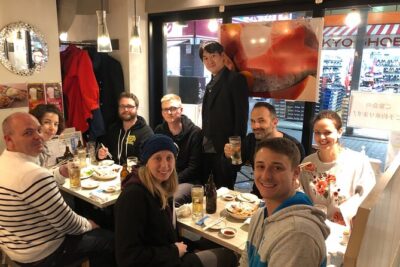
Eat and Drink Like a Local: Tokyo Ueno Food Tour-Taverns&Ramen
Read our review →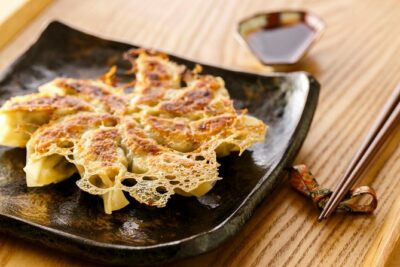
Ramen & Gyoza Cooking Class in Tokyo with Local Supermarket Visit
Read our review →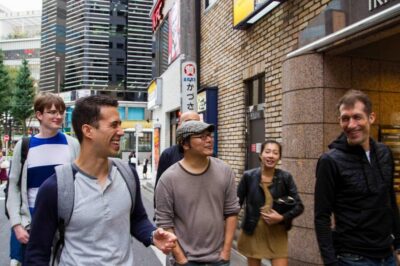
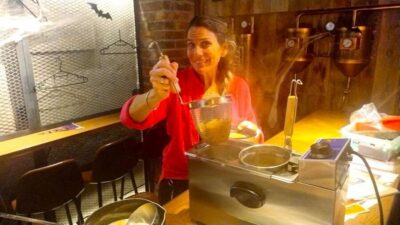
Easy Ramen Cooking Experience in Kabukicho, Shinjuku
Read our review →
Ramen and Sushi Cooking Class with Sake Pairing Set in Tokyo
Read our review →
Professional Ramen & Gyoza with Ramen Chef in a restaurant!
Read our review →
Ramen Dojo Tokyo | Make All 3 (Tonkotsu/Shoyu/Miso)
Read our review →
Browse the lists this tour appears in