
Reviewed · FOOD
REAL, All-Inclusive Tokyo Food and Drink Adventure (leave the tourists behind)
Tokyo gets more interesting when you leave the neon canyons of Shinjuku and Shibuya. This three-hour food and drink walk takes you through Oimachi and Kamata, where narrow lanes, old shopping streets, standing bars, and late-night local life replace the usual sightseeing circuit. You move between several tachinomi, eating enough for dinner and receiving three drinks along the way.
I like the small size, with five people expected and six as the maximum. I also like the two-neighborhood plan: Oimachi gives you a quick start near Shinagawa, while Kamata adds older architecture, a classic shotengai, and a second look at Tokyo nightlife. The main consideration is the walking and standing. This is not a sit-down restaurant tour, and the food may include unfamiliar Japanese dishes.
Key points before you book
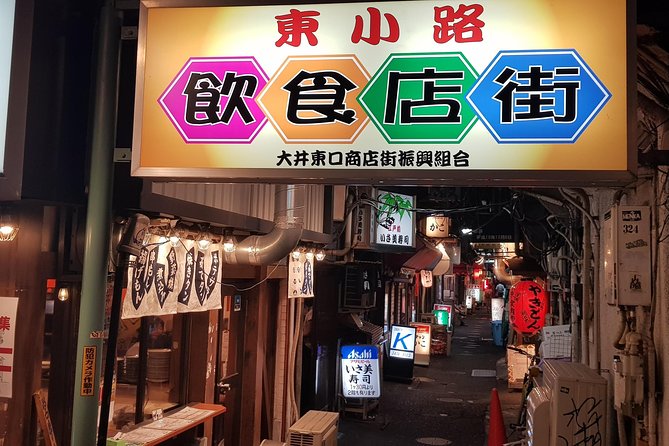
- Two local neighborhoods: Explore Oimachi and Kamata instead of staying in Tokyo’s main sightseeing districts.
- Three drinks included: Choose alcoholic or non-alcoholic beverages, with beer, sake, and other options available.
- Dinner-sized food: Several small stops provide enough food to count as an evening meal.
- Very small group: The experience is designed for about five people and capped at six.
- Local guides make the difference: Andrew, Mini, Ryuhki, Yeman, and Lukas have each led highly praised outings.
- Simple rail connection: The tour begins at 6:30 pm at Oimachi Station and ends near Kamata Station.
Why Oimachi is a smart place to begin
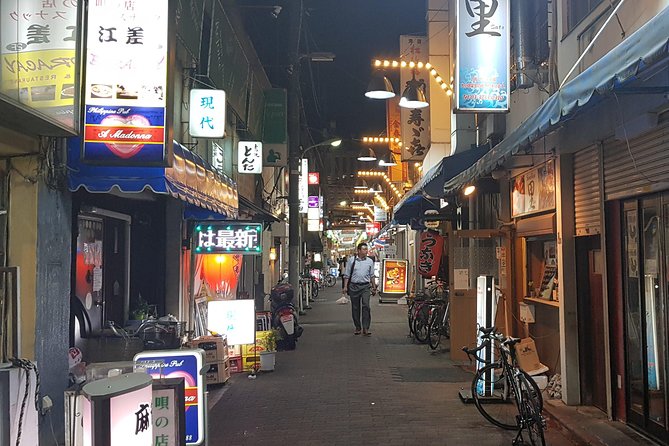
Oimachi is only a short ride from Shinagawa, yet its backstreets feel far removed from the grand hotel towers and major shopping zones. From Oimachi Station, you quickly reach narrow lanes lined with small eateries, bars, and old storefronts. This is the kind of setting that is easy to miss when you spend your Tokyo nights around Shibuya Crossing or the Kabukicho entertainment district.
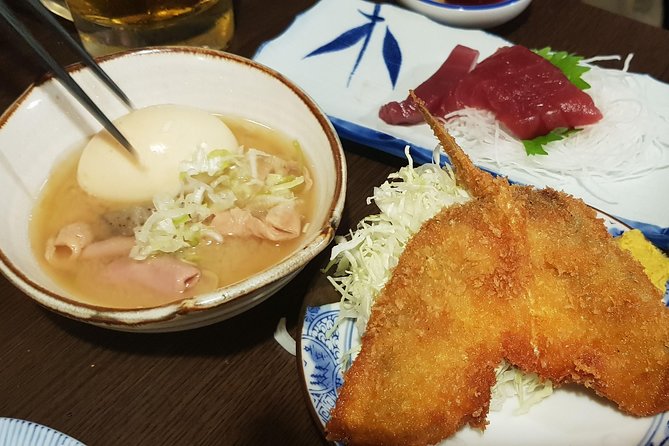
The first stop is a tachinomi, a Japanese standing bar. You can expect a cold beer or another drink, along with Japanese-style pub food. The food is meant to be shared in small portions, which suits a progressive evening with several stops better than one large meal.
You do not have to be an adventurous eater to take part. Western-style choices are available for anyone who feels cautious about more unusual Japanese ingredients. Still, I would come ready to try something new. Part of the value here is seeing what ordinary after-work dining can look like, rather than simply ordering the most familiar dish on a menu.
The first Oimachi portion lasts about an hour and a half. After eating and drinking at two restaurants, your guide leads you through the surrounding streets and explains the area. The walking is not just a way to get from one bar to the next. It gives you a chance to notice the compact buildings, local businesses, and small details that disappear in Tokyo’s larger commercial centers.
More Tokyo food tours:
- Tokyo: Shinjuku Food Tour (13 Dishes at 4 Local Eateries)
★ 5.0 · 6,603 reviews - Tokyo Tsukiji Fish Market Food and Culture Walking Tour
★ 5.0 · 3,184 reviews - Tokyo: Shinjuku Food Tour (15 Dishes and 4 Eateries)
★ 4.9 · 2,033 reviews
Standing bars, small plates, and a local evening meal
Tachinomi are a useful introduction to Tokyo’s casual drinking culture. You stand at the counter or in a compact space, order a drink, and eat a few dishes without committing to a long formal meal. These places can feel intimate and lively, but they may not be ideal if you need a chair throughout the evening.
The experience includes dinner and three alcoholic or non-alcoholic drinks in total. Alcoholic beverages are included, and beer and sake are specifically part of the food and drink selection. You can choose non-alcoholic drinks instead, which makes the tour possible for people who do not drink, though the atmosphere is still centered on bars.
A practical point: three drinks spread across roughly three hours is enough for many people, but not everyone. The package is designed around sampling rather than heavy drinking. You will have food along the way, and the guide can help you understand what you are ordering.
The food may include both Japanese and Western-style bar snacks. The exact dishes are not fixed in the details provided, so you should not book this expecting one specific specialty. Think of it as a guided introduction to several local places, with the menu shaped by the restaurants and your group’s preferences.
The small group helps here. A guide can explain a dish, adjust the pace, and respond to your comfort level more easily with five people than with a large busload. Several guides have been praised for making the experience feel personal. Andrew has been singled out for adding history and local suggestions, while Mini has been praised for being friendly and accommodating. Ryuhki was described as feeling like a friend showing someone around town.
Those personal touches matter in a food tour. You are not only paying for bites and drinks. You are paying for help entering places where English menus, unfamiliar ordering customs, and limited space might otherwise make you hesitate.
The six-minute ride to Kamata
After the Oimachi portion, the group takes a short train ride to Kamata. The transfer is about six minutes, and transportation during the tour is included. Your guide can also help you get on the right train at the end, which is useful if you are still learning Tokyo’s rail system.
Kamata offers a different mood from Oimachi. It has older bubble-era architecture dating from the 1980s and early 1990s, mixed with more recent improvements. You also see a classic shotengai, or covered shopping street, where local shopping and food businesses serve the neighborhood.
This part of Tokyo is not presented as polished or grand. That is the point. Kamata gives you a look at an older side of the city, one that can be easy to overlook as redevelopment changes neighborhoods. The streets and buildings help explain how Tokyo’s everyday districts have evolved over recent decades.
The Kamata section lasts about an hour and 15 minutes. You visit another local restaurant with a relaxed atmosphere and friendly clientele. By this stage, you have already had two restaurants and two drinks in Oimachi, so the second neighborhood adds variety rather than forcing you to rush through a single location.
The evening ends at Kamata Station. That is convenient if you plan to continue exploring the area or return to your accommodation by train. It also means this is not a round-trip experience from Oimachi, so check your route before booking and allow time to understand your return journey.
What the guides add to the night
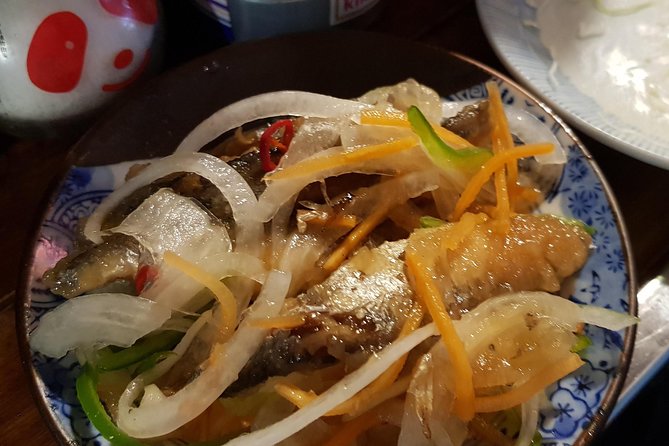
The guides are central to this experience. The neighborhoods are interesting, but the tour’s real strength is having someone explain what you are seeing and help you feel comfortable in small local establishments.
Andrew has been praised for combining food with Japanese history, personal stories, nightlife tips, and practical help. One particularly useful detail is that he helped someone purchase a train ticket home. That kind of assistance can matter more than another fact about Tokyo, especially on your first night in Japan.
Mini has been praised for adapting the food to the group and even helping with a Suica card and flavored Kit Kats for souvenirs. Those extras are not guaranteed parts of the tour, but they show the sort of practical help a good guide may offer when time and circumstances allow.
Ryuhki has been described as friendly, witty, and strong on local history. Yeman led an evening that included sake, unusual food, and explanations of local places such as love hotels. Lukas has also been praised for making a family outing feel comfortable and for explaining the culture behind the establishments.
You should not assume that one particular guide will lead your departure. Names such as Andrew, Mini, Ryuhki, Yeman, and Lukas come from previous departures, not from a guaranteed schedule. Still, the pattern is clear: the guide role is more than pointing at restaurants. Expect conversation, cultural context, local recommendations, and help with the mechanics of getting around.
A completely different kind of day in Tokyo:
- Mt Fuji and Hakone 1-Day Bus Tour Return by Bullet Train
★ 5.0 · 26,383 reviews - 1-Day Tokyo Bus Tour
★ 5.0 · 14,250 reviews - Tokyo: teamLab Planets TOKYO Digital Art Museum Entry Ticket
★ 4.6 · 9,779 reviews - Mt Fuji & Hakone Cruise, Drum Show Bullet Train 1 Day from Tokyo
★ 4.0 · 7,413 reviews
Food comfort, dietary needs, and the pace
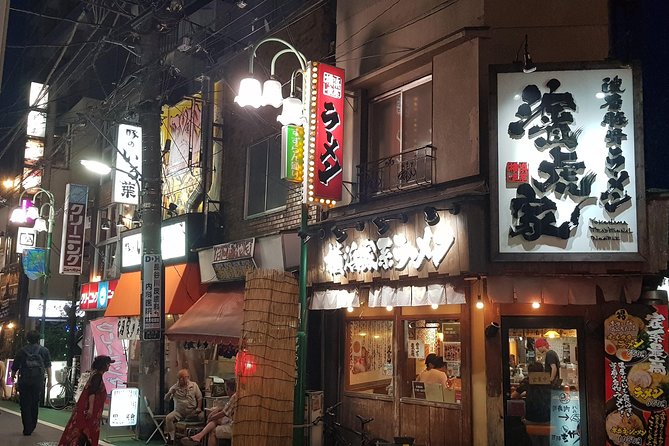
Vegetarian food is available if you request it at booking. You should give that information early, since the experience visits small restaurants where choices may be limited. The provided details do not promise a specific vegan menu or describe allergy procedures, so anyone with serious allergies should ask the provider for confirmation before paying.
You should also be honest about your appetite and food comfort. The experience is aimed at people who want local Japanese or Western-style pub food, and some dishes may be unfamiliar. The guide can help you understand what is on offer, but this is not the best choice if you want a predictable menu of standard Western meals.
Comfortable walking shoes are a good idea. You will move through narrow streets, shopping areas, stations, and standing bars for around three hours. One outing had to be shortened because of very hot weather, so seasonal conditions can affect your enjoyment. Tokyo evenings can feel demanding when you are walking, standing, eating, and drinking in warm weather.
Families need to read the age rules closely. All participants must be at least 18, and the minimum drinking age is 20. That means an 18 or 19-year-old may participate under the stated rules, but cannot legally drink alcohol. A 16-year-old cannot join, even when accompanied by parents.
Is $125 a fair price?
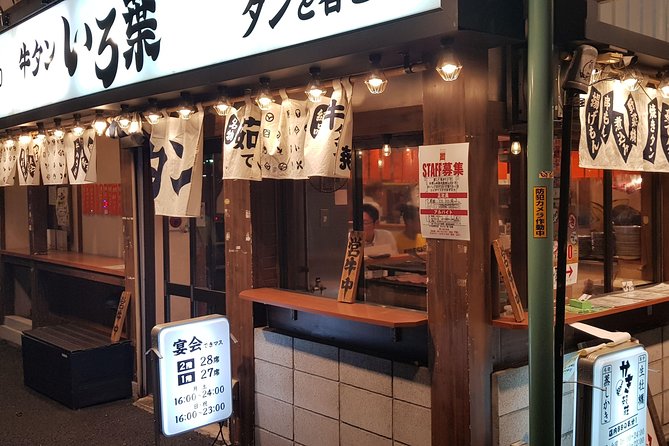
The price is $125 per person. That is not a bargain if you measure the experience only by three drinks and a meal. It becomes more reasonable when you include the guide, food at several stops, the included rail transportation, and the chance to enter places you might not confidently find or use on your own.
Tokyo’s local food can be inexpensive, and you could certainly eat for less by choosing one casual restaurant. But doing this evening independently would require finding suitable tachinomi, understanding the menus, managing the train transfer, and deciding how much food to order at each stop. The guide removes much of that uncertainty.
The maximum group size of six is also important to the value. You are paying for a small-group introduction rather than a large organized walk. With a group this size, the guide can ask about your tastes and keep the conversation moving. If your departure has five people, the atmosphere should feel especially personal.
The experience is best value at the start of a Japan trip. A guide can give you ideas for later nights, explain how to handle local bars, and offer practical suggestions for neighborhoods and transportation. Several guides have provided recommendations for the rest of the visit, which can help you make better use of the days that follow.
Timing, meeting point, and cancellation details
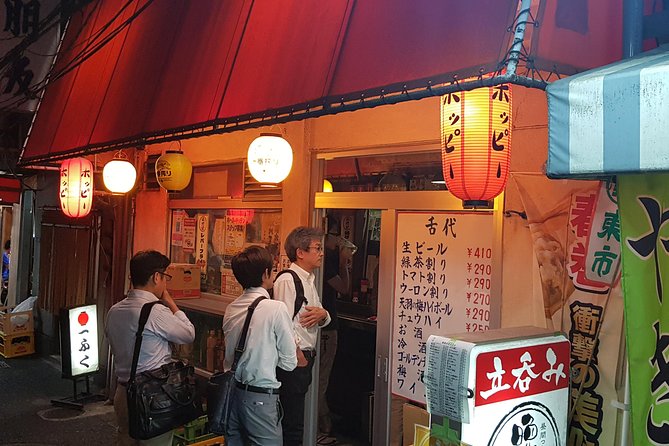
The tour starts at 6:30 pm at Oimachi Station, at 1 Chome-1 Ōi in Shinagawa City. Oimachi is close to Shinagawa and just a short ride from the Yamanote Line, making the meeting point fairly convenient from many parts of central Tokyo.
It ends at Kamata Station, near 7-chome Nishikamata. Hotel pickup and drop-off are not included. The tour operator can help you board the correct train, but you are responsible for reaching the meeting point and continuing from the end point.
Confirmation arrives when you book, and the meeting point is near public transportation. You should have a moderate level of physical fitness because the evening includes walking, standing, and moving between venues.
Cancellation rules are strict close to departure. Cancel at least six full days before the start time for a full refund. Cancellation two to six full days ahead receives a 50 percent refund, while cancellation less than two full days before departure receives no refund. The cut-off uses Tokyo local time.
Who will enjoy this Tokyo food tour?
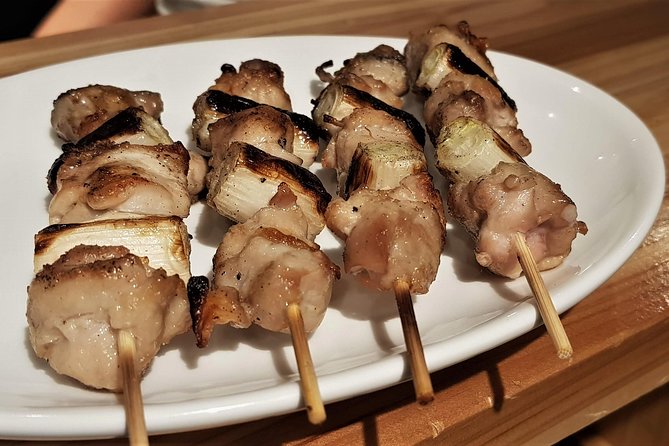
I would choose this for a first or second night in Tokyo if you want a friendly introduction to local nightlife without planning every stop yourself. It is also a good match for curious eaters who want to try small dishes and see neighborhoods that rarely appear on standard sightseeing routes.
It suits solo visitors particularly well because the small group gives you company without the scale of a large tour. Couples and groups of adult children can also enjoy it, provided everyone is comfortable standing and trying food that may be unfamiliar.
I would hesitate if you want a quiet, seated dinner, a fixed menu, or a major landmark tour. This is about neighborhood life, not Tokyo Tower or the Shibuya skyline. You should also think twice if hot weather, stairs, long periods on your feet, or drinking-oriented venues will make the evening difficult.
Should you book it?
Book this experience if you want Tokyo as locals use it after work: compact bars, small dishes, old shopping streets, short train rides, and conversation with a guide who can explain what would otherwise feel opaque. The two-neighborhood route gives the evening a clear shape, and the small group keeps it personal.
Skip it if your priority is a formal restaurant meal or a famous Tokyo sight. For everyone else, $125 is a fair price for dinner, three drinks, transport, and the confidence to enter places you might otherwise pass by. Request a vegetarian option in advance, wear comfortable shoes, and remember that all participants must be 18 or older.
FAQ
Where does the experience start?
It starts at Ōimachi Station, at 1 Chome-1 Ōi, Shinagawa City, Tokyo.
Where does the experience end?
The tour ends near Kamata Station in Nishikamata, Tokyo.
What time does the tour begin?
The start time is 6:30 pm.
How long does the tour last?
The experience lasts approximately three hours.
How many people can join?
The experience is designed for a small group of about five people and has a maximum of six participants.
Is dinner included?
Yes. Dinner is included, with enough food provided for an evening meal.
How many drinks are included?
Three alcoholic or non-alcoholic beverages are included in total.
Can I choose non-alcoholic drinks?
Yes. Non-alcoholic beverage options are available.
Is a vegetarian option available?
Yes. You must advise the provider when booking if you require vegetarian food.
What are the age requirements?
All participants must be at least 18 years old. The minimum drinking age is 20.
Is hotel pickup included?
No. Hotel pickup and drop-off are not included.
How far in advance can I cancel for a full refund?
You must cancel at least six full days before the experience start time to receive a full refund.
Newly reviewed around Tokyo
- Tokyo Asakusa:Calligraphy & Make T-shirt Activity★ 5.0 · 62 reviews
- Intercity Shuttle, Tokyo to Haneda /Narita /Yokohama /Makuhari★ 5.0 · 5 reviews
- 1 Hour Travel around Tokyo with a Professional Photographer★ 5.0 · 3 reviews
- Travel Tokyo with Your Own Personal Photographer★ 5.0 · 43 reviews
- Train in Samurai Swordsmanship and Defeat the Demon in Tokyo★ 5.0 · 5 reviews
- Shuttle Van 6hr Tokyo Tour to-and-from Tokyo, Yokohama and Narita★ 5.0 · 9 reviews
- Kickboxing & Body Training with EX-Pro Fighter★ 5.0 · 4 reviews
- Traditional Japanese Knife Sharpening Class★ 5.0 · 18 reviews
Food, compared.
Shinjuku Food Tour (13 Dishes at 4 Local Eateries)
Read our review →
Tokyo Tsukiji Fish Market Food and Culture Walking Tour
Read our review →
Shinjuku Food Tour (15 Dishes and 4 Eateries)
Read our review →
Best of Shinjuku: Izakaya Food Tour (4 Stops, 14+ Tastings)
Read our review →
Tokyo Night Foodie Tour in Shinjuku – Seasonal Sushi, Wagyu Beef
Read our review →
Eat and Drink Like a Local: Tokyo Ueno Food Tour-Taverns&Ramen
Read our review →
Browse the lists this tour appears in