
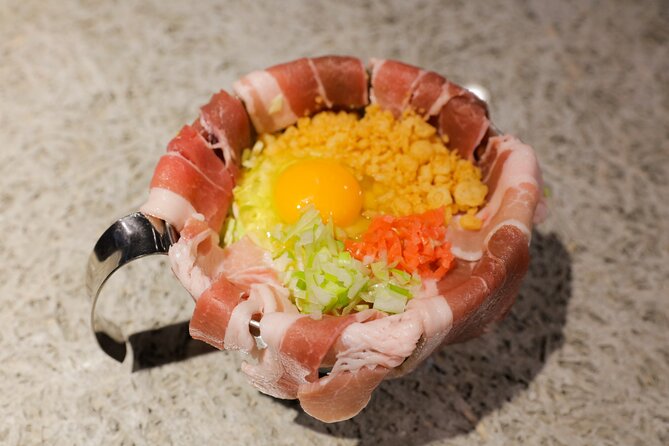
Reviewed · FOOD
Okonomiyaki making experience~Japanese popular food
Okonomiyaki is more than a Japanese pancake. It is a hot, hands-on meal that you mix, shape, cook, and cover with sauce, mayonnaise, and seaweed. In this Shinjuku class, you choose between a meat or seafood version, then cook it on a griddle with help from the chef and English-speaking guides.
I like the private setting, since your group gets the attention of the cooking team instead of being folded into a large class. I also like the useful extra touch: one participant was able to make a second okonomiyaki to take home. That turns a one-hour meal into a small cooking lesson you can remember later.
The main thing to consider is the short duration. One hour is enough for a focused introduction, but not a long Japanese food workshop. The meeting point can also take a little care to find: it is a house with flowers on the fourth floor of the Dai 6 Sanwa Building in Shinjuku.
Key points before you book
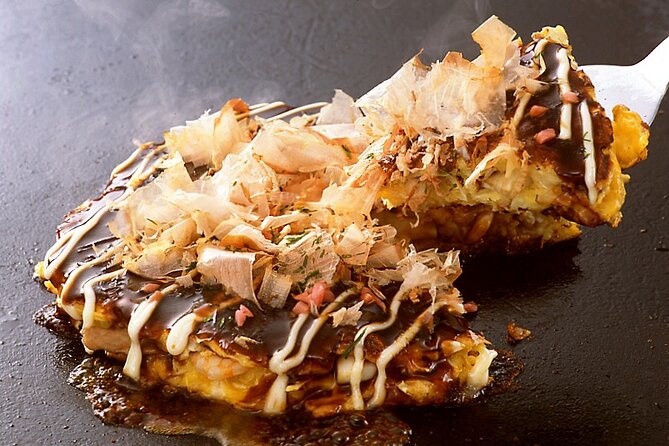
- Cook your own Japanese soul food: Mix and prepare okonomiyaki, then cook it on a griddle rather than simply watching a demonstration.
- Choose meat or seafood: The experience offers two main flavor options, so you can pick the style that suits you.
- English help is provided: The chef works with English-speaking guides, including Nina, who helps explain the process.
- Private group format: Only your group participates, which can make the lesson easier to follow and more relaxed.
- One-hour commitment: The class fits neatly into a busy Tokyo day, but it is a compact experience rather than a full meal tour.
- Central Shinjuku location: The meeting point is near public transportation, at a fourth-floor address in Shinjuku.
What makes okonomiyaki worth learning
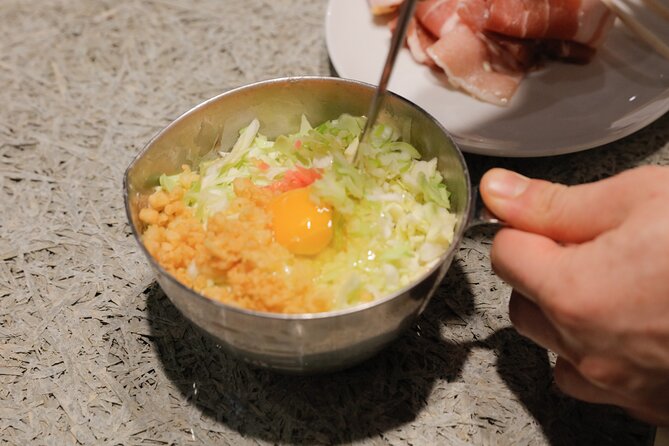
Okonomiyaki is often described as a Japanese pancake, but that label only gets you halfway there. The basic mixture uses flour, eggs, and cabbage. Meat, seafood, vegetables, or noodles can be added, and the finished pancake is cooked on a hot griddle before being dressed with savory sauce, mayonnaise, and aonori, or dried seaweed.
The word is commonly explained as meaning something like what you like, grilled. That idea fits the dish. Okonomiyaki is flexible, filling, and made for a cooking surface where you can see the food change in front of you.
I like this class because it gives you the part of okonomiyaki that a restaurant meal cannot provide. You are not just handed a finished pancake. You get to take part in mixing and cooking it, with the chef and guides helping you through the process.
The dish is also tied to everyday Japanese food culture. It is eaten at home, at festivals, and in restaurants. You do not need to treat it as a formal culinary lesson. The appeal is more direct: good food, a hot griddle, and the satisfaction of turning simple ingredients into lunch or dinner.
More Tokyo food tours:
- Tokyo: Shinjuku Food Tour (13 Dishes at 4 Local Eateries)
★ 5.0 · 6,603 reviews - Tokyo Tsukiji Fish Market Food and Culture Walking Tour
★ 5.0 · 3,184 reviews - Tokyo: Shinjuku Food Tour (15 Dishes and 4 Eateries)
★ 4.9 · 2,033 reviews
Arriving at the Shinjuku meeting point
The experience begins at a house with flowers in Shinjuku City, at 3-chome 6-7, Dai 6 Sanwa Building, fourth floor, Tokyo 160-0022. The activity ends at the same place, so you do not need to arrange a separate return transfer.
The address is near public transportation, which helps in a city as large as Tokyo. Still, I would allow a little extra time to locate the building and reach the fourth floor. The description of the meeting point is distinctive, but it is not the kind of major landmark you can spot from several blocks away.
You receive confirmation when you book, and the experience uses a mobile ticket. Keep the ticket easy to open on your phone. That is a small practical step, but it saves time when you are trying to match a Tokyo address with the right building entrance.
Because transportation to the meeting point is not included, you pay for your own train or other local transport. Lunch, dinner, bottled water, and additional drinks are also separate. The price covers the class fee and tax, not a full evening out.
The cooking lesson in one focused hour
The class lasts about one hour. That is short enough to fit between sightseeing stops, but it also means the activity stays focused. You are there to learn the main steps of okonomiyaki, cook it, and eat it, not to spend half a day moving through several food stations.
The basic process begins with the pancake mixture. Flour is combined with water, then ingredients such as cabbage and eggs are added. Depending on your choice, meat or seafood goes into the mixture or onto the cooking surface as part of the dish.
The exact order of every step is not specified, so I would not expect a formal chef-school lesson with a long lecture. Think of it as a guided introduction. The chef handles the cooking expertise, while the English-speaking guides make the instructions easier to follow.
The best part comes when the mixture reaches the griddle. Okonomiyaki is not a dish that rewards impatience. It needs to cook into a cohesive pancake, and the griddle gives the class its hands-on character. You get to take part in the shaping and cooking instead of standing behind a counter.
Once cooked, the okonomiyaki is finished with Japanese condiments. The usual toppings listed for this experience include sauce, mayonnaise, and aonori. These add sweetness, salt, creaminess, and a light seaweed flavor. The toppings are a big part of the visual appeal, too, turning a plain pancake into a distinctly Japanese dish.
Choosing between meat and seafood
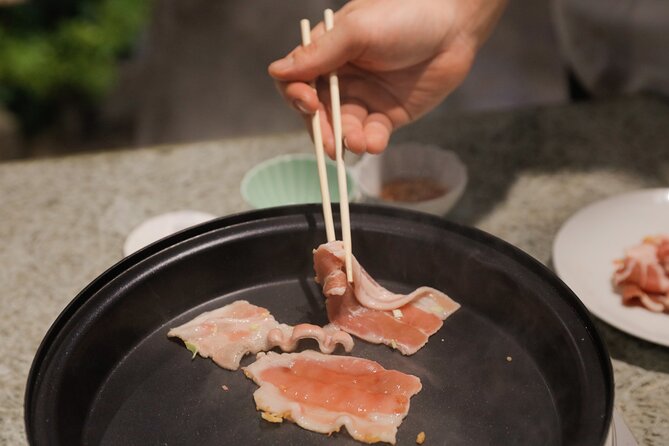
You can choose either the meat or seafood option. That is useful for couples, families, or friends who want to compare two versions of the same dish.
The information does not specify the exact meat or seafood ingredients, so you should not book this expecting a particular shellfish, fish, or cut of meat. If you have a serious allergy or strict dietary requirement, ask the provider before booking. The available information confirms the two broad choices, but it does not promise vegetarian, vegan, gluten-free, or allergy-specific preparation.
For a first taste, the choice can be simple. Pick meat if you prefer a familiar, hearty pancake. Pick seafood if you like the flavor of the sea in a savory griddle dish. The format allows you to choose rather than accept one fixed menu.
This flexibility is one reason the experience works well for a small private group. Everyone can make a decision based on preference, and the class does not require the entire group to eat exactly the same version.
A completely different kind of day in Tokyo:
- Mt Fuji and Hakone 1-Day Bus Tour Return by Bullet Train
★ 5.0 · 26,383 reviews - 1-Day Tokyo Bus Tour
★ 5.0 · 14,250 reviews - Tokyo: teamLab Planets TOKYO Digital Art Museum Entry Ticket
★ 4.6 · 9,779 reviews - Mt Fuji & Hakone Cruise, Drum Show Bullet Train 1 Day from Tokyo
★ 4.0 · 7,413 reviews
English support and the role of Nina
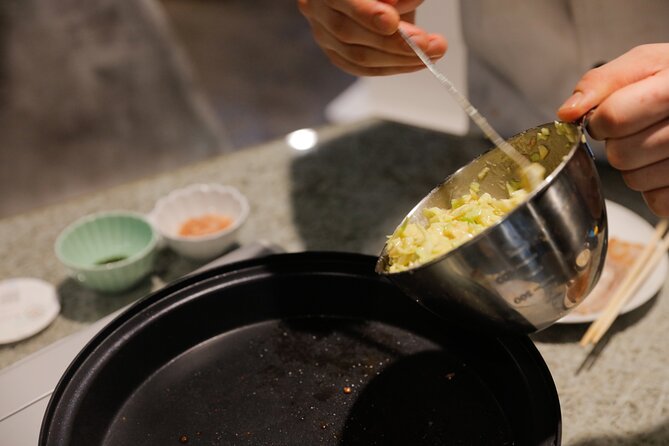
The class includes a chef and English-speaking guides. Nina is specifically noted as a translator, and her role is practical: helping you understand the instructions and making sure the class keeps moving.
That matters because cooking on a hot griddle involves timing and technique. A language gap can turn a fun activity into a guessing game. With English help beside the chef, you can pay attention to the food instead of wondering what to do next.
The class has also been praised for its friendly welcome and helpful support throughout the process. I would treat that as a strong reason to choose this activity if you want a cooking lesson but do not speak Japanese.
At the same time, this is not presented as a long cultural lecture. You will learn about the dish through the cooking itself. If you want detailed instruction about regional styles, ingredient sourcing, or the history of Japanese food, this one-hour format may feel limited.
The private format and what it changes
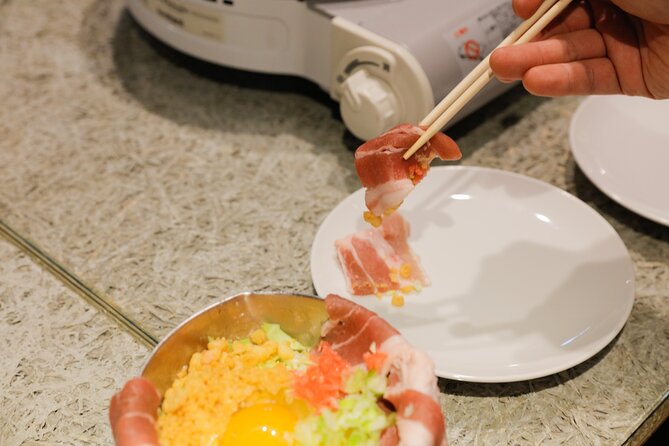
Only your group participates in the activity. That is a meaningful feature, especially if you are traveling as a couple, family, or small group of friends.
A private lesson can make it easier to ask for help, choose your preferred version, and move at a comfortable pace. It also avoids the awkwardness of joining a large class where some people already know how to cook and others are still figuring out the first step.
The tradeoff is that a private activity can be less social than a shared food tour. You are not automatically meeting a room full of people from other countries. If your main goal is to make new friends, a group class may offer more of that.
For most people, the private setup is a plus. It keeps the attention on your food and gives the chef and guides a clearer chance to help you.
Taste, toppings, and the take-home possibility
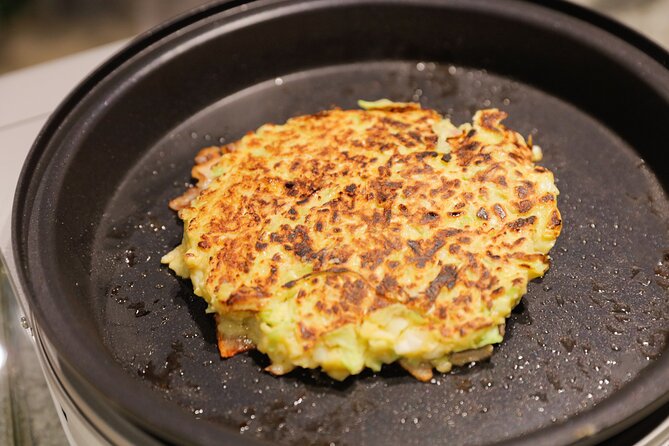
The finished okonomiyaki is served with familiar toppings such as sauce, mayonnaise, and aonori. You get the soft, savory pancake base along with the strong flavor of the condiments. The result is casual and satisfying rather than delicate or formal.
One especially useful detail is the possibility of making a second okonomiyaki to take home. This was possible for at least one participant, but it is not clearly promised as a standard inclusion. Ask the provider if taking a second one away matters to you.
That extra pancake can be a nice bonus, particularly if you are not very hungry at the start of the class or want to save something for later. Still, I would book for the class and the meal you make there, not on the assumption that a second portion is guaranteed.
The activity does not include bottled water, extra drinks, lunch, or dinner. Your cooked okonomiyaki is the central food experience. Plan a little before or after the class if you want a larger meal.
Is $39.02 a fair price?
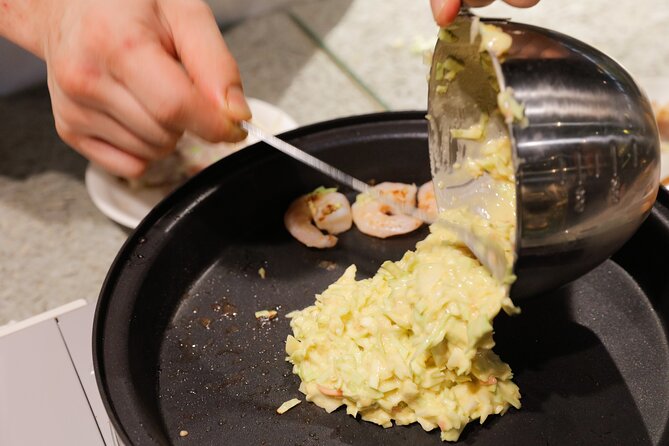
At $39.02 per person, this is not the cheapest way to eat okonomiyaki in Tokyo. You could certainly find a restaurant meal for less, especially if you only want to taste the dish.
The value comes from the activity, not just the ingredients. You receive a private, guided cooking experience with a chef and English-speaking support. You also get to choose meat or seafood and take part in the preparation rather than simply ordering from a menu.
For me, the price makes the most sense if you enjoy food activities, want a break from ordinary sightseeing, or are looking for something that works well in a small private group. It is less compelling if your only aim is a quick, inexpensive lunch.
The one-hour length helps the value. You do not need to give up half a day, and the class can fit into a Shinjuku itinerary. Since local transportation is extra and additional drinks are not included, remember to add those costs when planning your budget.
Who should book this experience?
I would recommend it to first-time visitors who want a simple introduction to Japanese cooking. You do not need advanced kitchen skills, and the format is accessible to most people according to the activity information.
It is also a good match for families and couples. The hands-on format gives children and adults something to do together, though the hot griddle means everyone should follow the chef’s instructions carefully.
Food-focused visitors will get the most from it. You learn why okonomiyaki is such a popular everyday dish by preparing one yourself. You may also leave with a better sense of how Japanese meals can be social, flexible, and built around a shared cooking surface.
I would be more cautious if you have strict dietary needs, want a long lesson, or expect a large meal with drinks included. The available details do not confirm special dietary menus, and the experience is deliberately compact.
Booking and cancellation details
You receive confirmation at the time of booking, and the mobile ticket is convenient for meeting the team in Tokyo. The activity is booked an average of 14 days ahead, so I would reserve early if your schedule is fixed.
Free cancellation is available if you cancel at least 24 hours before the start time. Changes or cancellations inside that 24-hour window are not accepted and are not refunded.
The activity requires good weather and a minimum number of participants. If poor weather or insufficient numbers causes cancellation, you are offered another date or experience, or a full refund. The listed conditions are worth checking before you set your Tokyo plans around the class.
Should you book the okonomiyaki class?
Book it if you want a short, private food activity in Shinjuku and like the idea of cooking your own meal with English help. The chef-led format, meat or seafood choice, and possible take-home second pancake give it more substance than a quick restaurant stop.
Skip it if you only want the cheapest okonomiyaki meal, need a guaranteed special diet, or prefer a long cultural workshop. At $39.02, you are paying for the instruction and hands-on experience as much as the food.
For most visitors with one free hour in Shinjuku, this is a friendly and practical introduction to one of Japan’s most enjoyable comfort foods.
FAQ
Where does the okonomiyaki experience take place?
It takes place at a house with flowers at Japan, 160-0022 Tokyo, Shinjuku City, Shinjuku, 3-chome 6-7, Dai 6 Sanwa Building, fourth floor.
How long does the experience last?
The activity lasts approximately one hour.
What types of okonomiyaki are available?
You can choose between a seafood version and a meat version.
Is transportation included?
No. Transportation to the meeting point is not included, so you arrange and pay for your own transport.
Is food included?
The cooking experience includes the okonomiyaki you prepare. Bottled water, additional meals and drinks, lunch, and dinner are not included.
Is the activity private?
Yes. Only your group participates in the activity.
Is the experience near public transportation?
Yes. The meeting point is near public transportation.
Will the class be conducted in English?
English-speaking guides assist with the class. Nina is identified as a translator, and the chef leads the cooking.
Can I cancel for a full refund?
Yes, if you cancel at least 24 hours before the experience start time. Cancellations or changes made less than 24 hours in advance are not refunded or accepted.
Newly reviewed around Tokyo
- Tokyo Asakusa:Calligraphy & Make T-shirt Activity★ 5.0 · 62 reviews
- Intercity Shuttle, Tokyo to Haneda /Narita /Yokohama /Makuhari★ 5.0 · 5 reviews
- 1 Hour Travel around Tokyo with a Professional Photographer★ 5.0 · 3 reviews
- Travel Tokyo with Your Own Personal Photographer★ 5.0 · 43 reviews
- Train in Samurai Swordsmanship and Defeat the Demon in Tokyo★ 5.0 · 5 reviews
- Shuttle Van 6hr Tokyo Tour to-and-from Tokyo, Yokohama and Narita★ 5.0 · 9 reviews
- Kickboxing & Body Training with EX-Pro Fighter★ 5.0 · 4 reviews
- Traditional Japanese Knife Sharpening Class★ 5.0 · 18 reviews
Food, compared.
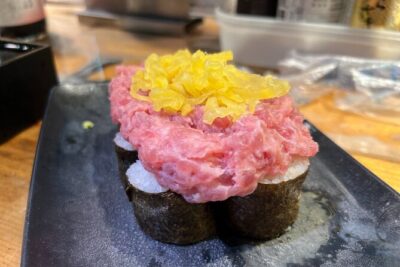
Shinjuku Food Tour (13 Dishes at 4 Local Eateries)
Read our review →
Tokyo Tsukiji Fish Market Food and Culture Walking Tour
Read our review →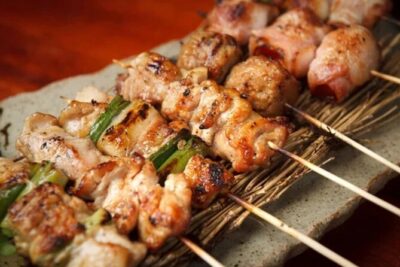
Shinjuku Food Tour (15 Dishes and 4 Eateries)
Read our review →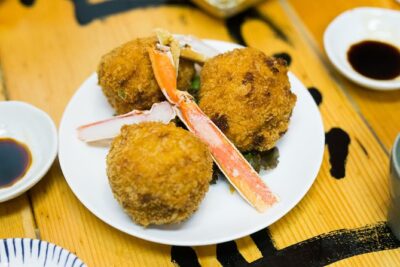
Best of Shinjuku: Izakaya Food Tour (4 Stops, 14+ Tastings)
Read our review →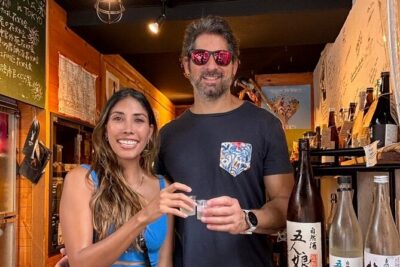
Tokyo Night Foodie Tour in Shinjuku – Seasonal Sushi, Wagyu Beef
Read our review →
Eat and Drink Like a Local: Tokyo Ueno Food Tour-Taverns&Ramen
Read our review →
Browse the lists this tour appears in