
Reviewed · TOKYO GO-KART TOURS
Official Street Go-Kart in Shibuya
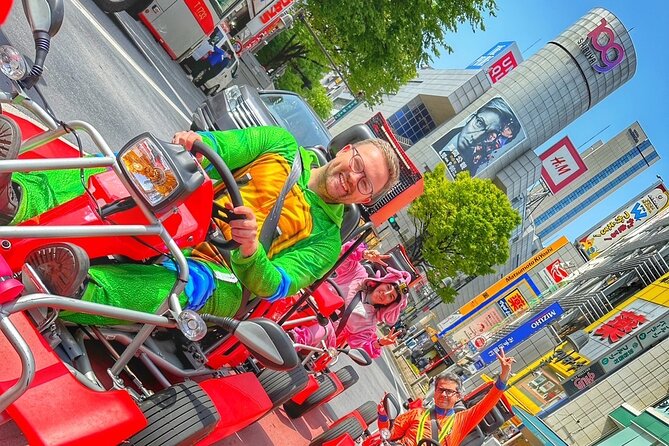
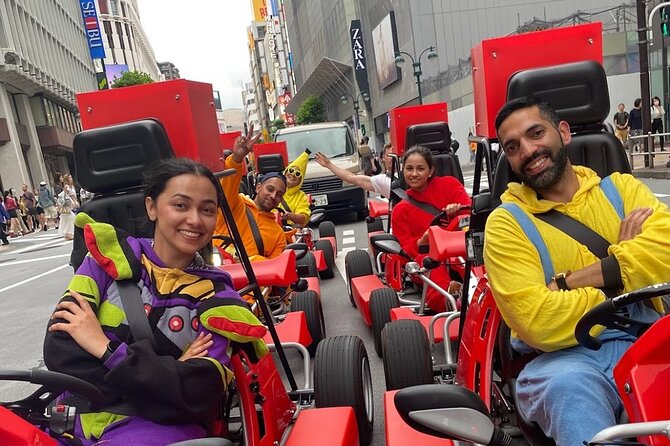
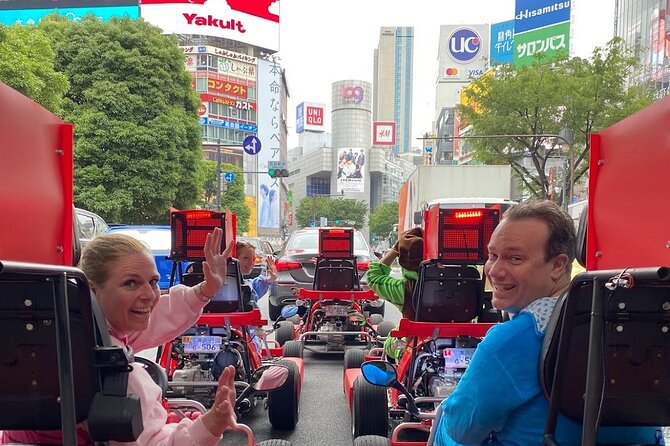
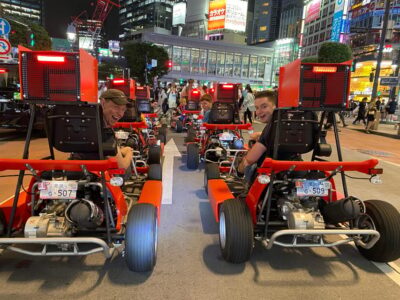
Shibuya Crossing is the headline here, but the real treat is seeing Tokyo from a tiny kart at street level. You roll through the famous intersection, pass Harajuku’s fashion streets, and cruise Omotesando under its tree-lined boulevard. People wave, cameras come out, and for a few minutes you feel like part of the city’s moving show.
I like the small six-person limit, which keeps the group easier to manage in traffic. I also like that the guide takes photos, so you can concentrate on driving instead of trying to photograph yourself. Guides including Pime, Manuel, Allen, Alexis, and Saleh have earned praise for clear instructions and calm leadership.
The main catch is serious: this is not a casual amusement-park ride. You need the correct International Driving Permit, your passport, and a physical home-country license. You must be at least 18, wear suitable clothing, and feel comfortable operating a vehicle in Tokyo traffic.
Key points before you book
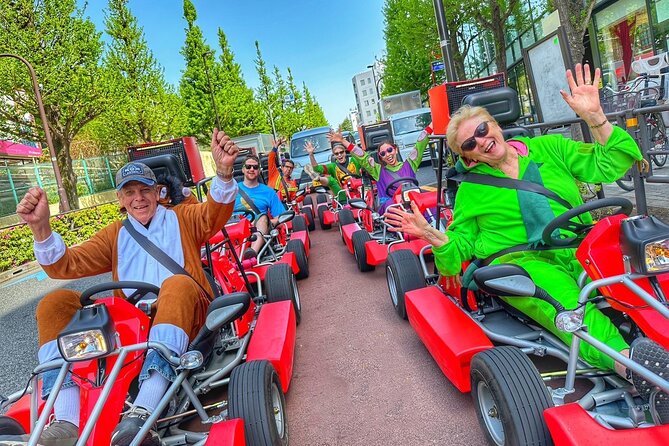
- Shibuya Crossing is the star: You drive through Japan’s most famous intersection while pedestrians wave and take photos.
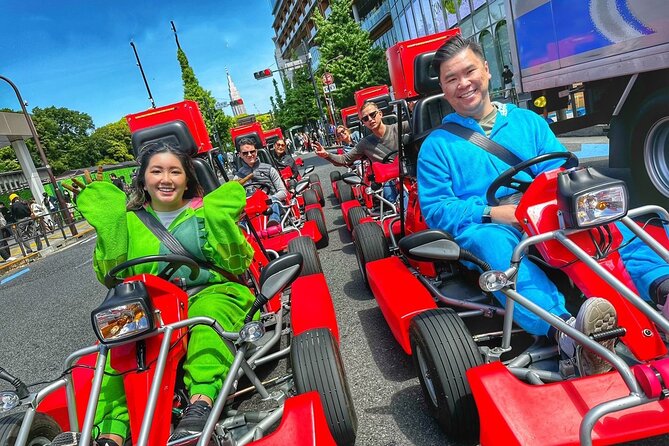
- Groups are small: The normal maximum is six drivers, though larger bookings split into separate groups.
- Your paperwork matters: Most drivers need a 1949 Geneva Convention International Driving Permit, not just a regular home license.
- The route has three distinct moods: Shibuya is electric, Harajuku is youthful and fashion-focused, and Omotesando feels polished and calm.
- Costumes and photos add fun: Costumes are included, and guides commonly take pictures during the ride.
- The price buys a memorable hour: At $76.27 per person, it is not cheap transport, but it is far more unusual than a standard city tour.
What the Shibuya route actually feels like
This tour gives you about one hour to one hour and 30 minutes from start to finish, with roughly 40 minutes of actual driving noted in one detailed account. The exact pace can depend on traffic, lights, weather, and the group.
You meet at Street Kart Shibuya in Maruyamacho, near public transportation. Allow extra time to find the shop. Tokyo stations can be confusing, and one useful rule is to arrive at least 45 minutes before departure, even though the formal arrival guidance may be shorter.
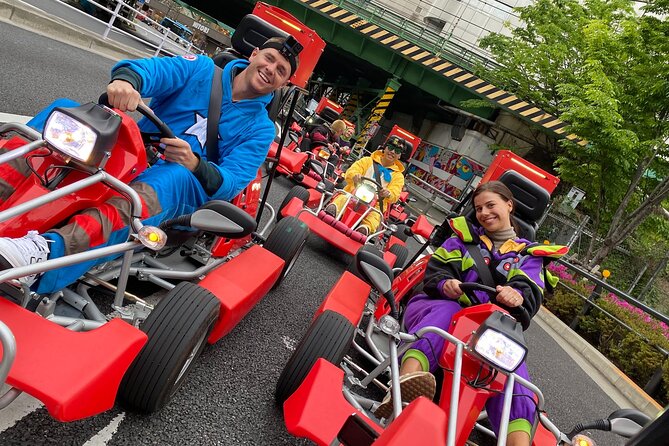
At the shop, you check in, choose a costume, watch a safety video, and receive an explanation of the kart. The guide also gives a backup safety briefing and uses hand signals while leading the group. You are not left to figure out the vehicle on your own.
The karts are single-seaters. That matters for families: children and non-drivers cannot ride along, and every person in the group must drive. The experience works best when everyone is keen to participate, not when one person wants to watch from the pavement.
The first minutes on the road may feel like a lot. Tokyo traffic is orderly, but it is still traffic. The guide keeps the group together and manages the route, while you steer, watch the road, and follow instructions. Several guides, including Manuel, Alexis, Allen, and Pime, have been singled out for calm explanations and careful supervision.
More things to do in Shibuya:
- Tokyo: Street Kart Experience in Shibuya
★ 4.9 · 1,484 reviews - Shibuya Meltdown Nightlife Tour: All-You-Can-Drink Bar Hopping
★ 5.0 · 1,058 reviews - Shibuya Official Street Go-Kart in Shibuya Annex
★ 5.0 · 972 reviews
Shibuya Crossing: Tokyo’s biggest photo moment
The crossing is the payoff. You approach with the guide, line up with traffic, and pass through the intersection rather than simply viewing it from a nearby pavement or café.
When the lights change, pedestrians stream across in every direction. From a kart, you see the crossing from a low, open position, and people often wave, smile, and take photos. It is a strange and funny little performance, with you both observing Tokyo and becoming part of the scene.
You should not expect to stop in the middle of Shibuya Crossing for a photo. This is a road experience, not a staged photo session. The appeal comes from moving through the intersection with the city operating around you.
If your friends or family are not driving, the crossing still offers a good viewing point. One family member watched from upstairs at Starbucks while another drove through the intersection. That is a practical option if only some members of your party meet the license rules.
The downside is that this part can feel brief. Shibuya Crossing is famous because of its scale and timing, but you pass through it as part of a moving route. Treat it as the highlight of a wider drive, not as a long sightseeing stop.
Harajuku brings a different Tokyo
After Shibuya, the route heads toward Harajuku. The mood changes quickly. Instead of Shibuya’s giant crossing and bright commercial energy, Harajuku points toward Tokyo’s youth fashion and street style.
You will not have time for a shopping visit during the drive. The value is visual: you see the streets where many fashion trends begin, from the seat of a small vehicle instead of from a train or tour bus.
This section also gives the ride some variety. If the entire route stayed around Shibuya, the experience could become a single spectacle. Harajuku adds a different side of the city and helps you understand how close Tokyo’s neighborhoods can be while still feeling distinct.
Keep your attention on the road. Costumes and traffic make this a lively experience, but you are still responsible for driving. The guide leads the way, yet the kart is yours to operate.
Omotesando adds a polished final stretch
Omotesando is the most refined part of the route. Its broad avenue is lined with luxury shops, cafés, and trees. By day, you get the clean lines of the boulevard and shopfronts. At night, the trees and city lights create a different scene.
This is one reason the time of day matters. Morning and daylight rides make it easier to see details along the route. Evening rides give you illuminated streets and a more theatrical backdrop. The tour offers start times from morning through night, so choose based on the mood you want rather than assuming one departure is best.
Omotesando also gives the guide room to show a more polished side of Tokyo after the intensity of Shibuya. You get a compact tour of three recognizable districts without spending the whole day on foot.
The tradeoff is that you will not stop to explore shops or cafés. If you want time inside Harajuku boutiques or an Omotesando coffee shop, schedule that separately before or after the kart ride.
More Tokyo go-kart tours:
- Flagship 2-Hours Official Street Go-Kart Tour – Tokyo Bay Shop
★ 5.0 · 4,974 reviews - Official Street Go-Kart Tour – Akihabara
★ 5.0 · 1,578 reviews - Tokyo Go Kart: Asakusa, Skytree, and Akihabara **IDP MUST**
★ 5.0 · 988 reviews - Tokyo: Asakusa, Skytree & Akhihabara Go-Kart City Experience
★ 4.7 · 761 reviews
Why the guide makes or breaks the ride
The guide is not just there to point out streets. The guide sets the pace, watches the group, gives hand signals, and helps you feel less nervous during the first stretch.
Pime has been praised for reassuring a nervous driver and keeping the mood light. Manuel is known for clear communication, route control, and a steady approach to traffic. Allen has been praised for easy instructions and strong photos, while Alexis received specific praise for careful explanations. Saleh has also been noted as a friendly leader.
That does not mean every guide will have the same personality. One rainy-day experience was judged fun and well organized, but the guide was described as less warm and engaging than the front-desk staff. That is worth noting because the social side matters here. You spend the ride close to the guide and depend on that person to keep the group together.
The six-person limit helps. A smaller group is easier to brief, easier to keep in formation, and less likely to feel like a traffic jam on wheels. If you book as a larger party, groups of more than six drivers split into two smaller groups, each with its own guide.
If you are booking for friends or family, book everyone together. Separate reservations do not guarantee that you will be placed in the same group.
Costumes, photos, and the value of the experience
The $76.27 price includes the kart, fuel surcharge, taxes, handling fees, guide, and costume rental. A full coverage insurance option costs an additional ¥1,000 per person. Food, drinks, and hotel transportation are not included.
That price is high if you think of the activity as transportation. It is reasonable if you see it as a one-hour Tokyo attraction with equipment, staff, safety preparation, and photos.
The costume is part of the fun, but it is not compulsory in spirit. You can dress up for the street spectacle, though you should know that Mario and Nintendo-themed costumes or items are not permitted because of copyright restrictions. Choose from the available non-Nintendo options instead.
Photos are another useful value point. Guides commonly take pictures during the route and share them at the end, including by AirDrop in some cases. You do not need to risk handling your phone while driving. The quality and number of photos can vary, but having the guide handle the camera lets you enjoy the ride properly.
For a birthday, final evening in Tokyo, or special family outing, the extra cost may feel justified. For a budget-focused visitor who wants to see neighborhoods efficiently, a train and walking tour will cost far less.
The license rules are not a minor detail
Do not book first and check the driving documents later. This activity requires preparation before you arrive in Japan.
Most participants need all of the following:
- A physical International Driving Permit issued under the 1949 Geneva Convention
- A physical domestic driver’s license
- A physical passport
The permit must come from a government-authorized association. A normal home-country license by itself is not enough.
Drivers with licenses issued in Switzerland, Germany, France, Taiwan, Belgium, or Monaco need an official Japanese translation from the Japan Automobile Federation instead of the standard IDP route. Licenses from countries not covered by the 1949 Geneva Convention, including China, Indonesia, Mexico, Qatar, and Saudi Arabia, are not accepted for driving in Japan.
You must be at least 18. Keep the original documents with you. Digital copies are not a safe substitute for the required physical papers.
The operator may ask you to send a copy of your permit before your trip. Read every message after booking, including your junk folder. This is the single most important practical step in planning the experience.
Clothing, weather, and comfort
Wear flat, closed shoes. Avoid long, loose skirts and flowing dresses. You need clothing that will not catch or distract you while operating the kart.
Tokyo weather can change the feel of the ride. Rain does not automatically make the experience miserable, and costumes may provide some extra warmth and cover, but you should still dress for the temperature. December rides can be cold, especially on an open kart.
The activity requires a moderate level of physical fitness. You need to sit in and operate the kart, follow traffic instructions, and stay alert for the length of the route. Tell the operator in advance about any hearing or mobility impairment so they can discuss whether the activity is suitable.
Poor weather can lead to cancellation. If the operator cancels for that reason, you can choose another date or receive a full refund. If you cancel yourself, you need to do so at least 24 hours before the start time for a full refund.
Who will enjoy this most
I would choose this for an adult who wants an unusual Tokyo memory and is comfortable being seen. The costumes, waves from pedestrians, and open-road setting make it playful and public. If you dislike attention, the same features may feel tiring rather than entertaining.
It works especially well for:
- Couples looking for a shared activity
- Families where every participant is at least 18 and properly licensed
- Friends who want photos and a lively evening outing
- First-time Tokyo visitors who want to connect several famous neighborhoods
- Drivers who enjoy a little novelty but still want a guided route
I would be cautious about booking it for someone who is nervous around traffic, dislikes costumes, or expects a slow sightseeing tour with frequent stops. This is active sightseeing. You drive, follow the guide, and stay alert.
It is also not a substitute for a full Shibuya or Harajuku walking tour. You will see the streets, but you will not enter shops, visit attractions, or stop for food. Pair it with a separate walking outing if you want a closer look at the neighborhoods.
Should you book the Shibuya street kart tour?
Book it if you have the correct documents, meet the age requirement, and want a memorable way to pass through Shibuya Crossing. The combination of a small group, guide-led route, costumes, and included photos gives the experience more substance than a simple kart rental.
I would not book it as a last-minute whim. Confirm your IDP well ahead of time, arrive early, wear sensible shoes, and check the forecast. If you handle those details, the ride offers a rare street-level view of Shibuya, Harajuku, and Omotesando, with enough excitement to make the $76.27 worthwhile for the right person.
FAQ
Do I need an International Driving Permit?
Yes. Most participants need a physical International Driving Permit issued in the format of the 1949 Geneva Convention. You must also carry your physical domestic license and passport.
Can I use only my home-country driver’s license?
No. A regular home-country license alone is not accepted. Participants from Switzerland, Germany, France, Taiwan, Belgium, and Monaco need an official Japanese translation from the Japan Automobile Federation.
What is the minimum age?
All drivers must be at least 18 years old.
Can children or non-drivers ride along?
No. The karts are single-seaters, so every participant must drive and meet the license requirements.
How many people are in each group?
The activity has a maximum of six drivers. If a booking includes more than six drivers, the party splits into two smaller groups with a guide for each group.
Are costumes included?
Yes. Costume rental is included. Mario and Nintendo-themed costumes, clothing, and related items are not permitted because of copyright restrictions.
What should I wear?
Wear flat, closed footwear. Do not wear long, flowing skirts or dresses.
What happens if the weather is bad?
The activity requires good weather. If the operator cancels because of poor weather, you can choose another date or receive a full refund. Self-cancellation must be made at least 24 hours before the start time for a full refund.
Newly reviewed around Tokyo
- Tokyo Asakusa:Calligraphy & Make T-shirt Activity★ 5.0 · 62 reviews
- Intercity Shuttle, Tokyo to Haneda /Narita /Yokohama /Makuhari★ 5.0 · 5 reviews
- 1 Hour Travel around Tokyo with a Professional Photographer★ 5.0 · 3 reviews
- Travel Tokyo with Your Own Personal Photographer★ 5.0 · 43 reviews
- Train in Samurai Swordsmanship and Defeat the Demon in Tokyo★ 5.0 · 5 reviews
- Shuttle Van 6hr Tokyo Tour to-and-from Tokyo, Yokohama and Narita★ 5.0 · 9 reviews
- Kickboxing & Body Training with EX-Pro Fighter★ 5.0 · 4 reviews
- Traditional Japanese Knife Sharpening Class★ 5.0 · 18 reviews
Tokyo Go-Kart Tours, compared.
Flagship 2-Hours Official Street Go-Kart Tour – Tokyo Bay Shop
Read our review →
Tokyo Go Kart: Asakusa, Skytree, and Akihabara **IDP MUST**
Read our review →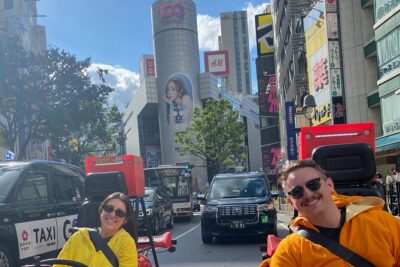
Shibuya Official Street Go-Kart in Shibuya Annex
Read our review →
Asakusa, Skytree & Akhihabara Go-Kart City Experience
Read our review →
Premium Go-Kart Tour with Tower & Shibuya Crossing
Read our review →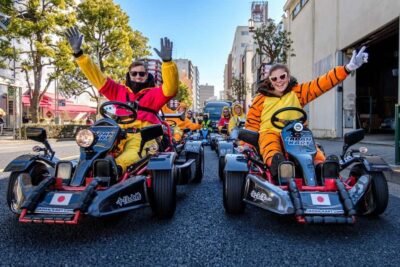
Browse the lists this tour appears in