
Reviewed · TOKYO MARTIAL ARTS EXPERIENCES
Tokyo: Karate Experience with Former All-Japan Champion
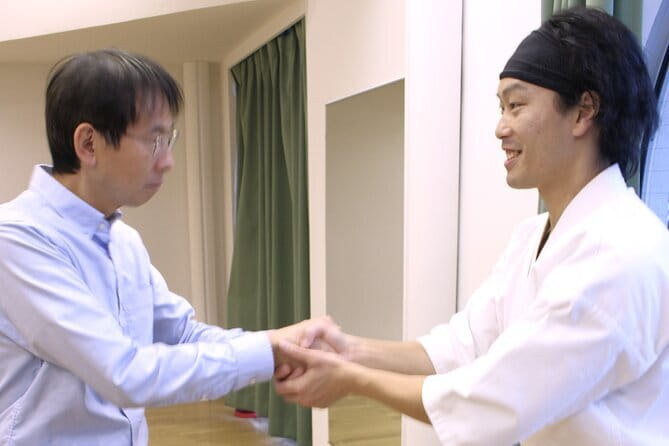
Tokyo’s karate class with former All-Japan champion Ryo gives you more than a quick photo opportunity. In 90 minutes, you learn how to bow, breathe, stand, punch, block, kick, and defend against attacks without physical contact. The class is capped at eight people, so instruction stays personal.
I like the clear step-by-step teaching and the chance to train with someone who has 20 years of experience. I also like the practical format: uniform and pads are supplied, the location is near public transportation, and morning or afternoon classes fit neatly into a Tokyo day.
The main consideration is physical. You need moderate fitness, and kicks can test your hip mobility. This is beginner-friendly, but it is still a workout, not a passive cultural demonstration.
Key points before you book
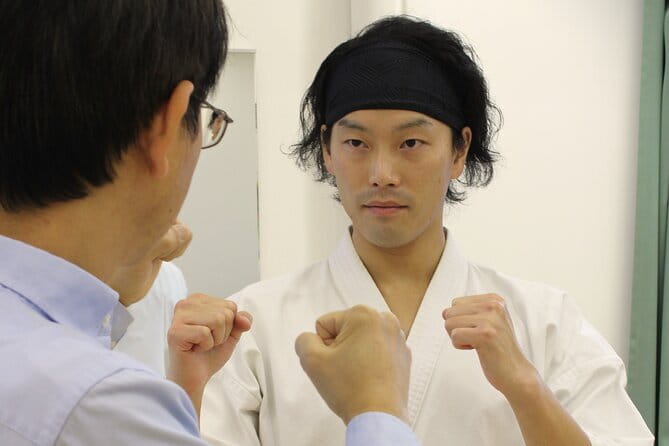
- Train with Sensei Ryo: Your instructor is a former All-Japan champion with 20 years of karate experience and clear English.
- Small class size: The maximum is eight people, allowing Ryo to adjust the pace and technique for different ability levels.
- Learn the full foundation: The class covers bowing, breathing, stretching, stances, punches, blocks, kicks, and no-contact kumite.
- Standing Zen Training: You’ll practice a calm, focused standing position that links karate technique with mental control.
- Uniform and pads included: You do not need to pack specialist equipment for this 90-minute session.
- Convenient Tokyo timing: Morning and afternoon options, mobile tickets, and a central Sumida location make this easy to add to a sightseeing day.
What this Tokyo karate class really offers
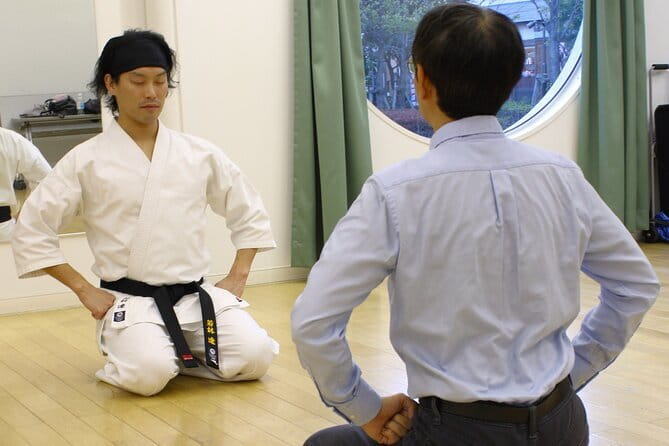
This is a hands-on introduction to traditional karate, not a staged martial arts show. You take part from the first bow, work through the basic movements, and finish by applying defensive ideas in controlled, no-contact exercises.
That difference matters. You are not simply watching a demonstration of fast kicks or dramatic board breaking. You are learning why karate begins and ends with a bow, how breath affects concentration, and how a stable stance supports every strike.
The experience is led by Ryo, a Japanese black belt and former All-Japan champion. His 20 years of experience give the session a serious foundation, but the class is built for mixed ability levels. If you have never practiced martial arts, the movements are broken into small steps. If you have trained in another style, Ryo can adjust the lesson and point out differences in posture, power, and sparring technique.
That flexibility is one of the strongest reasons to choose this class. Previous students with boxing or martial arts experience have been able to discuss combat sports with Ryo, while complete beginners have found his explanations easy to follow. You are not expected to arrive knowing Japanese commands or karate terminology.
More Tokyo martial arts classes:
- Tokyo: Samurai Sword & Archery Class from Samurai Descendant
★ 5.0 · 603 reviews - Tokyo:Samurai sword and archery class from a samurai descendant
★ 5.0 · 121 reviews - Tokyo 2-Hour Genuine Samurai Experience: Kendo in Japan
★ 5.0 · 112 reviews
Starting with a bow and controlled breathing
The lesson begins with bowing. In karate, the idea is simple: start with a bow and end with a bow. It sets the tone for the class and introduces the respect and discipline built into the practice.
You also work on breathing from the belly. This is not filler before the exercise begins. Controlled breathing helps you settle your mind, focus on the instructor, and avoid rushing through each movement. It also gives you a useful way to manage effort when the pace picks up.
This opening section is especially good for first-time participants. You learn that karate is not only about force. Balance, attention, and control are part of the technique. The calm beginning also helps if you feel self-conscious about trying martial arts in front of other people.
Stretching that prepares you for kicks
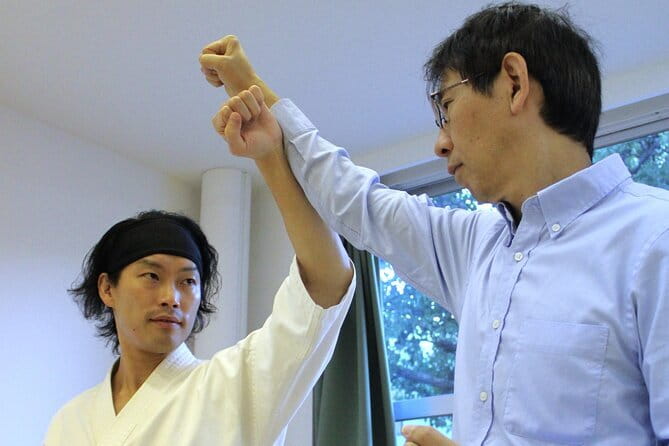
Next comes a stretching routine for the major working areas of the body. The lesson includes the leg muscles, hip joints, shoulder blades, and chest.
This section deserves more attention than it might receive in a short cultural activity. Kicks require mobility, and basic karate positions can feel unfamiliar if you spend much of your day walking, sitting, or sightseeing. The stretching gives you a safer starting point before you begin practicing higher or more demanding movements.
You should still be honest about your own fitness. The class requires a moderate level of physical ability, and one participant found that limited mobility made some kicks difficult. You do not need to arrive in athletic shape, but you should expect to bend, stretch, hold positions, and repeat techniques.
Wear something that allows free movement, even though a karate uniform is provided. The supplied uniform and pads make the activity easier for visitors who do not want to pack training clothes or equipment, but they do not remove the need for comfortable movement.
Building punches, blocks, and kicks one move at a time
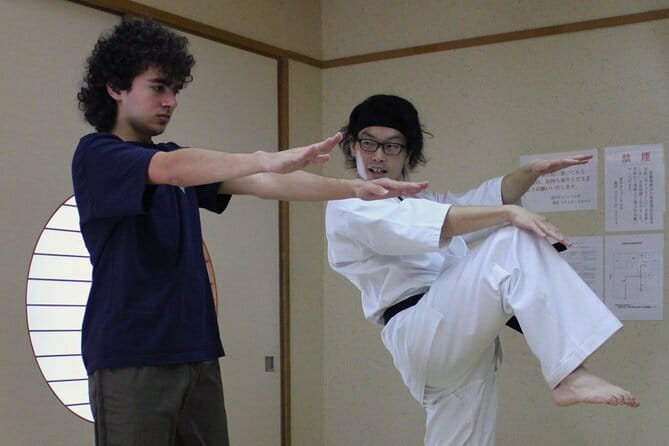
The technical heart of the class covers basic punches, blocks, and kicks. Ryo divides each technique into several movements, so you can understand the stance, body position, and sequence instead of trying to copy one fast action.
That teaching method works well for beginners. A punch is not simply an arm movement. Your stance, balance, hips, breathing, and target all affect the result. The same is true for a block or kick. By breaking the movement apart, Ryo can correct the details that are easy to miss when you only watch a demonstration.
You also get a useful workout. The class is active and focused, but it is not described as extreme conditioning. Several participants found the pace intense enough to feel worthwhile without becoming excessive. That makes the experience a good fit for someone who wants an unusual activity in Tokyo but does not want to spend half a day at a full martial arts seminar.
People with previous karate training may appreciate the corrections even more than complete beginners. Ryo has adjusted lessons for students familiar with other styles, including those who wanted help with posture, stomach power, and sparring skills. Different karate systems can share basic movements while using different timing or body mechanics, so experienced martial artists may find fresh details in familiar exercises.
A completely different kind of day in Tokyo:
- Mt Fuji and Hakone 1-Day Bus Tour Return by Bullet Train
★ 5.0 · 26,383 reviews - 1-Day Tokyo Bus Tour
★ 5.0 · 14,250 reviews - Tokyo: teamLab Planets TOKYO Digital Art Museum Entry Ticket
★ 4.6 · 9,779 reviews - Mt Fuji & Hakone Cruise, Drum Show Bullet Train 1 Day from Tokyo
★ 4.0 · 7,413 reviews
Standing Zen Training and the mental side of karate
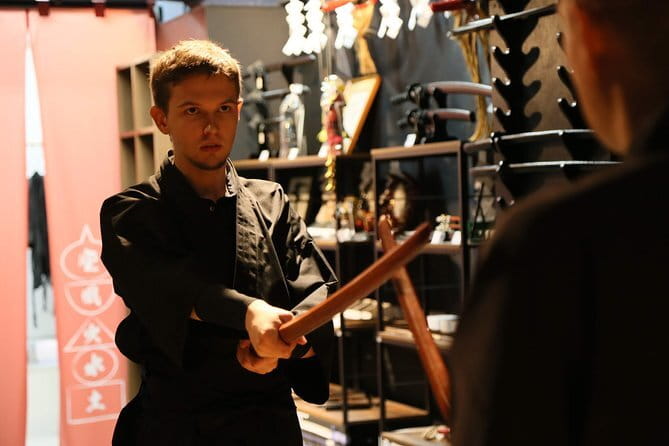
One of the class highlights is Standing Zen Training. The position gives you a chance to work on stillness, posture, breathing, and mental focus.
For a visitor, this is one of the more distinctive parts of the activity. Punches and kicks are easy to recognize as martial arts movements. Standing quietly with proper alignment shows another side of karate, one based on patience and control.
The exercise also gives the lesson a useful rhythm. You move from active stretching and technique practice to a more settled form of training. This helps explain why the class begins with breathing and why a strong stance matters before you add speed or power.
Do not expect a long meditation session. The available information describes Standing Zen Training as part of the karate instruction, not as a separate spiritual workshop. Think of it as a focused posture and breathing exercise within the martial arts lesson.
No-contact kumite for a safe finish
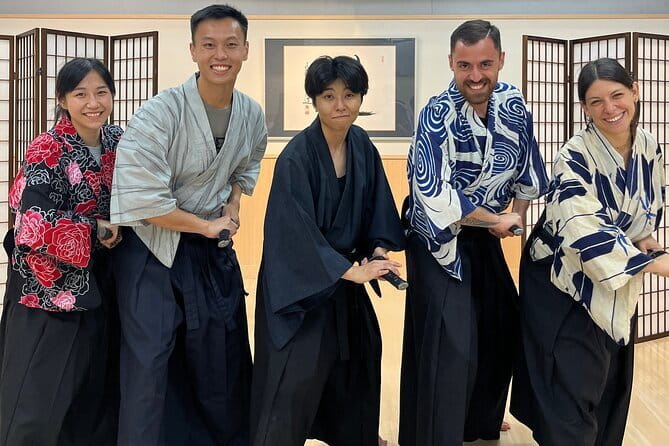
The final part introduces the essence of kumite, or sparring, without physical contact. You learn how to respond to attacks such as punches, front kicks, and low kicks, using different defensive tips for precision and efficiency.
This is a smart format for a mixed group. You get a taste of timing and defense without the risks of full-contact sparring. It also lets beginners practice the logic of a confrontation: identify the attack, keep your stance, choose a response, and maintain control.
The no-contact approach does not make the section pointless. Karate defense depends on distance, position, timing, and accuracy. You can work on those elements without trading blows. It is also a good choice if you are interested in martial arts but do not want an activity that leaves you sore or bruised.
If you have trained before, this part may be where the lesson becomes most useful. Ryo can adjust the level and offer a different view of familiar defensive movements. If you are new, you can focus on clean form rather than speed.
A small class with room for personal instruction
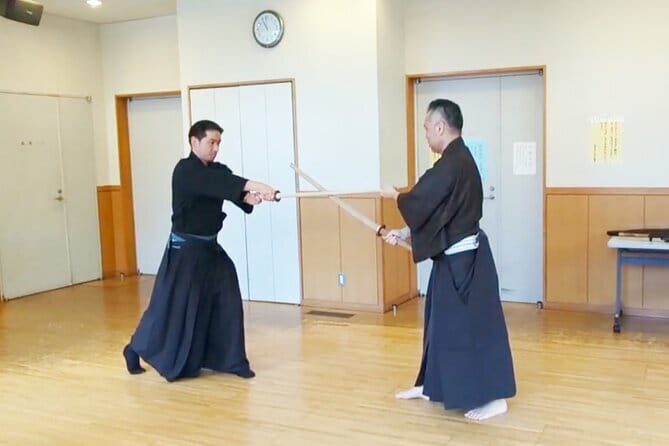
The maximum group size is eight. That is small enough for Ryo to see how people are moving and adjust the session to suit the group.
This matters because the class attracts different kinds of participants. Some people may be trying karate for the first time. Others may have practiced another martial art or trained in a different karate style. A fixed routine would serve one group well and leave another group bored or overwhelmed. The ability to adapt gives the session broader appeal.
The teaching style is a major part of the value. Ryo is described as friendly, approachable, and precise in English. Clear communication is important in a physical class, where a small misunderstanding about stance or direction can affect the whole movement.
The maximum size is a limit, not a promise of a private lesson. If only a small number of people book, the experience may feel very personal. If the class reaches eight, you will still be in a compact group, but you should not assume one-on-one coaching throughout.
Location, timing, and what to bring
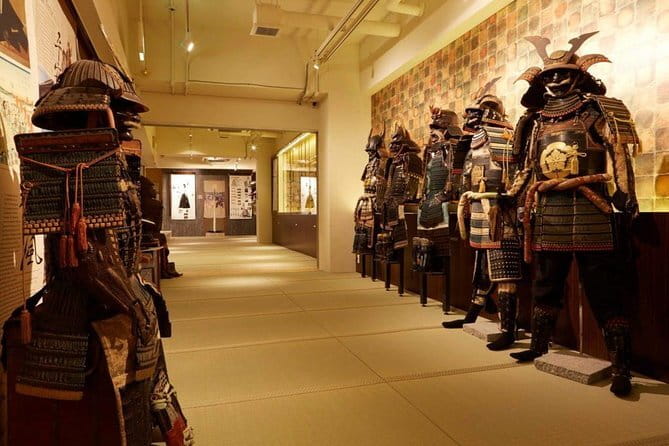
The meeting point is Azumabashi Hall at 1-chōme-23-27 Azumabashi, Sumida City, Tokyo 130-0001. The activity ends at the same location. It is near public transportation, so you can reach it by train and continue with your Tokyo plans afterward.
Morning and afternoon sessions make the class easy to fit around sightseeing. A morning booking can provide an active start before exploring the city. An afternoon booking may work better if you want to visit attractions first and train later.
Allow enough time to locate Azumabashi Hall and arrive ready to begin. The available information does not name a particular station or provide a detailed route, so check the exact meeting point before setting out. A mobile ticket is provided, which means you can keep confirmation on your phone rather than carrying a printed voucher.
The uniform and pads are included. You should still bring water and wear or pack clothing that allows movement, although those items are not specifically listed as inclusions. The class lasts about 90 minutes, and the meeting point is also the end point, so there is no extra transfer to plan afterward.
Is $66.99 a fair price?
At $66.99 per person, the cost works out to about $44.66 per hour. That is not the cheapest physical activity in Tokyo, but the price includes a small-group lesson with a former All-Japan champion, a karate uniform, and pads.
The value depends on what you want from the experience. If you only want to try a few martial arts moves for a quick photo, this may feel expensive. If you want structured instruction, cultural context, and a real workout, the 90 minutes offer more substance than a short demonstration.
The small group also matters. You are paying for access to an instructor who can adjust technique rather than simply following a large class from the back row. Group discounts may be available, which can improve the value for couples, families, or friends booking together.
The activity is often booked about 29 days ahead, so plan early if your Tokyo dates are fixed. That booking pattern does not guarantee that every date sells out, but it is a useful sign that advance planning makes sense.
Who should book this experience?
I would recommend this class to first-time martial arts participants who want something active and distinctly Japanese. You get basic instruction without needing previous experience, and the no-contact sparring keeps the final section controlled.
It also suits people who have trained in boxing, karate, or another martial art. Ryo has worked with students who wanted to compare styles, correct old habits, or gain a new view of posture and sparring.
Couples and small groups should find the format particularly appealing. You can share a memorable activity without needing every person to have the same fitness level. The instructor can adapt the lesson, though each participant still needs moderate physical fitness.
I would be more cautious if you have limited hip or leg mobility, an injury, or little tolerance for physical exertion. The lesson is beginner-friendly, but beginner-friendly does not mean effortless. Ask yourself if you can stretch, hold a stance, and practice repeated kicks comfortably.
Free cancellation is available up to 24 hours before the start time for a full refund. Changes or cancellations inside that window are not refunded, so keep the cutoff in mind when arranging a busy Tokyo schedule.
Should you book the Tokyo karate class?
Book it if you want to do more than look at Japan’s martial arts culture from the sidelines. Ryo’s class combines tradition, exercise, clear instruction, and safe practice in a compact 90-minute session.
The best reasons to choose it are the small group, the instructor’s championship background, the included equipment, and the ability to adapt the lesson for both beginners and experienced martial artists. The main caution is physical: stretching and kicks can be demanding if your mobility is limited.
For many visitors, this is a strong choice for a free morning or afternoon in Tokyo. You leave with a better sense of how karate uses posture, breath, focus, and control, not just punches and kicks.
FAQ
How long does the karate experience last?
The class lasts approximately 1 hour and 30 minutes.
Where does the class meet?
The meeting point is Azumabashi Hall, 1-chōme-23-27 Azumabashi, Sumida City, Tokyo 130-0001, Japan.
Where does the activity end?
The class ends back at the meeting point.
Who teaches the class?
The instructor is Ryo, a former All-Japan champion, Japanese black belt, and teacher with 20 years of experience.
Is the class suitable for beginners?
Yes. The lesson is designed for beginners as well as people who have previous karate or martial arts experience.
What techniques will I learn?
You will practice bowing, breathing, stretching, stances, basic punches, blocks, kicks, Standing Zen Training, and no-contact kumite.
Is sparring included?
A no-contact form of kumite is included. You will practice defenses against punches, front kicks, and low kicks without physical contact.
Are a karate uniform and pads provided?
Yes. A karate uniform and pads are included.
How many people can join the class?
The maximum group size is eight people.
What level of fitness do I need?
A moderate level of physical fitness is recommended. The class includes stretching, stances, punches, blocks, and kicks.
Are morning and afternoon classes available?
Yes. You can choose from morning and afternoon class times.
Is the experience near public transportation?
Yes. The meeting location is near public transportation.
How much does the experience cost?
The listed price is $66.99 per person. Group discounts may be available.
Can I cancel for a full refund?
Yes, if you cancel at least 24 hours before the experience start time. Cancellations made less than 24 hours before the start time are not refunded.
Newly reviewed around Tokyo
- Tokyo Asakusa:Calligraphy & Make T-shirt Activity★ 5.0 · 62 reviews
- Intercity Shuttle, Tokyo to Haneda /Narita /Yokohama /Makuhari★ 5.0 · 5 reviews
- 1 Hour Travel around Tokyo with a Professional Photographer★ 5.0 · 3 reviews
- Travel Tokyo with Your Own Personal Photographer★ 5.0 · 43 reviews
- Train in Samurai Swordsmanship and Defeat the Demon in Tokyo★ 5.0 · 5 reviews
- Shuttle Van 6hr Tokyo Tour to-and-from Tokyo, Yokohama and Narita★ 5.0 · 9 reviews
- Kickboxing & Body Training with EX-Pro Fighter★ 5.0 · 4 reviews
- Tokyo History: Sensoji Temple & Asakusa District Private Tour★ 5.0 · 28 reviews
Tokyo Martial Arts Experiences, compared.
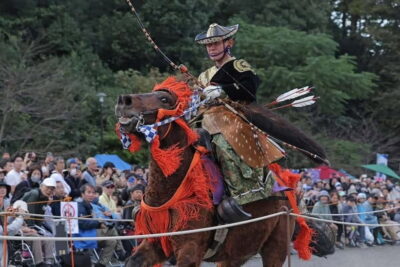
Samurai Sword & Archery Class from Samurai Descendant
Read our review →
Samurai sword and archery class from a samurai descendant
Read our review →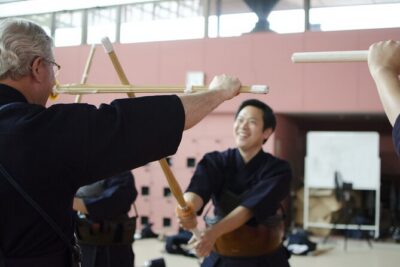
Tokyo 2-Hour Genuine Samurai Experience: Kendo in Japan
Read our review →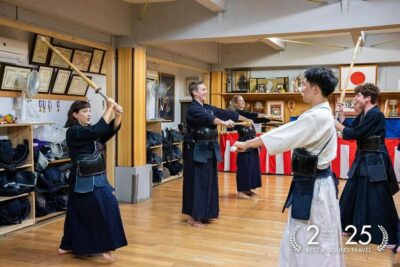
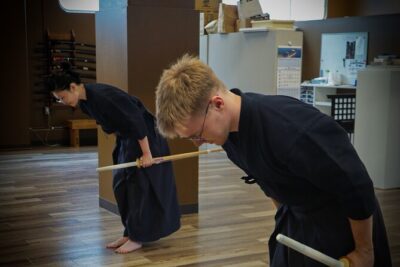
Samurai Experience – Learn Bushido through Kendo, in Tokyo
Read our review →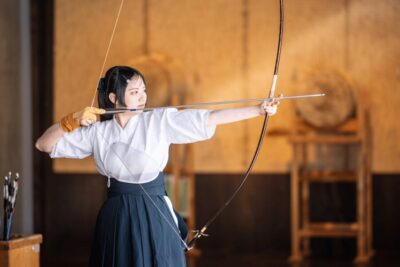
Samurai Experience – Learn Bushido through Kendo, in Tokyo
Read our review →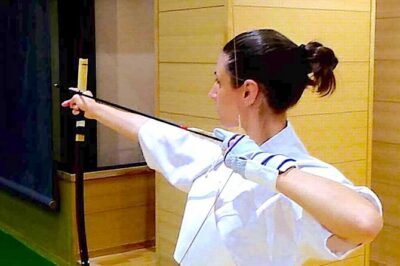
Authentic Kyudo Japanese Archery Experience in Tokyo
Read our review →Browse the lists this tour appears in