
Reviewed · TOKYO GO-KART TOURS
Go Karting Tokyo Old Town Experience | 8 Destinations in 100 Mins
Tokyo sightseeing usually means trains, temples, and crowded sidewalks. This tour gives you a different view: you sit behind the wheel and follow a guide through Tokyo’s old-town districts, passing eight major sights in about 100 minutes. You may drive by Tokyo Skytree, Ryogoku, Akihabara, Ueno, Asakusa, Tokyo Station, the Sword Museum, and the Imperial Palace.
I like the small group, capped at 10 people, and the fact that costumes, fuel, insurance, water, and photos are included. I also like the broad mix of Tokyo neighborhoods, from sumo country and samurai culture to anime streets and imperial grounds. The main catch is serious: you must bring the original required driving documents. A digital IDP copy will not work, and you will not receive a refund if missing paperwork cancels your ride.
Key things to know before you book
- Eight Tokyo destinations in 100 minutes: You cover a wide stretch of the city, with time for roadside views and photo stops rather than long visits inside attractions.
- A real driving-document requirement: Bring your original local license and a physical International Driving Permit issued under the 1949 Geneva Convention, unless you qualify under one of the stated exceptions.
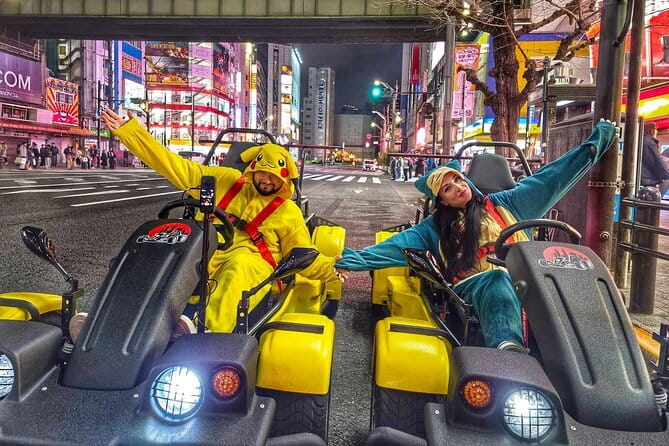
- Costumes are available: You can choose a quirky outfit for the drive, adding a playful touch to the photos and videos.
- Small group of 10 maximum: The limited group makes it easier to stay with the guide and keeps the outing more personal.
- Starts and ends in Katsushika City: Pickup and drop-off are not included, so you must make your own way to Higashiyotsugi.
- Weather can change the plan: The tour requires good weather. A poor-weather cancellation brings a choice of another date or a full refund.
Tokyo sightseeing from the driver’s seat
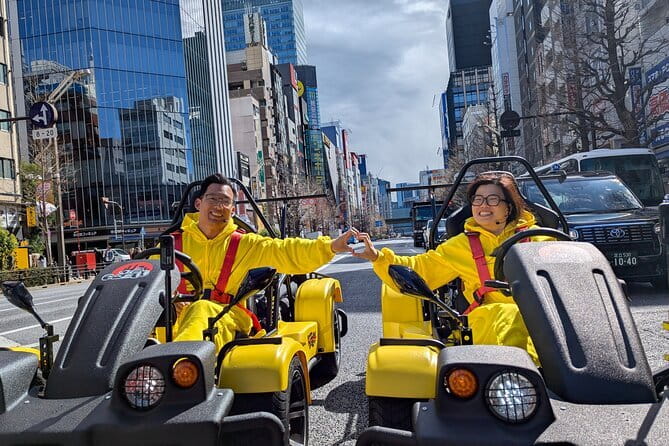
The appeal here is not simply speed. It is the odd pleasure of seeing Tokyo from street level while operating a go-kart, then turning familiar landmarks into part of a moving city tour.
You will follow a local guide through public roads and several districts. That means the experience is less like a museum visit and more like a fast visual sampler. You will not have time to explore each attraction properly, but you will get a useful sense of how Tokyo’s old neighborhoods, commercial centers, and major monuments fit together.
The group size matters. With no more than 10 participants, the guide can keep the line together more easily than on a large coach outing. It also gives you a better chance of getting photos and videos during the ride, which are included in the price.
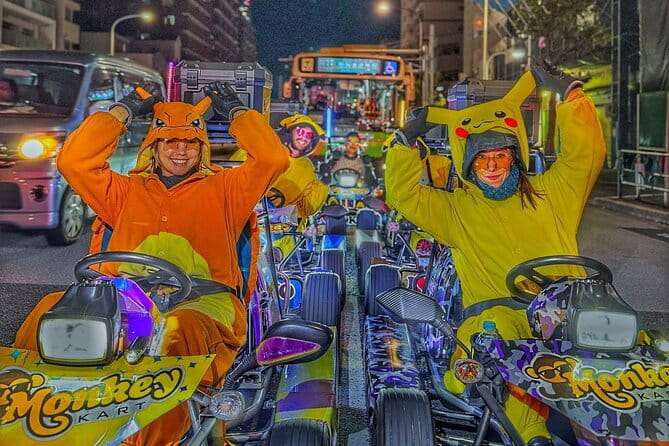
The costumes are another small but enjoyable feature. You can choose from the available outfits before setting off. They are not the reason to book, but they make the photos more memorable and suit the playful nature of driving a go-kart through Tokyo.
More Tokyo go-kart tours:
- Flagship 2-Hours Official Street Go-Kart Tour – Tokyo Bay Shop
★ 5.0 · 4,974 reviews - Official Street Go-Kart in Shibuya
★ 5.0 · 3,435 reviews - Official Street Go-Kart Tour – Akihabara
★ 5.0 · 1,578 reviews
The route from Katsushika to Tokyo’s major sights
The meeting point is at Japan, 124-0014 Tokyo, Katsushika City, Higashiyotsugi, 1-chōme202, at the listed Kojima office location. The experience returns to this same point.
That location is important when planning your day. This is not a central Tokyo hotel pickup, and pickup and drop-off are not included. You will need to arrange your own transportation to the starting point, then return there after the tour.
The route is designed as a continuous sightseeing circuit. The stops below are best understood as points of interest along the drive. You should not expect a full guided visit inside each place.
Tokyo Skytree and the Sumida skyline
Tokyo Skytree is one of the first major visual anchors of the route. It rises above Sumida City as the world’s tallest broadcasting and communication tower and the third tallest structure in the world.
From a go-kart, the tower gives you a strong sense of scale. You can see how Tokyo’s low-rise old districts sit beside newer high-rise development. The stop is especially useful if you have not yet visited Skytree, since the tour gives you another angle for photos without requiring a separate observation-deck ticket.
The trade-off is time. This is a pass-by or photo-focused stop, not an admission visit. If you want the tower’s observation decks, shops, or aquarium area, plan that separately.
Ryogoku and the Sumo Stadium
Ryogoku brings a different side of Tokyo. It is associated with sumo, and the stadium area gives the route a strong connection to one of Japan’s best-known traditional sports.
This portion helps break up the modern-city sights. After Skytree, you are not simply moving from one tall building to another. You are seeing a district tied to old Tokyo customs and public spectacle.
The itinerary does not promise a sumo match or entry into the stadium. Think of Ryogoku as a neighborhood view from the road, with the stadium as the visual focus.
A completely different kind of day in Tokyo:
- Mt Fuji and Hakone 1-Day Bus Tour Return by Bullet Train
★ 5.0 · 26,383 reviews - 1-Day Tokyo Bus Tour
★ 5.0 · 14,250 reviews - Tokyo: teamLab Planets TOKYO Digital Art Museum Entry Ticket
★ 4.6 · 9,779 reviews - Mt Fuji & Hakone Cruise, Drum Show Bullet Train 1 Day from Tokyo
★ 4.0 · 7,413 reviews
The Tokyo Sword Museum
The Tokyo Sword Museum represents Japan’s samurai tradition. Japanese swords are treated not only as weapons, but also as symbols of authority, art objects, and items connected with worship.
That makes this a worthwhile cultural contrast to Akihabara’s pop culture and Tokyo Station’s architecture. Even a brief look at the museum area adds another layer to the tour, reminding you that Tokyo’s past is not confined to temples and palace grounds.
The museum itself is not listed as an included admission. If sword history is a main interest, you should allow separate time to visit it properly rather than relying on the go-kart route alone.
Tokyo Station and Marunouchi
The tour passes through the Marunouchi district, where Tokyo Station provides one of the route’s clearest architectural sights. The station dates from the early twentieth century and remains one of the city’s best-known buildings.
This part of the drive shows a more formal side of Tokyo. Marunouchi is tied to offices, major streets, and grand urban design, a change from the smaller-scale atmosphere of old-town neighborhoods.
You will likely appreciate seeing Tokyo Station as part of the city rather than only as a place to catch a train. Still, traffic and road conditions can affect how long you have to look or photograph it. The tour is built around movement, not a long architectural stop.
Akihabara and Tokyo’s pop-culture center
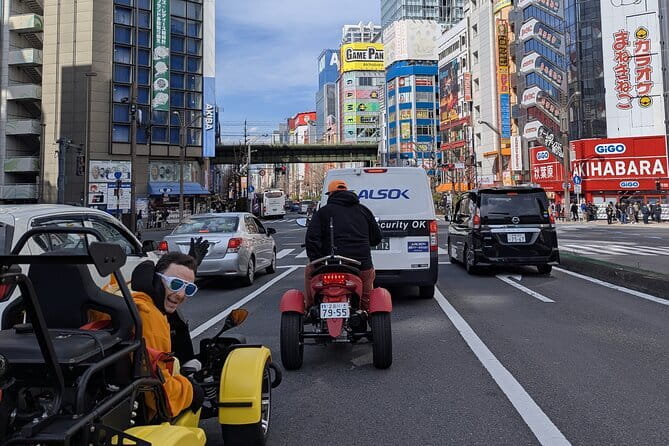
Akihabara is the route’s most playful cultural change. It is famous for electronics, anime, and Japanese pop culture, and it is often called the Otaku capital of the world.
Driving through this area lets you see the visual energy of its shops and streets without spending your full day indoors. For anyone interested in anime or Japanese games, this is a useful first look that can help you decide if you want to return on foot.
The limitation is the same as at the other stops: the go-kart gives you an overview, not shopping time. If you want stores, arcades, or specialty cafés, plan a separate visit. You will have far more freedom to browse on foot.
Ueno and its art and culture
Ueno began gaining importance after the Tokugawa Shogunate was established in Edo in 1603. It first developed around Buddhist temples and local residents, then became a major center for modern Japanese art and culture during the Meiji period.
This is a useful place to consider the value of the route. The tour is not only a collection of famous photo points. It links districts with different roles in Tokyo’s development, from religious and local life to art and modern city culture.
Ueno is also the sort of area where a quick drive can leave you wanting more. If museums and cultural sites appeal to you, treat this section as a preview and return later with time to walk.
Asakusa and old Tokyo charm
Asakusa is one of the strongest matches for the old-town theme. Its origins go back about 1,400 years, and the district is known for its shitamachi character, meaning the traditional low-city side of Tokyo.
This is where the tour feels closest to the city many people picture when they imagine older Tokyo. The streets, temples, and long-standing local identity offer a contrast to the sleek office districts and neon-heavy commercial areas.
Asakusa is also an excellent place to revisit on foot. You can take your time with its historic sites, shops, and food streets after the driving experience. During the go-kart ride, you are mainly seeing the district as part of the larger circuit.
The Imperial Palace
The Imperial Palace gives the route a final major landmark. It is the residence of the Japanese Emperor and Empress and occupies the grounds associated with Edo Castle.
The site connects modern Tokyo with the city’s political past. Ota Dokan constructed the original castle in 1457, and the grounds later became central to the Tokugawa period. That background makes the palace more than a grand address. It helps explain why Tokyo developed around this part of the city.
Do not expect a full palace tour as part of this experience. The route offers an outside view and historical context, while a separate visit is better if you want to explore the grounds in detail.
What the 100-minute format really gives you
One hour and 40 minutes is a good length for a high-energy introduction to Tokyo. It is long enough to cover several districts, but short enough to fit around other plans.
You should set your expectations correctly. This is not eight full sightseeing visits packed into one afternoon. It is a moving route with landmark views, brief stops, and photo opportunities. The value comes from seeing how different parts of Tokyo connect, not from spending an hour at each attraction.
I would place this tour early in a Tokyo stay if you have the time. The route can help you identify areas you want to revisit by train or on foot. Asakusa, Ueno, Akihabara, and the Imperial Palace each deserve more time than this format permits.
The small group also helps the schedule. A maximum of 10 participants is compact enough to make the ride feel organized, though road conditions and city traffic can still affect the pace.
Cost, inclusions, and the real value
At $91.45 per person, this is not the cheapest way to see Tokyo. You are paying for more than transport, though. The fee includes the go-kart rental, guide, costume, fuel, insurance, photos and video, and drinking water.
That package makes the price easier to justify if you value the driving experience itself. You are not simply being carried between sights. You are taking part in the activity, following the route, and creating images that would be difficult to capture on a standard walking or bus tour.
The included photos and video are useful because you may not want to handle a camera while driving. There is an extra charge if you want to purchase a data card for the Insta360 camera, so ask about that cost before deciding.
Food is not included. You should also budget for transportation to and from Higashiyotsugi, since there is no pickup or drop-off service.
For a first-time visitor who wants classic sightseeing in the most efficient way, a regular guided city tour may offer more explanation and less paperwork. For someone who specifically wants to drive a go-kart through Tokyo, this price covers the main practical costs and adds the unusual element that makes the outing different.
The documents you must bring
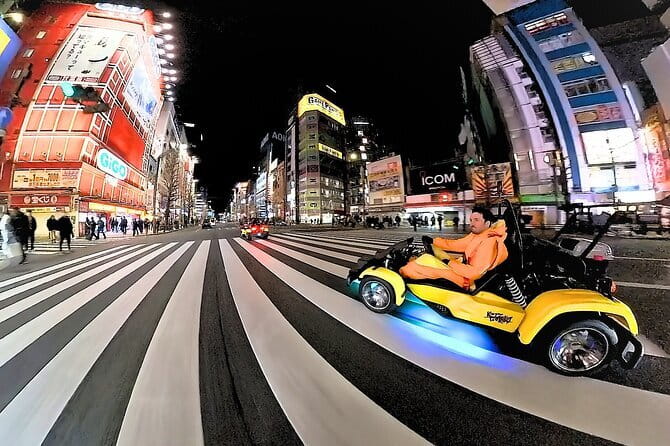
This is the most important practical detail in the entire experience.
You need your passport, your original local driving license, and an International Driving Permit issued under the 1949 Geneva Convention. The permit must be physical. A digital copy, email proof, or phone image is not accepted for this driving activity.
One person was unable to drive because they had digital proof of the IDP rather than the required physical document. The company explained that Japanese law requires the physical IDP or an approved original license for public-road driving. The lesson is simple: check your documents well before leaving home.
There are listed exceptions. Nationals of Switzerland, Germany, France, Belgium, Monaco, and Taiwan may drive if they have a Japanese translation of their driving license. The operator asks you to make contact a month in advance if you need help with that process.
US Forces personnel in Japan need a SOFA Driving License.
Do not treat this as a minor check at registration. If you cannot provide the correct original documents, the experience can be canceled with no refund. I would confirm your exact eligibility before paying, especially if your driving permit situation is unusual.
Safety, access, and weather
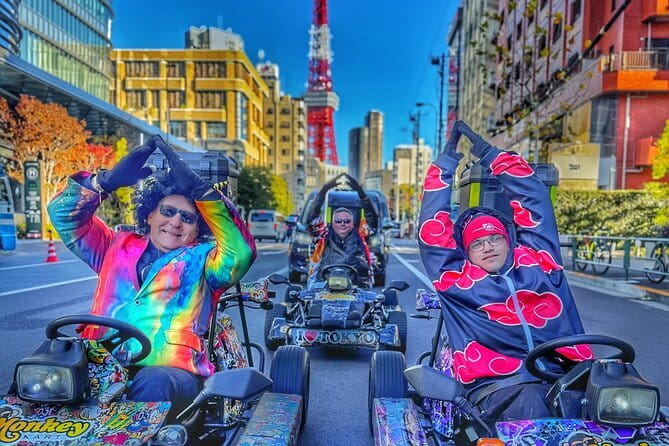
The experience is wheelchair accessible, and most people can participate. The tour operates outdoors and requires good weather, so rain or poor conditions can change the plan.
If the company cancels because of weather, you are offered another date or a full refund. That is helpful, but you should still avoid placing the tour immediately before a flight or another fixed appointment.
You also need to be comfortable with the basic demands of a public-road driving activity. The provided information does not describe the specific training, vehicle controls, or road briefing, so contact the operator directly if you need those details before booking.
The local guide leads the group, and insurance is included. Those are useful protections, but they do not replace careful attention to the guide and Japanese traffic rules.
Who will enjoy this most
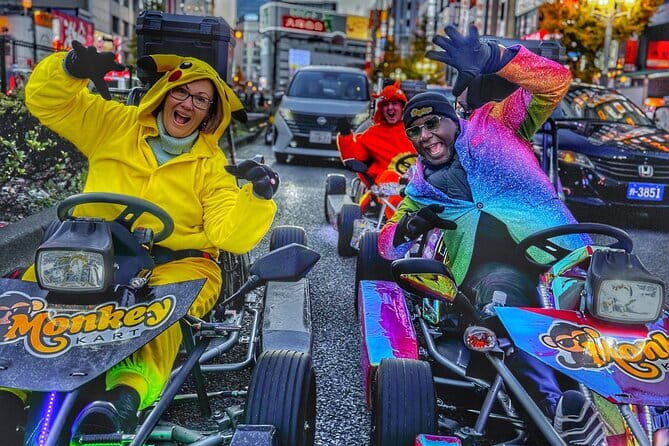
I would recommend this to you if you like active sightseeing, unusual city tours, and quick visual snapshots of many neighborhoods. It suits people who want a memorable activity rather than a quiet museum afternoon.
It is especially good for:
- First-time visitors who want to map out several Tokyo districts.
- Anime and electronics fans who want a first look at Akihabara.
- People interested in sumo, samurai culture, imperial history, and old Tokyo.
- Couples, friends, or families who enjoy playful photos and shared activities.
- Visitors comfortable with driving paperwork and a road-based tour.
I would be more cautious if your priority is detailed cultural explanation, long visits at each landmark, or a relaxed pace. The route moves quickly, and the driving element is the point.
The accessibility note is encouraging, but wheelchair users should still confirm the exact vehicle and boarding arrangements with the operator before booking. The available information confirms accessibility, but it does not explain the equipment or transfer process.
Cancellation and scheduling advice
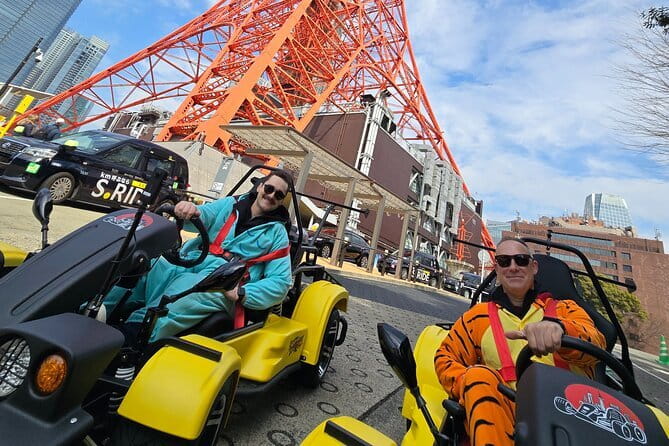
You can cancel for a full refund up to 24 hours before the scheduled start time. Cancellations made within 24 hours are not refunded, and late changes are not accepted.
I would book on a day when the forecast looks stable and keep some flexibility in your Tokyo schedule. If poor weather cancels the tour, you can choose another date or receive a full refund, but a rescheduled activity may affect other plans.
The experience begins and ends at the same Katsushika meeting point. Allow enough time to reach Higashiyotsugi, complete the required checks, and avoid arriving rushed.
Should you book the Tokyo go-kart tour?
Book it if the idea of driving through Tokyo sounds as appealing as the sightseeing itself. The route gives you eight distinct city views in 100 minutes, and the combination of costumes, photos, a small group, and included fuel and insurance makes the outing feel like a complete activity rather than a simple ride.
Skip it if you mainly want deep visits to the Imperial Palace, Asakusa, Ueno, or the Tokyo Sword Museum. You will see these places, but you will not have time to explore them fully.
My practical verdict: this is a fun add-on for an active Tokyo itinerary, not a replacement for Tokyo’s museums, temples, and neighborhoods. Confirm your physical IDP or qualifying license documents first. If your paperwork is ready and the weather is good, the tour offers a memorable way to connect Tokyo’s old streets, modern districts, and famous landmarks from behind the wheel.
FAQ
How long does the go-kart experience last?
The experience lasts approximately 1 hour and 40 minutes, or 100 minutes.
Where does the tour start?
It starts in Katsushika City at Japan, 124-0014 Tokyo, Katsushika City, Higashiyotsugi, 1-chōme202, at the listed Kojima office location.
Where does the tour end?
The experience ends back at the meeting point.
What landmarks are included along the route?
The route includes Tokyo Skytree, Ryogoku and the Sumo Stadium, the Tokyo Sword Museum, Tokyo Station and Marunouchi, Akihabara, Ueno, Asakusa, and the Tokyo Imperial Palace.
What driving documents are required?
You must bring your passport, your original local driving license, and an original physical International Driving Permit issued under the 1949 Geneva Convention. Digital copies are not accepted.
Are there exceptions to the International Driving Permit requirement?
Nationals of Switzerland, Germany, France, Belgium, Monaco, and Taiwan can drive with a Japanese translation of their driving license. US Forces in Japan need a SOFA Driving License.
Is the experience wheelchair accessible?
Yes, the experience is described as wheelchair accessible. The provided information does not specify the exact vehicle or boarding arrangements, so contact the operator if you need those details.
What happens if the weather is poor?
The experience requires good weather. If the operator cancels because of poor weather, you can choose another date or receive a full refund.
Newly reviewed around Tokyo
- Tokyo Asakusa:Calligraphy & Make T-shirt Activity★ 5.0 · 62 reviews
- Intercity Shuttle, Tokyo to Haneda /Narita /Yokohama /Makuhari★ 5.0 · 5 reviews
- 1 Hour Travel around Tokyo with a Professional Photographer★ 5.0 · 3 reviews
- Travel Tokyo with Your Own Personal Photographer★ 5.0 · 43 reviews
- Train in Samurai Swordsmanship and Defeat the Demon in Tokyo★ 5.0 · 5 reviews
- Shuttle Van 6hr Tokyo Tour to-and-from Tokyo, Yokohama and Narita★ 5.0 · 9 reviews
- Kickboxing & Body Training with EX-Pro Fighter★ 5.0 · 4 reviews
- Traditional Japanese Knife Sharpening Class★ 5.0 · 18 reviews
Tokyo Go-Kart Tours, compared.
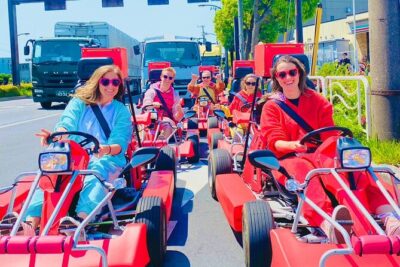
Flagship 2-Hours Official Street Go-Kart Tour – Tokyo Bay Shop
Read our review →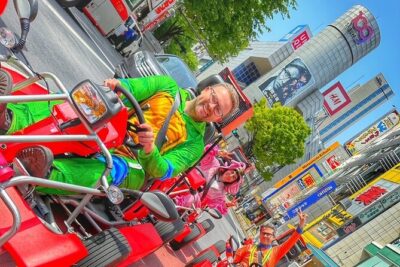
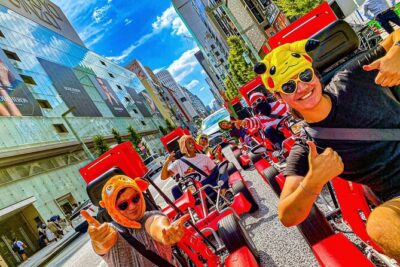
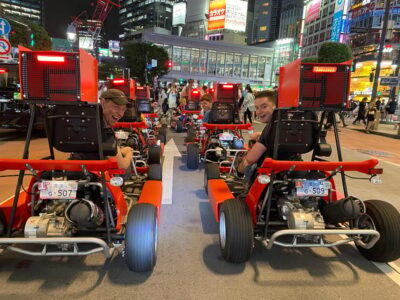
Tokyo Go Kart: Asakusa, Skytree, and Akihabara **IDP MUST**
Read our review →
Shibuya Official Street Go-Kart in Shibuya Annex
Read our review →
Asakusa, Skytree & Akhihabara Go-Kart City Experience
Read our review →
Premium Go-Kart Tour with Tower & Shibuya Crossing
Read our review →Browse the lists this tour appears in