
Reviewed · TOKYO FOOD TOURS
Flavors of Japan Food Tour in Tokyo
Tokyo’s food culture makes more sense when you taste its building blocks one by one. This three-hour walk through Nihonbashi brings you to shops for wagashi, dashi, tamagoyaki, fish cakes, eel sushi, green tea, and regional snacks, then finishes with a full Japanese lunch.
I like the small group of no more than 10 people, which should make questions and tastings easier. I also like the mix of food and place: a 300-year-old knife shop, Japan’s oldest fruit shop, tea, shrines, Nihonbashi Bridge, and an underground department-store food hall. The main consideration is price. At $209 per person, this is not a cheap lunch, so it makes the most sense for first-time visitors who want a guided introduction rather than a simple meal.
Key points at a glance
- Seven food stops in about three hours: The route gives you a broad look at Japanese flavors without requiring several separate restaurant visits.
- A full washoku lunch is included: Choose from options such as soba, tempura, sashimi, grilled fish, chicken, or sukiyaki.
- Nihonbashi is part of the lesson: The route includes COREDO Muromachi, historic shops, shrines, Nihonbashi Bridge, and a depachika food hall.
- You taste ingredients, not just finished dishes: Dashi, pickles, sweet potatoes, fish cakes, tea, and tamagoyaki help explain how Japanese cooking is built.
- Dietary choices are available: The tour is suitable for pescatarians, vegetarians, and vegans, with lunch choice made during booking.
- Rain is usually manageable: The route includes indoor food stops and works well as a rainy-day activity, though poor weather can still lead to changes.
Why Nihonbashi is the right place for a food tour
Nihonbashi is a useful starting point for understanding Japanese cuisine because food shops and old commercial traditions sit close to modern department stores. You are not simply moving from restaurant to restaurant. You are seeing how ingredients, tools, sweets, tea, and prepared dishes fit into everyday Japanese life.
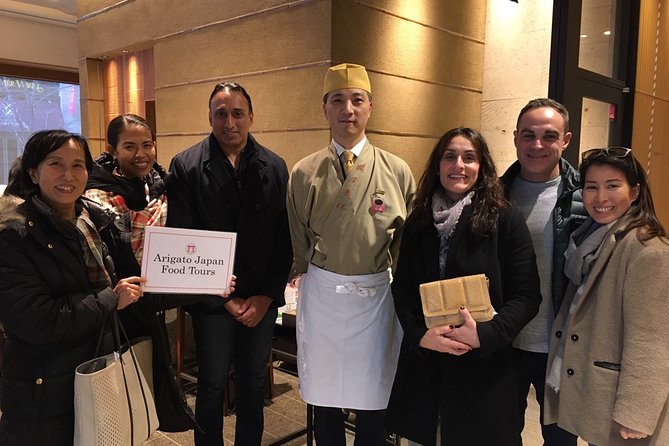
The meeting point is the Starbucks Coffee in the Nihombashi Suruga Building, near COREDO Muromachi. The supplied details give both 10 a.m. and 10:30 a.m. as possible start times, so I would check your confirmation carefully before setting out. The tour ends in the Nihonbashi area, not back at your hotel, and you must arrange your own way there and back.
From the start, your English-speaking local guide sets the pace and explains what you are tasting. That matters in Japan, where a small sample can carry a lot of meaning. A piece of pickled vegetable, for example, is not just a salty bite. It helps show how preservation and balance work in Japanese meals.
More Tokyo food tours:
- Tokyo: Shinjuku Food Tour (13 Dishes at 4 Local Eateries)
★ 5.0 · 6,603 reviews - Tokyo: Shinjuku Food Tour (15 Dishes and 4 Eateries)
★ 4.9 · 2,033 reviews - Best of Shinjuku: Izakaya Food Tour (4 Stops, 14+ Tastings)
★ 5.0 · 1,863 reviews
COREDO Muromachi and the first food lessons
The walk begins around COREDO Muromachi, a modern shopping and dining complex in the Nihonbashi district. This is a practical place to meet because it is near public transportation and offers shelter if the weather turns wet.
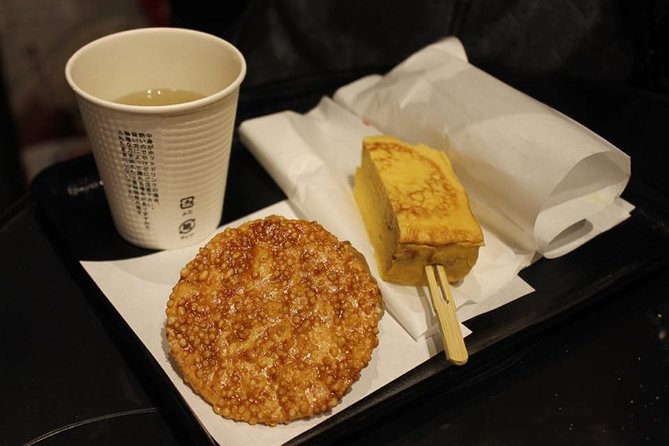
The route visits about seven food stops, with additional shops and cultural points along the way. Each stop represents a different region or part of Japan’s food tradition. You might taste satsuma imo, or fried sweet potato, along with tsukemono, Japanese pickled vegetables, and other local snacks.
The value here is variety. A short tour cannot explain all of Japanese cuisine, but it can show you how often meals depend on contrast: sweet and salty, crisp and soft, light and savory. By the end, dishes on a restaurant menu should feel less mysterious.
One early lesson focuses on dashi, the soup stock used in many Japanese dishes. Dashi is easy to overlook because it often sits behind the main ingredients. Tasting it directly gives you a better sense of why Japanese soups, sauces, noodles, and simmered foods can have such a strong savory base without feeling heavy.
Wagashi, tea, and the careful side of Japanese sweets
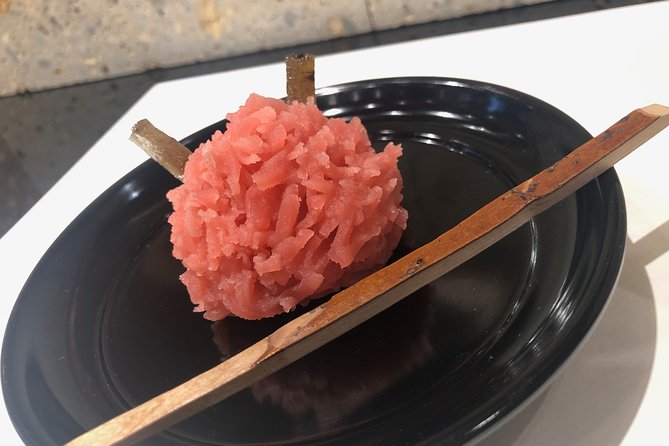
Wagashi is one of the most distinctive parts of the experience. These traditional Japanese sweets are often made with careful shapes and seasonal ideas, so they look almost too neat to eat. The tour lets you see how they are made and taste artistic wagashi for yourself.
This is not the same as stopping for a large Western-style dessert. Wagashi is usually small, measured, and designed to work with green tea. The pairing shows how sweetness can be used to prepare the palate for tea rather than overpower it.
The tea stop adds another useful layer. Green tea is not one single flavor, and the tour gives you a chance to taste different teas while learning how they fit into Japanese food customs. You may find the flavors more subtle than expected, especially compared with sweetened drinks.
One drink is included, but extra drinks and food are not. If you are hungry between official tastings, plan to pay for anything additional yourself.
Historic shops, tools, and the food behind the meal
The route includes Japan’s oldest fruit shop and a 300-year-old knife shop. These stops help explain why Japanese food is tied so closely to ingredients and preparation.
The fruit shop gives you a look at the care placed on produce and presentation. The knife shop points to the importance of cutting in Japanese cooking. A knife is not just a kitchen tool. The cut can affect texture, appearance, and how a piece of food is eaten.
You also pass places such as Fukutoku Shrine, Nihonbashi Takashimaya, Suitengu Shrine, and Nihonbashi Bridge. These stops add local context without turning the tour into a formal history walk. The main subject remains food, but the surrounding streets show the commercial and cultural setting that supports it.
The route may change. Restaurant schedules, holidays, weather, and other practical issues can lead to substitutions. That is worth accepting here because the tour depends on live shops and food businesses rather than a fixed museum display.
A completely different kind of day in Tokyo:
- Mt Fuji and Hakone 1-Day Bus Tour Return by Bullet Train
★ 5.0 · 26,383 reviews - 1-Day Tokyo Bus Tour
★ 5.0 · 14,250 reviews - Tokyo: teamLab Planets TOKYO Digital Art Museum Entry Ticket
★ 4.6 · 9,779 reviews - Mt Fuji & Hakone Cruise, Drum Show Bullet Train 1 Day from Tokyo
★ 4.0 · 7,413 reviews
The regional tasting sequence
The tasting portion is designed as a series of small lessons. You sample rather than sit for a long meal at every stop, which lets the guide cover more ground.
Possible tastes include:
- Dashi, the savory stock used across Japanese cooking
- Satsuma imo, or fried sweet potatoes
- Tsukemono, including Japanese pickled vegetables
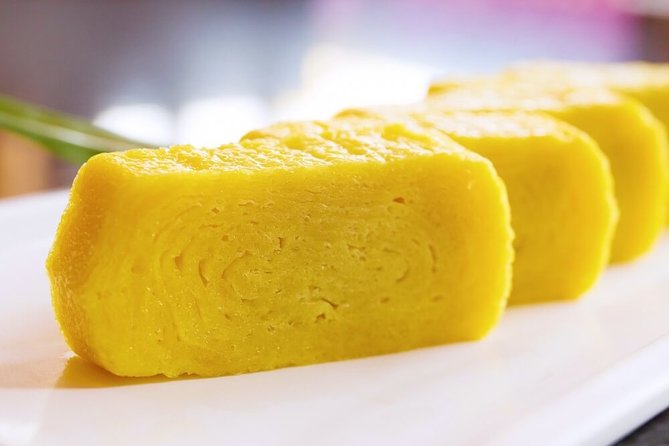
- Tamagoyaki, a rolled Japanese egg dish
- Fish cakes from Kagoshima
- Eel sushi
- Regional snacks
- Wagashi and green tea
The regional focus is important. Japanese food is often treated as one national style, but ingredients and dishes vary across the country. Fish cakes from Kagoshima, for example, give you a taste of a southern regional tradition. Eel sushi offers another example of how one ingredient can be prepared in a highly specific way.
You should expect tasting portions, not a full serving of every item. That is a benefit if you want range, but it can be less satisfying if you are looking for a single, leisurely food experience. The final lunch supplies the main meal.
Choosing your Japanese lunch
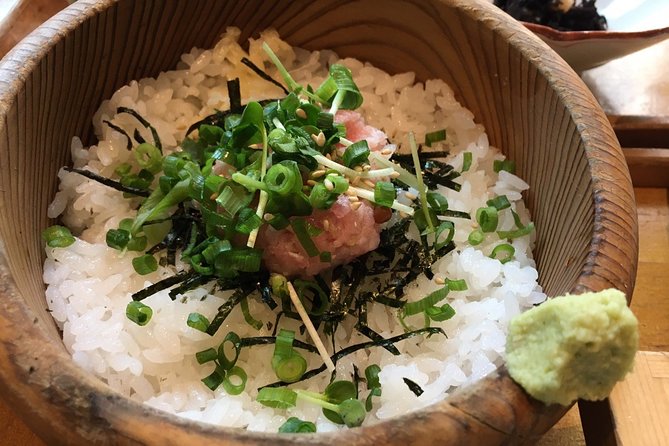
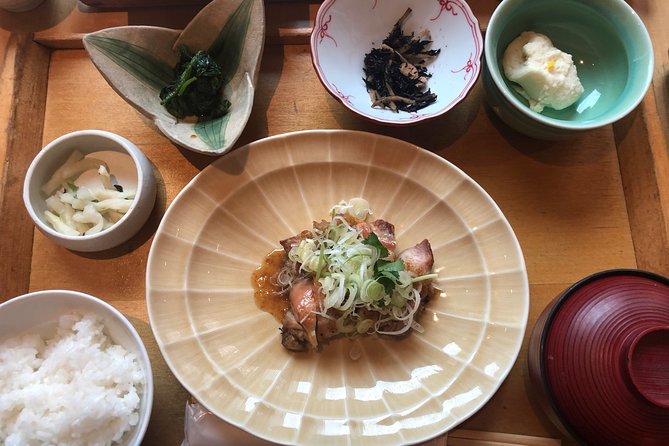
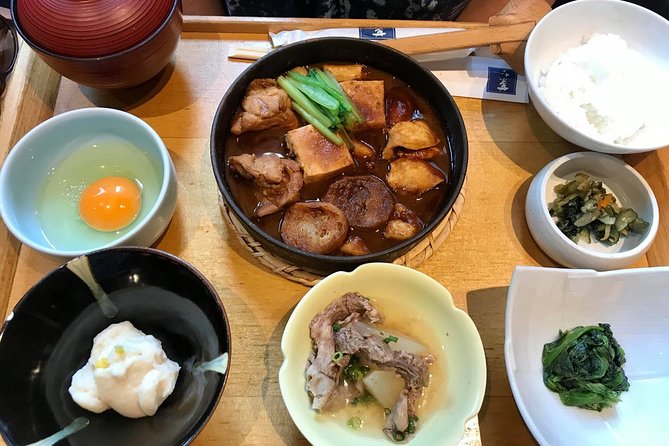
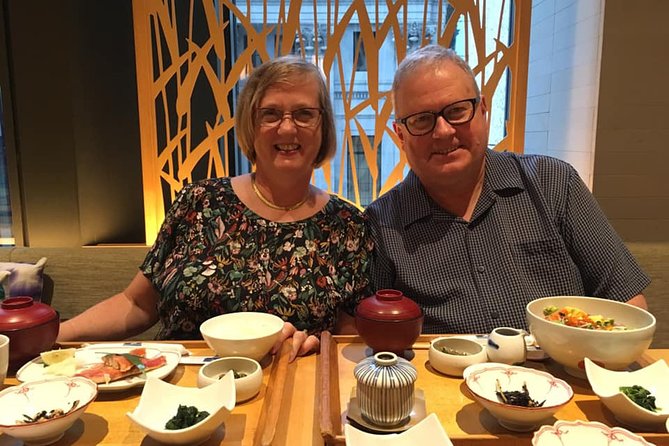
The tour ends with a full washoku lunch eaten with the group and guide. Washoku refers to traditional Japanese food served as a balanced meal, often with several components rather than one large plate.
Lunch choices include soba, tempura and sashimi sets, grilled fish, chicken, and sukiyaki. Your lunch selection is made at booking, so choose carefully and account for your diet. The experience is listed as suitable for pescatarians, vegetarians, and vegans, but you should make the correct selection in advance rather than wait until the day of the tour.
This meal is where the earlier tastings come together. After trying dashi, pickles, egg, seafood, tea, and sweets, you can ask the guide how those flavors appear in a more complete Japanese meal. That conversation is one of the best reasons to choose a guided tour instead of simply booking lunch on your own.
The tour’s strongest praise centers on how much you learn while eating. A guest described the experience as a food walk through upscale Tokyo that provided enough food for the day and made Japanese menus feel easier to approach. That is a fair description of the tour’s purpose. It is less about finding one famous dish and more about giving you a working vocabulary for Japanese food.
The depachika finish
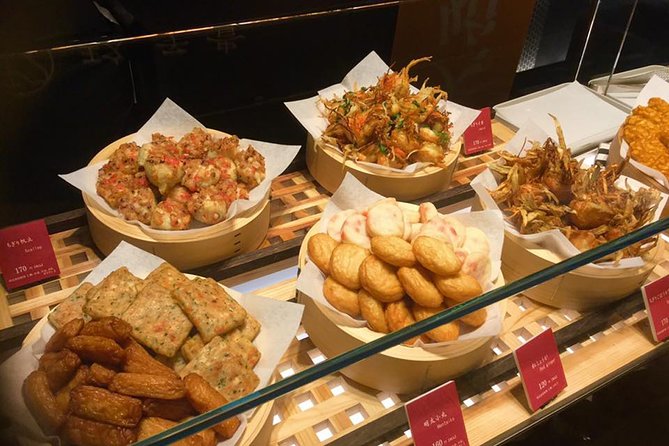
After lunch, the guide takes you into a depachika, the food hall located in the basement of a department store. The guide points you toward useful places for additional snacks, then you are free to explore on your own.
A depachika can be a rewarding final stop because it gathers prepared foods, sweets, baked goods, regional specialties, and gift items under one roof. The supplied tour details do not promise a fixed set of depachika tastings, so think of this part as advice and orientation rather than another formal course.
You may want to leave room in your appetite and luggage budget. Additional food is not included, and you pay for anything you buy after the tour.
Is $209 a fair price?
The $209 price is high for a three-hour food walk. If you measure it only by the amount of food, you can probably find a cheaper lunch in Tokyo.
The value comes from the combination of guided tastings, a full lunch, regional context, and access to shops you might not choose on your own. You are paying for the guide to connect dashi, wagashi, tea, seafood, Japanese sweets, regional snacks, and local shopping into one clear lesson.
The small group also matters. With a maximum of 10 people, you should have a better chance to hear explanations and ask questions than on a large bus-style food tour. The tour includes one drink, regional tastings, seven food stops, a local Japanese lunch, and the guide’s time. For a first visit, that package can be worthwhile if you want food guidance more than bargain dining.
I would not book it for a quick meal alone. I would book it if you want to spend your first Tokyo days learning what to order later in the trip.
Who will enjoy this walk most?
This experience suits first-time visitors who want a friendly introduction to Japanese cuisine. It is especially useful if menus, unfamiliar ingredients, or Japanese dining customs make you hesitate.
It also works well for people who like food markets, small samples, and local shopping. The route includes enough cultural stops to keep the morning from feeling like a string of restaurant counters.
Families can participate, but children must be accompanied by an adult. Children aged 10 and above require a copy of passport information. The minimum drinking age is listed as 21, though the supplied details do not say that alcohol is a central part of the tour.
Most people can take part, and the route is near public transportation. Since the tour lasts about three hours and includes walking between stops, comfortable shoes remain a sensible choice. That is general practical advice rather than a special requirement stated by the operator.
Useful planning details before you book
The start point is Starbucks Coffee in the Nihombashi Suruga Building, at 1 Chome 7-1 Nihombashimuromachi, Chuo City. The end point is in the Nihonbashi area, so do not plan on being dropped at your hotel.
A mobile ticket is included, and confirmation is provided when you book. The experience offers free cancellation if you cancel at least 24 hours before the start time. Changes inside that window are not accepted, and the amount paid is not refunded.
Weather can affect the tour. It is considered good for rainy days, but poor weather may still cause cancellation, in which case you are offered another date or a full refund. The minimum number of participants also matters. If that minimum is not met, you can choose another date or experience, or receive a full refund.
Should you book the Flavors of Japan Food Tour?
Book it if you want a guided food primer with a full lunch and a small group. The best parts are the range of tastings, the wagashi and tea lesson, the historic Nihonbashi shops, and the way the guide links individual ingredients to a complete Japanese meal.
Skip it if you mainly want the cheapest possible food or prefer to spend three hours at one restaurant. At $209, the tour asks you to pay for explanation, variety, and local orientation. For a first-time visitor who wants to feel more confident ordering Japanese food afterward, that is the point of the experience.
FAQ
Where does the tour begin?
The meeting point is Starbucks Coffee in the Nihombashi Suruga Building, near COREDO Muromachi in Nihombashi. The listed start time is 10:30 a.m., though another tour detail gives 10 a.m., so check your booking confirmation.
Where does the tour end?
The tour ends in the Nihonbashi area of Tokyo. Hotel pickup and drop-off are not included.
How long does the food tour last?
The walking tour lasts approximately three hours.
What food is included?
Included tastings may include dashi, regional snacks, satsuma imo, tsukemono, tamagoyaki, Kagoshima fish cakes, eel sushi, wagashi, and green tea. A full Japanese lunch is also included.
Can I choose my lunch?
Yes. Lunch choices include soba, tempura and sashimi sets, grilled fish, chicken, and sukiyaki. Lunch choice is made at booking.
Is the tour suitable for vegetarian or vegan visitors?
The tour is listed as pescatarian, vegetarian, and vegan friendly. Select the appropriate lunch option when booking.
Newly reviewed around Tokyo
- Tokyo Asakusa:Calligraphy & Make T-shirt Activity★ 5.0 · 62 reviews
- Intercity Shuttle, Tokyo to Haneda /Narita /Yokohama /Makuhari★ 5.0 · 5 reviews
- 1 Hour Travel around Tokyo with a Professional Photographer★ 5.0 · 3 reviews
- Travel Tokyo with Your Own Personal Photographer★ 5.0 · 43 reviews
- Train in Samurai Swordsmanship and Defeat the Demon in Tokyo★ 5.0 · 5 reviews
- Shuttle Van 6hr Tokyo Tour to-and-from Tokyo, Yokohama and Narita★ 5.0 · 9 reviews
- Kickboxing & Body Training with EX-Pro Fighter★ 5.0 · 4 reviews
- Traditional Japanese Knife Sharpening Class★ 5.0 · 18 reviews
Tokyo Food Tours, compared.
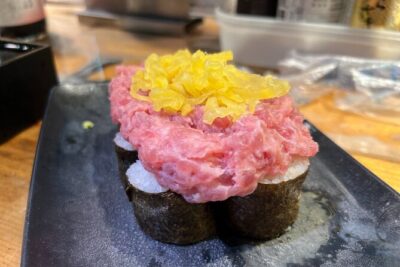
Shinjuku Food Tour (13 Dishes at 4 Local Eateries)
Read our review →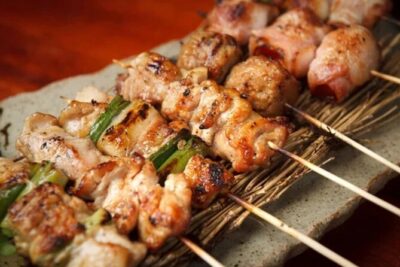
Shinjuku Food Tour (15 Dishes and 4 Eateries)
Read our review →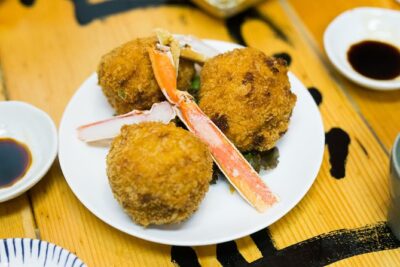
Best of Shinjuku: Izakaya Food Tour (4 Stops, 14+ Tastings)
Read our review →
Tokyo Night Foodie Tour in Shinjuku – Seasonal Sushi, Wagyu Beef
Read our review →
Eat and Drink Like a Local: Tokyo Ueno Food Tour-Taverns&Ramen
Read our review →
Tsukiji Fish Market: Street Food & Culture Walking Tour
Read our review →
Browse the lists this tour appears in