
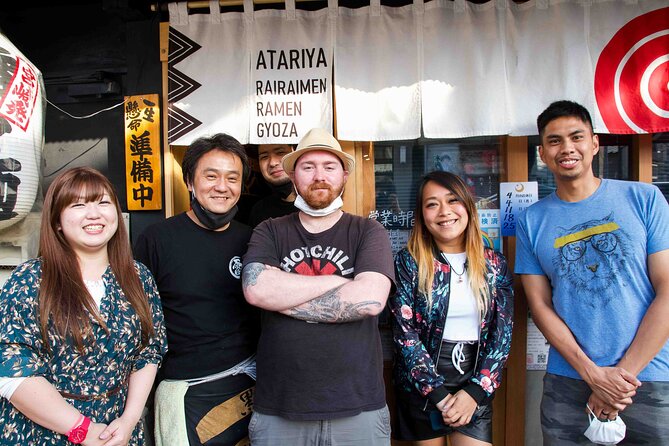
Reviewed · TOKYO RAMEN TOURS AND CLASSES
Exclusive Ramen Kitchen Experience
The best part of this Tokyo experience is the setting: you work inside a real, award-winning ramen kitchen rather than a classroom built for tourists. In about an hour, you learn two hands-on noodle skills, help assemble a bowl, and eat the finished ramen.
I like the small six-person cap and the chance to ask direct questions about recipes, ingredients, and ramen’s place in Japanese food. I also like that the broth and prep work are already done, so you get the fun parts without waiting ten hours for soup to cook. The main drawback is that this is not a full cooking class, and the published meeting details need a careful check because they mention both Nezu and Nakameguro.
Key points to know before booking
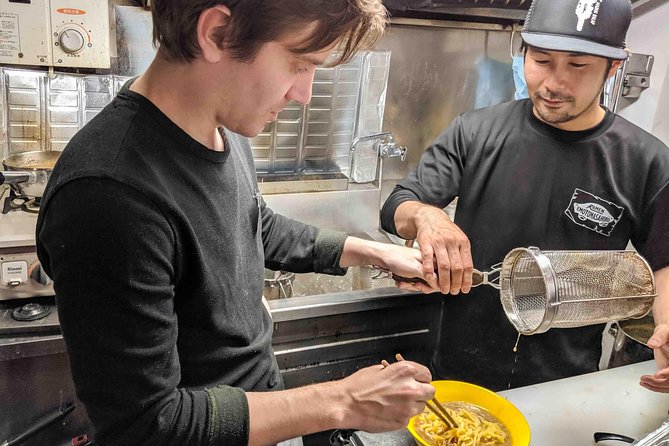
- Work in an actual award-winning ramen shop: This is a behind-the-counter look at a working kitchen, not a standard demonstration.
- Practice temomi and tebo: You massage the noodles, then shake off water using the tebo method.
- Eat the bowl you help make: Your ramen is assembled after the preparation work, with toppings you choose.
- Expect a shortened process: The broth and much of the prep are completed ahead of time, saving hours.
- Plan for meat and fish: The ramen contains chicken, pork, and fish, so this is not suited to vegetarians or people avoiding those ingredients.
- Check the meeting point: The details give 2-chōme-12-6 Nezu, Bunkyo City, as the start and return point, while Nakameguro Koukashita also appears in the stop information.
What this one-hour ramen experience really offers
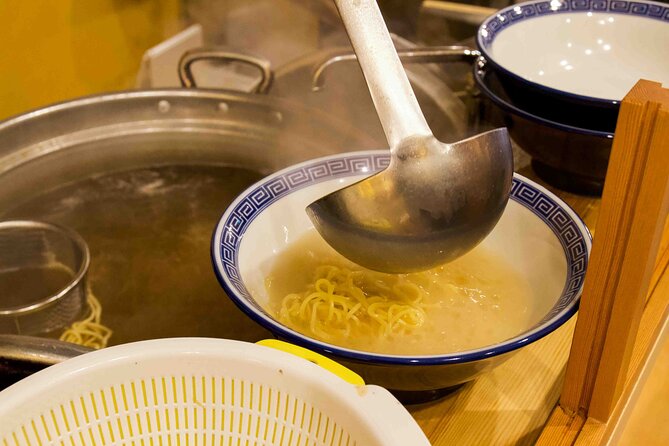
Tokyo has no shortage of ramen shops. You can order a bowl quickly, watch the staff work, and move on. This experience gives you a closer look at the labor behind that simple meal.
You learn how ingredients are prepared, what each one does, and where they come from. That matters because ramen is not just noodles dropped into soup. The broth, noodle texture, toppings, and timing all affect the final bowl.
The lesson takes place in a real ramen kitchen that has won several awards. That setting gives the activity its main value. You are not simply copying a recipe at a counter. You are seeing the tools, rhythm, and setup of a professional shop.
The short format also makes sense. A traditional ramen process can take hours. The broth alone takes about ten hours to prepare, so this experience skips the waiting and lets you focus on the parts you can actually perform during a one-hour visit.
I see this as a practical introduction, not professional training. You will not leave knowing how to make a complete broth from raw ingredients. You will leave with a better idea of how a ramen shop turns prepared components into a finished bowl.
More Tokyo ramen tours and classes:
- Eat and Drink Like a Local: Tokyo Ueno Food Tour-Taverns&Ramen
★ 5.0 · 957 reviews - Ramen & Gyoza Cooking Class in Tokyo with Local Supermarket Visit
★ 5.0 · 823 reviews - Tokyo: Ramen Tasting Tour with 6 Mini Bowls of Ramen
★ 4.9 · 432 reviews
Starting at the Tokyo meeting point
The listed start and end point is 2-chōme-12-6 Nezu, Bunkyo City, Tokyo 113-0031. The activity is near public transportation, which should make it manageable to reach, but you should allow enough time to find the exact entrance.
There is one detail I would not ignore. The activity information also names Nakameguro Koukashita as a stop, while the meeting point is in Nezu. Those are different Tokyo areas, so confirm the current meeting instructions before setting out. This may reflect a scheduling or listing detail, but the information provided does not explain the difference.
The experience returns to the meeting point. That is useful if you have another plan afterward, though a one-hour session can run a little beyond the advertised time if instructions and eating take longer than expected. Keep your next appointment flexible.
You receive confirmation when booking, and the activity uses a mobile ticket. The maximum group size is six people. That small number should make it easier to hear the guide, see the work area, and get a turn with the noodles.
Inside the award-winning ramen kitchen
The kitchen is the main attraction. You get a look at the sounds, tools, and work habits of a professional ramen shop, with access that is not normally available to the public.
That does not mean you should expect a long private tour of every station. The session is designed around ramen preparation and assembly. Still, the working environment gives the class more meaning than a generic cooking studio would.
The guide explains the ingredients and their purpose. You may learn how a particular component affects flavor, texture, or balance, along with information about where ingredients come from. The exact guide can vary, since multiple guides lead the activity, so do not book this expecting a particular named chef.
The chef’s role is important here. The strongest feedback about the experience centers on a kind and helpful chef who explains ramen’s role in Japanese cuisine and answers questions about recipes and their history. If you are curious, prepare a few questions before you arrive. A small group gives you a better chance to ask them.
This is also a useful activity for people who enjoy food but do not speak much Japanese. The guide-led format gives structure to a meal that can otherwise feel hard to understand. You are shown what to do, then given a chance to try it.
Temomi: working the noodles by hand
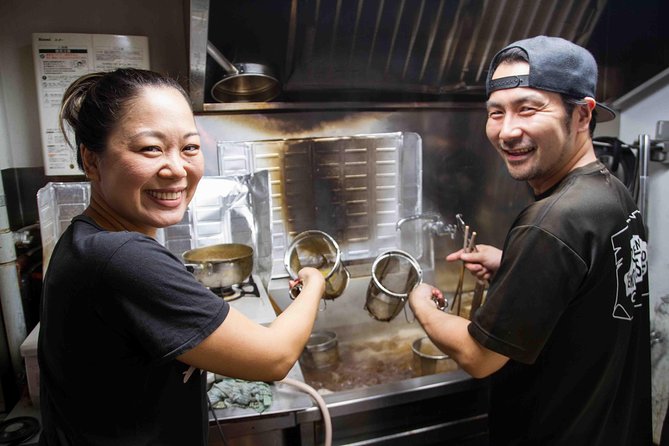
One of the clearest hands-on moments is temomi, the art of massaging ramen noodles. The name points to the physical work involved. You handle the noodles rather than simply watching someone else cook them.
The exercise helps you understand that noodle texture is part of ramen’s identity. Thickness and firmness matter, but so does the way the noodles are handled and prepared. The activity does not turn you into a noodle maker in an hour, but it gives you a feel for the process.
Because the noodles are part of your own bowl, the task has a clear payoff. You are not practicing an isolated kitchen trick. You are helping prepare the central ingredient you will soon eat.
The small group size matters here. With no more than six people, the guide can show the movement and watch participants try it. You should still expect a brief introduction rather than a long technical workshop.
A completely different kind of day in Tokyo:
- Mt Fuji and Hakone 1-Day Bus Tour Return by Bullet Train
★ 5.0 · 26,383 reviews - 1-Day Tokyo Bus Tour
★ 5.0 · 14,250 reviews - Tokyo: teamLab Planets TOKYO Digital Art Museum Entry Ticket
★ 4.6 · 9,779 reviews - Mt Fuji & Hakone Cruise, Drum Show Bullet Train 1 Day from Tokyo
★ 4.0 · 7,413 reviews
Tebo: shaking off the water
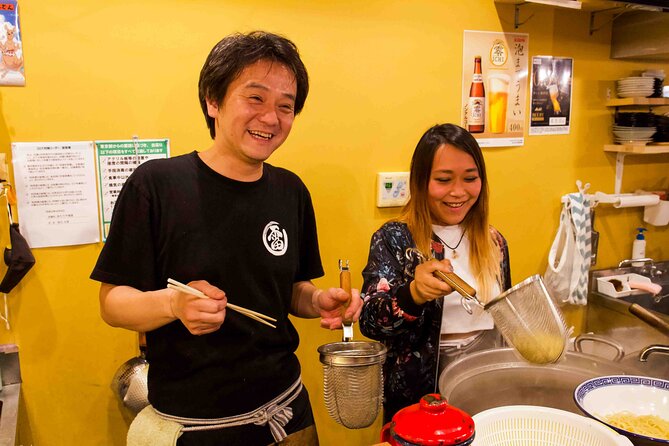
You also try tebo, the technique of shaking water from the noodles. This is another short but useful lesson in timing and control.
The process shows why ramen preparation moves quickly. Noodles need to reach the bowl at the right point, with excess water removed so the broth is not diluted. The tebo step connects the kitchen work to the taste of the final dish.
For many people, this will be the most memorable part because it feels like a real ramen-shop task. You get to handle the noodles and copy a movement used in professional service.
The activity keeps the process compact. You are not standing through every bowl made in the shop, and you are not waiting for ingredients to be cooked from the beginning. Instead, the class gives you a short, active look at two techniques that affect the finished ramen.
From prepared ingredients to your own bowl
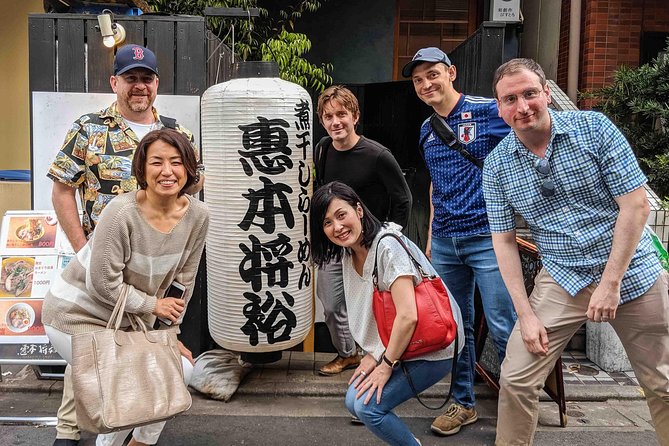
Once the noodle work is finished, you add your preferred toppings and put together your ramen. This is where the experience shifts from lesson to lunch or dinner.
Your choices appear to concern toppings rather than the entire recipe. You should not expect to design a completely new broth or select every ingredient from raw form. The shop has already prepared the major components so the session can fit into an hour.
That shortcut is sensible. Ramen broth can require about ten hours of cooking, and a full start-to-finish class would take much longer. The tradeoff is clear: you get less control over the recipe, but more time to see the shop and eat your bowl.
The final meal is not an afterthought. You eat the ramen you helped prepare, which gives the lesson a satisfying finish. The food is described as delicious, and the chef’s explanations connect the bowl to Japanese cuisine rather than treating it as a simple snack.
Keep the ingredient warning in mind. The ramen contains chicken, pork, and fish. If you avoid any of those foods, this is not the right activity unless the operator confirms an alternative in advance. The provided details do not promise substitutions.
Why the small group makes a difference

A group limit of six is one of the strongest practical features. Ramen kitchens can be tight, and a large crowd would make a working kitchen feel more like a stage set. Six people allows the activity to stay fairly personal.
You can hear the explanations more easily and ask about recipes or ramen history. You also get a better chance to take part in the noodle work rather than standing behind several other participants.
The group size does not guarantee a private class. Other people may be present, and the guides vary. Still, the limit gives the session a more direct feel than a large food tour.
I would especially consider this for couples, families with older children, and solo visitors who want a food activity with real participation. It also works well for anyone who has already eaten plenty of ramen in Tokyo and now wants to understand what happens behind the counter.
Price and value at $78.38
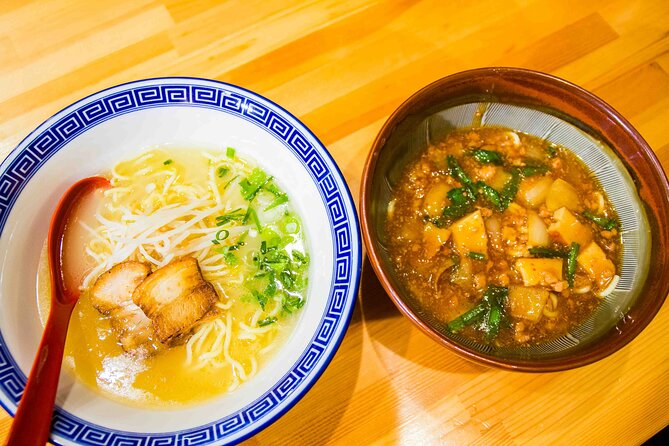
At $78.38 per person, this is not a cheap ramen meal. If your only goal is to eat a bowl of noodles, you can spend far less at a Tokyo ramen shop.
The price makes more sense when you separate the meal from the access. You are paying for a guided kitchen visit, instruction in two techniques, an explanation of ingredients, a small group setting, and the ramen you assemble.
The award-winning shop adds value, especially for food-focused visitors. You are not learning in an ordinary home kitchen. You are seeing a professional operation that has earned recognition, with access that is normally not available.
I would call it fair value for someone who wants a structured food experience. It is less convincing for a budget-conscious diner who does not care about preparation or kitchen access. The one-hour duration keeps the commitment low, but it also limits how much cooking you can do.
The meal itself helps soften the cost. You do not leave after watching a demonstration. You eat the result. Still, think of this as a food culture activity with ramen included, not as an inexpensive lunch.
Who should book this experience
You should consider booking if you want:
- A close look at professional ramen preparation
- A small group activity rather than a large food tour
- Hands-on noodle work without a full-day cooking commitment
- A meal connected to what you learned
- A chance to ask about ramen recipes and Japanese food culture
- A short activity that fits into a Tokyo sightseeing day
Families should check the age suitability directly, since no age information is provided. The small group may work well for a family, but the kitchen setting and noodle handling may not suit very young children.
Food enthusiasts will get the most from the explanations. If you are happy simply ordering ramen and moving on, the price may feel high. If you want to know why the noodles, broth, and toppings work together, the activity gives you more to think about.
It is not a good choice for vegetarians or for anyone who cannot eat chicken, pork, or fish. It is also not the right class for someone hoping to make broth from scratch or spend several hours learning advanced ramen technique.
Timing, cancellation, and final planning advice
The experience lasts about one hour. Since the class includes instruction, noodle handling, assembly, and eating, arrive ready to stay focused rather than treating it as a quick photo stop.
Free cancellation is available if you cancel at least 24 hours before the start time. Cancellations or changes made less than 24 hours before the local start time are not refunded or accepted. The activity also requires a minimum number of participants, so an operator cancellation for that reason leads to a different date or experience, or a full refund.
Book about two weeks ahead if your Tokyo schedule is fixed. The experience is booked an average of 16 days in advance, so leaving it until the last minute may reduce your options.
Before you leave your hotel, check the meeting instructions carefully. The Nezu address is listed as the start and return point, but Nakameguro Koukashita also appears in the activity details. That is the one logistical point I would verify directly before travel.
Should you book it?
Book this experience if you want more than a bowl of ramen. The real kitchen, six-person limit, noodle techniques, and direct food questions give it a personal feel. The strongest reason to choose it is the chance to learn from a working ramen operation, then eat the bowl you helped prepare.
Skip it if you want a full cooking class, need vegetarian food, or are mainly looking for a cheap meal. At $78.38, the value comes from access and instruction, not from the ramen alone.
For a food-minded visit to Tokyo, I would book it after confirming the meeting location and ingredient details. It is short, focused, and hands-on, with enough kitchen access to make the meal feel like part of the lesson.
FAQ
How long does the ramen experience last?
The experience lasts approximately one hour.
Where does the experience start?
The listed start point is 2-chōme-12-6 Nezu, Bunkyo City, Tokyo 113-0031, Japan.
Where does the experience end?
The activity ends back at the meeting point.
Is the activity near public transportation?
Yes. The provided details state that it is near public transportation.
How many people can join?
The activity has a maximum of six travelers.
What ramen techniques will I learn?
You learn temomi, or massaging the noodles, and tebo, or shaking water from the noodles.
Will I make the ramen broth from scratch?
No. This is not a full cooking class. The broth and much of the preparation are completed ahead of time, and the broth can take about ten hours to make.
Can I choose my toppings?
Yes. After preparing the noodles, you add your preferred toppings before eating your ramen creation.
Does the ramen contain meat or fish?
Yes. The ramen contains chicken, pork, and fish.
Can I cancel for a full refund?
Yes, if you cancel at least 24 hours before the experience start time. Cancellations made less than 24 hours before the start time are not refunded.
Newly reviewed around Tokyo
- Tokyo Asakusa:Calligraphy & Make T-shirt Activity★ 5.0 · 62 reviews
- Intercity Shuttle, Tokyo to Haneda /Narita /Yokohama /Makuhari★ 5.0 · 5 reviews
- 1 Hour Travel around Tokyo with a Professional Photographer★ 5.0 · 3 reviews
- Travel Tokyo with Your Own Personal Photographer★ 5.0 · 43 reviews
- Kickboxing & Body Training with EX-Pro Fighter★ 5.0 · 4 reviews
- Train in Samurai Swordsmanship and Defeat the Demon in Tokyo★ 5.0 · 5 reviews
- Shuttle Van 6hr Tokyo Tour to-and-from Tokyo, Yokohama and Narita★ 5.0 · 9 reviews
- Traditional Japanese Knife Sharpening Class★ 5.0 · 18 reviews
Tokyo Ramen Tours and Classes, compared.

Eat and Drink Like a Local: Tokyo Ueno Food Tour-Taverns&Ramen
Read our review →
Ramen & Gyoza Cooking Class in Tokyo with Local Supermarket Visit
Read our review →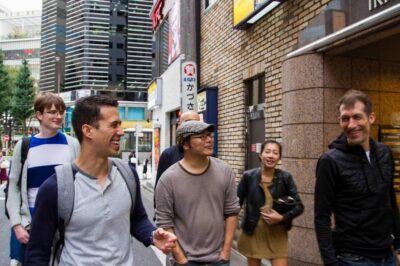

Easy Ramen Cooking Experience in Kabukicho, Shinjuku
Read our review →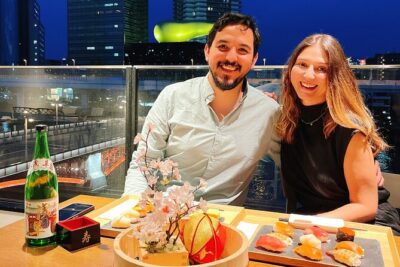
Ramen and Sushi Cooking Class with Sake Pairing Set in Tokyo
Read our review →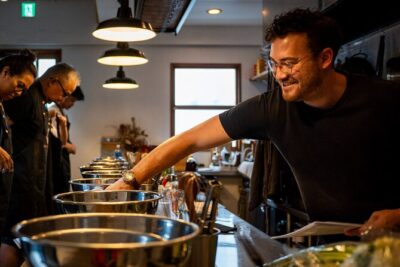
Professional Ramen & Gyoza with Ramen Chef in a restaurant!
Read our review →
Ramen Dojo Tokyo | Make All 3 (Tonkotsu/Shoyu/Miso)
Read our review →Ramen Dojo Tokyo | Make All 3 (Tonkotsu/Shoyu/Miso)
Read our review →Browse the lists this tour appears in