
Reviewed · TOKYO GEISHA SHOWS AND DINNERS
Authentic Geisha Performance with Dinner in Tokyo
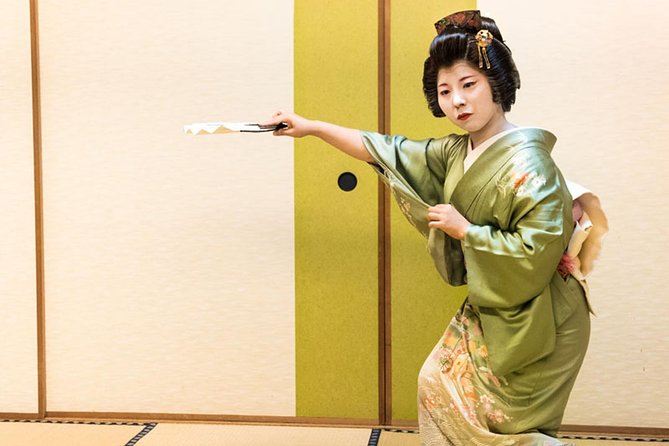
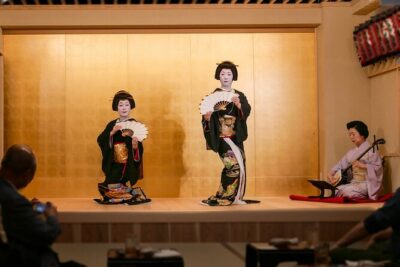
The most unusual part of this Tokyo evening is the chance to share a meal with a working geisha, not simply watch a staged dance from across a theater. At Sansyūya, a traditional restaurant in Asakusa, you can ask questions through an English interpreter, see fan dance and music, and join traditional games.
I like the small-group format, which can turn dinner into a real conversation instead of a quick photo stop. I also like the mix of kaiseki dishes, performance, and games, since you get a fuller picture of geisha culture than a show alone. The main caution is value: at $239.83 per person, the evening is costly, and the setting may be plain, the food may not suit every palate, and only one geisha may appear.
Key points before you book
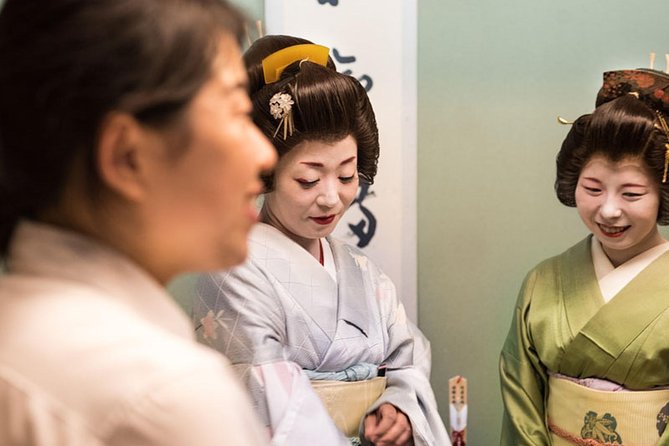
- Sansyūya in Asakusa: The dinner takes place in a traditional Japanese restaurant, not at a large sightseeing venue.
- A two-hour cultural evening: Your 6:00 pm start leaves most of the day free for temples, museums, and neighborhoods.
- Conversation through an interpreter: Ask about training, modern geisha life, music, dance, and customs.
- One or two geisha: Availability can change, and smaller events may have only one geisha.
- Chair seating by default: You do not need to plan on sitting on the floor, though stairs may be required.
- Group size matters: Shared events generally run with about 6 to 20 people, with a maximum of 15 listed for this activity.
What this geisha dinner actually offers
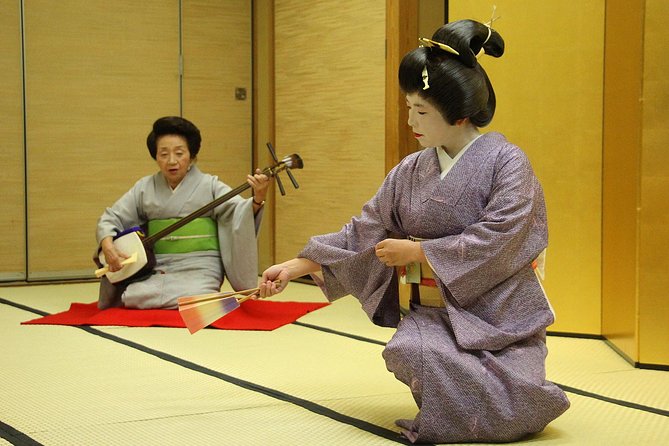
A geisha evening is often misunderstood as a simple dance performance. Here, the performance is only one part of the night. You sit down for a multi-course Japanese meal, watch traditional arts, talk with the geisha through an interpreter, and take part in games linked to the social customs of geisha entertainment.
That combination is the strongest reason to consider the experience. You are not only looking at costumes and makeup. You get a chance to ask questions about the work, training, daily life, and changing place of geisha in modern Japan. Several of the most useful moments described from this event involve direct conversation, with the interpreter helping bridge the language gap.
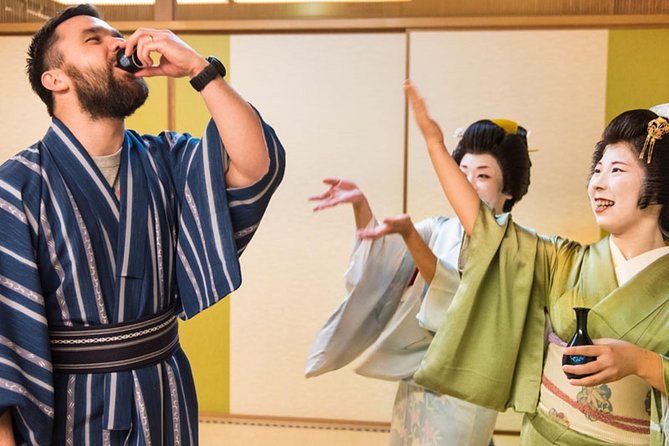
The evening has also included fan dance, drum music, and playful drinking games. You do not need to be an expert in Japanese customs. The interpreter explains what is happening and helps keep the atmosphere relaxed.
Still, keep your expectations sensible. This is a commercial cultural dinner, not a private invitation into a mysterious world. One dissatisfied diner felt the price was too high, found the food unsuitable, and wanted more explanation of geisha history and training. That criticism matters. The experience can offer genuine contact with geisha artists, but it may not provide a full academic lesson in the tradition.
More Tokyo geisha shows and dinners:
- Tokyo: Traditional Geisha Experience Show & Japanese Dinner
★ 4.2 · 59 reviews - Asakusa: Geisha Performance and Tea House Experience
★ 5.0 · 52 reviews - Tokyo Traditional Geisha Show and Japanese Fine Dining Experience
★ 4.5 · 35 reviews
Arriving at Sansyūya in Asakusa
The meeting time is 6:00 pm at Sansyūya, in Tokyo’s Asakusa area. Transportation is not included, and there is no hotel pickup, so you must make your own way there.
Allow extra time. The location can be difficult to spot, even when map directions take you to the correct building. Some visitors have found the entrance on the side of the building, then climbed to the second and third floors. A hostess has helped late-arriving diners find the right door, but you should not rely on that. I would arrive early, check the building carefully, and keep the tour operator’s contact details handy.
This is especially important because Tokyo’s train and bus connections can take longer than expected. One couple nearly missed the start after changing between trains and a bus, although the operator was understanding when they called. A few extra minutes can spare you a rushed beginning.
The restaurant setting is traditional, but do not expect a lavish palace. The room may be fairly simple, with plain walls and limited decoration. That may disappoint you if you are paying mainly for atmosphere. On the other hand, a modest room can keep attention on the food, conversation, and performance.
Chair seating is the default, which is helpful for many people. There are stairs, however, and one account specifically warns that the venue may not suit someone who cannot manage them. The activity is described as suitable for most people, but it is not presented as wheelchair accessible.
The kaiseki dinner and what to expect on the plate
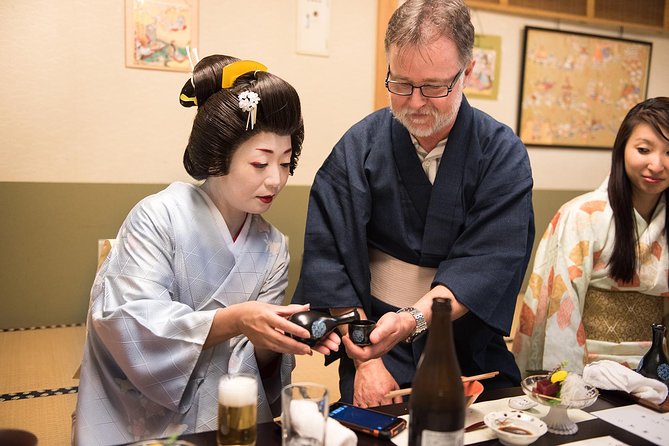
The price includes an elegant Japanese dining course, described as a multi-course kaiseki dinner. Kaiseki is built around several carefully prepared dishes rather than one large entrée. The meal can include sashimi and other traditional items, and the portions have sometimes been described as generous.
Food is part of the cultural lesson. You may encounter ingredients, textures, and serving styles that are unfamiliar. Some diners have found the meal delicious and plentiful, while another found the food bland and difficult to eat. That contrast is worth taking seriously. Kaiseki is not designed to be a familiar Western dinner, and it may not satisfy you in the way a large bowl of noodles or a plate of grilled meat would.
If you have dietary restrictions, allergies, pregnancy-related needs, or strong dislikes, contact the operator before booking and put the details on the required Geisha Form. One serious complaint involved raw food and seafood that was not served as requested. Do not assume a change can be made at the table. Get clear confirmation before committing your money.
You should also consider the price. At $239.83 per person, the meal alone does not explain the cost. You are paying for a rare performance, interpreter support, restaurant arrangements, and access to a small cultural event. For someone who places high value on personal contact and traditional arts, that can be worthwhile. If your priority is simply a good Japanese dinner, you can spend far less elsewhere in Tokyo.
Meeting the geisha and learning through conversation
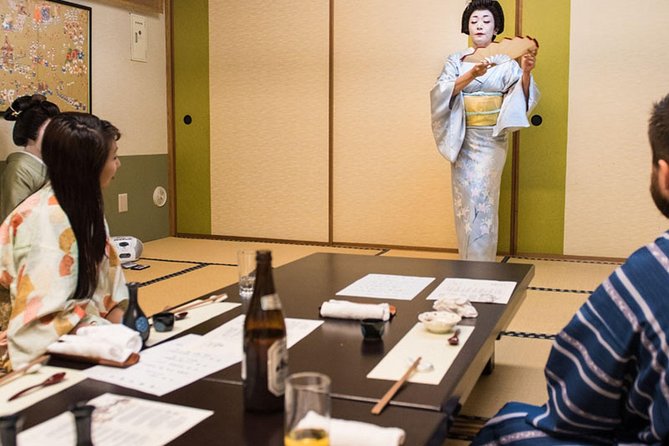
The conversation is where this activity can become far more personal than a standard stage show. The geisha are trained in dance, music, and the art of communication. With the interpreter’s help, you can ask about their work, customs, training, and modern life.
The interpreter’s role is crucial. Several accounts describe excellent help with explanations, etiquette, and questions. Names connected with individual events include Mami H, Musuko Igarashi, and geisha such as Yukimi, Kodemari, and Ponco. Staff and performers can vary by date, so you should not book expecting a particular person unless the operator confirms it.
Language support also varies in how much conversation it produces. One negative account felt that too little was interpreted, making it hard to speak with the geisha. That is a fair concern in any cross-language experience. The best evening will depend partly on the interpreter, the group’s questions, and how much time is given to each person.
Come prepared with a few respectful questions. You might ask how someone trains, what instruments or dances they study, how modern work differs from the past, or how geisha communities vary across Japan. Avoid treating the geisha as a costume prop. The point of the exchange is to meet an artist and professional host, not simply to collect a photograph.
More Tokyo dinner experiences:
- Tokyo Bar Hopping Tour in Shinjuku (All-You-Can-Drink + Dinner)
★ 5.0 · 3,587 reviews - Tokyo: Sumo Show and Dining Experience
★ 4.8 · 2,742 reviews - Sumida River: Japanese Traditional Yakatabune Dinner Cruise
★ 4.6 · 779 reviews - Tokyo Bay Yakatabune Dinner/Day Cruise with Japan Show and Drinks
★ 4.5 · 473 reviews
Dance, music, and traditional games
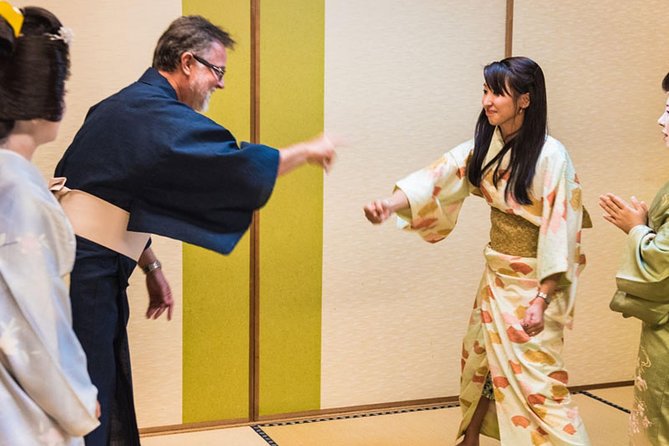
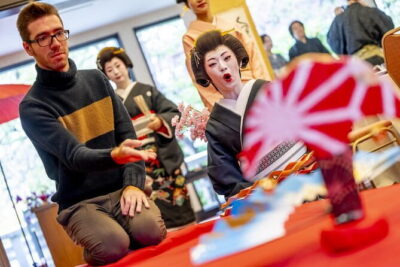
The performance may include a fan dance and drum songs, along with other music or dance. These arts are controlled and precise rather than loud or theatrical. The setting lets you see the small gestures, posture, rhythm, and formal movements at close range.
The games are often the most relaxed part of the night. Traditional drinking games can involve rhythm, quick reactions, and playful penalties. You can join in even if you do not drink alcohol, but the supplied information does not specify nonalcoholic alternatives, so ask the host if that matters to you.
Some evenings have included one geisha, while private events have featured two, including Kodemari and Ponco. The operator warns that availability, season, and group size can change the arrangement. In smaller groups, the event may still go ahead with just one geisha.
That is not necessarily a weakness. One geisha may give you more time for questions and personal interaction. But if your mental picture includes a large ensemble, musicians, and a full formal production, this dinner may feel smaller than expected.
Group size, private bookings, and timing
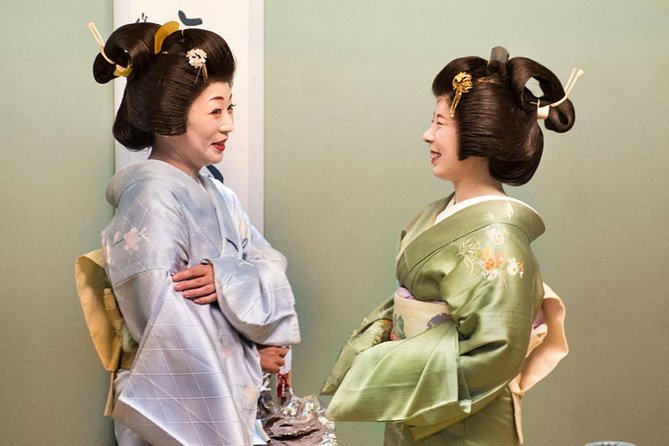
The shared dinner is intended for a small group, generally around 6 to 20 people, with a maximum of 15 stated for this activity. The number matters. With only two or three other diners, you may have plenty of time to ask questions. With a fuller room, conversation becomes more shared and less personal.
Private events are available if you select that option. For groups of more than five, the operator recommends booking two geisha. A private booking can make sense for a family, celebration, or group with a strong interest in the arts. It will also likely make the high price easier to justify if everyone wants a tailored evening.
The event lasts about two hours and begins at 6:00 pm. That timing works well with a day in Asakusa. You can visit Senso-ji and nearby streets earlier, then head to dinner without giving up a full day of sightseeing. Afterward, you still have time for a short walk or a return to your hotel, though the location and transport connections deserve planning.
For groups of 10 or more, an all-you-can-drink option is available for 2,900 Japanese yen per person, paid in cash at the venue. You must request it when booking, and it is not available for groups of nine or fewer.
Is the $239.83 price fair?
The short answer is that the value depends on what you want from Japan. This is not a bargain meal. It is a special-interest cultural evening that combines food, performance, conversation, and interpreter service.
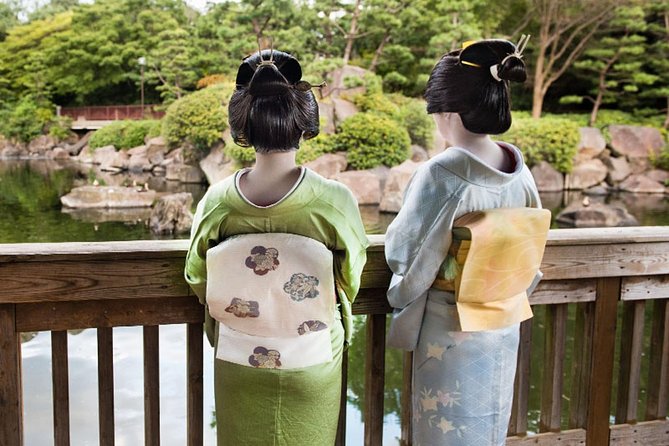
I would consider the price reasonable if you have already enjoyed Tokyo’s temples, markets, and ordinary restaurants and want one planned evening focused on traditional arts. The direct contact, photo opportunities, commemorative moments, and chance to play games with a geisha are difficult to arrange independently.
I would hesitate if you mainly want a refined meal or a polished theater performance. The room may be plain, the number of performers is not guaranteed, and the dinner may not work well for every diet. One person also found the portions insufficient, while others found there was more food than they could finish. That tells you the meal is not the main reason to book.
The current rating is 4.7 from 101 ratings, with 94 percent recommending the experience. That points to a strong overall result, but it does not erase the practical risks. Expensive cultural activities need careful expectation-setting.
Booking details you should not overlook
Complete the Geisha Form accurately when you receive it, ideally at least 10 days before the event. The operator says confirmation arrives within 48 hours of booking, subject to availability, but some dates need a minimum of six to eight people. You may initially be placed on a waiting list until enough people confirm.
Final confirmation may arrive at least five days before the activity. The venue can change with group size and availability, especially in peak season. Book early, preferably about three months before your travel date, or at least one month ahead.
The supplied terms are strict. One section describes fees of 25 percent within 30 days, 50 percent within 21 days, and 100 percent within 14 days. The final cancellation policy also says the experience is non-refundable and cannot be changed for any reason. Because these statements conflict, ask the operator to clarify the exact rule before paying. Treat the booking as non-refundable unless you receive different written terms.
Children must be at least 10 and accompanied by an adult. All seats are non-smoking, with designated smoking areas outside. Gratuities are optional and transportation is not included.
Should you book this geisha dinner?
Book it if you want a rare, structured introduction to geisha arts and are willing to pay for personal access, interpretation, and a traditional meal. It suits couples, families with older children, and small groups who enjoy asking questions and trying unfamiliar customs.
Skip it if you need guaranteed accessibility, strict control over every dish, or a large-scale performance with several geisha. I would also skip it if the cost would leave you feeling resentful about a plain room or a single performer.
My practical advice is to book early, confirm dietary needs in writing, plan your route to the side entrance at Sansyūya, and ask how many geisha are expected on your date. With those points settled, this can be one of Tokyo’s more personal cultural evenings. Without them, the price and uncertainty may outweigh the charm.
FAQ
Where does the geisha dinner take place?
It takes place at Sansyūya, a traditional restaurant in Tokyo’s Asakusa area. The exact venue may change based on availability and group size.
What time does the experience begin?
The start time is 6:00 pm, and the experience lasts about two hours.
How many geisha will attend?
The number is not guaranteed. Depending on availability and group size, one geisha may attend, while private events can be arranged with two geisha.
Is an English interpreter included?
Yes. An English interpreter is included to help you communicate with the geisha and understand the performance, etiquette, and dinner.
Is transportation or hotel pickup included?
No. You must arrange your own transportation to and from the venue. Hotel pickup and drop-off are not included.
Can children join the dinner?
Yes, but children must be at least 10 years old and accompanied by an adult.
Newly reviewed around Tokyo
- Tokyo Asakusa:Calligraphy & Make T-shirt Activity★ 5.0 · 62 reviews
- Intercity Shuttle, Tokyo to Haneda /Narita /Yokohama /Makuhari★ 5.0 · 5 reviews
- 1 Hour Travel around Tokyo with a Professional Photographer★ 5.0 · 3 reviews
- Travel Tokyo with Your Own Personal Photographer★ 5.0 · 43 reviews
- Kickboxing & Body Training with EX-Pro Fighter★ 5.0 · 4 reviews
- Train in Samurai Swordsmanship and Defeat the Demon in Tokyo★ 5.0 · 5 reviews
- Shuttle Van 6hr Tokyo Tour to-and-from Tokyo, Yokohama and Narita★ 5.0 · 9 reviews
- Traditional Japanese Knife Sharpening Class★ 5.0 · 18 reviews
Tokyo Geisha Shows and Dinners, compared.
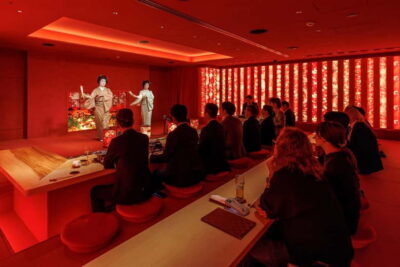
Traditional Geisha Experience Show & Japanese Dinner
Read our review →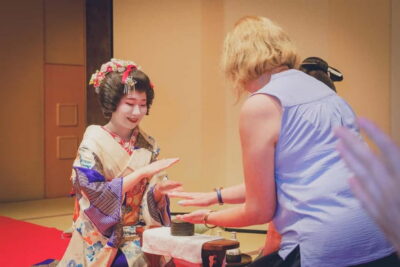
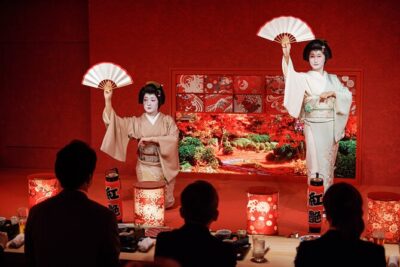
Tokyo Traditional Geisha Show and Japanese Fine Dining Experience
Read our review →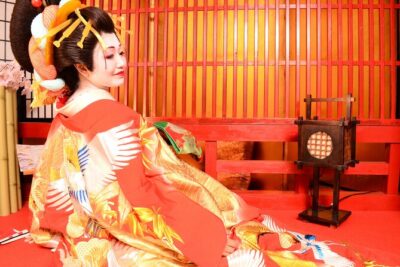
Tokyo Geisha or Oiran Dress-Up Experience and Professional Photos
Read our review →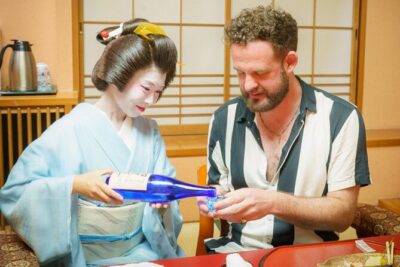
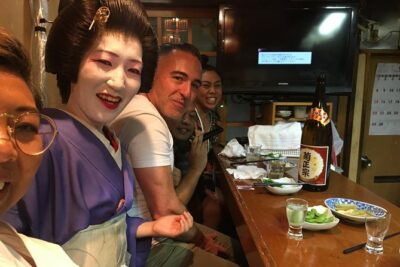
An Enchanted Evening with Geisha – A Rare Experience in Tokyo
Read our review →Browse the lists this tour appears in