
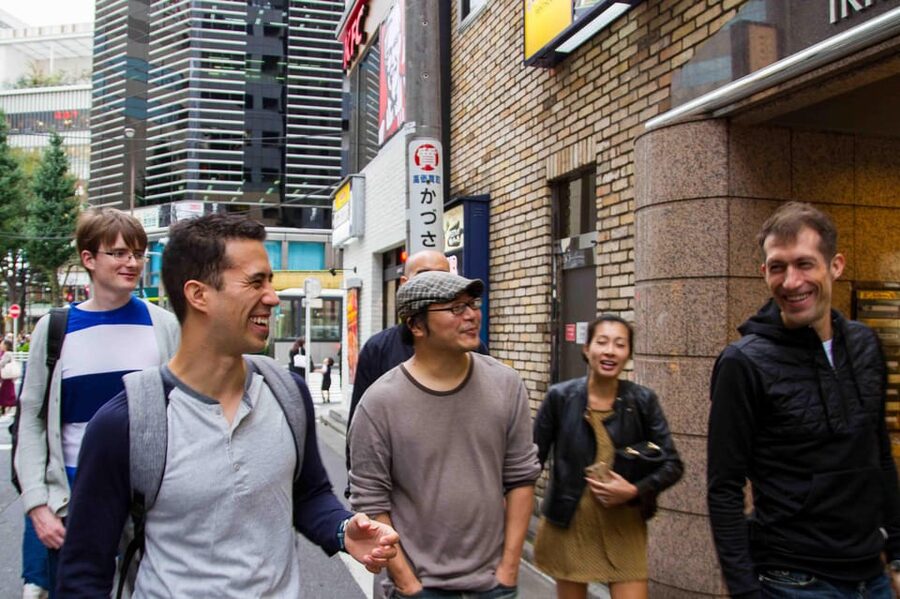
Reviewed · TOKYO RAMEN TOURS AND CLASSES
Tokyo: Ramen Tasting Tour with 6 Mini Bowls of Ramen
Six small bowls, three ramen shops, and three Tokyo neighborhoods make this a smart way to understand how broad ramen can be. You choose six tastes from 11 to 12 options, including styles you might not spot on a standard menu, such as curry, tsukemen, squid ink, pesto, or Hokkaido ramen.
I like the mix of food and place. You are not parked in one restaurant all afternoon, and the walking between stops gives you time to digest. I also like the teaching: guides such as Sahori, Bunga, and Makayla use slides or an iPad to explain ramen’s origins and regional styles. The drawback is clear: $122 is a serious price for noodles, and the three-kilometer walk can feel long if you have low fitness or arrive already full.
Key points at a glance
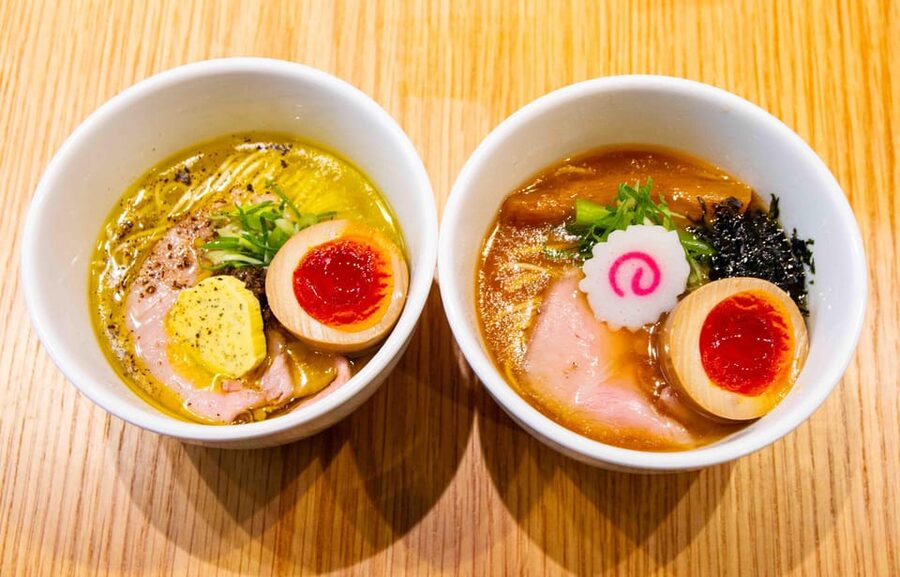
- Six quarter-size bowls: Each serving is about one-fourth of a normal bowl, so you can compare several broths without ordering six full meals.
- Three distinct Tokyo areas: Routes use Shibuya, Shinjuku, or Ueno, with the Shibuya route ending in Ebisu.
- A wide choice of styles: Depending on the route, you may try Hokkaido, Kyushu, Tokyo, tonkotsu, tori paitan, curry, tsukemen, chicken, or fish ramen.
- Small groups of up to eight: The format leaves room for questions and makes restaurant visits easier to manage.
- A walking food lesson: About three kilometers of walking connects the shops and helps break up the eating.
- Important dietary limit: The regular tour uses broths containing chicken, pork, and fish. Vegans and vegetarians should book the separate vegan and vegetarian tour.
Why six mini bowls work better than one giant ramen meal
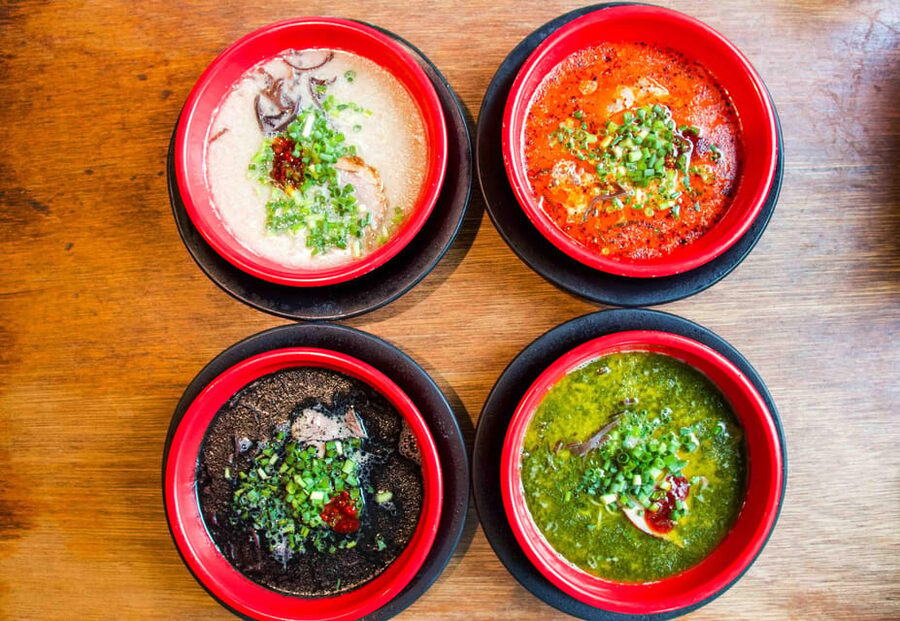
Ramen is not one fixed dish. The noodles, broth, toppings, seasoning, and cooking method can change from one region or restaurant to the next. The usual problem for a curious eater is practical: you can order only so much before your stomach says no more.
This tour solves that problem with six small bowls. Each is roughly one-fourth the size of a full serving, and these tasting portions are made for the tour. You choose two bowls at each of three shops, giving you control over the meal rather than receiving six items selected for you.
That choice matters. If you prefer lighter soup, you can avoid committing to three large bowls of heavy pork broth. If you are curious about unusual combinations, you can use your six selections to test styles you would not order on your own.
Do not mistake mini for insubstantial. Six bowls still make a substantial meal. One person specifically wished for more stomach space by the final bowl, and another advised skipping lunch. I would plan a light meal beforehand, not arrive starving after a full breakfast and lunch.
The walking helps. You move between restaurants instead of eating continuously at one table, and the pace gives you a chance to talk, look around, and let the previous bowl settle.
More Tokyo ramen tours and classes:
- Eat and Drink Like a Local: Tokyo Ueno Food Tour-Taverns&Ramen
★ 5.0 · 957 reviews - Ramen & Gyoza Cooking Class in Tokyo with Local Supermarket Visit
★ 5.0 · 823 reviews - Tokyo: Easy Ramen Cooking Experience in Kabukicho, Shinjuku
★ 4.6 · 321 reviews
The Shibuya route: Hokkaido, tonkotsu, and curry
The Shibuya option begins with classic Hokkaido ramen. Hokkaido is closely associated with miso-style ramen and hearty bowls, though the exact choices can vary. This first stop gives you a traditional regional reference point before the tour shifts to newer or more unusual approaches.
The second shop serves fusion tonkotsu, a pork-bone style known for a thick, creamy broth. The word fusion signals that this is not simply a basic bowl of tonkotsu. It is a chance to compare an established ramen family with a restaurant that changes or combines familiar ideas.
The third stop offers savory curry ramen. This is one of the most useful parts of the route for first-time ramen explorers because it shows how far the dish can move from the standard soy or pork-bone bowl. Curry brings a different seasoning profile and gives you a clear example of modern variation.
The Shibuya route is also the strongest choice if you want a walk through one of Tokyo’s best-known districts. The tour starts in Shibuya and ends in Ebisu, with the shops reached on foot and, if required, by train. A train ticket is not included, so keep a little extra money ready for transport.
The Shinjuku route: Tokyo tradition and modern chicken broth
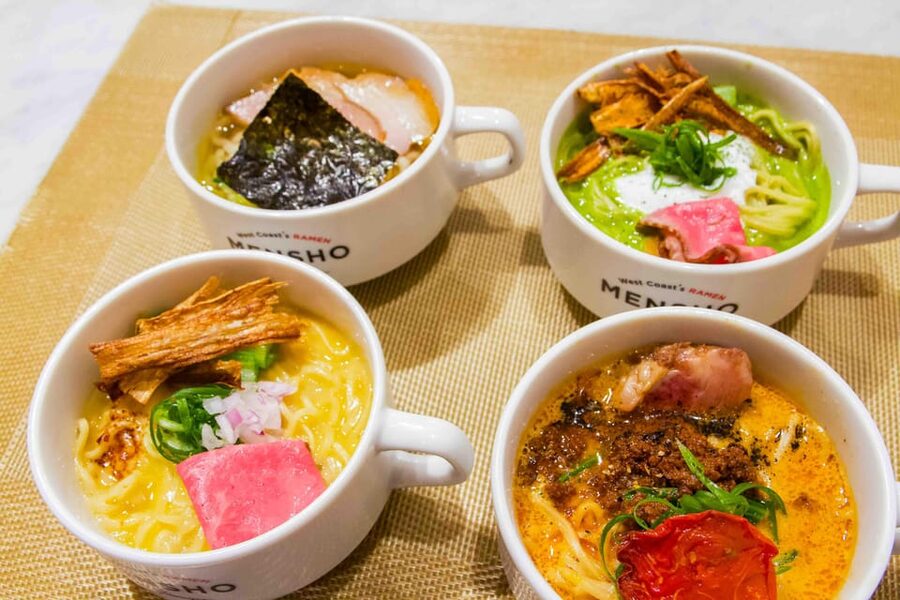
The Shinjuku route opens with classic Tokyo ramen. This is a useful starting point because it anchors the tasting in the local style before moving toward newer interpretations.
The second shop focuses on tori paitan, a rich chicken ramen. It gives you a direct comparison with tonkotsu without relying on pork as the main character. The broth can feel full and creamy, but the base is different, which makes this stop particularly helpful for learning how ingredients affect texture and flavor.
The third shop serves luxurious chicken or fish ramen. The precise selection depends on the day, but the stated choices point toward a more refined bowl built around a carefully defined main ingredient. This route should suit you if you want to compare Tokyo tradition with modern chicken and fish preparations.
The route may finish in Shinjuku rather than Ebisu, depending on the day. Check the exact meeting and ending details when you book, especially if you have evening plans or a restaurant reservation afterward.
The Ueno route: Kyushu, tsukemen, and modern Tokyo
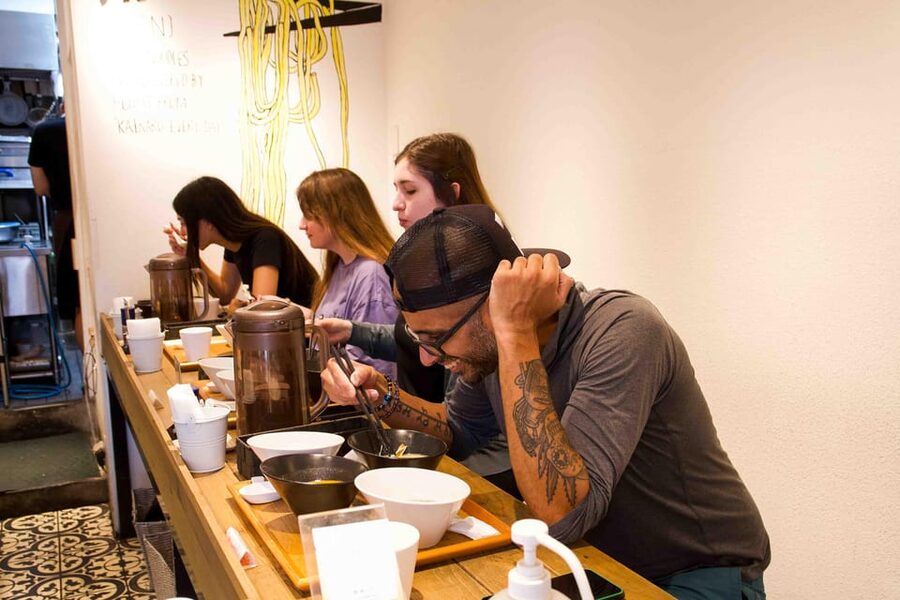
The Ueno option starts with classic Kyushu ramen. Kyushu is strongly associated with tonkotsu traditions, so this stop gives you another regional benchmark. Compared with the Hokkaido and Tokyo openings, it helps show that even classic ramen can differ sharply from one part of Japan to another.
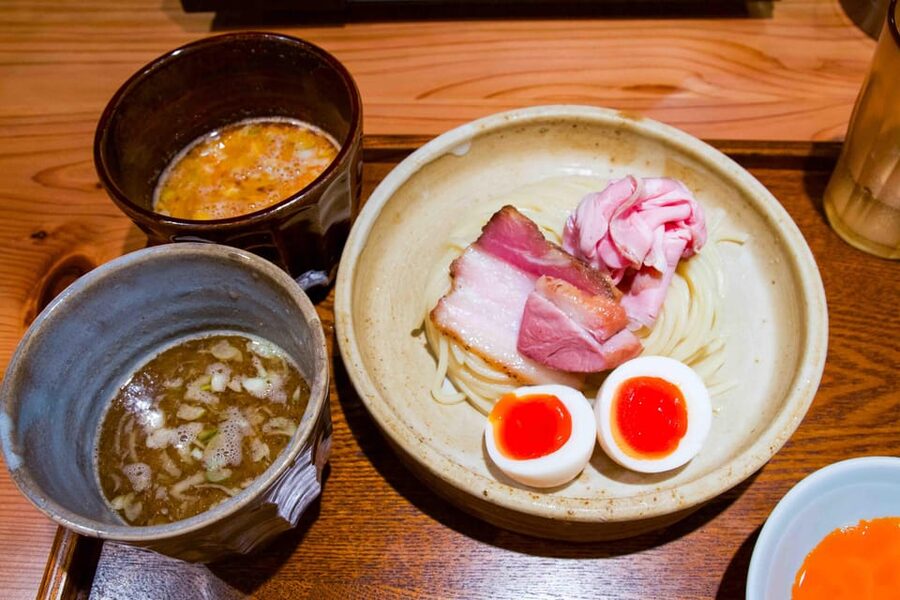
Next comes contemporary tsukemen, or dipping ramen. Instead of sitting in a single bowl of broth, the noodles and dipping soup are served separately. You control how much sauce clings to each bite, and the texture can feel different from ordinary ramen because the noodles are not soaking in hot broth.
The final shop serves modern Tokyo ramen. This brings the route back to the capital, but with a newer approach than the opening bowl. The progression from Kyushu to dipping noodles to modern Tokyo gives the Ueno route a particularly clear structure.
All three routes visit three restaurants, but the neighborhood and styles change. Do not assume you can select any route after arrival. Choose the option that fits your sightseeing plans and check where it starts and ends.
More Tokyo food tours:
- Tokyo: Shinjuku Food Tour (13 Dishes at 4 Local Eateries)
★ 5.0 · 6,603 reviews - Tokyo Tsukiji Fish Market Food and Culture Walking Tour
★ 5.0 · 3,184 reviews - Tokyo: Shinjuku Food Tour (15 Dishes and 4 Eateries)
★ 4.9 · 2,033 reviews - Best of Shinjuku: Izakaya Food Tour (4 Stops, 14+ Tastings)
★ 5.0 · 1,863 reviews
What the teaching adds to the meal
The food is the main event, but the explanations are what make the price easier to assess. Guides use colorful slides, handouts, or a tablet to show how ramen developed, how styles differ, and how each bowl is prepared.
That visual element is useful because ramen vocabulary can become a blur after the second or third bowl. Seeing the terms while tasting them gives you something concrete to remember. You are not just told that one broth is chicken-based and another is pork-based. You can compare them while the difference is in front of you.
The guides also answer questions about food and Tokyo beyond ramen. Bunga is known for a lively presentation and has helped people with general Japan advice. Sahori is praised for clear English and an engaging manner. Makayla has been noted for explaining the material carefully and helping with practical Tokyo questions.
Guide quality can shape this experience. The group is limited to eight, so the tour has a personal feel when everyone participates. If your group is small, you may have more time to ask about ingredients, regional names, and how to choose ramen on your own later.
The teaching is not academic for its own sake. It helps you read a ramen menu with more confidence. After the tour, terms such as tonkotsu, tori paitan, and tsukemen will mean something more specific than simply different kinds of soup.
The restaurants and the three-kilometer walk
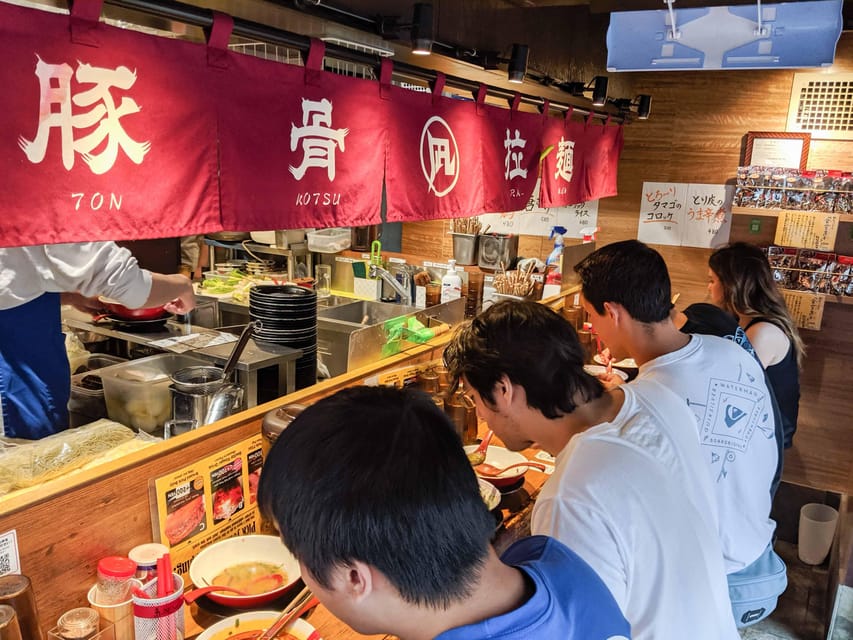
The tour uses three award-winning ramen shops, but the experience is not designed as a restaurant-hopping luxury meal. You should expect compact, practical noodle shops and a moving route through Tokyo neighborhoods.
The walking distance is about three kilometers, or 1.86 miles. That is not a marathon, but it can feel substantial when combined with six tastings and city stairs, crossings, and station connections. Wear comfortable shoes and do not schedule another demanding walking activity immediately afterward.
A train may be needed between areas, and that fare is separate. The route itself is part of the experience because the restaurants are not chosen only for easy access. You get to see parts of Shibuya, Shinjuku, or Ueno between meals rather than spending the full three hours indoors.
Weather matters. Rain can make the transfers less pleasant, and one group needed a taxi for the final stop during heavy rain. That was an exception handled by the guide, not a standard inclusion, so bring suitable clothing and do not count on private transport being supplied.
Price, group size, and what you receive
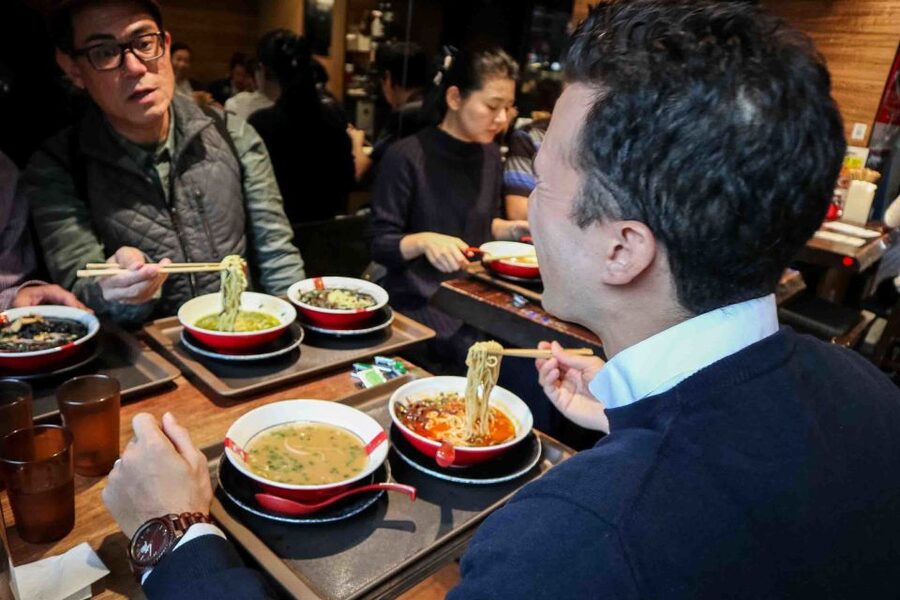
The cost is $122 per person. Included are six mini bowls and one beverage. Train tickets, if needed, are extra.
That is expensive compared with ordering one bowl of ramen at a neighborhood shop. If your only goal is to eat a filling lunch, this is not the best value. You can spend far less by choosing a single restaurant yourself.
The value is different if you want guided access to several styles, six tasting portions, neighborhood walks, and a clear lesson in ramen. You are paying for the range and the organization. Ordering six small portions independently would be difficult, and many restaurants do not offer quarter-size bowls.
The small group also matters. With no more than eight people, you can ask questions without competing with a large crowd. The experience works especially well for couples, families, and solo visitors who want company at the table without joining a huge group.
The three-hour length is enough for a proper introduction, but not so long that ramen becomes an all-day commitment. Starting times vary, so check availability and plan your other meals around it.
Dietary needs and physical demands
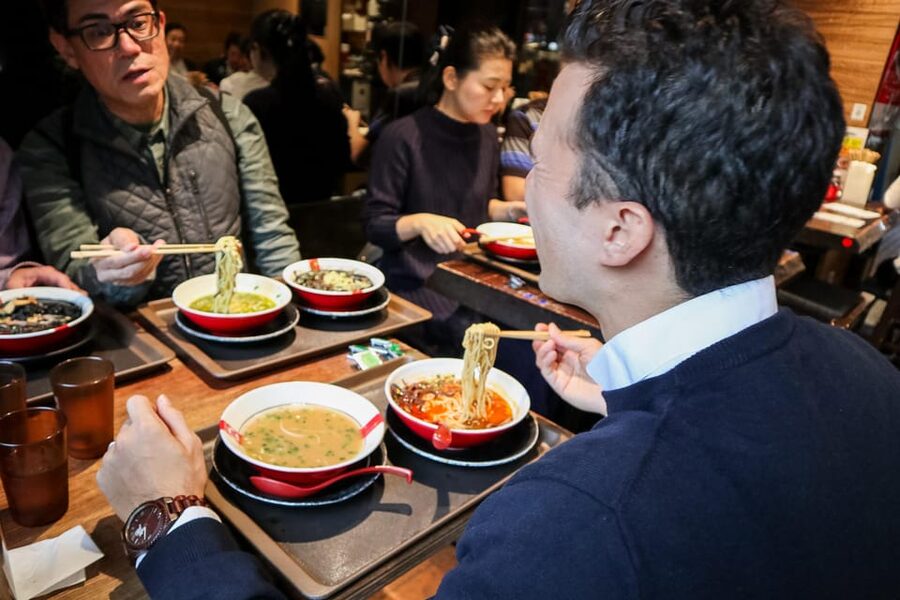
The regular tour is not vegetarian. Every ramen shop blends chicken, pork, and fish into its broth, even if a particular bowl sounds like vegetable ramen or uses a different main flavor.
Vegans and vegetarians should book the separate vegan and vegetarian ramen tasting tour. Do not rely on choosing a meat-free topping while keeping the standard booking.
The walking makes the tour less suitable for people with low fitness. You will move between three restaurants, and the food itself can leave you feeling full. Families can enjoy it, and one guide handled a group that included a nine-year-old, but children should be comfortable walking and trying unfamiliar foods.
The six-choice format can help cautious eaters because you are not committed to six full bowls. At the same time, unusual flavors such as curry, squid ink, or pesto may not suit every palate. You can ask the guide questions before choosing.
Who should book this ramen tour
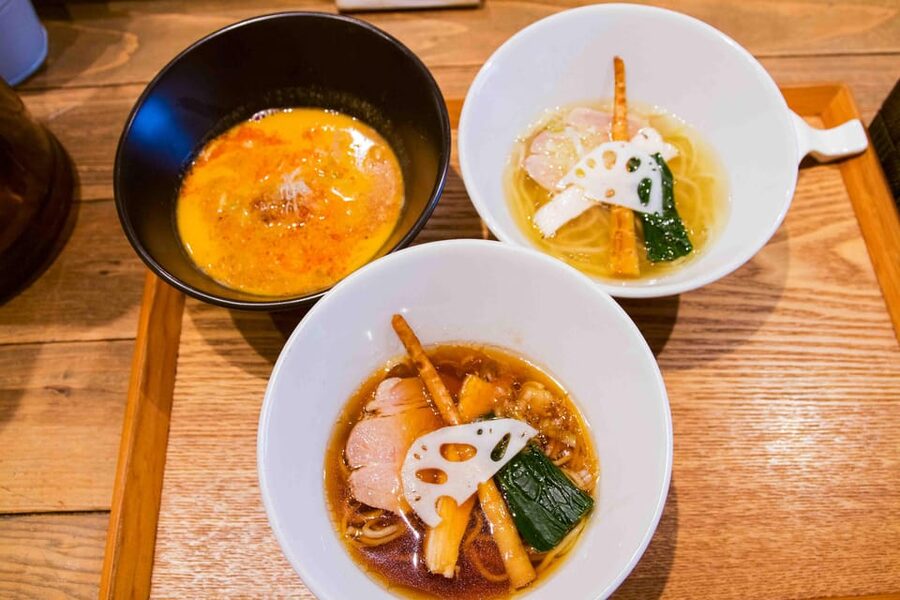
I would recommend it first to people who already like ramen but know only the familiar versions. The tour shows how much separates a classic Tokyo bowl from Hokkaido, Kyushu, chicken, fish, curry, and dipping styles.
It also suits first-time visitors who want a guided introduction to Japanese food culture. The lesson gives you context, while the neighborhood walks make the afternoon feel like sightseeing rather than a restaurant appointment repeated three times.
Families can benefit from the small portions and the visual teaching. Couples and friends can compare favorites, since each person chooses six bowls and may come away with a different winner.
I would be more cautious if you are on a tight budget, have a low tolerance for walking, or want a slow, formal meal. This is an active tasting with several transitions, not a single long dinner.
Book it early in your Tokyo stay if possible. That gives you time to use the new ramen vocabulary and restaurant knowledge for the rest of your trip. It also keeps the food lesson from arriving on your final day, when you have no chance to follow up on what you learned.
Should you book it?
Book this tour if you want to compare six distinct ramen styles and need help making sense of Tokyo’s huge noodle scene. The mini bowls, small group, and enthusiastic guides such as Sahori, Bunga, and Makayla make the experience more useful than simply ordering one famous bowl and moving on.
Skip it if $122 feels too high for a meal, or if you want vegetarian food on the regular route. For everyone else, the strongest reason to go is range: three neighborhoods, three restaurants, six choices, and enough explanation to help you understand what is in the bowl.
FAQ
How many bowls of ramen do I receive?
You receive six mini bowls of ramen. Each is approximately one-fourth the size of a full bowl, and you choose the six from a selection of 11 to 12 choices.
How long does the tour last?
The tour lasts three hours. Starting times vary, so check availability for the date you want.
Which Tokyo neighborhoods are included?
The available routes use Shibuya, Shinjuku, or Ueno. The Shibuya route starts in Shibuya and ends in Ebisu, while the ending point can be Shinjuku on some days.
Is transportation included?
Walking between the restaurants is part of the tour. A train may be required, and train tickets are not included.
Are the ramen broths vegetarian or vegan?
No. The regular tour broths contain chicken, pork, and fish. Vegans and vegetarians should book the separate vegan and vegetarian ramen tasting tour.
How large is the group, and what language is used?
The tour is conducted in English, with a live guide, and groups are limited to eight participants.
Newly reviewed around Tokyo
- Tokyo Asakusa:Calligraphy & Make T-shirt Activity★ 5.0 · 62 reviews
- Intercity Shuttle, Tokyo to Haneda /Narita /Yokohama /Makuhari★ 5.0 · 5 reviews
- 1 Hour Travel around Tokyo with a Professional Photographer★ 5.0 · 3 reviews
- Travel Tokyo with Your Own Personal Photographer★ 5.0 · 43 reviews
- Train in Samurai Swordsmanship and Defeat the Demon in Tokyo★ 5.0 · 5 reviews
- Shuttle Van 6hr Tokyo Tour to-and-from Tokyo, Yokohama and Narita★ 5.0 · 9 reviews
- Kickboxing & Body Training with EX-Pro Fighter★ 5.0 · 4 reviews
- Traditional Japanese Knife Sharpening Class★ 5.0 · 18 reviews
Tokyo Ramen Tours and Classes, compared.
Eat and Drink Like a Local: Tokyo Ueno Food Tour-Taverns&Ramen
Read our review →
Ramen & Gyoza Cooking Class in Tokyo with Local Supermarket Visit
Read our review →
Easy Ramen Cooking Experience in Kabukicho, Shinjuku
Read our review →
Ramen and Sushi Cooking Class with Sake Pairing Set in Tokyo
Read our review →
Professional Ramen & Gyoza with Ramen Chef in a restaurant!
Read our review →
Ramen Dojo Tokyo | Make All 3 (Tonkotsu/Shoyu/Miso)
Read our review →Ramen Dojo Tokyo | Make All 3 (Tonkotsu/Shoyu/Miso)
Read our review →
Browse the lists this tour appears in