Reviewed · GUIDED
Tokyo: Private Shinto Shrines Tour by Car with Local Guide
Tokyo’s spiritual side is easy to miss among its towers, rail lines, and crowded streets. This private half-day tour changes that, taking you by car to four important Shinto shrines tied to love, luck, business, and protection. You get context at each stop instead of simply walking through a gate, bowing once, and wondering what to do next.
I like the door-to-door transport, especially in a city where shrine-hopping by train can eat up much of your morning. I also like the stamp-book help: a goshuin from each shrine becomes a useful, attractive souvenir. The main consideration is time. Four shrines in half a day means brief visits, so this suits you best if you want a broad introduction rather than a slow, detailed study of one sacred site.
Key points at a glance
- Four different kinds of blessings: Visit shrines associated with love, fortune, success, protection, and spiritual renewal.
- Private car and hotel pickup: Travel between districts without sorting out several train routes.
- Guide Oishi’s local help: Expect explanations of shrine customs, landmarks, and the meaning of each stop.
- Goshuin assistance included: Build a stamp book as you go, with stamps costing about 500 yen at each shrine.
- Flexible route: Koami Jinja may be added if time permits, and an Asakusa Shrine stop has been accommodated on request.
- Good value for a small group: The $248 price covers up to three people, transport, guide, fuel, tolls, parking, and hotel pickup and drop-off.
Why Four Tokyo Shrines Make a Good Half-Day
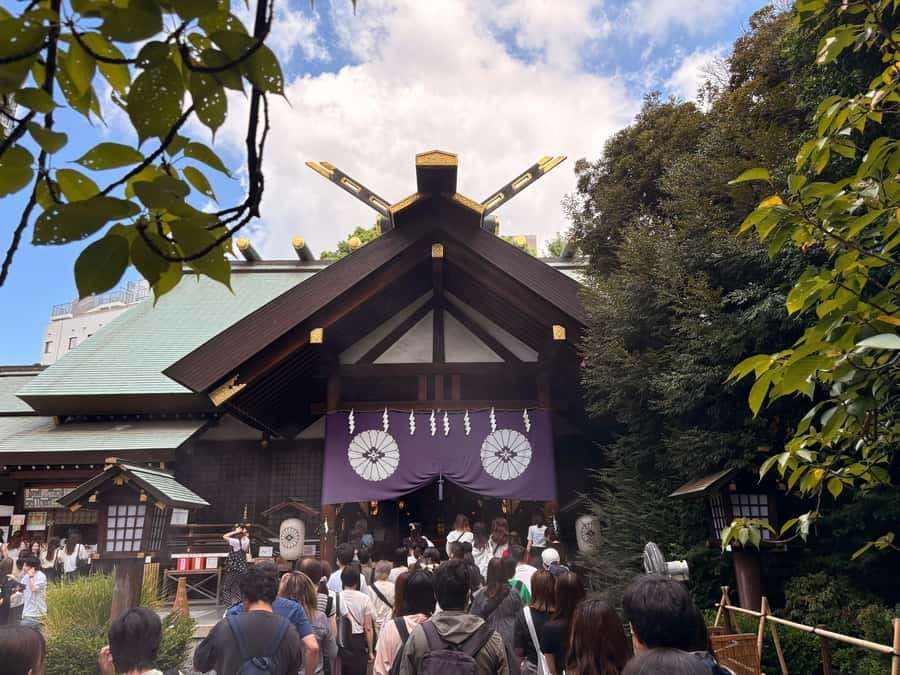
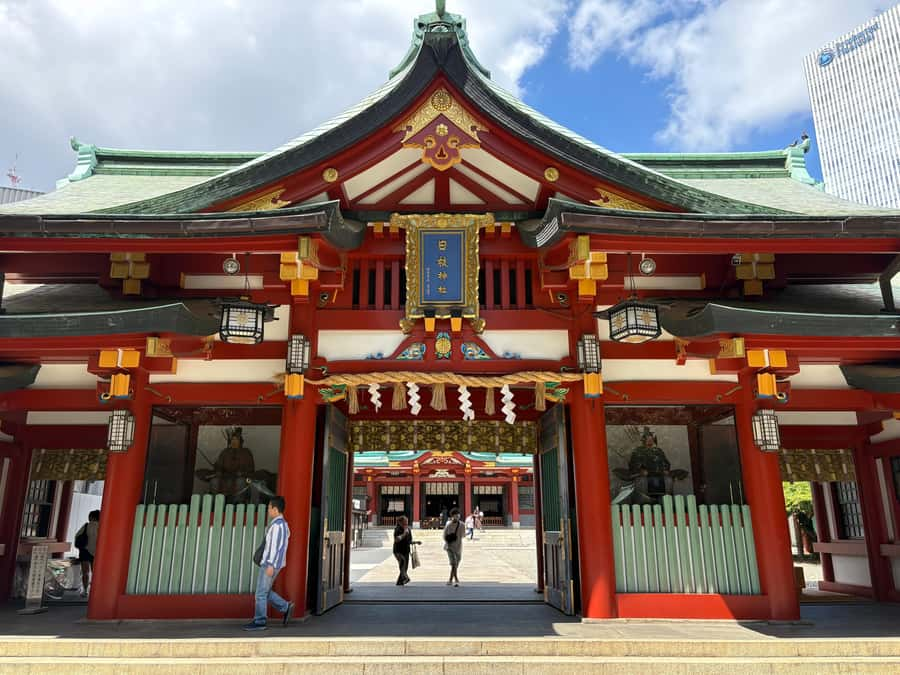
The appeal here is variety. Meiji Shrine gives you forest, space, and imperial-era symbolism. Hie Shrine adds a striking row of red torii gates and prayers for fortune and relationships. Tokyo Daijingu focuses on romantic happiness, while Kanda Myojin connects old Shinto practice with modern business and technology.
That range makes the tour more useful than visiting four similar sites. You get a quick look at how people bring different hopes to different shrines. One person may be thinking about marriage, another about a new business, and another about protection on the journey home.
The private format also helps you set the pace. You are not joining a large bus group with a fixed script and a long list of names to remember. Your English-speaking guide can explain the customs in front of you, point out details as they come up, and adjust the route around your interests when time allows.
Still, this is a survey tour. You will see several places, but you will not have unlimited time to sit quietly at each one. If you want long periods for photography, prayer, or reading every sign, ask about the timing before you book.
More private tours in Tokyo:
- Tokyo 6hr Private Tour with Government-Licensed Guide
★ 5.0 · 3,902 reviews - Private Tour to Mt. Fuji and Hakone (Fully Licenced Operator)
★ 5.0 · 1,910 reviews - Tokyo Customized Private Tour (Must See Places in 1 Day)
★ 5.0 · 1,499 reviews
Meiji Shrine, Tokyo’s Forested Spiritual Refuge
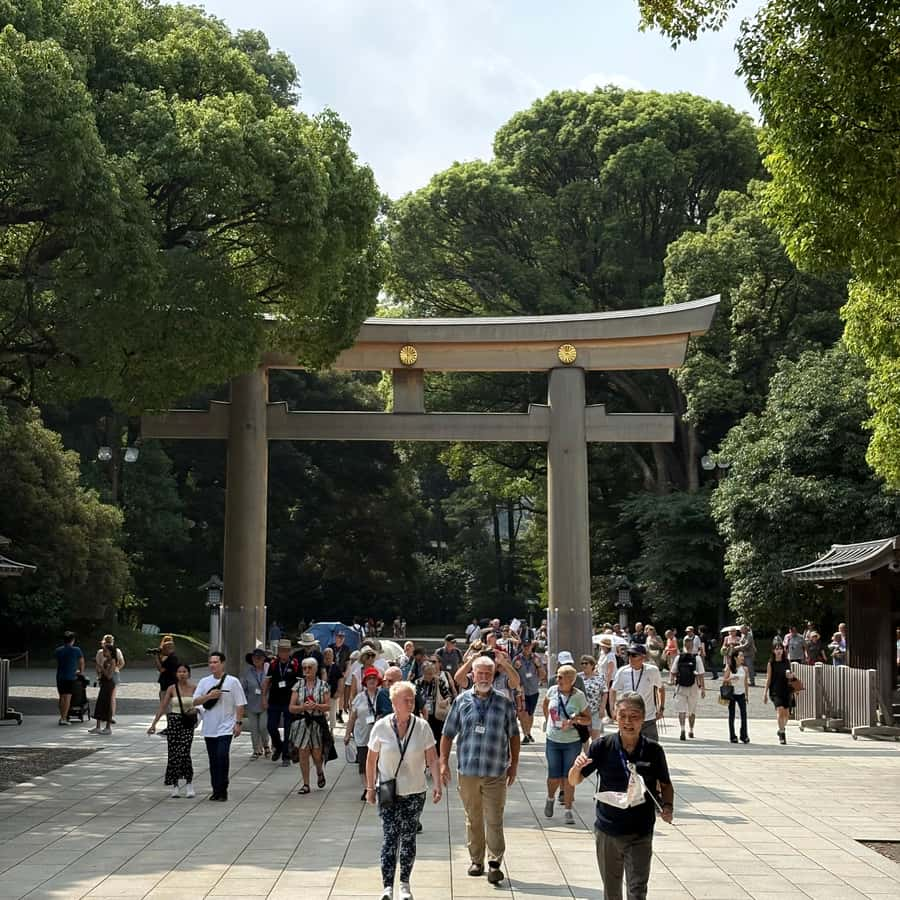
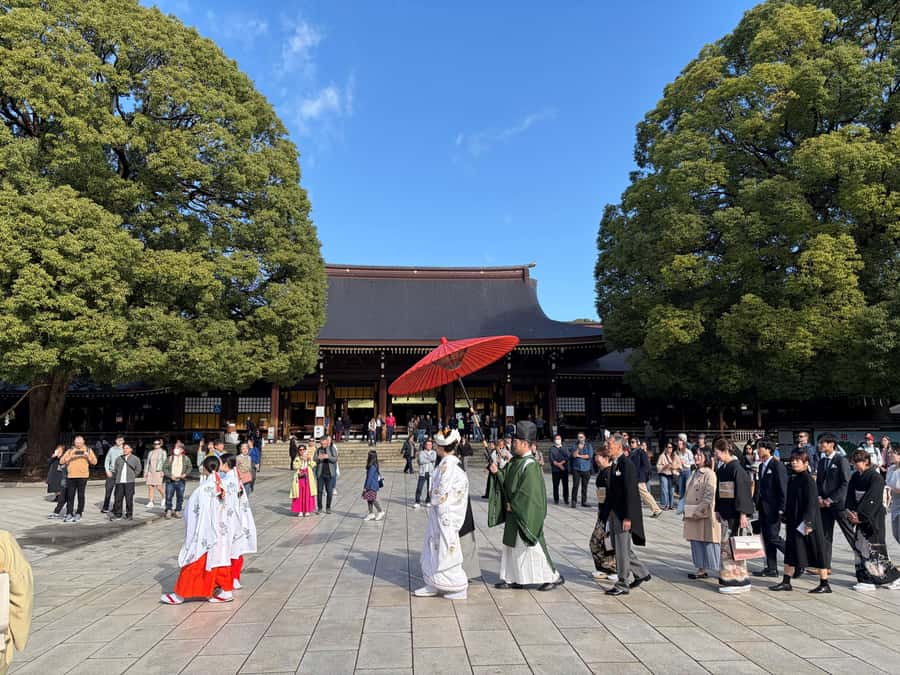
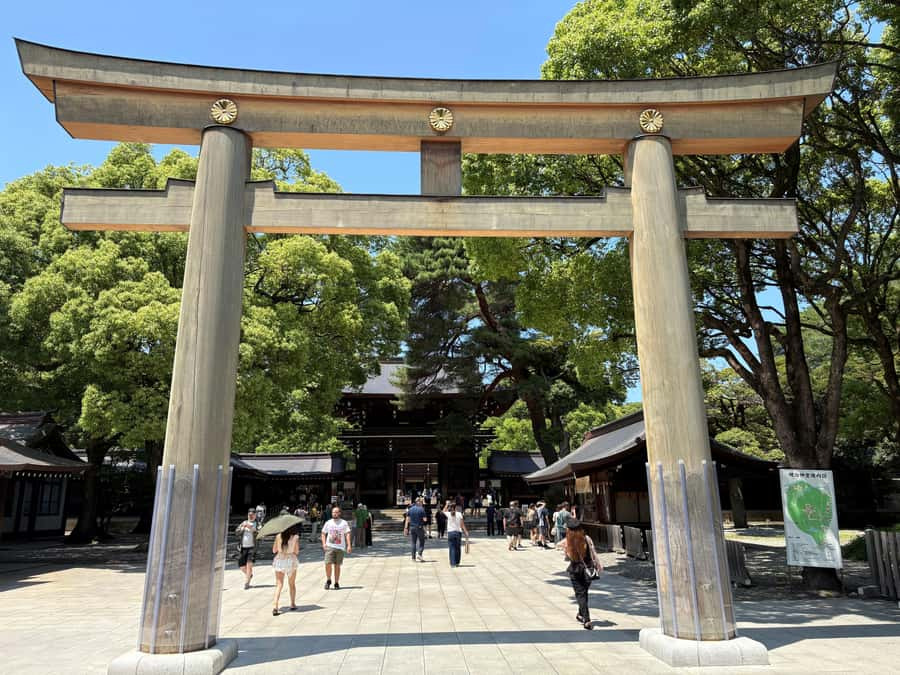
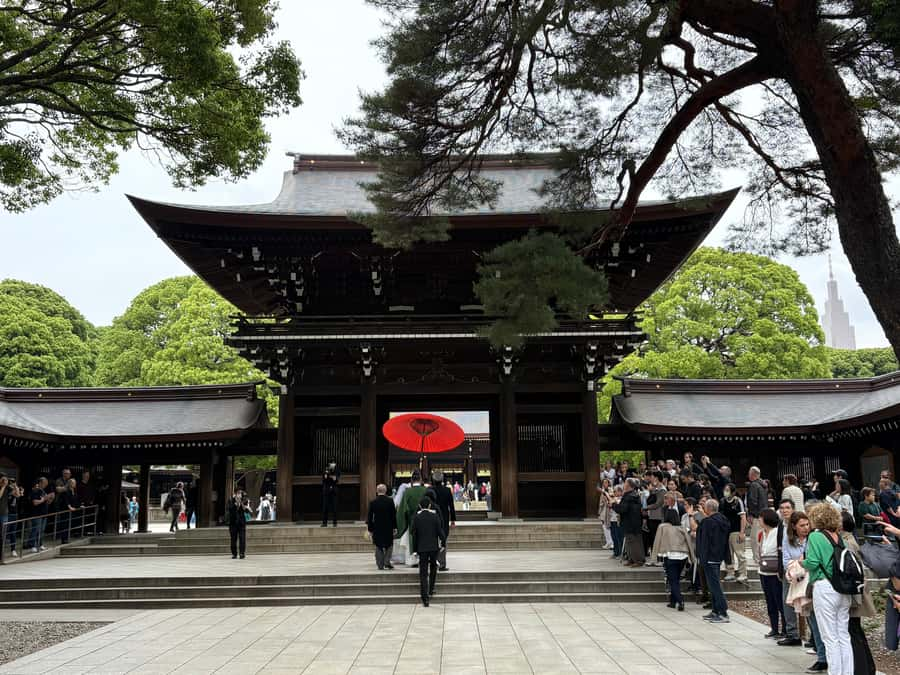
Meiji Shrine is the natural first stop. It sits in a large forested area in central Tokyo, creating a sharp change from the city streets outside. The setting is part of the experience. Even before you reach the main shrine area, the trees help lower the volume of the city.
The shrine has a close connection to Emperor Meiji, which gives the site national and historical importance. Your guide can explain that connection while also showing you how to approach the shrine respectfully. For a first visit to Japan, this is a useful place to learn the basic rhythm of Shinto worship.
You should arrive in comfortable shoes. Shrine grounds can require walking, and the half-day schedule works better when you are ready to move between the car and each sacred site without fuss.
Meiji Shrine is also the stop most likely to give you a sense of quiet. The other sites have their own character, but this one offers the clearest break from Tokyo’s hard edges. I would take a moment here to notice the trees and the scale of the grounds instead of treating it as a quick photo stop.
Hie Shrine and Its Red Torii Passage
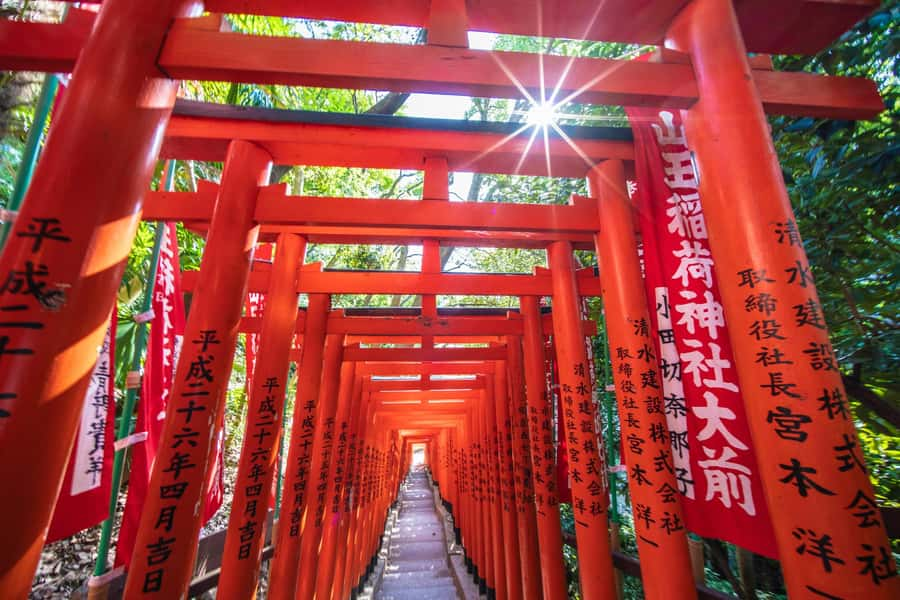
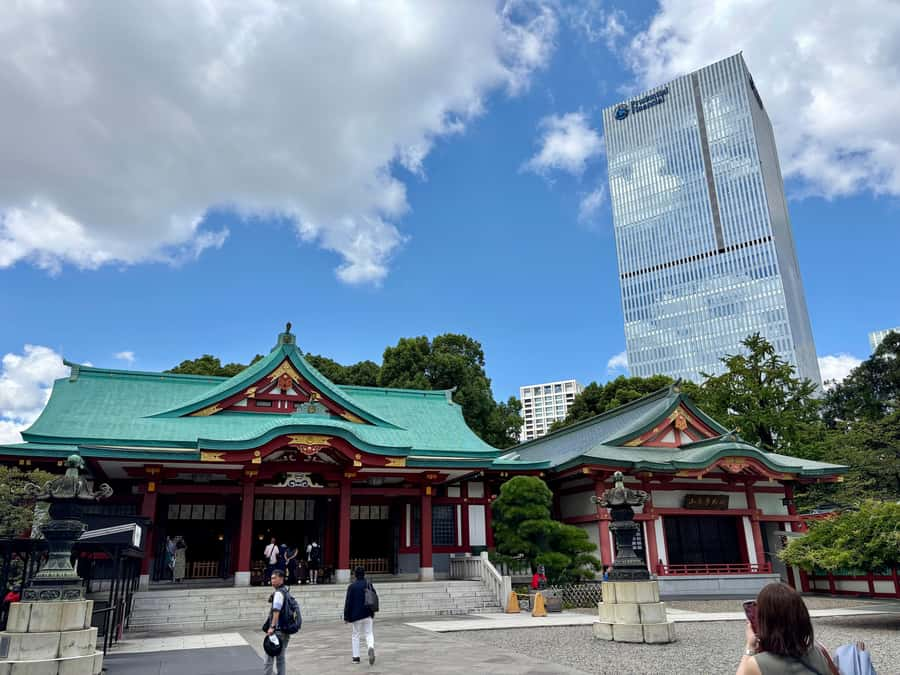
Hie Shrine brings a more visual kind of energy. It is known for a tunnel of bright red torii gates, the repeated gateways that make one of the tour’s most recognizable scenes.
The gates create a strong contrast with Tokyo’s modern streets and office districts. Your guide can explain the shrine’s association with good fortune and lasting relationships, so the visit has a clear purpose beyond taking pictures.
This is a good stop for anyone interested in how Japanese sacred spaces use color, repetition, and movement. Walking through a line of torii gives the visit a simple sense of progression. You pass from one space into another, with the city still close by but temporarily set aside.
The practical limitation is that a popular visual feature can attract other people. You may need patience if you want an unobstructed photograph. The tour is not designed as a dedicated photography outing, so enjoy the gates while also listening to the cultural explanation.
Tokyo Daijingu, A Shrine for Love and Marriage
Tokyo Daijingu is the most direct stop for romantic wishes. It is known as one of Tokyo’s leading shrines for love, making it a natural choice for couples, people hoping for a relationship, or anyone interested in the role of matchmaking prayers in Japanese culture.
The value of visiting with a guide is clearest here. Shinto shrines can look simple at first glance, but the actions you take matter. Your guide explains the proper way to make a prayer and helps you avoid treating the shrine like a stage set.
I would not expect the tour to provide a private spiritual answer or guarantee a particular result. Its value is cultural and personal: you learn why people come to this shrine, how they express a wish, and how modern hopes fit into an old religious setting.
If you are traveling with a partner, this can be a pleasant shared stop. If you are alone, it still offers an interesting look at the way Tokyo connects sacred practice with everyday hopes for affection and companionship.
More guided tours in Tokyo:
- Tokyo: Shinjuku Local Bar and Izakaya Guided Walking Tour
★ 4.9 · 1,794 reviews - Tokyo: Private City Highlights Tour with Local Guide
★ 4.8 · 1,433 reviews - Tokyo: Tsukiji Fish Market Guided Walking Tour
★ 4.9 · 1,397 reviews - Tokyo 4hr Private Tour with Government-Licensed Guide
★ 5.0 · 1,394 reviews
Kanda Myojin, Where Tradition Meets Business
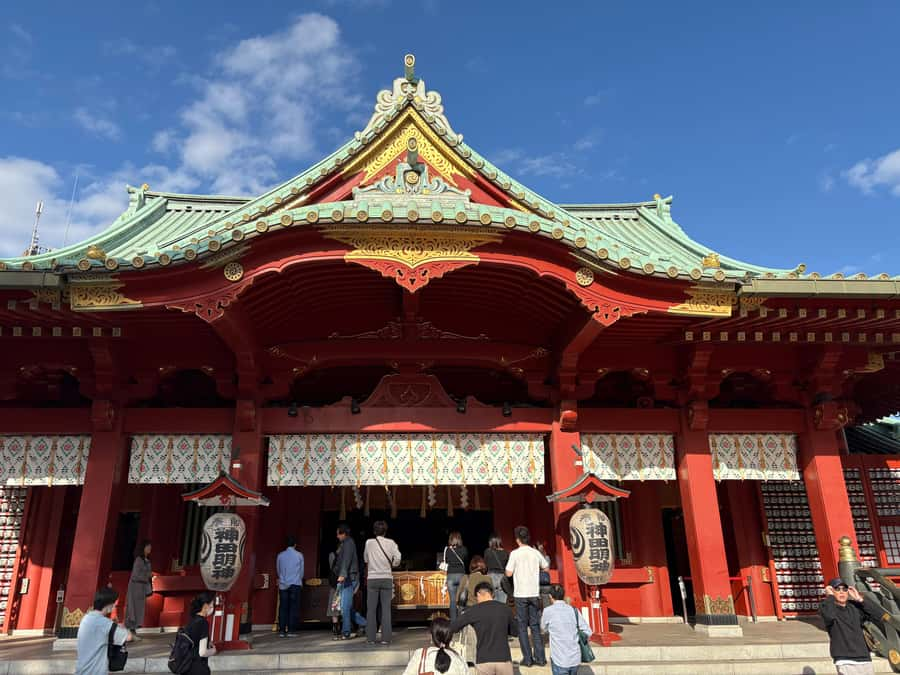
Kanda Myojin gives the tour its most modern connection. The shrine is cherished by entrepreneurs and technology workers who come for business success and protection.
That pairing makes sense for Tokyo. Shinto practice is not confined to remote rural sites or distant mountain temples. Here, a shrine can serve people working in offices, launching companies, managing shops, or building careers in technology.
I like this stop because it prevents the tour from presenting shrines as museum pieces. Kanda Myojin shows how religious customs remain part of present-day city life. You can ask your guide about the shrine’s role and get a better feel for how Japanese visitors connect work, luck, and protection.
This is also where a local guide can add useful context that a guidebook may not provide quickly. Oishi, the named driver and guide associated with this experience, is described as professional, entertaining, and attentive to shrine protocols. He also points out Tokyo landmarks during the drive, so the time between shrines becomes part of your orientation to the city.
Koami Jinja, If the Schedule Allows
Koami Jinja is a small shrine with a strong reputation for good luck and protection. It is especially notable because it survived earthquakes and wartime bombing, leading many people to associate it with protective power.
Do not treat this as a guaranteed fifth stop. It is included only if time permits. That makes it a pleasant extra rather than a reason to book the tour by itself.
Its smaller scale may appeal to you if the grander shrines feel formal or overwhelming. The story of survival also gives the visit a concrete link to Tokyo’s difficult past. Ask your guide about the site if it is added to your route, since the available time may determine how much explanation and quiet reflection you get.
The flexible nature of the itinerary has another advantage. A request to visit Asakusa Shrine has been accommodated even when it was not part of the original plan. That does not mean every requested stop can be added, but it does suggest you should tell the guide early if you have a specific interest.
Learning Shrine Etiquette Without Guesswork
A first shrine visit can feel awkward. You may see people bowing, washing, placing offerings, or praying, but not know which actions are expected and which are simply personal habits.
The guide explains the proper rituals for making a Shinto prayer. That practical help matters because it lets you pay attention to the place instead of worrying about making a mistake. You can ask questions as they come up, then use the same basic approach at the next shrine.
The tour also includes assistance with collecting goshuin. A goshuin is a sacred stamp and calligraphy entry placed in a dedicated book. It is one of the best physical reminders of a shrine visit, and the stamps generally cost about 500 yen each.
Bring a stamp book if you already have one, or ask the guide about the process. The tour provides collection assistance, but the individual stamp charge is not listed as included. If you collect all four, budget roughly 2,000 yen for the stamps, based on the stated price of 500 yen each.
A goshuin book is more meaningful than a generic souvenir because it records the actual places you visited. It also gives you a reason to slow down and treat each shrine as a separate stop rather than one blended sequence.
Private Car Travel and Hotel Pickup
The car is a major part of the tour’s value. Tokyo’s shrines are spread across different parts of the city, and moving between them by public transport can involve several train rides, station walks, and decisions about which exit to use.
With private transportation, you can leave that work to the guide and focus on the city outside the window. The vehicle is air-conditioned, and tolls, parking fees, and fuel costs are included. Hotel pickup and drop-off are also included, which makes the morning or afternoon easier to manage.
This setup is particularly useful for a group of two or three people. At $248 per group of up to three, the rough per-person cost is about $83 when three people share. That is not the cheapest way to visit shrines, but it becomes more reasonable when you account for a private guide, car, parking, fuel, tolls, and hotel service.
For one person, the price is harder to justify unless you place a high value on convenience and personal attention. For a couple or a small family, the cost compares more favorably with arranging separate transport and paying for a private guide.
The tradeoff is that a car can never remove all walking. You still need comfortable shoes, and shrine grounds require movement on foot. Think of the car as a way to connect the sites efficiently, not as a fully seated sightseeing experience.
What the Guide Adds to the Experience
The guide’s main job is not simply to drive. You need someone to connect each shrine’s setting with its purpose, explain the rituals, and help you understand what you are seeing.
Oishi is specifically associated with this experience. He points out landmarks during the drive, explains shrine protocols, and has helped shape the route around personal requests. One useful touch is his help finding a good sushi restaurant, though lunch itself is not included and restaurant arrangements should not be assumed as part of every tour.
The guide speaks English and Japanese. That makes the experience easier for English-speaking visitors who want more than silent sightseeing. You can ask why one shrine is linked to love and another to business, or clarify what to do before making a prayer.
The quality of any private tour depends on the person leading it, so it is worth keeping expectations practical. The provided information identifies Oishi and gives the clearest picture of his role, but another guide may be assigned. The important feature to look for is the ability to explain both etiquette and local context, not just point out the next gate.
What Is Not Included and What to Bring
Lunch is not included. Plan to eat before or after the tour, or ask about a restaurant stop if your schedule and guide allow. A sushi lunch has been arranged during a previous outing, but you should not count on food being part of the official package.
Wear comfortable shoes. That is the one listed packing tip, and it is sensible given the walking at four shrine grounds. Smoking is not allowed on the tour.
The tour includes the vehicle, driver-guide, hotel pickup and drop-off, fuel, tolls, parking, and help with goshuin collection. You should still budget for the individual sacred stamps and any food or personal purchases.
The experience is offered in English and Japanese. If you need the tour in another language, this option is not a fit based on the information provided.
Who Should Book This Shrine Tour?
I would recommend it most strongly to first-time visitors who want a structured introduction to Shinto customs without spending a full day on one site. It also suits couples interested in Tokyo’s love shrines, small groups seeking an easy private outing, and anyone who wants a keepsake goshuin book.
It is a good match if you prefer a local guide to explain what you are doing rather than relying on signs or a phone. The flexible route is useful if you have another nearby shrine in mind, though extra stops depend on time.
I would hesitate if you want a long, silent, highly personal visit at each shrine. Four sites in half a day require some efficiency. I would also compare the cost carefully if you are traveling alone, since the $248 group price offers better value when shared by two or three people.
The tour has a five-star rating based on three reviews, which is encouraging but still a small sample. I would treat that as a positive signal, not as proof that every guide and every route will be identical.
Should You Book It?
Book this tour if you want to see several different sides of Tokyo’s shrine culture in a short period, with transport and etiquette handled for you. The best reasons are the private car, the chance to collect several goshuin, and the clear contrast between Meiji Shrine, Hie Shrine, Tokyo Daijingu, and Kanda Myojin.
Skip it if you prefer to explore slowly on your own or if you are mainly seeking a single shrine for extended prayer and photography. For a small group, though, the price becomes fair once you count the private guide and all transport costs. Tell Oishi or your assigned guide about special interests early, wear good shoes, and leave room in your schedule for an extra stop only if time allows.
FAQ
How many shrines are included in the tour?
The main route visits four shrines: Meiji Shrine, Hie Shrine, Tokyo Daijingu, and Kanda Myojin.
Is Koami Jinja included?
Koami Jinja may be visited if time permits. It is known for good luck and protection and has a reputation connected to surviving earthquakes and wartime bombing.
Is hotel pickup included?
Yes. Hotel pickup and drop-off are included with the private tour.
Is transportation private?
Yes. The tour uses private transportation in an air-conditioned vehicle.
Are tolls, parking, and fuel included?
Yes. Toll fees, parking fees, and fuel costs are included.
Is a guide included?
Yes. An English-speaking local guide is included. The tour is also available in Japanese.
Does the tour include lunch?
No. Lunch is not included.
Can I collect sacred stamps?
Yes. Goshuin collection assistance is included. Individual stamps cost about 500 yen each according to the provided tour information.
How much does the tour cost?
The price is $248 per group of up to three people. Cancellation is allowed up to 24 hours in advance for a full refund, and you can reserve and pay later.
Newly reviewed around Tokyo
- Tokyo Asakusa:Calligraphy & Make T-shirt Activity★ 5.0 · 62 reviews
- Intercity Shuttle, Tokyo to Haneda /Narita /Yokohama /Makuhari★ 5.0 · 5 reviews
- 1 Hour Travel around Tokyo with a Professional Photographer★ 5.0 · 3 reviews
- Travel Tokyo with Your Own Personal Photographer★ 5.0 · 43 reviews
- Train in Samurai Swordsmanship and Defeat the Demon in Tokyo★ 5.0 · 5 reviews
- Shuttle Van 6hr Tokyo Tour to-and-from Tokyo, Yokohama and Narita★ 5.0 · 9 reviews
- Kickboxing & Body Training with EX-Pro Fighter★ 5.0 · 4 reviews
- Tokyo History: Sensoji Temple & Asakusa District Private Tour★ 5.0 · 28 reviews
Guided, compared.
Tokyo 6hr Private Tour with Government-Licensed Guide
Read our review →
Shinjuku Local Bar and Izakaya Guided Walking Tour
Read our review →
Private City Highlights Tour with Local Guide
Read our review →
Tokyo 4hr Private Tour with Government-Licensed Guide
Read our review →
Samurai Ninja Museum Guided tour and Experience
Read our review →