
Reviewed · TOKYO
Tokyo Time Machine: Exploring Old School Monzen-Nakacho
Monzen-Nakacho is the sort of Tokyo neighborhood many visitors pass without noticing. This tour takes you into its narrow backstreets, family-run eateries, sake shops, and tiny bars, then adds a Buddhist fire ceremony at Fukagawa Fudodo. I like that the food is not an afterthought: Fukagawa meshi, sushi, oysters, barbecue, snacks, beer, sake, and other drinks form the backbone of the afternoon.
I also like the very small group, capped at six people. Guides such as Michelle, who has lived in Japan for 20 years, Elly, and Mairi can explain customs and make introductions that are hard to manage alone. The main consideration is the price: at $195 per person, this costs more than a casual meal, though the included food, alcohol, coffee, tea, and guide time make the value easier to judge.
Key points at a glance
- A temple ceremony with real cultural weight: Visit Fukagawa Fudodo and see a Buddhist fire ritual rather than simply taking photos outside.
- Fukagawa meshi at the source: Try the Monzen-Nakacho specialty of clams served over rice, along with sushi and other neighborhood food.
- Tiny bars, not tourist set pieces: The route includes a sake specialist, a standing bar, an oyster shucker, and small izakayas.
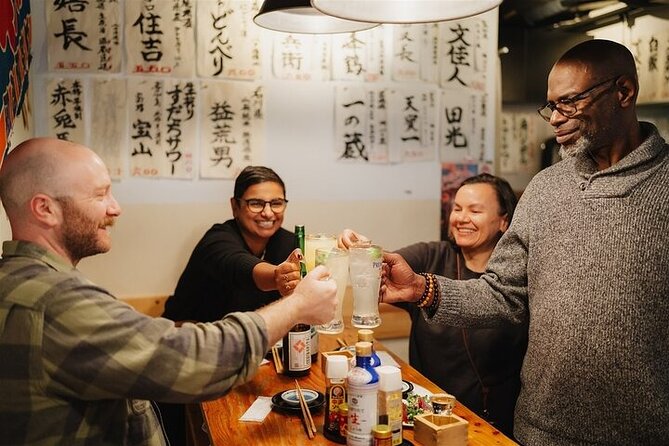
- A maximum of six people: The compact group suits anyone who wants conversation and help with Japanese menus.
- Food and drinks are included: Dinner, snacks, alcoholic beverages, coffee, and tea are part of the price.
- An afternoon-to-evening schedule: Meet at Monzen-Nakacho Station at 1 p.m. and return there after about five to six hours.
Why Monzen-Nakacho makes a good food walk
Tokyo has no shortage of famous food districts. Tsukiji, Shibuya, Shinjuku, and Asakusa are easier to find, but they can also make the city feel like a series of well-worn stops. Monzen-Nakacho offers a different kind of afternoon. You spend time in a neighborhood where temples, ordinary shops, drinking spots, and long-running food businesses share the same streets.
The focus is not just on eating. You learn how sake connects with religion, how small bars serve their regulars, and how a local specialty grew from the area’s connection with fishermen and waterways. The result feels less like a checklist of dishes and more like a guided look at how people eat and drink in one part of Tokyo.
The route also works well for first-time visitors who are unsure about entering a tiny Japanese pub. Some places may have little English signage, limited seating, or a menu that assumes you already know the customs. Your guide handles the introductions and explains what is being served, which removes much of the guesswork.
Other Tokyo days people book alongside this one:
- Mt Fuji and Hakone 1-Day Bus Tour Return by Bullet Train
★ 5.0 · 26,383 reviews - 1-Day Tokyo Bus Tour
★ 5.0 · 14,250 reviews - Tokyo: teamLab Planets TOKYO Digital Art Museum Entry Ticket
★ 4.6 · 9,779 reviews
Starting with Fukagawa meshi and neighborhood sushi
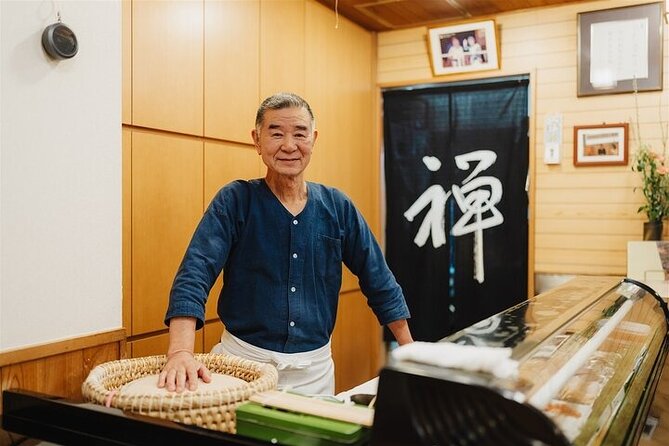
Meet your guide at Monzen-Nakacho Station at 1 p.m. The tour begins with food before moving into the temple and bar portions of the day. One early stop is a classic neighborhood spot for sushi and Fukagawa meshi, a local dish of clams served over rice.
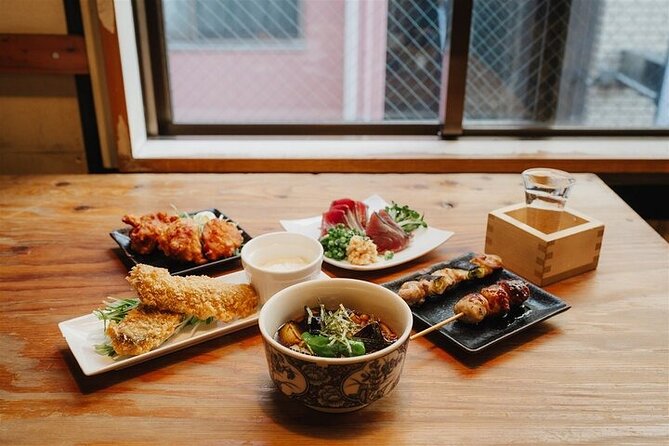
Fukagawa meshi is important here because it gives you a taste tied to the district rather than a generic Tokyo meal. The dish is simple and hearty. Its appeal comes from the connection between the ingredients and the area’s working food culture. If you enjoy learning why a dish belongs to a particular place, this opening stop gives the rest of the walk a useful foundation.
The food is served as part of the experience, so you do not need to keep calculating the cost of every tasting. That makes the afternoon easier, though you should still arrive ready to eat. The exact balance of dishes can depend on the shops and bars available that day.
Fukagawa Fudodo and the Buddhist fire ceremony
The spiritual center of the walk is Fukagawa Fudodo. Here, the tour moves beyond food and drink to the religious life of the neighborhood. You pay your respects and watch a Buddhist fire ceremony, an intense, multisensory ritual involving sound, movement, and flame.
This is one of the strongest reasons to choose this experience over a standard food crawl. You are not simply being told that religion matters in Japan. You are given a chance to observe a ceremony in a working temple setting, then connect it with the role of sake and food in local customs.
Your guide can also help explain what you are seeing and how to behave respectfully. That matters because religious sites in Japan are not just scenic backdrops. The temple portion gives the afternoon a change of pace, although it may not suit someone who wants nonstop eating from the first minute to the last.
Sake, oysters, and the people behind the food
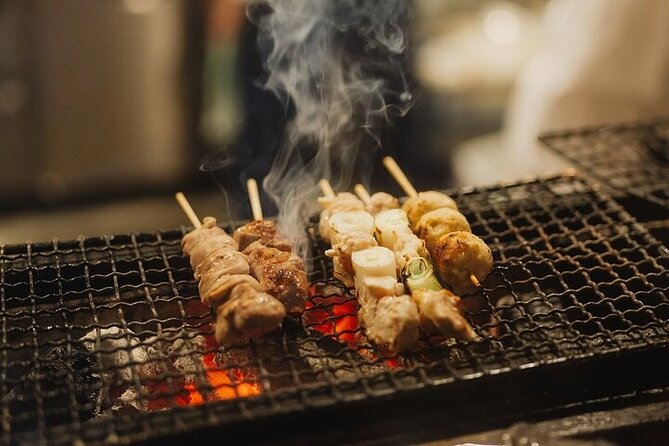
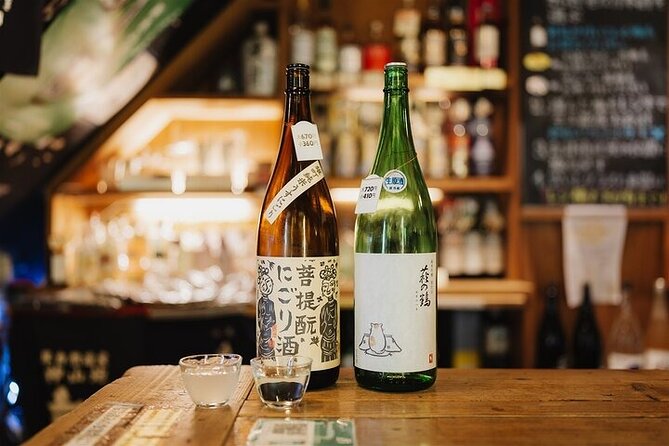
After the temple visit, the route turns toward Monzen-Nakacho’s drinking spots. A sake specialist is part of the afternoon, with tastings that show some of the variety within Japan’s traditional spirit. The point is not simply to drink several samples. You also hear about sake’s place in Japanese culture and religion.
The tour includes a stop with an oyster shucker who buys directly from fishermen affected by the 2011 tsunami. That detail gives the food a human and economic connection. You are tasting oysters, but you are also hearing how one small business supports producers rebuilding after a disaster.
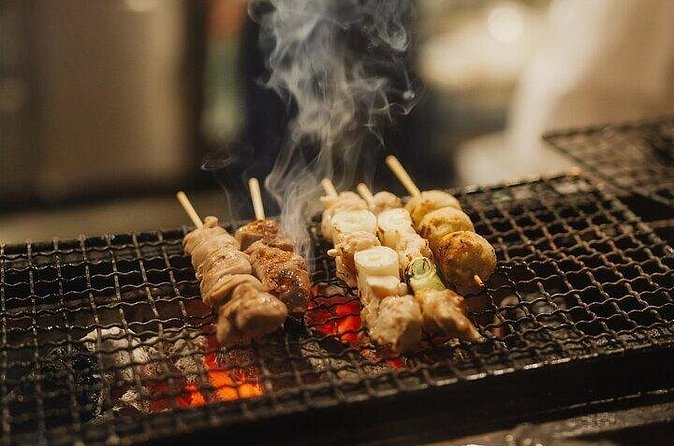
Other tastings can include local beer, barbecue, and carefully prepared bar snacks. One person described the mix as particularly useful for understanding rice-based foods, history, and everyday customs. That is a good way to think about the tour: the dishes are entry points into a larger story.
Keep in mind that alcohol is a central part of the experience. Alcoholic beverages are included, along with dinner and snacks, but this is not the right choice if you want a completely alcohol-free food tour. The tour is for people aged 18 and older.
A completely different kind of day in Tokyo:
- Mt Fuji & Hakone Cruise, Drum Show Bullet Train 1 Day from Tokyo
★ 4.0 · 7,413 reviews - Tokyo: Shinjuku Food Tour (13 Dishes at 4 Local Eateries)
★ 5.0 · 6,603 reviews - Tokyo Mt Fuji 5th St & Hakone Cruise Bus Tour w/Bullet Train
★ 4.4 · 5,024 reviews - Flagship 2-Hours Official Street Go-Kart Tour – Tokyo Bay Shop
★ 5.0 · 4,974 reviews
Squeezing into a Japanese tachinomi
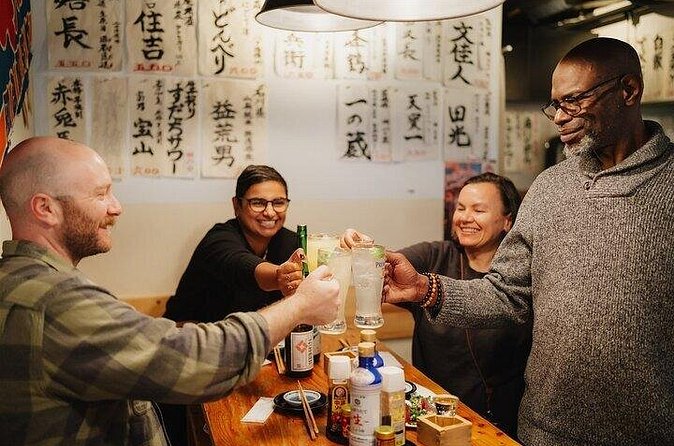
One of the most atmospheric stops is a tachinomi, or standing bar. These places are often small, practical, and built around quick conversation, good drinks, and a compact kitchen. You may have little room, but that is part of the character.
The guide makes this kind of stop much easier. Without help, a first-time visitor may hesitate at the entrance, wonder how to order, or worry about taking up space. With a guide, you can focus on the food and the rhythm of the place.
The tour also includes other out-of-the-way izakayas and bars. These are not presented as grand attractions. Their value is in seeing how neighborhood drinking works when the room is small, the food is made in front of you, and the regular clientele knows the staff.
You should expect the pace to be relaxed rather than rushed. The afternoon begins with food, moves through the temple, then gradually becomes an evening food and drink walk. Several stops are included, so portions may be smaller than a conventional restaurant dinner. By the end, however, you should have eaten enough for the meal included in the price.
What the $195 price really covers
At $195 per person, this is a premium walking tour. You are paying more than you would for a self-guided visit to Monzen-Nakacho, and you could certainly eat cheaply in Tokyo by choosing individual restaurants yourself.
The value comes from the combination of access, explanation, and included consumption. Dinner, snacks, alcoholic beverages, coffee, and tea are included. You also receive several tastings across different types of places rather than paying separately at every stop.
The group size matters here. With no more than six people, the guide can explain unfamiliar dishes, help with ordering, and answer questions without turning the tour into a lecture. The personal connections described by the guides are another part of the cost. Michelle, Elly, and Mairi have been praised for their understanding of Tokyo’s food culture and their relationships with small businesses.
I would consider the tour good value if you want one carefully organized afternoon that combines meals, drinks, religion, and neighborhood history. If your priority is simply eating the cheapest possible dinner, the price will feel high.
How the schedule affects your Tokyo day
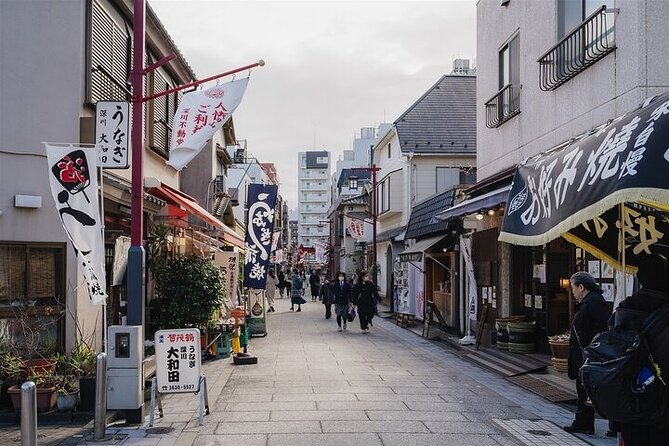
The start time is 1 p.m., and the activity lasts about five to six hours. That means you should keep the rest of the day light. You will finish around early evening, depending on the pace and the stops used.
The schedule is useful for visitors who want to avoid an early morning start. It also lets you experience the neighborhood as the day changes into evening, when bars and izakayas become more active. On the other hand, it takes up most of an afternoon and evening, so do not book it on a day when you need to cross Tokyo for a fixed dinner reservation.
There is no private transportation. You meet at Monzen-Nakacho Station, walk through the district, and finish back at the meeting point. Since the route is on foot, wear comfortable shoes and allow room for the small bars and crowded interiors that are part of the experience.
Guide quality and the benefit of a small group
The guide can make or break a food walk, particularly in a neighborhood where signs and menus may not be aimed at international visitors. Michelle has lived in Japan for 20 years and brings long experience in Tokyo. Elly has been praised for explaining the area’s food and history, while Mairi is known for her personal connections with small businesses.
You may not receive the same guide every time, but the format depends on a guide who can do more than identify dishes. You want someone who can explain the temple ceremony, describe local customs, and make a tiny bar feel welcoming. The guide also helps with language barriers, which is one of the clearest practical benefits of booking.
A maximum of six people keeps the group nimble. It is easier to enter a small shop, hear the explanation, and speak with the guide. The tradeoff is that the experience is less private than a one-on-one tour. If you are looking for a fully private food itinerary, this is not that.
Dietary needs and drinking preferences
One person with celiac disease had a good experience on the tour, which suggests the food can work for some gluten-free diners. Still, you should share dietary requirements when booking and confirm what can be accommodated. The available details do not promise a gluten-free menu or rule out cross-contact.
The same advice applies to allergies, vegetarian diets, and other restrictions. The tour includes several types of food and drinks, and the exact dishes can vary. Ask before you book rather than assuming every stop can adjust its menu.
Alcohol is included and plays a visible role, with sake and local beer among the drinks mentioned. If you do not drink, you should confirm how the included tastings can be handled before booking. The tour may still offer food, coffee, and tea, but the experience is built partly around Japanese drinking culture.
Who will enjoy this Monzen-Nakacho walk
I would recommend this tour to you if you want food to open a door into local customs. It suits people who enjoy small restaurants, traditional drinks, temple rituals, and the stories behind ordinary businesses.
It is especially useful for a first visit to Tokyo, when you may want a confident introduction to izakayas and Japanese menus. It also works for repeat visitors who have already seen the major sights and want a quieter neighborhood with a strong local identity.
You may want to skip it if you dislike alcohol, have strict dietary needs that have not been confirmed, or prefer a fast-moving tour with large portions at one or two restaurants. The walking and standing-bar format may also be less comfortable if you need frequent seating.
Should you book Tokyo Time Machine?
Book it if the idea of eating clam rice, watching a Buddhist fire ceremony, tasting sake, meeting small food producers, and ending in a standing bar sounds better than another famous Tokyo attraction. The mix is unusually broad, and the small group gives you a better chance to ask questions and enter places you might avoid alone.
At $195, it is not a bargain meal. It is a full afternoon of guided access, food, drinks, cultural explanation, and local introductions. For anyone who values context as much as cuisine, that package earns its price. Cancel at least 24 hours before the 1 p.m. start if your plans change, since later cancellations are not refundable.
FAQ
Where does the tour meet?
The meeting point is Monzen-Nakacho Station at 2 Chome-4 Monzennakacho, Koto City, Tokyo 135-0048, Japan.
What time does the tour start?
The tour starts at 1 p.m.
How long does the experience last?
The activity lasts approximately five to six hours.
Where does the tour finish?
The tour ends back at the meeting point near Monzen-Nakacho Station.
How many people can join?
The group has a maximum of six participants.
Is food included?
Yes. Dinner and snacks are included.
Are drinks included?
Yes. Alcoholic beverages, coffee, and tea are included.
What age must participants be?
Participants must be at least 18 years old.
Is transportation included?
Private transportation is not included. The experience begins and ends at the station meeting point and takes place as a walking tour.
Can I cancel for a refund?
Yes. You can cancel at least 24 hours before the experience start time for a full refund. Cancellations or changes made less than 24 hours before the start time are not accepted for a refund.
Newly reviewed around Tokyo
- Tokyo Asakusa:Calligraphy & Make T-shirt Activity★ 5.0 · 62 reviews
- Intercity Shuttle, Tokyo to Haneda /Narita /Yokohama /Makuhari★ 5.0 · 5 reviews
- 1 Hour Travel around Tokyo with a Professional Photographer★ 5.0 · 3 reviews
- Travel Tokyo with Your Own Personal Photographer★ 5.0 · 43 reviews
- Train in Samurai Swordsmanship and Defeat the Demon in Tokyo★ 5.0 · 5 reviews
- Shuttle Van 6hr Tokyo Tour to-and-from Tokyo, Yokohama and Narita★ 5.0 · 9 reviews
- Kickboxing & Body Training with EX-Pro Fighter★ 5.0 · 4 reviews
- Traditional Japanese Knife Sharpening Class★ 5.0 · 18 reviews