Reviewed · TOURS
Tokyo Afternoon Tour with Pick-up Service from designated hotels
Tokyo’s past and present come together neatly on this afternoon route: a samurai garden, a short river cruise, an old Buddhist temple, and the neon world of Akihabara. I like the way the tour gives you several different sides of the city without asking you to plan a maze of train connections. The cruise from Hinode Pier to Asakusa is another strong point, giving your feet a break while you see Tokyo from the water.
I also like the balance between guided sightseeing and free time at Senso-ji and Akihabara. Guides such as Yoshi and Yunko have earned warm praise for being friendly and helpful. The main caution is timing: traffic, pickup confusion, rain, and long outdoor walks can turn this into a tiring afternoon, and one delayed tour caused a missed dinner reservation.
Key points to know before booking
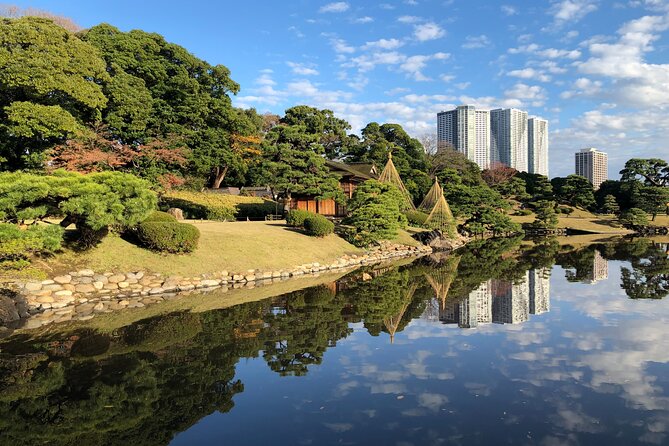
- Hama Rikyu begins the tour with a 40-minute visit to a former samurai lord’s garden, including a tidal pond and traditional tea houses.
- The 30-minute cruise replaces one stretch of city traffic, carrying you from Hinode Pier toward Asakusa.
- Senso-ji includes time for Nakamise shopping street, but crowds and walking are part of the deal.
- The bus passes Tokyo Sky Tree, Kappabashi, Ueno, and Akihabara, with some passengers able to leave the tour in those districts.
- The tour ends in Akihabara, with a return-to-hotel option available if you select it.
- The $55.28 price includes transport, a licensed English-speaking guide, garden entry, and cruise tickets, but not lunch or gratuity.
Four hours of Tokyo in one clean sweep
I see this as a useful orientation tour, not a slow, intimate look at one neighborhood. In roughly four to four and a half hours, you move from a quiet garden to Tokyo Bay, then into Asakusa’s temple district and finally toward the city’s pop-culture center.
That range is the point. You get a taste of old Tokyo, water-level views, famous landmarks, and modern Japanese subculture in one afternoon. You will not have time to examine every museum, shop, or temple detail, but you can learn which areas deserve a longer visit later.
The listed start time is 1:30 p.m. Hotel pickup is available at major Tokyo hotels, though the exact pickup arrangements matter. A taxi may be used, and a guide may not accompany that part of the journey. Confirm your hotel and meeting point carefully, and arrive early. A pickup mix-up led to one pair crossing much of the city by taxi before joining the group, while another couple was helped after missing the correct stop.
The vehicle is air-conditioned, and the maximum group size is 40 people. That is large enough for a proper coach tour, so you should expect a group experience rather than a private guide. The benefit is a simple route and a set price. The tradeoff is that stops move on a schedule.
Other Tokyo days people book alongside this one:
- Mt Fuji and Hakone 1-Day Bus Tour Return by Bullet Train
★ 5.0 · 26,383 reviews - 1-Day Tokyo Bus Tour
★ 5.0 · 14,250 reviews - Tokyo: teamLab Planets TOKYO Digital Art Museum Entry Ticket
★ 4.6 · 9,779 reviews
Hama Rikyu Gardens and the quiet opening
The tour starts at Hama Rikyu Gardens, one of the best choices for easing into Tokyo. The garden was created for a daimyo, or samurai war lord, and its design includes a tidal pond, man-made hills, and traditional tea houses.
You have about 40 minutes here, with admission included. That is enough time to walk through the main sections, take photographs, and hear how the garden was used. The saltwater pond changes with the tide, a small but memorable reminder that this peaceful park is tied to Tokyo Bay.
I like this opening because it gives you space before the crowds of Asakusa. After the noise and density of central Tokyo, the garden offers a calmer view of Japanese design. Look for the careful balance of water, trees, paths, and raised ground. The garden is not just a green break. It shows how power and leisure once shaped the city.
Still, 40 minutes is not long. If you enjoy gardens, you may wish you had more time to linger at the tea houses or explore every path. Treat this as an introduction rather than a full garden visit.
Wear shoes you can walk in. The tour includes outdoor paths, and the total amount of walking is more substantial than the short stop times suggest.
Hinode Pier to Asakusa by boat
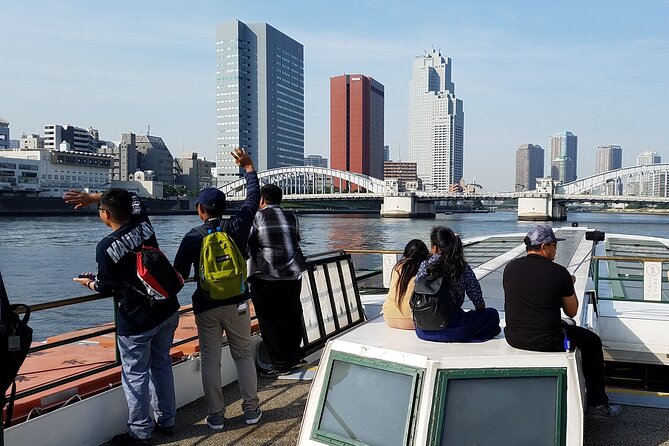
From Hama Rikyu, the group continues to Hinode Pier for a 30-minute Tokyo Bay and Sumida River cruise. The boat ride is one of the tour’s best practical features. Instead of sitting on the bus through another stretch of Tokyo traffic, you get a slower view of the waterfront and arrive near Asakusa by water.
This is a one-way cruise, not a round trip. The boat ticket is included, and the cruise is normally scheduled to end in Asakusa. You can use this half hour to rest, take photographs, and watch the city change from modern waterfront buildings to the older streets around the temple district.
Weather matters here. The tour requires good weather, and the boat may be replaced if operations or conditions prevent the normal cruise. If the Sumida River route is unavailable, the operator may use a longer Tokyo Bay cruise from Odaiba, including a trip via Rainbow Bridge. In that case, Hama Rikyu Gardens may be omitted.
If neither cruise is possible, the alternative may involve driving through Odaiba and across Rainbow Bridge before continuing to Asakusa by bus. This keeps the route moving, but it changes the character of the afternoon. If the cruise is the main reason you are booking, check the forecast and keep the weather policy in mind.
Senso-ji and the Nakamise shopping street
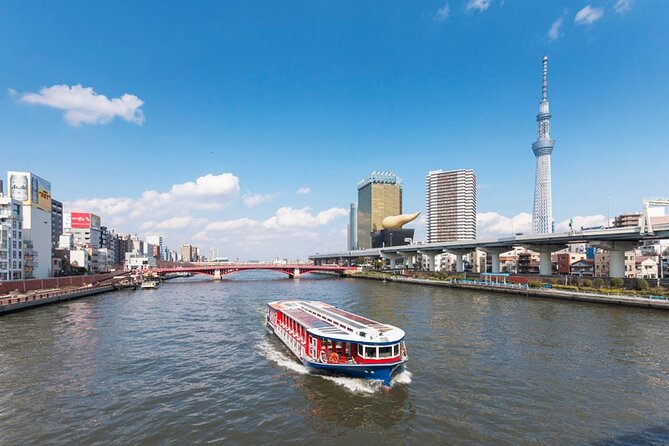
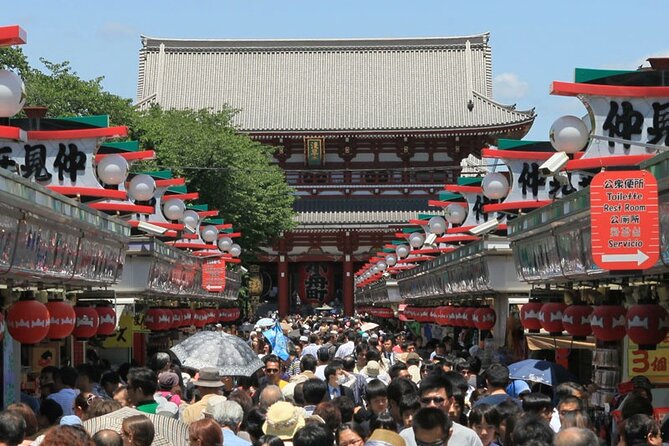
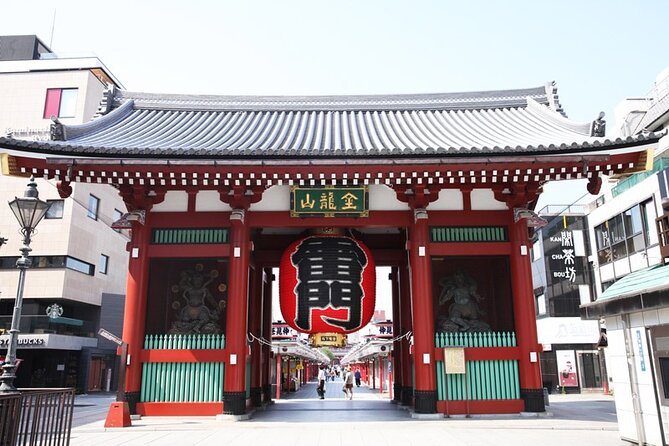
The next main stop is Senso-ji, founded in the seventh century and one of Tokyo’s oldest and largest Buddhist temples. You have about 50 minutes, with no separate admission fee.
This is where the afternoon becomes more crowded and lively. The approach to the temple runs along Nakamise Shopping Street, lined with shops selling snacks, souvenirs, small gifts, and traditional items. You can use the free time for a quick look around, a snack, or photographs of the temple grounds.
Fifty minutes gives you a useful first visit, but not a leisurely one. Keep an eye on the meeting time, especially if you stop to shop. Asakusa rewards wandering, yet this tour must continue toward its final stop.
I like the contrast with Hama Rikyu. The garden is open and quiet, while Senso-ji brings you into a more active public setting. You see how Tokyo’s older religious and commercial life still fits into a huge modern city.
You should also expect crowds. The route involves walking outdoors, and rainy weather can make the temple area unpleasant. One poor-weather experience became especially difficult because the group had to walk long distances in heavy rain and cold. Bring an umbrella or raincoat, and do not count on weather alone being enough to change the schedule.
A completely different kind of day in Tokyo:
- Mt Fuji & Hakone Cruise, Drum Show Bullet Train 1 Day from Tokyo
★ 4.0 · 7,413 reviews - Tokyo: Shinjuku Food Tour (13 Dishes at 4 Local Eateries)
★ 5.0 · 6,603 reviews - Tokyo Mt Fuji 5th St & Hakone Cruise Bus Tour w/Bullet Train
★ 4.4 · 5,024 reviews - Flagship 2-Hours Official Street Go-Kart Tour – Tokyo Bay Shop
★ 5.0 · 4,974 reviews
The bus ride through Sky Tree, Kappabashi, and Ueno
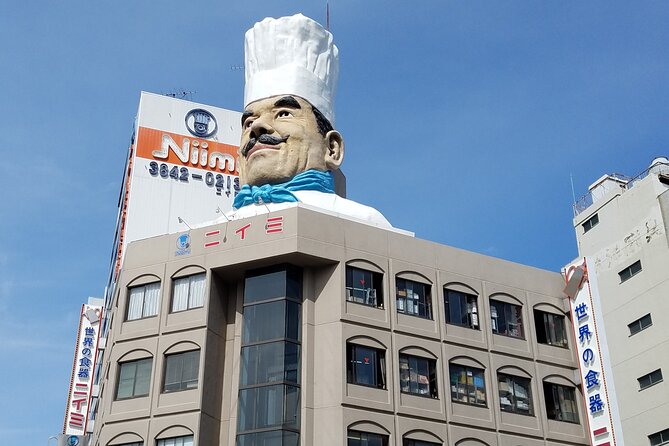
Some of Tokyo’s best-known districts are seen from the bus rather than visited as full stops. The route passes Tokyo Sky Tree, Kappabashi, Ueno, and Akihabara.
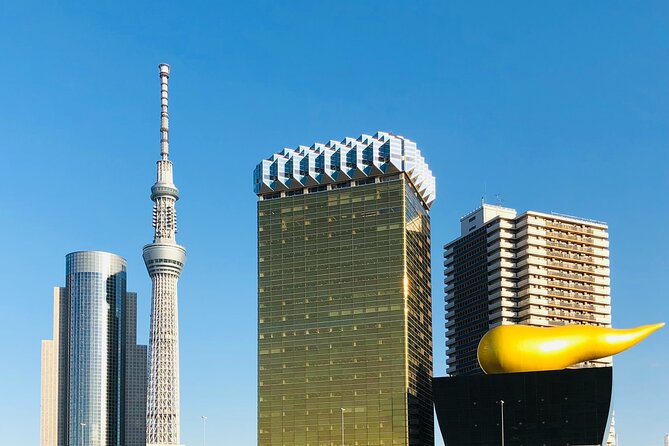
Tokyo Sky Tree rises 634 meters and is one of the city’s defining landmarks. The bus may allow you to get off there if you want to stay in the area, but that choice affects the rest of your tour. Clarify the drop-off rules with your guide before leaving the group.
Kappabashi is Tokyo’s kitchen-supply district. Its shops are known for cooking utensils, realistic plastic food displays, and Japanese kitchen knives. If you like food, design, or home cooking, this area can be more interesting than a quick view from the coach suggests.
Ueno is a major shopping and cultural district. Ueno Park contains museums and historic sites, and some participants may choose to leave the bus there. Again, this is best treated as a drop-off option, not a full guided visit.
These pass-by sections add value because they help you understand Tokyo’s layout. They also require realistic expectations. You will not have time to explore Sky Tree, Kappabashi, and Ueno in depth during this afternoon. Think of them as useful previews for a later independent visit.
Akihabara, the final stop
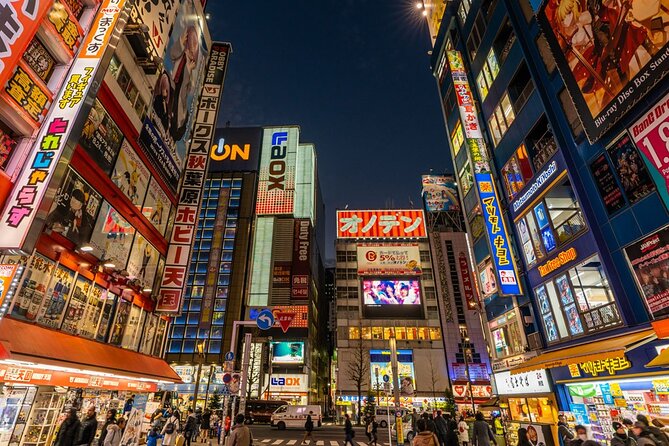
The tour ends in Akihabara, Tokyo’s center for anime, manga, electronics, and Japanese pop culture. If you have never seen this side of the city, the final stop gives you a clear next move after the formal tour ends.
This arrangement is especially handy if you want to continue into the evening. You can explore Akihabara on your own, browse its specialist shops, or make your own way to dinner. The tour gives you an introduction without forcing you to return immediately to your hotel.
If anime and manga are not high on your list, Akihabara may feel less useful than Asakusa or Ueno. Still, it is a memorable contrast to the garden and temple earlier in the day. The route moves from samurai-era scenery to one of Tokyo’s most modern forms of popular culture.
A return service is available if selected. Check the details when booking rather than assuming every hotel receives a drop-off. The operator can provide a taxi for pickup or return, and a guide may not accompany that transfer. One guide made an extra hotel drop-off because it was conveniently along the route, but that should not be treated as a standard promise.
What the $55.28 price really covers
At $55.28 per person, this tour is priced as a practical city sampler. The cost includes an air-conditioned vehicle, a certified English-speaking National Licensed Guide Interpreter, Hama Rikyu admission, and the river cruise.
That is fair value if you want transport between several scattered areas. Tokyo’s size can make a half-day route tiring to organize, especially when you are still learning the train system. The tour also saves you from working out how to connect Hama Rikyu, Hinode Pier, Asakusa, and Akihabara in one afternoon.
The value is lower if you prefer to spend two or three hours in one neighborhood. You are paying for movement and structure as much as for sightseeing. Lunch is not included, WiFi is not available on board, and gratuity is optional.
The group can reach 40 people, so you should not expect a quiet private experience. On the positive side, the coach is comfortable, and several guides have been praised for friendly presentation, humor, and helpfulness. Yoshi and Yunko are two names associated with particularly warm guiding experiences, although the guide assigned to your departure may be different.
Timing, weather, and the small print that matters
The experience is advertised as about four hours, while the operating information gives an approximate duration of four and a half hours. Pickup and travel between attractions use part of that time, so the actual sightseeing time is less than the full tour duration.
Do not schedule a tight dinner reservation immediately afterward. Traffic can delay the coach, and the pickup process can also take longer than expected. Leave a generous buffer, especially if your evening plans involve a nonrefundable booking.
The tour can change its route because of traffic, weather, or operating conditions. A stop or form of transport may be omitted or replaced, and the tour may continue without a refund in those cases. The cruise has specific alternatives, as noted above, and poor weather may lead to a different date or a full refund if the experience is canceled.
The cancellation policy is simple: you can receive a full refund if you cancel at least 24 hours before the start time. Changes or cancellations made inside that window are not accepted for a refund.
Children up to age five may join free, but no free bus seat or lunch is provided. If a child needs a seat, the applicable child fare is charged. Ask about this when booking so your family arrangement is clear.
Who will get the most from this afternoon
I would recommend this tour to you if you have limited time in Tokyo, want a broad first look, or prefer having transport arranged between distant sights. It suits first-time visitors who want some historical texture without spending a full day at museums or temples.
It is also a good fit if the river cruise appeals to you and you want an easy way to combine it with Asakusa. The final stop in Akihabara is useful if anime, manga, or Japanese pop culture is part of your plan.
I would be more cautious if you dislike group schedules, crowded sites, or outdoor walking. You should also skip it if your day depends on a fixed dinner reservation soon after the finish. Rain can make the walking sections hard, and the company may not radically shorten the route simply because conditions are unpleasant.
Comfortable sneakers are essential. Carry rain gear, keep water with you, and avoid overloading the afternoon with extra bookings. The tour works best when you let it provide the framework, then choose one district, perhaps Akihabara or Asakusa, for a longer independent visit afterward.
Should you book this Tokyo afternoon tour?
Book it if you want four major Tokyo flavors in one organized outing: a daimyo garden, a water journey, an ancient temple district, and Akihabara’s modern subculture. The $55.28 price is reasonable for the coach, guide, admissions, and cruise, especially when you value convenience.
Do not book it for a slow, detailed exploration of each neighborhood. You will see a lot, but some of it will be from the bus, and the schedule can be affected by traffic and weather. Confirm your pickup point, allow extra time after the tour, and bring good shoes and rain protection.
FAQ
What time does the Tokyo afternoon tour start?
The listed start time is 1:30 p.m. Pickup and travel time are included in the overall duration.
How long does the tour last?
The tour is described as about four hours, while the additional operating information gives an approximate duration of four and a half hours, including pickup and travel between attractions.
Is hotel pickup available?
Yes. Pickup is available at major hotels in Tokyo. A taxi may be used, and a guide may not accompany the pickup or return transfer.
Is the river cruise included?
Yes. Admission for the river cruise is included. The usual cruise lasts about 30 minutes and travels from Hinode Pier toward Asakusa.
What is included in the tour price?
The price includes an air-conditioned vehicle, a certified English-speaking National Licensed Guide Interpreter, hotel pickup where available, Hama Rikyu admission, and river cruise tickets. Lunch, gratuity, and onboard WiFi are not included.
Can I cancel for a refund?
You can cancel at least 24 hours before the experience start time for a full refund. Cancellations or changes made less than 24 hours before the start time are not accepted for a refund.
Newly reviewed around Tokyo
- Tokyo Asakusa:Calligraphy & Make T-shirt Activity★ 5.0 · 62 reviews
- Intercity Shuttle, Tokyo to Haneda /Narita /Yokohama /Makuhari★ 5.0 · 5 reviews
- 1 Hour Travel around Tokyo with a Professional Photographer★ 5.0 · 3 reviews
- Travel Tokyo with Your Own Personal Photographer★ 5.0 · 43 reviews
- Train in Samurai Swordsmanship and Defeat the Demon in Tokyo★ 5.0 · 5 reviews
- Shuttle Van 6hr Tokyo Tour to-and-from Tokyo, Yokohama and Narita★ 5.0 · 9 reviews
- Kickboxing & Body Training with EX-Pro Fighter★ 5.0 · 4 reviews
- Tokyo History: Sensoji Temple & Asakusa District Private Tour★ 5.0 · 28 reviews
Tours, compared.
Mt Fuji and Hakone 1-Day Bus Tour Return by Bullet Train
Read our review →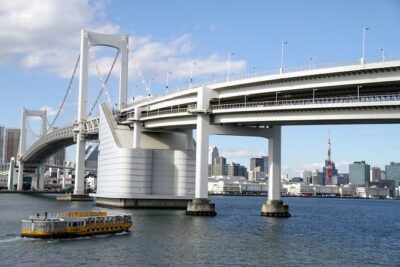
Shinjuku Food Tour (13 Dishes at 4 Local Eateries)
Read our review →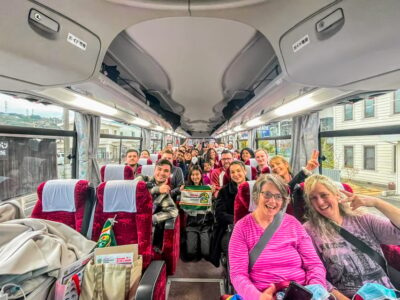
Tokyo Mt Fuji 5th St & Hakone Cruise Bus Tour w/Bullet Train
Read our review →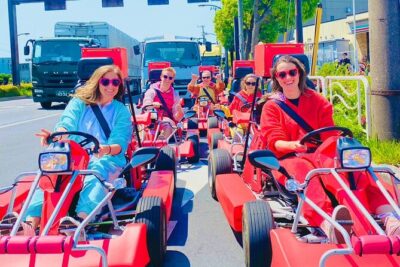
Flagship 2-Hours Official Street Go-Kart Tour – Tokyo Bay Shop
Read our review →
Mt. Fuji Tour, Hakone Ropeway, Owakudani, Lake Ashi
Read our review →
Tokyo 6hr Private Tour with Government-Licensed Guide
Read our review →