
Reviewed · TOKYO GO-KART TOURS
Shibuya: Tokyo Street Go-Kart Tour by Shibuya Annex
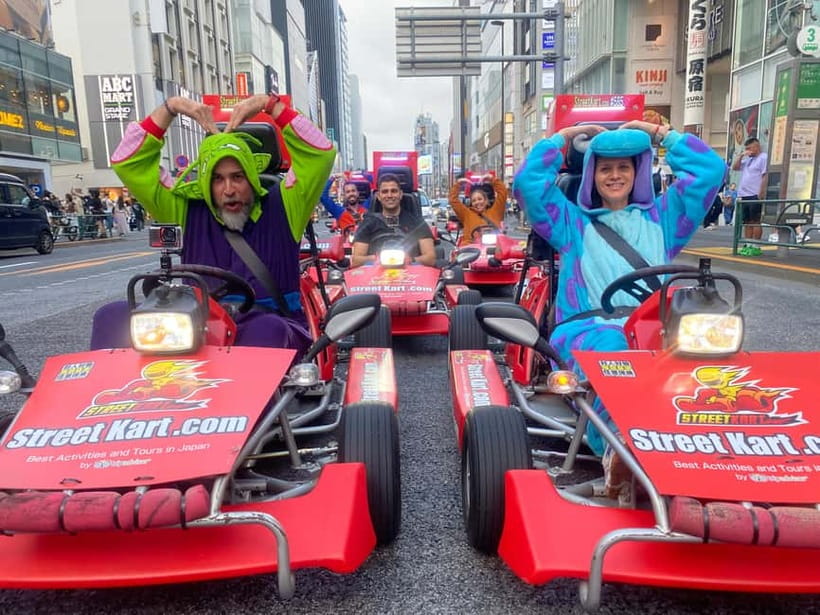
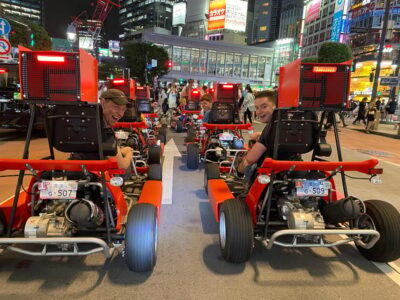
Driving a go-kart through Shibuya Crossing is about as close as Tokyo gets to turning a famous movie scene into your own moving postcard. You cross several times from different directions, then follow your guide toward Harajuku and Omotesando in a small convoy.
I like the clear road briefing and the personal guidance from the lead kart. I also like that the guide takes photos throughout the ride and gives you the image data afterward. The main catch is simple but serious: you need the correct Japanese driving documents, and this is real street driving, not a closed amusement-park track.
Key points to know before booking
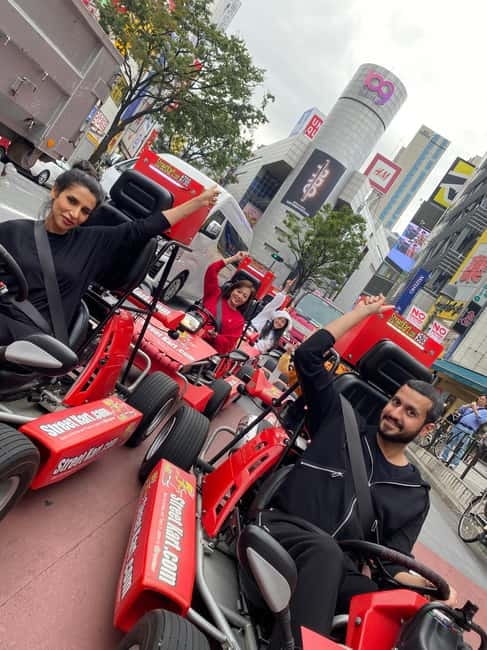
- Shibuya Crossing is the main event: You drive across it multiple times from different directions.
- The route includes Harajuku and Omotesando: You get a quick look at two of Tokyo’s best-known fashion areas.
- Guides take the safety role seriously: Stanley, Tomas, and Cole have been praised for clear instructions, friendly help, and careful driving leadership.
- The group is limited to six people: That keeps the convoy small and makes direct instructions easier.
- Costumes and accessories are included: A playful outfit adds to the spectacle, though it is optional.
- Your physical documents matter: Most drivers need a booklet-format International Driving Permit issued under the 1949 Geneva Convention, plus a physical passport.
Shibuya Crossing from behind the wheel
Most people know Shibuya Crossing as a place to watch from above or cross on foot. This experience changes the angle completely. You sit low in a custom-made legal go-kart, wait for the traffic signal, and then drive into one of Tokyo’s most photographed intersections.
The crossing is not a one-time pass-by. The route takes you through it multiple times from different directions, which gives you several chances to enjoy the moment and attract attention. That repeated circuit is useful because the first crossing may pass quickly in a blur of traffic, signs, buildings, and people.
You should expect plenty of eyes on you. The included costumes and accessories are designed to make the scene more playful, and a person in a bright outfit driving a go-kart through Shibuya is hard to miss. If you prefer to blend into Tokyo’s crowd, this is not the activity for you. If you want a memorable photo and do not mind being watched, it delivers a very different view of the city.
The important point is that you are driving on public roads. You must follow the guide, observe Japanese road rules, and stay with the group. The briefing video explains the regulations and kart operation before you set off, followed by direct instructions from the guide. That preparation is one of the strongest parts of the experience because it gives you a chance to understand the vehicle before entering a busy district.
More things to do in Shibuya:
- Official Street Go-Kart in Shibuya
★ 5.0 · 3,435 reviews - Tokyo: Street Kart Experience in Shibuya
★ 4.9 · 1,484 reviews - Shibuya Meltdown Nightlife Tour: All-You-Can-Drink Bar Hopping
★ 5.0 · 1,058 reviews
Harajuku and Omotesando after the crossing
Once the Shibuya portion is complete, the route heads toward Harajuku and Omotesando. These districts are known as Tokyo fashion centers, so the ride adds more than a single famous intersection to your hour.
Harajuku brings a youthful, colorful side of Tokyo, while Omotesando is associated with polished shops, modern architecture, and a more refined style. From a go-kart, you will not stop for shopping or sightseeing, so treat this section as a moving city tour rather than a substitute for walking either neighborhood.
That distinction matters. You get a quick visual introduction to the streets and commercial character of these areas, but the pace and road rules limit how much detail you can absorb. If you want to explore Harajuku’s shops or study Omotesando’s buildings, return later on foot. The kart ride gives you a lively first look and a sense of how the districts connect.
The route also gives the hour some variety. Shibuya provides the headline moment, while Harajuku and Omotesando keep the ride from feeling like a single-intersection photo stop. You spend the full hour moving through central Tokyo rather than waiting around for one brief crossing.
Why the guide matters on city streets
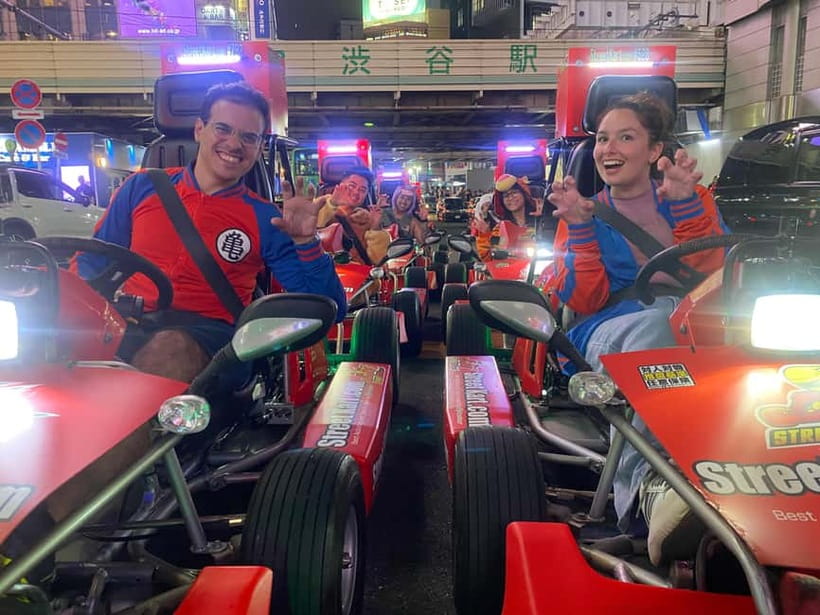
The guide is not just there to point out landmarks. The guide rides on a kart, leads the group, explains road procedures, and watches the convoy during the activity. That role is especially important for anyone who has never driven in Japan.
The experience includes an English-speaking guide, a briefing video, private instructions, and full support with the required document information. The small-group limit of six participants is another practical benefit. A guide can give clearer directions to six drivers than to a large crowd, and you have a better chance of hearing or seeing what to do at intersections.
The named guides connected with positive feedback include Stanley, Tomas, and Cole. Stanley was noted for explaining everything clearly and keeping the ride safe. Tomas was helpful and took many photos, while Cole received praise for leading an enjoyable outing. Guide assignments can change, so book this for the format and service rather than expecting a specific person.
Safety is the area where you should keep a sensible attitude. The activity provider describes the guides as professionally trained, and the instructions are designed to prepare you for the road. Still, you are operating a vehicle in central Tokyo. Follow the leader, keep your attention on traffic, and do not let the costume or the excitement distract you.
Photos, costumes, and the social side
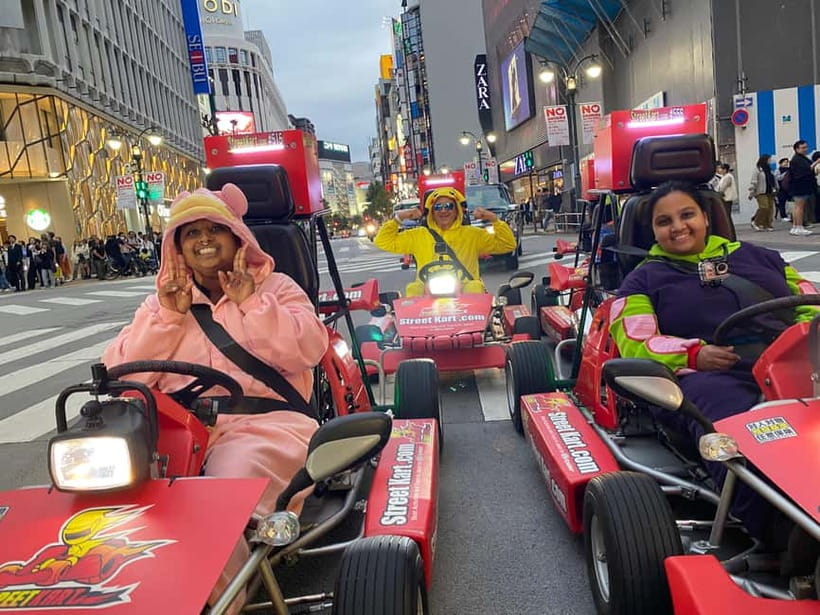
The guide takes as many photos as possible during the ride and provides the data at the end. That is a useful inclusion because you cannot safely take your own photos while driving. It also means you can enjoy the crossing instead of trying to hold a phone or camera.
The photo coverage is one of the better values in the package. You receive the custom kart, gasoline, guide, costume or accessory rental, and the guide’s photo data without paying an additional photography fee. The images will depend on the route, timing, traffic, and what the guide can safely capture, so do not treat them as a formal professional photo session. Think of them as a record of a very unusual hour in Tokyo.
Costumes are included at no extra charge. A onesie or another playful outfit can make the photos more memorable, and one participant specifically recommended wearing one. You can choose how far to take the theme. The costume is part of the fun, not a requirement for enjoying the ride.
You can join alone and meet people from different countries, or arrive with your own group. Since the maximum is six participants, the social side stays fairly contained. It is a good fit for friends, couples, or families with adult children who enjoy a shared spectacle and do not mind being the center of attention.
More Tokyo go-kart tours:
- Flagship 2-Hours Official Street Go-Kart Tour – Tokyo Bay Shop
★ 5.0 · 4,974 reviews - Official Street Go-Kart Tour – Akihabara
★ 5.0 · 1,578 reviews - Tokyo Go Kart: Asakusa, Skytree, and Akihabara **IDP MUST**
★ 5.0 · 988 reviews - Shibuya Official Street Go-Kart in Shibuya Annex
★ 5.0 · 972 reviews
What the one-hour schedule feels like
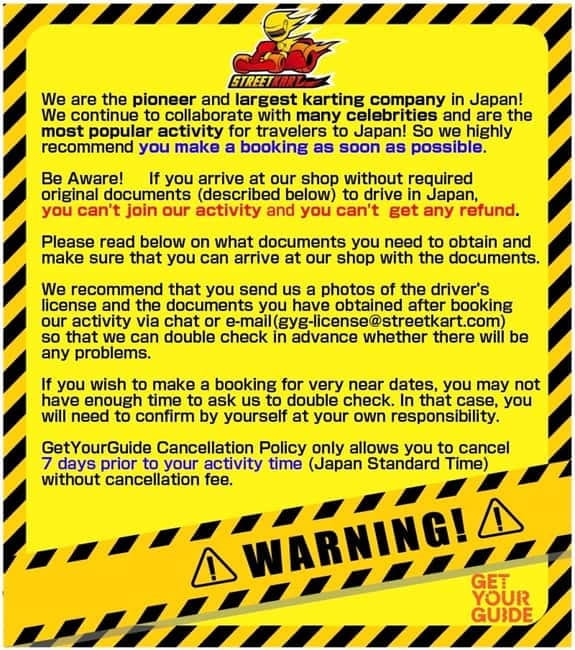
The advertised duration is one hour, so this is an easy activity to fit into a busy Tokyo day. The hour includes preparation and the road route, which means the actual driving time is not unlimited. That is normal for a public-road experience. You need time for check-in, the safety video, kart instructions, document checks, and group organization.
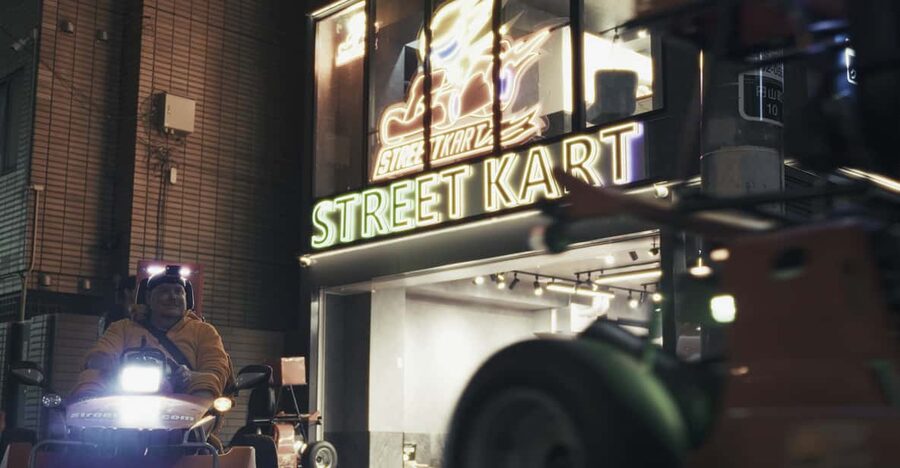
At the meeting point, look for the large logo in the second-floor window. The brand name Street Kart appears beneath it in neon lights. Use the stairs or elevator to reach the second floor for check-in.
Before leaving, you receive the road-regulation video and operating instructions. The guide then gives direct support and leads the group. After the route through Shibuya, Harajuku, and Omotesando, the guide shares the photos taken during the ride.
Starting times vary, so you need to check availability for your date. The operator sends necessary information by email within 24 hours of booking. Read that message carefully, especially the instructions about driving documents, clothing, and arrival details.
The driving documents are not a minor detail
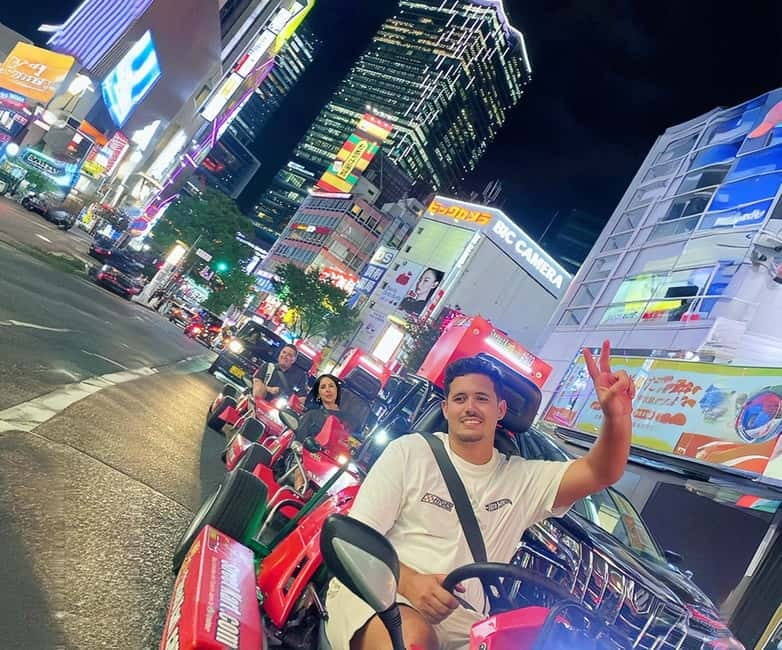
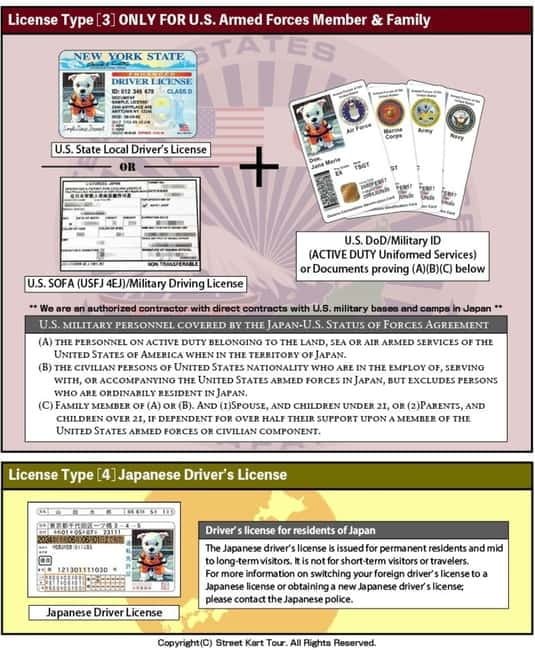
This is the most important booking issue. Every participant who drives must obtain the special documents required to drive in Japan. For most countries, that means a physical International Driving Permit in booklet format, issued under the 1949 Geneva Convention.
The permit must be issued by the same country that issued your domestic driving license. You cannot obtain a valid permit online while already traveling in Japan. Bring the physical permit and your physical passport.
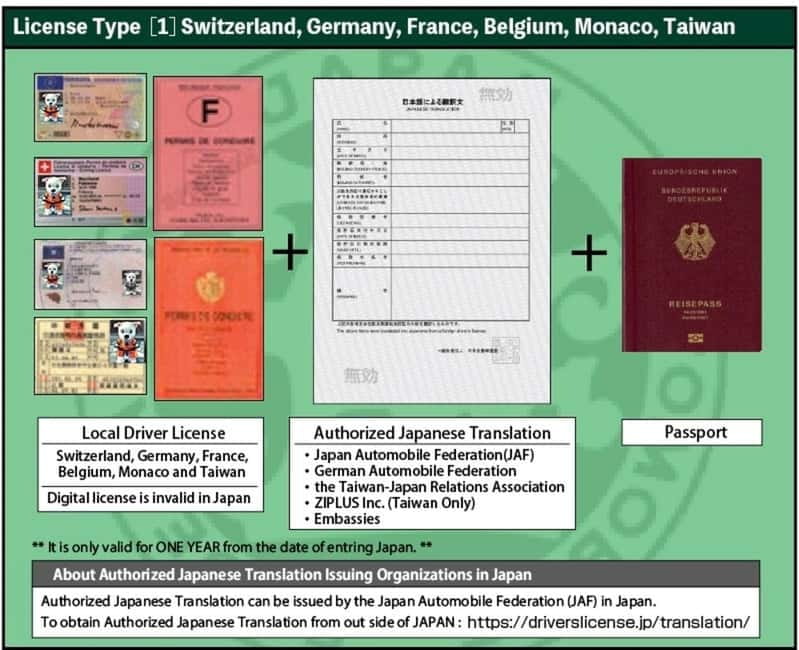
Drivers from Switzerland, Germany, France, Taiwan, Belgium, and Monaco follow a different process. They need their physical domestic license plus an official Japanese translation from the Japan Automobile Federation, commonly called JAF. They do not use an International Driving Permit for this activity.
Licenses from countries not covered by the 1949 Geneva Convention, including China, Indonesia, Mexico, Qatar, and Saudi Arabia, are not permitted for driving in Japan under the stated rules. If you are unsure, confirm your eligibility before paying for the experience. A missing document can stop you from driving, and this is not something to sort out at the meeting point.
You also need to be at least 18 and hold a valid driving license. Bring the original physical documents, not phone images or copies. This single check is more important than choosing a costume or planning your photos.
Clothing, health, and comfort
Wear practical shoes. High heels, sandals, flip-flops, and bare feet are not allowed. Closed, secure footwear is the sensible choice even though the exact shoe type is not otherwise specified.
The activity is not suitable for pregnant people, anyone with back, heart, respiratory, or mobility problems, or anyone with epilepsy, a recent surgery, or a low level of fitness. It is also not suitable for wheelchair users, visually impaired or hearing-impaired participants, children under 18, or anyone without a driver’s license.
Alcohol and drugs are prohibited. You need to be alert from the briefing through the final return because you are driving on public streets.
The kart itself may look playful, but the physical position and road setting still matter. If sitting low, operating controls, or staying focused in traffic could be uncomfortable for you, choose a different Tokyo activity. The provider’s restrictions are broad, so take them seriously rather than treating them as routine fine print.
Is $67 a fair price for one hour?
At $67 per person, the price is reasonable if you value the unusual access and included extras. You are paying for a custom-made legal kart, gasoline, an English-speaking road guide, safety instruction, costume or accessory rental, and the guide’s photo data.
You are not paying for a long sightseeing tour or a full day of Tokyo landmarks. One hour is short, and the route is focused on Shibuya, Harajuku, and Omotesando. The value comes from the experience itself: driving through a famous crossing and receiving photos that would be difficult to create safely on your own.
The small group also helps justify the cost. With up to six participants, the guide can offer direct instructions and keep the convoy manageable. A larger group might reduce the personal attention that matters most on city streets.
Extra charges may apply if you want to rent an action camera, buy a micro-SD card, or rent a camera mount. Those items are not included, so you can keep the base price down by relying on the guide’s photos.
The flexible booking terms add some practical value. You can reserve now and pay later, and cancellation is free up to 24 hours in advance for a full refund. Check the exact booking conditions for your reservation, but this option is useful when Tokyo plans are still shifting.
Who should book this Shibuya experience?
I would recommend it most strongly to adults who want a playful, highly visual Tokyo memory and are comfortable driving in an unfamiliar city. It suits friends, couples, solo participants who enjoy meeting people, and families traveling with adult children.
It is also a good choice if you have already seen Shibuya Crossing from the sidewalk or observation area and want a different perspective. The costume, convoy, and guide photos make it more than a standard walking stop.
I would not choose it for a quiet introduction to Tokyo. You are exposed, watched, and moving through traffic. It is also a poor fit if you want time to browse shops, stop at cafés, or study the neighborhoods in detail.
The best approach is to think of the ride as a short urban spectacle with a guided safety structure. It is not a replacement for exploring Shibuya, Harajuku, or Omotesando on foot. It is a memorable extra that lets you see those districts from the road.
Should you book the Shibuya Street Go-Kart Tour?
Book it if the idea of crossing Shibuya in a legal go-kart makes you smile, you have the correct physical driving documents, and you are comfortable being noticed. The clearest strengths are the repeated crossing route, direct guide support, small group, free costumes, and included photo data.
Skip it if you lack the proper permit or translation, dislike public-road driving, need a fully accessible activity, or prefer a slower cultural tour. For the right person, $67 buys a compact but unusual Tokyo memory, with the guides and photos doing much of the practical work.
FAQ
How long does the Shibuya go-kart tour last?
The activity lasts one hour. Check availability for the available starting times on your chosen date.
How many people can join the group?
The experience is limited to six participants, making it a small-group activity.
Is the guide available in English?
Yes. The tour includes an English-speaking live guide who leads the karts and gives road and operating instructions.
Do I need an International Driving Permit?
Most participants need a physical, booklet-format International Driving Permit issued under the 1949 Geneva Convention. It must come from the same country that issued your domestic driving license, and you must also carry your physical passport.
What documents do drivers from Germany, France, Switzerland, Taiwan, Belgium, or Monaco need?
Drivers from those countries need their physical domestic license and an official Japanese translation from the Japan Automobile Federation. They do not use an International Driving Permit for this activity.
Are costumes and photos included?
Yes. Free costume or accessory rental is included, and the guide provides the data from the photos taken during the ride.
What clothing is not allowed?
High heels, sandals, flip-flops, and bare feet are not allowed. Alcohol and drugs are also prohibited.
Newly reviewed around Tokyo
- Tokyo Asakusa:Calligraphy & Make T-shirt Activity★ 5.0 · 62 reviews
- Intercity Shuttle, Tokyo to Haneda /Narita /Yokohama /Makuhari★ 5.0 · 5 reviews
- 1 Hour Travel around Tokyo with a Professional Photographer★ 5.0 · 3 reviews
- Travel Tokyo with Your Own Personal Photographer★ 5.0 · 43 reviews
- Train in Samurai Swordsmanship and Defeat the Demon in Tokyo★ 5.0 · 5 reviews
- Shuttle Van 6hr Tokyo Tour to-and-from Tokyo, Yokohama and Narita★ 5.0 · 9 reviews
- Kickboxing & Body Training with EX-Pro Fighter★ 5.0 · 4 reviews
- Tokyo History: Sensoji Temple & Asakusa District Private Tour★ 5.0 · 28 reviews
Tokyo Go-Kart Tours, compared.
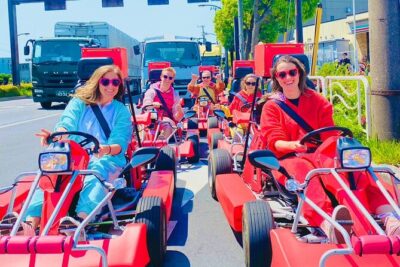
Flagship 2-Hours Official Street Go-Kart Tour – Tokyo Bay Shop
Read our review →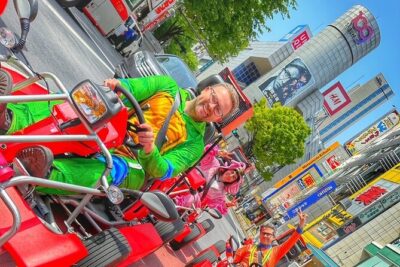
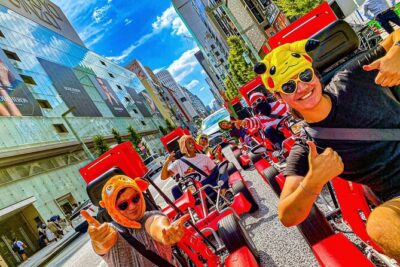
Tokyo Go Kart: Asakusa, Skytree, and Akihabara **IDP MUST**
Read our review →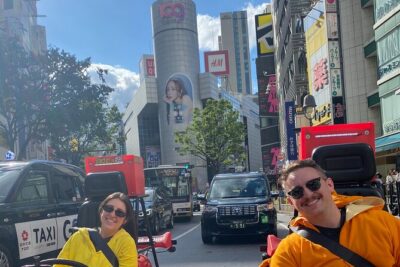
Shibuya Official Street Go-Kart in Shibuya Annex
Read our review →
Asakusa, Skytree & Akhihabara Go-Kart City Experience
Read our review →
Premium Go-Kart Tour with Tower & Shibuya Crossing
Read our review →Browse the lists this tour appears in