
Reviewed · TOKYO SPORTS GAMES AND TICKETS
Horse Racing Tour with Local Fans in Tokyo Racecourse
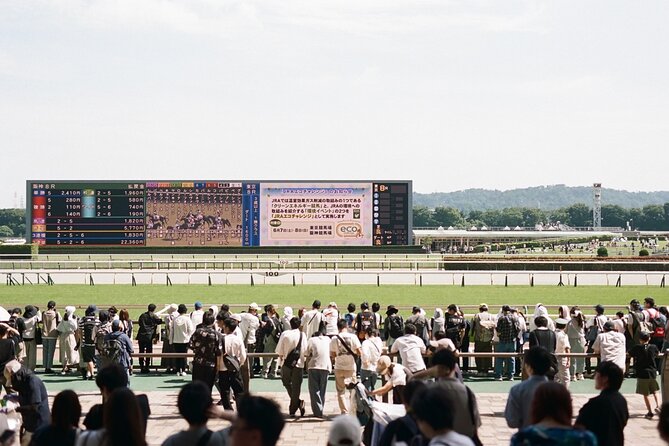
Tokyo Racecourse gives you a close look at a lively Japanese pastime, not just a seat in the grandstand. Your guide explains the rules in plain English, helps you place bets, and takes you into the race-day mood with local fans. Watching the horses in the paddock and seeing the crowd react to each race are two of the strongest parts.
I like the easy train ride from Shibuya and the chance to taste sake, cocktails, and Japanese street food while the races unfold. I also like that the guide helps beginners handle the betting process instead of leaving you to decode Japanese signs alone. The main catch is that food, drinks, transportation, and bets cost extra, so the $100 price is only the starting point.
Key points to know before booking
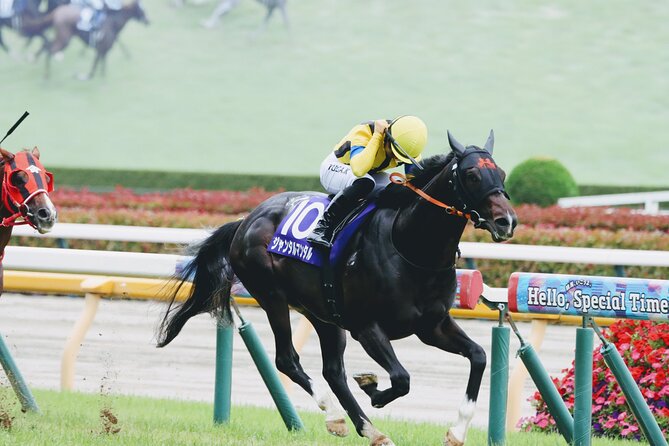
- Four hours at Tokyo Racecourse: The afternoon gives you time for several live races without taking over your entire day.
- A guide handles the racing basics: You receive a simple introduction before learning how to place bets.
- Paddock access adds atmosphere: You may watch the horses before a race, a more personal moment than simply seeing them run.
- Sake and Japanese food are available: Premium drinks and street food are part of the setting, but you pay for them separately.
- A small group keeps things manageable: The maximum group size is 12 people.
- Bring Japanese yen: Betting generally requires cash, and the betting money is not included.
From Shibuya to Tokyo Racecourse by train
The meeting point is SHIBU HACHI BOX at 2-chōme-1-1 Dōgenzaka in Shibuya. From there, you travel with the guide by train to Tokyo Racecourse, so the trip begins with local transportation rather than a private vehicle or a rushed arrival at the gate.
I like this start because the train ride gives you time to ask questions before the action begins. If Japanese horse racing is new to you, that early conversation matters. You can explain what you already know, admit that you have never placed a bet, or simply ask what to watch for.
Public transportation costs ¥320 per person and is not included in the tour price. The meeting point is near public transportation, but you should still arrive ready to walk and transfer as needed. The activity ends back at the original meeting point, which makes the return simple, though it also means you should allow time for the trip back before booking another timed activity.
The outing lasts about four hours and finishes around 4:00 PM. Exact race schedules can affect how the afternoon feels, but you should expect a compact visit with several races rather than an all-day race meet.
More Tokyo sports games and tickets:
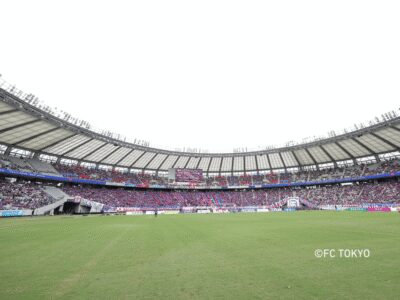
- Tokyo: FC TOKYO Football Game at Ajinomoto Stadium
★ 4.8 · 58 reviews - Catch a Baseball Game in Tokyo with a Local – Tickets Included
★ 5.0 · 24 reviews - Tokyo: Alvark Tokyo Basketball Game Ticket
★ 4.5 · 18 reviews
A plain-English introduction to Japanese horse racing
At the racecourse, the guide gives you a basic explanation of Japanese horse racing. The point is not to turn you into an expert in one afternoon. It is to make the signs, race cards, betting choices, and pre-race routine less intimidating.
This is especially useful if you do not speak Japanese. Racing has its own vocabulary anywhere, and in Tokyo you also face unfamiliar characters and betting procedures. A guide who explains the process in simple terms lets you focus on the horses and the crowd instead of worrying about making a basic mistake.
The guide also provides race predictions. Treat these as part of the fun, not as a promise of profit. Horse racing always involves chance, and the cost of betting comes from your own pocket. I would decide in advance how much money you are comfortable losing, then bring only that amount in yen.
You do not need to be a serious racing fan to enjoy this portion. The lesson gives structure to the day. You learn what happens before a race, how fans choose a horse, and how the betting process fits into the event.
Seeing the horses in the paddock
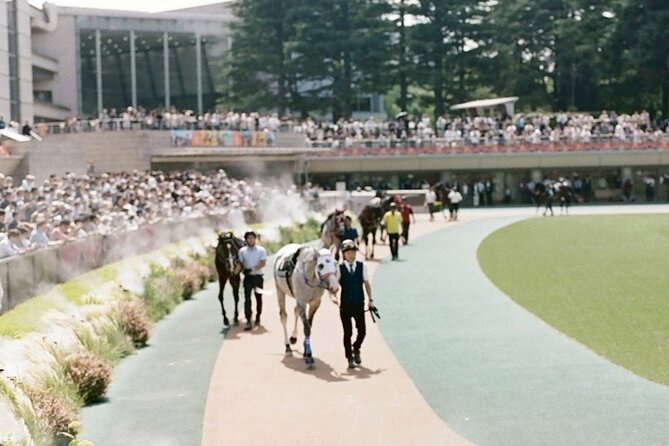
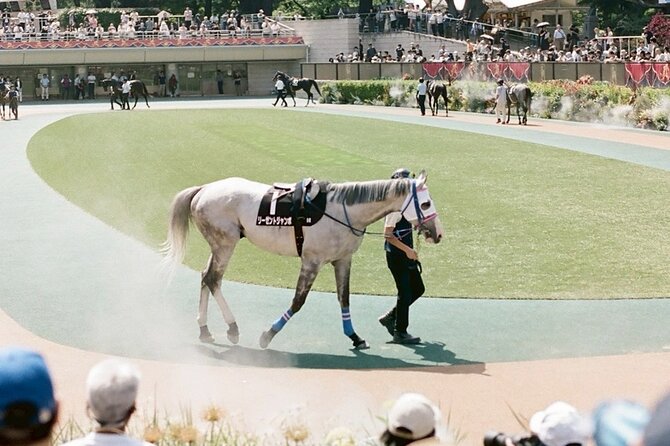
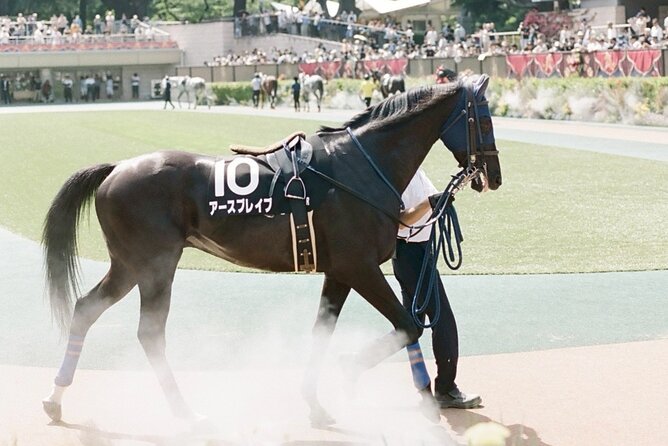
One of the most appealing details of the experience is the chance to watch horses in the paddock. This is where you can see them before the race, when they are being presented to the crowd and assessed by fans.
That moment feels different from watching a race at full speed. You have time to notice the horses and follow the guide’s explanation before the noise rises. For a first-time visitor, the paddock can make the sport easier to understand because you are seeing the preparation, not just the final burst toward the finish.
Access and timing can depend on the racecourse schedule and the day’s arrangements, so you should not assume every part of the visit follows the same pattern. Still, the paddock is an important reason this is more than a basic ticket-and-seat outing.
The tour can also include time to look around the racecourse and visit the gift shop. One particularly accommodating outing included help at the paddock, betting assistance, a gift shop stop, and an escort back to a hotel. That level of personal help is encouraging, but hotel escort service is not listed as a standard feature, so you should not count on it unless arranged directly.
Live races and the sound of local fans
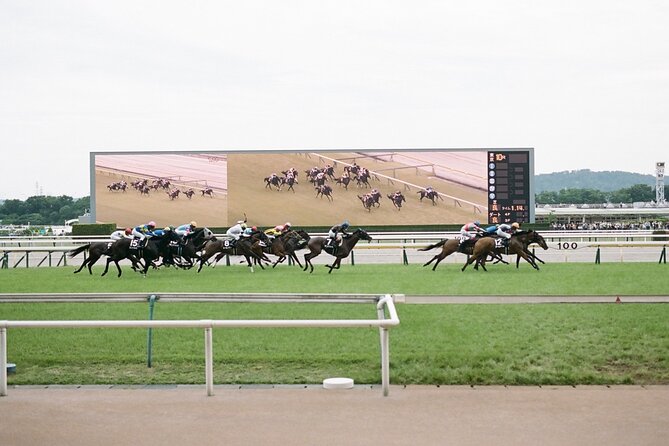
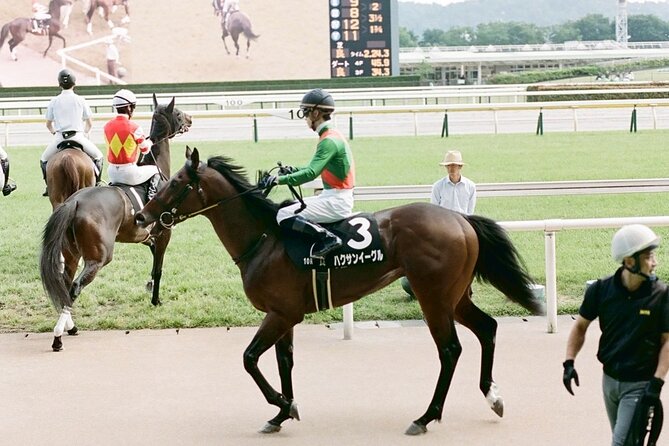
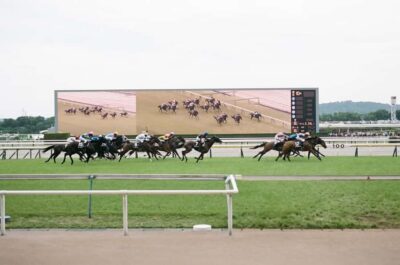
The races are the center of the day. You watch horses charge around the course while fans cheer for their chosen runners. The energy comes from the crowd as much as from the race itself.
This is a good setting for people who want to see how a Japanese audience enjoys a sporting event. You are not placed in a quiet museum-style tour. Fans react strongly, bets create personal stakes, and each race brings a fresh round of predictions and cheers.
I like that the tour leaves room to walk around. You are not expected to sit in one place for four hours. Between races, you can explore the grounds, talk with the guide, check the betting options, and take in the crowd.
The small group size helps here. With no more than 12 people, the guide has a better chance of answering individual questions and keeping beginners together. It is still a public racecourse, not a private event, so the setting may feel busy and noisy. That is part of the appeal, but people seeking a quiet afternoon should think carefully before booking.
More Horses in Tokyo:
- Tokyo: Horse Racing Tour with Local Fan
★ 5.0 · 14 reviews - Horse Racing Tour with Local Fans in Tokyo, Oi Racecourse
★ 5.0 · 5 reviews
How betting works, and what your money covers
The guide shows you how to place bets, from the first step to the final choice. You can take part as a complete beginner, and the guidance can also help if you already know basic racing but have never used a Japanese betting system.
Your bet is not included in the tour price. Bring Japanese yen in cash because betting typically requires it. The listing specifically gives no betting allowance, so the $100 fee pays for the guide rather than your wagers.
This separation is useful because you control your own spending. You can bet a small amount, watch without betting, or make several modest wagers across the afternoon. The guide’s predictions may make the choices more entertaining, but you should not read them as guaranteed advice.
The best approach is to set a firm budget before you leave Shibuya. If you want to place several bets, buy food, and order drinks, the total will rise quickly. If you only want to watch the races and learn the system, you can keep your extra spending lower.
Sake, cocktails, and Japanese street food
The racecourse visit includes opportunities to enjoy premium drinks such as sake and cocktails, along with Japanese street food. These details help make the outing feel social. You can talk through the next race while eating, compare predictions, and enjoy a taste of the local race-day routine.
Food and alcohol are not included in the $100 price. That matters when comparing this tour with a standard sightseeing ticket. The guide fee gives you instruction and company, while your purchases depend on what you choose.
I would think of the food and drinks as optional additions rather than guaranteed dining. The description promises access to gourmet Japanese street food and premium drinks, but it does not specify a fixed menu, tasting amount, or number of drinks. If you have strict dietary needs, ask the provider before booking because no special menu information is provided.
Alcohol can also affect how much you enjoy the betting. A drink or two may fit the mood, but the guide’s explanation and the race action are easier to follow if you keep your spending and drinking under control.
Is $100 a fair price for four hours?
At $100 per person, this is not the cheapest way to enter a racecourse. The value comes from the personal help, the guided train journey, the racing explanation, the betting instructions, and the chance to experience the event with someone who knows how it works.
If you already understand Japanese betting and can comfortably manage the racecourse alone, you may find the guide fee harder to justify. You would still need to pay for transport, food, drinks, and wagers, but you could avoid the tour cost.
For a first visit, I think the price makes more sense. You are paying to skip the confusion that often comes with a foreign sporting venue. The guide can explain what you are seeing, give predictions, and help you take part rather than simply watch from the edge.
The maximum of 12 people is another value point. This is not a private tour, but it is small enough to feel more personal than a large bus group. The experience earns its price when you want instruction and conversation, not just admission.
Who will enjoy this race-day outing?
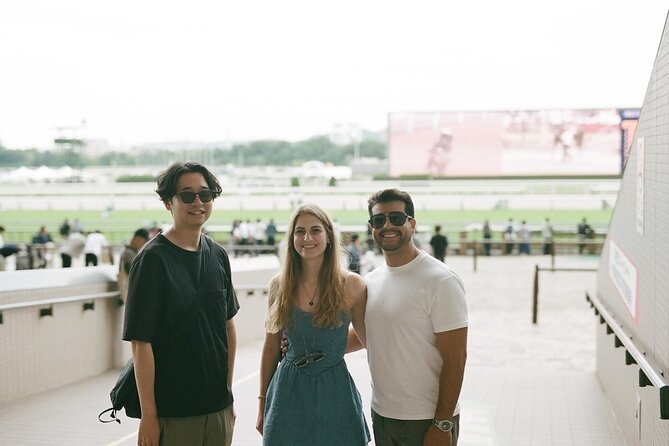
This tour suits you if you want an activity that feels distinctly local and social. It is a good match for first-time racegoers, visitors who do not speak Japanese, and anyone curious about how betting fits into Japanese entertainment.
It also works for mixed groups. One person can be interested in horses, another in Japanese food, and another in the crowd atmosphere. The guide’s explanations give everyone a way into the experience.
The tour may be less suitable if you dislike gambling, crowds, or alcoholic drinks. You can watch without betting, but betting is a major part of the afternoon. It may also disappoint you if you expect a private viewing area, included meals, or a fixed number of drinks. None of those are listed as included.
You should have a moderate level of physical fitness. The plan includes train travel and walking around the racecourse, so comfortable shoes are sensible. Service animals are allowed, and the activity is near public transportation.
The human side of the tour
The strongest personal detail is the guide’s friendly, accommodating manner. The guide did more than explain betting. Conversation continued on the train and at the racecourse, and the outing could include practical help with the paddock, gift shop, and onward arrangements.
That friendly tone matters because racing can feel confusing when you are new to it. A guide who answers basic questions without making you feel foolish can change the entire afternoon.
The conversations can also go beyond horses. One outing included an entertaining discussion about Jim Lee, the comic creator, and the guide’s surprise at how widely Batman and X-Men are known in Japan. That kind of exchange gives the tour a personal edge. You are not simply following a script about odds and race cards.
No guide name is provided, so you should not book expecting a particular individual. The important point is the direct, conversational format and the effort made to help people feel comfortable.
Booking details and cancellation
Confirmation is provided when you book. The experience has free cancellation if you cancel at least 24 hours before the local start time. Cancellations made less than 24 hours before the start are not refunded, and changes inside that window are not accepted.
The activity normally sells around 37 days before the date, which suggests you should plan ahead if your Tokyo schedule is tight. A maximum of 12 people keeps the group limited, but availability can still vary.
Bring Japanese yen for betting and ¥320 for public transportation. Plan separately for any food or alcohol you want. Your mobile ticket should be ready for the meeting, and you should allow enough time to reach SHIBU HACHI BOX before the group leaves for the station.
Should you book this Tokyo Racecourse tour?
Book it if you want a friendly introduction to Japanese horse racing, value help with betting, and like the idea of spending an afternoon with local fans. The paddock, race predictions, train ride, and casual food-and-drink setting give the outing more character than a simple racecourse visit.
Skip it if you want a low-cost admission ticket, a quiet sightseeing stop, or a package with food, drinks, and betting included. You should also set a clear gambling budget before you go.
For a first-time racegoer, especially one who does not speak Japanese, I think this is a strong choice. You receive the context needed to enjoy the races, while still having room to make the afternoon your own.
FAQ
Where does the tour start?
It starts at SHIBU HACHI BOX, 2-chōme-1-1 Dōgenzaka, Shibuya, Tokyo 150-0043, Japan.
Where does the tour end?
The activity ends back at the original meeting point in Shibuya.
How long does the experience last?
It lasts approximately four hours and concludes around 4:00 PM.
How do I get to Tokyo Racecourse?
You travel by train with the guide from the Shibuya meeting point. Public transportation costs ¥320 per person and is not included.
Is the tour suitable for people who do not speak Japanese?
Yes. The guide explains Japanese horse racing and the betting process in an easy-to-understand way for people who do not speak Japanese.
Is betting included in the price?
No. The cost of betting is separate. Bring Japanese yen in cash because betting typically requires it.
Are food and drinks included?
No. Food and alcoholic beverages are not included. The experience offers opportunities to enjoy Japanese street food, sake, and cocktails, which you pay for separately.
How many people can join the tour?
The maximum group size is 12 people.
Can I cancel for a full refund?
Yes, if you cancel at least 24 hours before the experience start time. Cancellations made less than 24 hours before the start are not refunded, and late changes are not accepted.
Newly reviewed around Tokyo
- Tokyo Asakusa:Calligraphy & Make T-shirt Activity★ 5.0 · 62 reviews
- Intercity Shuttle, Tokyo to Haneda /Narita /Yokohama /Makuhari★ 5.0 · 5 reviews
- 1 Hour Travel around Tokyo with a Professional Photographer★ 5.0 · 3 reviews
- Travel Tokyo with Your Own Personal Photographer★ 5.0 · 43 reviews
- Kickboxing & Body Training with EX-Pro Fighter★ 5.0 · 4 reviews
- Train in Samurai Swordsmanship and Defeat the Demon in Tokyo★ 5.0 · 5 reviews
- Shuttle Van 6hr Tokyo Tour to-and-from Tokyo, Yokohama and Narita★ 5.0 · 9 reviews
- Traditional Japanese Knife Sharpening Class★ 5.0 · 18 reviews
Tokyo Sports Games and Tickets, compared.
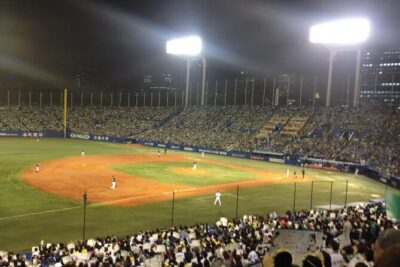
Catch a Baseball Game in Tokyo with a Local – Tickets Included
Read our review →
Tokyo Baseball Experience Tour with Expert English-Speaking Guide
Read our review →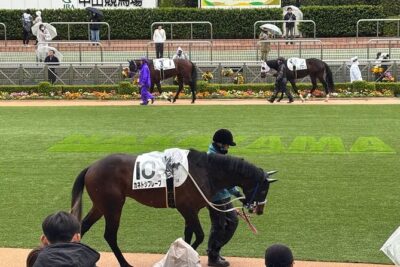
Horse Racing Tour with Local Fans in Tokyo, Oi Racecourse
Read our review →Browse the lists this tour appears in