
Reviewed · KAMAKURA DAY TRIPS FROM TOKYO
Kamakura Temples Private Guided Tour from Tokyo
Kamakura’s best sights fit neatly into one day: Hase Temple, the 13-meter Great Buddha, and Tsurugaoka Hachimangu Shrine. This private tour takes you from Tokyo by train, then links the main sights on foot with an English-speaking licensed guide who can explain the symbols, stories, and customs that are easy to miss.
I like the efficient route and the private format. You get time for Hase Temple’s gardens and Kannon statue, a close look at Kotokuin’s famous Buddha, and lunch and shopping on Komachi Street. I also like that experienced guides such as Mizuma-san, Steve, and Take have used maps and pictures to make Kamakura’s past easier to follow. The catch is value: at $145 per person, you still pay train fares, temple admissions, lunch, and drinks separately.
Key points to know before booking
- Three major Kamakura sights in one day: Visit Hase Temple, Kotokuin’s Great Buddha, and Tsurugaoka Hachimangu Shrine without arranging the route yourself.
- A private English-speaking guide: The tour is for your group, with a National Government Licensed Guide Interpreter.
- Train travel from Tokyo: Allow roughly 70 minutes each way, plus walking and local train travel between sights.
- A useful 3 to 4 kilometers on foot: Comfortable shoes matter, especially around temple grounds and station areas.
- Extra costs add up: Budget for about 2,000 yen in transport, 700 yen for the two listed admissions, and your lunch and drinks.
- Best for cultural context: The tour suits you if you want explanations and local orientation, not just a ride to photo stops.
Why Kamakura makes a strong day trip from Tokyo
Kamakura gives you a very different day from central Tokyo. Instead of tall buildings and packed commercial streets, you move between temple gardens, a major Shinto shrine, old religious monuments, and a traditional shopping street.
The appeal is not just the number of sights. The three main stops show different sides of Japanese religious life. Hase Temple presents Buddhist art and quiet garden spaces. Kotokuin gives you Japan’s famous outdoor Great Buddha. Tsurugaoka Hachimangu shows the importance of Shinto worship in the center of Kamakura.
You travel by train from Tokyo, with the ride taking about 70 minutes in the published route details. The main description also describes the journey as about one hour, so expect roughly an hour to 70 minutes each way. That is a fair amount of transit for an eight-hour day, but it is far less complicated than planning several connections on your own.
Pickup and drop-off are on foot. Your guide can meet you at your hotel if you provide the hotel details when booking, or you can use one of the listed meeting areas, including Tokyo Station and Shinjuku Station. You should not expect a private vehicle.
More Kamakura day trips from Tokyo:
- Tokyo: Mt. Fuji, Kamakura, Big Buddha, & Lake Ashi Day Trip
★ 4.5 · 867 reviews - Tokyo:Sea of Mount Fuji, Hakone Ropeway, Ōwakudani, Enoshima
★ 4.9 · 84 reviews - Kamakura 8 hr Private Walking Tour with Licensed Guide from Tokyo
★ 5.0 · 80 reviews
Hase Temple and its eleven-faced Kannon
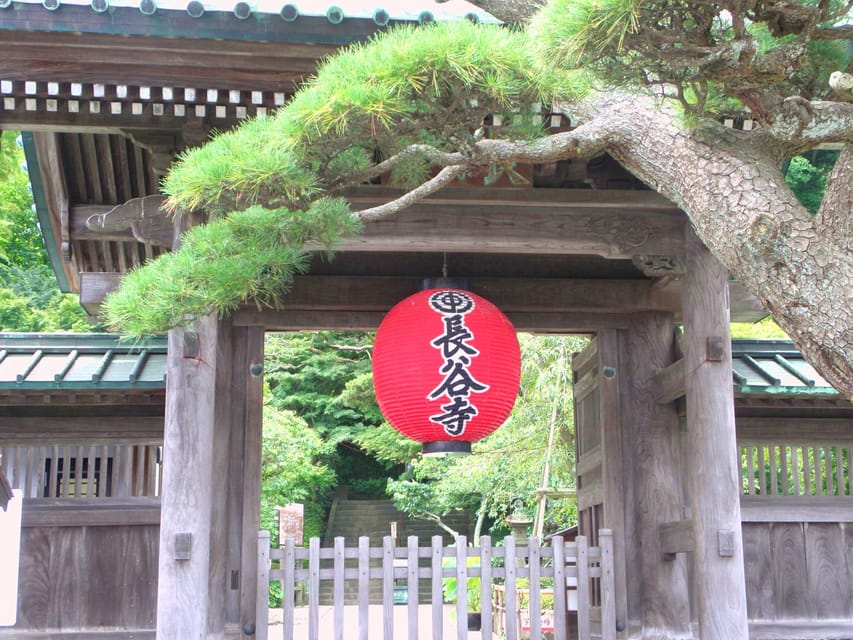
Hase Temple, also called Hase-dera, is the first major stop. The temple is known as the Temple of Flowers, and the visit combines an important Buddhist image with outdoor spaces that give you a quieter start to the day.
Inside Hase Kannon, you see the statue of Kannon, the Goddess of Mercy. The figure is described as eleven-faced, with the faces representing different stages in the search for enlightenment. This is exactly the kind of detail that can pass you by if you simply walk through, take a picture, and move on.
The tour allows about 30 minutes here according to the planned route. That is enough for a guided introduction and a look around, but it is not a long, slow temple visit. If gardens are your main interest, keep your pace steady and listen carefully as the guide points out the key areas.
Outside, the gardens add variety to the stop. You also visit Jizo-do Hall, where hundreds of small Jizo Bodhisattva statues are gathered. Jizo is associated with protection, and the repeated small figures create a very different impression from the large Kannon image inside the temple.
Admission to Hase Temple is 400 yen per person. That fee is not included in the tour price. The site includes stairs and walking, so comfortable shoes are more useful here than stylish ones.
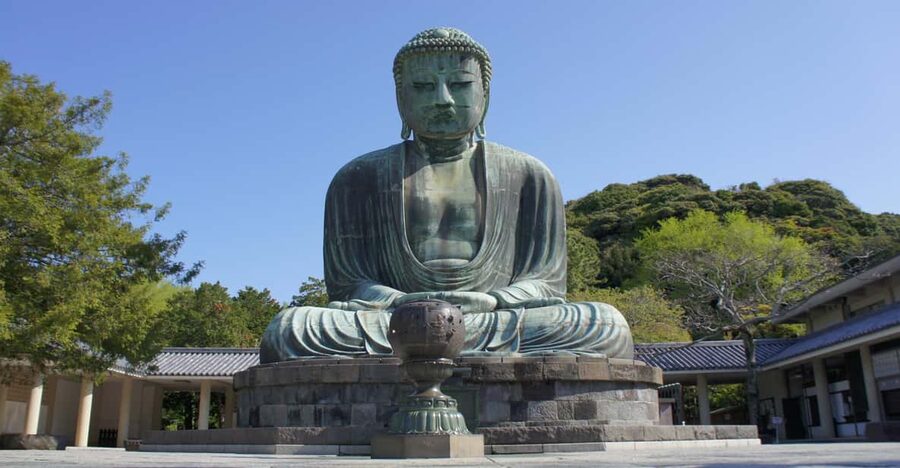
The Great Buddha at Kotokuin
From Hase Temple, you walk about 10 minutes to Kotokuin Temple. This short connection is one of the tour’s practical strengths. You do not need to work out another local bus or train ride, and the guide can keep the group moving in the right direction.
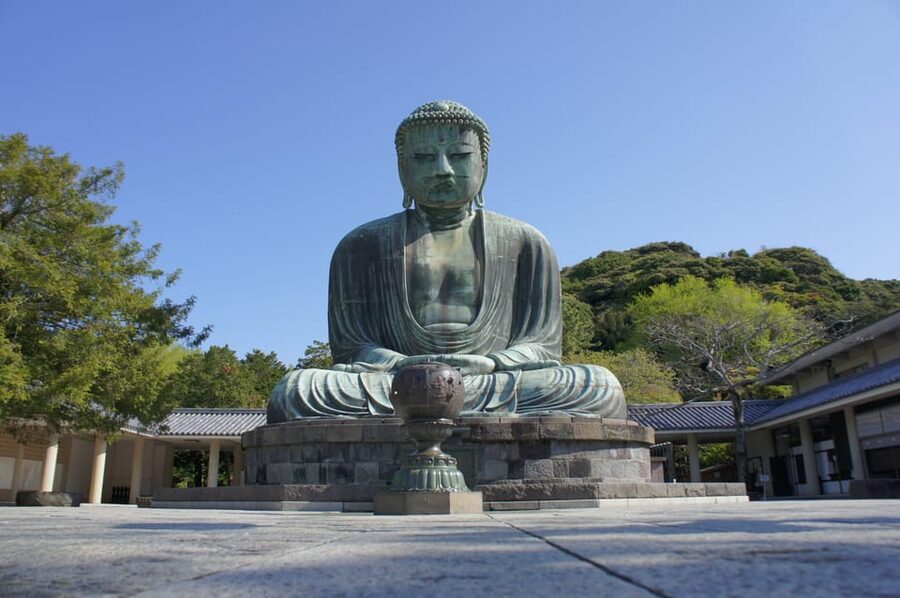
Kotokuin is home to Kamakura’s Great Buddha, an enormous bronze statue about 13 meters high. The statue dates back to 1292 and is the visual centerpiece of the day. Even if you have seen pictures, its scale is clearer when you are standing near it.
Your guide explains the statue’s significance and history, rather than leaving you with a quick photo stop. The planned visit is about 30 minutes, which should give you time to look at the Buddha, hear the main story, and take photographs.
Admission to Kotokuin costs 300 yen per person. Again, this is paid separately. The site is straightforward to visit, but it can be crowded. One past tour guest specifically noted that the guide managed to move through heavy crowds while still reaching the main points. That is useful in Kamakura, where popular sights can feel much less calm during busy periods.
The Great Buddha is also a good example of why a private guide can help. You can appreciate the size without much explanation, but the date, religious role, and survival of the statue give the stop more meaning. Ask your guide to slow down if you want more detail here, since the scheduled time is fairly short.
Tsurugaoka Hachimangu in the heart of Kamakura
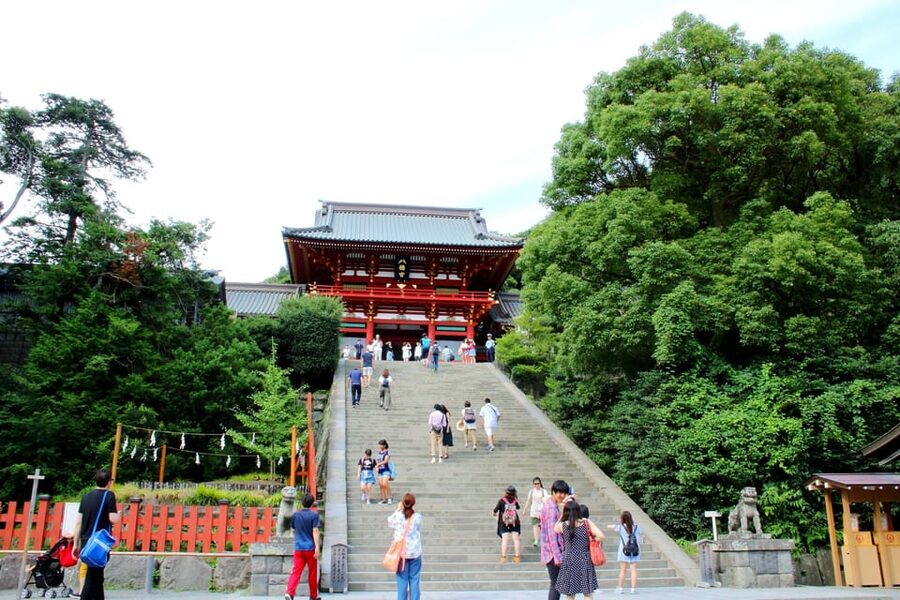
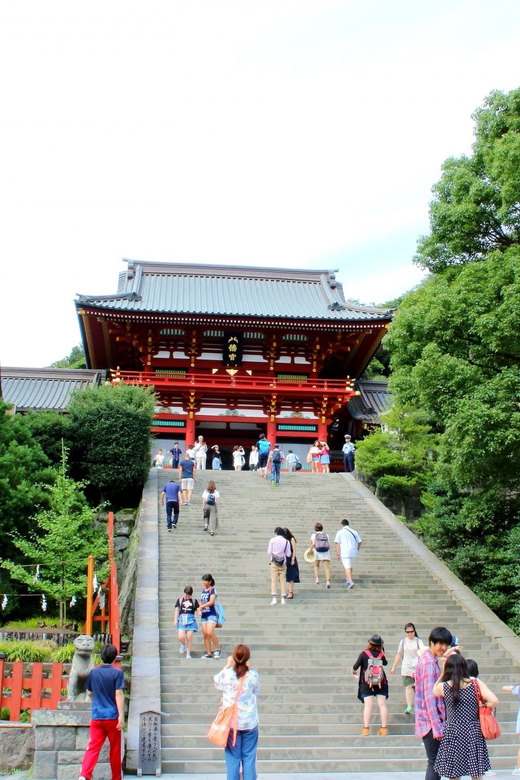
After Kotokuin, you take a local train for about 10 minutes before visiting Tsurugaoka Hachimangu Shrine. This is the city’s most important Shinto shrine and sits at Kamakura’s geographical center.
The shrine was built in 1063 and is dedicated to Emperor Ojin, who is also known as a god of war. That background helps explain why the site has such a strong connection to samurai-era Kamakura. Your guide can place the shrine within the city’s religious and political story, rather than presenting it as just another attractive complex.
The planned guided visit lasts about 30 minutes. You can expect a look at the shrine buildings and a chance to absorb the calm atmosphere of the grounds. Since this is an active Shinto site, respectful behavior matters. Follow your guide’s lead around worship areas and avoid treating every ritual space as a photo backdrop.
Tsurugaoka Hachimangu is a good place to compare with the earlier Buddhist sites. Hase Temple and Kotokuin focus on Buddhist tradition and imagery. Here, the setting and customs belong to Shinto. Seeing both in one day gives you a clearer picture of how different religious traditions appear side by side in Japan.
More private tours in Tokyo:
- Tokyo 6hr Private Tour with Government-Licensed Guide
★ 5.0 · 3,902 reviews - Private Tour to Mt. Fuji and Hakone (Fully Licenced Operator)
★ 5.0 · 1,910 reviews - Tokyo Customized Private Tour (Must See Places in 1 Day)
★ 5.0 · 1,499 reviews - Mount Fuji Full-Day Private Tour from Tokyo (Customizable)
★ 4.9 · 1,470 reviews
Lunch and Komachi Street
The route gives about 1.5 hours for lunch, a guided walk, free time, and shopping around Komachi Street. This is the most flexible part of the day, and it breaks up the temple visits with food and time to browse.
Lunch is not included. You and your guide pay for your own food and drinks, so you should treat the phrase finest Japanese restaurants as a general description rather than a guaranteed reservation or fixed restaurant. The supplied details do not identify the restaurant, menu, or price.
That lack of a set lunch can work in your favor. You can tell the guide what you want to eat, and one past guest appreciated having a pleasant lunch in town along with green tea. At the same time, you should ask early about the lunch plan if you have dietary needs or a strict budget.
Komachi Street is useful for more than shopping. It gives you a feel for Kamakura’s modern visitor center, with food and local goods alongside the older religious sites. Still, this is the part of the day most likely to feel commercial. If your priority is temples and quiet spaces, do not let shopping take too much time.
What the private guide adds
The guide is the main reason to consider this experience instead of visiting Kamakura independently. You get a private group and an English-speaking National Government Licensed Guide Interpreter. The guide also handles the route from Tokyo, the station changes, and the walking links between sights.
Past guides have included Mizuma-san, Steve, and Take. Their approach appears to vary. Mizuma-san was praised for his grasp of Japanese history and culture. Steve was noted for keeping the day well organized, adding useful information, and including lunch and green tea. Take used maps and pictures to explain Kamakura’s past, which can be especially helpful when the buildings and dates begin to blur together.
You are not guaranteed one of these specific guides, so do not book on the assumption that you will receive a particular person. The private format does give you a chance to ask for more explanation, adjust the pace within reason, or spend more time on the Great Buddha or temple gardens.
This matters because the scheduled sightseeing blocks are short, generally 30 minutes at each major sight. A good guide can focus your attention quickly. A less effective day could feel like being escorted from gate to gate, especially if you do not ask questions. One past guest felt the explanations were too limited for the price, so you should be clear that you want historical and cultural detail.
Walking, trains, and the real timing
The day lasts eight hours, with return to Tokyo around 4 or 5 pm. The route includes about 3 to 4 kilometers of walking, plus train rides. You walk from the station areas to the sights, between Hase Temple and Kotokuin, around the religious sites, and through Komachi Street.
The train ride from Tokyo is about 70 minutes in the route plan. The return takes about one hour. A 10-minute local train ride connects the central Kamakura area with the Hase and Kotokuin area.
The details give two transport estimates: public transport for you and the guide is listed at around 2,000 yen per person, while one-way train tickets are described as around 1,200 yen. Because those figures do not line up perfectly, confirm the expected transport payment when booking. The key point is simple: train fares are extra, and you may pay for both yourself and the guide as part of the tour-day transport arrangement.
The walking is manageable for many people, but it is not a seated sightseeing day. Wear comfortable shoes. Temple grounds may include steps, and a crowded station area can make the short links feel slower than the map suggests.
Is $145 per person good value?
The listed price is $145 per person, which is a serious amount before you add local transport, admissions, lunch, and drinks. The two stated temple admissions total 700 yen per person. Transport is listed at around 2,000 yen per person, though you should clarify the exact calculation. Lunch is separate for both you and the guide.
So the tour is not a cheap way to get from Tokyo to Kamakura. You are paying for a private guide, hotel pickup and drop-off on foot, route planning, and English explanations. For a couple or family that wants a private day with no route planning, that can be worthwhile.
The value is weaker if you are comfortable using trains, reading signs, and learning about the temples independently. Kamakura’s core sights can be visited without a private guide, and you would avoid the guide fee. The $145 price makes most sense when your time in Tokyo is limited, you want cultural context, or you prefer not to manage several train legs yourself.
The Italian-language feedback included a particularly sharp concern about the price and the amount of information provided. That is a fair warning. The tour is only good value if the guide gives you the cultural explanation you are paying for. Ask questions, request context, and confirm what transport payment is expected.
Who should book this Kamakura day?
I would consider this tour for first-time visitors to Japan who want a structured introduction to Kamakura without joining a large group. Families may also like the private setting, especially if the guide can adjust the pace and explain the sites in an accessible way.
It also suits you if you are staying in Tokyo and want a full cultural day outside the city. The guide takes care of the broad route, while the private setup leaves more room for personal questions than a standard group excursion.
I would be more cautious if your budget is tight or if you prefer slow temple visits. Thirty minutes at Hase Temple, Kotokuin, and Tsurugaoka Hachimangu is enough for a clear introduction, but not enough for an unhurried study of every building and garden.
The tour is also less suitable if you want a food-focused Kamakura outing. Lunch time is generous at 1.5 hours, but no restaurant or menu is fixed in advance, and lunch costs extra.
Final call: book it for guidance, not transport alone
Book this tour if you want a private English-speaking guide to connect Kamakura’s Buddhist temples, Great Buddha, and Shinto shrine into one understandable story. The efficient route, licensed guide, and help with train travel are the strongest reasons to choose it.
Skip it if you mainly need transportation or if $145 feels high before extras. You will still pay for trains, admissions, lunch, and drinks, and the quality of the day depends heavily on how much explanation your assigned guide provides.
Before booking, confirm the meeting point, hotel pickup details, transport payment, and lunch plan. If those details suit you, this is a convenient and culturally focused way to see Kamakura in one day.
FAQ
How long does the Kamakura tour last?
The tour lasts eight hours. You are expected to return to Tokyo around 4 or 5 pm.
How do you travel from Tokyo to Kamakura?
You travel by train. The journey takes about 70 minutes in the planned route details, while the return journey is described as about one hour.
Which sights are included?
The tour visits Hase Temple, Kotokuin Temple and its Great Buddha, Tsurugaoka Hachimangu Shrine, and Komachi Street.
Are train fares included?
No. Public transportation for you and the guide is paid separately. The listed estimate is around 2,000 yen per person, and one-way train tickets are also described as around 1,200 yen.
Are temple admission fees included?
No. Hase Temple costs 400 yen per person, and Kotokuin Temple costs 300 yen per person.
Is lunch included?
No. Lunch and drinks are paid separately by you and the guide. The route allows about 1.5 hours for lunch, a guided visit, free time, and shopping around Komachi Street.
Newly reviewed around Tokyo
- Tokyo Asakusa:Calligraphy & Make T-shirt Activity★ 5.0 · 62 reviews
- Intercity Shuttle, Tokyo to Haneda /Narita /Yokohama /Makuhari★ 5.0 · 5 reviews
- 1 Hour Travel around Tokyo with a Professional Photographer★ 5.0 · 3 reviews
- Travel Tokyo with Your Own Personal Photographer★ 5.0 · 43 reviews
- Train in Samurai Swordsmanship and Defeat the Demon in Tokyo★ 5.0 · 5 reviews
- Shuttle Van 6hr Tokyo Tour to-and-from Tokyo, Yokohama and Narita★ 5.0 · 9 reviews
- Kickboxing & Body Training with EX-Pro Fighter★ 5.0 · 4 reviews
- Tokyo History: Sensoji Temple & Asakusa District Private Tour★ 5.0 · 28 reviews
Kamakura Day Trips from Tokyo, compared.
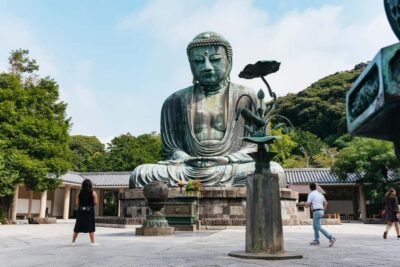
Mt. Fuji, Kamakura, Big Buddha, & Lake Ashi Day Trip
Read our review →
Sea of Mount Fuji, Hakone Ropeway, Ōwakudani, Enoshima
Read our review →
Kamakura 8 hr Private Walking Tour with Licensed Guide from Tokyo
Read our review →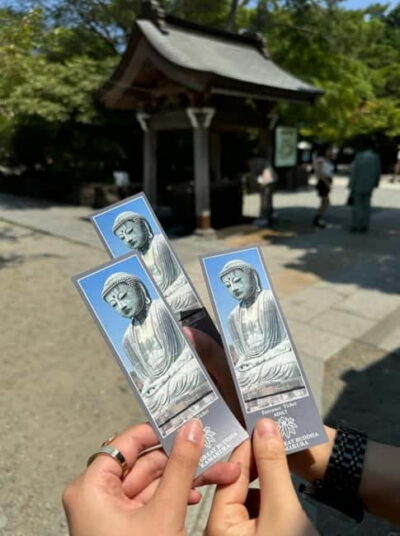
Kamakura & Enoshima Day Tour with Pickup & Train Ride
Read our review →
Kamakura Private & Customizable Tour – All-in-One Experience
Read our review →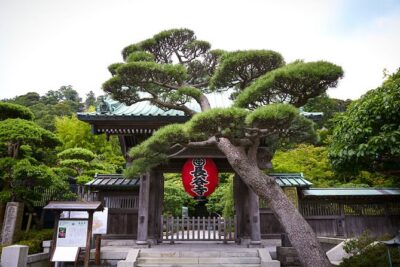
Private Car Tour to see Highlights of Kamakura, Enoshima, Yokohama from Tokyo
Read our review →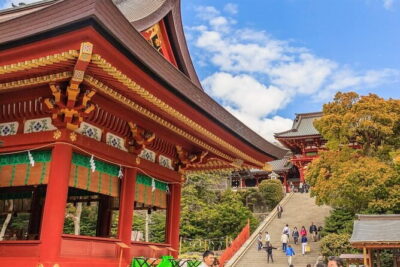
From Tokyo Kamakura, Hachimangu Shrine and Enoshima Full Day Tour
Read our review →
Day Trip to Kamakura & Enoshima: Shrines, Seaside, Temples & Tea
Read our review →Browse the lists this tour appears in